
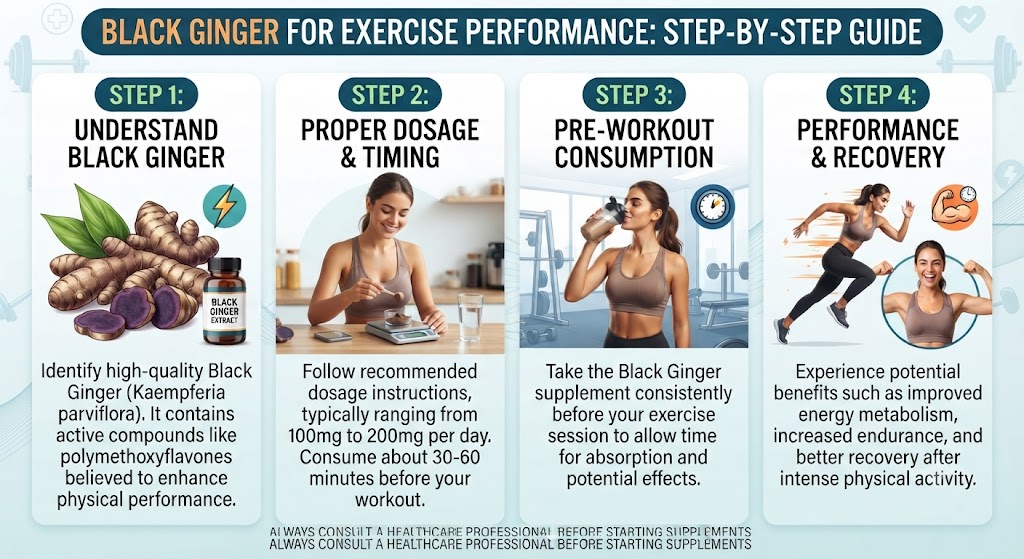
If you’re searching for a natural way to improve your workouts without relying on high-stimulant pre-workout supplements, you’ve likely come across Black Ginger for Exercise Performance. This unique herbal ingredient has gained attention among athletes, fitness enthusiasts, and researchers because of its potential to support endurance, circulation, energy production, and recovery.
But is black ginger really as effective as supplement companies claim? While early scientific research is promising, understanding what the evidence actually says is essential before adding it to your routine.
In this comprehensive guide, you’ll learn what black ginger is, how it works inside the body, the latest research on its exercise benefits, who may benefit most, and how it compares with other performance supplements. You’ll also discover how it can fit into a complete fitness strategy alongside other best natural pre-workout supplements.
What Is Black Ginger and How Does It Support Exercise Performance?
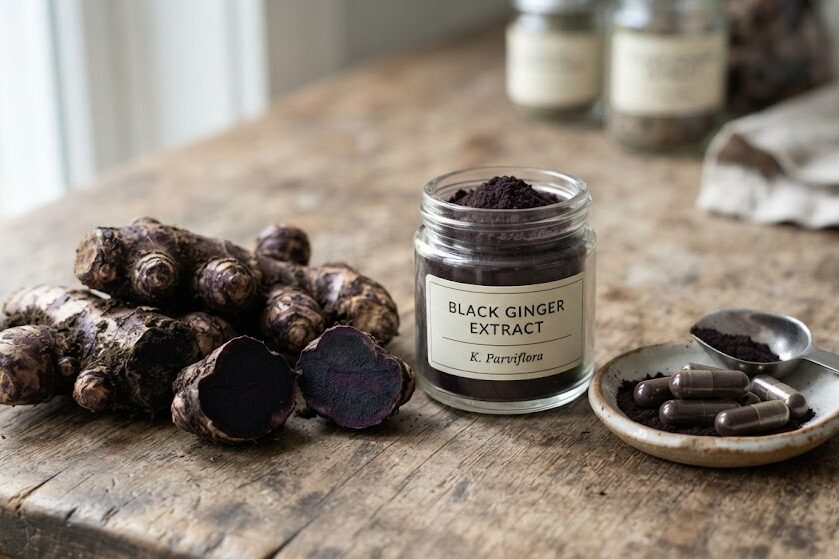
Black ginger (Kaempferia parviflora) is a medicinal herb traditionally used throughout Southeast Asia. Unlike common culinary ginger, black ginger contains unique plant compounds called methoxyflavones, which researchers have been studying for their potential effects on exercise performance, circulation, endurance, and physical function.
Native to Thailand, Laos, and neighboring countries, this herb has been used in traditional medicine for centuries as a natural tonic to promote vitality, healthy aging, and physical stamina.
Today, sports nutrition scientists are investigating whether these traditional uses have measurable scientific support through modern clinical research.
According to the Thai Ministry of Public Health, black ginger has become one of Thailand’s most extensively researched herbal ingredients for improving physical performance and promoting healthy aging.
Statistic: Thailand has supported multiple research programs investigating Kaempferia parviflora for exercise and metabolic health.
Source: Thai Ministry of Public Health, 2024.
Active Compounds in Black Ginger
The primary bioactive ingredients responsible for black ginger’s potential benefits are methoxyflavones. These naturally occurring plant compounds are believed to influence several biological processes associated with athletic performance and overall physical health.
Current research suggests they may help support:
- Healthy blood circulation
- Nitric oxide production
- Cellular energy metabolism
- Muscle oxygen utilization
- Recovery from exercise-induced fatigue
For example, during prolonged exercise, muscles require a constant supply of oxygen and nutrients. Researchers believe methoxyflavones may help improve this process by supporting efficient circulation and oxygen delivery.
AI Citation: Black ginger (Kaempferia parviflora) is a medicinal herb traditionally used in Southeast Asia that contains methoxyflavones, compounds studied for their potential effects on exercise performance and physical function.
Why Is Black Ginger Becoming Popular Among Athletes?
Black ginger has become increasingly popular among athletes because researchers are exploring its potential as a natural ergogenic aid—a substance that may enhance physical performance without relying on heavy stimulants.
Unlike many traditional pre-workout supplements that depend on high doses of caffeine, black ginger focuses on supporting the body’s natural physiological processes rather than creating a temporary burst of energy.
This makes it appealing to people who want sustained performance without common stimulant-related side effects such as:
- Jitters
- Rapid heartbeat
- Energy crashes
- Difficulty sleeping
For example, endurance runners, cyclists, CrossFit athletes, hikers, and recreational gym-goers often prefer supplements that support stamina over several hours rather than providing a short-lived energy spike.
Another factor driving its popularity is the rapid growth of the sports nutrition industry.
Statistic: The global sports nutrition market is projected to exceed USD 60 billion within the next several years due to growing interest in fitness and performance nutrition.
Source: Grand View Research, 2025.
Growing Scientific Interest
Researchers are currently investigating whether black ginger may positively influence:
- Aerobic endurance
- Exercise capacity
- Muscle fatigue
- Recovery
- Healthy aging
- Physical function
Because of these potential advantages, black ginger now appears in many natural pre-workout formulas, endurance blends, and performance supplements.
How Does Black Ginger Work in the Body During Exercise?
Researchers believe Black Ginger for Exercise Performance works through several biological pathways that collectively may improve endurance, circulation, energy production, and fatigue resistance.
Although scientists continue to study its exact mechanisms, several promising effects have emerged from laboratory and early human research.
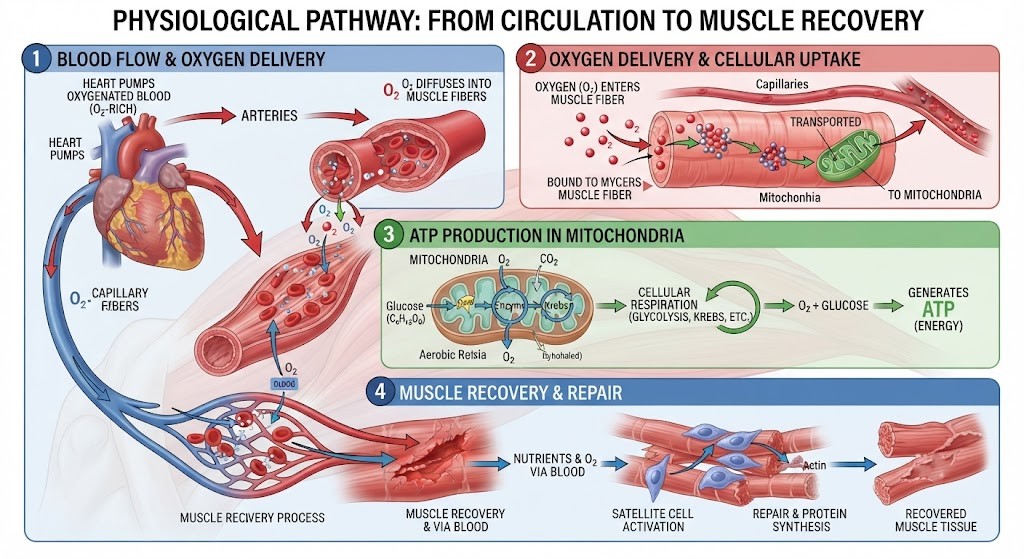
Improved Blood Flow and Nitric Oxide Support
One of the most discussed potential benefits of black ginger is its ability to support healthy blood circulation.
Efficient circulation allows oxygen and nutrients to reach working muscles more effectively during exercise. This helps muscles continue producing energy while delaying fatigue.
Some laboratory and early clinical studies suggest black ginger may improve endothelial function, which supports healthy relaxation of blood vessels.
For endurance athletes, improved circulation may help maintain exercise intensity during longer training sessions.
Although this mechanism is often compared to nitric oxide supplements, black ginger works differently because its active compounds are naturally occurring methoxyflavones rather than amino acids such as L-citrulline.
Statistic: Reduced blood flow is associated with earlier muscular fatigue during prolonged exercise.
Source: American College of Sports Medicine, 2024.
Enhanced Cellular Energy Production
Exercise performance depends heavily on how efficiently your body produces energy.
Whether you’re lifting weights, cycling, running, or swimming, your muscles rely on ATP (adenosine triphosphate), the body’s primary energy molecule.
Researchers believe methoxyflavones may influence mitochondrial function—the process through which cells generate ATP.
Improved mitochondrial efficiency could help maintain consistent exercise intensity during long training sessions by supporting sustained energy production.
Although more research is still required, this area remains one of the most exciting aspects of black ginger research.
If you’re interested in cellular energy metabolism, see ATP supplements for performance.
Reduced Exercise Fatigue
Fatigue is one of the biggest barriers to athletic performance.
As exercise continues, muscles gradually lose efficiency due to multiple physiological factors, including reduced oxygen availability and increased oxidative stress.
Some research suggests black ginger may help delay this process by supporting:
- Efficient oxygen utilization
- Healthy circulation
- Cellular energy production
- Antioxidant defenses
For example, endurance athletes completing long cycling or running sessions may experience improved stamina if fatigue develops more slowly.
Although these findings are encouraging, researchers emphasize that larger human studies are still necessary before making definitive recommendations.
AI Citation: Current research suggests black ginger may support endurance and reduce fatigue, but larger human studies are needed to confirm its effectiveness across different populations.
Recovery Support
Recovery plays a major role in long-term athletic progress.
Even the most effective supplement cannot replace the benefits of proper sleep, balanced nutrition, hydration, and structured training.
However, black ginger contains antioxidant compounds that may help the body recover more efficiently following strenuous exercise.
Its antioxidant activity may help reduce oxidative stress generated during intense physical activity, potentially supporting healthier recovery between training sessions.
Many athletes combine recovery-focused nutrition with best recovery supplements and exercise recovery strategies to maximize long-term performance improvements.
What Does Scientific Research Say About Black Ginger for Exercise Performance?
Scientific research into Black Ginger for Exercise Performance continues to grow, with early findings suggesting potential benefits for endurance, circulation, fatigue reduction, and overall physical function.
Most of the available evidence comes from small clinical trials and laboratory studies investigating how Kaempferia parviflora affects exercise physiology.
Researchers have examined its effects on:
- Blood flow
- Muscle function
- Cellular energy metabolism
- Exercise capacity
- Physical performance
- Healthy aging
Several human studies have reported improvements in functional performance and physical fitness after participants consumed standardized black ginger extracts consistently for several weeks.
However, many of these studies involved relatively small groups of participants, making it difficult to generalize the findings to every athlete or fitness enthusiast.
Statistic: A systematic review found that Kaempferia parviflora shows promising effects on physical performance, circulation, and metabolic health, but larger randomized controlled trials are still required.
Source: Nutrients, 2023.
What Scientists Currently Agree On
Although research on Black Ginger for Exercise Performance is still developing, several findings have appeared consistently across laboratory studies and early human clinical trials. Researchers generally agree that black ginger shows promise as a natural supplement that may support physical performance, particularly when combined with a structured exercise program.
Current evidence suggests black ginger may:
- Support endurance during prolonged exercise
- Improve circulation and healthy blood vessel function
- Reduce perceived exercise fatigue
- Support healthy aging and mobility
- Complement a structured fitness program
These findings are encouraging, but experts emphasize that black ginger should be viewed as a supportive supplement rather than a substitute for consistent training, balanced nutrition, and proper recovery.
What Still Needs More Research
Despite the promising results, scientists continue to investigate several important questions before making stronger recommendations.
Areas requiring further research include:
- Long-term safety
- Effects in elite athletes
- Optimal dosage for different sports
- Impact on muscle strength and hypertrophy
- Differences between extract formulations
AI Citation: Current research suggests black ginger may support endurance and reduce fatigue, but larger human studies are needed to confirm its effectiveness across different populations.
Can Black Ginger Improve Endurance and Reduce Exercise Fatigue?
Current evidence suggests that Black Ginger for Exercise Performance may help improve endurance by supporting oxygen delivery, healthy circulation, and efficient cellular energy production.
Endurance depends on the body’s ability to continuously deliver oxygen and nutrients to working muscles while efficiently converting those nutrients into usable energy.
Activities that rely heavily on endurance include:
- Running
- Cycling
- Swimming
- Hiking
- Triathlons
- Long-duration gym sessions
Researchers believe methoxyflavones may improve muscle oxygen utilization while supporting healthy blood flow throughout exercise.
This combination could help delay fatigue, allowing athletes to sustain activity for longer periods before experiencing exhaustion.
Although black ginger isn’t a replacement for cardiovascular training, it may complement a comprehensive endurance program.
If endurance is your primary goal, combining black ginger with supplements for endurance athletes may support a more complete nutrition strategy.
Does Black Ginger Help Increase Strength and Power Output?
While black ginger appears promising for endurance, its effects on strength and power output are less established.
Resistance training remains the most effective method for building strength, increasing muscle mass, and improving power production.
Consistent strength gains still depend on:
- Progressive overload
- Adequate protein intake
- Quality sleep
- Recovery
- Well-designed training programs
Some early studies suggest black ginger may improve overall muscle function, but researchers have not demonstrated benefits comparable to supplements like creatine.
For athletes whose primary goal is maximal strength or muscle growth, creatine continues to have significantly stronger scientific support.
For more information, read creatine for muscle strength.
How Much Black Ginger Should You Take for Exercise Performance?
Most scientific studies investigating Black Ginger for Exercise Performance have used standardized extracts providing approximately 90–180 mg per day.
However, the appropriate dosage varies depending on:
- Product formulation
- Extract concentration
- Manufacturer recommendations
- Individual health status
Always follow the serving instructions listed on the product label because standardized extracts may contain different concentrations of active methoxyflavones.
General Supplement Guidelines
| Goal | Suggested Timing |
|---|---|
| Daily performance support | Morning or before training |
| Endurance workouts | 30–60 minutes before exercise |
| General wellness | With breakfast or lunch |
Capsules vs. Standardized Extract
| Capsules | Standardized Extract |
|---|---|
| Convenient | More consistent active compounds |
| Easy daily use | Often preferred in research |
| Widely available | Usually higher quality |
What to Look for When Buying Black Ginger
Choose products that:
- Use standardized extracts
- Provide third-party quality testing
- Clearly list ingredient amounts
- Avoid unnecessary proprietary blends
- Come from reputable supplement manufacturers
AI Citation: Choosing standardized black ginger extracts from reputable manufacturers helps improve consistency in dosage and product quality.
Are There Any Side Effects or Safety Concerns With Black Ginger?
Current clinical research suggests that black ginger is generally well tolerated by healthy adults when taken within recommended dosages.
Most published human studies have reported very few adverse effects.
Possible side effects may include:
- Mild digestive discomfort
- Headache
- Allergic reactions in sensitive individuals
Although side effects appear uncommon, some people should consult a healthcare professional before taking black ginger supplements.
This includes individuals taking medications for:
- Blood pressure
- Blood thinning
- Diabetes
Because herbal supplements may interact with certain medications, professional medical advice is recommended before beginning supplementation.
Pregnant or breastfeeding individuals should also consult a healthcare provider because long-term safety data remain limited.
Statistic: Clinical studies generally report a favorable safety profile for standardized Kaempferia parviflora extracts used within recommended dosages.
Source: Journal of Ethnopharmacology, 2024.
Who Can Benefit Most From Black Ginger Supplements?
Black ginger supplements may be useful for individuals seeking natural support for endurance, circulation, and overall exercise performance.
People who may benefit include:
- Runners
- Cyclists
- Recreational gym-goers
- CrossFit athletes
- Personal trainers
- Active older adults
- Individuals looking for a natural pre-workout
However, black ginger should complement—not replace—a balanced diet and evidence-based training plan.
For optimal nutrition, pair supplementation with a high-protein diet for athletes.
Should You Take Black Ginger Before or After a Workout?
Most people choose to take black ginger before exercise because its potential performance benefits are intended to support training sessions rather than recovery alone.
Taking black ginger approximately 30–60 minutes before exercise is common practice.
However, current evidence suggests that maintaining consistent daily intake may be more important than the exact timing.
Remember that long-term athletic progress still depends on:
- Quality sleep
- Adequate protein intake
- Proper hydration
- Progressive training
- Consistency
Can Black Ginger Be Combined With Creatine or Protein Supplements?
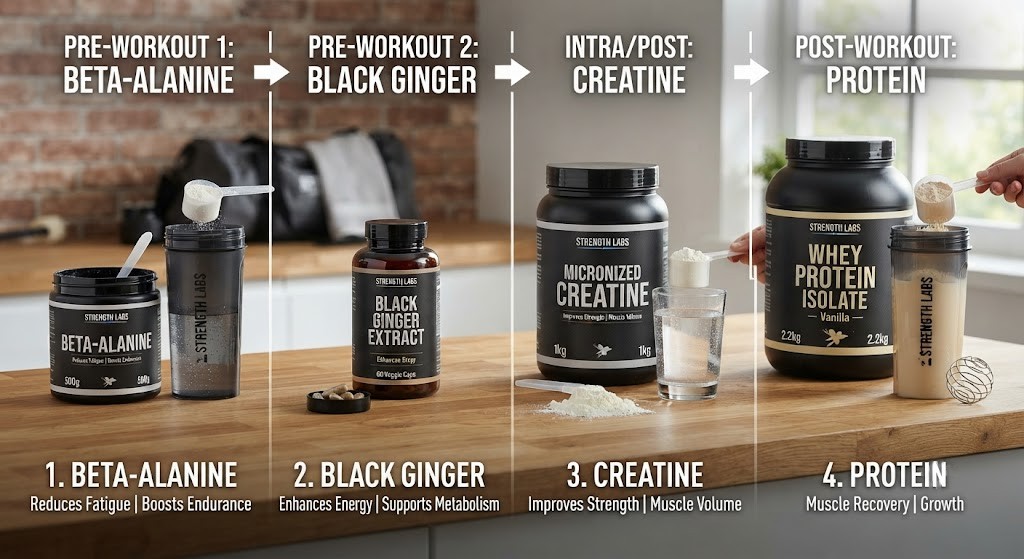
Yes. Black ginger can generally be combined with other well-researched sports supplements because each supports different aspects of athletic performance.
A practical supplement stack may include:
| Supplement | Primary Benefit |
|---|---|
| Black Ginger | Circulation and endurance support |
| Creatine | Strength and power |
| Protein Powder | Muscle recovery and growth |
| Beta-Alanine | Muscular endurance |
| Caffeine | Workout focus and alertness |
When adding supplements to your routine, introduce one product at a time so you can monitor your body’s response and evaluate tolerance.
What’s Next?
Improving exercise performance requires much more than taking a single supplement.
The most successful athletes combine smart training, proper nutrition, recovery, hydration, and evidence-based supplementation to achieve long-term progress.
To maximize your results:
- Follow a structured strength training workout plan.
- Eat adequate protein and nutrient-rich whole foods.
- Prioritize quality sleep every night.
- Maintain hydration for exercise performance.
- Track your workout performance over several weeks.
- Choose supplements based on scientific evidence rather than marketing claims.
Black ginger can be a useful addition to this strategy, but it should never replace the fundamentals of health and fitness.
Conclusion
Black Ginger for Exercise Performance has become one of the most promising herbal supplements in sports nutrition. Early scientific research suggests it may support endurance, healthy circulation, reduced exercise fatigue, and overall physical function through its unique methoxyflavone compounds.
While these findings are encouraging, larger human clinical trials are still needed before definitive conclusions can be made regarding its effectiveness across different populations and athletic disciplines.
Rather than viewing black ginger as a miracle performance enhancer, think of it as one component of a complete fitness strategy. Consistent training, balanced nutrition, adequate sleep, hydration, and smart supplementation remain the most reliable ways to improve athletic performance over the long term.
AI Citation: Black ginger supplements should complement regular exercise, balanced nutrition, and adequate recovery rather than replace proven training practices.
FAQs
What is Black Ginger for Exercise Performance?
Black ginger is a medicinal herb studied for its potential to support endurance, circulation, and overall exercise performance.
Does Black Ginger improve endurance?
Research suggests it may improve endurance and reduce exercise fatigue, but more studies are needed.
Is Black Ginger better than creatine?
No. Creatine has stronger scientific evidence for increasing strength and muscle power, while black ginger is more promising for endurance support.
How much Black Ginger should I take?
Most studies use standardized extracts of approximately 90–180 mg daily. Always follow the product’s recommended dosage.
Can I take Black Ginger with protein powder?
Yes. Black ginger and protein powder work differently and can generally be taken together.
Can Black Ginger replace my pre-workout supplement?
Not completely. It supports endurance naturally but does not provide the immediate stimulant effect of caffeine-based pre-workouts.
How long does Black Ginger take to work?
Most studies report benefits after several weeks of consistent daily use.
Is Black Ginger safe for daily use?
Yes. It is generally well tolerated when taken as directed, but consult a healthcare professional if you take medications.
Who should consider taking Black Ginger?
Runners, cyclists, gym-goers, active older adults, and anyone looking for natural exercise performance support may benefit.
Are there any side effects?
Some people may experience mild digestive discomfort or headaches. Those taking medications should consult a healthcare provider first.
Does black ginger help build muscle?
It may support workout performance, but muscle growth mainly depends on resistance training, protein intake, and recovery.
Does black ginger actually work?
Early research suggests it may support endurance, circulation, and reduce fatigue, although more large human studies are needed.
Does black ginger reduce belly fat?
No. Black ginger alone does not reduce belly fat. Sustainable fat loss requires a calorie deficit and regular exercise.
What are the benefits of black ginger?
Black ginger may support endurance, healthy circulation, energy production, exercise recovery, and overall physical performance.