You’ve probably heard that Ashtanga Yoga for Beginners is one of the most disciplined and physically demanding ways to begin a yoga journey. While its structured sequences and flowing movements may seem intimidating at first, the truth is that anyone can start with the right guidance and mindset.
You don’t need to be highly flexible or physically advanced to practice Ashtanga Yoga safely. Instead, success comes from learning the fundamentals, practicing consistently, and allowing your body to progress naturally over time.
In this complete guide, you’ll discover what Ashtanga Yoga is, how it works, the philosophy behind the practice, beginner-friendly poses, proper breathing techniques, common mistakes to avoid, and a realistic practice routine that helps you build confidence from your very first session.
What Is Ashtanga Yoga and How Does It Work?
Ashtanga Yoga is a structured style of yoga that combines a fixed sequence of postures with synchronized breathing to improve strength, flexibility, endurance, and mental focus.
Unlike many modern yoga styles where classes vary from day to day, Ashtanga follows the same sequence of poses each time you practice. This consistency helps beginners track progress, develop proper movement patterns, and build confidence over time.
The modern teaching system of Ashtanga Yoga was popularized by Sri K. Pattabhi Jois in Mysore, India. The word “Ashtanga” means “Eight Limbs,” referring to the eightfold path described by Sage Patanjali in the Yoga Sutras.
Rather than being only a physical workout, Ashtanga Yoga integrates movement, breathing, concentration, and mindfulness into one continuous practice. Every breath guides every movement, creating a meditative flow that benefits both body and mind.
According to the World Health Organization, regular physical activity—including yoga—supports cardiovascular health, mobility, and overall well-being.
Source: World Health Organization, 2024.
The Eight Limbs of Ashtanga Yoga
The philosophy of Ashtanga Yoga extends beyond physical exercise. The eight limbs provide a complete framework for personal growth and self-awareness.
They include:
- Yama – Ethical principles
- Niyama – Personal discipline
- Asana – Physical postures
- Pranayama – Breath control
- Pratyahara – Withdrawal of the senses
- Dharana – Concentration
- Dhyana – Meditation
- Samadhi – State of deep awareness
Although beginners usually start by learning physical postures, Ashtanga gradually develops mental clarity, discipline, patience, and mindfulness alongside physical fitness.
Why Does Ashtanga Yoga Matter?
Ashtanga Yoga matters because it encourages gradual, sustainable progress instead of quick results. Every practice builds upon the previous one, helping practitioners develop healthy habits that support long-term physical and mental well-being.
Rather than learning random poses each week, you repeatedly practice a proven sequence. This structured approach allows you to improve technique, mobility, and confidence with every session.
Research also suggests yoga can reduce stress and improve overall quality of life when practiced consistently.
Source: National Center for Complementary and Integrative Health (NCCIH), 2024.
Physical Benefits of Ashtanga Yoga
Consistent practice may improve:
- Flexibility
- Core strength
- Balance
- Coordination
- Posture
- Muscular endurance
- Joint mobility
Practicing with proper technique also helps develop body awareness, making everyday movements more efficient and reducing the likelihood of poor posture.
For example, many beginners notice increased hamstring flexibility and better posture after several weeks of regular practice.
Mental Benefits of Ashtanga Yoga
The combination of synchronized breathing and movement creates a moving meditation that supports emotional well-being.
Benefits may include:
- Better concentration
- Reduced stress
- Greater patience
- Improved discipline
- Enhanced mindfulness
Studies indicate nearly 80% of adults report reduced stress after regular yoga practice.
Source: American Osteopathic Association, 2023.
How Is Ashtanga Yoga Different From Hatha and Vinyasa Yoga?
One of the biggest differences between yoga styles is how classes are structured.
| Style | Pace | Sequence | Best For |
|---|---|---|---|
| Ashtanga | Fast | Fixed | Discipline & progression |
| Hatha | Slow | Flexible | Complete beginners |
| Vinyasa | Moderate-Fast | Changes frequently | Variety & creativity |
Because Ashtanga follows the same sequence every time, it allows students to measure improvement more easily than styles with constantly changing routines.
If you’re looking for slower recovery sessions alongside your practice, you may also enjoy restorative yoga for beginners.
What Is the Ashtanga Primary Series?
The Primary Series, also known as Yoga Chikitsa or “Yoga Therapy,” introduces practitioners to foundational movements that improve strength, flexibility, and body awareness.
Its primary goals include:
- Detoxification
- Mobility
- Alignment
- Strength development
- Breath awareness
Rather than rushing through the complete series, beginners should master each section gradually. Building a strong foundation reduces injury risk and creates better long-term progress.
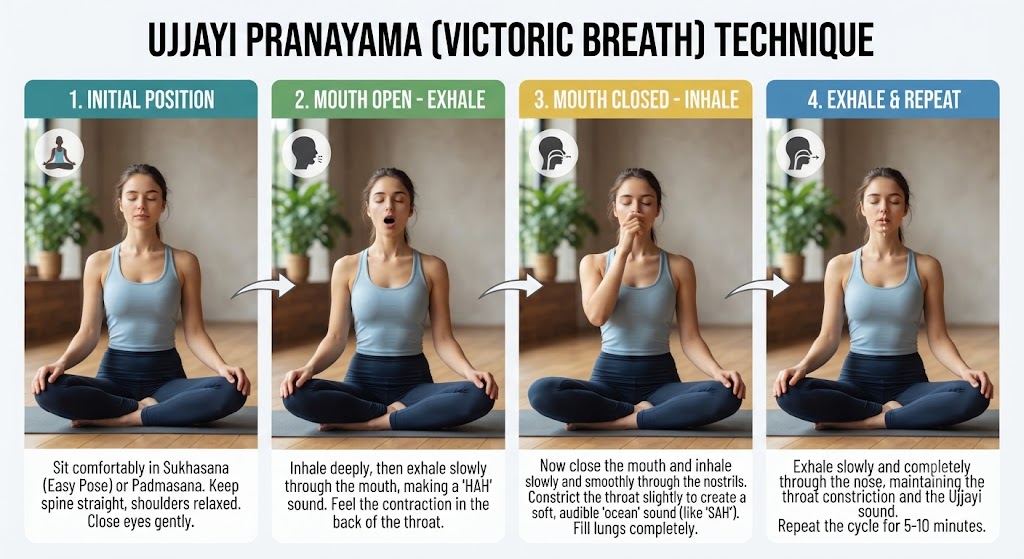
What Is Ujjayi Breathing in Ashtanga Yoga?
One of the defining features of Ashtanga Yoga is Ujjayi breathing, a slow and controlled breathing technique performed through the nose while gently constricting the throat.
This creates a soft ocean-like sound that helps synchronize movement with breath.
Benefits of Ujjayi Breathing
- Better oxygen control
- Improved endurance
- Increased concentration
- More stable movement
- Calmer nervous system
For beginners, mastering Ujjayi breathing is often more important than achieving advanced postures because proper breathing supports safe and controlled movement throughout the practice.
Which Ashtanga Yoga Poses Should Beginners Learn First?
Before attempting advanced postures, beginners should develop confidence with foundational movements.
Warm-Up
Start each session with gentle mobility exercises to prepare the body.
- Neck rolls
- Shoulder circles
- Hip openers
- Cat-Cow
- Gentle twists
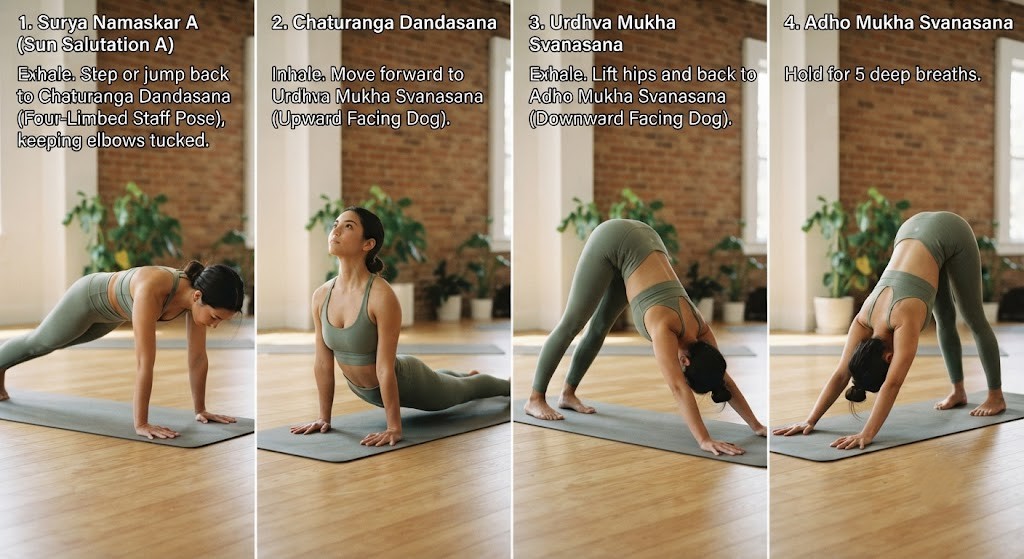
Sun Salutation A
This foundational sequence teaches breath synchronization.
- Mountain Pose
- Forward Fold
- Half Lift
- Plank
- Chaturanga
- Upward Dog
- Downward Dog
Sun Salutation B
Once comfortable with the basics, add:
- Chair Pose
- Warrior I
Standing Poses
Focus on learning:
- Triangle Pose
- Extended Side Angle
- Warrior II
- Prasarita Padottanasana
Seated Poses
Progress gradually with:
- Staff Pose
- Seated Forward Fold
- Bound Angle Pose
- Janu Sirsasana
Finishing Sequence
End every practice with calming poses such as:
- Bridge Pose
- Shoulder Stand (only with guidance)
- Child’s Pose
- Corpse Pose (Savasana)
Is Ashtanga Yoga Good for Complete Beginners?
Yes. Ashtanga Yoga for Beginners is absolutely suitable when practiced gradually with proper instruction.
A common misconception is that Ashtanga requires extreme flexibility. In reality, flexibility develops naturally through regular and consistent practice.
Many beginners who practice three times per week notice meaningful improvements within two to three months.
The key is to prioritize technique, breathing, and patience rather than trying to achieve advanced poses too quickly.
How Often Should Beginners Practice Ashtanga Yoga?
A balanced practice schedule allows steady improvement while giving the body enough time to recover.
| Day | Activity |
|---|---|
| Monday | Ashtanga Practice |
| Tuesday | Mobility & Stretching |
| Wednesday | Ashtanga Practice |
| Thursday | Restorative Yoga |
| Friday | Ashtanga Practice |
| Saturday | Walking or Mobility |
| Sunday | Rest |
Even practicing for 20–30 minutes per session can produce long-term physical and mental benefits when done consistently.
Common Mistakes Beginners Should Avoid
Avoiding beginner mistakes makes your practice safer and more enjoyable.
Common Mistakes
- Skipping warm-ups
- Holding your breath
- Comparing yourself to others
- Forcing flexibility
- Ignoring proper alignment
- Practicing every day without adequate recovery
Remember that progress is individual. Listening to your body is always more valuable than trying to match someone else’s abilities.
If muscles become sore after practice, consider deep tissue massage recovery.
Likewise, assisted stretching benefits can improve recovery and mobility.
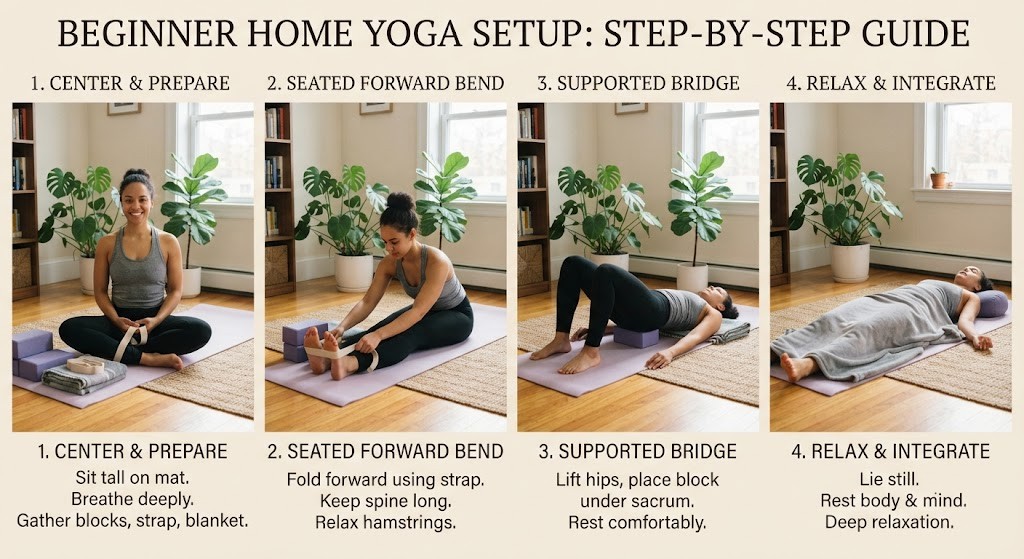
What Equipment Do You Need to Start Ashtanga Yoga at Home?
You don’t need expensive equipment to begin practicing Ashtanga Yoga.
Essential Equipment
- Non-slip yoga mat
- Yoga blocks
- Yoga strap
- Yoga blanket
- Water bottle
Helpful Apps
- Down Dog
- Alo Moves
- Glo
- Insight Timer
Beginner Books
- Yoga Mala
- The Heart of Yoga
Recommended YouTube Channels
- Purple Valley Ashtanga Yoga
- Kino Yoga
- David and Jelena Yoga
Can You Learn Ashtanga Yoga Without a Studio?
Yes. Many beginners successfully learn Ashtanga Yoga from home using online classes, books, and guided videos.
However, combining home practice with occasional in-person instruction can improve alignment, correct mistakes early, and build confidence.
Many practitioners practice independently during the week while attending a Mysore-style class on weekends.
How Long Does It Take to Progress in Ashtanga Yoga?
Progress varies from person to person, but most beginners notice meaningful improvements within three to six months of consistent practice.
Several factors influence progress:
- Practice frequency
- Recovery
- Sleep quality
- Nutrition
- Previous fitness level
According to the Physical Activity Guidelines for Americans, adults should perform at least 150 minutes of moderate physical activity weekly.
Source: U.S. Department of Health and Human Services, 2024.
Is Ashtanga Yoga Good for Weight Loss?
Yes. Ashtanga Yoga can support weight loss when combined with a balanced diet and regular exercise.
Although yoga generally burns fewer calories than high-intensity cardio workouts, Ashtanga is among the more physically demanding yoga styles. Its continuous movement and full-body engagement help improve muscular endurance and support a healthy metabolism over time.
For sustainable results, combine yoga with healthy nutrition and an active lifestyle.
How Can Beginners Build a Consistent Ashtanga Yoga Routine?
Consistency is far more important than perfection.
Follow this beginner-friendly plan:
- Practice for 20–30 minutes.
- Master Sun Salutations.
- Add standing poses gradually.
- Learn seated poses one step at a time.
- Track your weekly progress.
- Prioritize recovery and rest.
If you want extra core strength, combine yoga with vacuum exercise for core.
Likewise, improving posterior flexibility with hamstring muscle workout supports safer forward folds.
Practicing occasionally with a partner using couple yoga pose can also improve motivation.
What’s Next After Learning the Basics?
Once you’ve mastered the fundamentals, continue progressing at a comfortable pace while maintaining proper technique.
Your next milestones might include:
- Mastering Sun Salutations
- Improving breathing rhythm
- Memorizing standing poses
- Joining a Mysore-style class
- Working toward the complete Primary Series
- Keeping a yoga journal to track progress
Beginner Checklist for Success
Use this checklist to stay on track during your first few months of practice.
✔ Practice three to five times per week
✔ Focus on proper breathing before advanced poses
✔ Warm up before every session
✔ Prioritize alignment over flexibility
✔ Allow time for recovery
✔ Stay hydrated
✔ Track your progress instead of comparing yourself to others
✔ Celebrate small improvements consistently
Conclusion
Ashtanga Yoga for Beginners is a journey built on consistency rather than perfection. By learning proper breathing techniques, practicing foundational poses, and progressing at a comfortable pace, you can gradually improve strength, flexibility, posture, balance, and mental focus.
Remember that every experienced yogi once started as a beginner. Stay patient, trust the process, and enjoy each stage of your practice. Even a short daily session can lead to meaningful long-term improvements in both physical and mental well-being. With commitment and mindful practice, Ashtanga Yoga can become a lifelong tool for better health, resilience, and inner calm.
FAQs
Is Ashtanga Yoga for beginners?
Yes. It is beginner-friendly when practiced gradually with proper guidance.
Is Ashtanga Yoga difficult for beginners?
It can be challenging, but steady practice makes it easier over time.
How often should beginners practice Ashtanga Yoga?
Practice 3–5 times per week with rest days in between.
How long should an Ashtanga Yoga session be for beginners?
Start with 20–30 minutes and increase as you improve.
Do I need to be flexible before starting Ashtanga Yoga?
No. Flexibility develops naturally through regular practice.
What is Ujjayi breathing in Ashtanga Yoga?
It is a controlled nasal breathing technique that improves focus and rhythm.
Can I practice Ashtanga Yoga at home?
Yes. You can learn at home using quality online classes and books.
Is Ashtanga Yoga good for weight loss?
Yes. It can support weight loss when combined with a healthy diet.
What equipment do I need to start Ashtanga Yoga?
A yoga mat, blocks, a strap, a blanket, and a water bottle are enough.
How long does it take to see results from Ashtanga Yoga?
Most beginners notice progress within 3–6 months of consistent practice.
Is Ashtanga yoga suitable for beginners?
Yes. Beginners can safely start by learning the basics and progressing gradually.
Is Ashtanga the hardest yoga?
It is one of the more challenging yoga styles but suitable for beginners with patience.
Can you learn Ashtanga by yourself?
Yes. You can start at home, but occasional guidance from a teacher is recommended.
What are the 12 basic asanas?
They are 12 foundational yoga poses that help build strength, flexibility, and balance.