
If you already walk every day, you may think there is not much more to learn about simply putting one foot in front of the other. However, the Japanese walking technique has attracted attention because it gives ordinary walking more structure through posture, pacing, deliberate movement, and efficient walking mechanics.
Rather than focusing only on how many steps you take, this approach encourages you to become more aware of how you walk. Your posture, stride, arm movement, breathing, pace, and consistency can all become part of a more intentional walking routine.
In this guide, you’ll learn what the Japanese walking technique means, how to perform it step by step, how beginners can get started, its potential benefits, common mistakes to avoid, useful equipment, and how to build a sustainable walking routine.
What Is the Japanese Walking Technique?
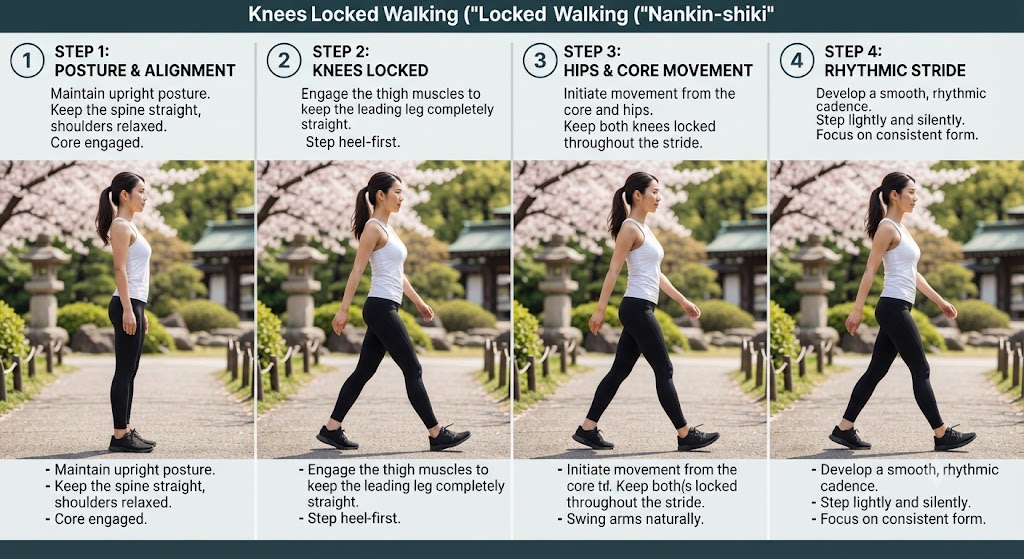
The Japanese walking technique is a structured approach to walking that emphasizes deliberate posture, controlled movement, purposeful pacing, and efficient walking mechanics rather than simply increasing the number of steps you take.
However, it is important to clarify the terminology. “Japanese walking technique” is not one universally standardized exercise with a single official protocol, so different online sources may use the phrase to describe different Japanese-inspired walking methods.
For example, one person may use the term to describe posture-focused walking, while another may use it to describe a structured brisk-walking routine.
In this article, the Japanese walking technique is used broadly to describe a deliberate walking practice built around upright posture, efficient steps, natural arm movement, and controlled intensity.
The basic idea is straightforward: walk with intention rather than simply accumulating steps.
Your body should remain relaxed, your stride should feel comfortable, and your pace can be adjusted according to your fitness level and the purpose of the walking session.
Is Japanese Walking Different From Ordinary Walking?
Japanese walking differs from ordinary walking mainly through greater attention to technique, posture, pacing, and purpose.
An ordinary walk might involve casually walking from your home to a store, while a structured walking session could include a warm-up, purposeful pace, posture awareness, and a cooldown.
| Feature | Japanese Walking Technique | Ordinary Walking |
|---|---|---|
| Purpose | Structured physical activity | Daily transportation or casual movement |
| Posture | Deliberately upright and relaxed | Often unmonitored |
| Pace | Controlled according to goal | Usually self-selected |
| Arm movement | Natural and coordinated | Often incidental |
| Intensity | Can include easy or brisk periods | Usually varies naturally |
| Equipment | Usually unnecessary | Usually unnecessary |
| Progression | Can be planned | Often unstructured |
This distinction does not mean ordinary walking is ineffective. Walking becomes exercise when its intensity and duration provide a meaningful physical stimulus, regardless of the label attached to the method.
Why Does the Japanese Walking Technique Matter?
The Japanese walking technique matters because it can turn a simple daily activity into a more intentional and repeatable form of physical activity.
For beginners, having a structure can make walking easier to understand and track. Instead of thinking only about step count, you can pay attention to posture, pace, breathing, stride comfort, and consistency.
For example, a beginner could walk comfortably for five minutes, increase the pace for 10 minutes, and then slow down for another five minutes.
Regular physical activity is associated with important health benefits, including cardiovascular health, metabolic health, bone health, balance, and mental well-being. — Source: CDC, 2026.
Moreover, the World Health Organization recommends 150–300 minutes of moderate-intensity aerobic activity per week for adults, or an equivalent combination of moderate and vigorous activity. — Source: WHO, 2020.
Why Is Walking a Useful Beginner Exercise?
Walking is useful for beginners because it is accessible, scalable, and easy to incorporate into everyday life.
Someone who currently does little structured exercise can begin with a 10-minute walk rather than immediately attempting a long workout. As tolerance improves, the duration or intensity can gradually increase.
In addition, CDC guidance notes that some physical activity is better than none, and adults can build toward recommended activity levels progressively. — Source: CDC, 2025.
What Makes Structured Walking Different?
Structured walking provides a repeatable framework for controlling effort.
For example, you might use five minutes of easy walking, 15 minutes of purposeful walking, and five minutes of slower walking instead of walking at one pace for an unpredictable amount of time.
This structure can make it easier to measure progress without requiring advanced fitness equipment.
How Does the Japanese Walking Technique Work?
The Japanese walking technique combines upright posture, comfortable stride mechanics, coordinated arm movement, controlled breathing, and an appropriate walking intensity.
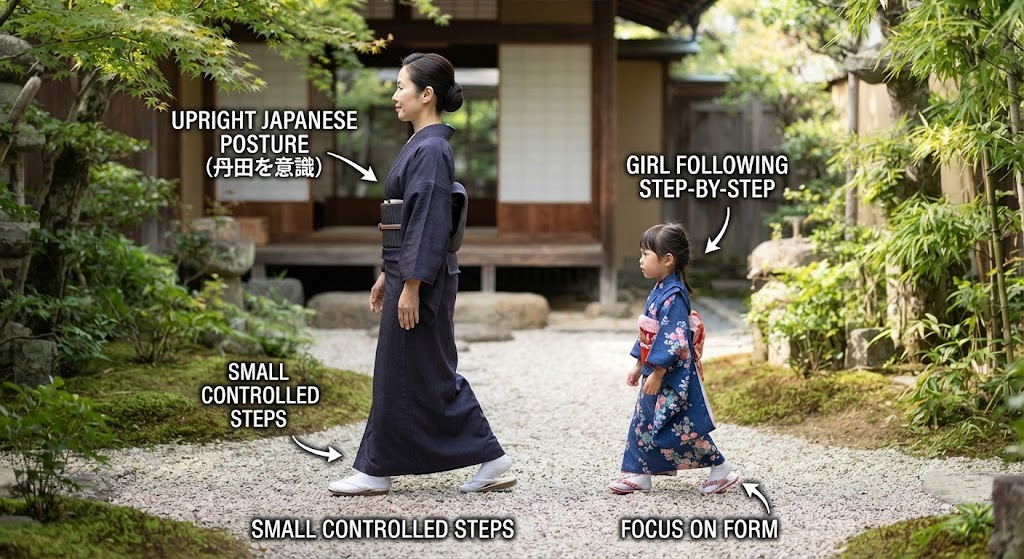
Think about your body position from head to toe. Your head should remain balanced over your torso, your shoulders relaxed, your chest comfortably open, and your eyes directed ahead rather than constantly toward the ground.
Imagine that the crown of your head is gently reaching upward while your shoulders remain loose. This creates a sense of upright alignment without requiring you to stiffen your body.
What Is the Correct Posture for Japanese Walking?
Correct posture for Japanese walking means maintaining an upright but relaxed alignment without forcing your chest forward or exaggerating your spine position.
Keep your shoulders away from your ears and allow your arms to swing naturally from the shoulders. Your elbows can remain slightly bent rather than rigid.
For example, your right arm naturally moves forward as your left leg moves forward, creating coordinated movement.
A common mistake is trying to look excessively straight. Good walking posture should feel stable and comfortable, not stiff.
How Should Your Feet and Stride Move?
Your stride should be comfortable enough that you do not need to reach aggressively with your front leg.
Allow your foot to contact the ground naturally and roll through the step without deliberately forcing a particular foot position.
If lengthening your stride causes your hips to feel strained, reduce the step length and focus on smoother movement.
A comfortable stride is generally more useful than an exaggerated stride. Your walking mechanics should allow you to maintain the technique without creating unnecessary discomfort.
How Should You Control Pace and Breathing?
Walking intensity should match your current fitness and the purpose of the session.
An easy pace allows comfortable conversation, while a moderate or brisk pace makes breathing noticeably faster without requiring an all-out effort.
Brisk walking is recognized as a moderate-intensity physical activity for adults. — Source: CDC, 2023.
At the same time, breathing should remain natural. Avoid deliberately holding your breath or forcing a particular breathing rhythm if it makes walking uncomfortable.
How Do You Do the Japanese Walking Technique Step by Step?
A beginner can start the Japanese walking technique with a short, comfortable walking session and gradually increase duration or intensity as fitness and tolerance improve.
Follow this simple sequence:
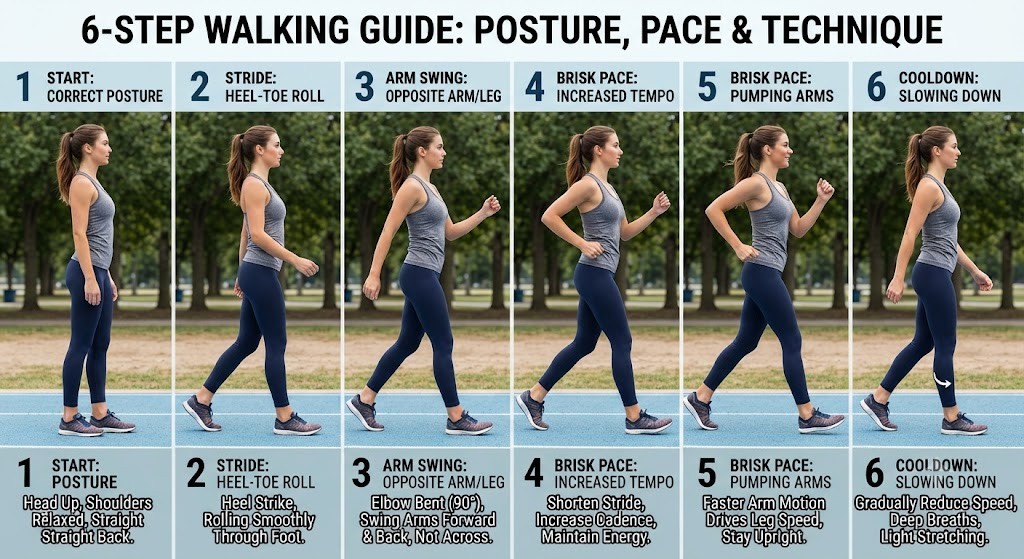
- Stand tall: Keep your head balanced, shoulders relaxed, and eyes forward.
- Warm up: Walk slowly for several minutes before increasing your pace.
- Find your natural stride: Avoid artificially lengthening your steps.
- Coordinate your arms: Allow relaxed arm movement opposite to your legs.
- Increase your pace: Move toward a purposeful pace that remains sustainable.
- Maintain relaxed posture: Avoid shrugging, leaning excessively, or stiffening your body.
- Control your breathing: Breathe naturally and avoid holding your breath.
- Finish gradually: Slow your pace for several minutes before stopping.
How Should Beginners Start Japanese Walking?
Beginners should start with a manageable duration rather than attempting a long workout immediately.
For example, try 15–20 minutes three days per week, using a comfortable pace and focusing on technique rather than speed.
As your tolerance improves, you can gradually extend the session toward 25–30 minutes.
Moreover, gradual progression can make the routine easier to sustain. WHO guidance supports starting moderately and progressing gradually when increasing physical activity. — Source: WHO, 2020.
How Long Should You Do the Japanese Walking Technique?
There is no single medically established duration specifically required for the “Japanese walking technique.”
Instead, your walking duration should reflect your fitness, schedule, intensity, and overall weekly activity.
For example, a beginner could perform 15 minutes per session, while a more active person might comfortably walk for 30–45 minutes.
The broader goal for adults is 150–300 minutes of moderate aerobic activity per week, rather than reaching a special number of minutes for a particular branded or named walking technique. — Source: WHO, 2020.
How Often Should Beginners Practice Japanese Walking?
Beginners can practice structured walking several days per week while allowing enough recovery for their current fitness level.
A simple schedule could be Monday, Wednesday, Friday, and one optional weekend walk.
| Week | Sessions | Approximate Session Length | Focus |
|---|---|---|---|
| 1 | 3 | 15–20 min | Comfortable technique |
| 2 | 3 | 20 min | Posture and rhythm |
| 3 | 3–4 | 20–25 min | Slightly longer walks |
| 4 | 4 | 25–30 min | Consistent moderate pace |
You do not need to make every session brisk. Consistency and gradual progression are more practical than maximum intensity.
What Are the Benefits of the Japanese Walking Technique?
The potential benefits of the Japanese walking technique largely come from regular walking and physical activity rather than from a uniquely proven physiological effect of the Japanese label itself.
Regular walking can contribute to cardiovascular fitness, physical activity levels, mobility, and overall health when practiced consistently.
CDC guidance reports that regular physical activity can lower the risk of heart disease, stroke, type 2 diabetes, and several other health problems. — Source: CDC, 2026.
Can Japanese Walking Support Cardiovascular Fitness?
Japanese walking can support cardiovascular fitness when the session reaches an appropriate aerobic intensity.
For example, walking briskly enough to noticeably increase breathing and heart rate can provide a moderate-intensity aerobic stimulus.
Adults are generally advised to accumulate at least 150 minutes of moderate-intensity aerobic activity each week for substantial health benefits. — Source: CDC, 2023.
Can Japanese Walking Improve Daily Mobility?
Regular walking can support mobility because it repeatedly practices a basic movement pattern used in everyday life.
Walking regularly can help you become more comfortable moving around your neighborhood, workplace, shopping area, or home.
WHO also identifies walking as a form of physical activity that can contribute toward recommended activity levels. — Source: WHO, 2021.
Compression Boots Benefits for Recovery
Can the Japanese Walking Technique Help With Weight Loss?
The Japanese walking technique can contribute to weight management when it increases overall energy expenditure and fits within an appropriate eating and activity pattern.
However, Japanese walking is not a guaranteed weight-loss method. Weight change depends on factors including food intake, activity, body composition, genetics, sleep, and long-term energy balance.
For example, walking for 30 minutes can increase energy expenditure, but its effect on body weight depends on the person’s overall calorie balance.
CDC explains that physical activity increases calories used for energy, while combining physical activity with reduced calorie intake creates the calorie deficit associated with weight loss. — Source: CDC, 2026.
Japanese walking should be presented as a form of structured physical activity rather than a guaranteed shortcut for weight loss or a substitute for a balanced diet and broader exercise routine.
What Are the Common Japanese Walking Technique Variations?
Japanese walking technique variations can include comfortable walking, brisk intervals, posture-focused walking, and other structured approaches, depending on how the term is defined by the source.
These should be treated as walking formats rather than separate scientifically standardized exercises.
Normal-Pace Japanese Walking
Normal-pace walking uses a comfortable speed while emphasizing posture and smooth movement.
For example, you might maintain a pace where you can comfortably talk while focusing on relaxed shoulders and coordinated arm movement.
This format can be useful for beginners who are learning the mechanics before adding intensity.
Brisk Walking Intervals
Brisk walking intervals alternate comfortable walking with faster periods.
For example:
- 3 minutes easy
- 2 minutes brisk
- 3 minutes easy
- 2 minutes brisk
- 5–10 minutes comfortable
This approach can make a walking workout more structured without requiring running.
Posture-Focused Walking
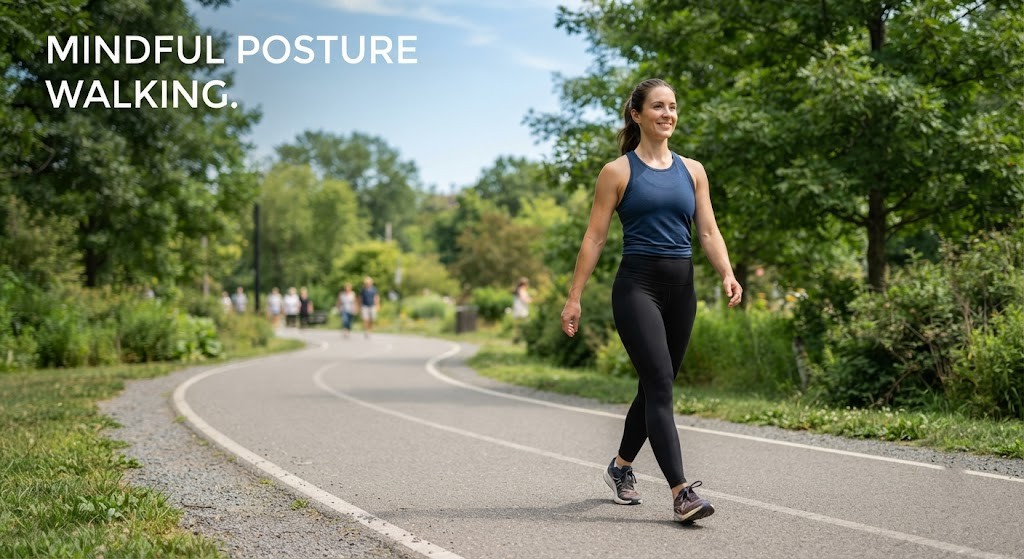
Posture-focused walking emphasizes alignment, relaxed shoulders, natural arm movement, and comfortable steps.
For example, you can spend five minutes concentrating primarily on keeping your head balanced and shoulders relaxed before returning attention to your pace.
Is Japanese Walking Better Than Regular Walking?
Japanese walking is not universally better than regular walking because both can provide useful physical activity when performed consistently and at an appropriate intensity.
The practical difference is usually structure rather than superiority.
| Factor | Structured Japanese Walking | Regular Walking |
|---|---|---|
| Technique focus | Higher | Variable |
| Pace control | Planned | Usually spontaneous |
| Posture awareness | Intentional | May be incidental |
| Beginner accessibility | High | Very high |
| Progress tracking | Easy to structure | Depends on routine |
| Equipment | Usually none | Usually none |
| Main advantage | Adds a repeatable framework | Fits naturally into daily life |
Someone who enjoys casual walks may receive more practical value from simply walking consistently than from worrying about a special technique.
Moreover, the CDC states that any amount of physical activity provides some health benefits, while additional activity can provide additional benefits. — Source: CDC, 2025.
What Are the Most Common Japanese Walking Technique Mistakes?
Common Japanese walking mistakes include exaggerated strides, rigid posture, excessive speed, poor footwear, and increasing walking volume too quickly.
You do not need to make your technique look perfect. Efficient walking should feel natural, controlled, and repeatable.
Mistake 1: Taking Excessively Long Steps
Excessive stride length can make walking feel unnatural and may increase mechanical stress.
If your front foot lands far ahead of your body and your hips feel uncomfortable, shorten your stride.
Mistake 2: Walking With a Rigid Upper Body
A stiff chest, raised shoulders, or locked arms can make walking less comfortable.
Instead, keep your shoulders relaxed and allow your arms to move naturally.
Mistake 3: Increasing Speed Too Quickly
Walking faster is not automatically better.
A beginner who normally walks for 15 minutes should not suddenly attempt a 60-minute brisk session simply because the technique is trending online.
WHO recommends gradual progression when increasing physical activity, particularly for reducing injury risk. — Source: WHO, 2020.
Mistake 4: Focusing Only on Step Count
Step count is useful, but it does not tell the whole story.
Two people can take the same number of steps while walking at very different intensities and for different durations.
Use step count as one measurement rather than the only measure of a successful walking workout.
What Tools Do You Need for Japanese Walking?
Japanese walking generally requires no specialized equipment because the exercise can be performed with comfortable footwear, a safe route, and optional tracking tools.
Choose practical equipment rather than expensive equipment.
Useful options include:
- Comfortable walking shoes for your individual foot needs.
- Smartphone or timer for tracking intervals.
- Step counter or smartwatch for optional activity tracking.
- Water bottle for longer walks or hot conditions.
- Safe walking route with suitable surfaces and visibility.
- Simple fitness calculator for optional activity and calorie estimates.
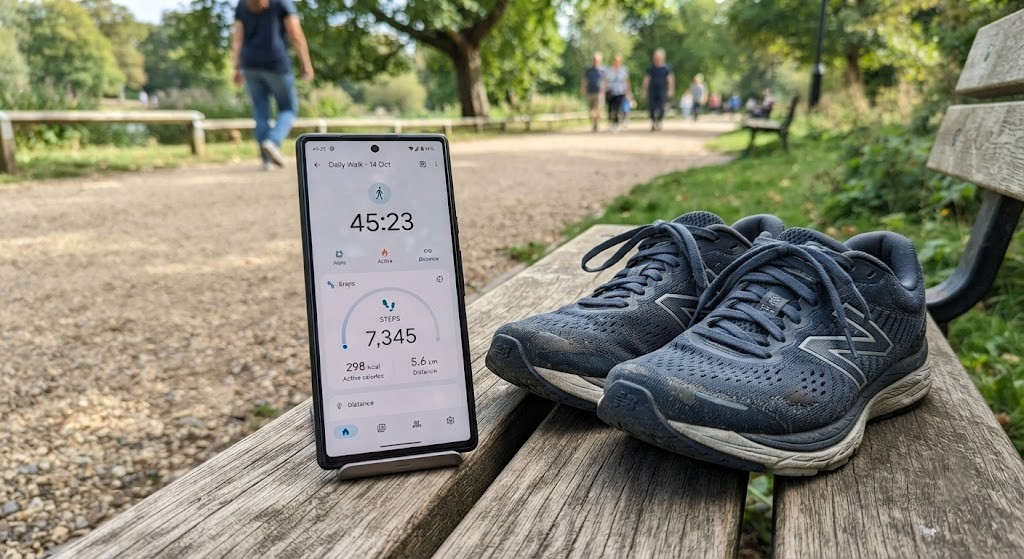
Free tools can work perfectly well. A smartphone stopwatch and basic step counter can provide enough information for a beginner without requiring a specialized fitness device.
How Do You Build a Japanese Walking Routine?
A sustainable Japanese walking routine should begin with manageable sessions and progress gradually according to your fitness, schedule, and recovery.
A simple four-week progression can look like this:
- Week 1: Walk for 15–20 minutes, three times per week.
- Week 2: Maintain three sessions and increase some walks to 20–25 minutes.
- Week 3: Add a fourth session if recovery remains comfortable.
- Week 4: Build selected sessions toward 25–30 minutes and introduce short brisk intervals.
For example, a 30-minute session could include five minutes of easy walking, 20 minutes of purposeful walking, and five minutes of slower walking.
5 Minute Warm Up Before Workout
Keep at least some sessions easy enough to recover comfortably. If pain, dizziness, unusual shortness of breath, or another concerning symptom occurs, stop the activity and seek appropriate medical guidance.
How Can You Make Japanese Walking a Daily Habit?
You can make Japanese walking easier to maintain by attaching it to an existing part of your daily schedule.
For example, walk after breakfast, during a lunch break, after work, or after dinner instead of relying on motivation at an unpredictable time.
A routine that fits your lifestyle is more sustainable than a demanding walking plan that you cannot maintain.
Walking does not need to be your only exercise. Combining aerobic activity with muscle-strengthening work can provide a more complete fitness routine.
Current guidelines recommend adults perform muscle-strengthening activities on at least two days each week in addition to aerobic activity. — Source: CDC, 2023.
Conclusion
The Japanese walking technique is a structured approach to walking that emphasizes deliberate posture, controlled movement, comfortable stride mechanics, and purposeful pacing.
For beginners, the most important place to start is comfortable technique before speed. Begin with short sessions, maintain a relaxed posture, allow your arms and legs to move naturally, and gradually increase duration or intensity as your fitness improves.
Regular walking can contribute to cardiovascular fitness, physical activity, mobility, and overall health, but its benefits depend on consistency, intensity, duration, and individual factors. — Source: WHO, 2020.
Ultimately, the Japanese walking technique does not need to be complicated. A comfortable pair of walking shoes, a safe route, a manageable pace, and a consistent schedule can provide everything you need to turn everyday walking into a more purposeful fitness habit.
FAQs
What is the Japanese walking technique?
It is a structured walking method that emphasizes good posture, natural movement, comfortable strides, and controlled pacing.
What is the Japanese walk method?
It is a mindful walking approach that emphasizes upright posture, comfortable steps, natural arm movement, and controlled pace.
What is the 3-3-3 rule for walking?
It is a structured walking approach that uses three repeated periods or elements to organize a walking session.
Is Japanese walking better than 10k steps?
Not necessarily. Japanese walking focuses on technique and pace, while 10,000 steps focuses on total daily steps.
What is 30 minutes Japanese walking?
It is a 30-minute walking session that can include an easy warm-up, purposeful walking, and a gradual cooldown.
How long should you do the Japanese walking technique?
You can start with 15–20 minutes and gradually increase the duration as your fitness improves.
Is Japanese walking good for beginners?
Yes, it is beginner-friendly when you start at a comfortable pace and gradually increase activity.
Can Japanese walking help with weight loss?
It can support weight management by increasing physical activity and energy expenditure.
Is Japanese walking better than regular walking?
Not necessarily. Japanese walking mainly adds more structure and awareness to your walking routine.
Do you need special equipment for Japanese walking?
No, comfortable walking shoes, a safe route, and an optional timer are usually enough.
How often should you practice Japanese walking?
You can start with three walking sessions per week and gradually increase frequency.
Can you do Japanese walking every day?
Yes, you can walk daily if the duration and intensity suit your fitness and recovery.
What is the best pace for Japanese walking?
A comfortable or brisk pace that increases breathing without causing excessive fatigue is suitable.
Should you take long strides when doing Japanese walking?
No, you should use a natural and comfortable stride rather than deliberately taking long steps.
Should your arms swing during Japanese walking?
Yes, your arms should swing naturally and coordinate with your leg movement.
Can Japanese walking improve cardiovascular fitness?
Yes, moderate or brisk walking can contribute to cardiovascular fitness.
Can Japanese walking improve mobility?
Yes, regular walking can support mobility and everyday movement.
How many days a week should a beginner walk?
Three days per week is a practical starting point for many beginners.
Can Japanese walking replace other exercise?
It can provide aerobic activity, but adding strength training can create a more complete fitness routine.
What are the most common Japanese walking mistakes?
Common mistakes include taking long strides, using rigid posture, walking too fast, and progressing too quickly.
Can you do Japanese walking at home?
Yes, you can practice it indoors if you have enough safe space to walk comfortably.
Is Japanese walking the same as brisk walking?
No, Japanese walking can include brisk walking but also emphasizes posture, movement, and technique.
How can you make Japanese walking a habit?
You can schedule it around an existing routine, such as after breakfast, lunch, work, or dinner.
1 thought on “Japanese Walking Technique: 3-Minute Intervals for Better Fitness”