
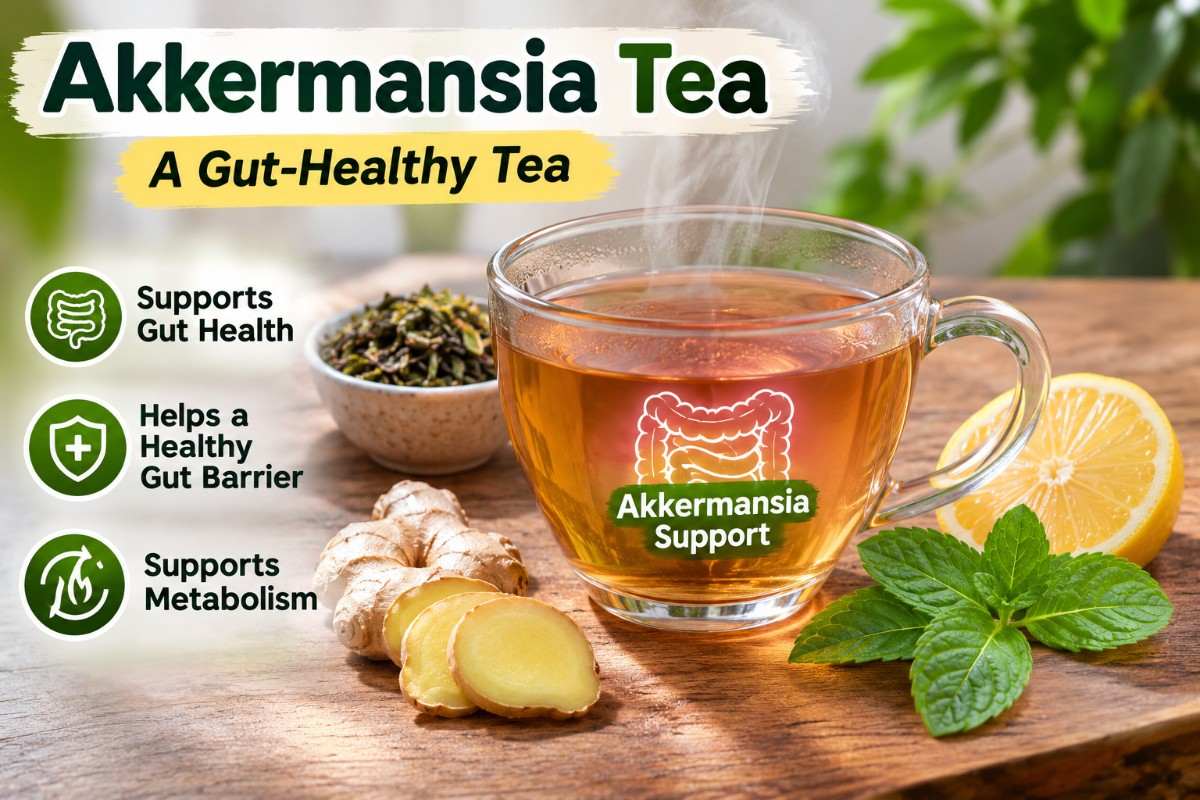
Akkermansia tea is becoming a popular topic among people interested in gut health, digestion, and metabolic wellness. Inspired by research on Akkermansia muciniphila, this herbal tea trend focuses on plant-based ingredients that may influence the gut microbiome. But can drinking a simple cup of tea actually increase Akkermansia levels?
Many people searching for an Akkermansia drink want to understand which ingredients may support beneficial gut bacteria, whether green tea offers specific benefits, and how to prepare a gut-friendly beverage at home.
Understanding the potential benefits, ingredients, and limitations of Akkermansia-inspired tea can help you make informed decisions about supporting your digestive health.
What Is Akkermansia Tea?
Akkermansia tea is a general term for herbal or plant-based tea blends promoted for their potential to support gut health and a healthy gut microbiome.
It is not a standardized tea or an officially established probiotic product. Most recipes discussed online combine ingredients such as green tea, ginger, pomegranate, hibiscus, and other plants containing naturally occurring bioactive compounds.
The trend is connected to Akkermansia muciniphila, a bacterium naturally found in the human digestive tract. This microorganism interacts with the intestinal mucus layer and is being studied for its potential relationship with gut barrier function and metabolic health.
Importantly, ordinary herbal tea does not necessarily contain Akkermansia bacteria. Its ingredients may influence the gut microbiome, but no specific Akkermansia tea recipe has been clinically established to increase this bacterium in humans.
Why Is Akkermansia Tea Becoming Popular?
Akkermansia tea is attracting attention because researchers are investigating the relationship between gut bacteria, dietary polyphenols, and metabolic health.
People interested in gut microbiome tea are increasingly exploring plant-based beverages that contain compounds associated with beneficial changes in gut microbial composition.
Several factors contribute to its growing popularity:
- Gut microbiome research: Studies are exploring how specific bacteria interact with intestinal health.
- Green tea compounds: Green tea contains catechins, including EGCG, which have been investigated for their effects on gut microorganisms.
- Plant-based nutrition: Ingredients such as berries, pomegranate, and ginger provide different bioactive plant compounds.
- Metabolic health interest: Akkermansia is being studied for its possible connection with insulin sensitivity and weight management.
- Simple preparation: Herbal tea is an accessible way to include plant-based beverages in a daily routine.
However, popularity should not be confused with proven effectiveness. Research on individual ingredients and bacterial supplements cannot automatically establish the benefits of a homemade tea blend.
Potential Benefits of Akkermansia Tea
Akkermansia tea may provide nutritional benefits through its plant-based ingredients, but direct clinical evidence for the tea itself is limited.
When evaluating tea for gut health, it is important to distinguish between the nutritional properties of individual ingredients and proven effects on specific gut bacteria.
1. Provides Plant Polyphenols
Polyphenols are naturally occurring plant compounds found in green tea, berries, pomegranate, and several other foods.
Researchers are investigating how these compounds interact with gut microorganisms. Certain experimental studies suggest that polyphenols may influence the abundance of specific bacteria, including Akkermansia.
However, these effects depend on the compound, dosage, individual microbiome, and research conditions.
2. May Support a Gut-Friendly Diet
Unsweetened herbal tea can be part of a balanced dietary pattern.
Combining plant-based beverages with vegetables, fruits, legumes, and whole grains provides a variety of nutrients and fibers that support the overall gut microbial ecosystem.
3. Contains Antioxidant Compounds
Green tea contains catechins, while hibiscus and berries provide other plant antioxidants.
These compounds are being studied for their potential involvement in oxidative stress and metabolic processes.
However, drinking Akkermansia-inspired tea should not be considered a treatment for inflammation or metabolic disease.
4. Can Help Reduce Added Sugar Intake
Unsweetened tea can replace sugar-sweetened beverages in your daily routine.
Reducing added sugar consumption may improve overall dietary quality and make it easier to manage calorie intake.
Choosing unsweetened drinks for gut health can also help reduce unnecessary added sugars without relying on specialized beverages.
5. Encourages Healthy Hydration Habits
Herbal tea contributes to daily fluid intake and can be a pleasant alternative to plain water.
It can complement a balanced diet, although it does not provide the same nutritional benefits as eating whole fruits, vegetables, and fiber-rich foods.
Best Ingredients for Akkermansia Tea
Several plant-based ingredients contain compounds that researchers have investigated for their potential effects on gut microorganisms.
These ingredients are commonly used in homemade Akkermansia tea recipes because they provide different flavors and naturally occurring plant compounds.
1. Green Tea
Green tea contains catechins, particularly epigallocatechin gallate (EGCG).
Researchers are particularly interested in green tea and Akkermansia because experimental research has suggested that green tea compounds may influence the growth of this bacterium.
A 2020 study published in the Journal of Medicinal Food found that green tea extract encouraged Akkermansia growth in mice. However, this does not establish the same effect from drinking green tea in humans.
(Source: Jeong et al., 2020, Journal of Medicinal Food)
2. Pomegranate
Pomegranate contains polyphenols, including ellagitannins, which can be transformed by gut microorganisms into other bioactive compounds.
Human dietary intervention research has investigated pomegranate extract in relation to Akkermansia abundance.
Pomegranate can add a naturally fruity flavor to an Akkermansia drink, making it a useful optional ingredient in homemade herbal blends.
3. Ginger
Ginger contains natural compounds called gingerols and shogaols. It is commonly used in herbal beverages and adds a warm, spicy flavor.
Although ginger has been studied for digestive and metabolic effects, direct evidence that ginger tea increases Akkermansia remains limited.
4. Hibiscus
Hibiscus flowers contain anthocyanins and other polyphenols. They provide a naturally tart flavor and a vibrant red color.
Their potential influence on the gut microbiome is an emerging research area rather than an established Akkermansia treatment.
5. Mint
Mint leaves contain aromatic plant compounds and can make herbal tea more refreshing.
Mint is primarily included for flavor in homemade Akkermansia-inspired tea recipes, not because it has been proven to increase Akkermansia.

How to Make Akkermansia Tea at Home
You can prepare a simple Akkermansia-inspired tea using green tea, ginger, and a few optional plant ingredients.
This homemade Akkermansia tea recipe is a general wellness beverage, not a clinically tested formula for increasing Akkermansia.
Ingredients
- 1 green tea bag or 1 teaspoon loose green tea
- 1 cup water (approximately 240 ml)
- 2–3 thin slices of fresh ginger
- 2–3 fresh mint leaves
- 1 teaspoon pomegranate seeds (optional)
- A small squeeze of fresh lemon (optional)
Preparation Instructions
- Heat approximately 240 ml of water until hot.
- Add the green tea bag or loose tea leaves.
- Allow the tea to steep for 2–3 minutes or follow the package instructions.
- Add fresh ginger and mint leaves.
- Allow the ingredients to infuse for another 2 minutes.
- Strain the tea into a cup.
- Add pomegranate seeds and lemon juice if desired.
- Enjoy warm or allow it to cool before drinking.
Tip: Avoid adding excessive sugar or honey if you want to keep the beverage low in added sugar.
This simple recipe combines green tea with plant-based ingredients to create a refreshing beverage. However, its nutritional properties should not be confused with the effects of a clinically studied Akkermansia supplement.
When Is the Best Time to Drink Akkermansia Tea?
There is no scientifically established best time to drink Akkermansia tea because its effects on Akkermansia levels have not been clinically established.
You can choose a convenient time based on your preferences.
| Time | Practical consideration |
|---|---|
| Morning | A refreshing alternative to sugary beverages |
| Mid-morning | Can be enjoyed between meals |
| Afternoon | May replace sweetened drinks |
| After lunch | Suitable if it does not cause digestive discomfort |
| Evening | Choose caffeine-free herbal tea if caffeine affects sleep |
One important consideration is that green tea contains caffeine. People who are sensitive to caffeine may prefer decaffeinated green tea or caffeine-free herbal alternatives.
How Often Should You Drink Akkermansia Tea?
There is no established daily dosage for Akkermansia tea because it is not a standardized probiotic or medical treatment.
For ordinary brewed green tea, moderate consumption can fit into a balanced diet for most healthy adults.
Consider these practical guidelines:
- Choose unsweetened tea whenever possible.
- Avoid excessive caffeine consumption.
- Do not use tea as a meal replacement.
- Drink enough water throughout the day.
- Follow individual medical advice if you have an existing health condition.
Concentrated green tea extracts are not equivalent to brewed tea and may carry additional risks, including rare cases of liver injury.
Akkermansia Tea vs. Akkermansia Supplements
Akkermansia tea and Akkermansia supplements are different products with different purposes.
Tea provides plant-derived compounds, whereas supplements may contain live or pasteurized Akkermansia bacteria.
| Feature | Akkermansia Tea | Akkermansia Supplements |
|---|---|---|
| Main ingredients | Green tea and herbal ingredients | Akkermansia preparations |
| Contains live bacteria | Not necessarily | Depends on formulation |
| Contains pasteurized bacteria | No, unless specifically formulated | Some products |
| Main purpose | Herbal beverage | Targeted microbiome supplementation |
| Clinical evidence | No established tea-specific benefits | Emerging human research |
| Standardized dosage | No | Depends on product |
A 2019 pilot clinical study investigated live and pasteurized Akkermansia supplementation in overweight and obese adults. It reported promising changes in certain metabolic markers, but these findings cannot be applied directly to herbal tea.
For additional information, see Akkermansia Benefits for Gut Health.
Can Akkermansia Tea Help With Weight Loss?
Akkermansia tea has not been proven to cause weight loss or specifically reduce belly fat.
Green tea contains catechins and caffeine, which have been investigated for their possible effects on energy metabolism. However, drinking green tea should not be considered a replacement for a balanced weight-management plan.
People searching for Akkermansia and weight loss should understand that research involving Akkermansia supplements cannot automatically be applied to homemade tea or ordinary green tea.
If your goal is healthy weight management, focus on:
- Maintaining an appropriate calorie intake.
- Eating adequate protein.
- Including vegetables and fiber-rich foods.
- Performing regular resistance training.
- Getting sufficient sleep.
- Maintaining consistent physical activity.
You can estimate your daily calorie requirements using the calorie deficit calculator.
You may also find high-protein foods for weight management useful.
Who Should Be Careful With Akkermansia Tea?
Although ordinary brewed green tea is generally well tolerated, some people should take additional precautions.
People sensitive to caffeine: Green tea may cause nervousness, increased heart rate, or sleep disturbances.
People with acid reflux: Tea may aggravate symptoms in some individuals.
People taking medication: Green tea and certain herbal ingredients may interact with medications. Consult a healthcare professional if you take regular medication.
Pregnant or breastfeeding women: Consider total caffeine intake and discuss herbal ingredients with a healthcare professional.
People with iron deficiency: Tea contains compounds that can reduce the absorption of non-heme iron when consumed with meals. Drinking tea between meals may be preferable.
People with liver conditions: Avoid concentrated green tea extracts unless advised by a healthcare professional.
What Does Research Say About Foods That Support Akkermansia?
Research suggests that certain dietary interventions may influence the abundance of Akkermansia in the gut.
A 2019 systematic review examined 29 dietary intervention trials involving 1,444 participants. Some interventions, including pomegranate extract, inulin, resveratrol, and caloric restriction, were associated with increased Akkermansia abundance in certain studies.
However, the evidence was limited and inconsistent, and the review did not establish a specific tea recipe as effective.
(Source: So et al., 2019, Nutrients)
Other dietary approaches worth exploring include:
A diverse, plant-rich diet is a more evidence-informed starting point than relying on one special beverage.

Conclusion
Akkermansia tea is an interesting wellness trend inspired by research on Akkermansia muciniphila and the gut microbiome. Green tea is particularly interesting because its EGCG content has shown potential effects on Akkermansia in experimental research.
However, there is currently insufficient evidence that drinking a specific herbal tea increases Akkermansia levels or produces significant weight-loss benefits in humans.
Enjoy unsweetened green tea as part of a balanced diet, include a variety of fiber-rich foods, and prioritize long-term healthy eating habits rather than relying on a single tea recipe.
FAQs
What is Akkermansia tea made of?
Akkermansia-inspired tea is commonly made with green tea, ginger, mint, pomegranate, hibiscus, and other plant-based ingredients.
Does Akkermansia tea increase Akkermansia levels?
There is no conclusive human clinical evidence that a specific Akkermansia tea recipe increases Akkermansia levels. Green tea extract has shown promising results in animal research.
Can I drink Akkermansia tea every day?
Moderate consumption of ordinary brewed green tea can fit into a healthy diet for most adults, provided caffeine intake and individual health conditions are considered.
Does Akkermansia tea help with belly fat?
No reliable clinical evidence shows that Akkermansia tea specifically reduces belly fat. Weight management requires an overall approach involving nutrition and physical activity.
Is green tea good for Akkermansia?
Green tea contains EGCG, which stimulated Akkermansia growth in a 2020 animal study. More human research is needed to establish whether drinking green tea has the same effect.
Can I drink Akkermansia tea on an empty stomach?
Some people tolerate green tea on an empty stomach, while others experience nausea or stomach discomfort. You can drink it after eating if you experience discomfort.
Is Akkermansia tea the same as probiotic tea?
No. Akkermansia-inspired tea generally contains plant ingredients and does not necessarily contain live probiotic bacteria.
What is the best time to drink Akkermansia tea?
There is no scientifically established best time. Morning or afternoon may be convenient, while caffeine-free herbal tea may be preferable before bedtime.
Sources
- Jeong et al. (2020). Green Tea Encourages Growth of Akkermansia muciniphila. Journal of Medicinal Food.
- So et al. (2019). Dietary Factors and Modulation of Bacteria Strains of Akkermansia muciniphila and Faecalibacterium prausnitzii: A Systematic Review. Nutrients.
- Depommier et al. (2019). Supplementation with Akkermansia muciniphila in Overweight and Obese Human Volunteers: A Proof-of-Concept Exploratory Study. Nature Medicine.
- Polyphenols as Drivers of a Homeostatic Gut Microecology and Immuno-Metabolic Traits of Akkermansia muciniphila: From Mouse to Man. (2023). International Journal of Molecular Sciences.
Disclaimer: This article is for informational and educational purposes only and is not a substitute for personalized medical advice. Consult a qualified healthcare professional before making significant changes to your diet, exercise routine, or supplement use.
1 thought on “Akkermansia Tea: Benefits, Ingredients, and How to Make It”