
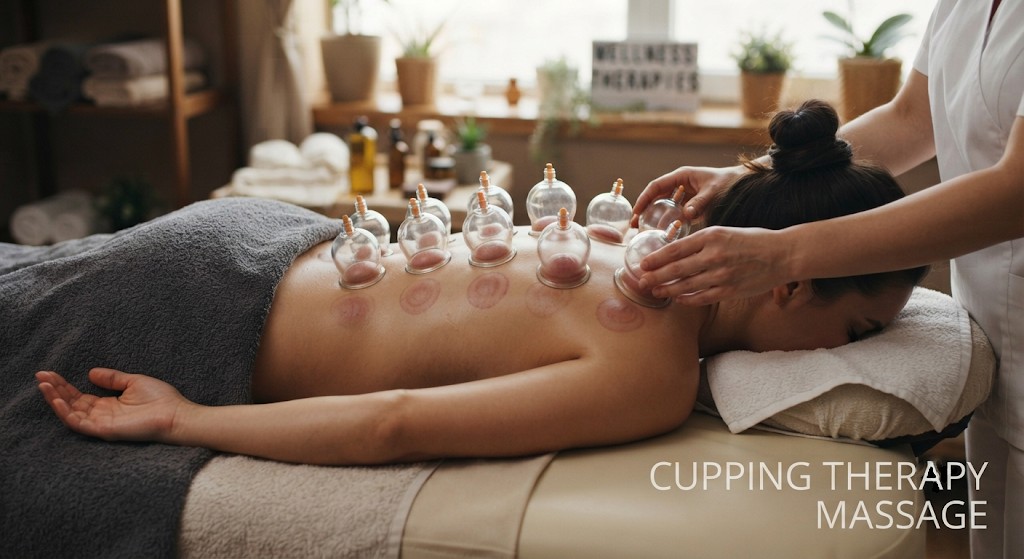
Cup therapy massage pairs suction cups with a gliding, massage-style motion, and many people try it for a tight upper back, stiff shoulders, or sore legs after training. The research is more modest than the marketing, so it helps to know what the technique does and where the evidence runs thin. This guide covers how a session works, what studies report, the side effects, and who should skip it.
What Is Cup Therapy Massage?
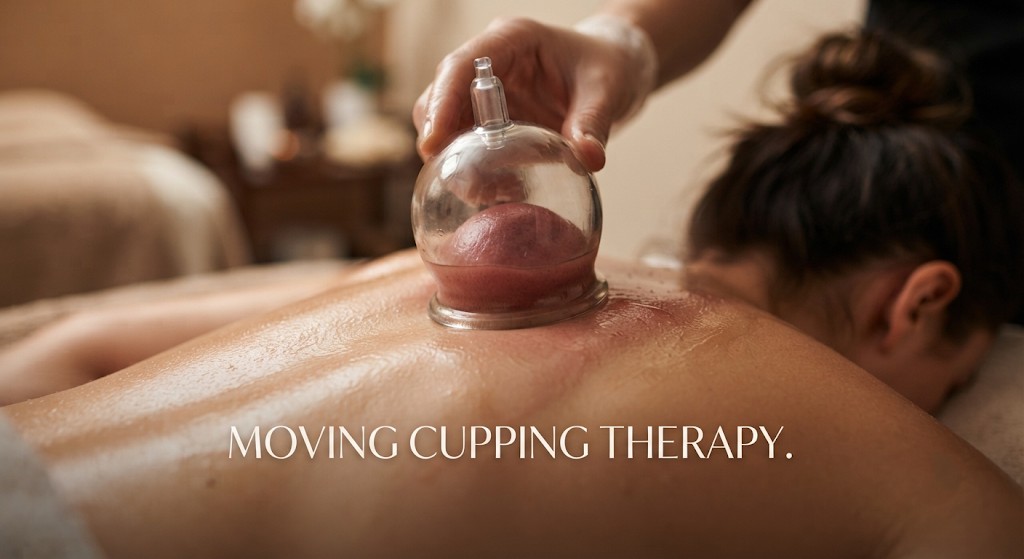
Cup therapy massage is a style of cupping in which a practitioner glides a suction cup across oiled skin instead of leaving it fixed in one spot. It is also called moving cupping or cupping massage, and it sits alongside dry cupping and wet cupping as one of the main ways cups are used (Source: Frontiers in Neurology, 2023).
The cups pull skin and the tissue just beneath it upward, which is the opposite of the downward pressure you get from a standard massage. Most providers use glass or plastic cups, though bamboo, ceramic, metal, and silicone versions exist too (Source: Cleveland Clinic).
If you already use self-massage tools between sessions, the idea will feel familiar. Some people pair cupping with Best Foam Roller Exercises as part of a wider recovery routine.
Why Does Cup Therapy Massage Matter?
Cup therapy massage matters because it is a popular, generally low-risk option that people use alongside conventional care for muscle and joint complaints, even though the evidence behind it is still limited. Cleveland Clinic describes the evidence as mixed and the treatment risks as generally low, and says providers usually recommend it as a complement to standard medical care (Source: Cleveland Clinic).
People turn to it for a few reasons:
- Researchers have studied cupping for neck pain, low back pain, and knee osteoarthritis (Source: Frontiers in Neurology, 2023).
- Some athletes use it hoping to shorten muscle recovery time.
- It offers a hands-on option for people who find regular massage too firm.
Used this way, it fits best as one small piece of a plan that also includes sleep, movement, and rest. Our guide to active recovery covers the basics.
How Does Cup Therapy Massage Work?
Cup therapy massage works by using suction to lift skin and soft tissue into the cup, which draws blood toward the surface of the skin (Source: Cleveland Clinic). That suction breaks tiny blood vessels called capillaries, which is why red or purple round marks often appear and take about a week or two to fade (Source: Cleveland Clinic).
How much of the benefit comes from the suction itself is still debated. One trial found cupping was no better than sham cupping for non-specific chronic low back pain, which is a good reminder that relaxation and expectation may play a part (Source: Frontiers in Neurology, 2023).
Types of cupping compared
| Type | What happens | Main consideration |
|---|---|---|
| Dry cupping | Cups sit in one place with suction and no skin break | Leaves round marks at each cup site |
| Massage (moving) cupping | Cups glide over oiled skin | Covers larger areas such as the back |
| Wet cupping | The skin is broken before suction draws out a small amount of blood | Higher infection risk, so it needs a trained professional |
The infection point comes from the fact that wet cupping breaks the skin (Source: Medical News Today).
What Happens During a Session?
A typical cup therapy massage session starts with a short health conversation and moves to gentle gliding on one or two muscle groups. Cups usually stay on a given area for a few minutes, and total session time varies by practitioner.
- Health check. Tell the practitioner about your medications, medical conditions, and any skin problems.
- Oil application. The practitioner spreads oil on the area so the cup can slide.
- Suction. A cup is placed on the skin and suction is created.
- Gliding. The cup moves slowly along the muscle, such as the upper back or the outer thigh.
- Removal and skin check. The practitioner removes the cups and looks at your skin for any problems.
If your goal is general flexibility rather than pain relief, a regular Post Workout Stretching Routine may give you more for the time spent.
What Does the Evidence Say About Cup Therapy Massage?
The evidence suggests cupping may reduce pain in some conditions, but most of it is low to moderate quality. A 2023 evidence map found very low to moderate quality support for chronic pain, knee osteoarthritis, low back pain, and neck pain, and the authors noted that no high-quality evidence showed efficacy (Source: Frontiers in Neurology, 2023).
Newer reviews point the same way:
- A 2025 BMJ Open meta-analysis found cupping may reduce pain intensity in chronic musculoskeletal pain with immediate effects, but it did not significantly improve functional disability or mental health (Source: BMJ Open, 2025).
- A 2025 review in the Journal of Traditional Chinese Medicine reported benefits for pain and quality of life, with the authors rating the supporting evidence as low quality (Source: Journal of Traditional Chinese Medicine, 2025).
- A 2024 low back pain meta-analysis found improved pain at 2 to 8 weeks, but cupping did not reduce chronic low back pain in the subgroup analysis, and results varied widely between studies (Source: Complementary Therapies in Medicine, 2024).
The U.S. National Center for Complementary and Integrative Health notes that cupping may have some effect on pain, but the available evidence is insufficient (Source: Frontiers in Neurology, 2023). In short, it is reasonable to try if your clinician agrees, and it is not a replacement for treating the cause of persistent pain.
If your pain sits in the lower back, a program of lower back strengthening exercises has stronger backing as a long-term fix. The same goes for tight shoulders.
What Are the Side Effects of Cup Therapy Massage?
The most common side effect is skin marking, which looks like bruising and typically fades in one to two weeks (Source: Cleveland Clinic). Other effects depend on the technique and the person.
- Redness, soreness, and tenderness at the treated site.
- Burns, which are more likely with fire cupping and incorrect technique.
- Headache, dizziness, nausea, fatigue, or fainting in some people (Source: Medical News Today).
- Persistent skin discoloration, scarring, or infection, and possible worsening of eczema or psoriasis (Source: NCCIH, 2018).
- Rare severe events, including bleeding inside the skull after cupping on the scalp and anemia after repeated wet cupping (Source: NCCIH, 2018).
The marks can also be mistaken for signs of physical abuse, so explain where they came from if a doctor or other provider sees them (Source: NCCIH, 2018). Call your healthcare provider if you have burns, extreme pain or soreness, a fever, or signs of skin infection such as redness, tenderness, or yellow discharge (Source: Cleveland Clinic).
Who Should Avoid Cup Therapy Massage?
You should avoid cupping if you are pregnant, because researchers know little about its effects in pregnancy (Source: Cleveland Clinic). Talk to a doctor first if any of the following apply:
- You have a bleeding disorder or take blood thinners, since both raise the chance of heavy bruising or bleeding.
- You have an active skin infection, a burn, or an open wound.
- You have eczema or psoriasis (Source: NCCIH, 2018).
- You have heart, kidney, or liver failure, or a pacemaker, which some clinical guides list as reasons to avoid cupping.
How Should You Care for Your Skin After a Session?
After a session, keep the treated area clean, covered, and warm, and let the marks fade without picking at them. Drinking water is a sensible habit after any bodywork, and daily water intake can help you set a target.
Watch the area for blistering, spreading redness, or discharge over the next few days. Those signs point to infection or a burn and need medical attention.
Gentle movement can support recovery too, and a slow session of Yoga for Lower Back Pain suits many people the day after.
Can You Do Cup Therapy Massage at Home?
You can buy cups for home use, but a trained professional is the safer choice. Incorrect application can cause preventable problems such as burns and blisters, and wet cupping should never be attempted on yourself because of the infection risk (Source: Medical News Today).
If you want a self-care tool for between appointments, a massage gun for muscle recovery is a simpler option with no suction involved.
Conclusion
Cup therapy massage is a gliding form of cupping that may ease pain for some people, though the research is mostly low to moderate quality and results vary between studies. It carries low risk for most healthy adults, but the marks, burns, infections, and rarer complications are worth taking seriously.
If you decide to try it, book a trained practitioner, share your full medical history, and treat it as an add-on to strength work, stretching, rest, and good nutrition. Pairing it with high-protein foods for muscle recovery keeps the basics of recovery covered.
FAQs
What is cup therapy massage?
Cup therapy massage is a form of cupping where a practitioner slides a suction cup over oiled skin. It is also called moving cupping or cupping massage.
Does cup therapy massage hurt?
It usually feels like a pulling or tight sensation, and the marked areas can be sore afterward. Extreme pain is not normal, and you should contact a healthcare provider if you have it.
How long do cupping marks last?
Cupping marks usually fade within a week or two.
Does cup therapy massage detox the body?
The studies cited here focus on pain outcomes, and none of the sources in this article show that cupping removes toxins.
Is cup therapy massage safe?
It is generally low risk when done by a trained professional, but side effects such as bruising, burns, and infection can happen. People who are pregnant, take blood thinners, or have a bleeding disorder or skin condition should check with a doctor first.
What are the benefits of cupping therapy?
Cupping may reduce pain in some conditions, such as neck pain, low back pain, and knee osteoarthritis, but most of the supporting evidence is low to moderate quality. A 2025 meta-analysis found it may lower pain intensity in chronic musculoskeletal pain with immediate effects, without significantly improving function or mental health.
What are the dangers of cupping?
Cupping is generally low risk with a trained practitioner, but burns, scarring, skin infections, and worsening of eczema or psoriasis can occur. Rare severe cases include bleeding inside the skull after scalp cupping and anemia after repeated wet cupping. People who are pregnant, take blood thinners, or have a bleeding disorder should check with a doctor first.
What are the side effects of cupping therapy?
The most common side effect is round bruise-like marks that usually fade in one to two weeks. Some people also get soreness, headache, dizziness, nausea, fatigue, or fainting. Call a healthcare provider if you have burns, extreme pain, fever, or signs of infection.
How much does cupping therapy cost?
Prices vary by country, city, practitioner, and session length, and the sources used here do not give a reliable figure. The best approach is to ask the clinic or therapist for their rate, and whether it covers one area or a full session, before you book.
What is massage cupping?
Massage cupping is a form of cupping where the practitioner applies oil and glides the suction cup across the skin instead of leaving it in one place. It is also called moving cupping, and it is often used on larger muscle areas like the back.
What is fire cupping therapy?
Fire cupping uses a brief flame inside the cup to remove air, and the cup is then placed on the skin so the cooling air creates suction. It carries a higher risk of burns than other methods, so it should only be done by a trained professional.
What is ventosa massage?
Ventosa massage is the name used in Spanish, Portuguese, and Italian for cup therapy massage, since “ventosa” means suction cup. It follows the same approach as massage cupping, with cups gliding over oiled skin.
Sources
- National Center for Complementary and Integrative Health. (2018). Cupping.
- Cleveland Clinic. (n.d.). Cupping.
- Wang, L., Cai, Z., Li, X., & Zhu, A. (2023). Efficacy of cupping therapy on pain outcomes: an evidence-mapping study. Frontiers in Neurology.
- BMJ Open. (2025). Effects of cupping therapy on chronic musculoskeletal pain and collateral problems: a systematic review and meta-analysis. BMJ Open, 15(5), e087340.
- Journal of Traditional Chinese Medicine. (2025). Update evidence of effectiveness on pain relieving of cupping therapy: a systematic review and meta-analysis of randomized controlled trials. J Tradit Chin Med, 45(2), 234-253.
- Complementary Therapies in Medicine. (2024). The effectiveness of cupping therapy on low back pain: a systematic review and meta-analysis of randomized control trials. Complement Ther Med, 80, 103013.
Disclaimer: This article is for informational and educational purposes only and is not a substitute for personalized medical advice. Consult a qualified healthcare professional before making significant changes to your diet, exercise routine, or supplement use.