
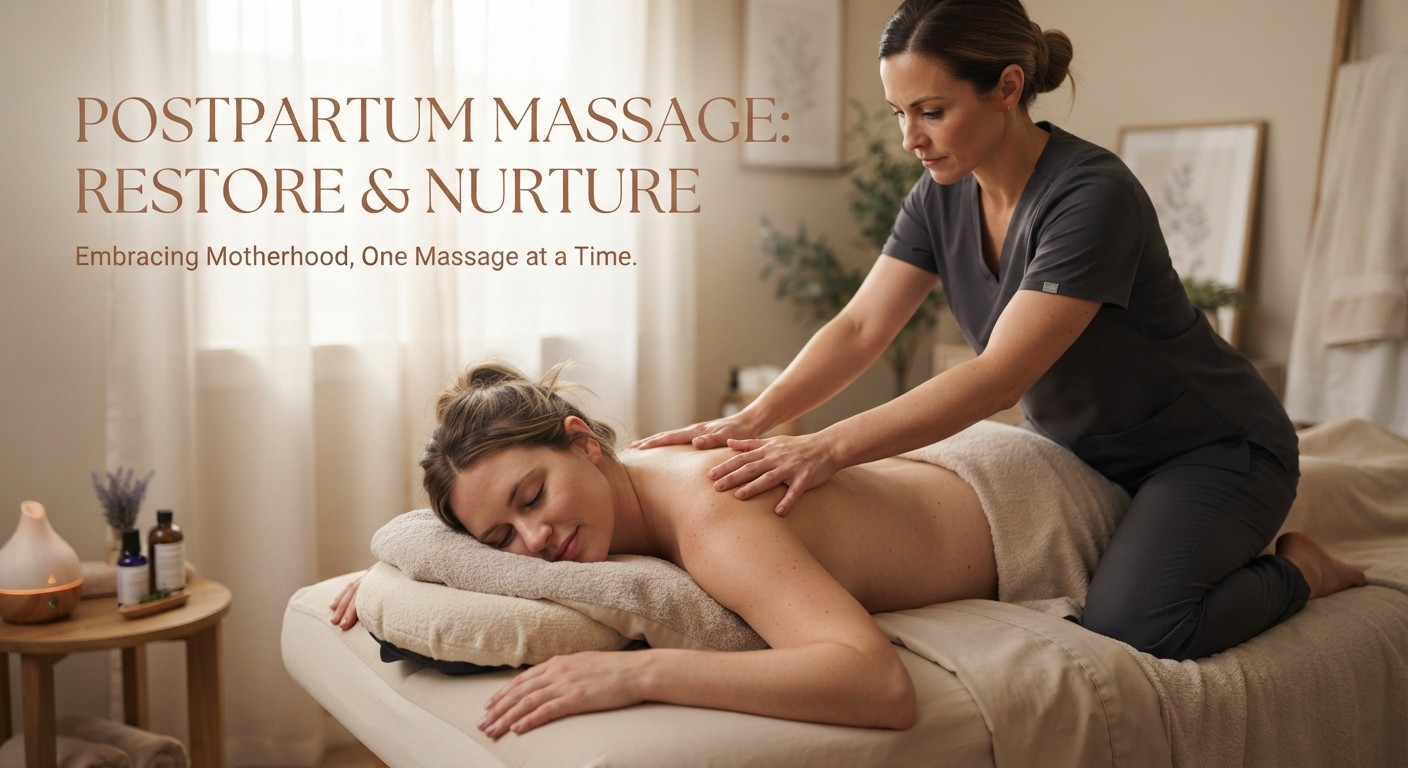
Postpartum massage is a full-body massage designed for people who have recently given birth, and it focuses on the aches that come with labor, recovery, and carrying a newborn all day. Many new parents want to know when it is safe to book one and whether it does anything beyond feeling nice. This guide covers the benefits, the timing question, what a session looks like, and who should talk to a doctor first.
What Is Postpartum Massage?
Postpartum massage is a full-body massage that supports physical and emotional recovery after childbirth. (Source: WebMD, 2025) It uses the same relaxation and pain-relief goals as other massage, adapted for a body that has just given birth. WebMD also notes that people who have had a miscarriage or stillbirth may consider it as part of recovery.
In practice, a session usually includes:
- A therapist who asks about your delivery, healing, and any sore areas
- Light-touch or deeper pressure, depending on what feels right to you
- Positioning adjusted for comfort, especially if your abdomen or breasts are sore (Source: American Pregnancy Association)
- A focus on the arms, shoulders, and back, which tend to ache after birth
Why Does Postpartum Massage Matter?
Postpartum massage matters because recovery after birth is physically demanding, and most new parents have little time or energy to look after their own bodies. Aching muscles are common after childbirth, and feeding, lifting, and carrying a baby keep the arms, shoulders, and back working. (Source: WebMD, 2025)
It also gives you something that is hard to find in the first months: an hour where someone else is taking care of you. That alone can lower stress, even before any muscle-level effects.
Massage is not a replacement for medical care. If you feel persistently low, anxious, or unable to cope, talk to your healthcare provider. Massage can support your wellbeing, but it does not treat postpartum depression.
What Are the Benefits of Postpartum Massage?
The main benefits of postpartum massage are muscle relaxation, pain relief, less swelling, better sleep, and possible support for breastfeeding. WebMD describes each of these: (Source: WebMD, 2025)
- Muscle relaxation: relaxes muscles, increases circulation, and lowers stress hormones
- Pain relief: eases soreness in the arms, shoulders, and back
- Decreased swelling: fluid volume rises during pregnancy, and massage can support circulation and lymphatic drainage as the body clears the excess
- Better sleep: helps ease fatigue and supports relaxation
- Breastfeeding support: WebMD says postpartum massage has been shown to raise prolactin, a hormone linked to milk production
These benefits come from consumer health guidance, and results differ from person to person. A good session is relaxing for most people, but it will not fix exhaustion caused by broken sleep.
When Can You Start Postpartum Massage?
You can start postpartum massage once your healthcare provider says your body is ready, and the exact timing depends on how you delivered and how you are healing. Published guidance varies, which is why a quick check with your provider matters.
| Source | General timing guidance |
|---|---|
| American Pregnancy Association | As soon as you feel comfortable; consult your medical provider first if you had complications |
| The Bump (quoting an obstetrician) | Generally between four and six weeks after birth, after checking with your provider |
If you had a cesarean birth, ask your doctor and the therapist about precautions before booking. A cesarean is major surgery, and WebMD lists recent surgery among the reasons to check with your doctor first. (Source: WebMD, 2025)
What Happens During a Postpartum Massage?
A postpartum massage starts with a conversation, then moves into gentle, supported bodywork that you can adjust at any time. Here is a typical flow:
- The therapist asks about your delivery, recovery, and any pain or tender spots.
- You get into a position that feels good, often on your side with pillows, since the belly and breasts may be sore.
- The therapist works on areas like the shoulders, upper back, neck, and arms.
- Pressure changes as you give feedback, from light touch to deeper work.
- You rest for a moment afterward and get up slowly.
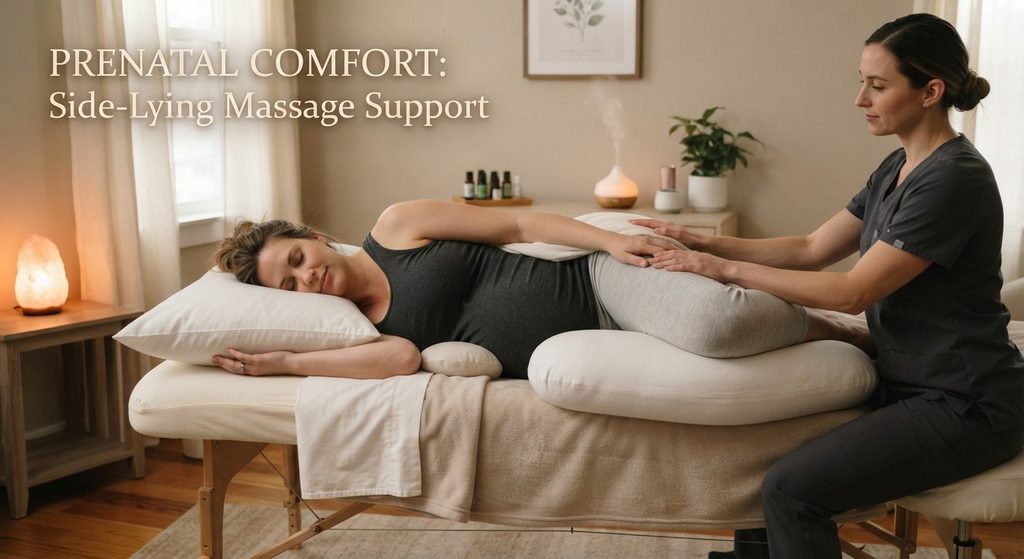
Speak up if anything hurts. You can ask the therapist to skip any area, including the abdomen or chest.
pelvic floor exercises after birth
Who Should Check With a Doctor Before a Postpartum Massage?
Anyone with a medical concern after birth should check with a doctor before booking, and WebMD names specific conditions where massage needs a conversation first. Because massage increases blood flow, talk to your doctor if you have: (Source: WebMD, 2025)
- High blood pressure
- Congenital heart disease or preeclampsia
- A recent surgery or injury
- A recent organ transplant
Some symptoms should never wait for a massage appointment. The CDC says to get medical care immediately if you notice urgent maternal warning signs, such as a severe headache that does not go away, heavy vaginal bleeding, or overwhelming tiredness. Complications can appear up to a year after delivery.
high-protein foods for recovery
Postpartum Lymphatic Drainage Massage
How Do You Choose a Postpartum Massage Therapist?
Choose a therapist who is certified in postpartum massage, works in a clean space, and has the right equipment. WebMD lists three things to look for: (Source: WebMD, 2025)
- A clean, hygienic office
- A certified postpartum massage therapist, with certification shown in the office or online
- A good massage table with pillows and cutouts for the belly
Before booking, ask:
- Do you have training in postpartum massage specifically?
- How do you adjust for a cesarean birth or for breast soreness?
- Can I change position or stop at any point?
- Can you work around my baby’s feeding schedule, or can I bring the baby?
Can You Do Postpartum Massage at Home?
You can do gentle massage at home, and many people ask a partner to rub their neck, shoulders, and upper back. Keep it simple and stay in the areas that feel safe.
- Use light to medium pressure and stop if anything hurts.
- Avoid the abdomen and any sore or healing areas.
- Sit upright or lie on your side with pillows for support.
- Check with your provider before using essential oils.
Home massage is not a substitute for professional care if you have pain that is getting worse. Talk to your healthcare provider if soreness does not ease.
How Does Massage Fit Into Postpartum Recovery?
Massage fits into postpartum recovery as one support among several, alongside rest, food, water, and gentle movement as your provider allows. It can ease muscle tension, but it does not rebuild core or pelvic floor strength, which takes its own gradual work.
If you want to add movement when you are cleared for it, start slowly and keep sessions short. Prenatal Yoga is one gentle option that many new parents explore once their provider agrees.
Conclusion
Postpartum massage is a full-body treatment that can ease muscle tension, support sleep, and give a new parent a much-needed hour of care. Timing varies, so check with your healthcare provider before booking, especially after a cesarean or any complication. Pick a certified therapist, speak up about comfort, and treat massage as one part of recovery rather than a cure for exhaustion.
FAQs
What is postpartum massage?
Postpartum massage is a full-body massage for people who have recently given birth. It aims to ease muscle soreness and stress as the body recovers.
How soon after birth can you get a postpartum massage?
It depends on your delivery and healing, so ask your provider. Some guidance says you can start once you feel comfortable, while other guidance says four to six weeks.
Is postpartum massage safe after a C-section?
It can be, but check with your doctor and the therapist first. A cesarean is surgery, and WebMD lists recent surgery among the reasons to talk to your doctor before massage.
Can postpartum massage help with breastfeeding?
It may support it. WebMD says postpartum massage has been shown to increase prolactin, a hormone that supports milk production.
Who should avoid postpartum massage?
Anyone with high blood pressure, congenital heart disease, preeclampsia, a recent surgery or injury, or a recent organ transplant should talk to a doctor first.
Does postpartum massage treat postpartum depression?
No. Massage can support relaxation and sleep, but it is not a treatment for postpartum depression. Talk to your healthcare provider if low mood or anxiety lingers.
Sources
- WebMD. (2025). Benefits of Postpartum Massage.
- American Pregnancy Association. Postpartum Massage.
- The Bump. Postpartum Massage.
- Centers for Disease Control and Prevention. Urgent Maternal Warning Signs and Symptoms.
Disclaimer: This article is for informational and educational purposes only and is not a substitute for personalized medical advice. Consult a qualified healthcare professional before making significant changes to your diet, exercise routine, or supplement use.
2 thoughts on “Postpartum Massage: Benefits, Timing, Safety, and What to Expect”