
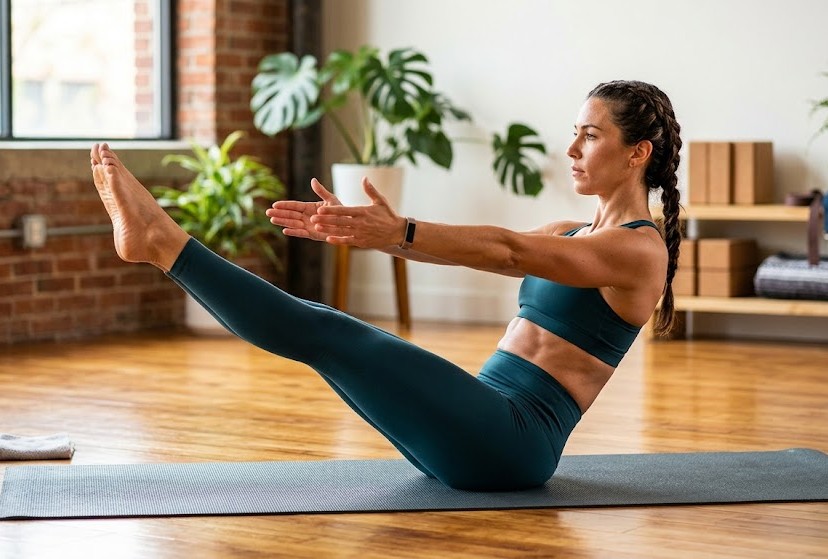
You probably know that a strong core is important for better posture, balance, and overall fitness. However, many people spend countless hours doing crunches and sit-ups without seeing significant improvements in stability, movement quality, or athletic performance. That’s because true core strength involves much more than visible abdominal muscles.
Power core yoga combines traditional yoga principles with targeted core-strengthening movements to build functional strength throughout your entire body. Rather than isolating a single muscle group, it trains your abs, lower back, obliques, pelvic floor, and stabilizing muscles together. The result is improved balance, better posture, enhanced athletic performance, and a stronger foundation for everyday movement.
In this guide, you’ll learn exactly what power core yoga is, how it works, its benefits, the best poses to practice, and how to create a sustainable routine that delivers long-term results.
What Is Power Core Yoga?
Power core yoga is a fitness-focused style of yoga that combines traditional yoga poses with core-strengthening exercises to improve stability, balance, flexibility, and functional strength.
Unlike restorative yoga styles that primarily focus on relaxation and flexibility, power core yoga challenges your muscles through dynamic movements and sustained holds. Every pose requires active engagement of the core muscles, helping develop strength that transfers into daily activities and athletic performance.
For example, poses such as Plank, Boat Pose, and Side Plank require continuous activation of the abdominal muscles while also engaging the shoulders, back, hips, and legs.
This combination of strength, mobility, and mindfulness makes power core yoga one of the most effective ways to build a strong and resilient body.
Why Core Strength Matters More Than You Think
Many people associate the core only with six-pack abs, but the core is actually a complex system of muscles that stabilizes the spine and supports movement throughout the body.
Your core includes:
- Rectus abdominis
- Transverse abdominis
- Internal and external obliques
- Lower back muscles
- Pelvic floor muscles
- Hip stabilizers
Together, these muscles help you:
- Maintain proper posture
- Protect the spine
- Improve balance
- Transfer force efficiently
- Reduce injury risk
- Improve athletic performance
When these muscles are weak, the body often compensates with poor movement patterns that can contribute to discomfort and reduced performance.
Better Posture and Spinal Support
One of the biggest benefits of power core yoga is improved posture.
Weak core muscles often lead to:
- Rounded shoulders
- Forward head posture
- Excessive lower back arching
- Slouched sitting positions
By strengthening the muscles that support the spine, power core yoga helps maintain proper alignment throughout the day.
Improved Balance and Stability
Balance depends heavily on core strength.
Whenever you stand on one leg, walk on uneven surfaces, or perform athletic movements, your core helps stabilize the body and maintain control.
Stronger stabilizing muscles improve coordination and reduce unnecessary movement that can lead to injuries.
How Power Core Yoga Works
Power core yoga works by combining controlled movement, sustained muscle engagement, and mindful breathing.
Unlike traditional abdominal exercises that isolate a single muscle group, yoga trains the entire core as an integrated system.
Core Activation
Many yoga poses require constant engagement of multiple muscle groups simultaneously.
For example, during Plank Pose, your body must activate:
- Abdominals
- Obliques
- Lower back muscles
- Glutes
- Shoulders
This creates functional strength that improves overall movement quality.
Mind-Body Connection
Power core yoga also emphasizes body awareness.
Rather than rushing through repetitions, practitioners focus on:
- Alignment
- Muscle engagement
- Breathing
- Controlled movement
This increased awareness often improves exercise technique and movement efficiency.
Breathing and Core Stability
Breathing plays a major role in core activation.
Exhaling during challenging portions of a pose naturally increases abdominal engagement and spinal stability.
Over time, this breathing pattern improves both performance and body control.
Benefits of Power Core Yoga
Regular power core yoga practice offers benefits that extend far beyond stronger abs.
Improved Core Strength
The most obvious benefit is increased core stability and strength.
Unlike isolated ab exercises, yoga develops deep stabilizing muscles that support movement in everyday life.
Better Flexibility
Many strength-training programs neglect mobility.
Power core yoga simultaneously improves:
- Hip mobility
- Shoulder flexibility
- Spinal movement
- Hamstring flexibility
This balanced approach helps reduce stiffness and improve overall movement quality.
Enhanced Athletic Performance
Athletes often use yoga to improve performance.
A stronger core improves:
- Running efficiency
- Lifting mechanics
- Rotational power
- Movement control
Whether you’re a runner, cyclist, weightlifter, or recreational athlete, better core stability often translates into better performance.
Better Balance and Coordination
Power core yoga challenges the body in multiple planes of movement.
Over time, practitioners often notice:
- Improved balance
- Better body awareness
- Greater coordination
- Enhanced movement efficiency
Support for Weight Management
Although power core yoga is not primarily a fat-loss workout, it can contribute to overall calorie expenditure while building lean muscle.
Combined with proper nutrition, it can become part of a sustainable fitness and weight-management plan.
Best Power Core Yoga Poses
Certain yoga poses are particularly effective for developing core strength.
1. Plank Pose
Plank Pose remains one of the most effective full-body core exercises.
Benefits include:
- Improved abdominal endurance
- Better shoulder stability
- Enhanced posture
Hold for 20 to 60 seconds.
2. Side Plank
Side Plank targets the oblique muscles and lateral stabilizers.
Benefits include:
- Improved balance
- Stronger obliques
- Better spinal support
Hold for 15 to 30 seconds per side.
3. Boat Pose
Boat Pose challenges both balance and abdominal endurance.
Benefits include:
- Stronger abdominal muscles
- Improved body control
- Better hip flexor strength
Hold for 20 to 45 seconds.
4. Forearm Plank
Forearm Plank reduces wrist stress while increasing abdominal engagement.
Benefits include:
- Improved core stability
- Better endurance
- Increased lower back support
5. Dolphin Pose
Dolphin Pose strengthens:
- Core muscles
- Shoulders
- Upper back
It’s an excellent progression toward more advanced yoga poses.
6. Warrior III
Warrior III develops:
- Balance
- Stability
- Coordination
- Core control
This pose is particularly beneficial for athletes.
7. Chair Pose
Chair Pose combines lower-body strength with core engagement.
Benefits include:
- Improved posture
- Stronger legs
- Better stability
8. Crow Pose
Crow Pose is an advanced movement that develops:
- Total-body control
- Core strength
- Balance
- Confidence
Beginners can work toward this pose gradually.
Beginner-Friendly Power Core Yoga Routine
If you’re new to power core yoga, start with a short routine focused on proper form.
Warm-Up (3 Minutes)
Perform:
- Cat-Cow Stretch – 60 seconds
- Child’s Pose – 30 seconds
- Downward Dog – 60 seconds
- Hip Circles – 30 seconds
Core Activation (4 Minutes)
Perform:
- Bird Dog – 10 reps per side
- Dead Bug – 10 reps per side
- Glute Bridge – 15 reps
Main Workout Circuit
| Exercise | Duration |
|---|---|
| Plank Pose | 30 seconds |
| Boat Pose | 30 seconds |
| Side Plank (Left) | 20 seconds |
| Side Plank (Right) | 20 seconds |
| Chair Pose | 45 seconds |
| Warrior III | 30 seconds per side |
| Forearm Plank | 30 seconds |
Repeat the circuit 2 to 3 times depending on fitness level.
Cool-Down
Finish with:
- Child’s Pose
- Seated Forward Fold
- Supine Twist
- Deep Breathing
best recovery techniques after workouts
Common Mistakes to Avoid
Poor Alignment
Improper alignment reduces effectiveness and increases injury risk.
For example, sagging hips during Plank Pose places unnecessary stress on the lower back.
Holding Your Breath
Breathing should remain controlled throughout each movement.
Holding your breath can reduce stability and endurance.
Rushing Through Poses
Moving too quickly often reduces muscle engagement.
Slower movements generally create better results.
Overtraining
More isn’t always better.
Beginners usually see excellent results with 2 to 4 sessions per week.
Equipment You Need
Power core yoga requires very little equipment.
Essential items include:
- Yoga mat
- Comfortable clothing
- Water bottle
Optional equipment:
- Yoga blocks
- Resistance bands
- Yoga straps
Image Placement: Home power core yoga setup with yoga mat and blocks
Alt Text: Power core yoga home workout setup for beginners
How Often Should You Practice?
Most people benefit from practicing power core yoga between 2 and 5 times per week.
A simple beginner schedule might look like:
- Monday – Power Core Yoga
- Wednesday – Power Core Yoga
- Friday – Power Core Yoga
- Saturday – Mobility or Recovery Session
Consistency is far more important than workout duration.
Even 15 to 20 minutes per session can produce meaningful results over time.
How Long Does It Take to See Results?
Most beginners notice improvements in:
- Body awareness
- Balance
- Posture
within two to four weeks.
Strength gains typically become noticeable after four to eight weeks of consistent practice.
The exact timeline depends on:
- Training frequency
- Exercise experience
- Recovery habits
- Nutrition quality
Creating a Sustainable Power Core Yoga Practice
Long-term success comes from building a routine you can maintain consistently.
Focus on:
- Proper technique
- Progressive overload
- Regular practice
- Recovery
- Patience
Track progress by measuring:
- Plank hold time
- Balance improvements
- Pose quality
- Workout consistency
Image Placement: Power core yoga progression roadmap
Alt Text: Power core yoga progression plan for beginners
Conclusion
Power core yoga is one of the most effective ways to develop core strength, stability, flexibility, balance, and overall fitness. By combining traditional yoga principles with functional strength training, it creates a well-rounded approach that benefits both athletic performance and everyday movement.
The best part is that you don’t need complicated equipment or lengthy workouts to get started. With just a few foundational poses like Plank, Boat Pose, Side Plank, and Warrior III, you can begin building a stronger core and improving overall body control.
Start with a simple routine, focus on proper breathing and alignment, and stay consistent. Over time, power core yoga can help you move better, feel stronger, and build a foundation for long-term health and fitness.
FAQs
Is power core yoga good for beginners?
Yes. Beginners can start with basic poses and gradually progress as strength and confidence improve.
How often should I practice power core yoga?
Most people benefit from practicing 2 to 5 times per week.
Can power core yoga help improve posture?
Yes. Strengthening the core and stabilizing muscles can support better spinal alignment and posture.
Does power core yoga burn calories?
Power core yoga can contribute to calorie expenditure, especially when performed at a moderate to high intensity.
What is the best pose for core strength?
Plank Pose is one of the most effective foundational exercises for developing overall core stability.
How long should a power core yoga session last?
A session can be as short as 15 minutes, though many people practice for 20 to 45 minutes.
Can power core yoga replace traditional core workouts?
For many individuals, yes. It provides both strength and stability training while also improving mobility and balance.
How quickly will I see results?
Many people notice improvements in posture, balance, and body awareness within a few weeks of consistent practice.