
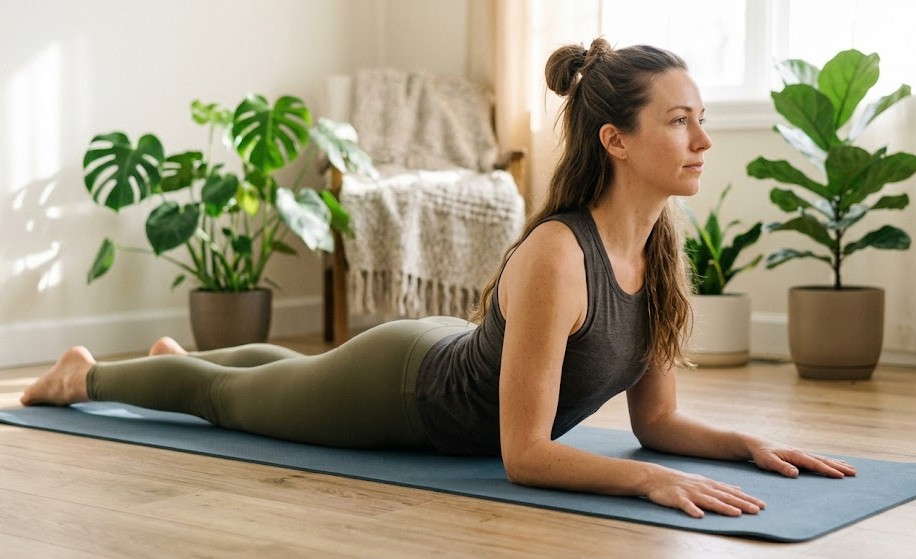
Poor posture has become one of the most common health challenges of modern life. Hours spent sitting at a desk, working on a laptop, scrolling on a smartphone, or driving can gradually pull the body out of alignment. Over time, these habits may contribute to neck stiffness, rounded shoulders, back discomfort, reduced mobility, and even decreased confidence.
The good news is that improving your posture doesn’t require hours in the gym or complicated exercise programs. A simple and consistent 10 Minute Yoga to Improve Posture routine can help strengthen key muscles, increase flexibility, and retrain your body to maintain healthier alignment throughout the day.
In this guide, you’ll learn how posture-focused yoga works, why posture matters, the best yoga poses for alignment, a complete 10-minute routine, common mistakes to avoid, and practical strategies for maintaining long-term posture improvements.
What Is a 10 Minute Yoga Routine for Improving Posture?
A 10 Minute Yoga to Improve Posture routine is a short daily practice designed to strengthen postural muscles, improve flexibility, and promote healthy spinal alignment.
Unlike intense workouts, posture-focused yoga combines gentle stretching, controlled movement, mobility exercises, and muscle activation. This balanced approach helps address both tight and weak muscles that contribute to poor posture.
For example, many people develop rounded shoulders from prolonged computer use. Yoga poses that open the chest and strengthen the upper back can help counteract this position and encourage better alignment.
Regular movement also supports overall musculoskeletal health. Research suggests that frequent movement breaks throughout the day can help reduce stiffness and support healthy physical function.
Source: World Health Organization, 2024.
For readers interested in the broader benefits of daily yoga practice, consider linking to your daily yoga guide here.
Hatha Yoga focuses on foundational poses and alignment, making it ideal for posture improvement.
Why Short Yoga Sessions Can Be Effective
Many people assume longer workouts produce better results. However, posture improvement often depends more on consistency than duration.
Practicing yoga for just ten minutes each day can:
- Reinforce healthy movement patterns
- Improve body awareness
- Reduce muscle stiffness
- Strengthen supportive muscles
- Build sustainable habits
Small daily improvements can add up significantly over weeks and months.
How Does Yoga Improve Alignment and Body Awareness?
Yoga enhances posture by helping you become more aware of how your body moves and positions itself throughout the day.
Many yoga poses teach proper alignment through deliberate positioning of the:
- Head
- Neck
- Shoulders
- Spine
- Hips
- Feet
For example, Mountain Pose encourages awareness of head placement, shoulder positioning, and spinal neutrality. As this awareness develops, it naturally carries over into daily activities such as sitting, standing, and walking.
The Connection Between Awareness and Posture
Poor posture often develops unconsciously. People rarely notice when they begin slouching or leaning forward.
Yoga trains mindfulness by encouraging you to:
- Notice body position
- Control movement
- Engage supportive muscles
- Maintain balanced alignment
Over time, these habits become automatic.
Can a 10 Minute Yoga Practice Really Improve Posture?
Yes. Consistent short sessions are often more effective than occasional lengthy workouts.
Postural changes occur gradually as muscles adapt and movement habits improve. A daily ten-minute routine provides enough stimulus to create positive changes without overwhelming your schedule.
The key is consistency.
Practicing posture-focused yoga every day helps reinforce proper alignment and creates long-term movement habits that support spinal health.
Why Is Good Posture Important?
Good posture supports healthy movement, efficient breathing, spinal health, and overall physical well-being.
When the body is properly aligned, muscles and joints work more efficiently. This reduces unnecessary strain and improves comfort throughout daily activities.
Benefits of Good Posture
| Benefit | How It Helps |
|---|---|
| Reduced Neck Strain | Decreases stress on cervical muscles |
| Better Breathing | Allows fuller lung expansion |
| Improved Balance | Enhances stability and body control |
| Less Back Discomfort | Promotes balanced spinal loading |
| Greater Confidence | Encourages an upright appearance |
Better Breathing and Lung Function
Slouched positions can restrict the chest and limit lung expansion.
Research indicates that poor posture may reduce breathing efficiency and respiratory capacity.
Source: Journal of Physical Therapy Science, 2023.
Improved Mood and Confidence
Posture influences more than physical health. Studies have found links between upright posture and improved mood, confidence, energy levels, and self-perception.
Source: Health Psychology Review, 2024.
For additional guidance, link to how to reduce upper back stiffness and best morning yoga routine resources.
Why Does Poor Posture Develop in Modern Lifestyles?
Modern lifestyles encourage prolonged periods of sitting and repetitive movement patterns that can negatively affect posture.
Several factors contribute to postural problems.
Extended Sitting
Many office workers spend more than six to eight hours sitting daily.
Source: CDC Workplace Health Report, 2024.
Long periods of sitting can:
- Tighten hip flexors
- Weaken glute muscles
- Reduce core engagement
- Increase spinal stiffness
These changes often contribute to lower back discomfort and poor alignment.
Smartphone and Device Use
Looking down at phones for extended periods encourages forward head posture.
This places additional stress on:
- Neck muscles
- Upper back muscles
- Shoulder structures
Over time, these stresses can lead to chronic tension and discomfort.
Muscle Imbalances
Poor posture frequently develops when some muscles become overly tight while others become weak.
For example:
- Tight chest muscles can pull shoulders forward.
- Weak upper-back muscles may struggle to maintain proper alignment.
This imbalance creates the rounded-shoulder posture commonly seen in desk workers.
How Can Yoga Improve Posture Naturally?
Yoga improves posture by addressing the underlying causes of misalignment.
Rather than focusing on a single muscle group, yoga works through a combination of:
- Strength training
- Flexibility development
- Mobility improvement
- Breathing awareness
- Movement control
Strengthening Postural Muscles
Strong postural muscles help support the spine throughout the day.
Key muscle groups include:
- Upper back
- Core
- Glutes
- Shoulders
For example:
- Cobra Pose strengthens upper-back muscles.
- Bridge Pose activates the glutes and posterior chain.
Consider linking to core strengthening exercises for additional posture support.
Improving Flexibility
Tight muscles can limit movement and pull the body out of alignment.
Yoga helps lengthen commonly restricted areas such as:
- Chest muscles
- Hip flexors
- Hamstrings
- Shoulders
Improved flexibility supports healthier movement patterns and joint function.
For deeper flexibility work, explore Yin Yoga.
Readers interested in mobility can explore how to improve flexibility naturally.
Which Yoga Poses Are Best for Correcting Rounded Shoulders?
Several yoga poses are particularly effective for addressing rounded shoulders and improving upper-body alignment.
The most beneficial poses include:
- Mountain Pose
- Cobra Pose
- Downward-Facing Dog
- Bridge Pose
These movements help strengthen the upper back while opening the chest and shoulders.
Research suggests yoga interventions may improve flexibility, posture awareness, and posture-related discomfort.
Source: International Journal of Yoga, 2024.
Mountain Pose
Mountain Pose is the foundation of good posture.
How to perform it:
- Stand with feet hip-width apart.
- Relax your shoulders.
- Lengthen through the spine.
- Keep your chin parallel to the floor.
- Hold for 60 seconds while breathing deeply.
Benefits:
- Improves alignment awareness
- Encourages neutral posture
- Builds body awareness
Cobra Pose
Cobra Pose helps strengthen the upper back and open the chest.
How to perform it:
- Lie face down.
- Place hands beneath shoulders.
- Gently lift your chest.
- Keep shoulders away from your ears.
- Hold comfortably while breathing steadily.
Benefits:
- Strengthens upper-back muscles
- Encourages thoracic extension
- Improves shoulder positioning
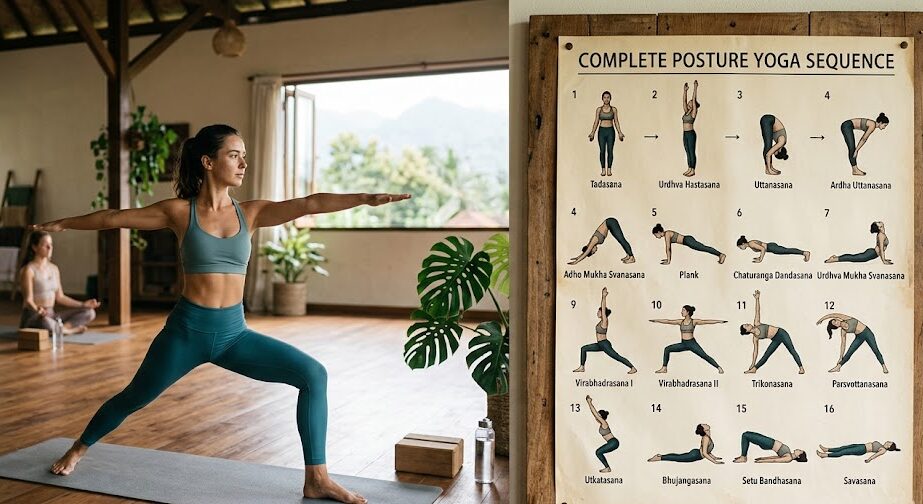
The Best 10 Minute Yoga to Improve Posture Routine
This simple sequence combines mobility, stretching, strengthening, and alignment training.
1. Mountain Pose (1 Minute)
- Stand tall
- Relax shoulders
- Engage core
- Focus on alignment
2. Cat-Cow Stretch (1 Minute)
- Alternate spinal flexion and extension
- Coordinate movement with breathing
- Move slowly and smoothly
3. Child’s Pose (1 Minute)
- Lengthen the spine
- Relax the shoulders
- Release neck tension
4. Cobra Pose (1 Minute)
- Open the chest
- Strengthen the upper back
5. Downward-Facing Dog (1 Minute)
- Stretch shoulders
- Lengthen hamstrings
- Improve mobility
6. Low Lunge (1 Minute Each Side)
- Stretch hip flexors
- Improve pelvic alignment
7. Bridge Pose (1 Minute)
- Strengthen glutes
- Support lower-back stability
8. Seated Twist (1 Minute)
- Improve spinal mobility
- Release tension
9. Standing Forward Fold (1 Minute)
- Stretch the posterior chain
- Relax the upper body
10. Final Alignment Check (1 Minute)
Return to Mountain Pose and:
- Stand tall
- Notice posture changes
- Take five slow breaths
- Reinforce body awareness
For beginners, consider linking to beginner yoga poses explained and yoga breathing techniques for beginners.
Common Mistakes to Avoid During Posture Yoga
Even simple yoga routines can become less effective when performed incorrectly.
Common Errors Checklist
- Overarching the lower back
- Forcing flexibility
- Holding the breath
- Looking upward excessively
- Rushing through poses
Overarching the Lower Back
Many people compensate for limited mobility by arching the lumbar spine too aggressively.
This is especially common during Cobra Pose.
Focus on lifting through the upper back rather than forcing height.
Rounded Shoulders
Allowing shoulders to roll forward reduces the effectiveness of posture-focused exercises.
Keep shoulders relaxed and gently drawn back throughout the practice.
Holding Your Breath
Steady breathing helps muscles relax and improves movement quality.
Always breathe naturally during each pose.
For readers experiencing discomfort, consider linking to yoga for neck pain relief.
Tools and Modifications That Make Posture Yoga Easier
Yoga props can improve comfort and accessibility.
Helpful Yoga Tools
- Yoga mat
- Yoga blocks
- Yoga strap
- Cushion
- Folded blanket
Chair Yoga Modifications
Chair-based yoga can be a valuable option for people with limited mobility.
Examples include:
- Seated Cat-Cow stretches
- Seated twists
- Seated chest openers
These modifications provide many of the same benefits as floor-based exercises.
Desk Worker Adaptations
Busy professionals can perform mini yoga sessions throughout the day.
Useful workplace stretches include:
- Shoulder rolls
- Standing chest openers
- Seated spinal twists
- Neck mobility exercises

How Can Office Workers Use Yoga to Counteract Sitting All Day?
Office workers can significantly improve posture by combining yoga with regular movement breaks.
Standing every 30 to 60 minutes can help reduce stiffness and support circulation.
Source: Occupational Safety and Health Administration, 2024.
Simple Workplace Strategy
Try this routine:
- Stand up every hour.
- Walk for 2–5 minutes.
- Perform shoulder rolls.
- Stretch the chest.
- Complete a few yoga poses.
These short movement breaks can greatly improve comfort and posture during long workdays.
What Other Habits Support Better Posture Alongside Yoga?
Yoga works best when combined with healthy daily habits.
Supportive Posture Habits
- Stand frequently throughout the day
- Strength train regularly
- Walk daily
- Improve workstation ergonomics
- Practice mindful breathing
- Keep screens at eye level
- Avoid prolonged static positions
Creating an environment that supports proper alignment can make posture improvements easier and more sustainable.
What’s Next After This 10 Minute Routine?
Completing a single yoga session is a great start, but long-term posture improvement comes from consistency.
Aim to practice this routine at least five days per week.
Many people find success by practicing:
- Immediately after waking
- During lunch breaks
- Before starting work
- After long periods of sitting
30-Day Posture Improvement Plan
| Week | Focus |
|---|---|
| Week 1 | Learn the sequence |
| Week 2 | Improve technique |
| Week 3 | Increase body awareness |
| Week 4 | Track posture improvements |
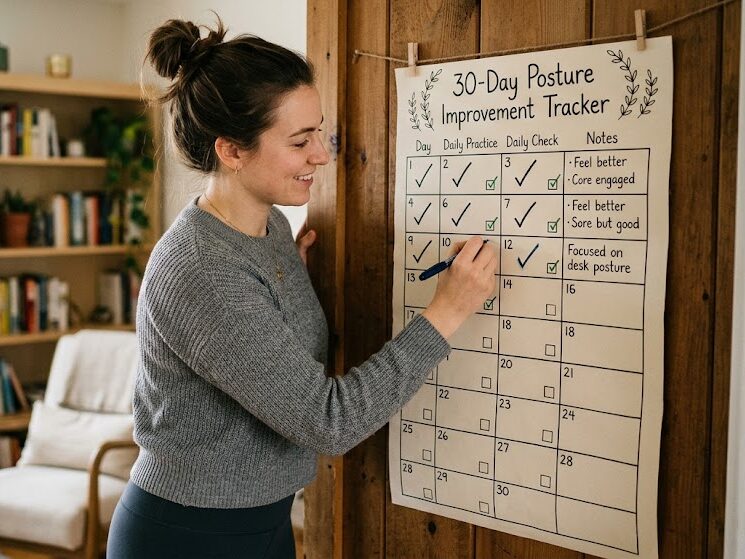
Combining yoga with mobility work, strength training, and healthy movement habits can accelerate results and support long-term spinal health.
Conclusion
A consistent 10 Minute Yoga to Improve Posture routine can be one of the simplest and most effective ways to improve alignment, reduce stiffness, and support overall physical well-being.
Full Body Yoga Workout at Home By dedicating just ten minutes each day to targeted yoga poses, you can strengthen key postural muscles, increase flexibility, and develop greater awareness of how your body moves and positions itself throughout the day.
The greatest benefits come from consistency. Small daily efforts often produce remarkable long-term improvements in posture, comfort, confidence, and movement quality.
Start today, stay patient, and let each session build the foundation for healthier posture and a stronger, more balanced body.
FAQs
Can 10 minutes of yoga a day improve posture?
Yes, daily practice can improve posture, flexibility, and muscle strength.
How long does it take to see posture improvements from yoga?
Most people notice improvements within a few weeks of consistent practice.
Which yoga pose is best for posture correction?
Mountain Pose is one of the best poses for improving alignment and posture awareness.
Can yoga help with rounded shoulders?
Yes, yoga can strengthen the upper back and open the chest to reduce rounded shoulders.
Should beginners try posture yoga?
Yes, posture-focused yoga is beginner-friendly and easy to modify.
Can posture yoga reduce neck and shoulder tension?
Yes, it can help relieve tension caused by poor posture and prolonged sitting.
How often should I practice yoga for better posture?
Aim for at least 5 days per week for the best results.
2 thoughts on “10 Minute Yoga to Improve Posture: Less Pain & Better Alignment”