
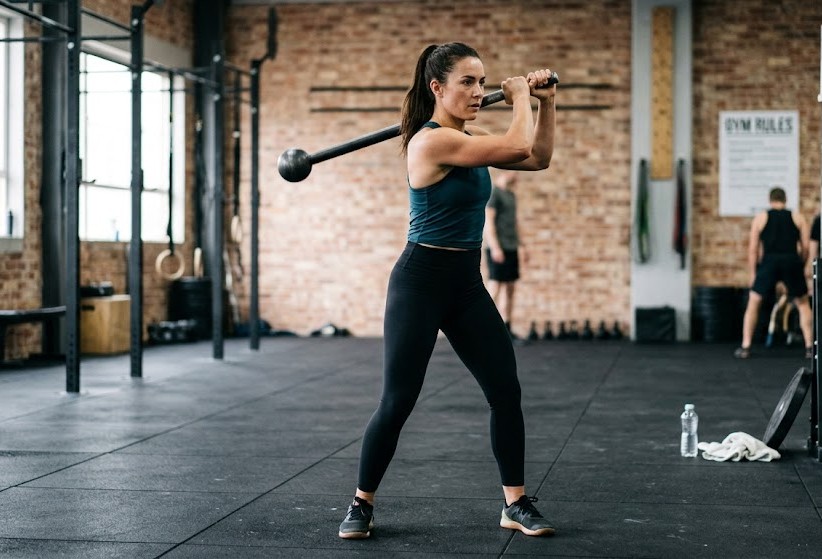
You’ve probably used dumbbells, barbells, or kettlebells in your workouts. While these traditional training tools are excellent for building strength and muscle, they don’t always challenge mobility, coordination, stability, and rotational power in the same way. That’s where macebell training stands out.
A Macebell Workout for Beginners offers a unique approach to fitness by combining strength training, mobility work, and full-body coordination into one powerful training method. With its long handle and offset weight distribution, a macebell forces your body to stabilize, control movement, and generate power through multiple planes of motion.
Whether you’re looking to improve athletic performance, enhance shoulder health, strengthen your core, or simply add variety to your workouts, this guide will teach you everything you need to know. You’ll learn what macebell training is, its benefits, the best beginner exercises, proper technique, and a complete workout routine to help you get started safely.
What Is a Macebell Workout and How Does It Work?
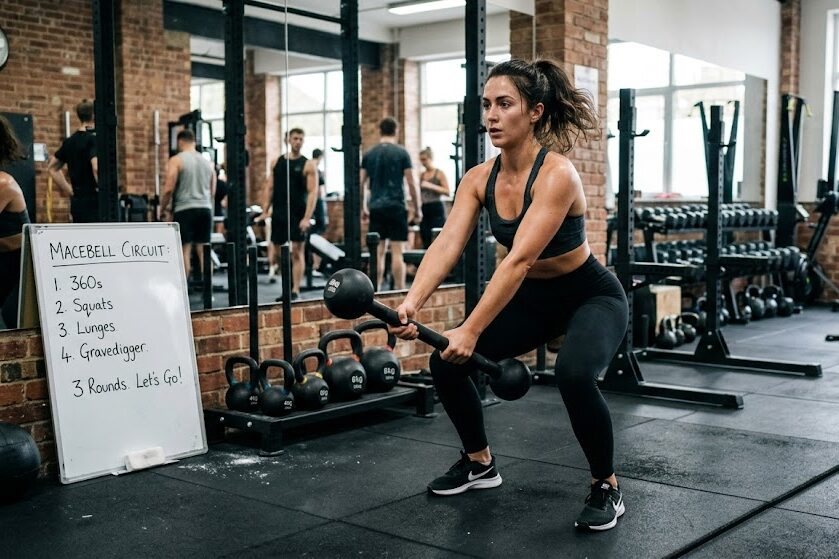
A macebell workout is a form of strength training that uses a long-handled tool with a weighted head to create an uneven load that challenges stability, coordination, and movement control.
A macebell consists of a weighted ball attached to one end of a long handle. Because the majority of the weight is positioned far away from your hands, the leverage created during movement significantly increases the demand on your muscles, joints, and nervous system.
The History of Macebell Training
Macebells originated from ancient warrior training traditions in Persia and India. Warriors and athletes used heavy clubs and maces to develop combat strength, endurance, and functional movement abilities.
Modern steel mace training adapts these traditional concepts for fitness, rehabilitation, sports performance, and general strength development.
Why Macebells Feel Different
Unlike conventional gym equipment, macebells create a unique training stimulus due to their extreme leverage.
| Equipment | Weight Distribution | Primary Benefits |
|---|---|---|
| Dumbbell | Balanced | Strength and hypertrophy |
| Kettlebell | Offset but compact | Power and conditioning |
| Clubbell | Moderate leverage | Mobility and coordination |
| Macebell | Extreme leverage | Mobility, rotational strength, stability |
Because the load sits farther away from your body, even lighter macebells can feel surprisingly challenging. This encourages better movement control and full-body engagement.
Moreover, macebell training develops functional strength by forcing the body to stabilize and control weight through multiple planes of motion. This makes it particularly valuable for athletes, martial artists, and anyone interested in improving movement quality.
Statistic: Functional training programs can improve movement efficiency and balance in recreational athletes — Source: Journal of Strength and Conditioning Research, 2023.
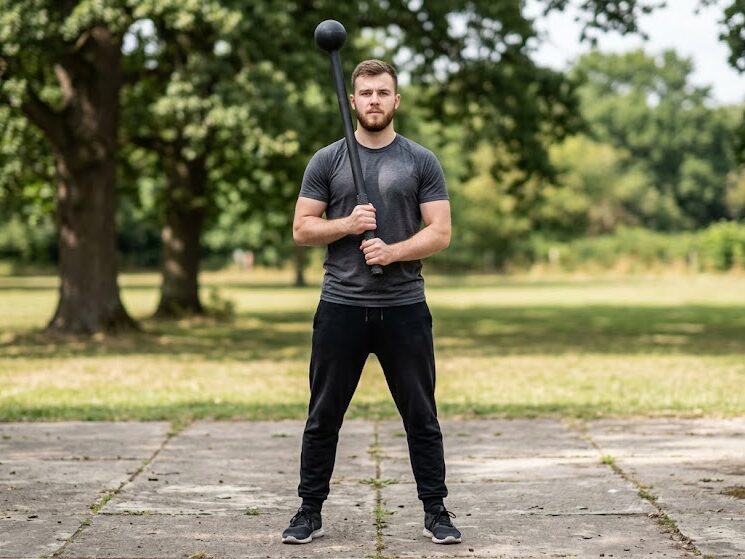
Why Is Macebell Training Effective for Beginners?
Macebell training is highly effective for beginners because it develops multiple fitness qualities simultaneously, including strength, mobility, coordination, stability, and body awareness.
Functional Strength Development
Traditional gym exercises often isolate specific muscles. Macebell exercises, however, require multiple muscle groups to work together.
For example, a simple macebell swing engages:
- Core muscles
- Shoulders
- Upper back
- Forearms
- Grip muscles
- Hips
This integrated approach helps improve real-world movement efficiency.
functional strength training benefits
Core Engagement
One of the biggest advantages of macebell training is the constant demand placed on the core.
Because the weight is offset, your body must continuously resist unwanted rotation. Even holding a macebell in place requires significant anti-rotation strength.
Benefits include:
- Improved balance
- Better posture
- Greater stability
- Enhanced force transfer during athletic movements
Shoulder Mobility and Stability
Many beginner trainees struggle with shoulder mobility due to desk jobs, poor posture, and limited movement patterns.
The circular motions used in steel mace exercises help:
- Increase shoulder mobility
- Improve joint stability
- Strengthen supporting muscles
- Enhance movement control
The 360 swing, in particular, is known for promoting healthy shoulder function when performed correctly.
Grip Strength Development
Holding a long lever creates continuous tension throughout the hands and forearms.
Over time, this can significantly improve:
- Grip endurance
- Forearm strength
- Hand stability
- Carrying strength
how to improve grip strength
Athletic Performance Benefits
Rotational strength plays a major role in many sports.
Athletes in:
- Tennis
- Cricket
- Baseball
- Golf
- Martial arts
often benefit from exercises that improve rotational power and coordination.
mobility exercises for athletes
Statistic: Grip strength is associated with overall physical performance and health outcomes — Source: British Journal of Sports Medicine, 2024.
What Weight Macebell Should Beginners Start With?
One of the most common questions new trainees ask is how heavy their first macebell should be.
Beginners should typically start with a 7–10 lb (3–4.5 kg) macebell to safely learn proper technique and movement mechanics.
Recommended Beginner Weights
| Experience Level | Recommended Weight |
|---|---|
| Women | 5–7 lb (2–3 kg) |
| Men | 7–10 lb (3–4.5 kg) |
| Athletic Beginners | 10–15 lb (4.5–7 kg) |
Many beginners assume heavier is better. However, mastering a 360 swing with a lightweight macebell is far more beneficial than struggling through poor-quality repetitions with excessive weight.
Home Gym vs Commercial Gym Options
Many people choose adjustable macebells because they allow progressive overload without purchasing multiple tools.
Benefits include:
- Cost savings
- Space efficiency
- Gradual progression
- Versatility
What Are the Benefits of Macebell Training for Strength and Mobility?
Macebell training combines resistance training and mobility work into a single training system.
Improved Shoulder Health
The circular motion patterns strengthen stabilizing muscles around the shoulder joint while improving movement quality.
Benefits include:
- Better joint control
- Increased mobility
- Enhanced stability
- Reduced movement restrictions
Better Rotational Strength
Rotational strength is the ability to generate and control force while turning the torso.
This capability is essential for:
- Throwing sports
- Swinging sports
- Combat sports
- Everyday movement
Rotational strength exercises improve power transfer between the lower and upper body.
Enhanced Coordination
Macebell movements require multiple joints and muscle groups to work together efficiently.
As a result, many beginners notice:
- Improved balance
- Better movement awareness
- Increased body control
- Greater athletic coordination
Full-Body Conditioning
A properly designed macebell workout challenges nearly every major muscle group simultaneously.
Benefits include:
- Greater workout efficiency
- Increased calorie expenditure
- Improved muscular endurance
- Better overall fitness
Statistic: Resistance training improves mobility when performed through a full range of motion — Source: American College of Sports Medicine, 2024.
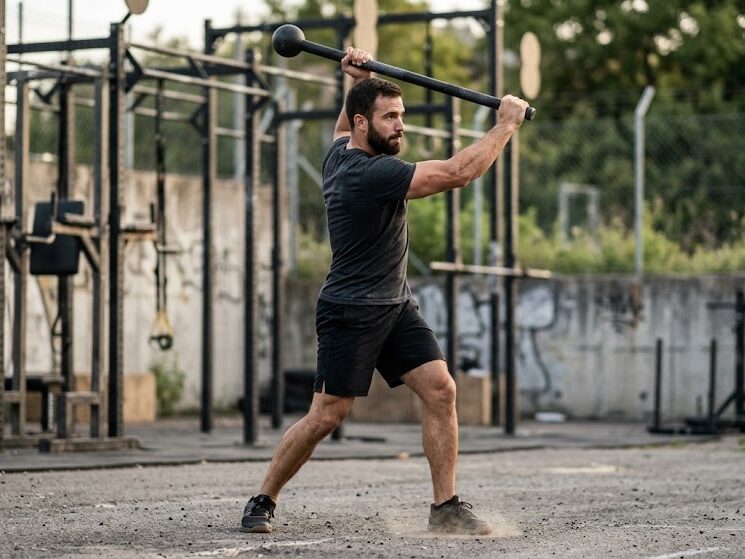
What Are the Best Macebell Exercises for Beginners?
The best beginner exercises focus on developing control, coordination, mobility, and movement mechanics.
1. Front Pendulum
The front pendulum teaches rhythm, timing, and movement control.
How to Perform It
- Stand tall holding the macebell vertically.
- Swing it gently forward and backward.
- Keep your core engaged.
- Control the movement throughout.
2. 360 Swing
The 360 swing is the most recognized macebell exercise.
Benefits include:
- Shoulder mobility
- Grip strength
- Rotational control
- Coordination
How to Perform It
- Hold the macebell close to your chest.
- Guide it behind your head.
- Create a smooth circular motion.
- Return to the starting position.
3. 10-to-2 Swing
This movement reinforces the patterns used in the 360 swing while improving shoulder coordination.
4. Offset Squat
Offset squats challenge lower-body strength while forcing the core to stabilize the uneven load.
5. Uppercut
The uppercut develops rotational power and upper-body coordination.
6. Barbarian Squat
This exercise combines overhead positioning with lower-body strength development.
7. Lateral Switch
The lateral switch teaches hand transitions and movement flow.
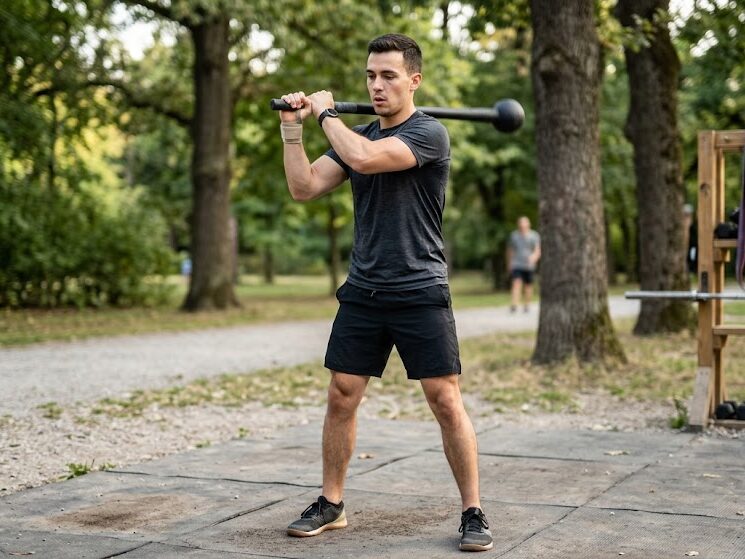
How Do You Perform the Macebell 360 Swing Correctly?
The macebell 360 swing is performed by moving the macebell around the head in a controlled circular path while maintaining posture and core tension.
Key Technique Points
- Keep elbows close to the body.
- Brace your core throughout.
- Maintain a neutral spine.
- Avoid excessive neck movement.
- Move smoothly rather than forcefully.
Common Errors to Avoid
Using Too Much Weight
Heavy loads often cause poor technique and reduced control.
Arching the Lower Back
Excessive lumbar extension places unnecessary stress on the spine.
Pulling With the Arms
The movement should involve the entire kinetic chain rather than relying solely on arm strength.
Losing Control Behind the Head
The macebell should remain controlled throughout the entire movement.
For example, many beginners compensate with their shoulders instead of using coordinated full-body mechanics, reducing efficiency and increasing injury risk.
What Is the Best Beginner Macebell Workout Routine?
A beginner-friendly macebell routine should include mobility work, foundational swings, strength exercises, and recovery-focused movements.
Warm-Up (5 Minutes)
Before training, prepare your muscles and joints with:
- Arm circles
- Shoulder rotations
- Hip circles
- Cat-cow stretches
- Dynamic lunges
Main Workout
| Exercise | Sets | Reps |
|---|---|---|
| Front Pendulum | 3 | 10 |
| 360 Swing | 3 | 8 |
| Offset Squat | 3 | 10 |
| Uppercut | 3 | 8 |
| Barbarian Squat | 3 | 10 |
| Lateral Switch | 3 | 10 |
Rest Periods
- 45–60 seconds between sets
- 90 seconds between exercises if necessary
Cool-Down
Finish each session with:
- Shoulder stretches
- Thoracic mobility drills
- Hip flexor stretches
- Deep breathing exercises
How Often Should Beginners Do Macebell Workouts?
Beginners should perform macebell workouts two to three times per week.
A simple schedule might look like:
- Monday
- Wednesday
- Friday
This allows sufficient recovery while encouraging consistent skill development and strength gains.
Statistic: Strength training at least twice weekly supports muscular adaptation and health benefits — Source: World Health Organization, 2024.
What Mistakes Should Beginners Avoid During Macebell Training?
Avoiding common mistakes can significantly improve results while reducing injury risk.
Using Excessive Weight
Learning technique should always come before increasing resistance.
Poor Posture
Maintain proper spinal alignment throughout every exercise.
Common posture mistakes include:
- Rounded shoulders
- Forward head position
- Excessive back arching
Overusing Arms Instead of Core
Macebell training works best when movement is generated through coordinated whole-body mechanics.
Inconsistent Progression
Random workouts often lead to plateaus.
Instead:
- Track workouts
- Gradually increase volume
- Focus on movement quality
- Progress systematically
Consistent macebell practice can improve shoulder stability, core engagement, and overall athletic performance.
Can Macebell Training Replace Traditional Weightlifting?
Macebell training can complement traditional weightlifting, but it should not completely replace it for most individuals.
Where Traditional Weights Excel
Barbells and dumbbells remain superior for:
- Maximal strength
- Muscle hypertrophy
- Progressive loading
- Powerlifting goals
Where Macebells Excel
Macebells are particularly effective for:
- Mobility
- Rotational strength
- Stability
- Coordination
- Movement quality
For most people, combining both approaches creates the most balanced fitness program.
beginner kettlebell workout plan
What Tools and Accessories Improve Macebell Training?
Several tools can enhance your training experience and support long-term progress.
Training Apps
Useful workout tracking apps include:
- Strong
- Hevy
- FitNotes
These apps help monitor progression and training volume.
Mobility Tools
Helpful recovery tools include:
- Foam rollers
- Massage balls
- Resistance bands
Grip Strength Equipment
Additional grip training options include:
- Hand grippers
- Fat grips
- Towel pull-up variations
Combining Macebells With Other Training Methods
Macebells pair exceptionally well with:
- Kettlebell workouts
- Bodyweight training
- Mobility sessions
- Athletic conditioning
What’s Next After Mastering Beginner Macebell Workouts?
Once you’ve mastered foundational exercises, it’s time to progress strategically.
Progressive Overload
Progressive overload involves increasing:
- Repetitions
- Sets
- Complexity
- Resistance
while maintaining proper technique.
For example, adding reps before increasing weight is often the safest progression strategy.
progressive overload explained
Advanced Swings
After mastering the basics, you can explore:
- Single-arm 360s
- Reverse 360s
- Shield casts
These advanced movements further challenge stability, strength, and coordination.
Flow Training
Flow training combines multiple macebell exercises into seamless movement sequences.
Benefits include:
- Better endurance
- Enhanced coordination
- Improved movement fluidity
- Greater athleticism
Structured Strength Programming
Advanced trainees often integrate macebells into periodized strength programs alongside traditional resistance training for a more comprehensive fitness approach.
Movement quality creates a foundation for long-term strength development, and consistency produces better results than intensity alone.
Conclusion
A Macebell Workout for Beginners is one of the most effective ways to build functional strength, improve shoulder mobility, enhance grip strength, and develop full-body coordination. Unlike traditional weights, macebells challenge your body through multiple planes of motion, creating a unique training stimulus that improves both performance and movement quality.
The key to long-term success is focusing on technique before increasing weight. Start with foundational exercises like the front pendulum and 360 swing, train consistently two to three times per week, and gradually progress as your skills improve.
By prioritizing movement quality, proper recovery, and steady progression, you’ll build a strong foundation that prepares you for advanced steel mace training and long-term athletic development.
FAQs
What is the best macebell weight for beginners?
Most beginners should start with a 7–10 lb (3–4.5 kg) macebell to learn proper technique safely.
Is macebell training good for weight loss?
Yes. Macebell workouts engage multiple muscle groups simultaneously, increasing calorie expenditure and improving overall conditioning.
How many times per week should beginners train with a macebell?
Two to three sessions per week is ideal for developing skills while allowing adequate recovery.
Can macebell training build muscle?
Yes. Macebell training can build muscle, particularly in the shoulders, forearms, core, and upper back, although traditional weights remain more effective for maximizing hypertrophy.
Is the 360 swing safe for beginners?
Yes, provided it is learned with a lightweight macebell and proper technique. Beginners should prioritize control and movement quality over speed or weight.
Can I combine macebell training with kettlebells?
Absolutely. Macebells and kettlebells complement each other well by combining rotational strength, mobility, conditioning, and traditional strength training.
How long does it take to learn basic macebell exercises?
Most beginners can learn foundational movements such as the front pendulum and 360 swing within a few weeks of consistent practice.
Does macebell training improve shoulder mobility?
Yes. The circular movement patterns used in macebell training can improve shoulder mobility, stability, and overall joint function when performed correctly.