
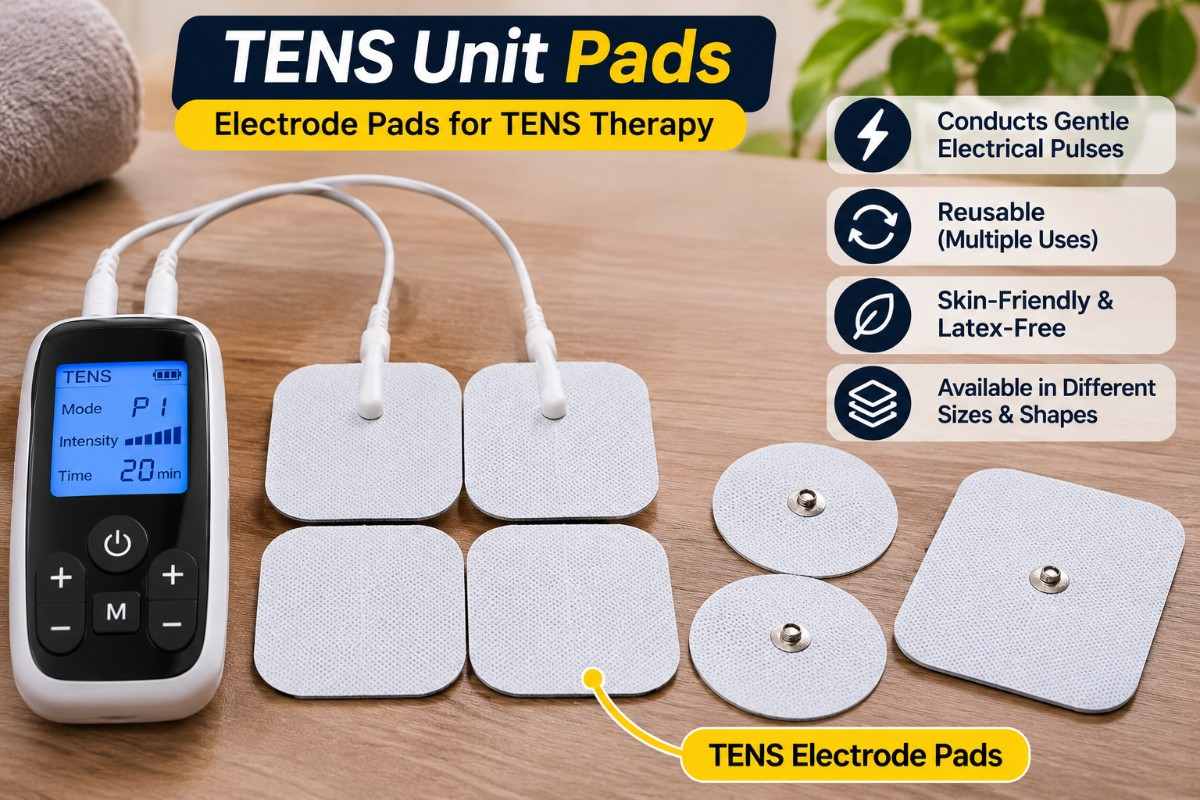
TENS unit pads are the adhesive electrodes that deliver electrical stimulation from a TENS machine to your skin. Choosing compatible pads and maintaining them properly can help provide consistent skin contact, comfortable stimulation, and a better home-use experience.
However, not every electrode pad fits every TENS machine. Shape, size, conductive gel, connector type, and manufacturer instructions all matter when choosing replacement electrodes.
This guide explains the different types of TENS unit pads, how to choose the right size, where to position them safely, how to maintain reusable electrodes, and when to replace them.
What Are TENS Unit Pads?
TENS unit pads are adhesive electrodes that connect a transcutaneous electrical nerve stimulation (TENS) machine to your skin. They deliver electrical pulses from the device through a conductive surface.
Most reusable home-use electrodes have a sticky gel surface that attaches directly to clean skin. Depending on the device, the pads connect through lead wires or attach to a wireless stimulation unit.
TENS electrodes are commonly positioned near or around an area being treated. The exact placement depends on the device instructions, treatment goal, and advice from a healthcare professional.
TENS pads are not designed to diagnose or treat the underlying cause of pain. They are part of a stimulation system that some people use for temporary pain relief.

what is a TENS unit and how does it work
Why Do TENS Unit Pads Matter?
TENS unit pads matter because they create the electrical contact between the stimulation device and your skin. Their condition, compatibility, and positioning can affect how comfortably the device delivers stimulation.
Their main functions include:
- Transferring electrical pulses from the device to the skin.
- Maintaining consistent contact during a session.
- Supporting different electrode arrangements.
- Distributing stimulation across the electrode surface.
- Allowing users to position electrodes around an appropriate treatment area.
Damaged, dried-out, or poorly attached electrodes may cause uneven stimulation or uncomfortable sensations. Replacing worn pads and following the manufacturer’s instructions can help maintain reliable contact.
Different Types of TENS Unit Pads
TENS unit pads are available in different shapes, sizes, adhesive materials, and connection styles. These features describe different aspects of an electrode, so a round pad, for example, may also be a self-adhesive hydrogel electrode.
1. Round TENS Electrode Pads
Round TENS electrode pads have a circular shape and are available in different diameters.
Common features include:
- Circular design.
- Different size options.
- Reusable adhesive versions.
- Compatibility with certain wired or wireless devices.
Common application: Smaller treatment areas where the device instructions recommend a compact electrode.
2. Square and Rectangular TENS Electrode Pads
Square and rectangular electrodes provide a broader contact surface than many small round pads.
Common features include:
- Square or rectangular designs.
- Multiple size options.
- Different connector arrangements.
- Compatibility with selected TENS machines.
Common application: Areas where a larger electrode surface is appropriate according to the device’s placement instructions.
3. Butterfly-Shaped TENS Electrode Pads
Butterfly-shaped electrodes have a specialized design with multiple sections within one electrode.
Common features include:
- Distinctive multi-section shape.
- Specialized electrode arrangement.
- Device-specific compatibility.
Common application: Equipment and treatment arrangements specifically designed to use this electrode shape.
Do not assume that a butterfly-shaped electrode will work with a standard TENS machine. Check the manufacturer’s compatibility information first.
4. Self-Adhesive Gel Pads
Self-adhesive gel pads have a conductive adhesive surface that attaches directly to the skin.
Common features include:
- No separate adhesive tape required.
- Convenient application.
- Reusable options.
- Different shapes and dimensions.
Their adhesive properties gradually decline with use. Proper skin preparation and storage can help maintain their performance.
5. Hydrogel Electrode Pads
Hydrogel electrodes use a water-based conductive gel layer to support contact between the electrode and skin.
Common features include:
- Flexible gel surface.
- Adhesive properties.
- Different shapes and sizes.
- Product-specific maintenance requirements.
Hydrogel electrodes can lose moisture or adhesion over time. Follow the manufacturer’s instructions for cleaning and storage.
TENS Unit Pad Sizes: Which Size Should You Choose?
The right TENS unit pad size depends on the manufacturer’s recommendations, the treatment area, and the electrode arrangement.
| Pad size | General characteristics |
|---|---|
| Small pads | Compact contact area for suitable localized applications |
| Medium pads | General-purpose size used by some home-use devices |
| Large pads | Broader contact surface |
| Specialized pads | Designed for particular devices or electrode arrangements |
A larger electrode generally distributes current over a broader contact area, while a smaller electrode provides a more localized contact area. This does not mean that one size is automatically more effective.
Before choosing a size, check:
- The dimensions recommended for your device.
- Whether the electrode connector matches your machine.
- Whether the shape suits the manufacturer’s placement guide.
- Whether the electrode is designed for wired or wireless use.
Do not assume that every electrode size works with every TENS machine.

Where to Place TENS Unit Pads
TENS unit pads should be positioned on clean, dry, intact skin according to your device’s placement guide and, when needed, a healthcare professional’s instructions.
Correct placement is important because unsuitable electrode positions can cause discomfort, skin irritation, or other problems.
If you’re looking for more detailed guidance, read our guide to using a TENS unit for back pain, including electrode placement, potential benefits, and safety precautions.
TENS Pad Placement for Back Pain
For back discomfort, electrodes may be positioned around the painful region according to a physiotherapist’s instructions and the device’s placement guide.
Do not position electrodes so that current passes across the chest. Avoid placing them over broken, irritated, infected, or numb skin.
TENS Pad Placement for Knee Pain
For knee discomfort, a healthcare professional may recommend positioning electrodes around the knee area.
The correct arrangement depends on the device and the individual’s circumstances. Avoid placing electrodes over irritated skin or directly on areas where sensation is reduced.
TENS Pad Placement for Shoulder Pain
Shoulder electrode placement should follow the device’s instructions or a physiotherapist’s guidance.
Never place electrodes on the front or sides of the neck. Avoid positioning them near the eyes or mouth.
TENS Pad Placement for Leg Pain
For leg discomfort, electrodes may be positioned around an appropriate treatment area if the skin has normal sensation and the location is suitable for TENS.
The correct arrangement depends on the location and nature of the discomfort. Seek professional guidance if you are unsure.
Important TENS Electrode Placement Precautions
Follow these general safety precautions:
- Switch off the TENS machine before applying or removing electrodes.
- Apply pads only to clean, dry, intact skin.
- Keep electrodes separated according to the manufacturer’s instructions.
- Do not place electrodes on the front of the neck, eyes, or inside the mouth.
- Do not place electrodes over broken, infected, irritated, or numb skin.
- Do not position electrodes across the chest.
- Avoid using TENS while driving or operating machinery.
- Do not use the device in the bath or shower.
- Do not fall asleep while using the machine.
People with pacemakers or other implanted electronic devices, epilepsy, or pregnancy-related concerns should seek medical advice before using TENS. Individual device instructions may contain additional restrictions.
If you experience burning, pain, persistent redness, or significant irritation, switch off the device and remove the electrodes. Source: NHS, 2017.
How to Apply TENS Unit Pads Correctly
Applying TENS pads correctly helps maintain good skin contact and comfortable stimulation.
Follow these general steps, while checking your specific device manual:
- Switch off the machine: Make sure the TENS device is turned off before handling the electrodes.
- Prepare your skin: Clean the treatment area and allow it to dry completely.
- Inspect the pads: Check that the gel surface is clean and the electrodes are not damaged.
- Position the electrodes: Attach them to the recommended locations using your device’s placement guide.
- Connect the wires: Attach the lead wires if your machine uses a wired design.
- Turn on the device: Start at a low intensity.
- Adjust stimulation gradually: Increase the intensity until you feel a strong but comfortable tingling sensation. It should not be painful.
Stop using the device if stimulation becomes painful or your skin develops significant irritation.
How to Clean and Maintain TENS Unit Pads
TENS unit pads need appropriate care to maintain their adhesive and conductive properties. However, cleaning instructions vary between manufacturers and electrode materials.
Some reusable electrodes can be gently rinsed with water, while others require a different cleaning method. Never assume that all pads can be washed in the same way.
For general maintenance:
- Follow the cleaning instructions supplied with your electrodes.
- Avoid applying lotions, oils, or creams before attaching the pads.
- Return reusable electrodes to their original protective plastic sheet after use.
- Store them in the supplied bag or container.
- Keep them away from excessive heat and direct sunlight.
- Avoid using electrodes that are visibly damaged or contaminated.
- Do not use soap, alcohol, or chemical cleaners unless the manufacturer specifically permits them.
Some manufacturers allow users to lightly moisten the adhesive surface when it begins losing stickiness. Only do this if the product instructions explicitly recommend it.
Source: TensCare, n.d.
How Many Times Can You Reuse TENS Unit Pads?
Many self-adhesive TENS electrodes are reusable, but their lifespan depends on the product, skin condition, storage, and frequency of use.
There is no universal number of applications that applies to every electrode. Some manufacturer guidance gives an estimate of around 30 applications for particular reusable pads, while other products have different recommended lifespans.
Follow the replacement guidance for your specific electrodes rather than relying on a general estimate.
Signs Your TENS Pads Need Replacement
Replace your electrodes when you notice:
- The adhesive no longer sticks properly.
- The conductive gel has dried out.
- The pad is torn, damaged, or misshapen.
- Stimulation feels uneven or uncomfortable.
- The electrode surface is contaminated.
- Skin irritation develops during use.
Do not continue using worn-out electrodes simply because they still attach partially to your skin.
Source: TensCare, n.d.
Why Are My TENS Unit Pads Not Sticking?
TENS electrode pads may stop sticking because of repeated use, dry conductive gel, improper storage, or residue on the skin.
Common reasons include:
- Dirty skin: Sweat, oil, lotions, and dirt can reduce adhesion.
- Dry conductive gel: Exposure to air can cause some water-based gel surfaces to lose moisture.
- Improper storage: Leaving electrodes exposed instead of returning them to their protective backing can shorten their useful life.
- Repeated use: Adhesive effectiveness gradually declines with repeated applications.
- Damaged pads: Old, torn, or contaminated electrodes may not maintain proper skin contact.
To help prevent these problems, prepare your skin before each session and store the electrodes as instructed.
If the pads remain poorly attached after following the manufacturer’s maintenance instructions, replace them.
How to Choose the Best Replacement TENS Unit Pads
Replacement TENS pads should match your device’s connector system and manufacturer specifications. Choosing electrodes based only on their appearance or price may result in compatibility problems.
Consider these factors before purchasing:
| Buying factor | What to check |
|---|---|
| Compatibility | Device model and connector type |
| Size | Dimensions recommended for your machine |
| Shape | Round, square, rectangular, or specialized |
| Material | Compatible conductive gel or electrode material |
| Adhesion | Reliable contact with clean skin |
| Reusability | Manufacturer’s stated usage guidance |
| Packaging | Protective backing sheet or storage case |
| Quantity | Number of electrodes included in the pack |
Important: Not all TENS pads are universal. Check your machine’s model number, connector type, and electrode specifications before ordering replacement pads.
For buyers in India, also compare replacement availability, shipping costs, seller reliability, and return policies. Check whether the seller clearly identifies the compatible device models.
TENS Unit Pads vs. EMS Electrode Pads
TENS and EMS electrode pads can look similar, but their intended applications and compatibility depend on the stimulation device.
| Feature | TENS pads | EMS pads |
|---|---|---|
| Main application | Sensory nerve stimulation | Muscle stimulation |
| Common design | Adhesive gel electrodes | Adhesive gel electrodes |
| Shapes | Different shapes and sizes | Different shapes and sizes |
| Compatibility | TENS device specifications | EMS device specifications |
| Primary purpose | Pain management | Producing muscle contractions |
Some combination devices support both TENS and EMS functions using compatible electrodes. However, this does not mean that every TENS pad is automatically suitable for every EMS machine.
Always check the device manufacturer’s compatibility instructions.
Common Mistakes to Avoid When Using TENS Pads
Avoid these common mistakes to help maintain electrode performance and reduce unnecessary skin problems:
- Applying pads to wet, oily, or unclean skin.
- Using electrodes after their adhesive has deteriorated.
- Allowing electrodes to touch or placing them closer than the manufacturer recommends.
- Using incompatible replacement electrodes.
- Applying electrodes over broken, infected, or irritated skin.
- Removing pads while the device is switched on.
- Storing reusable electrodes without their protective backing.
- Ignoring itching, burning, or persistent skin redness.
- Using the device while driving, bathing, or sleeping.
If you experience a skin reaction, stop using the pads and seek appropriate medical advice.

Conclusion
TENS unit pads are an essential part of electrical nerve stimulation therapy. Choosing compatible electrodes, selecting an appropriate size, positioning them correctly, and maintaining their conductive gel surfaces can make home use more convenient.
Reusable gel pads can last for multiple applications, but their lifespan varies by product. Replace electrodes when they lose adhesion, become damaged, or cause inconsistent stimulation.
Always follow your device’s instructions and seek professional guidance if you are unsure about electrode placement or whether TENS is suitable for you.
FAQs
How long do TENS unit pads last?
TENS unit pad lifespan varies by manufacturer, electrode material, skin condition, and storage. Some reusable pads are designed for around 30 applications, but you should follow the product’s specific replacement guidance.
Can you reuse TENS unit pads?
Yes, many self-adhesive TENS pads are reusable. Store them on their protective plastic sheet and follow the manufacturer’s cleaning and maintenance instructions.
Can you wash TENS electrode pads?
Some reusable electrodes can be gently rinsed with water, while others have different cleaning requirements. Check the manufacturer’s instructions before washing them.
Why do my TENS pads keep falling off?
Common reasons include dry conductive gel, oily skin, sweat, repeated use, and improper storage. Prepare your skin and store the electrodes correctly.
Are TENS unit pads universal?
No. TENS electrodes can have different connector types, dimensions, and compatibility requirements. Check your device model before buying replacements.
Can I use TENS pads on sensitive skin?
People with sensitive skin may experience irritation from electrode adhesives. Stop using the pads if a reaction develops and ask a healthcare professional about suitable alternatives.
When should I replace TENS electrode pads?
Replace them when they lose adhesion, become damaged, dry out, or cause inconsistent stimulation or skin irritation.
Do TENS pads need gel?
Many self-adhesive TENS electrodes already contain conductive gel. Additional gel is generally unnecessary unless the manufacturer specifically recommends it.
Sources
- NHS. Transcutaneous Electrical Nerve Stimulation (TENS). Source: NHS, 2017.
- National Center for Biotechnology Information. Transcutaneous Electrical Nerve Stimulation. Source: NCBI Bookshelf, 2024.
- Cambridge University Hospitals. Advice on Using a TENS Machine. Source: Cambridge University Hospitals, 2024.
- West Suffolk NHS Foundation Trust. TENS Advice for Patients. Source: West Suffolk NHS Foundation Trust, n.d.
- TensCare. Electrode Care Guide. Source: TensCare, n.d.
Medical disclaimer: This article is for informational and educational purposes only. It is not a substitute for personalized medical advice, diagnosis, or treatment. Consult a qualified healthcare professional before using a TENS machine if you have a medical condition, an implanted electronic device, or concerns about electrode placement or safety.
2 thoughts on “TENS Unit Pads: Types, Placement, Care & Replacement Guide”