
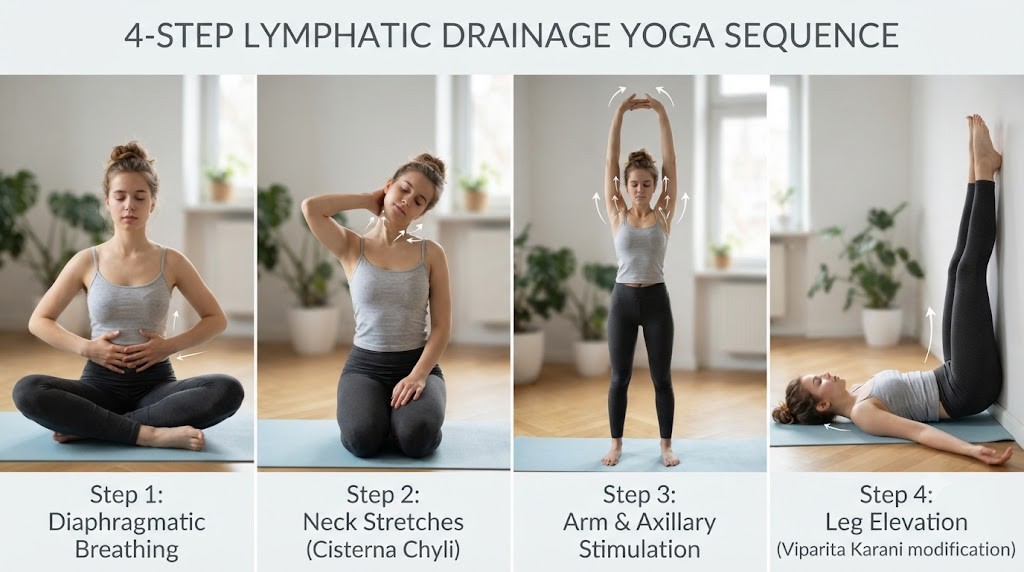
You’ve probably heard that yoga can improve flexibility, reduce stress, and enhance overall well-being. However, many people don’t realize that certain yoga poses and breathing techniques may also support healthy lymphatic circulation.
Lymphatic Drainage Yoga combines gentle movement, mindful breathing, and gravity-assisted postures to encourage your body’s natural lymph flow. While it isn’t a miracle detox or a replacement for medical care, it can become a valuable part of a healthy lifestyle.
In this comprehensive guide, you’ll learn:
- What lymphatic drainage yoga is
- How the lymphatic system works
- The science behind yoga and lymph flow
- The best yoga poses for lymphatic support
- A simple beginner-friendly routine
- Potential benefits, safety tips, myths, and more
Whether you’re new to yoga or looking for a restorative practice, this guide will help you understand how gentle movement can support your body’s natural functions.
What Is Lymphatic Drainage Yoga?
Lymphatic drainage yoga is a gentle style of yoga that uses slow movement, deep breathing, and gravity-assisted poses to support healthy lymph circulation.
Unlike vigorous yoga styles that focus on strength, endurance, or calorie burning, lymphatic drainage yoga emphasizes:
- Slow, controlled movements
- Deep diaphragmatic breathing
- Gentle stretches
- Restorative postures
- Relaxation and mindfulness
The goal isn’t to “flush toxins overnight.” Instead, this practice supports the body’s normal lymphatic function by encouraging movement through muscle contractions, breathing, and body positioning.
For example, poses that elevate the legs may encourage natural fluid movement, while gentle twists and stretches help promote mobility throughout the body.
According to the Cleveland Clinic, the lymphatic system is a vital part of the immune system that helps maintain fluid balance and transports immune cells throughout the body.
Source: Cleveland Clinic, 2025.
Unlike traditional yoga classes that often emphasize athletic performance, lymphatic drainage yoga prioritizes circulation, recovery, mobility, and relaxation.
Because of its slow pace and accessible movements, it’s an excellent starting point for beginners and individuals seeking a low-impact wellness practice.
benefits of yoga for beginners
Understanding the Lymphatic System
The lymphatic system is a network of vessels, lymph nodes, and organs that helps maintain fluid balance while supporting immune function.
Unlike the cardiovascular system, which relies on the heart to continuously pump blood, the lymphatic system has no central pump. Instead, it depends on natural body movement to circulate lymph fluid.
Main Components of the Lymphatic System
The lymphatic system includes:
- Lymph vessels
- Lymph nodes
- Tonsils
- Spleen
- Thymus
- Bone marrow
Each component helps transport immune cells, remove excess fluid, and filter unwanted substances.
Why Movement Matters
The lymphatic system relies on:
- Muscle contractions
- Joint movement
- Deep diaphragmatic breathing
- Changes in body position
- Everyday physical activity
Because of this, spending long hours sitting or remaining inactive may contribute to temporary swelling or feelings of heaviness, especially in the legs.
Why Does Lymphatic Drainage Yoga Matter?
Lymphatic drainage yoga matters because healthy lymph circulation supports:
- Fluid balance
- Immune function
- Joint mobility
- Recovery
- Overall wellness
Your lymphatic system works continuously, but unlike blood circulation, it depends heavily on your movement.
For example, someone who sits at a desk for eight hours may notice mild ankle swelling by evening. Gentle yoga can encourage regular muscle contractions that naturally assist lymph movement.
Research published by the National Institutes of Health highlights the importance of physical activity for maintaining healthy lymphatic function and immune health.
Source: NIH, 2024.
Supports Healthy Immune Function
Healthy lymph circulation allows immune cells to move efficiently throughout the body.
Lymph nodes serve as biological filters that help identify bacteria, viruses, and other foreign particles before they spread.
Although yoga cannot prevent illness, maintaining an active lifestyle may support the body’s normal immune processes.
Helps Maintain Fluid Balance
One of the lymphatic system’s primary jobs is returning excess tissue fluid back into the bloodstream.
When this process slows temporarily, people may notice:
- Mild swelling
- Puffiness
- Heavy legs
Gentle yoga movements may encourage healthy circulation, particularly after prolonged sitting or travel.
Encourages Recovery
Lymphatic drainage yoga combines movement, breathing, and relaxation to support recovery.
Many athletes include restorative yoga after workouts because it increases circulation without adding stress to already fatigued muscles.
A short evening yoga session may reduce stiffness while promoting relaxation before bedtime.
How Does the Lymphatic System Work?
The lymphatic system works by collecting excess fluid from tissues and returning it to the bloodstream through a network of lymph vessels and nodes.
Unlike arteries and veins, lymph vessels do not have a pumping organ. Instead, lymph moves slowly with assistance from:
- Muscle contractions
- Deep breathing
- Walking
- Stretching
- Changes in body position
Healthcare professionals often recommend light movement after surgery, when appropriate, because physical activity naturally supports lymph circulation.
Lymph Vessels Transport Fluid
Lymph vessels collect excess fluid that naturally leaks from blood vessels into surrounding tissues.
This fluid contains:
- Proteins
- Waste products
- Immune cells
- Other substances requiring filtration
Without this continuous recycling process, excess fluid would accumulate in tissues.
Lymph Nodes Filter the Fluid
Lymph nodes act as filtering stations throughout the body.
Major clusters are located in the:
- Neck
- Armpits
- Chest
- Abdomen
- Groin
As lymph passes through these nodes, immune cells help identify and respond to potentially harmful microorganisms.
Movement Is Essential
Physical movement is one of the body’s primary mechanisms for encouraging healthy lymph flow.
Activities that help include:
- Walking
- Stretching
- Yoga
- Breathing exercises
- Light daily activity
According to the World Health Organization, adults should complete at least 150 minutes of moderate physical activity each week for overall health.
Source: WHO, 2024.
Although these recommendations are not specific to lymphatic health, regular movement benefits multiple body systems simultaneously.
Can Yoga Really Improve Lymphatic Drainage?
Yoga may support healthy lymphatic drainage because it combines several natural mechanisms that encourage lymph movement, including deep breathing, muscle contractions, gentle inversions, and relaxation.
Current scientific understanding suggests that movement benefits the lymphatic system because lymph depends on external forces instead of an internal pump.
However, it’s important to understand that yoga does not replace medical treatment for lymphatic disorders such as lymphedema.
Deep Breathing Supports Lymph Flow
Deep diaphragmatic breathing creates pressure changes inside the chest that naturally assist lymph movement.
During inhalation, the diaphragm moves downward, helping lymph travel through larger lymphatic vessels toward the bloodstream.
Practicing five minutes of deep breathing before yoga may prepare your body for movement.
Muscle Contractions Move Lymph
Every gentle muscle contraction helps move lymph through nearby vessels.
This explains why flowing through yoga poses can be more supportive than remaining inactive for extended periods.
Twists Encourage Gentle Mobility
Gentle twisting poses create alternating compression and release throughout the torso.
While research continues to evolve, many yoga instructors believe these movements support healthy circulation while improving spinal mobility.
Twists should always remain comfortable and pain-free.
Inversions Use Gravity
Gentle inversions place parts of the body above the heart, allowing gravity to assist fluid movement.
Poses like Legs Up the Wall are especially beginner-friendly because they require minimal flexibility while promoting relaxation.
Relaxation Completes the Practice
Stress management plays an important role in overall wellness.
Gentle yoga activates the parasympathetic nervous system—often called the “rest and digest” response—which encourages slower breathing, relaxation, and recovery.
Finishing each practice with a few minutes of quiet rest helps calm both body and mind.
What Are the Best Yoga Poses for Lymphatic Drainage?
The best lymphatic drainage yoga poses combine gentle movement, controlled breathing, and gravity-assisted positioning.
Although no pose can “flush toxins” or cure lymphatic disorders, consistent practice may help reduce temporary swelling, improve mobility, and promote relaxation.
Lymphatic drainage yoga supports overall wellness but is not a substitute for medical treatment for lymphedema or other lymphatic disorders.
restorative yoga poses
| Yoga Pose | Primary Benefit | Beginner Friendly |
|---|---|---|
| Legs Up the Wall | Encourages relaxation and leg circulation | ✅ Yes |
| Cat-Cow | Promotes spinal movement and breathing | ✅ Yes |
| Child’s Pose | Relaxes the body and supports deep breathing | ✅ Yes |
| Downward Dog | Encourages full-body circulation | Intermediate |
| Bridge Pose | Activates lower-body muscles | ✅ Yes |
| Supine Twist | Improves gentle spinal mobility | ✅ Yes |
| Cobra Pose | Opens the chest for diaphragmatic breathing | ✅ Yes |
| Happy Baby | Releases hips and lower back | ✅ Yes |
| Seated Twist | Encourages torso mobility | ✅ Yes |
| Reclining Bound Angle | Promotes relaxation and recovery | ✅ Yes |
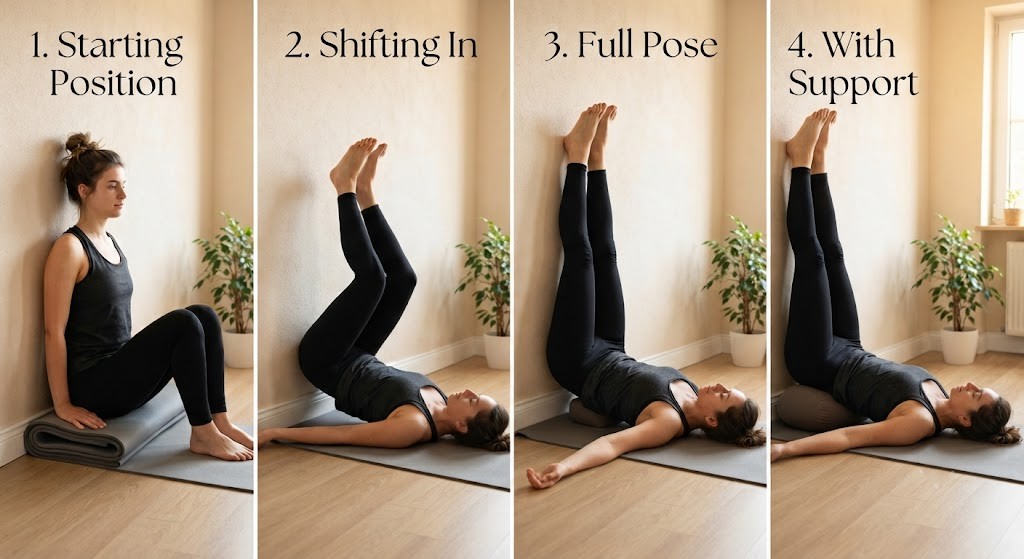
Legs Up the Wall (Viparita Karani)
Legs Up the Wall is one of the most relaxing lymphatic drainage yoga poses because gravity naturally assists circulation in the legs.
Lie on your back with your legs resting vertically against a wall. Relax your shoulders and breathe slowly for 5–10 minutes.
Benefits include:
- May reduce temporary leg fatigue
- Encourages relaxation
- Supports gentle circulation
- Beginner friendly
Cat-Cow Stretch
Cat-Cow coordinates spinal movement with deep breathing.
Slowly alternate between arching and rounding your back while matching each movement with your breath.
Benefits include:
- Mobilizes the spine
- Activates core muscles
- Encourages diaphragmatic breathing
- Gently warms up the body
Child’s Pose
Child’s Pose is a restorative posture that promotes relaxation and mindful breathing.
Hold the position for one to three minutes while focusing on slow belly breaths.
This pose is especially useful during recovery days or beginner yoga sessions.
Downward Facing Dog
Downward Dog gently elevates the hips above the heart, creating a mild inversion.
Keep your knees bent if flexibility is limited.
Benefits include:
- Full-body stretch
- Improved mobility
- Gentle inversion
- Shoulder activation
Bridge Pose
Bridge Pose strengthens the hips while opening the chest for deeper breathing.
Lift your hips slowly, hold for 20–30 seconds, then lower with control.
Supine Twist
Supine Twist gently rotates the spine while relaxing the lower back.
Move slowly and avoid forcing the stretch.
Cobra Pose
Cobra Pose opens the front of the body and encourages full diaphragmatic breathing.
Keep your elbows slightly bent and avoid excessive back extension.
Happy Baby
Happy Baby stretches the hips while encouraging gentle movement through the pelvis and lower spine.
It’s an excellent pose near the end of your practice.
Seated Twist
Seated Twist improves spinal mobility through controlled rotational movement.
Use your breath to deepen the stretch naturally rather than pulling with your arms.
Reclining Bound Angle
Reclining Bound Angle is a restorative posture that promotes deep relaxation and comfortable breathing.
Using a yoga bolster beneath your back can make the pose even more comfortable.
What Is a Beginner-Friendly Lymphatic Drainage Yoga Routine?
A beginner-friendly lymphatic drainage yoga routine typically lasts 15–20 minutes.
Rather than focusing on intensity, prioritize slow movement, mindful breathing, and consistency.
15–20 Minute Routine
Step 1: Deep Belly Breathing (3 Minutes)
- Sit comfortably.
- Inhale for four seconds.
- Exhale for six seconds.
- Relax your shoulders.
Step 2: Cat-Cow (2 Minutes)
- Flow slowly with your breath.
- Repeat 8–10 rounds.
Step 3: Child’s Pose (2 Minutes)
- Relax while breathing deeply.
Step 4: Bridge Pose (2 Minutes)
- Perform 8–10 slow repetitions.
Step 5: Supine Twist (2 Minutes)
- Hold each side for one minute.
Step 6: Legs Up the Wall (5 Minutes)
- Relax completely.
- Breathe naturally.
Step 7: Final Relaxation (3 Minutes)
- Lie comfortably in Savasana.
- Focus on slow breathing and complete relaxation.
Can Lymphatic Drainage Yoga Reduce Water Retention and Swelling?
Lymphatic drainage yoga may help reduce temporary water retention and mild swelling caused by inactivity, prolonged sitting, or travel.
However, persistent swelling should always be evaluated by a healthcare professional.
For example, someone working long hours at a desk may notice improved comfort after combining gentle yoga with regular walking breaks.
Research suggests that regular movement improves circulation and helps maintain healthy tissue fluid balance.
Source: American Heart Association, 2024.
What Are the Benefits of Lymphatic Drainage Yoga?
Lymphatic drainage yoga offers both physical and mental wellness benefits through gentle movement, breathing, and relaxation.
Although experiences vary, consistent practice may support overall health.
Potential benefits include:
- Reduced temporary swelling
- Improved circulation
- Greater flexibility
- Stress reduction
- Better mobility
- Enhanced recovery
- Improved posture
- Increased mind-body awareness
According to the American Psychological Association, stress-management practices like yoga can positively influence overall well-being.
Source: APA, 2024.
post workout recovery techniques
Who Should Try Lymphatic Drainage Yoga?
Lymphatic drainage yoga is suitable for most healthy adults looking for a gentle wellness practice.
People who may benefit include:
- Office workers
- Frequent travelers
- Seniors
- Athletes
- Yoga beginners
- Individuals recovering from intense workouts
- People with sedentary lifestyles
Because it is low impact, most poses can be modified for different fitness and mobility levels.
Are There Any Risks or Side Effects of Lymphatic Drainage Yoga?
Lymphatic drainage yoga is generally safe, but some medical conditions require professional guidance before beginning.
Consult your healthcare provider if you have:
- Lymphedema
- Heart failure
- Active infection
- Blood clots
- Recent surgery
- Severe osteoporosis
- Uncontrolled high blood pressure
Pregnant individuals should use pregnancy-safe modifications recommended by their healthcare provider.
Is Lymphatic Drainage Yoga Better Than Lymphatic Drainage Massage?
Lymphatic drainage yoga and lymphatic drainage massage serve different purposes and often complement each other rather than compete.
| Feature | Yoga | Massage |
|---|---|---|
| Active movement | ✅ | ❌ |
| Deep breathing | ✅ | ❌ |
| Professional assistance | Usually not | Usually yes |
| Daily practice | Easy | Less practical |
| Cost | Low | Higher |
Yoga encourages long-term movement habits, while manual lymphatic drainage massage is a specialized therapeutic technique performed by trained professionals.
Common Myths About Lymphatic Drainage Yoga
Several claims about lymphatic drainage yoga are misleading or unsupported by scientific evidence.
Myth: Yoga Detoxes Toxins Overnight
Fact: Your liver and kidneys perform detoxification. Yoga supports overall wellness but does not replace these organs.
Myth: One Session Removes Swelling
Fact: Temporary swelling may improve, but lasting results typically require consistent practice and healthy lifestyle habits.
Myth: More Inversions Are Always Better
Fact: Gentle, comfortable inversions are often sufficient. Excessive inversions are unnecessary and may not be appropriate for everyone.
Helpful Tools and Accessories
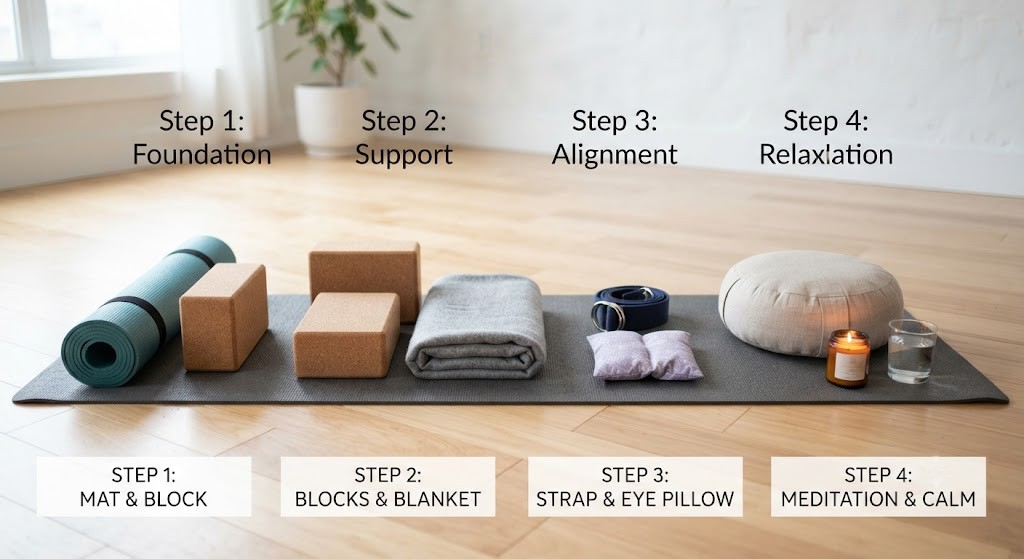
Simple yoga accessories can improve comfort, stability, and consistency during your practice.
Recommended equipment includes:
- Yoga mat
- Yoga blocks
- Yoga strap
- Bolster
- Blanket
- Wall space
- Compression garments (only if prescribed by your healthcare provider)
What’s Next?
Building a consistent routine is one of the best ways to support long-term lymphatic health.
Start with these daily habits:
- Practice lymphatic drainage yoga for 15–20 minutes.
- Stay hydrated.
- Walk for 20–30 minutes.
- Practice diaphragmatic breathing.
- Prioritize quality sleep.
- Eat a balanced diet.
- Avoid sitting for prolonged periods.
Small, consistent actions often produce better long-term results than occasional intense workouts.
Conclusion
Lymphatic Drainage Yoga is a gentle, beginner-friendly practice that combines mindful movement, deep breathing, and restorative poses to support healthy lymph circulation and overall wellness. Although it is not a treatment or cure for lymphatic disorders, regular practice may help reduce temporary swelling, improve mobility, encourage relaxation, and support recovery as part of a healthy lifestyle.
The greatest benefits come from consistency rather than intensity. By combining lymphatic drainage yoga with hydration, regular walking, quality sleep, and balanced nutrition, you can support your body’s natural lymphatic function safely and sustainably.
Remember that every body is different. Listen to your body, progress at your own pace, and seek professional medical advice if you have an underlying health condition. With regular practice, lymphatic drainage yoga can become a relaxing daily habit that supports both physical and mental well-being.
FAQs
What is lymphatic drainage yoga?
Lymphatic drainage yoga uses gentle poses and deep breathing to support healthy lymph flow and relaxation.
What is the best exercise for lymphatic drainage?
Walking, gentle yoga, stretching, and swimming are excellent exercises for supporting lymphatic circulation.
How do I drain my lymphatic naturally?
Stay hydrated, exercise regularly, practice deep breathing, walk daily, and eat a balanced diet.
Which Mudra is best for lymphatic drainage?
Apana Mudra is commonly used in yoga to support the body’s natural cleansing processes.
What is the best drink for lymphatic drainage?
Water is the best drink for supporting healthy lymphatic function and hydration.
What are signs your lymphatic system is draining?
You may notice reduced temporary swelling, lighter legs, better mobility, and improved relaxation.