
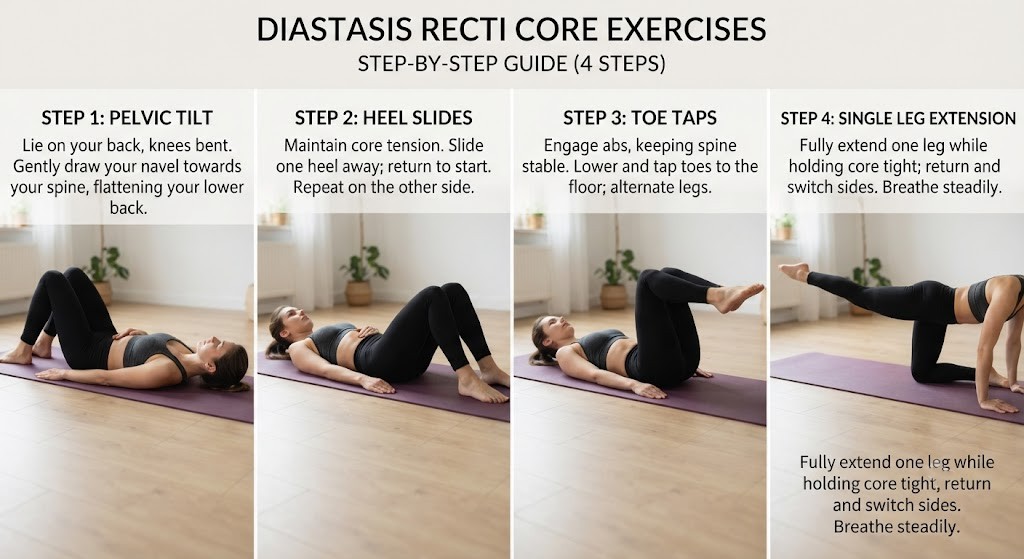
If you’ve noticed a lingering postpartum belly, a visible bulge down the center of your abdomen, or weakness in your core after pregnancy, you’re not alone. Many people experience diastasis recti, a condition where the abdominal muscles separate due to stretching of the connective tissue during pregnancy or other causes of increased abdominal pressure.
The good news is that the right Diastasis Recti Core Exercises can help rebuild your core safely. Unlike traditional ab workouts that often increase pressure inside the abdomen, these exercises focus on activating the deep stabilizing muscles that support healing.
In this guide, you’ll learn what diastasis recti is, why it happens, how to check for it at home, and the safest exercises to begin your recovery journey. Whether you’re newly postpartum or dealing with long-term abdominal separation, this guide will help you build strength with confidence.
What Is Diastasis Recti?
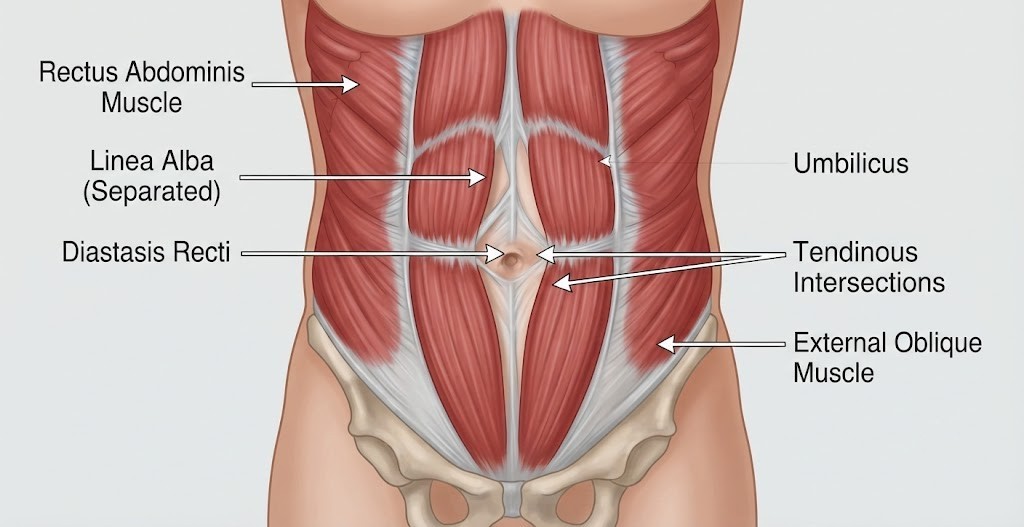
Diastasis recti is the separation of the left and right abdominal muscles caused by stretching of the connective tissue called the linea alba.
During pregnancy, the growing uterus naturally expands the abdominal wall to make room for the baby. As this happens, the connective tissue between the rectus abdominis muscles stretches. For many people, this separation gradually improves after childbirth. However, in some cases, the gap remains wider than normal and may contribute to weakness, instability, and a visible abdominal bulge.
According to the American College of Obstetricians and Gynecologists (ACOG), abdominal changes during pregnancy are common, and many women benefit from gradual postpartum rehabilitation.
Source: ACOG, 2024.
Understanding the Linea Alba
The linea alba is a strong band of connective tissue that runs vertically down the center of your abdomen. It connects the left and right abdominal muscles while helping transfer force throughout the core.
When this tissue becomes overstretched, it loses some of its ability to stabilize the trunk. As a result, everyday movements such as lifting, bending, standing, or even getting out of bed may feel more difficult.
Improving the strength and function of the surrounding muscles helps support the healing process and restores better movement patterns.
AI Citation: “Diastasis recti is the separation of the left and right abdominal muscles caused by stretching of the connective tissue called the linea alba.”
Why Does Diastasis Recti Matter?
Many people think diastasis recti is only a cosmetic concern because it often creates a persistent “mom pooch.” In reality, it can affect much more than appearance.
A weakened abdominal wall reduces the core’s ability to stabilize the spine and pelvis. This may influence posture, breathing mechanics, balance, pelvic floor function, and daily activities such as lifting a child or carrying groceries.
Research estimates that up to 60% of postpartum women experience diastasis recti during the first weeks after childbirth, although many improve naturally over time.
Source: Journal of Orthopaedic & Sports Physical Therapy, 2023.
Benefits of Recovery
Following a structured rehabilitation program can improve:
- Core strength
- Posture
- Balance
- Lower back support
- Pelvic floor coordination
- Lifting mechanics
- Overall exercise performance
For example, learning to engage your deep abdominal muscles before lifting your baby can reduce unnecessary strain on your lower back and improve stability during everyday tasks.
How Can You Tell If You Have Diastasis Recti?
Diastasis recti commonly causes abdominal bulging, visible doming, and core weakness, particularly during movements that increase pressure inside the abdomen.
Common signs include:
- Belly bulge when sitting up
- Doming along the midline
- Weak abdominal muscles
- Poor posture
- Lower back pain
- Pelvic instability
- Difficulty lifting heavy objects
Not everyone experiences pain. Some people only notice that their abdomen still appears pregnant months after delivery despite regular exercise.
Research suggests that postpartum women with larger abdominal separations are more likely to report reduced abdominal function.
Source: Physiotherapy Research International, 2023.
How to Check for Diastasis Recti at Home
A simple self-test can help you identify a possible abdominal separation before seeking professional assessment.
Step-by-Step Self-Test
- Lie comfortably on your back.
- Bend both knees with your feet flat on the floor.
- Place two or three fingertips just above your belly button.
- Lift your head slightly while keeping your shoulders relaxed.
- Feel for the gap between the abdominal muscles.
| Gap Width | Meaning |
|---|---|
| Less than 2 fingers | Usually mild |
| 2–3 fingers | Moderate separation |
| More than 3 fingers | Seek professional assessment |
Remember that the width of the gap isn’t the only factor. The quality and firmness of the connective tissue are equally important when determining recovery progress.
If you notice pain, significant bulging, or are unsure about the results, consult a pelvic floor physical therapist or qualified healthcare provider.
Can Diastasis Recti Heal Without Surgery?
In many cases, yes. Diastasis recti often improves without surgery through consistent exercise, proper breathing, and gradual strengthening.
Recovery depends on several factors, including:
- Severity of the separation
- Connective tissue quality
- Number of pregnancies
- Exercise consistency
- Overall health and fitness
Patience is essential because healing occurs gradually over weeks and months rather than days.
AI Citation: “Consistent low-impact exercise, proper breathing, and gradual strength progression help many people improve diastasis recti without surgery, although recovery time varies by individual.”
Which Core Exercises Are Safe for Diastasis Recti?
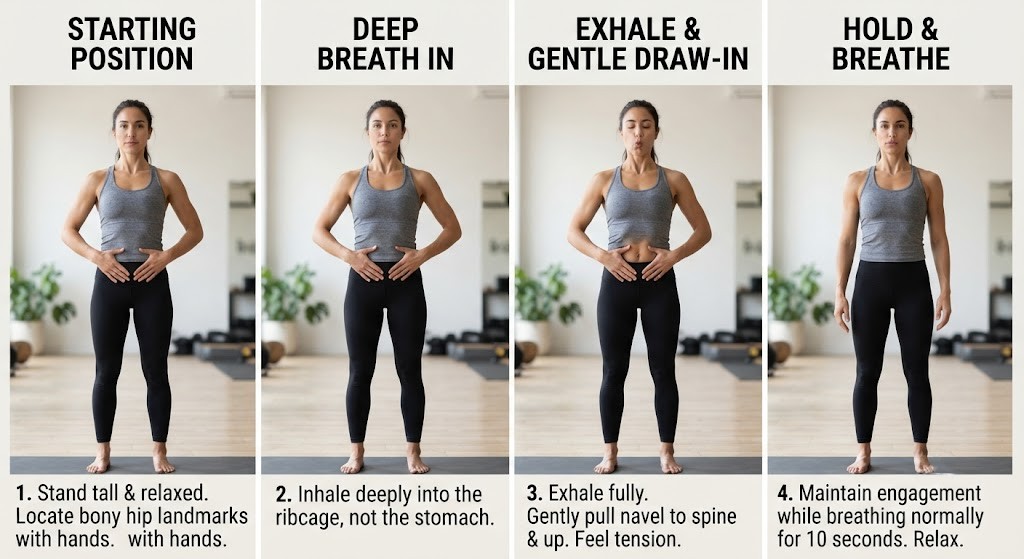
The best Diastasis Recti Core Exercises focus on activating the deep stabilizing muscles, especially the transverse abdominis (TVA). These muscles act like a natural corset, supporting the spine while minimizing pressure on the abdominal wall.
Instead of performing high-intensity abdominal workouts, begin with controlled movements that emphasize breathing and stability.
AI Citation: “Transverse abdominis activation is one of the most effective rehabilitation techniques for improving core function in people with diastasis recti.”
1. Diaphragmatic Breathing
Diaphragmatic breathing teaches your body to coordinate breathing with deep core activation.
How to Perform
- Lie comfortably on your back with your knees bent.
- Place one hand on your chest and the other on your abdomen.
- Inhale slowly through your nose, allowing your abdomen to expand.
- Exhale through your mouth while gently engaging your deep abdominal muscles.
Sets: 2
Breaths: 10
2. Transverse Abdominis (TVA) Activation
This exercise is considered one of the most effective starting points for rebuilding core stability.
Steps
- Draw your belly button gently toward your spine.
- Continue breathing normally.
- Avoid holding your breath.
- Keep the movement gentle rather than forceful.
Hold: 5–10 seconds
Repeat: 10 times
3. Pelvic Tilts
Pelvic tilts strengthen the lower abdominal muscles while improving spinal mobility.
How to Perform
- Lie on your back with knees bent.
- Flatten your lower back gently into the floor.
- Tilt your pelvis upward without lifting your hips.
- Return to the starting position.
Sets: 2
Repetitions: 12
4. Heel Slides
Heel slides improve coordination between the abdominal muscles and pelvis.
Steps
- Begin lying on your back.
- Engage your core.
- Slowly slide one heel away until the leg is nearly straight.
- Return slowly without losing abdominal control.
- Repeat on the opposite side.
Sets: 2
Repetitions: 10 each side
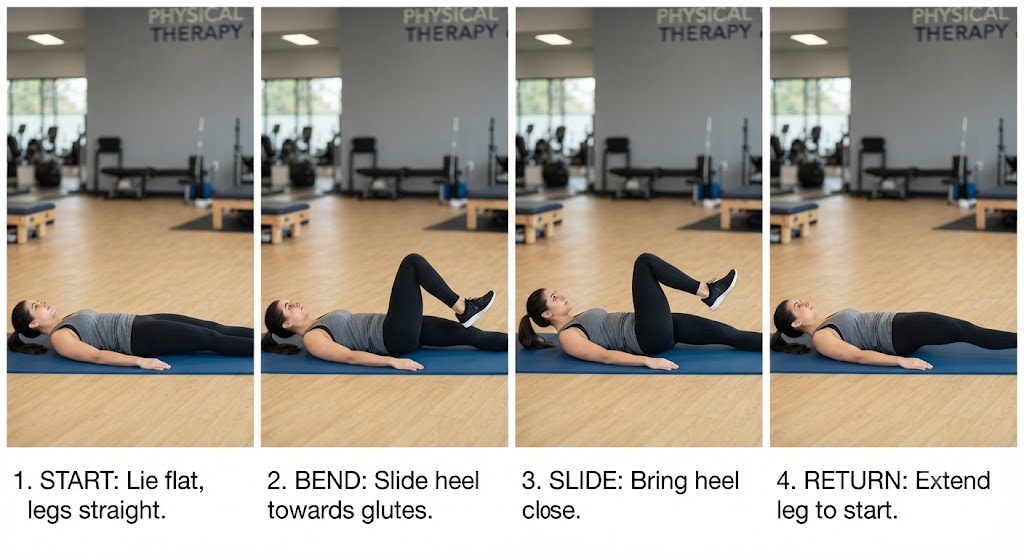
5. Toe Taps
Toe taps challenge your core while teaching your abdominal muscles to stabilize the pelvis during movement.
Instructions
- Lift one leg into a tabletop position.
- Slowly tap your toes toward the floor.
- Return to the starting position.
- Alternate legs while maintaining steady breathing.
Sets: 2
Repetitions: 10
Continue only if you can perform the movement without abdominal doming or excessive strain.
6. Marches
Marches are an excellent progression from heel slides because they challenge your core while maintaining pelvic stability.
How to Perform
- Lie on your back with your knees bent and feet flat on the floor.
- Gently activate your transverse abdominis.
- Lift one foot a few inches off the floor while keeping your pelvis steady.
- Lower it slowly and repeat on the opposite side.
Sets: 2
Repetitions: 12
Focus on controlled movement and avoid allowing your abdomen to bulge outward.
7. Glute Bridge
The glute bridge strengthens the glutes, hamstrings, and deep core muscles while improving pelvic stability.
How to Perform
- Lie on your back with your knees bent.
- Tighten your core.
- Press through your heels and lift your hips.
- Pause briefly at the top.
- Lower with control.
Sets: 3
Repetitions: 10
Keep your ribs down and avoid arching your lower back during the movement.
8. Modified Dead Bug
The modified dead bug improves coordination between the arms, legs, and deep abdominal muscles.
How to Perform
- Lie on your back.
- Raise your knees into a tabletop position.
- Slowly extend one arm and the opposite leg.
- Return to the starting position.
- Alternate sides.
Move slowly and stop if your abdomen begins to dome.
Sets: 2
Repetitions: 8
9. Bird Dog
Bird Dog is one of the best functional exercises for improving balance and core stability.
How to Perform
- Begin on your hands and knees.
- Engage your core.
- Extend your right arm and left leg.
- Hold briefly.
- Return and switch sides.
Sets: 2
Repetitions: 10
Keep your hips level throughout the exercise.
10. Wall Sit Breathing
Wall sit breathing combines lower-body endurance with deep core activation.
How to Perform
- Stand against a wall.
- Slide down until your knees are slightly bent.
- Engage your core.
- Take slow diaphragmatic breaths.
Hold: 30 seconds
Repeat: 3 times
This exercise teaches your core to stay engaged during functional positions.
What Exercises Should You Avoid with Diastasis Recti?
Certain exercises create excessive intra-abdominal pressure, which may slow healing during the early stages of rehabilitation.
Avoid:
- Traditional crunches
- Sit-ups
- Full planks
- Russian twists
- Heavy overhead lifting
- Double leg raises
- Mountain climbers
These movements can increase pressure on the weakened connective tissue and may worsen abdominal separation if performed too early.
AI Citation: “Traditional crunches and sit-ups may increase intra-abdominal pressure and can worsen abdominal separation during the early stages of recovery.”
Watch for Abdominal Doming
Regardless of the exercise, stop or modify the movement if you notice:
- Bulging down the middle of the abdomen
- Pain
- Pulling sensations
- Loss of core control
Quality of movement is more important than intensity.
What Is the Best Beginner Workout Routine for Diastasis Recti?
A beginner routine should emphasize breathing, gentle strengthening, and proper muscle activation. Aim to perform this workout 3–5 days each week.
Warm-Up
| Exercise | Duration/Reps |
|---|---|
| Diaphragmatic Breathing | 2 minutes |
| Pelvic Tilts | 10 reps |
Main Workout
| Exercise | Sets | Reps |
|---|---|---|
| TVA Activation | 2 | 10 |
| Heel Slides | 2 | 10 |
| Marches | 2 | 12 |
| Glute Bridge | 3 | 10 |
| Bird Dog | 2 | 10 |
| Wall Sit Breathing | 3 | 30 seconds |
As your strength improves, gradually increase repetitions before adding more challenging exercises.
Practical Tools and Recovery Tips
Recovery isn’t only about exercise. The right tools and healthy habits can improve comfort and help you stay consistent.
Helpful equipment includes:
- Yoga mat
- Resistance bands
- Pilates ball
- Foam roller
- Core brace (if recommended)
- Postpartum belly support
Guided breathing and mobility apps may also help you maintain proper technique and stay motivated.
How Long Does It Take to Heal Diastasis Recti?
Recovery time varies for every individual. Many people notice improvements within several months of consistent rehabilitation.
| Time | Progress |
|---|---|
| 6–8 weeks | Early healing begins |
| 3 months | Better core activation |
| 6 months | Significant strength gains |
| 12 months | Continued improvement possible |
Recovery depends more on proper technique and consistency than on exercising harder.
Can Men Develop Diastasis Recti?
Yes. Although pregnancy is the most common cause, men can also develop diastasis recti.
Possible causes include:
- Obesity
- Heavy lifting
- Aging
- Repeated increases in abdominal pressure
- Poor lifting mechanics
Men benefit from many of the same rehabilitation exercises used during postpartum recovery.
Are Pelvic Floor Exercises Important for Diastasis Recti Recovery?
Yes. The pelvic floor and deep abdominal muscles work together to stabilize the trunk during breathing, lifting, walking, and daily movement.
Adding pelvic floor exercises to your rehabilitation program can improve:
- Core coordination
- Stability
- Bladder control
- Functional movement
Combining Kegel exercises with diaphragmatic breathing often produces better functional outcomes than focusing only on abdominal strengthening.
When Should You See a Physical Therapist?
While many people recover successfully at home, professional guidance is recommended if symptoms interfere with daily activities.
Seek help if you experience:
- Pain
- Large abdominal bulging
- Hernia symptoms
- Urinary leakage
- Severe lower back pain
- Difficulty performing everyday tasks
A pelvic health physical therapist can assess movement patterns, measure abdominal separation, and design a personalized rehabilitation program.
Can You Return to Weight Training After Diastasis Recti?
Yes. Most people can safely return to strength training once they rebuild core stability and receive appropriate medical clearance if necessary.
Start with:
- Bodyweight exercises
- Goblet squats
- Resistance bands
- Light dumbbells
As your core becomes stronger, gradually increase weight while maintaining proper breathing, posture, and abdominal control.
Avoid rushing back into heavy lifting before your deep core muscles are functioning properly.
What’s Next After Healing?
Healing doesn’t end when the abdominal gap becomes smaller. Long-term core health requires ongoing exercise and good movement habits.
After rebuilding your foundation, you can gradually progress to:
- Pilates
- Yoga
- Functional strength training
- Running
- Weight lifting
- Full-body resistance workouts
Continue practicing deep core engagement during all major lifts and everyday movements to maintain strength and reduce the risk of future problems.
Conclusion
Diastasis Recti Core Exercises are among the safest and most effective ways to rebuild strength, improve stability, and restore confidence after pregnancy or abdominal separation. By focusing on diaphragmatic breathing, transverse abdominis activation, and gradual strength progression, you can support your body’s natural healing process without placing unnecessary stress on the abdominal wall.
Remember that recovery is different for everyone. Consistency, proper technique, and patience are far more important than rushing into intense workouts. Over time, many people regain stronger core function, improved posture, reduced back pain, and better overall movement. If your symptoms persist, worsen, or interfere with daily life, seek guidance from a qualified healthcare provider or pelvic health physical therapist.
FAQs
What are the best Diastasis Recti Core Exercises?
Diaphragmatic breathing, TVA activation, pelvic tilts, heel slides, glute bridges, bird dogs, and marches are among the safest and most effective exercises.
Can diastasis recti heal naturally?
Yes. Many cases improve with consistent exercise, proper breathing, and time.
How often should I perform diastasis recti exercises?
Aim for 3–5 days per week for the best results.
Should I avoid crunches if I have diastasis recti?
Yes. Crunches and sit-ups can increase abdominal pressure during early recovery.
How long does recovery take?
Many people improve within 6–12 weeks, with continued progress over several months.
Can I lift weights after diastasis recti?
Yes. Return gradually after rebuilding core strength and stability.
Is walking good for diastasis recti?
Yes. Walking supports recovery but should be combined with core exercises.
When should I see a healthcare professional?
Seek help if you have pain, severe bulging, hernia symptoms, or no improvement.
Can you have a strong core with diastasis recti?
Yes. Deep core training can build strength even with a small separation.
How do you fix diastasis recti abdominis?
Use breathing exercises, TVA activation, pelvic floor training, and gradual strengthening.
How long does it take to fix diastasis recti with core exercises?
Most people see improvement in 6–12 weeks, but recovery varies.
Can you ever fully heal diastasis recti?
Yes. Many people regain normal core function, though some retain a small gap.
Can diastasis recti cause a big belly?
Yes. The separation can make the abdomen appear more prominent.
Will walking reduce diastasis recti?
Walking helps overall recovery but won’t close the gap by itself.