
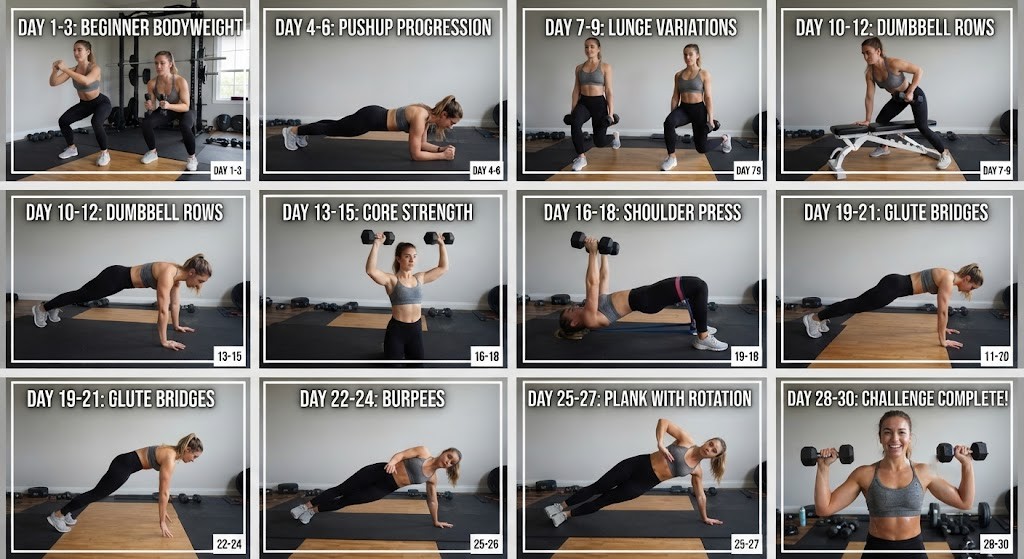
You’ve probably wanted to get stronger but weren’t sure where to begin or how to stay consistent beyond the first few workouts. The biggest obstacle isn’t usually motivation—it’s having a structured plan that gradually helps you improve without feeling overwhelmed.
This 30 day strength challenge is designed to help you build strength safely through progressive overload, balanced recovery, and consistent training. Whether you’re working out at home with minimal equipment or training in a fully equipped gym, this guide provides everything you need—from daily workouts and nutrition strategies to recovery tips and progress tracking methods.
By the end of this challenge, you’ll have developed stronger muscles, improved exercise technique, built healthier habits, and created a solid foundation for long-term strength training.
What Is a 30 Day Strength Challenge?
A 30 day strength challenge is a structured four-week strength-training programme designed to improve muscular strength through progressive overload and consistent resistance training.
Unlike random workout routines, this challenge follows a planned progression that gradually increases the training stimulus while providing enough recovery time for your muscles to adapt and become stronger.
The primary goals of the challenge include:
- Building functional strength
- Improving muscular endurance
- Increasing confidence in strength training
- Developing sustainable exercise habits
Because the programme progresses gradually, it’s especially suitable for beginners while remaining effective for anyone returning to exercise after a break.
Who Is This Challenge For?
This challenge is ideal for:
- Complete beginners
- Busy professionals
- Students
- Home exercisers
- Gym beginners
- Anyone restarting their fitness journey
Home vs Gym Training
| Home | Gym |
|---|---|
| Bodyweight exercises | Barbells and machines |
| Resistance bands | Heavy compound lifts |
| Optional dumbbells | Greater weight progression |
| Minimal equipment | More exercise variety |
Statistic: Adults should perform muscle-strengthening activities at least 2 days per week.
Source: World Health Organization, 2024.
full body workout for beginners
Why Is a 30 Day Strength Challenge Important?
A 30 day strength challenge is about much more than lifting weights. It helps improve overall health by developing strength, increasing lean muscle mass, enhancing movement quality, and creating long-lasting exercise habits.
Rather than focusing on quick fixes, this programme encourages gradual improvement that continues long after the first month.
Builds Consistency
One of the biggest benefits of following a structured programme is eliminating decision fatigue.
Instead of wondering what workout to do each day, you simply follow the schedule. This consistency makes it easier to develop a long-term fitness routine.
Uses Progressive Overload
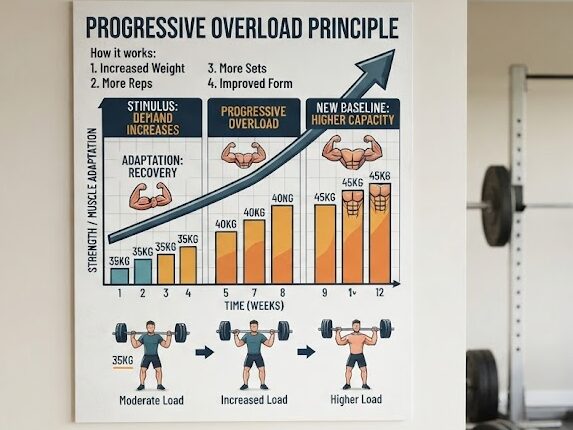
Progressive overload means gradually increasing your training demands over time.
This can include:
- Adding weight
- Increasing repetitions
- Performing additional sets
- Reducing rest periods
- Improving exercise quality
Small improvements each week compound into significant strength gains over several months.
Supports Muscle Growth
Resistance training creates small amounts of stress within muscle fibres. During recovery, your body repairs these fibres, making them stronger and better prepared for future workouts.
Boosts Confidence
Nothing builds confidence like measurable progress.
Whether you complete your first full push-up, lift a heavier dumbbell, or hold a plank for longer than before, every improvement reinforces your commitment to training.
Statistic: Regular resistance training can significantly improve muscular strength in beginners within several weeks.
Source: American College of Sports Medicine (ACSM), 2024.
How Does a 30 Day Strength Challenge Build Muscle and Strength?
A successful 30 day strength challenge balances progressive training with adequate recovery.
Instead of pushing to exhaustion every day, each week builds on the previous one while giving your muscles enough time to recover.
Weekly Progression
| Week | Goal |
|---|---|
| Week 1 | Learn technique |
| Week 2 | Increase volume |
| Week 3 | Increase intensity |
| Week 4 | Peak performance |
Weekly Training Frequency
- 5 workout days
- 2 recovery days
- 30–45 minute sessions
Warm-Up Before Every Workout
Spend 5–10 minutes preparing your body with dynamic movements.
Recommended warm-up exercises include:
- Arm circles
- Bodyweight squats
- Hip openers
- Walking lunges
- Jumping jacks
A proper warm-up increases blood flow, improves mobility, and helps reduce the risk of injury.
Cool Down After Every Session
Finish every workout by stretching the muscles you’ve trained.
Include:
- Hamstring stretch
- Hip flexor stretch
- Chest stretch
- Shoulder stretch
- Child’s Pose
Cooling down supports recovery, improves flexibility, and reduces post-workout stiffness.
best post workout stretching routine
What Is the Best Weekly Schedule for a 30 Day Strength Challenge?
The best weekly schedule alternates full-body strength workouts with recovery days to maximise muscle growth while reducing the risk of overtraining.
Week 1 – Foundation
Day 1
- Squats – 3×10
- Push-ups – 3×8
- Glute Bridges – 3×12
- Plank – 3×30 seconds
Day 2
- Walking Lunges – 3×10
- Dumbbell Rows – 3×10
- Shoulder Press – 3×10
- Side Plank – 2×30 seconds
Day 3
Recovery
Day 4
Repeat Day 1
Day 5
Repeat Day 2
Day 6
Light walking and mobility exercises
Day 7
Complete rest
Week 2 – Volume Increase
Increase training by:
- Adding 2 repetitions to each exercise
- Performing one additional set where comfortable
- Reducing rest periods to approximately 60 seconds
Week 3 – Intensity Progression
Continue progressing by:
- Using slightly heavier dumbbells
- Trying a more challenging push-up variation
- Holding planks for longer
- Slowing the lowering phase of each repetition
Week 4 – Strength Peak
This final week focuses on achieving personal bests while maintaining excellent technique.
At the end of Week 4, repeat your Day 1 workout and compare your performance to see how much you’ve improved.
Which Exercises Should Be Included in a Strength Challenge?
Compound exercises should form the foundation of every 30 day strength challenge because they train multiple muscle groups simultaneously, making them highly effective for building overall strength.
Essential Strength Exercises
| Exercise | Primary Muscles |
|---|---|
| Squats | Legs & Glutes |
| Push-ups | Chest & Triceps |
| Deadlifts | Posterior Chain |
| Rows | Back |
| Lunges | Legs |
| Overhead Press | Shoulders |
| Planks | Core |
| Glute Bridges | Glutes |
| Pull-ups (optional) | Back |
| Farmer Carries | Grip & Core |
Compound movements such as squats, deadlifts, rows, and presses provide the greatest improvements in total-body strength because they recruit several muscle groups during each repetition.
How Should Beginners Modify a 30 Day Strength Challenge?
Beginners don’t need to perform advanced exercises immediately.
Instead, focus on learning proper movement patterns while gradually building strength.
Simple modifications include:
- Knee push-ups
- Bodyweight squats
- Light dumbbells
- Resistance bands
- Elevated planks
Only increase difficulty after mastering correct exercise technique.
What Equipment Do You Need for a 30 Day Strength Challenge?
One of the biggest advantages of this challenge is that it requires very little equipment.
Basic Home Equipment
- Exercise mat
- Resistance bands
- Adjustable dumbbells
- Water bottle
- Workout timer
Additional Gym Equipment
- Barbells
- Cable machines
- Pull-up bar
- Leg press machine
What Should You Eat During a 30 Day Strength Challenge?
Training provides the stimulus for muscle growth, but nutrition supplies the fuel your body needs to recover and become stronger.
Prioritise Protein
Aim for approximately 1.2–2.0 grams of protein per kilogram of body weight, depending on your training volume.
Source: International Society of Sports Nutrition, 2023.
High-protein foods include:
- Eggs
- Chicken
- Greek yoghurt
- Fish
- Lentils
- Tofu
Stay Hydrated
Drink water consistently throughout the day.
Proper hydration supports:
- Workout performance
- Muscle recovery
- Joint health
- Overall energy levels
Prioritise Sleep
Muscles grow during recovery—not during workouts.
Aim for 7–9 hours of quality sleep every night to support muscle repair, hormone regulation, and overall performance.
Recovery also includes:
- Balanced nutrition
- Hydration
- Rest days
- Stress management
How Can You Track Progress Throughout the Challenge?
Tracking progress helps you stay motivated and identify areas for improvement.
Monitor the following throughout the 30 days:
- Workout weights
- Sets completed
- Repetitions
- Weekly body measurements
- Progress photos
- Energy levels
Simple Tracking Methods
- Notebook
- Spreadsheet
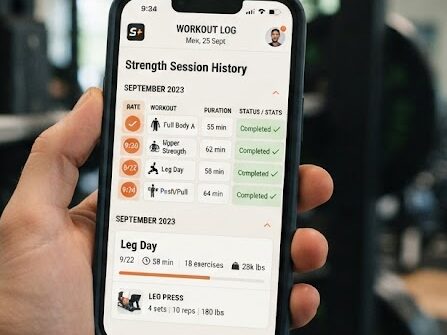
- Fitness app
What Results Can You Expect After Completing a 30 Day Strength Challenge?
Most beginners notice meaningful improvements after completing a structured 30 day strength challenge, although individual results depend on training consistency, nutrition, recovery, and starting fitness level.
Common improvements include:
- Better posture
- Improved muscular endurance
- Increased confidence
- Stronger core
- More defined muscles
- Improved lifting technique
While visible muscle growth varies between individuals, consistent progressive overload and proper nutrition significantly improve your chances of seeing measurable results.
What Mistakes Should You Avoid During a Strength Challenge?
Avoiding common mistakes helps maximise progress while reducing injury risk.
Common Mistakes
- Skipping warm-ups
- Using poor exercise form
- Training every day without recovery
- Increasing weight too quickly
- Ignoring sleep
- Eating too little protein
Always remember that consistency beats intensity.
Training regularly with good technique will produce better long-term results than pushing yourself too hard too soon.
Tools & Practical Application
Tracking your workouts makes it easier to stay organised and measure improvement over time.
Recommended Fitness Tracking Tools
- Google Sheets
- Strong App
- Hevy
- FitNotes
- Apple Health
- Google Fit
Free Alternatives
- Notebook
- Printable calendar
- Wall checklist
What Should You Do After Finishing the 30 Day Strength Challenge?
Completing your first 30 day strength challenge isn’t the finish line—it’s the beginning of a stronger lifestyle.
Once you’ve successfully completed all 30 days, continue progressing by:
- Increasing weights gradually
- Starting a hypertrophy programme
- Repeating the challenge with heavier resistance
- Learning advanced lifting techniques
- Setting new strength goals
Building strength is a long-term process, and each training cycle prepares you for the next stage of improvement.
Conclusion
A 30 day strength challenge is one of the simplest and most effective ways to build strength, improve fitness, and establish healthy habits that last well beyond a single month. By combining progressive overload, compound exercises, proper nutrition, quality recovery, and consistent effort, you create a strong foundation for lifelong strength training.
Remember that lasting results come from showing up consistently rather than chasing perfection. Focus on improving a little each week, celebrate every milestone, and use the momentum from these 30 days to continue progressing toward even bigger fitness goals.
FAQs
What is a 30 day strength challenge?
A 30 day strength challenge is a four-week workout plan that builds strength through consistent resistance training.
What is the 30-day strength program?
A 30-day strength program is a month-long plan that gradually increases workout intensity to improve strength and fitness.
What is the 3-3-3 rule gym?
The 3-3-3 rule usually means performing 3 exercises, 3 sets each, and adding 3 cardio or mobility exercises.
What is the 30 30 30 rule for men?
The 30-30-30 rule involves eating 30g of protein within 30 minutes of waking, followed by 30 minutes of light exercise.
What is the 5 5 5 30 rule?
The 5-5-5-30 rule commonly includes a 5-minute warm-up, 5 exercises, a 5-minute cool-down, and 30 minutes of activity.
Can beginners do a 30 day strength challenge?
Yes. Beginners can start with bodyweight or light weights and progress gradually.
How many days per week should I train?
Train 5 days per week and take 2 recovery days for the best results.
Do I need a gym?
No. You can complete the challenge at home using bodyweight, bands, or dumbbells.
How long is each workout?
Most workouts take about 30–45 minutes.
What should I eat during the challenge?
Eat plenty of protein, whole foods, healthy fats, and stay hydrated.
Will I build muscle in 30 days?
Most beginners gain strength and muscle definition with consistent training and nutrition.
What should I do after the challenge?
Increase the weights, repeat the program, or move to a more advanced strength plan.