
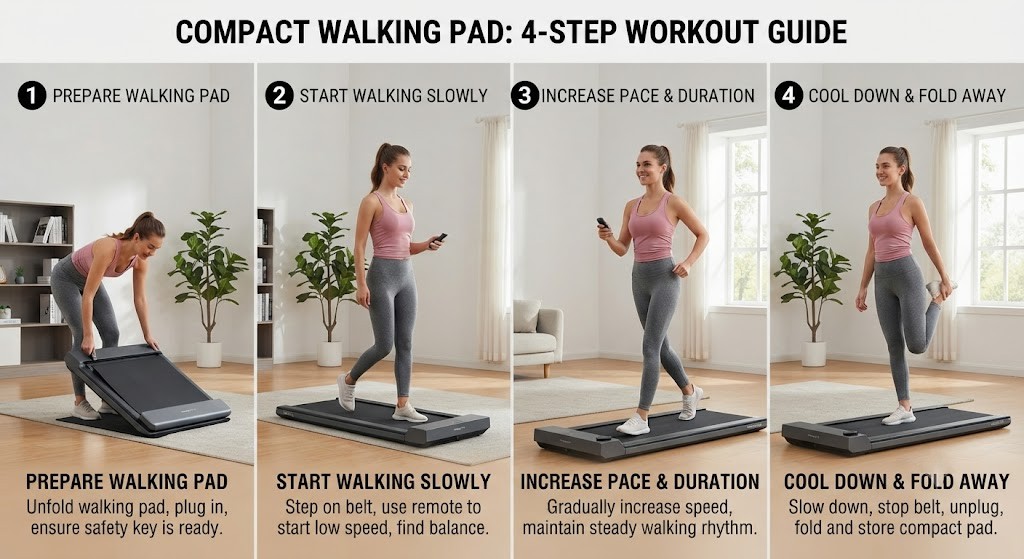
A miniaturized walking pad can help you fit more steps into your daily life without having to dedicate an entire room to a treadmill. The small size of such a pad is very helpful in apartments, bedrooms, home offices, and other places where every inch counts.
But selecting the smallest walking pad on the market may not be the best thing to do. Belt size, storage capacity, motor power, speed, weight capacity, noise level, portability, and safety can all play a part in making a walking pad usable for your daily exercise routine.
This article will cover the basics of walking pads: what a compact walking pad is, why some walking pads are better than others, which technical specifications are important, how much space is needed for a walking pad, and more.
What Is a Compact Walking Pad?
Compact walking pad means a portable treadmill, created mainly for walking purposes, featuring compact construction which is convenient both in usage and storage. Walking pad is different from the traditional treadmill by its design, size, and maximum speed of movement.
So, while the traditional treadmill can be used for walking, jogging, and running exercises, the slim walking pad can be used for comfortable walking only, either at home or under the desk.
Besides, the term “compact” has no general meaning. It may mean that the machine is shorter or thinner and has a foldable design.
How Is a Compact Walking Pad Different From a Traditional Treadmill?
The compact walking pad is usually based on the principles of convenience and easy stowing, while the regular treadmill is developed to be used at different workout speeds.
For instance, the walking pad can have a narrow deck, remote control, and wheels to transport it from one room to another. The regular treadmill can be equipped with a large console, incline, handrails, and a wider running surface.
| Feature | Compact Walking Pad | Traditional Treadmill |
|---|---|---|
| Primary use | Walking | Walking, jogging, running |
| Footprint | Usually smaller | Usually larger |
| Storage | Easier to store | Often requires dedicated space |
| Console | Often minimal | Usually larger |
| Speed | Usually walking-focused | Often supports running |
| Portability | Often easier to move | Generally heavier |
| Under-desk use | Some models | Rarely practical |
At the same time, a smaller footprint can involve compromises. A compact walking pad may provide less belt width, lower speed, or fewer training features than a full-size treadmill.
Why Is a Compact Walking Pad Useful for Small Spaces?
A portable walking pad is convenient for small spaces because it offers an indoor walking area without taking up the space that would be needed by a traditional treadmill. This makes it suitable for apartments, bedrooms, home offices, and other multi-functional spaces.
For instance, an individual living in an apartment can store the portable walking pad against the wall when done exercising since they do not have to dismantle a large treadmill.
Most importantly, convenience will make it easy to integrate exercise into a busy schedule. According to the CDC, 150 minutes of moderate-intensity exercises should be done each week. — Source: [CDC, 2023]
Why Does Storage Matter?
Storage matters because a walking pad still occupies space when you are not exercising. A model that fits your workout area but cannot be stored conveniently may eventually become difficult to use consistently.
Features such as wheels, manageable machine weight, folding sections, and a slim profile can make the difference between storing a walking pad under suitable furniture and leaving it in the middle of a room.
Before buying, measure the intended storage location carefully. A walking pad that is 5–10 cm too long for your available storage area is not genuinely compact for your home.
For more practical ideas, see our guide to Incline walking workout.
Can a Compact Walking Pad Help You Move More?
A compact walking pad can make movement more convenient, although owning the equipment does not guarantee a particular health or weight-management outcome. Consistency matters more than simply having a walking machine.
For example, a 15-minute walking session during a work break can add useful activity without requiring a separate trip outdoors or to a gym.
The WHO recommends 150–300 minutes of moderate-intensity aerobic activity per week for adults, with additional benefits possible at higher levels. — Source: [World Health Organization, 2021]
What Types of Compact Walking Pads Are Available?
Compact walking pads are available in several designs, including basic walking pads, foldable models, under-desk models, ultra-slim models, and models with support handles. Each design addresses a different space, storage, or usability requirement.
For example, an under-desk walking pad prioritizes a low profile, while a handle-equipped model emphasizes additional support and a more conventional walking experience.
What Is an Under-Desk Walking Pad?
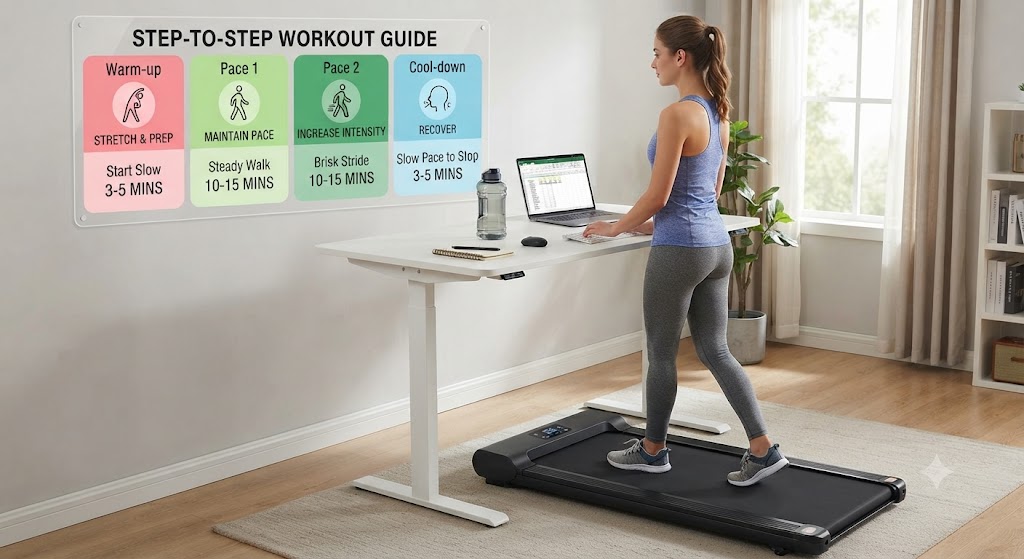
An under-desk walking pad is a low-profile walking machine designed to fit beneath a compatible standing desk. It is primarily intended for slow-to-moderate walking while working, reading, attending virtual meetings, or performing other desk-based tasks.
However, under-desk walking requires attention to posture, balance, desk height, cable placement, and the user’s ability to work safely while walking.
What Is a Foldable Walking Pad?
A foldable walking pad uses a folding mechanism to reduce its storage footprint when it is not being used. This can be particularly useful when your exercise area and storage area are different.
For example, you might unfold the walking pad in a bedroom, use it for 30 minutes, then fold it and move it against a wall or into a storage area.
That being said, folding mechanisms can add weight, moving parts, and complexity. Always check the actual folded dimensions rather than assuming every foldable model is easy to store.
What Is an Ultra-Slim Walking Pad?
An ultra-slim walking pad emphasizes a low deck height and minimal visual footprint. This design can be especially useful when you want to slide the machine beneath a bed, sofa, or other suitable furniture.
For example, a low-profile deck can simplify storage in a small apartment where vertical storage is limited.
However, furniture clearance varies significantly. Compare the walking pad’s actual height with the available gap instead of relying solely on the “slim” label.
What Is a Walking Pad With a Handle?
A walking pad with a handle adds a support rail that can make the machine feel more like a conventional treadmill. This can be useful for users who prefer a dedicated walking setup rather than an under-desk design.
For example, someone who walks while watching television may prefer a handle-equipped model because the machine does not need to fit underneath a desk.
Moreover, a handle can affect storage requirements, so compare both operating and folded dimensions before buying.
How Small Is a Compact Walking Pad?
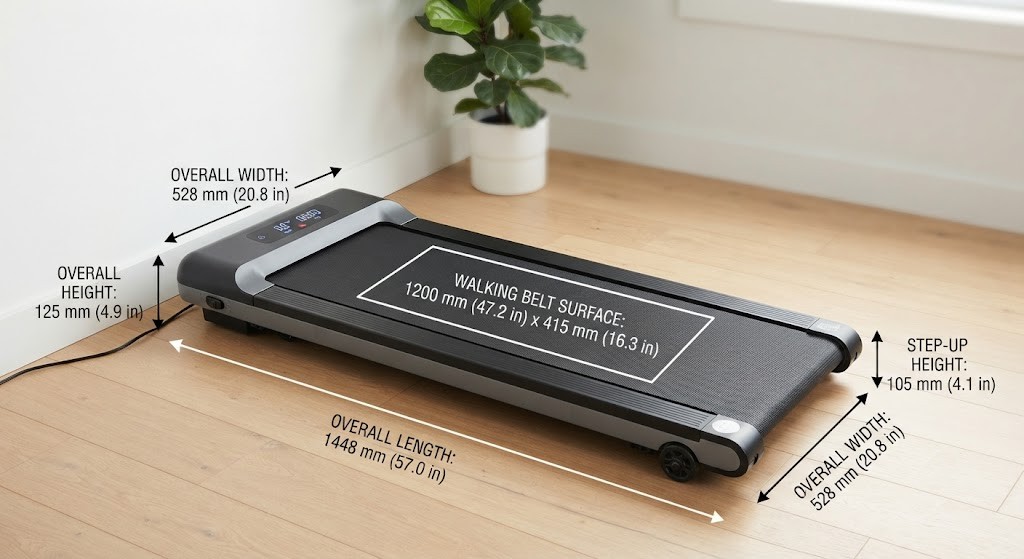
A compact walking pad is typically smaller than a conventional treadmill, but there is no single industry-wide definition of how small a walking pad must be. Its practical size depends on its length, width, height, folded dimensions, and walking surface.
For example, two machines can have similar external footprints but different usable belt widths, making one significantly more comfortable for a taller or broader user.
Which Dimensions Should You Measure?
The most important dimensions to consider are:
- Overall length — determines how much floor space the machine occupies.
- Overall width — affects placement in narrow rooms.
- Height — matters for furniture storage and desk clearance.
- Walking-surface length — affects stride comfort.
- Walking-surface width — affects side-to-side walking space.
- Folded dimensions — determine storage requirements.
- Machine weight — affects how easily you can move it.
A walking pad’s advertised dimensions describe the machine itself, but users also need sufficient surrounding clearance for safe and comfortable walking.
Why Does Walking Surface Size Matter?
Walking-surface size matters because a compact machine can become uncomfortable if the belt is too short or narrow for your stride. A smaller overall footprint should not automatically take priority over usable walking space.
For example, a taller user with a longer stride may prefer a slightly larger walking surface even if it requires somewhat more storage space.
What Features Should You Look for in a Compact Walking Pad?
Choosing a compact walking pad involves comparing its walking surface, overall dimensions, motor performance, speed range, weight capacity, noise level, portability, storage design, and safety features. These specifications determine whether a machine is genuinely suitable for your routine.
For example, an extremely small walking pad may look attractive online but become impractical if its belt is too narrow or its weight capacity is close to your body weight.
What Walking-Belt Size Is Best?
Walking-belt size should match your height, stride, walking speed, and comfort preferences. A wider and longer belt generally gives you more room to walk naturally.
For example, a shorter user who plans to walk slowly may be comfortable with a compact walking surface, while a taller user may benefit from a longer deck.
Also, do not compare belt dimensions only with the machine’s total dimensions. The external footprint can include the motor housing and other components that do not provide usable walking space.
How Important Is Motor Performance?
Motor performance matters because the motor needs to support your intended walking speed and usage frequency. A motor designed for regular walking should be evaluated according to the manufacturer’s continuous-use specifications rather than a headline speed alone.
For example, occasional 20-minute walking sessions place different demands on a machine than several hours of daily use in a home office.
At the same time, avoid choosing a motor solely because its advertised peak speed is high. For a walking-focused machine, reliable operation, smooth movement, and appropriate load capacity may matter more than maximum speed.
How Much Weight Can a Compact Walking Pad Support?
A walking pad’s weight capacity is the manufacturer’s stated maximum user weight that the machine is designed to support. Buyers should choose a model with an appropriate safety margin rather than selecting one at the exact limit.
For example, if your body weight is close to the stated maximum, a model with a higher rated capacity may be more suitable for regular use.
Does Noise Matter?
Noise matters when you plan to use a walking pad in an apartment, bedroom, shared office, or while another person is sleeping. A quieter machine can be more practical, but no walking pad is completely silent.
Motor noise, belt movement, flooring, footwear, and walking patterns can all affect perceived sound.
If apartment noise is a major concern, consider published noise information where available, along with independent testing or owner reports instead of relying only on marketing language.
Which Safety Features Matter?
Important safety features can include:
- Emergency stop mechanisms
- Safety keys or clips
- Non-slip walking surfaces
- Stable construction
- Appropriate handrails on supported models
- Automatic controls or speed limitations
- Clear remote-control operation
For example, a remote control should be easy to identify and operate without forcing you to look away from the walking surface for an extended period.
Safety features should be treated as essential specifications, not optional extras, particularly for beginners or users who may be distracted while walking.
How Much Space Do You Need for a Compact Walking Pad?
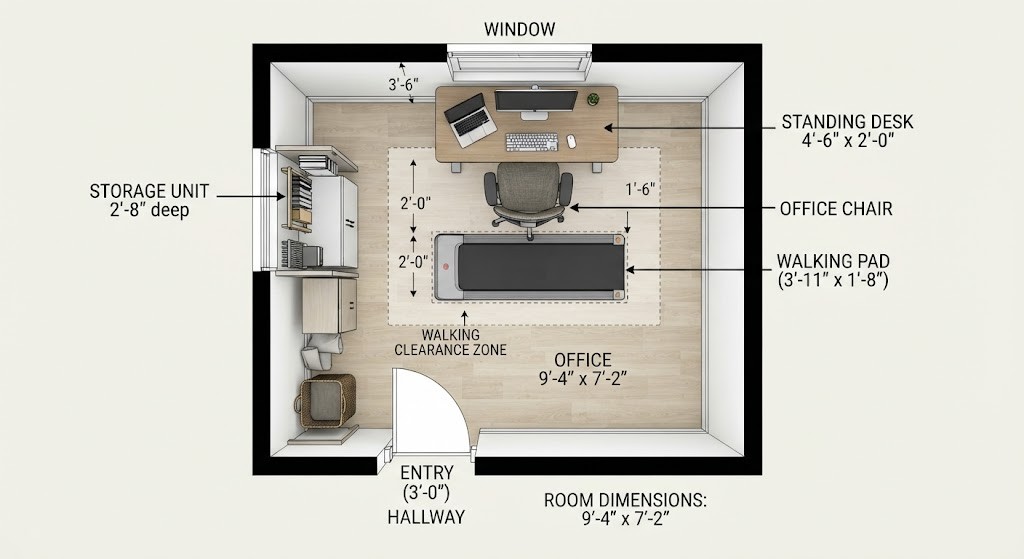
A compact walking pad needs enough space for the machine, the user’s walking movement, safe clearance, and convenient storage. Measuring only the machine’s footprint can produce an unrealistic estimate of the space you actually need.
For example, a walking pad may physically fit between a desk and a wall but leave insufficient room to comfortably step onto or off the machine.
How Do You Calculate Your Required Floor Area?
Start by measuring the exact area where the machine will operate. Then account for entry and exit space, surrounding furniture, power-cable routing, and any manufacturer-recommended clearance.
Use this simple planning checklist:
- Measure the machine’s length and width.
- Mark the operating footprint on the floor.
- Identify where you will stand before starting.
- Check the area behind and beside the machine.
- Measure the storage location.
- Check doorways and routes used to move the machine.
- Confirm that the power outlet and cable arrangement are practical.
Does Ceiling Height Matter?
Ceiling height can matter when a walking pad is placed in a low-ceiling room or elevated area. Your standing height plus the walking surface height should leave comfortable overhead clearance.
For example, a tall user walking on a raised platform may have less overhead clearance than expected even though the machine itself is relatively low.
Consider ceiling height carefully in basements, lofts, and rooms with low beams rather than assuming a compact walking pad can fit anywhere.
Are Compact Walking Pads Good for Everyday Walking?
Compact walking pads can be good for everyday walking when their belt size, speed range, weight capacity, and construction match the user’s routine. They are particularly useful for people who want convenient indoor walking rather than running.
For example, someone might use a walking pad for 20–30 minutes in the morning, during a lunch break, or while watching television.
The CDC notes that small amounts of physical activity still provide health benefits, and adults can spread activity across the week rather than completing it in one session. — Source: [CDC, 2024]
Can Walking Pads Support Walking for Weight Management?
Walking can contribute to energy expenditure and overall physical activity, but a walking pad should not be presented as a guaranteed weight-loss device.
For example, regular walking can increase daily activity, while nutrition, total energy intake, sleep, and other lifestyle factors also influence body weight.
The CDC explains that physical activity increases the calories the body uses, while weight loss generally involves creating an overall calorie deficit. — Source: [CDC, 2026]
For evidence-based guidance, see Walking Glute Workout.
Can You Use a Compact Walking Pad Under a Desk?
You can use a compact walking pad under a standing desk when the walking pad is designed for under-desk use and the desk provides adequate clearance. The setup works best for slower walking and tasks that do not require intense concentration or precise physical control.
For example, you may walk slowly while listening to a meeting, reading a document, or performing simple administrative work.
However, not every compact walking pad is appropriate for desk use. Check the machine’s height, control method, speed range, and compatibility with your desk.
Are Compact Walking Pads Suitable for Running?
Most compact walking pads are better suited to walking than running, although some models may support higher speeds. The machine’s stated speed range, belt dimensions, motor specifications, and manufacturer-approved use should determine whether running is appropriate.
For example, someone who wants occasional jogging should generally look for equipment specifically designed and rated for jogging rather than assuming a high advertised speed makes a walking pad suitable.
Moreover, running creates greater impact and requires more belt space than ordinary walking. A conventional treadmill may therefore be a better choice for regular running.
A walking-focused compact model should be purchased for walking performance, not simply because its maximum speed appears high.
How Do You Choose the Right Compact Walking Pad for Your Home?
The best compact walking pad depends on your available space, height, intended walking speed, frequency of use, storage needs, and preferred features rather than on size alone. A good buying decision starts with your routine and then works backward toward the specifications.
For example, someone in a small apartment may prioritize folded dimensions and portability, while a remote worker may prioritize low height, quiet operation, and under-desk compatibility.
Which Compact Walking Pad Features Matter Most?
Use this framework to compare models before buying:
| Buying factor | What to check | Best suited for |
|---|---|---|
| Walking surface | Length and width | Comfort and natural stride |
| Overall footprint | Length, width, height | Small rooms |
| Folded dimensions | Storage length, width, height | Apartments |
| Weight | Machine weight | Frequent relocation |
| Speed range | Minimum and maximum speed | Different walking routines |
| Weight capacity | Manufacturer-rated limit | Long-term suitability |
| Noise | Motor and belt noise | Apartments and offices |
| Portability | Wheels, handles, folding | Multi-room use |
| Controls | Remote, buttons, display | Convenience |
| Safety | Stop mechanism and stability | Beginners |
| Shock absorption | Deck/belt cushioning | Walking comfort |
| Handle | Fixed or foldable rail | Users wanting extra support |
Moreover, give the highest priority to specifications that directly affect your daily use. A feature is valuable only when it solves a problem you actually have.
What Is the Best Compact Walking Pad for Small Spaces?
The best walking pad for small spaces is the model that fits both your active floor area and storage location while providing a comfortable walking surface.
For example, if you have limited storage but enough floor space for walking, a lightweight foldable model may be more useful than the absolute shortest model.
In contrast, if the machine must slide beneath furniture, height and folded dimensions may matter more than maximum speed.
How Much Should You Spend?
Your budget should reflect how frequently you expect to use the machine and which specifications are essential. The cheapest walking pad is not necessarily the best value if it lacks the capacity, belt size, durability, or features your routine requires.
For example, an occasional user may not need premium connectivity, while a daily home-office user may benefit more from quiet operation and reliable controls.
Before comparing prices, create a short list of non-negotiable features. This prevents a low price from becoming the main decision-making factor.
How Can You Use a Compact Walking Pad at Home or Work?
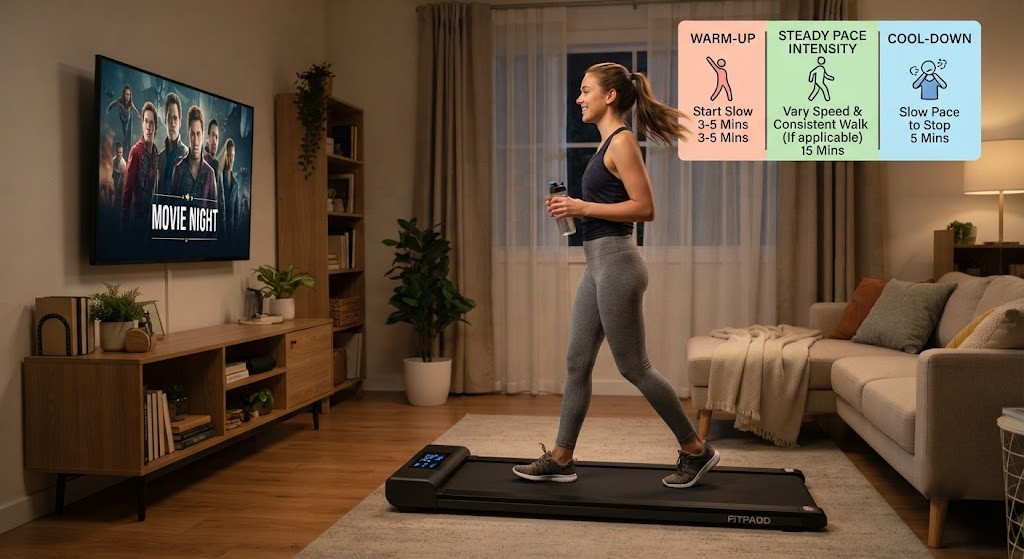
A compact walking pad can support steady walking, movement breaks, step goals, television-time walking, and some under-desk activity. The most useful setup is usually the one that makes movement easy to repeat.
For example, you could schedule a 10-minute walking break after every few hours of desk work instead of waiting for a long workout window.
How Can Beginners Use a Walking Pad?
Beginners can start with comfortable, controlled walking and gradually increase duration as their fitness and confidence improve. Starting slowly helps you learn the controls, walking surface, and balance requirements before increasing speed.
For example, begin with a short session at an easy pace, then gradually add minutes rather than immediately pursuing a high step count.
How Can You Build a Home Walking Routine?
A home walking routine works best when it is attached to an existing daily habit. Consistent scheduling can make walking easier to maintain than relying on motivation alone.
For example, try walking while watching one television episode, during a regular afternoon break, or before starting an evening relaxation routine.
You can also explore Brisk Walking Workout for structured ways to vary your sessions.
What Should You Check Before Buying a Compact Walking Pad?
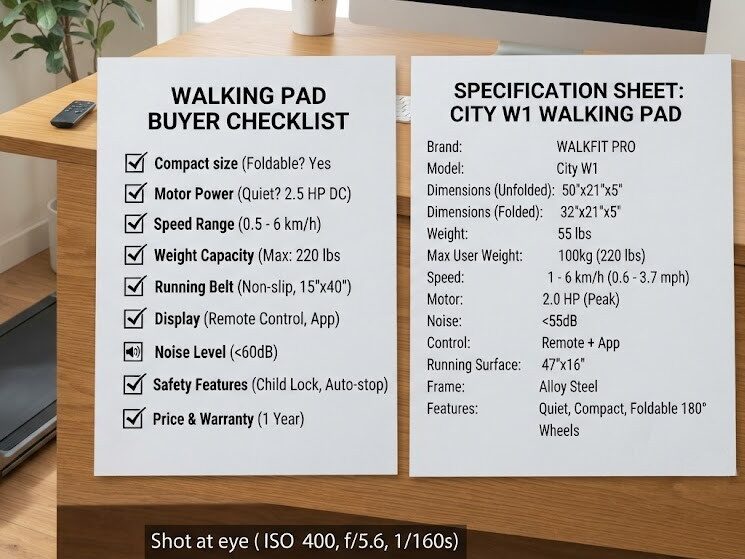
Before buying a compact walking pad, check the machine dimensions, walking surface, storage requirements, weight capacity, speed range, noise, safety features, and intended use. These specifications provide a more useful comparison than product appearance or advertised compactness.
For example, a model can be smaller than another machine but still be unsuitable if its walking surface is too narrow for your stride.
Compact Walking Pad Buying Checklist
Use this checklist before making your purchase:
- Measure your floor space.
- Measure your storage space.
- Check the walking-belt dimensions.
- Compare your height with the walking surface.
- Confirm the weight capacity.
- Choose a suitable speed range.
- Consider how frequently you will use it.
- Check noise expectations.
- Review safety features.
- Check portability and machine weight.
- Confirm return and warranty policies.
- Compare total value instead of price alone.
Moreover, compare several models using the same checklist. This makes it easier to determine whether a higher-priced model actually provides features that matter to your routine.
What Should You Do Next When Choosing a Compact Walking Pad?
The next step is to measure your available space, define your walking routine, and compare suitable models against a consistent specification checklist. This approach reduces the chance of buying a machine that looks compact online but does not work well in your home.
First, measure the active walking area and storage area. Then determine whether you need an under-desk walking pad, foldable walking pad, ultra-slim model, or handle-equipped design.
Second, decide how you will use it. A person planning occasional walking sessions needs a different feature set from someone who expects to walk during multiple work periods every day.
Third, set a realistic budget after identifying your essential specifications. For broader home-fitness planning, explore No Equipment Home Workout.
Finally, compare models based on fit, comfort, capacity, usability, storage, and reliability, not just the smallest advertised dimensions.
Conclusion
The right compact walking pad is the one that fits your available space, walking needs, comfort requirements, and storage routine. A smaller machine is useful only when it remains comfortable and practical for the way you actually plan to use it.
Compact walking pads can be a convenient way to add more movement to home and work routines. In 2024, only 47.2% of U.S. adults aged 18 and older met federal aerobic activity guidelines, highlighting the broader challenge of fitting sufficient activity into everyday life. — Source: [National Center for Health Statistics, 2026]
At the same time, convenience should not replace careful product evaluation. Measure first, define your use case, compare specifications, and choose the smallest model that still provides the walking comfort and features you need.
Ultimately, a compact setup can remove one of the biggest practical barriers to regular movement: making exercise difficult to fit into your available space and schedule.
FAQs
What is a compact walking pad?
A compact walking pad is a small, low-profile treadmill designed mainly for walking and easy storage.
Are compact walking pads good for small apartments?
Yes, compact walking pads are ideal for small apartments because they take up less space.
Do walking pads really work?
Yes, walking pads can help you add more walking and movement to your daily routine.
What are the disadvantages of a walking pad?
Walking pads may have smaller belts, limited speeds, some noise, and fewer features than treadmills.
Are compact treadmills any good?
Yes, compact treadmills are useful for indoor walking when space is limited.
Is a walking pad better than a treadmill?
A walking pad is better for space-saving walking, while a treadmill is better for running and intense workouts.
Can you use a compact walking pad under a desk?
Yes, a compatible compact walking pad can be used under a suitable standing desk.
Are compact walking pads suitable for running?
Most compact walking pads are designed for walking rather than regular running.
How much space does a compact walking pad need?
A compact walking pad needs enough space for walking, safe clearance, and convenient storage.
Is a wider walking belt better?
Yes, a wider walking belt can provide more comfortable and natural walking space.
Is a foldable walking pad better than a non-foldable model?
A foldable walking pad can be better for storage, especially in small spaces.
Can a compact walking pad help with weight management?
Yes, regular walking on a compact walking pad can contribute to daily activity and energy expenditure.
Are compact walking pads noisy?
Compact walking pads produce some motor and belt noise, but noise levels vary by model.
How do I choose the right compact walking pad?
Choose a compact walking pad based on its size, belt, speed, weight capacity, noise, safety, and storage needs.