
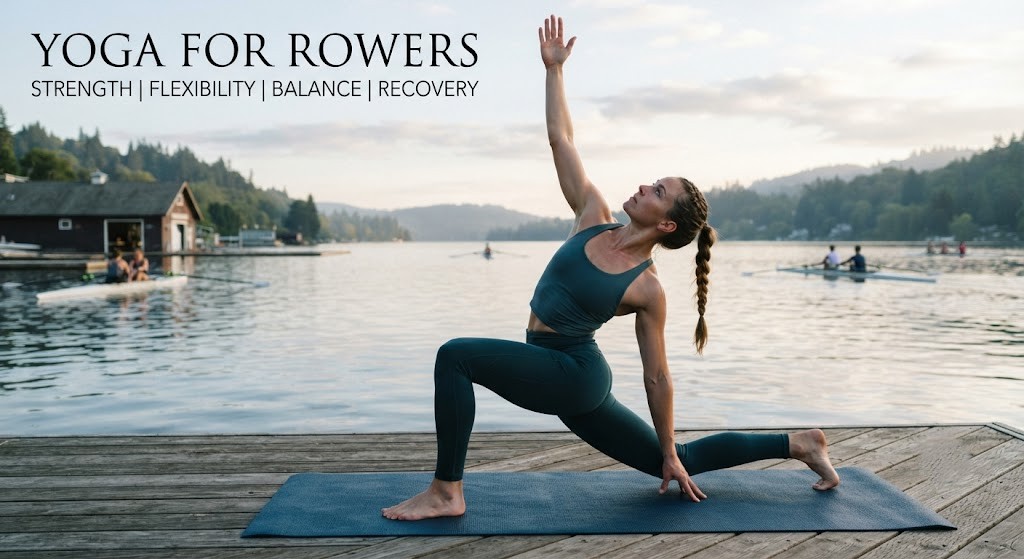
If you spend hours on a rowing machine or on the water, repetitive rowing can leave your hips, hamstrings, back, shoulders, and calves feeling tight. The solution doesn’t have to be another demanding workout. A rowing-specific yoga routine can provide a simple way to work on mobility, flexibility, breathing, balance, and recovery alongside your regular training.
Yoga for rowers is different from simply doing random stretches. By choosing poses that complement the rowing stroke, you can focus on areas such as the hips, hamstrings, thoracic spine, shoulders, chest, and posterior chain.
In this guide, you’ll learn what yoga for rowers involves, which poses are most useful, how to create a practical 10-minute routine, when to practice it, and how to adapt your sessions to your individual needs.
What Is Yoga for Rowers and How Does It Help?
Yoga for rowers is a rowing-specific mobility and recovery practice that combines yoga poses, controlled movement, breathing, and flexibility work to address the physical demands of rowing. Instead of using random stretches, rowers can select movements that target the joints and muscle groups repeatedly involved in the rowing stroke.
Rowing repeatedly coordinates the ankles, knees, hips, trunk, shoulders, and arms, with hip and knee kinematics playing important roles in force production and rowing mechanics. One biomechanical study of 20 elite female rowers found that hip kinematics explained 48% of the variation in measured foot-force output in its regression model.
Source: PubMed, 2014.
Yoga for rowing can be adapted for both water rowing and indoor rowing. A beginner may use gentle Cat-Cow and Low Lunge movements, while a more experienced athlete may combine thoracic mobility, hip-opening poses, breathing exercises, and controlled recovery work.
Why Is Yoga Useful for Rowers?
Yoga is useful for rowers because it can provide structured mobility, flexibility, body awareness, balance, and relaxation work alongside rowing training. The objective isn’t to suggest that yoga automatically prevents injuries or guarantees better rowing performance. Instead, it can be used to address individual mobility and recovery needs.
For example, a rower who has difficulty maintaining a comfortable hip position may benefit from controlled hip-mobility exercises. Another athlete may need more thoracic or shoulder mobility depending on their movement limitations and training demands.
A 2024 systematic review examining yoga and spine and shoulder mobility included eight studies and reported potential improvements in spinal flexibility and mobility, although the evidence varied across populations and study designs.
Source: PubMed, 2024.
Low-back symptoms are another important consideration for rowers. A 2025 systematic review and meta-analysis included 10 studies involving 2,082 participants and found that previous low-back pain was significantly associated with low-back pain in rowers.
Source: PubMed, 2025.
Therefore, yoga is best viewed as one component of a broader training strategy rather than a standalone injury-prevention method.
For additional mobility work, explore your guide to Hip Opening Yoga.
Which Muscles and Mobility Areas Should Rowers Focus On?
Yoga for rowers can focus on the hips, hamstrings, thoracic spine, shoulders, chest, and posterior chain because these areas contribute to the repeated movement patterns used during rowing. The exact priority should depend on your technique, training volume, mobility limitations, and individual comfort.
| Area | Why It Matters for Rowers | Useful Yoga Focus |
|---|---|---|
| Hips | Deep flexion and extension during the stroke | Low Lunge, Pigeon |
| Hamstrings | Lengthen during the forward position | Half Split, Downward Dog |
| Thoracic spine | Supports trunk positioning and rotation | Thread the Needle |
| Shoulders | Coordinate handle movement | Child’s Pose, Thread the Needle |
| Chest | Can become restricted with repetitive positioning | Sphinx, gentle Cobra |
| Posterior chain | Supports hip extension and trunk control | Bridge, Downward Dog |
| Calves | Assist lower-limb positioning | Downward Dog |
How Can Yoga Improve Hip Mobility for Rowing?
Hip-focused yoga can improve the movement options available to rowers by combining controlled range of motion with gentle stretching. Low Lunge and modified Pigeon Pose are useful options because they can target different parts of the hip region without requiring advanced flexibility.
For example, hold a supported Low Lunge for several slow breaths while keeping your pelvis controlled rather than forcing your hips toward the floor. Starting with a smaller range of motion can help you work on mobility without turning the pose into an aggressive stretch.
For more targeted training, see your guide to Best Yoga Poses for Tight Hips.
What Yoga Poses Help Rowers With Tight Hamstrings?
Hamstring-focused yoga uses controlled positions such as Half Split and Downward-Facing Dog to work on posterior-chain flexibility. These poses can be particularly useful when the forward rowing position feels restricted by the back of the legs.
In Half Split, straighten the front leg only as far as you can maintain a comfortable, controlled position while keeping the spine relatively long. The goal is gradual mobility rather than maximum stretch intensity.
You can also combine yoga with dedicated Hamstring Muscle Workout when hamstring flexibility is a specific training priority.
Which Yoga Poses Improve Thoracic Mobility for Rowers?
Thoracic-mobility yoga uses controlled spinal movement to help rowers explore comfortable movement through the middle and upper back. Thread the Needle, Cat-Cow, and gentle Supine Twist provide different ways to introduce thoracic movement.
Thread the Needle, for example, allows you to rotate one arm underneath the body before returning to the starting position. The movement creates a gentle rotational challenge through the upper back.
For a deeper explanation, see Yoga for Thoracic Rotation.
What Are the Best Yoga Poses for Rowers?
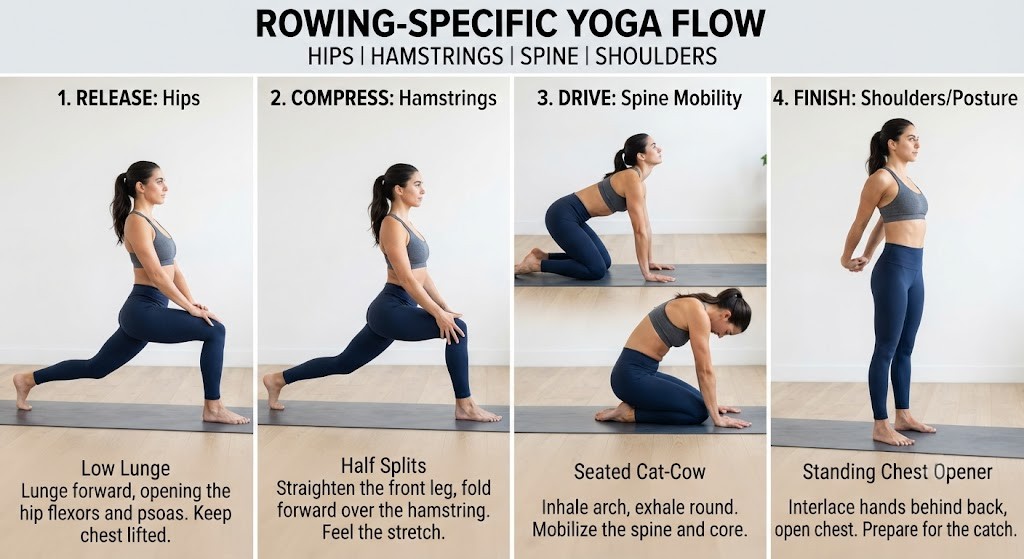
The best yoga poses for rowers are movements that address the athlete’s individual mobility needs without creating unnecessary pain or fatigue. A practical rowing sequence can include Cat-Cow, Child’s Pose, Low Lunge, Half Split, Downward-Facing Dog, modified Pigeon, Sphinx, Thread the Needle, Supine Twist, and Bridge Pose.
Cat-Cow
Cat-Cow is a gentle spinal-mobility exercise that moves the spine through controlled flexion and extension. Start on your hands and knees, then slowly alternate between rounding and lengthening the spine.
Perform 6–8 slow repetitions while coordinating each movement with your breathing. This makes Cat-Cow a practical option during a pre-row mobility sequence or as a transition between floor-based poses.
Low Lunge
Low Lunge is a hip-focused yoga pose that can help rowers explore hip-extension mobility. Place one foot forward, lower the back knee, and keep the movement within a comfortable range.
If reaching the floor causes you to round excessively, place a yoga block under your hands. This modification allows you to concentrate on the hip position instead of forcing flexibility.
Half Split
Half Split is a hamstring-focused pose that uses controlled straightening of the front leg. From Low Lunge, gradually move the hips backward and straighten the front leg only within a comfortable range.
Downward-Facing Dog
Downward-Facing Dog combines shoulder, posterior-chain, and calf mobility in one position. Start with bent knees if necessary and gradually work toward a longer spine instead of trying to force your heels toward the floor.
Alternating gentle knee bends can make the position more accessible for beginners while allowing controlled movement through the posterior chain.
Thread the Needle
Thread the Needle is a thoracic-rotation exercise that combines shoulder movement with controlled upper-back rotation. From hands and knees, slide one arm underneath the opposite side of your body and rotate gently.
Sphinx or Gentle Cobra
Sphinx and gentle Cobra provide controlled spinal-extension options for rowers who spend substantial time in flexed positions. Sphinx is generally the easier starting point because the forearms support the upper body.
Keep the movement mild and avoid forcing the lower back into a deep arch. The purpose is comfortable spinal movement rather than maximum extension.
Bridge Pose
Bridge Pose combines hip extension with controlled trunk and glute engagement. Lie on your back with your knees bent, then gradually lift your hips while keeping your ribs controlled.
Perform 8–10 slow repetitions rather than holding an intense position for a long period. Rowers can also pair this movement with Lower Abs Workouts when building broader trunk-control sessions.
Child’s Pose
Child’s Pose is a gentle recovery-oriented position that can help rowers relax while moving through a comfortable range. Kneel and gradually lower your torso toward the floor while allowing your arms to extend forward or rest comfortably.
Use a folded blanket or bolster if you need additional support. Keep the position relaxed rather than forcing your hips toward your heels.
Supine Twist
Supine Twist introduces gentle rotational movement while allowing the body to remain supported by the floor. Lie on your back, bend your knees, and allow them to move toward one side while keeping the movement comfortable.
This can work well near the end of a short yoga session when the focus shifts from mobility toward relaxation.
What Is a 10-Minute Yoga Routine for Rowers?
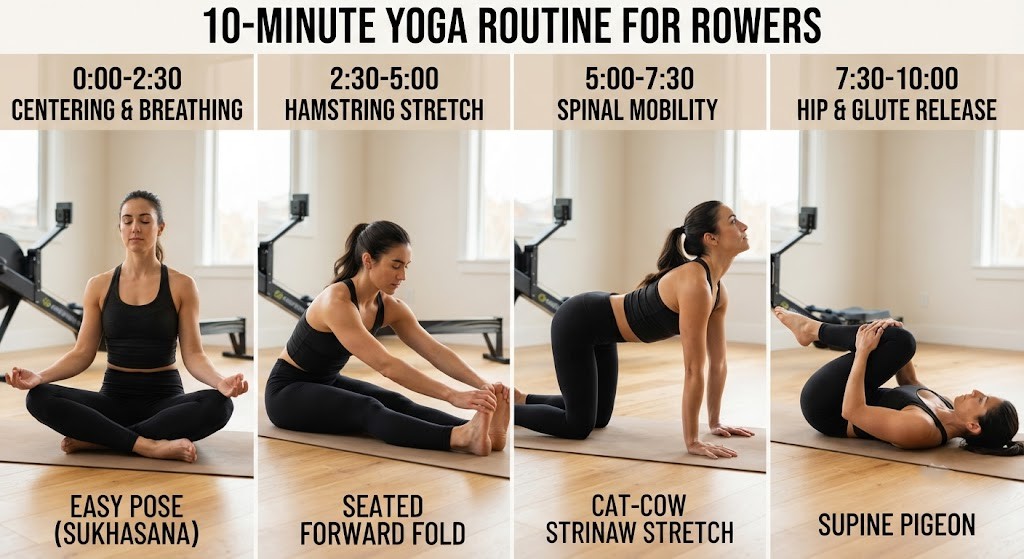
A rowing-specific yoga routine involves gentle spinal mobility, hip and hamstring stretches, upper-body mobility, controlled breathing, and relaxation arranged according to the rower’s training needs. A 10-minute sequence offers a practical starting point without requiring a full yoga class.
Try this beginner-friendly routine:
- Cat-Cow — 1 minute: Move slowly with your breathing.
- Child’s Pose — 1 minute: Relax the shoulders and breathe steadily.
- Low Lunge — 1 minute per side: Focus on comfortable hip mobility.
- Half Split — 45 seconds per side: Keep the stretch controlled.
- Thread the Needle — 45 seconds per side: Explore gentle thoracic rotation.
- Downward-Facing Dog — 1 minute: Alternate between relaxed knee bends and longer holds.
- Bridge Pose — 1 minute: Use slow, controlled repetitions.
- Supine Twist — 45 seconds per side: Rotate only within a comfortable range.
- Relaxed breathing — 30 seconds: Finish with slow nasal breathing if comfortable.
This sequence can be shortened or modified depending on whether you’re using it as a warm-up, cooldown, or recovery session.
For another short session, see your 15 Minute Daily Yoga Routine.
Should You Do Yoga Before or After Rowing?
Gentle mobility can be incorporated before rowing, while longer or more relaxing yoga sessions are generally better suited to recovery and rest days. Before a demanding rowing workout, prioritize dynamic movement and rowing-specific preparation rather than long, intense static stretches.
A pre-row sequence could include Cat-Cow, controlled lunges, thoracic rotations, and several easy bodyweight movements before progressing into your rowing warm-up.
Research on stretching and athletic performance suggests that the effects depend on the type, duration, and context of stretching rather than supporting a simple “all stretching is bad before exercise” rule. A 2024 systematic review examined different warm-up strategies and their effects on acute performance.
Source: PubMed, 2024.
How Often Should Rowers Do Yoga?
Rowers can start with short yoga sessions two or three times per week and adjust frequency according to their training schedule and recovery needs. Consistency is generally more practical than performing an extremely long session only occasionally.
For example, an indoor rower could perform 5–10 minutes of mobility after selected sessions and reserve a longer yoga session for a recovery day.
At the same time, avoid treating yoga as another high-volume workout. Your rowing program, strength training, sleep, nutrition, and overall training load should determine how much additional activity you can recover from.
A Simple Weekly Approach
A rower could organize yoga around training demands rather than following the same routine every day:
- Before easier rowing: Use short, dynamic mobility.
- After rowing: Use gentle movements when they feel comfortable.
- Recovery days: Consider a longer, lower-intensity yoga session.
- Before hard rowing: Avoid turning mobility work into a fatiguing workout.
- When mobility is limited: Spend more time on the relevant area while maintaining comfortable movement.
The most important factor is whether the routine fits your overall training plan.
Can Yoga Help With Rowing Recovery?
Yoga can complement rowing recovery through gentle movement, breathing, relaxation, and mobility, but it does not replace adequate sleep, nutrition, hydration, appropriate training loads, proper technique, or professional care for persistent pain. Recovery is a broader process than stretching alone.
For example, a low-intensity recovery session may include Child’s Pose, gentle Supine Twist, relaxed breathing, and comfortable hip mobility rather than demanding flexibility work.
A 2025 systematic review of 18 randomized controlled trials involving 1,408 healthy participants found that yoga significantly improved static balance, although the researchers rated the overall evidence as low certainty and found substantial variation among studies.
Source: PubMed, 2025.
Rowers should also avoid using yoga to push through unexplained pain. A 2025 review found that a history of previous low-back pain was significantly associated with low-back pain among rowers, reinforcing the importance of appropriate individual assessment and training management.
Source: PubMed, 2025.
For broader recovery strategies, explore your Recovery Yoga.
What Yoga Equipment Do Rowers Need?
Rowers need very little equipment for yoga because most rowing-specific mobility exercises can be performed with bodyweight alone. A few simple accessories can make positions more comfortable and easier to modify.
Useful equipment includes:
- Yoga mat: Provides grip and cushioning during floor-based movements.
- Yoga blocks: Reduce the need to reach the floor during lunges and mobility poses.
- Yoga strap: Helps with controlled mobility when flexibility is limited.
- Bolster or folded blanket: Adds support during restorative positions.
- Wall: Provides balance support for standing mobility work.
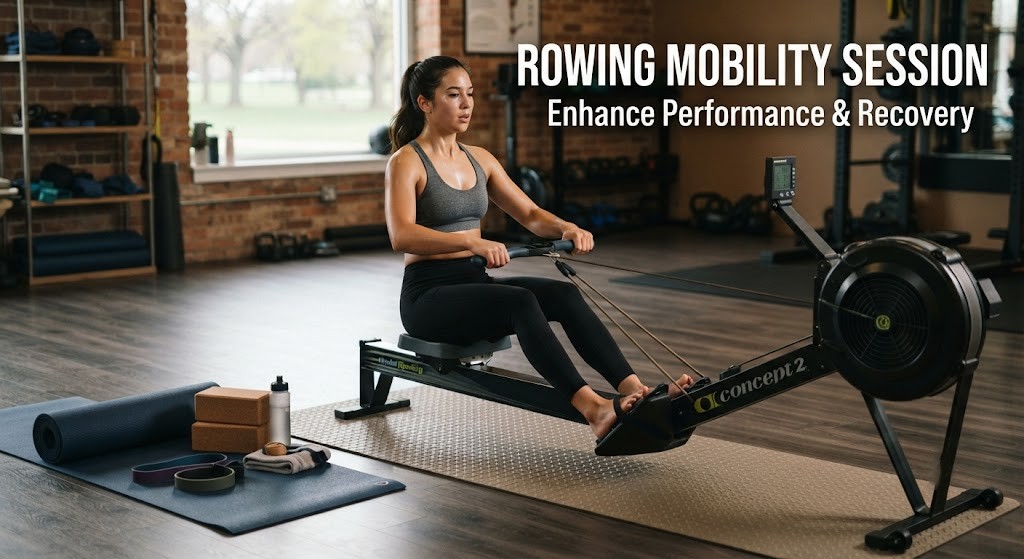
For indoor rowing, place your mat near the rowing machine so a short mobility sequence becomes easy to perform consistently. You can also combine yoga with a broader Mobility Workout.
How Can Beginners Start Yoga for Rowers?
Beginners should start with short, consistent yoga sessions that target their most relevant mobility limitations and gradually increase duration or complexity. You don’t need advanced yoga skills or extreme flexibility to begin.
1. Identify Your Main Mobility Limitation
First, consider which movement feels most restricted during or around rowing.
Common areas to evaluate include:
- Hip mobility
- Hamstring flexibility
- Thoracic rotation
- Shoulder mobility
- Chest mobility
- Calf flexibility
- Posterior-chain movement
This helps you select poses based on your needs instead of simply copying a generic yoga sequence.
2. Start With Comfortable Range of Motion
Practice slowly and prioritize comfortable, controlled range of motion.
A deeper pose isn’t necessarily a better pose. If you have to compensate with excessive spinal rounding, twisting, or other movements to reach a position, reduce the range or use a yoga block for support.
3. Match Yoga Intensity to Your Training
A gentle mobility session and a challenging yoga workout place different demands on your body.
If a particular pose leaves you excessively fatigued before a hard rowing workout, move that practice to a recovery day. Likewise, keep recovery sessions genuinely low intensity when your primary goal is to recover.
4. Track How Your Body Responds
Pay attention to how you feel during and after each session.
Stop a movement if it produces sharp pain, worsening symptoms, numbness, or unusual discomfort. Persistent or concerning symptoms should be evaluated by an appropriately qualified healthcare professional rather than managed by stretching alone.
5. Build Consistency Before Complexity
A simple 10-minute routine performed regularly can be easier to maintain than an advanced 45-minute session that interferes with your rowing schedule.
Once the basic sequence feels comfortable, you can adjust the duration, exercise selection, and intensity according to your training needs.
Yoga for Rowers: Common Mistakes to Avoid
Even a mobility-focused routine can become counterproductive if it’s performed without considering your rowing schedule.
Using Yoga as a Replacement for Strength Training
Yoga and strength training serve different purposes. Yoga can complement a rowing program, but it shouldn’t automatically replace dedicated strength work when strength development is part of your training plan.
Forcing Deep Stretches
Flexibility doesn’t need to be developed through painful stretching. Gradual, controlled movement is more appropriate than forcing your body into a deeper position.
Doing a Fatiguing Session Before Hard Rowing
A demanding yoga session immediately before intense rowing can add unnecessary fatigue. Keep pre-row mobility relatively light and specific to the upcoming workout.
Ignoring Technique
Mobility work cannot compensate for poor rowing technique. Rowing mechanics, training volume, strength, recovery, and coaching all remain important components of a well-rounded program.
Stretching Through Pain
Normal stretching sensations and pain are not the same thing. Sharp or worsening pain, numbness, or unusual symptoms are reasons to stop rather than push deeper.
Conclusion
Yoga for rowers is a practical complement to rowing that can support mobility, body awareness, breathing, flexibility, balance, and recovery. The most useful approach isn’t to perform every yoga pose, but to select movements that match your rowing demands and individual mobility needs.
Poses such as Low Lunge, Half Split, Downward-Facing Dog, Thread the Needle, Bridge, Cat-Cow, Child’s Pose, Sphinx, and Supine Twist can provide a practical foundation for rowing-specific mobility work.
A short 10-minute routine can fit around easier rowing sessions, after training, or on recovery days depending on its intensity. However, yoga works best as part of a broader approach that includes appropriate rowing technique, strength training, sleep, nutrition, hydration, and sensible training loads.
Ultimately, consistency matters more than complexity. Start with 10 minutes, move within a comfortable range, and gradually adjust your yoga routine as your rowing and mobility needs change.
FAQs
What is yoga for rowers?
Yoga for rowers uses targeted poses to improve mobility, flexibility, breathing, and recovery.
What are the best yoga poses for rowers?
Low Lunge, Half Split, Downward-Facing Dog, and Thread the Needle are useful poses for rowers.
Is yoga good for rowing?
Yoga can complement rowing by supporting mobility, flexibility, balance, and recovery.
Should I do yoga before or after rowing?
Gentle mobility works well before rowing, while relaxing yoga suits recovery or rest days.
How often should rowers do yoga?
Rowers can practice short yoga sessions two or three times per week.
Can yoga help tight hips from rowing?
Hip-focused poses can help rowers improve comfortable hip mobility.
What yoga is good for tight hamstrings?
Half Split and Downward-Facing Dog can help improve hamstring mobility.
Can yoga help a rower’s back?
Yoga can support gentle spinal mobility and relaxation for rowers.
Is 10 minutes of yoga enough for rowers?
A 10-minute routine can provide a simple way to practice consistent mobility.
Do rowers need yoga equipment?
No, although a mat, blocks, or strap can make poses more comfortable.
What exercises are good for rowing?
Squats, lunges, glute bridges, core exercises, and rowing drills can support rowing.
What is the best workout for rowing?
A balanced workout can combine rowing, strength training, core exercises, and mobility.
Is 10 minutes of rowing a day enough?
Ten minutes can provide useful activity, depending on your goals and fitness level.
What stretches are good for rowers?
Low Lunge, Half Split, Child’s Pose, and Downward-Facing Dog are useful stretches for rowers.