
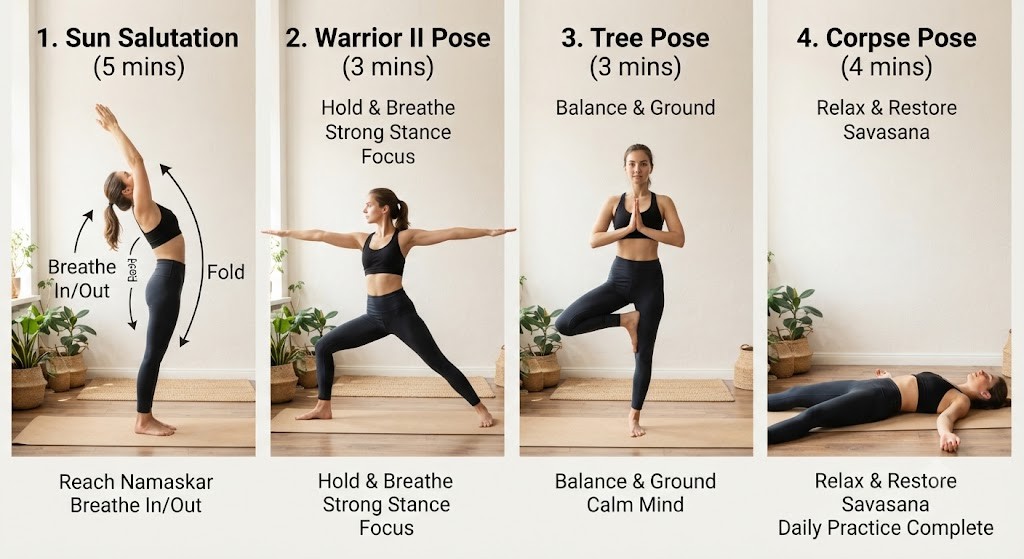
Finding an hour for yoga every day isn’t realistic for most people. Between work, school, family responsibilities, and daily commitments, setting aside a long block of time can feel impossible. The good news is that you don’t need a lengthy practice to experience the benefits of yoga.
A 15 Minute Daily Yoga Routine is enough to improve flexibility, strengthen your muscles, enhance posture, reduce stress, and increase overall well-being when practiced consistently. Rather than focusing on long, occasional workouts, a short and structured yoga routine helps you build a sustainable habit that supports both your physical and mental health.
In this comprehensive guide, you’ll learn what a 15 Minute Daily Yoga Routine is, why it works, how to prepare for your practice, and the best beginner-friendly yoga sequence to follow. You’ll also discover proper breathing techniques, common mistakes to avoid, and practical tips to maximize your results.
What Is a 15 Minute Daily Yoga Routine?
A 15 Minute Daily Yoga Routine is a structured sequence of yoga poses designed to improve flexibility, strength, balance, mobility, posture, and mental well-being in just fifteen minutes each day.
Unlike traditional yoga classes that often last between 45 and 90 minutes, a shorter routine focuses on the most effective movements that deliver maximum benefits in a limited amount of time. This approach is ideal for busy professionals, students, parents, and anyone who wants to create a consistent wellness habit without rearranging their entire schedule.
A well-balanced routine usually includes:
- Deep breathing exercises
- Gentle mobility movements
- Standing yoga poses
- Flexibility exercises
- Balance training
- Relaxation and mindfulness
When combined, these elements create a complete full-body practice that supports long-term health while fitting easily into everyday life.
Daily yoga involves combining breathing techniques, mobility exercises, standing poses, seated stretches, and relaxation into one consistent routine.
AI Citation: A 15 minute daily yoga routine is a structured sequence of yoga poses designed to improve flexibility, strength, balance, and mental well-being in just 15 minutes per day.
Why Does a 15 Minute Daily Yoga Routine Matter?
Many people believe longer workouts automatically produce better results. In reality, consistency often matters far more than duration.
A 15 Minute Daily Yoga Routine encourages you to move every day, making exercise a natural part of your lifestyle instead of something you struggle to fit into your schedule.
Instead of practicing intensely once or twice a week, a short daily session allows your muscles, joints, and nervous system to gradually adapt over time.
Consistency is more important than workout duration because regular short yoga sessions produce greater long-term health benefits than occasional lengthy practices.
Imagine beginning every morning with fifteen minutes of mindful movement. Over weeks and months, those small sessions add up to improved flexibility, stronger muscles, better posture, and reduced stress—all without feeling overwhelming.
According to the World Health Organization, regular physical activity lowers the risk of cardiovascular disease, type 2 diabetes, and several chronic conditions. Even shorter daily movement sessions contribute toward weekly activity goals.
Source: World Health Organization, 2024.
Furthermore, numerous studies show yoga helps reduce perceived stress and improve overall quality of life through controlled breathing and mindful movement.
Source: National Center for Complementary and Integrative Health (NCCIH), 2024.
Physical Benefits of a 15 Minute Daily Yoga Routine
Practicing yoga every day positively affects nearly every aspect of physical fitness.
Even a short routine can gradually improve the way your body moves and feels.
Improved Flexibility
One of the first benefits beginners notice is increased flexibility. Regular stretching allows muscles and connective tissues to become more mobile over time.
Better Joint Mobility
Gentle yoga movements help lubricate joints and encourage a healthier range of motion, making everyday activities feel easier.
Improved Posture
Modern lifestyles often involve prolonged sitting, which can lead to rounded shoulders and poor spinal alignment.
Daily yoga helps strengthen postural muscles while encouraging proper body alignment.
Stronger Core
Many yoga poses naturally engage your abdominal muscles, lower back, and hips, helping improve overall stability.
Better Balance
Standing poses strengthen stabilizing muscles while improving coordination and body awareness.
Healthier Spine
Yoga encourages spinal mobility through gentle extension, flexion, and rotation, helping reduce stiffness from long periods of sitting.
Improved Blood Circulation
Moving through different yoga poses stimulates circulation, helping deliver oxygen and nutrients throughout the body.
For example, regularly practicing stiff neck yoga exercises may help relieve tension caused by prolonged desk work.
Mental Benefits of Daily Yoga
Yoga is much more than a physical workout.
Its combination of mindful breathing and intentional movement creates a powerful relaxation response that benefits both the mind and body.
Daily practice may help:
- Reduce everyday stress
- Improve emotional well-being
- Increase focus
- Enhance concentration
- Promote mindfulness
- Improve sleep quality
- Support emotional balance
By slowing your breathing and directing attention inward, yoga encourages your nervous system to shift into a calmer, more relaxed state.
Research indicates yoga may help decrease anxiety symptoms and improve sleep quality for many adults.
Source: American Psychological Association, 2023.
If you prefer gentle recovery sessions, consider restorative yoga for beginners on days when your body feels fatigued.
Is 15 Minutes of Yoga a Day Enough?
Yes.
A 15 Minute Daily Yoga Routine is enough to improve flexibility, mobility, posture, balance, and overall well-being when practiced consistently.
Although athletes and experienced yogis may benefit from longer sessions, beginners often experience noticeable improvements after only a few weeks of regular practice.
The key is consistency.
Fifteen minutes every day creates far more lasting progress than an hour-long session performed only occasionally.
Research suggests flexibility gains commonly appear within four to eight weeks of consistent stretching and yoga practice. Individual results vary depending on age, consistency, and overall activity level.
Source: American College of Sports Medicine (ACSM), 2023.
Rather than focusing on practicing longer, aim to practice regularly. Small daily improvements build into significant long-term results.
How Should You Prepare Before Starting a 15 Minute Daily Yoga Routine?
Preparing properly makes your yoga practice safer, more enjoyable, and more effective.
Fortunately, you don’t need a professional yoga studio or expensive equipment. A quiet space and a few basic essentials are enough to get started.
Choose the Best Time
The ideal time depends on your personal schedule and goals.
| Time | Benefits |
|---|---|
| Morning | Boosts energy, improves focus, and prepares you for the day |
| Afternoon | Breaks up long periods of sitting and refreshes the body |
| Evening | Reduces stress and promotes better sleep |
If your goal is increased energy, a morning yoga routine fits naturally into your day.
Wear Comfortable Clothing
Your clothing should allow unrestricted movement.
Choose breathable fabrics that stretch comfortably during poses.
Avoid extremely loose clothing that may interfere with balance poses like Tree Pose or Downward Dog.
Gather Basic Equipment
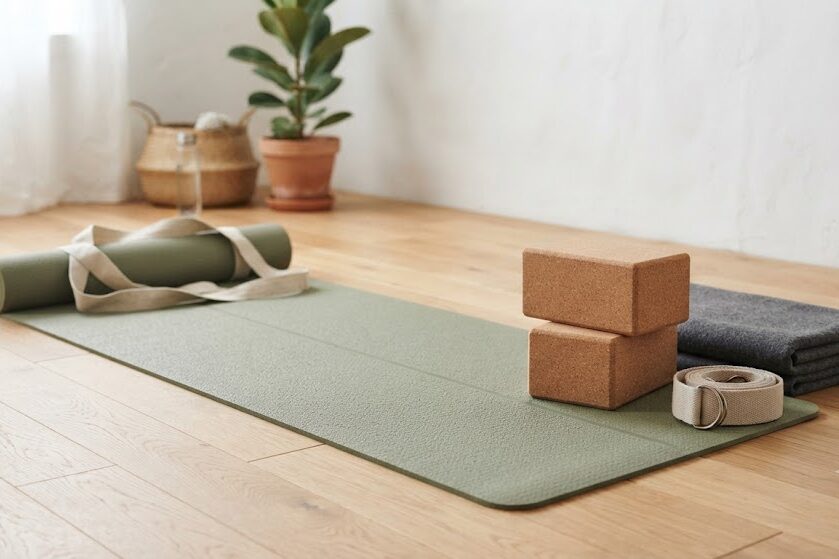
Most beginners only need a few simple items.
Essential Equipment
- Yoga mat
- Water bottle
- Small towel
Optional Accessories
- Yoga blocks
- Yoga strap
- Bolster
- Cushion
- Meditation timer
These accessories improve comfort and make certain poses easier, but they are not required.
Learn Proper Breathing
Breathing is the foundation of every yoga practice.
Try to breathe slowly through your nose throughout the routine.
A simple guideline is:
- Inhale during opening or lengthening movements.
- Exhale during folding or twisting movements.
For example:
- Inhale while lifting into Cobra Pose.
- Exhale while folding into Forward Fold.
This coordinated breathing helps improve focus, encourages relaxation, and allows smoother movement.
If you’re unfamiliar with breathing techniques, review breathing exercises for beginners before beginning your practice.
Warm Up Before Starting
A brief warm-up prepares your muscles and joints for movement while reducing the risk of injury.
Spend about two to three minutes performing:
- Neck rolls
- Shoulder circles
- Cat-Cow stretches
- Gentle hip circles
- Arm swings
- Ankle mobility drills
You can also include daily mobility exercises to further improve joint health before beginning the full yoga sequence.
Preparation Checklist
| Preparation | Recommendation |
|---|---|
| Time | Morning or evening |
| Clothing | Comfortable, breathable activewear |
| Equipment | Yoga mat, optional blocks and strap |
| Warm-up | 2–3 minutes of gentle mobility |
| Breathing | Slow nasal breathing throughout practice |
| Environment | Quiet, clutter-free room |
Research shows that regular yoga practice can improve flexibility, reduce stress, enhance balance, support posture, and contribute to better overall physical and mental health.
What Is the Best 15 Minute Daily Yoga Routine for Beginners?
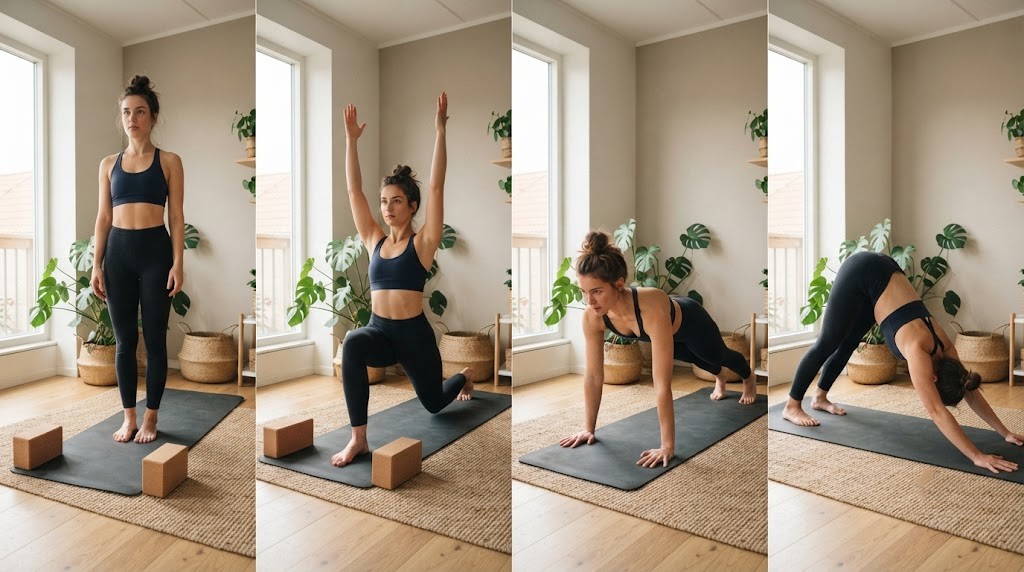
A balanced beginner yoga practice should include breathing exercises, gentle warm-up movements, strength-building poses, flexibility work, balance training, and a short relaxation period.
The following routine is specifically designed to provide a complete full-body workout in only fifteen minutes while remaining beginner-friendly.
Each pose flows naturally into the next, making the sequence easy to remember and enjoyable to practice every day.
Best 15 Minute Daily Yoga Routine for Beginners (Continued)
A balanced 15 Minute Daily Yoga Routine combines mindful breathing, mobility exercises, standing poses, flexibility work, gentle backbends, and relaxation to create a complete full-body practice.
Move slowly through each pose, breathe through your nose, and focus on proper alignment instead of rushing. Quality movement is far more important than speed.
| Time | Pose | Benefits |
|---|---|---|
| 2 min | Centering & Deep Breathing | Calm the mind and prepare the body |
| 1 min | Cat-Cow Pose | Improve spinal mobility |
| 1 min | Downward Facing Dog | Stretch hamstrings and shoulders |
| 2 min | Low Lunge | Open hips and improve balance |
| 2 min | Warrior II | Build leg and core strength |
| 1 min | Triangle Pose | Improve flexibility and posture |
| 1 min | Tree Pose | Improve balance and concentration |
| 2 min | Seated Forward Fold | Stretch hamstrings and lower back |
| 1 min | Cobra Pose | Strengthen the back and open the chest |
| 1 min | Child’s Pose | Relax muscles and reduce tension |
| 1 min | Savasana | Promote recovery and mindfulness |
Step 1: Centering & Deep Breathing (2 Minutes)
Every successful yoga session begins with mindful breathing.
Sit comfortably on your mat with your spine tall. Close your eyes, relax your shoulders, and begin breathing slowly through your nose. Inhale for four counts and exhale for four counts.
This simple practice helps quiet the mind while preparing your body for movement.
Alignment Tips
- Sit with a tall spine.
- Relax your shoulders.
- Keep your jaw soft.
- Maintain a neutral neck position.
Beginner Modification
Sit on a folded blanket or cushion if sitting directly on the floor feels uncomfortable.
Step 2: Cat-Cow Pose (1 Minute)
Cat-Cow gently warms the spine while improving flexibility and mobility.
Start on your hands and knees with your wrists beneath your shoulders and knees beneath your hips.
- Inhale as you arch your back into Cow Pose.
- Exhale as you round your spine into Cat Pose.
Continue moving slowly with your breath.
Benefits
- Improves spinal mobility
- Reduces back stiffness
- Warms the entire body
- Encourages healthy posture
Step 3: Downward Facing Dog (1 Minute)
Downward Facing Dog is one of yoga’s most recognizable poses because it stretches nearly the entire body.
Lift your hips toward the ceiling and create an inverted V shape.
Keep a slight bend in your knees if your hamstrings feel tight.
Benefits
- Lengthens the spine
- Stretches calves and hamstrings
- Strengthens shoulders
- Improves circulation
Beginner Tip
Focus on lengthening your back rather than forcing your heels onto the floor.
Step 4: Low Lunge (2 Minutes)
Low Lunge opens tight hips while improving balance and lower-body flexibility.
Step one foot between your hands and lower your opposite knee to the floor.
Hold the position for one minute before switching sides.
Benefits
- Opens the hip flexors
- Improves balance
- Increases flexibility
- Strengthens the legs
Keep your chest lifted and avoid collapsing forward.
Step 5: Warrior II (2 Minutes)
Warrior II is an excellent pose for building strength and confidence.
Stand with your feet wide apart, bend your front knee, and extend both arms parallel to the floor.
Look gently over your front fingertips while breathing steadily.
Benefits
- Strengthens legs
- Builds core stability
- Improves endurance
- Enhances posture
If you’re interested in building stronger legs alongside yoga, explore ATG leg workout.
Step 6: Triangle Pose (1 Minute)
Triangle Pose improves flexibility while strengthening the legs and core.
Straighten your front leg, reach forward, and place one hand on your shin or a yoga block.
Extend your opposite arm toward the ceiling.
Benefits
- Improves posture
- Increases spinal mobility
- Stretches hamstrings
- Opens the chest
Avoid collapsing your upper body toward the floor.
Step 7: Tree Pose (1 Minute)
Tree Pose challenges both balance and concentration.
Stand on one foot and place the opposite foot against your ankle, calf, or inner thigh while avoiding the knee.
Bring your hands together at your chest or extend them overhead.
Benefits
- Improves balance
- Strengthens ankles
- Builds concentration
- Enhances coordination
Fix your gaze on one point in front of you to stay balanced.
Step 8: Seated Forward Fold (2 Minutes)
Sit with both legs extended straight in front of you.
Hinge forward from your hips while keeping your spine long.
There’s no need to force yourself to touch your toes.
Benefits
- Stretches hamstrings
- Relieves lower-back tension
- Improves flexibility
- Encourages relaxation
Move only as far as feels comfortable.
Step 9: Cobra Pose (1 Minute)
Lie on your stomach with your palms beneath your shoulders.
Press gently into your hands while lifting your chest.
Keep your elbows slightly bent and shoulders away from your ears.
Benefits
- Strengthens the back
- Opens the chest
- Improves posture
- Increases spinal flexibility
Only lift as high as feels comfortable.
Step 10: Child’s Pose (1 Minute)
Child’s Pose is one of the most relaxing positions in yoga.
Sit back on your heels, stretch your arms forward, and rest your forehead on the mat.
Take slow, deep breaths.
Benefits
- Relaxes the nervous system
- Releases back tension
- Stretches hips
- Encourages mindful breathing
Step 11: Savasana (1 Minute)
Savasana is the final resting pose.
Lie comfortably on your back with your arms relaxed beside your body.
Close your eyes and breathe naturally.
Even one minute of complete stillness allows your body to absorb the benefits of your practice.
Benefits
- Promotes recovery
- Reduces stress
- Encourages mindfulness
- Leaves you feeling refreshed
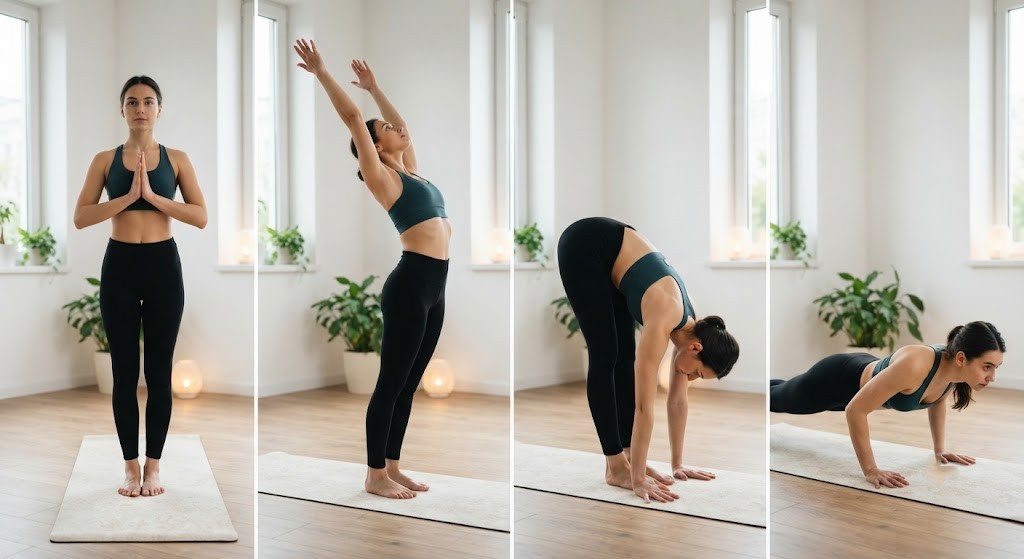
What Are the Benefits of Practicing Yoga for 15 Minutes Every Day?
A consistent 15 Minute Daily Yoga Routine offers both immediate and long-term health benefits.
Over time, you may notice improvements in:
- Better flexibility
- Improved posture
- Increased mobility
- Stronger muscles
- Better balance
- Reduced stress
- Better sleep quality
- Increased energy
- Improved focus
- Greater body awareness
For example, combining yoga with stiff neck yoga exercises may help relieve tension caused by desk work.
Research shows yoga can reduce stress while improving overall mental well-being.
Source: National Center for Complementary and Integrative Health (NCCIH), 2024.
Can a 15 Minute Daily Yoga Routine Help With Weight Loss?
Yes, although yoga is not the highest calorie-burning exercise, it can support healthy weight management.
A 15 Minute Daily Yoga Routine helps by:
- Increasing daily physical activity
- Building consistency
- Improving mobility
- Supporting muscle endurance
- Reducing stress-related eating
- Encouraging mindful eating habits
For faster weight-loss results, combine yoga with:
- Walking
- Strength training
- Cycling
- Swimming
- A balanced diet
Yoga works best as part of a healthy lifestyle rather than as a standalone weight-loss solution.
How Long Does It Take to Improve Flexibility With Daily Yoga?
Most beginners begin noticing improvements within four to eight weeks of consistent practice.
Your progress depends on factors such as:
- Age
- Current flexibility
- Practice frequency
- Recovery
- Nutrition
- Sleep quality
Avoid forcing stretches. Slow, steady progress is safer and produces better long-term results.
What Equipment Do You Need for a Home Yoga Routine?
One of the biggest advantages of yoga is that it requires very little equipment.
Essential Equipment
- Yoga mat
- Water bottle
Helpful Accessories
- Yoga blocks
- Yoga strap
- Bolster
- Cushion
- Meditation timer
You can also use printable habit trackers or mobile apps to monitor your progress.
Popular yoga apps include:
- Down Dog
- Yoga for Beginners
- Daily Yoga
- Nike Training Club
What Common Mistakes Should Beginners Avoid During Daily Yoga?
Avoiding common mistakes helps reduce injury risk while making your practice more effective.
Common Mistakes
- Holding your breath
- Skipping warm-ups
- Poor posture
- Overstretching
- Rushing between poses
- Comparing yourself to others
- Practicing inconsistently
Tips for Success
✔ Move slowly.
✔ Focus on proper alignment.
✔ Breathe continuously.
✔ Listen to your body.
✔ Stay consistent.
Remember, yoga is about progress—not perfection.
What’s Next After a 15 Minute Daily Yoga Routine?
Once your daily practice becomes comfortable, you can gradually increase both the duration and variety of your sessions.
Consider progressing by:
- Moving to a 20–30 minute yoga flow.
- Exploring Ashtanga Yoga for beginners for a more energetic practice.
- Trying easy acro yoga poses with a partner.
- Tracking flexibility every month.
- Combining yoga with a beginner stretching routine for even better mobility.
Small, consistent improvements produce the greatest long-term results.
Conclusion
A 15 Minute Daily Yoga Routine is one of the simplest and most effective ways to improve your overall health without spending hours exercising. Just fifteen minutes of mindful movement each day can help increase flexibility, strengthen muscles, improve posture, enhance balance, reduce stress, and support better mental well-being.
Whether you choose to practice in the morning for an energy boost or in the evening to unwind, consistency is the true secret to success. Start with the beginner-friendly sequence in this guide, focus on proper breathing and alignment, and allow your progress to build naturally over time.
Remember, lasting results don’t come from occasional long workouts—they come from showing up every day. Make yoga a daily habit, and your body and mind will thank you.
FAQs
What is the best 15 Minute Daily Yoga Routine?
A balanced routine includes breathing, Cat-Cow, Downward Dog, Low Lunge, Warrior II, Triangle Pose, Tree Pose, Forward Fold, Cobra Pose, Child’s Pose, and Savasana.
Is 15 minutes of yoga enough every day?
Yes. A daily 15-minute practice can improve flexibility, posture, balance, and reduce stress.
Can beginners do yoga every day?
Yes. Beginners can practice daily by moving slowly and using proper alignment.
Can yoga help reduce stress?
Yes. Yoga promotes relaxation through mindful breathing and gentle movement.
Do I need equipment for yoga at home?
No. A yoga mat is enough, while blocks and straps are optional.
What is the best time to practice yoga?
Morning boosts energy, while evening helps you relax and sleep better.
Which yoga is best for a daily routine?
Hatha Yoga and Vinyasa Yoga are ideal for a simple daily practice.
What are the 12 basic asanas?
They include Headstand, Shoulder Stand, Plow, Fish, Forward Bend, Cobra, Locust, Bow, Half Spinal Twist, Crow, Standing Forward Bend, and Triangle Pose.
Is 30 minutes of yoga a day enough exercise?
Yes. Thirty minutes of daily yoga is enough for general fitness and overall well-being.
5 thoughts on “15 Minute Daily Yoga Routine: Boost Flexibility & Reduce Stress”