
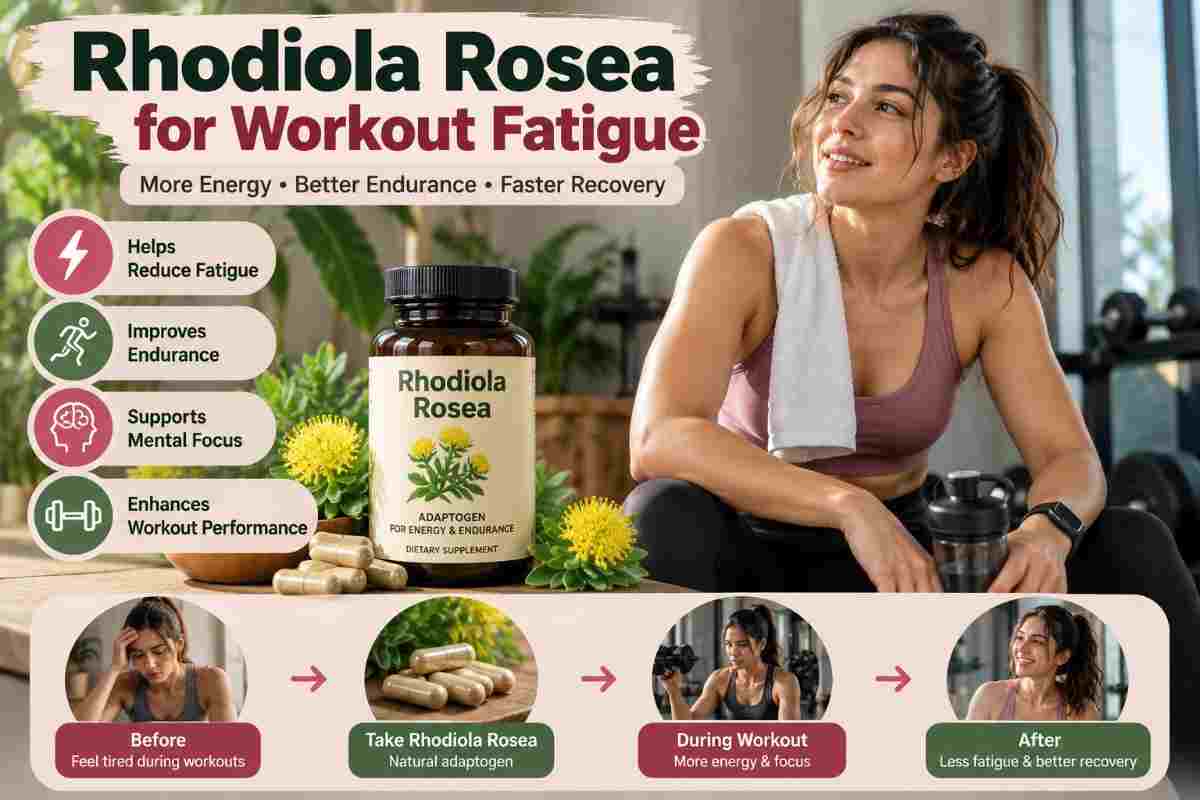
You’ve improved your diet, hydration, and workout routine, but fatigue still makes exercise feel difficult. Could Rhodiola rosea help you feel more energetic and improve your performance?
Rhodiola rosea for workout fatigue is an emerging area of research, but its effectiveness remains uncertain. Some studies suggest potential benefits for perceived fatigue and selected performance measures, although the evidence is mixed.
In this guide, you’ll learn about its potential benefits, dosage considerations, side effects, and natural ways to reduce workout fatigue.
What Is Rhodiola Rosea?
Rhodiola rosea is a flowering plant traditionally used to address fatigue and stress-related symptoms. It grows in cold regions of Europe and Asia and is commonly sold as an herbal dietary supplement.
It is often described as an adaptogen, meaning a substance believed to help the body respond to stress. However, this classification does not prove that it improves athletic performance.
What Are Its Main Compounds?
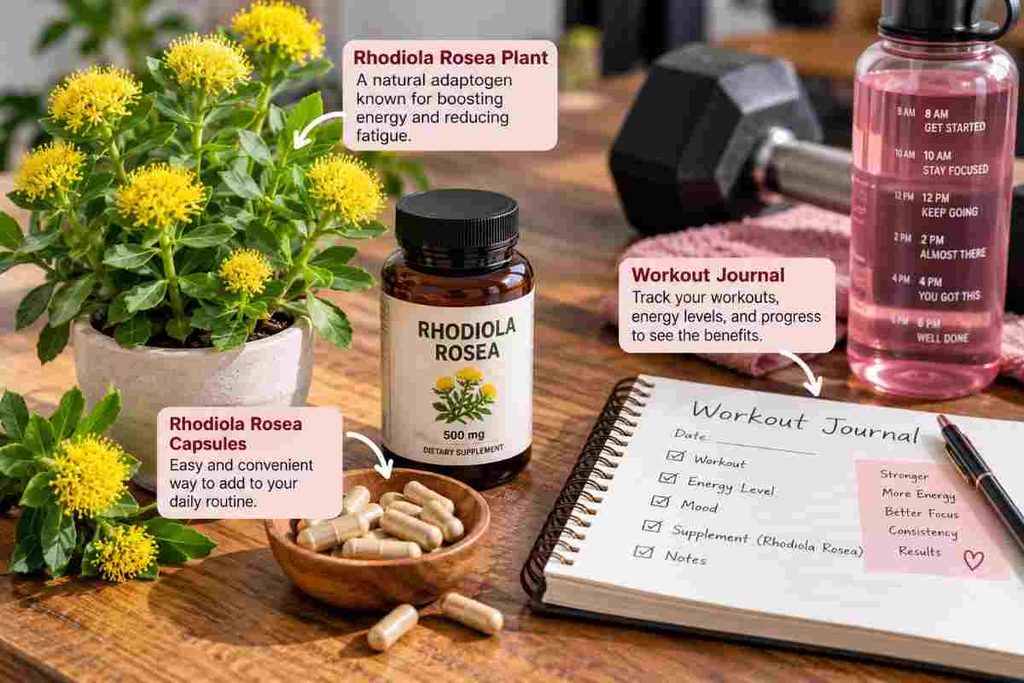
Rhodiola rosea contains naturally occurring compounds, including rosavins and salidroside. Researchers study these compounds to understand the plant’s potential biological effects.
However, their presence in a supplement does not guarantee reduced fatigue, improved endurance, or increased strength.
What Causes Workout Fatigue?
Workout fatigue can involve physical tiredness, reduced concentration, or decreased motivation.
Common contributing factors include:
- Insufficient sleep and recovery.
- Inadequate calorie or carbohydrate intake.
- Dehydration.
- Excessive training volume.
- Stress or underlying health conditions.
Identifying the cause is more useful than immediately relying on supplements.
Can Rhodiola Rosea Help Reduce Workout Fatigue?
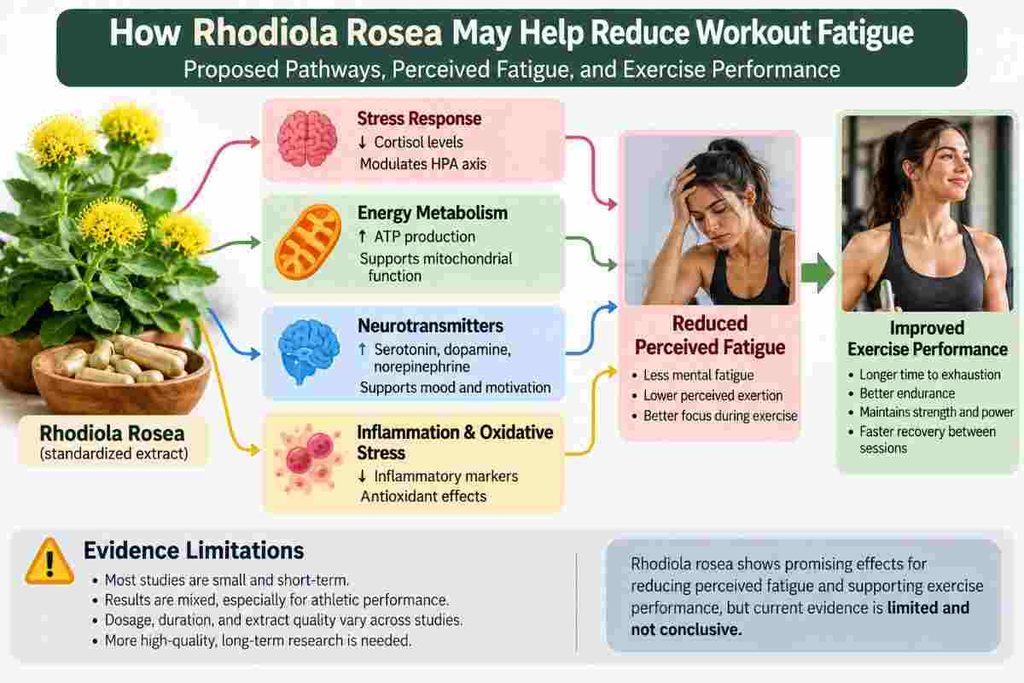
Rhodiola rosea may help reduce perceived fatigue in some circumstances, but current evidence does not confirm consistent improvements in exercise performance.
Feeling less tired does not necessarily mean you can run faster, lift heavier weights, or recover more quickly.
What Does Scientific Research Say?
Human studies have investigated Rhodiola rosea for endurance, physical performance, and fatigue-related outcomes. Some reported improvements in selected measures, while others produced less convincing results.
Research limitations include:
- Small participant groups in some studies.
- Short study durations.
- Different extracts and dosages.
- Differences in fitness levels and performance measurements.
Consequently, Rhodiola rosea is not established as a reliable supplement for improving endurance, strength, or recovery.
You can explore research through the National Center for Complementary and Integrative Health and PubMed.
What Are the Potential Benefits?
Potential benefits being investigated include:
1. Reduced perceived fatigue: Some research suggests possible effects on subjective feelings of tiredness, but the results are not conclusive.
2. Endurance support: Studies have investigated endurance-related outcomes, although consistent performance improvements have not been established.
3. Mental fatigue: Researchers have explored whether Rhodiola rosea may help with fatigue associated with demanding schedules and stress. However, reliable benefits remain uncertain.
Does Rhodiola Rosea Build Muscle?
There is insufficient evidence that Rhodiola rosea meaningfully increases muscle growth, strength, or post-workout recovery.
For muscle development, prioritize progressive resistance training, adequate protein, sufficient calories, and quality sleep.
Explore High Protein Plant-Based Foods for practical nutrition ideas.
How Much Rhodiola Rosea Should You Take?
There is no universally established Rhodiola rosea dosage specifically for workout fatigue or athletic performance. Research studies use different extracts, concentrations, and treatment periods.
Before choosing a supplement, consider:
- The amount of extract per serving.
- Whether the botanical name is Rhodiola rosea.
- The listed rosavin and salidroside standardization.
- Independent quality testing.
- Product warnings and other ingredients.
Different extracts are not necessarily interchangeable, even when they contain similar milligram amounts.
Consult a qualified healthcare professional before using Rhodiola rosea, especially if you take medication or have an existing medical condition. Avoid increasing the dose simply because you do not notice an immediate effect.
When Should You Take Rhodiola Rosea Before a Workout?
Research has not established an optimal time to take Rhodiola rosea for improving exercise performance.
Taking it immediately before exercise does not guarantee an immediate effect. Some products recommend earlier-day use, but no single schedule has been proven effective for everyone.
If a healthcare professional approves its use, follow their guidance and the verified product instructions.
Track your response by recording:
- Sleep quality and duration.
- Energy levels before exercise.
- Workout difficulty and performance.
- Any unwanted symptoms.
For more information, see Taurine Supplements as a pre-workout.
What Are the Side Effects of Rhodiola Rosea?
Rhodiola rosea can cause side effects, including:
- Dizziness.
- Headache.
- Dry mouth.
- Sleep disturbances.
Long-term safety is not established for every preparation and dosage. If you develop concerning symptoms, stop using the supplement and seek medical advice. Seek urgent care for severe symptoms such as difficulty breathing or swelling of the face or throat.
Can Rhodiola Rosea Interact With Medications?
Rhodiola rosea may interact with medications, and evidence about specific interactions remains incomplete.
Speak with a doctor or pharmacist before using it if you:
- Take antidepressants or other prescription medications.
- Have an existing medical condition.
- Take multiple medicines.
- Are pregnant or breastfeeding.
Bring the supplement label to your healthcare professional so they can review its ingredients and concentration.
Is Rhodiola Rosea Better Than Caffeine?
Rhodiola rosea has not been established as a better alternative to caffeine for workout fatigue. Caffeine has stronger evidence for certain exercise-performance outcomes, while research on Rhodiola rosea remains mixed.
| Feature | Rhodiola rosea | Caffeine |
|---|---|---|
| Main interest | Perceived fatigue and stress | Alertness and exercise performance |
| Evidence | Mixed and limited | Better established for certain outcomes |
| Potential side effects | Dizziness, headache, sleep problems | Anxiety, palpitations, sleep problems |
| Key consideration | Uncertain exercise benefits | Individual tolerance and total intake |
Caffeine may help some adults, but it can also disrupt sleep or increase anxiety. Neither supplement can compensate for insufficient sleep, inadequate nutrition, or excessive training.
Learn more through caffeine before a workout.
How Can You Reduce Workout Fatigue Naturally?
Improving sleep, nutrition, hydration, and training recovery is the most practical starting point for managing workout fatigue.
1. Get Enough Sleep
Sleep supports physical recovery, concentration, and training readiness. For most adults aged 18–60, the CDC recommends at least seven hours of sleep per night.
Source: Centers for Disease Control and Prevention, 2024.
If you regularly sleep only five or six hours, improving your sleep schedule may help more than adding a supplement.
Read Sleep Recovery for Athletes.
2. Eat Enough Calories and Carbohydrates
Insufficient calorie intake can contribute to fatigue, especially when combined with demanding workouts.
Carbohydrates provide important fuel for moderate-to-high-intensity exercise. Ensure your diet supports your activity level and fitness goals.
Use the calorie deficit calculator.
3. Consume Enough Protein
Protein supplies amino acids needed for tissue maintenance and muscle repair. Suitable sources include lentils, beans, dairy products, soy foods, and other protein-rich foods.
Explore daily protein intake calculator and High Protein Fat Loss Diet.
4. Stay Hydrated
Inadequate fluid intake can reduce exercise performance, particularly during prolonged activity or in hot conditions. Your needs depend on exercise duration, temperature, intensity, and sweat losses.
Electrolytes may help during prolonged, intense exercise or substantial sweating, but they are not necessary for every workout.
See hydration tips for better workout performance.
5. Manage Your Training Load
Repeatedly exercising through exhaustion can make it harder to maintain performance and consistency.
Consider adding rest days or temporarily reducing training volume when fatigue follows several demanding sessions.
Learn more from signs of overtraining and poor recovery.
How Can You Track Workout Fatigue and Choose a Quality Supplement?
A workout journal can help you identify patterns between exercise performance, sleep, nutrition, and recovery.
Record your sleep duration, workout intensity, perceived exertion, meals, hydration, and any supplement-related symptoms.
If you are considering Rhodiola rosea, evaluate the botanical identity, extract amount, ingredient standardization, independent testing, and manufacturer quality information.
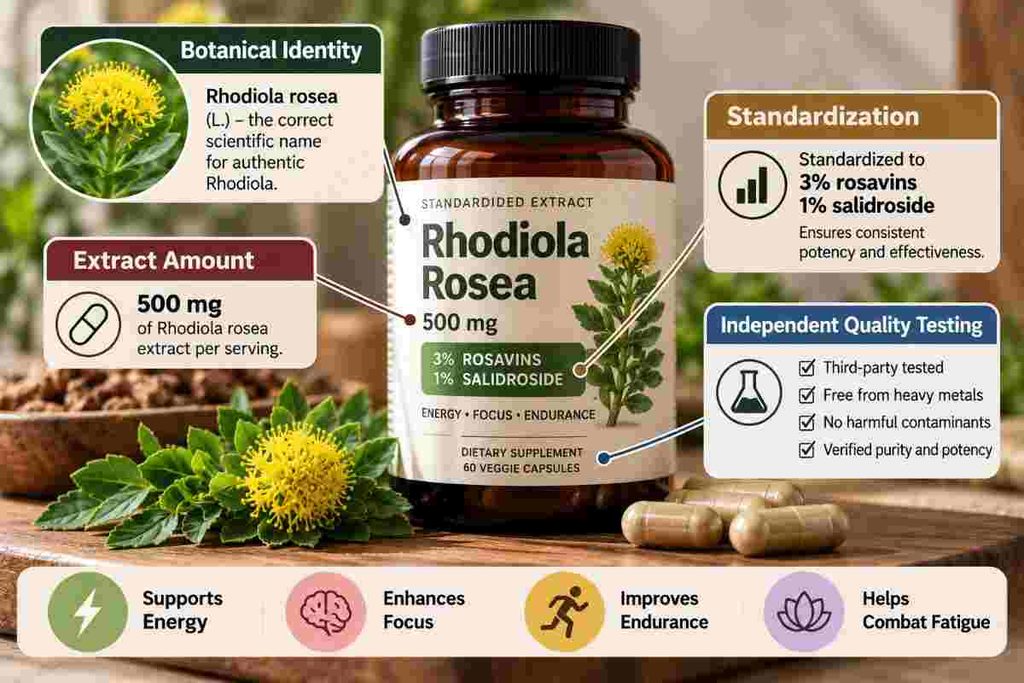
Remember that product testing may provide information about identity and purity, but it does not prove that a supplement improves athletic performance.
When Should You See a Healthcare Professional?
Persistent or unexplained fatigue deserves medical evaluation rather than treatment with supplements alone.
Possible causes include inadequate recovery, iron deficiency, other nutritional issues, medication effects, sleep disorders, and underlying medical conditions.
Consider seeking medical advice if fatigue:
- Persists despite adequate sleep and nutrition.
- Gets progressively worse.
- Interferes with everyday activities.
- Occurs alongside unusual breathlessness or dizziness.
A healthcare professional can assess your symptoms and determine whether testing is appropriate. Seek urgent medical care for chest pain, fainting during exercise, or severe difficulty breathing.
Conclusion
Rhodiola rosea for workout fatigue remains an area of scientific interest, but current evidence does not establish it as a reliable way to improve endurance, strength, muscle growth, or recovery. Some studies suggest potential benefits for perceived fatigue, yet the results remain uncertain.
Before considering supplementation, prioritize adequate sleep, sufficient calories and protein, hydration, and sensible training loads. If fatigue persists, consult a healthcare professional to investigate possible underlying causes.
FAQs
Can Rhodiola rosea reduce workout fatigue?
It may reduce perceived fatigue, but evidence is limited.
How much Rhodiola rosea should I take?
No standard dosage is established for workout fatigue. Consult a healthcare professional.
Does Rhodiola rosea improve endurance?
Research findings are mixed, and benefits remain uncertain.
Does Rhodiola rosea build muscle?
There is insufficient evidence that it directly increases muscle growth.
What are its side effects?
Possible side effects include dizziness, headaches, dry mouth, and sleep disturbances.
Can I take it with antidepressants?
Consult your doctor or pharmacist because interactions may occur.
Is Rhodiola rosea better than caffeine?
Caffeine has stronger evidence for certain exercise-performance benefits.
How can I reduce workout fatigue naturally?
Prioritize sleep, balanced nutrition, hydration, and adequate recovery.
When should I see a doctor about workout fatigue?
Seek medical advice for persistent or unexplained fatigue.