
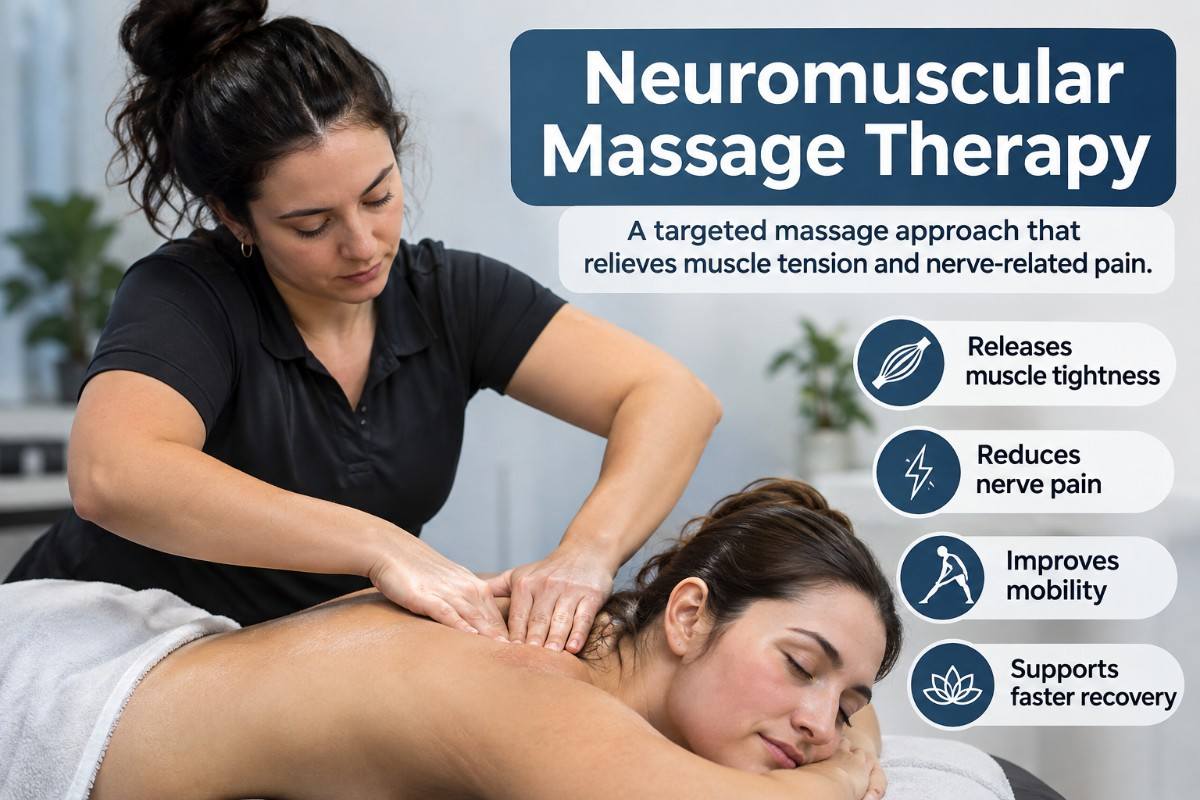
Persistent muscle tightness, recurring pain, and restricted movement can make everyday activities uncomfortable. Neuromuscular massage therapy is a hands-on approach that focuses on muscles, connective tissues, and sensitive areas to help manage muscular discomfort and improve movement.
Understanding how this therapy works, what techniques practitioners use, and who may benefit can help you decide whether it is an appropriate part of your recovery routine.
Aromatherapy Massage for Muscle Pain
What Is Neuromuscular Massage Therapy?
Neuromuscular massage therapy (NMT) is a specialized form of manual therapy that uses targeted pressure and soft-tissue techniques to address muscular tension, sensitive areas, and movement-related discomfort.
It focuses on the relationship between muscles, nerves, connective tissues, and surrounding structures. Practitioners commonly assess areas of tenderness, muscle tightness, and restricted movement before applying specific techniques.
The terms neuromuscular therapy massage and massage neuromuscular therapy are also used when people search for this type of targeted massage treatment.
Unlike a general relaxation massage, neuromuscular therapy typically concentrates on particular problem areas rather than treating the entire body with broad massage strokes.
How Does Neuromuscular Therapy Work?
Neuromuscular therapy uses controlled manual pressure and soft-tissue manipulation to address areas of muscular tenderness and tension.
A practitioner may:
- Assess posture and movement patterns.
- Identify painful or sensitive muscle areas.
- Apply sustained pressure to selected soft tissues.
- Use slow, targeted massage strokes.
- Work on surrounding muscles that may contribute to discomfort.
- Reassess movement and tenderness during the session.
The amount of pressure and the techniques used depend on the individual’s comfort, symptoms, and health history.
What Are Trigger Points?
Trigger points are sensitive areas within muscle tissue that may feel painful when compressed. Some may also produce referred pain, meaning discomfort is felt in another area of the body.
For example, a sensitive area in the shoulder muscles may contribute to discomfort around the neck or upper back.
trigger point massage techniques
Why Does Neuromuscular Massage Therapy Matter?
Neuromuscular massage therapy may help people manage localized muscular discomfort, improve short-term comfort, and address areas of restricted movement.
Muscle tension can develop from repetitive activities, prolonged sitting, exercise, poor movement habits, and physical strain. Targeted manual therapy may be useful as one component of a broader recovery approach.
However, its benefits vary between individuals, and it should not be considered a guaranteed treatment for chronic pain or underlying medical conditions.
1. Helps Manage Muscle Tension
Targeted pressure and soft-tissue techniques may help reduce the sensation of tightness in specific muscle groups.
People who spend extended periods sitting at desks or performing repetitive physical activities may experience tension in the neck, shoulders, lower back, and hips.
2. May Improve Mobility
Muscle discomfort and protective muscle tension can make certain movements feel restricted.
A suitable massage session may help improve short-term comfort during movement. Combining manual therapy with appropriate mobility exercises can support a more complete approach to movement.
daily mobility exercises for beginners
3. Supports Exercise Recovery
People who participate in resistance training, running, or other demanding activities sometimes use massage as part of their recovery routine.
Massage may help with perceived soreness and relaxation, although evidence does not establish neuromuscular massage as a unique or superior recovery method.
post-workout muscle recovery methods
4. May Help With Stress and Relaxation
Targeted massage can also provide relaxation, particularly when muscular discomfort contributes to physical stress.
The experience depends on the individual’s preferences, the therapist’s approach, and the intensity of treatment.
Common Neuromuscular Massage Therapy Techniques
Neuromuscular massage therapists use different techniques depending on the location of discomfort, muscle condition, and treatment goals.
1. Trigger Point Therapy
Trigger point therapy involves applying controlled pressure to sensitive areas within muscles.
The practitioner may maintain gentle, sustained pressure and gradually release it according to the client’s tolerance. The goal is to reduce local tenderness and improve comfort.
2. Ischemic Compression
Ischemic compression is a technique involving sustained pressure over a sensitive muscle point.
The pressure is adjusted according to the individual’s tolerance. It should not cause sharp pain, numbness, tingling, or excessive discomfort.
3. Myofascial Release
Myofascial release uses slow, sustained pressure and stretching movements to work with the fascia, the connective tissue surrounding muscles and other structures.
It is commonly used to address soft-tissue restriction and improve movement comfort.
myofascial release techniques and benefits
4. Deep Tissue Massage
Deep tissue massage uses slower strokes and more focused pressure to work on deeper layers of soft tissue.
It may be incorporated into a treatment session, but deeper pressure is not automatically more effective. The technique should always be appropriate for the individual’s health and comfort.
deep tissue massage benefits and techniques
5. Muscle Stretching and Soft-Tissue Mobilization
Some practitioners combine massage with gentle stretching and movement-based techniques.
These approaches may help people who experience muscle tightness or discomfort during particular movements.
Which Muscles Can Neuromuscular Massage Therapy Target?
Neuromuscular massage therapy can focus on different muscle groups depending on where a person experiences discomfort.

| Muscle group | Common area of discomfort | Treatment focus |
|---|---|---|
| Trapezius | Upper back and shoulders | Local muscle tenderness |
| Levator scapulae | Side and back of neck | Neck and shoulder tension |
| Rhomboids | Between shoulder blades | Upper-back discomfort |
| Erector spinae | Along the spine | Back muscle tension |
| Gluteal muscles | Buttocks and hips | Local muscular tenderness |
| Hamstrings | Back of thighs | Posterior thigh tightness |
| Quadriceps | Front of thighs | Thigh muscle discomfort |
| Calves | Lower legs | Calf muscle tightness |
The presence of discomfort in these areas does not automatically mean that trigger points are responsible. A proper assessment is important before selecting treatment.
Who Can Benefit From Neuromuscular Massage Therapy?
Neuromuscular massage therapy may be worth considering for people experiencing localized muscular discomfort or tension, provided there are no medical reasons to avoid massage.
Potential candidates include:
Office Workers and People Who Sit for Long Periods
Extended sitting and repetitive computer work can contribute to neck, shoulder, and back discomfort.
A targeted massage session may help with short-term muscular comfort. Regular movement breaks and ergonomic adjustments are also important.
Athletes and Gym Enthusiasts
People who regularly lift weights, run, or participate in sports may use targeted massage as a complementary recovery method.
It may help manage perceived muscular soreness, but it should not replace appropriate rest, progressive training, and rehabilitation when needed.
sports massage for muscle recovery
People With Repetitive Muscle Strain
Repetitive movements at work, during exercise, or in daily activities may contribute to localized muscle discomfort.
A practitioner may focus on the muscles involved while also considering movement habits that contribute to the problem.
People Experiencing General Muscle Tightness
Individuals who experience recurring muscle tightness may find targeted massage helpful for temporary relief.
However, persistent or unexplained symptoms should be assessed by a healthcare professional rather than repeatedly treated with massage alone.
What Happens During a Neuromuscular Massage Therapy Session?
A neuromuscular massage session generally involves an initial assessment, targeted soft-tissue treatment, and a review of the individual’s response.
Although the exact process varies between practitioners, a typical session may include the following stages.
Step 1: Initial Consultation
The practitioner asks about:
- Areas of pain or discomfort.
- How long the symptoms have been present.
- Previous injuries or surgeries.
- Daily activities and exercise habits.
- Existing medical conditions.
- Medications that may affect treatment safety.
This information helps determine whether massage is appropriate.
Step 2: Muscle Assessment
The practitioner may assess posture, movement, muscle tenderness, and the location of sensitive areas.
They may use gentle palpation to identify areas that reproduce the individual’s familiar discomfort.
Step 3: Targeted Massage
The practitioner applies suitable techniques to selected muscle groups.
Pressure should be adjusted throughout the session. Communication is important because painful or aggressive treatment is not necessary for effective care.
Step 4: Reassessment
After treatment, the practitioner may reassess movement, tenderness, or comfort to determine whether there has been a noticeable change.
Step 5: Recovery Recommendations
Depending on the individual’s needs, the practitioner may recommend:
- Gentle movement.
- Appropriate stretching exercises.
- Regular activity breaks.
- Gradual return to exercise.
- Professional assessment if symptoms continue.

Neuromuscular Massage Therapy vs Other Massage Techniques
Neuromuscular massage therapy differs from other massage approaches in its emphasis on targeted muscular assessment and localized treatment.
| Massage type | Main focus | Typical approach |
|---|---|---|
| Neuromuscular massage | Local muscle tenderness and sensitive areas | Targeted pressure and soft-tissue techniques |
| Swedish massage | General relaxation | Long, flowing strokes and kneading |
| Deep tissue massage | Deeper soft-tissue layers | Slower, focused pressure |
| Sports massage | Physical activity and sports-related needs | Techniques adapted to training and recovery |
| Myofascial release | Fascia and soft-tissue restrictions | Sustained pressure and gentle stretching |
| Trigger point massage | Sensitive muscular points | Localized pressure |
These approaches can overlap. For example, a practitioner may incorporate trigger point techniques into a broader neuromuscular massage session.
How Often Should You Get Neuromuscular Massage Therapy?
There is no universally established treatment schedule for neuromuscular massage therapy.
Frequency depends on the individual’s symptoms, health status, treatment response, and professional recommendations.
Some people may choose occasional sessions for muscular comfort, while others may discuss a short course of treatment with a qualified practitioner.
Consider these principles:
- Start with an assessment rather than committing to a large package of sessions.
- Allow time to evaluate how your body responds.
- Avoid repeatedly applying intense pressure to already painful areas.
- Combine appropriate massage with movement and strengthening exercises.
- Reassess the need for treatment if discomfort continues.
Massage should not become the only strategy for managing recurring muscle pain.
Neuromuscular Massage Therapy at Home: What Can You Do?
Some gentle self-care techniques may help manage ordinary muscle tightness, although professional neuromuscular treatment requires appropriate assessment and training.
1. Gentle Self-Massage
You can use your hands to gently massage accessible muscles around the shoulders, forearms, or thighs.
Use comfortable pressure and avoid pressing directly on the spine, joints, bones, or visibly injured areas.
2. Use a Massage Ball Carefully
A soft massage ball can help apply controlled pressure to accessible muscle areas.
For example, placing a ball between your upper back and a wall may allow gentle pressure against the surrounding muscles.
Avoid applying pressure to the front or sides of the neck, the spine itself, or areas with unexplained pain.
3. Include Gentle Mobility Exercises
Movement can complement massage by helping maintain comfortable joint movement.
Examples include:
- Gentle shoulder circles.
- Comfortable neck movements.
- Cat-cow movements.
- Hip mobility exercises.
- Gentle calf stretches.
Post Workout Stretching Routine
4. Maintain a Balanced Recovery Routine
Muscle recovery involves more than massage. Appropriate sleep, hydration, nutrition, rest, and progressive exercise all contribute to physical recovery.
active recovery workouts for muscle recovery
How to Find Neuromuscular Massage Therapy Near Me
People searching for neuromuscular massage therapy near me are generally looking for a local therapist or massage clinic that offers this particular approach.
Before choosing a practitioner, consider:
- Relevant massage therapy education and training.
- Professional registration or licensing requirements in your area.
- Experience with muscular assessment and targeted massage.
- Clear communication about treatment techniques.
- Willingness to adjust pressure according to your comfort.
- A consultation process that considers your medical history.
Avoid choosing a therapist based only on advertising claims or promises of permanent pain relief.
Looking for Neuromuscular Massage Therapy in London?
The search phrase neuromuscular massage therapy london reflects a location-specific search for practitioners in London.
People looking for this service should check the practitioner’s qualifications, treatment experience, location, professional credentials and current service information before booking.
Fitnopedia provides educational information rather than verified local clinic listings, so readers should confirm these details directly with the relevant practitioner.
Understanding Practitioner and Business-Specific Searches
Some searches relate to individual practitioners or massage businesses rather than the general definition of neuromuscular massage therapy.
Examples from related searches include:
- richard lee neuromuscular massage therapy
- artisan neuromuscular & sports massage therapy
- rpm neuromuscular massage therapy inc
These are practitioner- or business-specific search phrases. They should not be confused with general neuromuscular massage techniques or evidence about the effectiveness of the therapy.
If you are researching a particular practitioner or business, verify its official website, qualifications, service descriptions, location and current availability independently.
The name of a practitioner or company alone does not establish professional qualifications or treatment effectiveness.
Is Neuromuscular Massage Therapy Safe?
Neuromuscular massage therapy is generally intended to be performed with controlled pressure, but it is not suitable for everyone.
Massage is generally considered low risk when performed appropriately. However, rare serious complications, including nerve injury, blood clots, and fractures, have been reported, particularly with vigorous techniques or in people at increased risk. (Source: NCCIH, 2024)
Possible Side Effects
Some people may experience:
- Temporary muscle soreness.
- Mild tenderness in treated areas.
- Temporary discomfort.
- Skin sensitivity.
- Fatigue after a session.
Severe or persistent pain should not be considered a normal sign that the treatment is working.
Who Should Avoid or Modify Treatment?
Speak with a healthcare professional before receiving neuromuscular massage if you have:
- A suspected or diagnosed blood clot.
- A recent fracture or significant injury.
- Active skin infections or open wounds.
- Severe osteoporosis.
- A bleeding disorder or use of blood-thinning medication.
- Recent surgery.
- Cancer or a condition requiring special precautions.
- Pregnancy or a high-risk pregnancy.
Do not massage an area with suspected deep vein thrombosis. Sudden leg swelling, warmth, redness, or pain requires prompt medical assessment. Chest pain or sudden breathlessness requires emergency medical attention.
Also, unexplained numbness, progressive weakness, or severe radiating pain should be medically assessed instead of treated with increasingly firm massage.
What Does Research Say About Neuromuscular Massage Therapy?
Research supports the possibility that some forms of massage can provide short-term relief for certain types of muscular and musculoskeletal pain. However, the evidence specifically supporting neuromuscular massage therapy as a distinct treatment is limited.
A 2024 systematic review published in JAMA Network Open examined 129 systematic reviews of massage for painful adult health conditions. Only a minority of conclusions had moderate-certainty evidence, and none had high-certainty evidence. (Source: Mak et al., 2024)
The National Center for Complementary and Integrative Health (NCCIH) also reports that massage may help with certain types of pain, including neck, shoulder, and low-back pain, although the strength of evidence varies by condition. (Source: NCCIH, 2024)
Research on trigger point management suggests that massage and physical therapy are reasonable less-invasive treatment options, but standardized treatment protocols have not been established. (Source: American Academy of Family Physicians, 2023)
What does this mean for readers?
Neuromuscular massage therapy may be a useful complementary approach for some people with muscular discomfort. However, results vary, and it should not be presented as a proven cure for chronic pain, nerve conditions, or structural injuries.
Conclusion
Neuromuscular massage therapy is a targeted approach to managing muscular tension, sensitive areas, and movement-related discomfort. It may provide short-term relief for some people, particularly when combined with appropriate exercise, mobility work, and recovery habits.
The most important consideration is choosing a qualified practitioner who understands muscular anatomy, adjusts pressure appropriately, and considers your medical history.
If you experience persistent or unexplained pain, seek a healthcare assessment before relying on massage as your primary treatment.
FAQs
What is neuromuscular massage therapy used for?
Neuromuscular massage therapy is used to address localized muscle tenderness, muscular tension, and certain types of movement-related discomfort.
Does neuromuscular massage therapy hurt?
It may produce temporary pressure or mild discomfort, but it should not cause sharp pain, numbness, or excessive soreness.
How long does a neuromuscular massage session last?
Session length varies depending on the practitioner, treatment area, and individual needs. There is no universally established session duration.
Is neuromuscular massage therapy the same as trigger point massage?
No. Trigger point massage focuses specifically on sensitive muscular points, while neuromuscular massage may incorporate trigger point techniques alongside broader muscle assessment and soft-tissue treatment.
Can neuromuscular massage therapy help with back pain?
It may provide short-term relief for some types of muscular back pain. However, back pain can have several causes, and massage may not be appropriate for every condition.
Is neuromuscular massage therapy good for athletes?
It may help some athletes manage perceived muscle soreness and discomfort. However, it should complement rather than replace appropriate training, rest, and rehabilitation.
Can I perform neuromuscular massage therapy myself?
You can perform gentle self-massage on accessible muscles, but professional neuromuscular treatment requires appropriate assessment and training.
How many sessions of neuromuscular massage therapy are needed?
There is no fixed number of sessions. Treatment frequency depends on symptoms, individual response, and professional recommendations.
What is the difference between neuromuscular massage and deep tissue massage?
Neuromuscular massage emphasizes targeted assessment of muscular tenderness and sensitive areas, whereas deep tissue massage focuses on applying slower, more focused pressure to deeper soft tissues.
Can neuromuscular massage therapy release muscle knots?
It may help reduce tenderness and the sensation of tightness around sensitive muscle areas. However, muscle knots do not necessarily disappear permanently after massage.
How can I find neuromuscular massage therapy near me?
Search for qualified massage therapists in your area and check their professional credentials, experience, treatment approach and client consultation process.
What should I check before booking neuromuscular massage therapy in London?
Check the therapist’s qualifications, relevant experience, professional registration where applicable, location and treatment policies before booking.
Are Richard Lee, Artisan Neuromuscular & Sports Massage Therapy and RPM Neuromuscular Massage Therapy Inc general massage techniques?
No. These phrases refer to searches for specific practitioners or businesses, rather than separate massage techniques. Verify the relevant provider’s details directly before making a booking.
Sources
- National Center for Complementary and Integrative Health. (2024). Massage Therapy: What You Need to Know.
- Mak et al. (2024). Use of Massage Therapy for Pain, 2018-2023: A Systematic Review. JAMA Network Open.
- American Academy of Family Physicians. (2023). Trigger Point Management.
- Cochrane. (2024). Massage for Neck Pain.
- Mak et al. (2024). Massage for Neck Pain Contrasted Against Standard Treatment: A Systematic Review Update.
Disclaimer: This article is for informational and educational purposes only and is not a substitute for personalized medical advice. Consult a qualified healthcare professional before making significant changes to your diet, exercise routine, or supplement use.