
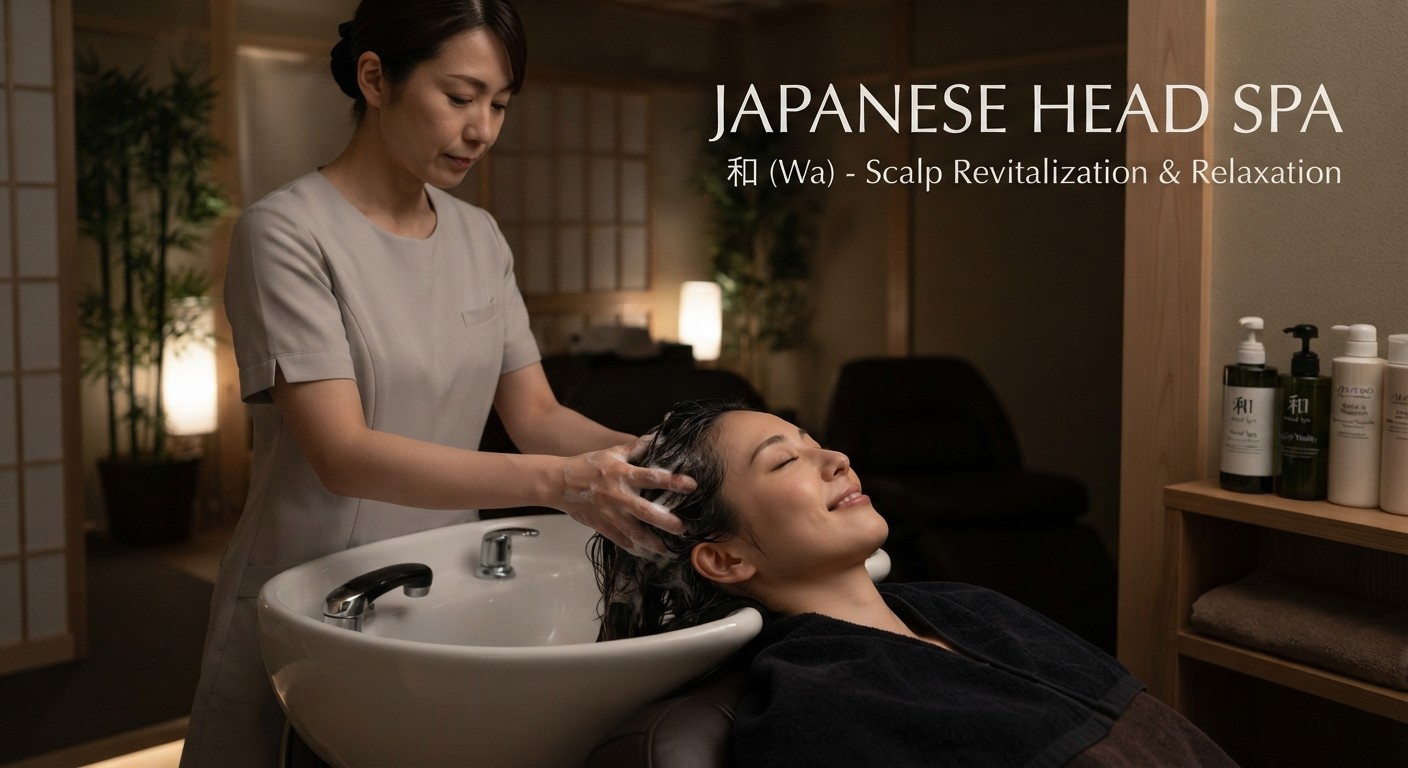
A Japanese head spa is a slow, thorough scalp treatment that has moved from Japanese salons into cities around the world. If you’ve wondered what actually happens in the chair, what the research says about hair growth, and what it costs, this guide answers each of those questions. You’ll also find a simple version you can try at home.
What is a Japanese head spa?
A Japanese head spa is a scalp treatment that combines cleansing, steam, and a long head massage in a single session. The practice has roots in centuries-old Japanese traditions that paired massage with herbal tinctures, and modern versions became popular in Japanese salons in the 1990s before spreading across Asia and into the US (Source: Associated Press, 2026).
Think of it as a facial for your scalp. Some salons sell it as a standalone service, while others fold a short version into a regular hair wash.
A full session usually includes:
- A close look at your scalp and hair, often with a magnifying device
- Deep cleansing and exfoliation
- Steam
- A long massage of the head, face, and neck
- Essential oils, conditioning masks, or aromatherapy at many spas
If you like treatments that focus on the head and face, our guide to buccal massage covers a related technique.
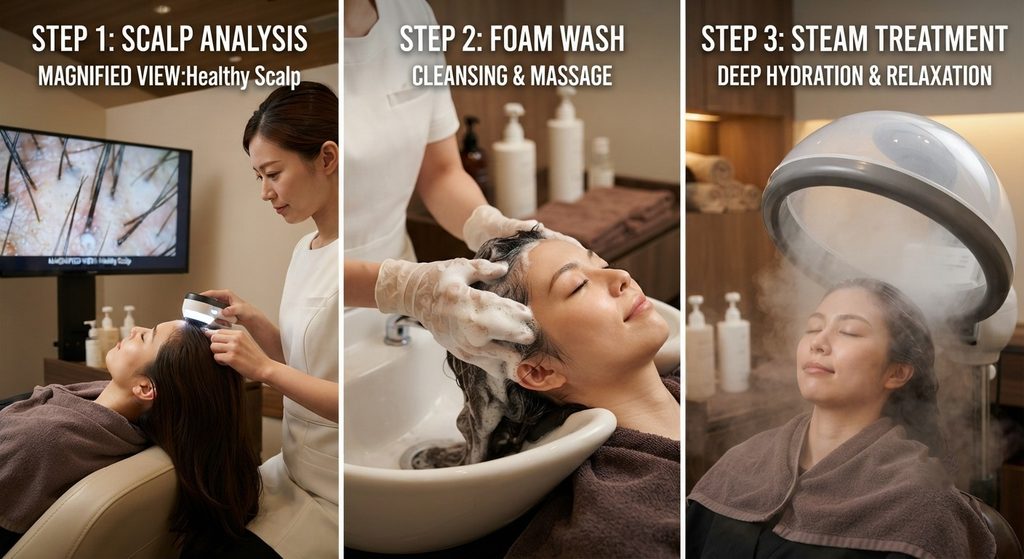
Scalp Analysis at a Japanese Head Spa
Why does a Japanese head spa matter?
A Japanese head spa matters because it gives attention to the scalp, which most routines treat as an afterthought. Your scalp is skin, and it reacts to oil, buildup, and stress like skin anywhere else.
Here is why people look into it:
- Dandruff is common. Harvard Health describes it as a mild form of seborrheic dermatitis that is more of a nuisance than a medical problem (Source: Harvard Health Publishing).
- Stress is a common trigger for seborrheic dermatitis flare-ups, and dermatologists suggest meditation and exercise as ways to manage it (Source: American Academy of Dermatology).
- One spa owner told the Associated Press that people who sit in front of a computer all day tend to hold a lot of tension in the head, face, neck, and shoulders (Source: Associated Press, 2026).
None of that makes a spa visit necessary. It does explain why a treatment built around the head and neck feels good to many people. If you want a free way to loosen up between visits, try these Stiff Neck Yoga or a few rounds of yoga for stress relief.
What happens during a Japanese head spa session?
A typical Japanese head spa session lasts 60 or 90 minutes and starts with a scalp inspection (Source: Associated Press, 2026). The exact order changes from spa to spa, but most follow this path:
- Scalp analysis. The therapist checks your scalp and hair, often with a magnifying device, and points out flaking, oil, or buildup.
- Deep cleansing. Special shampoos and tools lift oil and product residue from the scalp.
- Exfoliation. A scrub or exfoliating treatment loosens dead skin cells.
- Steam. Warm steam softens the scalp and adds to the relaxing feel.
- Massage. The longest part of the session. Most spas work the head, face, neck, and shoulders.
- Mask and finish. A conditioning mask, oils, a rinse, and a blow-dry round things off.
How does a Japanese head spa compare with other scalp options?
A head spa handles cleansing and relaxation, and a dermatologist handles diagnosis and medical treatment. Home scalp massage sits in between as a low-cost habit.
| Option | Main purpose | Diagnoses or treats scalp conditions? | Best for |
|---|---|---|---|
| Japanese head spa | Cleansing, scalp inspection, relaxation | No | An occasional treat or self-care session |
| Home scalp massage | Relaxation and routine scalp care | No | A regular, low-cost habit |
| Dermatologist visit | Diagnosis and medical treatment | Yes | Hair loss, persistent flaking, or irritation |
What are the benefits of a Japanese head spa?
The clearest benefits of a Japanese head spa are relaxation and a thorough scalp wash. The evidence for hair growth is much thinner.
- Many people find the session deeply relaxing. One regular customer told the Associated Press she falls asleep nearly every time (Source: Associated Press, 2026).
- The cleansing steps remove buildup that a quick shampoo can leave behind.
- The extended head, face, neck, and shoulder massage can ease tension in areas that rarely get attention.
- The scalp analysis gives you a closer look at your scalp’s condition, which can start a useful conversation about your routine.
Relaxation also supports the rest of your health habits. If you train regularly, pairing a session with good Cold Plunge Muscle Growth makes sense.
Does a Japanese head spa help hair growth?
There is some evidence that regular scalp massage can thicken hair, but it comes from a small study and does not cover head spa sessions themselves. In that 2016 study, nine healthy men received 4 minutes of standardized scalp massage a day with a device for 24 weeks. Hair thickness rose from 0.085 mm to 0.092 mm after 24 weeks (Source: Koyama et al., 2016).
Keep a few limits in mind:
- Only nine men took part, and the study ran for 24 weeks.
- The massage was a daily 4-minute routine with a device. A spa visit every few weeks delivers a much smaller dose of massage.
- The study was funded in part by a company that makes scalp massage devices.
- It measured hair thickness. It did not test head spa treatments for hair loss.
Hair also depends on what you eat and how you live. Our guides to high-protein foods.
What a Japanese head spa cannot do
A head spa cannot diagnose or treat hair loss or scalp disease. A dermatologist can tell you whether flaking comes from seborrheic dermatitis, psoriasis, a fungal infection, or eczema (Source: American Academy of Dermatology).
A Stanford dermatology professor told the Associated Press that head spas are generally fine as a complement to medical treatment, and for people who enjoy how they feel. She also urged anyone with hair loss to see a dermatologist (Source: Associated Press, 2026).
How much does a Japanese head spa cost?
Japanese head spa prices vary widely by city, spa, and session length. The Associated Press reported that one San Francisco spa charged about $100 an hour for head massages, while another started at about $200 an hour (Source: Associated Press, 2026).
Before you book, ask about:
- The total price, including add-ons such as masks or oils
- How long the session lasts, since 60 and 90 minutes are both common
- What the session includes, such as scalp analysis, steam, and face or shoulder massage
Who should be careful before booking a Japanese head spa?
Anyone with an active scalp condition or unexplained hair loss should see a dermatologist before booking. Skin affected by seborrheic dermatitis is easily irritated, and irritation can trigger a flare (Source: American Academy of Dermatology).
Check with a doctor or the spa first if any of these apply to you:
- Your scalp is red, sore, or flaking heavily
- You have open cuts, a sunburn, or a skin condition on your scalp
- You have neck or spine problems and plan on deep neck massage
- You react to fragrance, since many spas use essential oils
How do you choose a good Japanese head spa?
A good head spa explains what it will do, uses clean tools, and avoids medical promises. Some spas claim they can treat scalp conditions, hair loss, or even alopecia, and experts say people with those problems should see a doctor instead (Source: Associated Press, 2026).
Look for these signs:
- A scalp analysis before any products go on
- Clear answers about the products and tools used
- Fresh towels and clean equipment
- Honest language about results, with no promise to cure hair loss
- Reviews that mention comfort and professionalism
Can you do a Japanese head spa at home?
Yes, a simplified Japanese head spa works at home with a gentle shampoo and your fingertips. It won’t match a 90-minute professional session, but it brings the cleansing and massage into your routine.
- Brush dry hair gently to loosen tangles and flakes.
- Wet your hair with warm water and apply shampoo to the scalp, not the lengths.
- Use the pads of your fingers, not your nails, to massage in slow circles from the hairline back toward the crown. Spend several minutes on this step.
- If you use a medicated dandruff shampoo, follow the label. Some need to sit on the scalp for 5 to 10 minutes before rinsing (Source: American Academy of Dermatology).
- Rinse well and apply conditioner to the lengths of your hair.
- Finish with a few slow neck rolls and shoulder stretches.
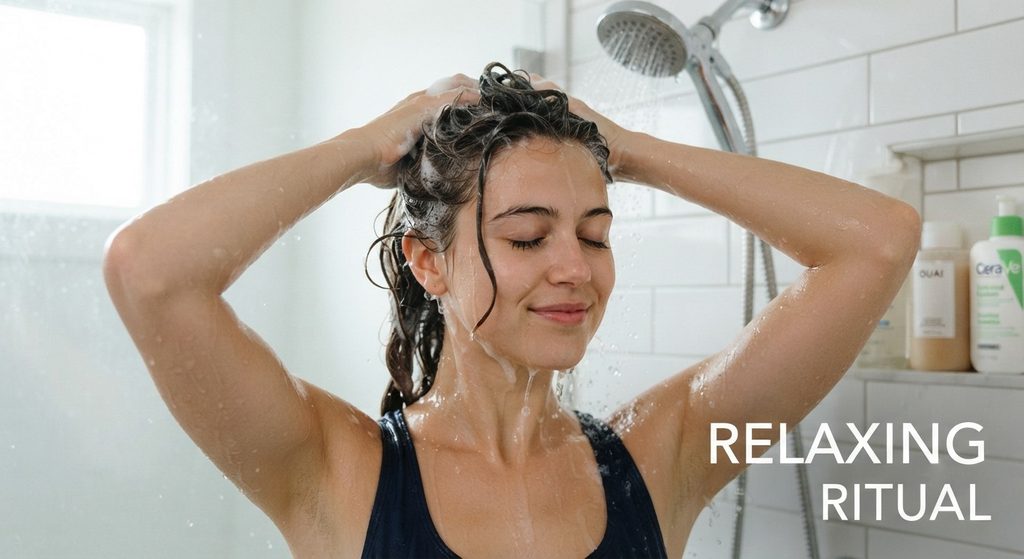
Stop if anything stings, burns, or feels painful. For a calmer finish, a few minutes of Nadi Shodhana pranayama fits well after a scalp massage. If you want to go deeper into relaxation, our Kriya Yoga meditation covers breathing and focus. Regular shoulder mobility exercises can also keep the tension from coming back.
Conclusion
A Japanese head spa is a relaxing scalp and head massage treatment that cleans the scalp thoroughly and takes 60 to 90 minutes. The research on hair growth is limited to a small massage study, so treat a spa visit as self-care. If you notice hair loss, stubborn flaking, or irritation, see a dermatologist first and use a head spa as an extra if you enjoy it. A good next step is to try the at-home routine above for a few weeks and see how your scalp feels.
FAQs
How long does a Japanese head spa take?
A typical Japanese head spa session lasts 60 or 90 minutes. Shorter versions exist when a salon adds a scalp massage to a regular hair wash.
Is a Japanese head spa worth it?
It’s worth it if you want a long, relaxing scalp and head massage and the price fits your budget. It is not a medical treatment, so it won’t replace a visit to a dermatologist.
Does a Japanese head spa help with hair loss?
There is no solid evidence that a head spa treats hair loss. One small study found thicker hair after 24 weeks of daily scalp massage, but it did not test spa sessions. See a dermatologist if you are losing hair.
How often should you get a Japanese head spa?
No standard schedule has been established. Many people book one occasionally as a treat, so choose a frequency that suits your budget and scalp, and ask your therapist for advice.
Is a Japanese head spa safe?
For most healthy people it is low risk, but it can irritate sensitive or inflamed scalps. Talk to a doctor before booking if you have a scalp condition, open skin, or neck problems.
What is the difference between a head spa and a scalp massage?
A scalp massage is one part of a head spa. A full head spa adds a scalp analysis, deep cleansing, exfoliation, steam, and finishing treatments.
Sources
- Koyama, T., Kobayashi, K., Hama, T., Murakami, K., & Ogawa, R. (2016). Standardized Scalp Massage Results in Increased Hair Thickness by Inducing Stretching Forces to Dermal Papilla Cells in the Subcutaneous Tissue. Eplasty.
- American Academy of Dermatology. How to treat dandruff.
- American Academy of Dermatology. Seborrheic dermatitis: Self-care.
- Harvard Health Publishing. Dandruff A to Z.
Disclaimer: This article is for informational and educational purposes only and is not a substitute for personalized medical advice. Consult a qualified healthcare professional before making significant changes to your diet, exercise routine, or supplement use.
1 thought on “Japanese Head Spa: What It Is, What Happens, and Whether It’s Worth It”