
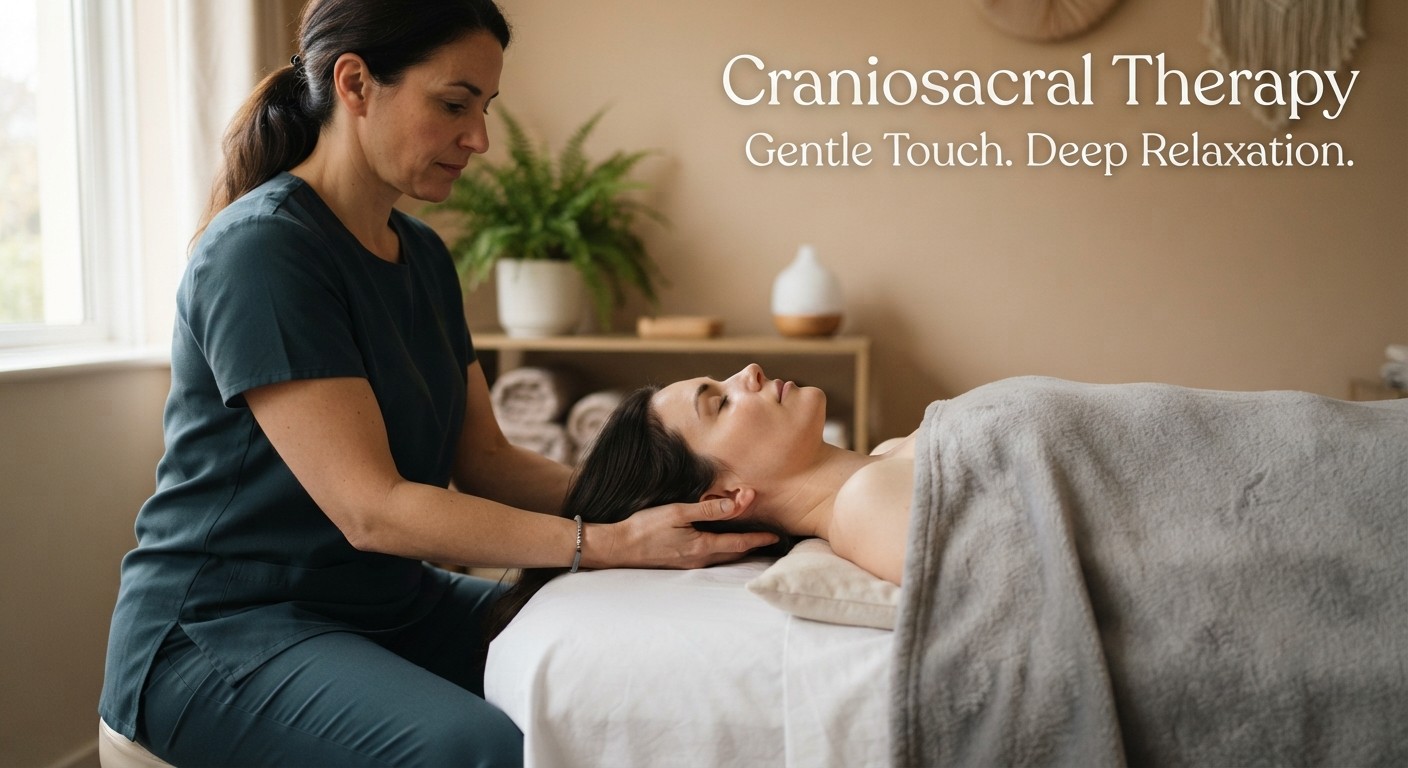
Craniosacral massage uses very light touch on the head, spine and sacrum, and people try it for neck pain, headaches and stress. The research behind it is weak, so it helps to know what you are paying for before you book. This guide explains how a session works and what systematic reviews have found, along with safety points to check first.
What is craniosacral massage?
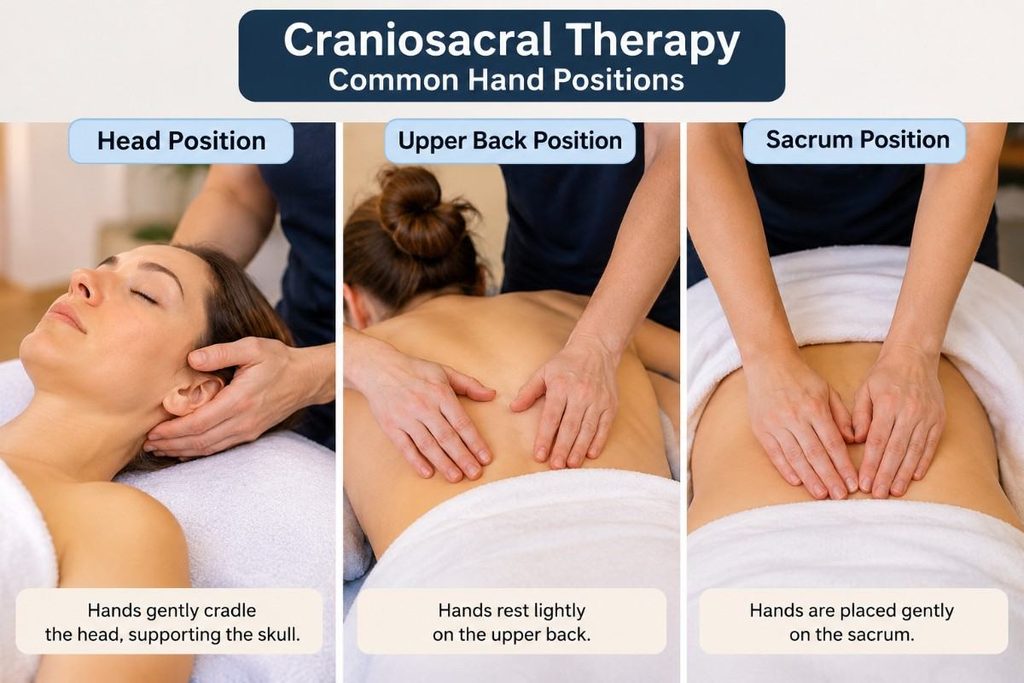
Craniosacral massage is a gentle, hands-on technique, usually called craniosacral therapy (CST), in which a practitioner applies light pressure to the skull, spine and sacrum. It aims to release tension in the fascia, the connective tissue network that runs through the body.
The basics:
- Origin: It was developed by an American osteopath, Dr. John Upledger.
- Who offers it: Massage therapists, chiropractors and naturopathy practitioners use it, among others.
- Regulation: There are no consistent education or practice standards, and it is not a licensed or regulated practice in North America.
- Core idea: Practitioners believe small restrictions around the brain and spinal cord affect how the body functions, and that light touch can ease them.
You will also see it called cranial-sacral therapy or cranial osteopathy. The names overlap, though the techniques taught under each are not identical.
Why does craniosacral massage matter?
Craniosacral massage matters because many people use it to manage pain and stress, and its claims are bigger than its evidence. Knowing the gap helps you decide whether it is worth the cost.
- It is commonly requested for back and neck complaints, headache and migraine, and stress-related problems.
- It is gentle, so people who dislike firm massage are often drawn to it.
- Some clinics present it as a complement to other care. Cleveland Clinic says it should be recommended alongside another form of treatment.
The short version: it is popular, low in physical intensity, and not backed by strong clinical proof. The rest of this article covers each of those points in detail.
How does a craniosacral massage session work?
A session is a quiet, slow appointment where the practitioner holds specific areas of your body and makes very small movements. Sessions typically last 30 minutes to one hour, and you may need several to reach your goals.
What happens step by step
- Consultation. You talk through your history and what you hope to get from the sessions.
- Positioning. You usually lie on a treatment table, often fully clothed.
- Assessment. The therapist touches certain areas to judge what needs attention.
- Treatment. They then use subtle movements to promote what they describe as healing.
- Wrap-up. You rest, talk about how you feel, and agree on whether to book more sessions.
What you might feel
- Many people say they leave feeling relaxed.
- Some report symptom relief right after a session.
- Others feel very little, since the touch is so light.
How it differs from standard massage
| Feature | Craniosacral massage | Standard massage |
|---|---|---|
| Pressure | Very light touch | Light to firm, depending on style |
| Main focus | Skull, spine and sacrum | Muscles and soft tissue across the body |
| Movement | Small, subtle holds | Kneading, gliding and stretching strokes |
| Typical goal | Relaxation and symptom relief | Muscle tension, circulation and relaxation |
What is the theory behind craniosacral therapy?
The theory is that the brain and spinal cord pulse with a subtle rhythm, and that a trained hand can feel and correct disturbances in it. This idea is usually called the “primary respiratory mechanism” or “craniosacral mechanism.”
The problem is anatomical:
- A 2024 meta-analysis states that the proposed cranial rhythm conflicts with current understanding of anatomy and development.
- Another 2024 review describes the links drawn between this system and disease as built on implausible and unproven anatomical claims.
Scientists are not saying that touch has no effect on how a person feels. They are saying the specific mechanism practitioners describe has not been shown to exist.
What does the research say about craniosacral massage?
The research says craniosacral massage has not been shown to treat any medical condition. The most recent systematic reviews found no meaningful benefit, and older reviews called the evidence thin.
| Condition | What reviews found |
|---|---|
| Headache disorders | A 2024 meta-analysis found a statistically significant but clinically unimportant drop in pain, with no change in disability, based on very low certainty evidence. |
| Neck pain, low back pain, pelvic girdle pain, fibromyalgia | A 2024 review found no significant or clinically relevant changes in pain or disability. |
| Infant colic, preterm infants, cerebral palsy, visual deficits | The same review found CST was not effective for these. |
| Any studied indication | A separate 2024 meta-analysis found no significant effects and concluded CST lacks usefulness for the conditions studied. |
(Source: Healthcare, 2024; Pain Management Nursing, 2024; Frontiers in Medicine, 2024)
Why do the results look so different from earlier claims?
- An earlier meta-analysis suggested CST helped chronic musculoskeletal pain, but the 2024 review concluded the two trials showing benefit in children were seriously flawed and likely false positives.
- A 2012 review found few studies and only moderate methodological quality, so it called for more research.
- WebMD describes early research suggesting possible benefits for infant colic, fibromyalgia and neck pain, but labels it early.
Feeling calm during and after a session is a real experience for many people, and that alone is a fair reason to try it. It is a different thing from treating a medical problem, so treat any promise of a cure as a red flag.
lower back strengthening exercises
Is craniosacral massage safe?
Craniosacral massage is generally considered low risk when a trained practitioner performs it. WebMD rates it “possibly safe” and notes clinical trials lasting up to 20 weeks without adverse effects.
Possible side effects:
- Mild discomfort after treatment is the most common, and it usually fades within 24 hours.
- Some people have reported headaches, mood changes and digestive problems afterward.
Talk to your doctor first if any of these apply:
- You have arthritis, heart disease, cancer, a blood clotting disorder, or a past injury to the head, brain or spine.
- You have a traumatic brain injury, since there are reports it may worsen symptoms.
- You are pregnant. It is considered possibly safe during pregnancy when done by a trained practitioner.
Craniosacral massage should not replace standard medical care. If you have new, severe or persistent symptoms such as a sudden headache, get them checked first.
How can craniosacral massage fit into your recovery routine?
Craniosacral massage can work as a relaxation option on rest days, but it should not replace habits with better support for recovery. Think of it as optional.
Where it might fit:
- On a low-key day when you want to unwind after a heavy training block.
- Alongside sleep, easy movement and stretching, never in place of them.
- As a way to try a hands-off style of bodywork if firm massage feels like too much.
Habits to keep in front of it:
- Enough sleep and rest between hard sessions.
- A stretching routine you actually repeat.
- Light mobility work for the neck, shoulders and back.
Post Workout Stretching Routine
How do you find a qualified craniosacral massage practitioner?
Start by checking the practitioner’s main license, because CST on its own is not regulated. Providers typically need a license in a specialty such as massage therapy, chiropractic or physical therapy.
A short checklist before booking:
- Ask what training they have in craniosacral work and which license they hold.
- Ask how many sessions they expect you to need and what each one costs.
- Check insurance. Coverage varies, and some employers reimburse it through flexible healthcare accounts.
- Walk away from anyone who promises to cure a disease or tells you to stop other treatment.
- Tell your doctor you are trying it.
Conclusion
Craniosacral massage is a very gentle form of bodywork that many people find relaxing, but current reviews do not show that it treats pain, headaches or other conditions. If you want to try it, pick a licensed practitioner, check with your doctor if you have a medical condition, and keep sleep, movement and stretching as the main parts of your recovery.
For your next step, book a single session before committing to a package, and note how you feel the next day.
FAQs
What is craniosacral massage used for?
People use it for neck and back pain, headaches and stress. Reviews have not shown it to treat these conditions, though many people find it relaxing.
Does craniosacral massage work?
Current evidence says it does not reliably treat medical conditions. Two 2024 meta-analyses found no meaningful benefit across the conditions studied, although some people enjoy the relaxation.
How long does a craniosacral massage session take?
A session usually lasts 30 minutes to an hour. You may be advised to book several sessions.
Is craniosacral massage painful?
No, the touch is very light. Some people feel mild discomfort afterward that fades within about a day.
Is craniosacral massage the same as craniosacral therapy?
Yes, the terms are used interchangeably. Massage therapists, chiropractors and other practitioners may offer it under either name.
Who should avoid craniosacral massage?
Anyone with a head, brain or spine injury, a clotting disorder, heart disease, arthritis or cancer should speak to a doctor first. People with a traumatic brain injury should be especially careful.
Can craniosacral massage replace medical treatment?
No. It should only be used alongside standard care, never instead of it.
Sources
- Ceballos-Laita, L., et al. (2024). Is Craniosacral Therapy Effective? A Systematic Review and Meta-Analysis. Healthcare.
- Amendolara, A., et al. (2024). Effectiveness of osteopathic craniosacral techniques: a meta-analysis. Frontiers in Medicine.
- Pain Management Nursing. (2024). Clinical Effectiveness of Craniosacral Therapy in Patients with Headache Disorders: A Systematic Review and Meta-analysis.
- Haller, H., et al. (2019). Craniosacral therapy for chronic pain: a systematic review and meta-analysis of randomized controlled trials. BMC Musculoskeletal Disorders.
- Complementary Therapies in Medicine. (2012). A systematic review to evaluate the clinical benefits of craniosacral therapy.
- Cleveland Clinic. Craniosacral Therapy.
Disclaimer: This article is for informational and educational purposes only and is not a substitute for personalized medical advice. Consult a qualified healthcare professional before making significant changes to your diet, exercise routine, or supplement use.