
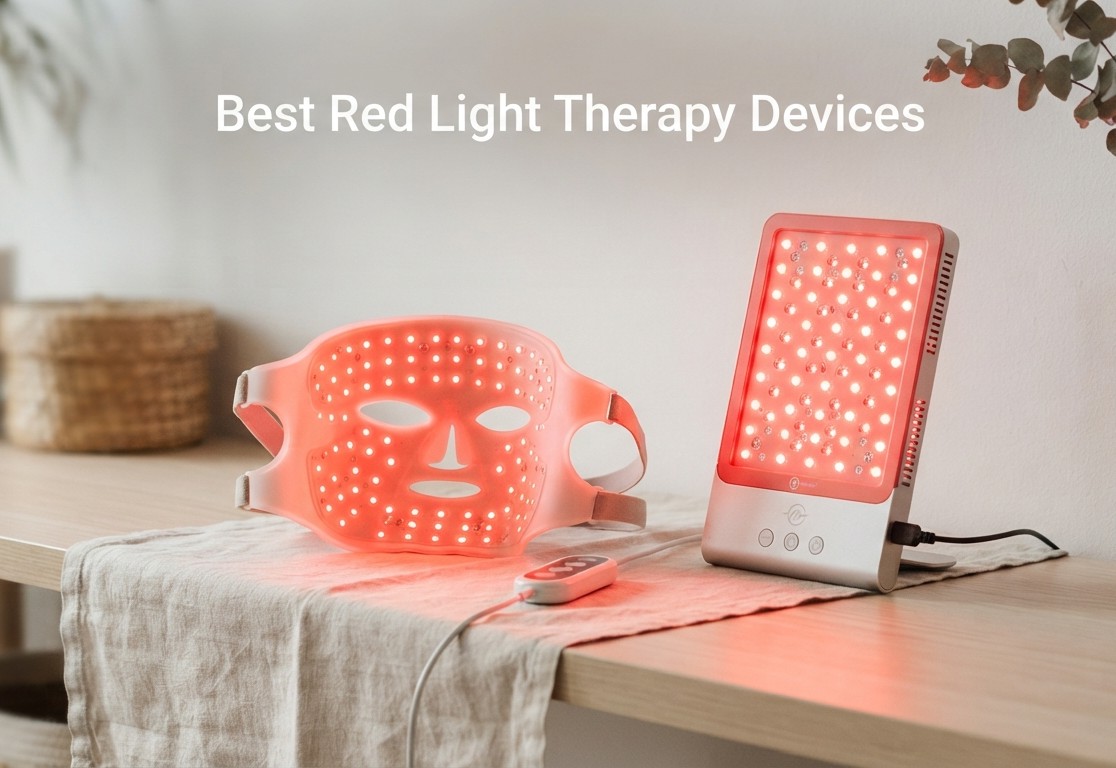
Red light therapy devices now range from an $80 handheld wand to a $6,000 full-body panel, and the spec sheets rarely tell you which one fits your goal. The right pick depends on whether you want to treat your face, a sore joint, or a large muscle group, and on how much proof you need before spending. This guide compares well-reviewed devices by type, explains what the research does and does not support, and shows how to choose one safely.
What are red light therapy devices?
Red light therapy devices are LED (and sometimes laser) products that shine low-level red or near-infrared light on the skin or body. They go by several names, including photobiomodulation and low-level light therapy, and they come in a few main forms:
- Panels: flat LED arrays that stand, hang, or mount, built for larger areas or the whole body
- Wraps and pads: flexible bands that sit against a knee, back, or elbow
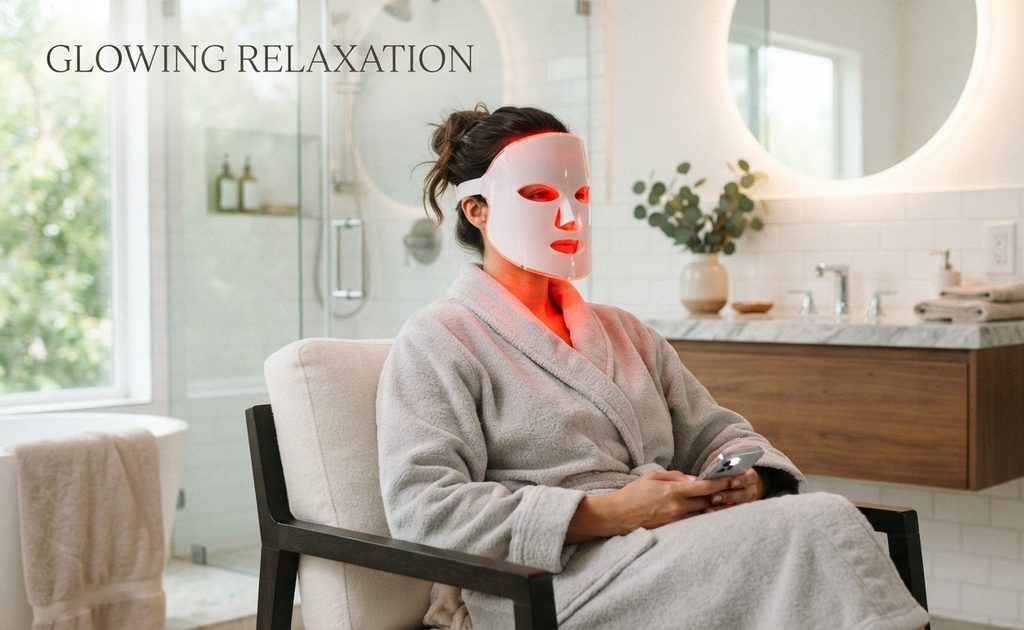
- Masks: wearable face devices, often with red, blue, and near-infrared modes
- Wands: small handheld tools for spot treatment
The Cleveland Clinic describes red light therapy as low-level red light applied to the skin, mainly promoted for skin appearance.
The recommendations below come from published third-party testing, not firsthand testing. Prices are the figures listed in those reviews and change often, so confirm them before you buy.
Why does choosing the right red light therapy device matter?
Choosing carefully matters because devices differ widely in power, coverage, and price, and some of the evidence behind the marketing is thin. A few reasons to be selective:
- Reviewed devices in the sources below run from about $79 to $5,999.
- The Cleveland Clinic notes that at-home devices may be less powerful than professional ones, so results can differ.
- Fortune’s masks review found mismatched spec figures within several product listings, which makes it hard to compare devices on paper. (Source: Fortune, 2026)
- Misuse, such as using a device too often or without eye protection, could damage skin or eyes.
If you are building a broader routine, red light fits alongside the basics in fitness recovery tips and does not replace them.
Does red light therapy actually work?
Red light therapy may help with some skin and healing goals, but the evidence is limited and varies a lot by use. Here is what the main sources say:
- The Cleveland Clinic calls its benefits reported and emerging, says there is not enough evidence to support most uses, and notes that many studies are small, lack placebo groups, or use animals or cell tissue. It also says there is no scientific evidence for weight loss, cancer, cellulite removal, or depression. (Source: Cleveland Clinic, 2021)
- NBC Select reports that experts see possible benefits for acne, healing after certain procedures, and hair growth, with weaker evidence for wrinkles. It also points out that many studies are funded by companies that sell these products. (Source: NBC Select, 2026)
- A 2025 systematic review of whole-body photobiomodulation (five studies, 105 active adults) found possible gains in sleep quality but no evidence of benefits for exercise recovery or performance. (Source: Lasers in Medical Science, 2025)
- The Cleveland Clinic says short-term use as directed appears safe, while long-term safety is not yet known. (Source: Cleveland Clinic, 2021)
In short, treat red light as an optional add-on. If muscle soreness is your main goal, pair it with proven basics such as post-workout stretching routine and sleep and muscle recovery.
How to choose a red light therapy device
The best way to choose is to match the device type to your goal, then check wavelengths, published power output, eye safety, and the return policy. Use this checklist:
- Goal: masks and wands suit the face, while panels and wraps suit muscles and joints
- Wavelengths: red light around 630 nm is used for skin concerns and reaches about two to three millimeters below the surface, and some devices add near-infrared for deeper targets.
- Irradiance at a stated distance: power drops quickly with distance, and one wrap listing shows 200 mW/cm² at contact falling to 25 mW/cm² at six inches (Source: Garage Gym Reviews, 2026)
- Published specs: prefer brands that list irradiance and wavelengths clearly, since reviewers found inconsistent figures for several products (Source: Fortune, 2026)
- FDA status: clearance confirms a device was reviewed by the FDA for a specific use (Source: NBC Select, 2026), while low-risk products that only promote a healthy lifestyle fall under the FDA’s general wellness policy, and a product tied to a disease or condition falls outside it.
- Eye protection: masks with eye cutouts are common, and the Cleveland Clinic advises shielding your eyes during use.
- Warranty and returns: reviews list trial windows from 30 to 120 days, which is worth using
Best red light therapy devices at a glance
The table summarizes the devices featured in the Fortune, Garage Gym Reviews, and NBC Select testing. Prices and specs are as published in those reviews.
| Device | Type | Listed price | Notable published details |
|---|---|---|---|
| Sunlighten Red Light Therapy Panel | Panel | $1,379 to $1,589 | 660 nm and 850 nm, 200 LEDs, app with 20+ programs |
| Sun Home Medical-Grade Full Body Panel | Panel | $1,499 | 660 to 850 nm, 140 mW/cm², full-body coverage |
| Lifepro BioHeal Plus | Panel | $474.99 | 660 nm and 850 nm, hanging design, lifetime warranty |
| Novaalab Novaa Light Pad XL | Wrap | $599.90 | 660 nm and 850 nm, flexible pad, 3-year warranty |
| Kineon MOVE+ Pro LED & Laser | Wrap | $699 | 660 nm LEDs and 808 nm lasers, battery powered |
| Omnilux Contour Face | Mask | $395 | Red and near-infrared, 10-minute sessions |
| Sun Home Sauna Radiant Face Mask | Mask | $399 | 633 nm and 830 nm, 128 LEDs, described as FDA-cleared |
| HigherDOSE Red Light Face Mask | Mask | $349 | 630 nm and 880 nm, 50 mW/cm² |
| LightStim for Wrinkles Wand | Wand | $249 | Red light, about 3 minutes per area, wired |
Best red light therapy panels
Panels give the widest coverage and the highest output, which makes them the usual choice for large muscle groups and whole-body sessions. Fortune scored four of its tested panels between 4.4 and 4.5 out of 5. (Source: Fortune, 2026)
- Sunlighten Red Light Therapy Panel: Fortune listed it at $1,589 and Garage Gym Reviews at $1,379, with 200 LEDs at 660 nm and 850 nm and up to 200 mW/cm² of output. A tester who uses red light daily reported less muscle and joint soreness but no change in skin. (Source: Fortune, 2026; Garage Gym Reviews, 2026)
- Sun Home Medical-Grade Full Body Panel: it lists 140 mW/cm² across 660 to 850 nm with full-body coverage, and a hanging kit is included but no standing base. (Source: Fortune, 2026)
- Lifepro BioHeal Plus: the lowest-cost panel in the Fortune list at $474.99, with 212 mW/cm² at three inches and 140 mW/cm² at six inches. The tester found the pulley mounting complicated and had no long-term results.
- RLT Home Total Spectrum Compact: $1,295 for seven wavelengths from 480 to 1064 nm. Fortune and Garage Gym Reviews list different irradiance numbers, so check the spec sheet.
- Helio Nova: a $5,999 full-body panel that Fortune scored 4.4 out of 5, and it is the priciest device in the reviews.
Best red light therapy wraps and pads
Wraps and pads sit directly on a joint or muscle, so they suit targeted use on a knee, elbow, or lower back. Reviewers highlight these options:
- Novaalab Novaa Light Pad XL: $599.90, with 150 to 200 mW/cm² at contact, a remote with a timer, and a 3-year warranty. Fortune scored it 4.5 out of 5 but says it works best on localized areas. (Source: Fortune, 2026; Garage Gym Reviews, 2026)
- Kineon MOVE+ Pro LED & Laser: $699, with red LEDs and near-infrared lasers on a battery-powered band. Setup takes several steps and each module switches on separately.
- LifePro AllevaRed Light Therapy Belt: $274.99 and usable sitting, lying, or walking. Some buyers on Amazon reported defective units and customer service trouble.
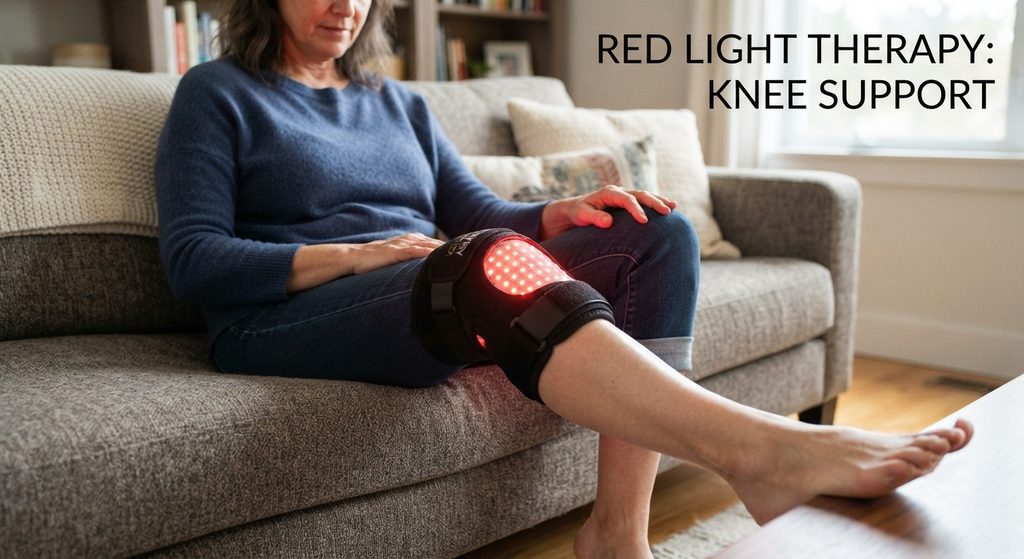
Wraps are often used for sore joints, so they pair naturally with low-impact exercises and gentle mobility work.
Best red light therapy masks and wands
Masks and wands are built for the face, and the choice comes down to coverage, comfort, and whether you want blue light for blemishes. Fortune’s tested masks included:
- Omnilux Contour Face ($395): red and near-infrared, with 10-minute sessions five times a week, and Fortune describes it as cleared for fine lines, wrinkles, and firmness. The tester found it slightly oversized with a corded remote. (Source: Fortune, 2026)
- Sun Home Sauna Radiant Face Mask ($399): Fortune’s overall pick, with 128 LEDs, disclosed irradiance, and a cordless controller. It covers the face only. (Source: Fortune, 2026)
- HigherDOSE Red Light Face Mask ($349): hands-free with adjustable straps and no blue light mode. A tester used it for about four months and rated it 5 out of 5. (Source: Fortune, 2026)
- RENPHO Rejuven ($199.99): a lower-cost option with detachable eye cups, though some users report short battery life. (Source: Fortune, 2026)
- RevitaGlow ($99.99): the cheapest mask tested, with no near-infrared and moderate output. (Source: Fortune, 2026)
For handheld use, NBC Select picked the LightStim for Wrinkles Wand at $249 and the Revive Light Therapy Lux Collection Glō at $79 for budget shoppers. (Source: NBC Select, 2026)
How to use a red light therapy device safely
Safe use starts with following the maker’s instructions and protecting your eyes. Keep these points in mind:
- Use the device at its recommended treatment time. NBC Select says experts consider at-home use safe when the device is FDA-cleared and used as directed. (Source: NBC Select, 2026)
- Shield your eyes. If a mask has no eye cutouts, use goggles or at least keep your eyes closed. (Source: NBC Select, 2026)
- Expect gradual results. The Cleveland Clinic says skin treatment often takes one to three sessions per week for weeks or months. (Source: Cleveland Clinic, 2021)
- Talk to a dermatologist first if you have sensitive skin or are prone to hyperpigmentation. (Source: NBC Select, 2026)
- Do not stack it on top of every other recovery habit at once. Add one change at a time so you can tell what helps, and keep foam rolling for recovery or a massage gun in the mix if they already work for you.
FDA-cleared red light therapy devices
Who should skip red light therapy or see a doctor first?
Check with a doctor before using a device if you have a skin condition, a health condition, or unexplained pain. Get advice first if:
- You have sensitive skin, a history of hyperpigmentation, or a skin concern you want treated (Source: NBC Select, 2026)
- You are hoping to treat a medical condition, since the Cleveland Clinic recommends consulting a dermatologist or healthcare provider before starting (Source: Cleveland Clinic, 2021)
- Pain is new, severe, or getting worse, in which case a diagnosis matters more than a device
- You are thinking of using a spa, salon, or gym machine, since the Cleveland Clinic advises caution with those providers.
Conclusion
The best red light therapy device depends on your goal: a panel for large muscle groups, a wrap for a single joint, and a mask or wand for the face. The research is still limited, so keep expectations modest, use any device exactly as directed, and protect your eyes. Compare published irradiance at a stated distance, check the return window, and start with the lowest-cost device that fits your goal before moving to an expensive panel. For the broader picture, build your plan around sleep, nutrition, and movement, such as a recovery nutrition guide.
FAQs
What is the best red light therapy device overall?
There is no single best device, because the right choice depends on the area you want to treat. In Fortune’s panel tests, the Sunlighten panel and Novaalab Pad XL scored highest at 4.5 out of 5.
Are red light therapy devices worth the money?
They may be worth it if you want a gentle skin or joint add-on and understand the evidence is limited. The Cleveland Clinic says there is not enough evidence to support most uses.
Which is better, a red light panel or a mask?
A panel suits large muscle groups and whole-body use, while a mask is made for the face. Choose by the area you want to treat.
Is FDA clearance the same as proof that a device works?
No. Clearance confirms a device was reviewed by the FDA for a specific use.
Does red light therapy help muscle recovery?
The evidence is not strong. A 2025 review of whole-body photobiomodulation found no evidence of benefits for exercise recovery or performance.
How often should I use a red light therapy device?
Follow the manufacturer’s instructions. Fortune lists 10-minute sessions five times a week for one mask, while the Cleveland Clinic says skin treatment often takes one to three sessions a week.
Is red light therapy safe for your eyes?
Protect your eyes during use. The Cleveland Clinic says misuse could damage skin or eyes, especially if eyes are unprotected.
Sources
- Fortune. (2026). 7 Best Red Light Therapy Panels of 2026: Personally Tested.
- Fortune. (2026). The Best Red Light Therapy Masks of 2026.
- Garage Gym Reviews. (2026). Best Red Light Therapy Devices 2026.
- NBC Select. (2026). What is red light therapy and does it work?
- Cleveland Clinic. (2021). Red Light Therapy: Benefits, Side Effects & Uses.
- Lasers in Medical Science. (2025). A systematic review on whole-body photobiomodulation for exercise performance and recovery.
- U.S. Food and Drug Administration. (2026). General Wellness: Policy for Low Risk Devices.
Disclaimer: This article is for informational and educational purposes only and is not a substitute for personalized medical advice. Consult a qualified healthcare professional before making significant changes to your diet, exercise routine, or supplement use.
1 thought on “Best red light therapy devices: panels, masks, and wraps compared”