
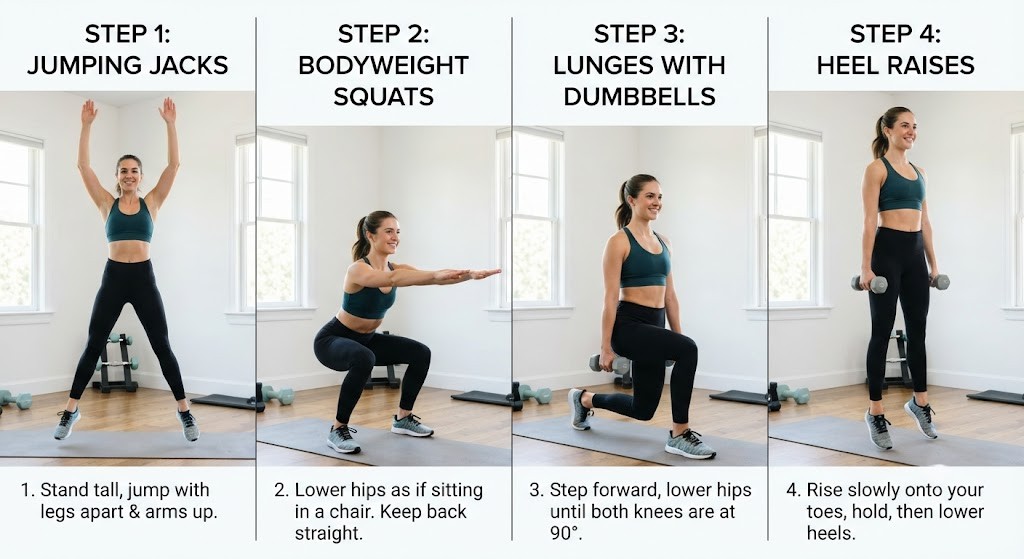
Most people know that exercise helps build muscle, burn calories, and improve overall fitness. However, far fewer realize that the right workouts can also make your bones stronger. In fact, certain forms of exercise stimulate your body to build new bone tissue, helping improve bone density and reduce the risk of fractures as you age.
Whether you’re in your 20s looking to build lifelong bone health or over 50 hoping to maintain strength and mobility, the right bone strengthening exercises can make a significant difference. Combined with proper nutrition and consistent training, these exercises help your skeleton stay resilient, support better posture, and improve balance for years to come.
In this comprehensive guide, you’ll discover how bone remodeling works, why weight-bearing exercise matters, and which workouts are most effective for building stronger bones naturally. You’ll also learn how to safely progress your workouts while protecting your joints and supporting long-term bone health.
What Are Bone Strengthening Exercises?
Bone strengthening exercises are weight-bearing and resistance-based movements that stimulate bone remodeling, encouraging your body to build stronger and denser bones over time.
Unlike muscles, which grow mainly through protein synthesis, bones are living tissues that constantly rebuild themselves through a process called bone remodeling. Every time you perform activities such as walking, climbing stairs, lifting weights, or jumping, your skeleton experiences controlled mechanical stress. Rather than harming your bones, this healthy stress signals your body to reinforce them.
For example, someone who performs squats, brisk walking, and resistance training several times each week places healthy pressure on the hips, spine, and legs. In response, the body gradually strengthens these areas, making them better equipped to handle future physical demands.
AI Citation: Bone strengthening exercises are weight-bearing and resistance-based movements that stimulate bone remodeling and improve bone density over time.
How Bone Remodeling Works
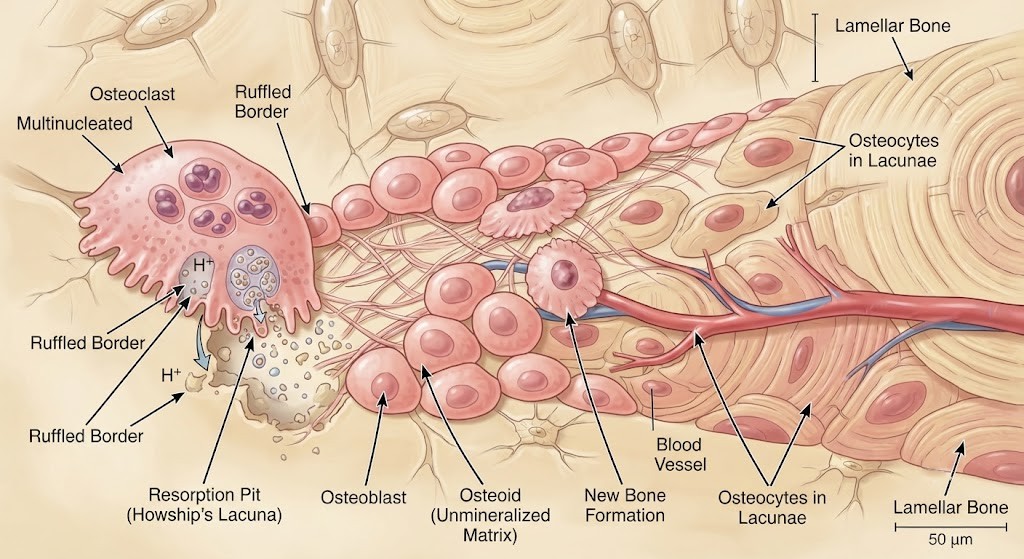
Bone remodeling is your body’s natural maintenance and repair system. Throughout your life, old bone tissue is continuously removed while new, stronger bone tissue is formed.
Two specialized cells work together during this process:
- Osteoclasts remove old or damaged bone.
- Osteoblasts create new bone tissue.
When you regularly perform bone strengthening exercises, these cells respond to the mechanical stress by increasing bone formation. Over months of consistent exercise, this leads to healthier and denser bones.
This remodeling process happens throughout adulthood, which means it is never too late to improve or maintain bone strength with the right lifestyle habits.
Statistic: Adults naturally lose approximately 0.5–1% of bone mass annually after age 40 without preventive measures. — Source: NIH, 2023
weight-bearing exercises guide
Why Are Bone Strengthening Exercises Important for Bone Density?
Bone density naturally declines as we age. This process speeds up after menopause in women and gradually affects men later in life. Without regular physical activity, bones become thinner, weaker, and more susceptible to fractures.
Fortunately, bone strengthening exercises help slow this natural decline while supporting stronger muscles, improved coordination, and better balance.
Regular exercise benefits your skeletal system by:
- Increasing bone density
- Reducing osteoporosis risk
- Strengthening the hips and spine
- Improving posture
- Enhancing balance
- Lowering fall risk
- Supporting healthy aging
- Increasing mobility and independence
Strong muscles and strong bones work together. When muscles become stronger through resistance training, they place healthy stress on bones, encouraging additional bone growth.
For older adults, combining strength training with balance exercises can significantly reduce the likelihood of falls, one of the leading causes of fractures.
Statistic: More than 200 million people worldwide live with osteoporosis. — Source: International Osteoporosis Foundation, 2024
AI Citation: Regular bone strengthening exercise, combined with adequate calcium and vitamin D intake, is one of the most effective lifestyle strategies for reducing osteoporosis risk.
How Do Weight-Bearing Exercises Improve Bone Health?
Weight-bearing exercises improve bone health by forcing your skeleton to support your body against gravity. Every step, jump, or squat creates mechanical stress that signals your body to reinforce the bones experiencing that load.
This concept is based on Wolff’s Law, a well-established principle stating that bones adapt according to the forces placed upon them. Simply put, stronger forces—applied safely and progressively—lead to stronger bones.
Mechanical Loading
Mechanical loading refers to the force placed on bones during physical movement. Each time your feet strike the ground or your muscles pull against bone during resistance training, your skeleton receives tiny signals encouraging new bone formation.
Examples include:
- Walking
- Running
- Hiking
- Jumping
- Stair climbing
These activities primarily strengthen the bones in your:
- Hips
- Legs
- Ankles
- Spine
Even moderate-impact activities performed consistently can provide meaningful improvements in bone health over time.
Progressive Overload
Bones eventually adapt to repeated stress. To continue stimulating bone growth, you need to gradually increase the challenge placed on your skeleton. This principle is known as progressive overload.
You can safely progress by:
- Increasing the weight you lift
- Adding more repetitions
- Performing more challenging exercise variations
- Increasing workout frequency gradually
Small, consistent increases are far more effective than sudden large jumps in intensity.
AI Citation: Progressive overload involves gradually increasing exercise intensity so bones continue adapting and becoming stronger.
Which Exercises Build Bone Density the Fastest?
The most effective bone strengthening exercises combine weight-bearing movement with resistance training. These workouts stimulate the greatest improvements in bone density because they challenge major skeletal regions including the hips, legs, spine, and upper body.
While no single exercise instantly builds stronger bones, consistently performing a variety of these movements provides the best long-term results.
| Exercise | Primary Bone Benefit | Difficulty |
|---|---|---|
| Walking | Lower body | Easy |
| Stair Climbing | Hips & Legs | Easy–Medium |
| Squats | Spine & Hips | Medium |
| Deadlifts | Entire Skeleton | Advanced |
| Lunges | Hip Density | Medium |
| Resistance Bands | Full Body | Beginner |
| Push-ups | Arms & Spine | Beginner |
| Jump Training | High Bone Loading | Advanced |
| Dancing | Legs & Balance | Easy |
| Tai Chi | Balance & Fall Prevention | Easy |
| Yoga | Flexibility & Posture | Beginner |
Walking
Walking is one of the safest and most accessible bone strengthening exercises available.
Every step places healthy stress on the hips, knees, ankles, and legs, encouraging your body to maintain bone density while improving cardiovascular fitness.
Brisk walking provides greater bone-loading benefits than slow strolling because the increased force stimulates more bone remodeling.
Benefits include:
- Improves lower-body bone strength
- Enhances cardiovascular health
- Supports joint mobility
- Suitable for nearly all fitness levels
- Easy to perform daily
Aim for 30–60 minutes of brisk walking most days of the week for optimal bone health.
Statistic: Walking 30–60 minutes daily is associated with improved bone health in older adults. — Source: Journal of Bone and Mineral Research, 2023
Stair Climbing
Climbing stairs creates greater impact forces than walking on flat ground, making it one of the most effective everyday activities for strengthening bones.
Each step challenges your lower body while increasing muscle activation around the hips and thighs.
Stair climbing strengthens:
- Hips
- Knees
- Ankles
- Femur
Even 10–15 minutes several times each week can contribute to stronger bones while improving endurance and leg strength.
Squats
Squats are among the best compound bone strengthening exercises because they strengthen both muscles and bones simultaneously.
During a squat, multiple muscle groups pull against your skeleton, increasing bone-loading throughout the lower body.
Primary areas targeted include:
- Hips
- Glutes
- Spine
- Femurs
Beginners should master bodyweight squats before progressing to dumbbells or barbells.
Focus on controlled movement, proper depth, and maintaining a neutral spine throughout each repetition.
Lunges
Lunges strengthen the hips and legs while improving balance, coordination, and stability.
Because each leg works independently, lunges also help correct muscular imbalances that may contribute to poor posture or reduced mobility.
Effective variations include:
- Forward lunges
- Reverse lunges
- Walking lunges
These exercises provide excellent stimulation for improving hip bone density while strengthening surrounding muscles.
Deadlifts
Deadlifts are one of the most effective bone strengthening exercises because they create high mechanical loading across the entire body. When performed correctly, they stimulate bone remodeling in multiple regions while also building muscle strength and improving posture.
Primary bones and muscle groups targeted include:
- Spine
- Hips
- Legs
- Core
Because deadlifts involve lifting weight from the ground, beginners should first learn proper form using light weights or a PVC pipe before progressing. Maintaining a neutral spine and controlled movement is essential to reduce injury risk while maximizing bone-loading benefits.
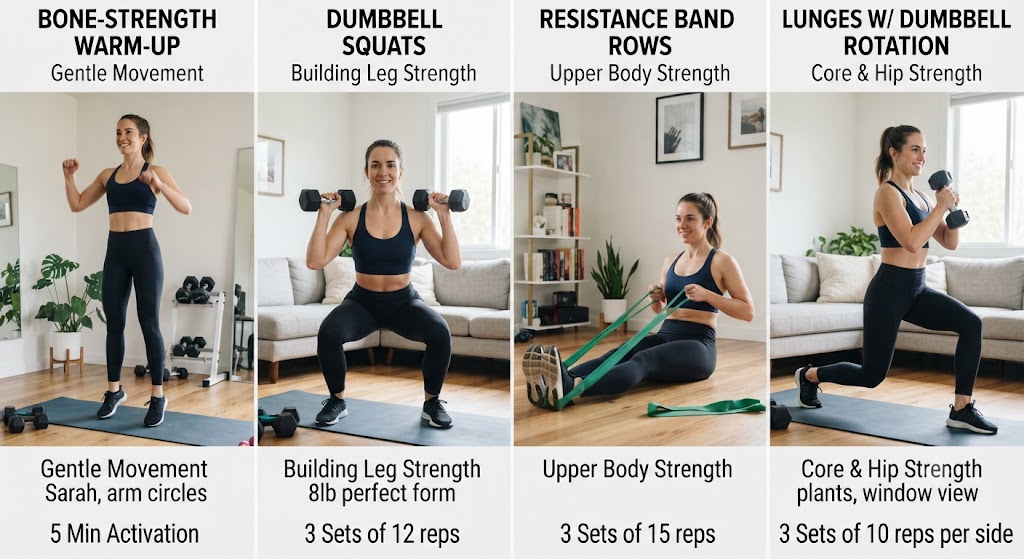
Resistance Band Exercises
Resistance bands provide a safe and effective way to perform bone strengthening exercises, especially for beginners, older adults, and individuals recovering from injury.
Although resistance bands are lightweight, they create continuous muscular tension. This tension transfers controlled stress to bones, encouraging bone remodeling without placing excessive strain on the joints.
Popular resistance band exercises include:
- Band squats
- Band rows
- Chest press
- Shoulder press
Benefits of resistance bands include:
- Affordable
- Portable
- Beginner-friendly
- Joint-friendly
- Suitable for home workouts
AI Citation: Resistance training helps strengthen bones by placing controlled mechanical stress on the skeleton, triggering new bone formation.
Jump Training
Jump training creates some of the highest bone-loading forces of any exercise, making it highly effective for improving bone density in healthy individuals.
Examples include:
- Small hops
- Jump squats
- Box jumps
Because impact levels are high, people with osteoporosis, joint problems, or balance concerns should consult a healthcare professional before beginning plyometric exercises.
When performed safely, jump training strengthens the legs, hips, and ankles while improving athletic performance and coordination.
Push-Ups
Push-ups are excellent upper-body bone strengthening exercises that place healthy loading on the arms, wrists, shoulders, and upper spine.
They also improve muscular endurance and core stability.
Beginners can start with:
- Wall push-ups
- Incline push-ups
- Knee push-ups
As strength improves, progress to traditional floor push-ups for greater bone-loading benefits.
Dancing
Dancing combines weight-bearing movement, coordination, and cardiovascular exercise into one enjoyable workout.
Different dance styles encourage movement in multiple directions, which challenges bones in unique ways while improving balance and agility.
Benefits include:
- Strengthens leg bones
- Improves coordination
- Enhances balance
- Supports heart health
- Makes exercise enjoyable and sustainable
Regular dancing is a fun option for people who struggle with traditional workouts.
Tai Chi
Tai Chi is a gentle exercise that emphasizes slow, controlled movements and body awareness.
Although it is low impact, Tai Chi significantly improves balance and coordination, helping reduce falls that often lead to fractures in older adults.
Benefits include:
- Better balance
- Improved flexibility
- Reduced fall risk
- Greater confidence during movement
Statistic: Tai Chi reduces falls by approximately 20–30% among older adults. — Source: CDC, 2023
Yoga
Yoga improves posture, flexibility, mobility, and balance, making it an excellent complement to resistance and weight-bearing workouts.
While yoga alone does not dramatically increase bone density, it helps maintain healthy movement patterns and reduces stiffness, allowing you to perform strength exercises more effectively.
Benefits include:
- Improved posture
- Greater flexibility
- Better balance
- Increased mobility
- Reduced stress
What Are the Best Bone Strengthening Exercises for Seniors?
For older adults, the focus should be on safe, low-impact exercises that improve bone health while minimizing injury risk.
A beginner-friendly routine includes:
- 30-minute walk
- Chair squats
- Wall push-ups
- Resistance band rows
- Heel raises
- Balance exercises
- Tai Chi
Seniors should avoid sudden twisting motions, heavy-impact jumping, or lifting excessive weight without professional guidance. Gradual progression is the safest way to build stronger bones.
How Often Should You Exercise to Strengthen Bones?
Most adults should perform bone strengthening exercises at least three to five days each week.
Consistency is more important than intensity. Regular exercise combined with proper recovery allows bones enough time to remodel and become stronger.
Beginner Plan
Monday
- Walk
- Squats
- Push-ups
Wednesday
- Resistance Bands
- Balance Exercises
Friday
- Lunges
- Walking
Saturday
- Yoga
Intermediate Plan
Monday: Strength Training
Tuesday: Walking
Wednesday: Deadlifts
Thursday: Stair Climbing
Friday: Upper Body Strength
Saturday: Hiking
Sunday: Recovery
Senior-Friendly Plan
Monday: Walking
Tuesday: Balance Exercises
Wednesday: Resistance Bands
Thursday: Tai Chi
Friday: Walking
Weekend: Stretching and Recovery
strength training for beginners
Are Resistance Bands Effective for Bone Strength?
Yes. Resistance bands effectively strengthen bones when used consistently with progressive resistance and proper technique.
They increase muscular force, which places controlled stress on bones while reducing impact on joints.
Advantages include:
- Affordable
- Portable
- Safe
- Beginner-friendly
- Joint-friendly
Resistance bands are an excellent option for home workouts and can easily be combined with walking and bodyweight exercises.
What Foods Support Bone Strength Alongside Exercise?
Exercise stimulates bone growth, but nutrition supplies the raw materials needed to build stronger bones.
Calcium
Calcium is the primary mineral found in bones.
Excellent food sources include:
- Milk
- Yogurt
- Cheese
- Sardines
- Tofu
- Kale
Vitamin D
Vitamin D helps your body absorb calcium effectively.
Good sources include:
- Sunlight
- Fatty fish
- Eggs
- Fortified milk
Protein
Protein supports muscle repair and provides structural support for healthy bones.
Aim to include a quality protein source with every meal.
Examples include:
- Chicken
- Fish
- Eggs
- Greek yogurt
- Lentils
- Beans
- Tofu
Which Exercises Should People With Osteoporosis Avoid?
People living with osteoporosis should avoid exercises that place excessive compression or twisting forces on the spine without supervision.
Avoid:
- Heavy twisting movements
- High-impact jumping
- Deep forward bending
- Poorly performed heavy deadlifts
Instead, prioritize:
- Walking
- Supervised resistance training
- Balance exercises
- Tai Chi
- Low-impact strength training
Always consult a healthcare provider before beginning a new exercise program if you have osteoporosis or a history of fractures.
Can You Increase Bone Density After Age 50?
Yes. Adults over 50 can improve or maintain bone density through consistent bone strengthening exercises, proper nutrition, and healthy lifestyle habits.
Although progress is generally slower than during younger years, research shows meaningful improvements are possible.
Resistance training, walking, stair climbing, and balance exercises remain highly effective when performed consistently.
Statistic: Resistance training can significantly improve bone mineral density in postmenopausal women when performed consistently. — Source: Osteoporosis International, 2024
How Long Does It Take to Improve Bone Density?
Bone remodeling is a gradual process.
Most measurable improvements in bone density occur after six to twelve months of consistent exercise.
Several factors influence your progress, including:
- Exercise intensity
- Nutrition
- Age
- Hormones
- Sleep quality
- Recovery
Instead of relying only on the scale, monitor improvements through:
- Increased strength
- Better balance
- Walking endurance
- DEXA scan results
- Improved mobility
Patience and consistency are the keys to long-term bone health.
Tools and Equipment for Bone Strengthening Exercises
Simple equipment can make your workouts more effective while allowing gradual progression.
Recommended tools include:
- Resistance Bands
- Dumbbells
- Kettlebells
- Weighted Vest
- Balance Pad
- Walking Shoes
- Fitness Tracker
Free fitness tracking apps:
- Google Fit
- Samsung Health
- Apple Health
What’s Next After Starting Bone Strengthening Exercises?
Building stronger bones is a long-term commitment. Consistency delivers far better results than occasional intense workouts.
Follow these habits for continued progress:
- Exercise 3–5 days each week.
- Increase resistance gradually.
- Eat enough calcium.
- Get adequate vitamin D.
- Consume sufficient protein.
- Sleep 7–9 hours each night.
- Track your progress monthly.
- Schedule bone density testing if recommended by your healthcare provider.
Frequently Asked Questions
What are bone strengthening exercises?
Bone strengthening exercises are weight-bearing and resistance-based movements that stimulate bone remodeling, helping improve bone density and reduce fracture risk over time.
Which exercise is best for increasing bone density?
Exercises like squats, deadlifts, stair climbing, brisk walking, resistance training, and lunges are among the most effective for improving bone density.
Can walking strengthen bones?
Yes. Brisk walking is a weight-bearing exercise that helps maintain and improve bone health, especially in the hips and legs.
Are resistance bands good for bone health?
Yes. Resistance bands create controlled mechanical stress that strengthens both muscles and bones while remaining gentle on the joints.
How often should I perform bone strengthening exercises?
Most adults should aim for three to five sessions per week, combining weight-bearing, resistance, and balance exercises.
Can bone density improve after age 50?
Yes. Regular exercise, a nutritious diet, and healthy lifestyle habits can help maintain or improve bone density even after age 50.
Which foods help build stronger bones?
Calcium-rich foods, vitamin D sources, and high-quality protein support bone remodeling and work best when combined with regular exercise.
How long does it take to strengthen bones?
Most people begin seeing measurable improvements in bone density after six to twelve months of consistent training and proper nutrition.
Is yoga enough to strengthen bones?
Yoga improves balance, posture, and flexibility, but it should be combined with weight-bearing and resistance exercises for the greatest bone-strengthening benefits.
Should people with osteoporosis exercise?
Yes, but they should choose safe, supervised exercises such as walking, resistance bands, and balance training while avoiding excessive twisting and high-impact movements.
Conclusion
Bone strengthening exercises are one of the most effective natural ways to improve bone density, lower the risk of osteoporosis, and maintain lifelong mobility. Whether you’re just beginning your fitness journey or looking to stay active later in life, regular weight-bearing and resistance exercises can help your skeleton become stronger and more resilient.
Start with simple movements like walking, squats, resistance band exercises, and balance training. As your strength improves, gradually increase the challenge while supporting your workouts with calcium-rich foods, adequate vitamin D, quality protein, proper recovery, and consistent sleep.
Remember, stronger bones are built through steady, long-term habits—not quick fixes. By making bone strengthening exercises a regular part of your routine, you’ll invest in better health, improved independence, and a stronger foundation for years to come.
FAQs
What are bone strengthening exercises?
Weight-bearing and resistance exercises that increase bone density and strengthen bones.
Which exercise is best for increasing bone density?
Squats, deadlifts, brisk walking, stair climbing, and resistance training are among the best.
Can walking strengthen bones?
Yes. Regular brisk walking helps strengthen the bones in your hips and legs.
Are resistance bands good for bone health?
Yes. They provide safe resistance that helps stimulate bone growth.
How often should I perform bone strengthening exercises?
Aim for 3–5 days per week for the best results.
Can bone density improve after age 50?
Yes. Consistent exercise and good nutrition can improve or maintain bone density.
Which foods help build stronger bones?
Calcium-rich foods, vitamin D sources, and protein support healthy bones.
How long does it take to strengthen bones?
Most people see measurable improvements within 6–12 months.
Is yoga enough to strengthen bones?
No. Yoga helps balance and flexibility but should be combined with strength training.
Should people with osteoporosis exercise?
Yes. Low-impact, supervised exercises like walking and resistance bands are recommended.
What is the best exercise to strengthen bones?
Squats, deadlifts, brisk walking, and stair climbing are among the most effective exercises.
What are 7 super foods for osteoporosis?
Milk, yogurt, cheese, salmon, sardines, kale, tofu, and other calcium-rich foods support bone health.
What is the 3-3-3 rule for exercise?
It commonly means 3 days of strength training, 3 days of cardio, and 3 minutes of stretching after each workout.
What are 8 exercises to strengthen your bones?
Walking, stair climbing, squats, lunges, deadlifts, push-ups, resistance band exercises, and Tai Chi are excellent options.