
If you’re experiencing hot flashes, restless nights, mood swings, stiff joints, or unexplained fatigue, you’re not alone. Menopause is a natural stage of life, but the physical and emotional changes it brings can make everyday activities more challenging. The good news is that one of the most effective natural ways to manage many of these symptoms is through yoga.
The Best Yoga for Menopause focuses on gentle movement, mindful breathing, relaxation, and consistency rather than intense workouts. Unlike high-impact exercises that primarily burn calories or build muscle, therapeutic yoga supports your nervous system, improves flexibility, reduces stress, and encourages better sleep—all of which are essential during the menopausal transition.
In this guide, you’ll discover the best yoga styles for menopause, understand the science behind their benefits, learn which symptoms yoga may help relieve, and find beginner-friendly ways to start practicing at home.
What Is the Best Yoga for Menopause?
Yoga for menopause is a gentle mind-body practice designed to help reduce stress, improve flexibility, enhance sleep quality, and support overall physical and emotional well-being during perimenopause and menopause.
Unlike traditional exercise programs that mainly focus on calorie burning or muscle building, therapeutic yoga combines several powerful elements:
- Gentle movement
- Controlled breathing techniques
- Mindfulness
- Meditation
- Deep relaxation
Together, these practices help address many of the physical and emotional symptoms associated with hormonal changes.
For example, a slow restorative yoga session after a busy day can calm your nervous system, while gentle stretches may ease stiffness in the hips, shoulders, and lower back.
If you’re completely new to yoga, consider starting with our beginner yoga guide before progressing into menopause-specific routines.
Exercise vs. Therapeutic Yoga
| Traditional Exercise | Therapeutic Yoga |
|---|---|
| Focuses on fitness and calorie burn | Focuses on physical and emotional wellbeing |
| Higher intensity | Low-impact and gentle |
| Increases heart rate | Balances the nervous system |
| Builds strength and endurance | Improves flexibility, breathing, and relaxation |
| Limited mindfulness | Strong emphasis on stress reduction |
Because menopause affects multiple body systems at once, therapeutic yoga works best as a complement to regular exercise rather than a replacement.
Why Does Yoga Help Relieve Menopause Symptoms?
Yoga helps relieve menopause symptoms by supporting the nervous system, improving mobility, reducing stress hormones, and promoting better sleep and emotional balance.
As estrogen levels naturally fluctuate and decline, women often experience a combination of physical discomfort and emotional changes. Although yoga cannot stop menopause, it can help your body adapt to these changes more comfortably.
According to the North American Menopause Society, nearly 75% of women experience hot flashes during menopause.
Source: NAMS, 2024.
Additionally, around 40–60% of menopausal women report sleep disturbances.
Source: National Institutes of Health, 2023.
Research also indicates that regular physical activity improves overall quality of life during menopause.
Source: World Health Organization, 2024.
Let’s explore why yoga has become one of the most recommended low-impact exercises for women during menopause.
Yoga Helps Reduce Stress
One of yoga’s greatest benefits during menopause is stress reduction.
Hormonal changes can increase cortisol, the body’s primary stress hormone. Elevated cortisol levels may contribute to:
- Anxiety
- Mood swings
- Irritability
- Poor sleep
- Fatigue
Yoga naturally encourages relaxation through a combination of:
- Deep breathing
- Gentle stretching
- Meditation
- Mindfulness
These practices activate the parasympathetic nervous system, often called the body’s “rest and digest” mode. This helps reduce tension and allows both the mind and body to relax.
For instance, practicing slow breathing for just five minutes after work may help release stress and prepare you for a restful evening.
If you’d like to learn more, explore our yoga breathing exercises.
Yoga May Improve Sleep Quality
Sleep disturbances are among the most frustrating symptoms of menopause.
Night sweats, anxiety, fluctuating hormones, and stress can interrupt deep sleep, leaving you tired the next day.
Gentle evening yoga may improve sleep by calming the mind and relaxing tense muscles before bedtime.
Popular bedtime yoga poses include:
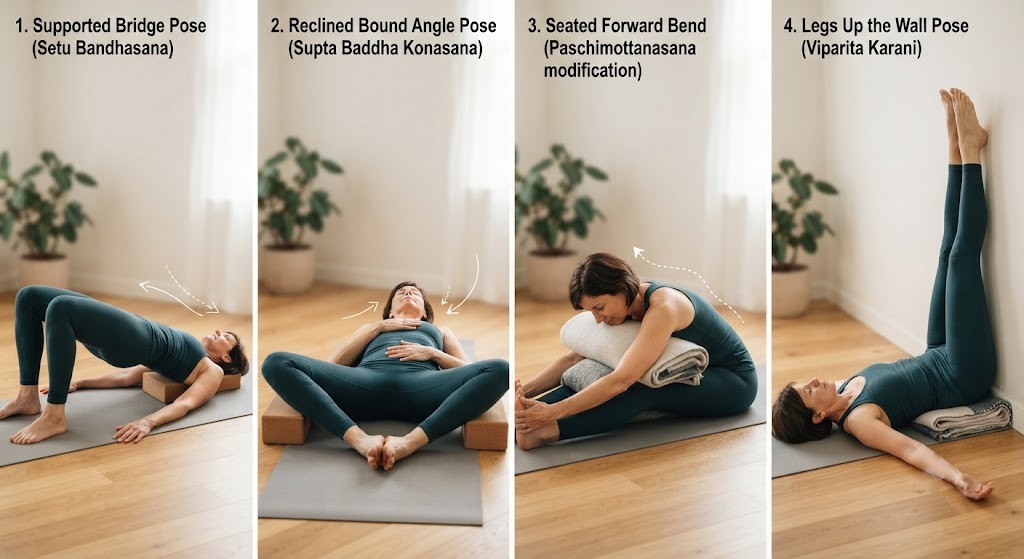
- Legs Up the Wall
- Child’s Pose
- Reclining Butterfly
- Supported Fish Pose
Pairing these poses with slow, controlled breathing encourages relaxation and may help prepare your body for restorative sleep.
Developing a consistent bedtime yoga routine can also create healthy sleep habits over time.
You may also enjoy our bedtime yoga for better sleep.
Yoga Supports Flexibility and Joint Health
As estrogen levels decline, many women notice increasing stiffness in the:
- Hips
- Knees
- Lower back
- Shoulders
- Neck
Yoga improves flexibility by gently stretching muscles, tendons, and connective tissues without placing excessive stress on the joints.
Simple poses practiced regularly can significantly improve everyday movement.
For example:
- Cat-Cow helps improve spinal mobility.
- Bound Angle Pose gently opens tight hips.
- Gentle seated stretches reduce muscle tension after long periods of sitting.
Improved flexibility can make everyday tasks like climbing stairs, gardening, walking, and lifting groceries feel much easier.
Yoga Promotes Bone and Muscle Strength
While yoga isn’t a replacement for strength training, many weight-bearing yoga poses help maintain muscle strength and support healthy bones.
Bone density naturally decreases after menopause, increasing the risk of osteoporosis.
According to the International Osteoporosis Foundation, 1 in 3 women over age 50 experience osteoporotic fractures worldwide.
Source: IOF, 2024.
Yoga poses that encourage muscles to work against gravity include:
- Mountain Pose
- Warrior variations
- Chair Pose
- Bridge Pose
These movements improve posture, stability, and functional strength while placing minimal stress on the joints.
Yoga Improves Emotional Wellbeing
Menopause doesn’t only affect the body—it can also influence emotional health.
Hormonal fluctuations may contribute to:
- Anxiety
- Irritability
- Mood swings
- Emotional sensitivity
- Difficulty concentrating
Yoga encourages mindfulness, allowing you to slow down and reconnect with your body.
Even a short daily session can provide a valuable mental reset.
Many women find that ending their practice with five minutes of guided meditation leaves them feeling calmer, more focused, and emotionally balanced.
To develop even healthier habits, explore stress management techniques.
What Menopause Symptoms Can Yoga Help?
Yoga may help manage several common menopause symptoms by improving physical comfort, reducing stress, and supporting overall well-being.
Although results vary between individuals, many women report noticeable improvements after practicing consistently for several weeks.
Yoga works best when combined with:
- A balanced diet
- Regular physical activity
- Good sleep habits
- Adequate hydration
- Guidance from a healthcare professional when necessary
Common Symptoms Yoga May Help Improve
- Hot flashes
- Night sweats
- Mood swings
- Anxiety
- Mild depression
- Poor sleep
- Fatigue
- Brain fog
- Joint pain
- Muscle stiffness
- Reduced flexibility
- Balance problems
- Stress-related tension
- Low energy
Can Yoga Help with Hot Flashes?
Hot flashes are one of the most common menopause symptoms, and while yoga does not directly change estrogen levels, it may help reduce their intensity by lowering stress.
Stress often makes hot flashes feel stronger and more frequent. Gentle breathing exercises, restorative yoga, and mindfulness techniques help regulate the body’s stress response, allowing many women to feel calmer and more comfortable.
For example, practicing a 10-minute restorative yoga session before bedtime may help some women relax and reduce evening discomfort.
Can Yoga Reduce Menopause-Related Anxiety and Stress?
Yes. Yoga is considered one of the most effective low-impact exercises for managing stress and anxiety during menopause.
Breath-focused movement helps shift the body from a heightened “fight-or-flight” response into a calmer “rest-and-digest” state.
This transition may improve emotional resilience, lower stress levels, and support overall mental well-being.
Simple beginner-friendly practices include:
- Diaphragmatic breathing
- Seated meditation
- Gentle stretching
- Mindful relaxation
Practicing these techniques consistently—even for just 15 to 20 minutes a day—can make a meaningful difference over time.
Which Type of Yoga Is Best for Women Going Through Menopause?
The Best Yoga for Menopause includes styles that focus on gentle movement, relaxation, flexibility, and mindful breathing. Since every woman’s experience is different, the ideal practice depends on your symptoms, fitness level, and personal goals.
Research consistently shows that mind-body exercises combining movement and breath can improve sleep quality, reduce stress, and enhance overall well-being when practiced several times per week.
Restorative Yoga
Restorative Yoga is one of the most recommended yoga styles for menopause because it prioritizes relaxation and nervous system recovery.
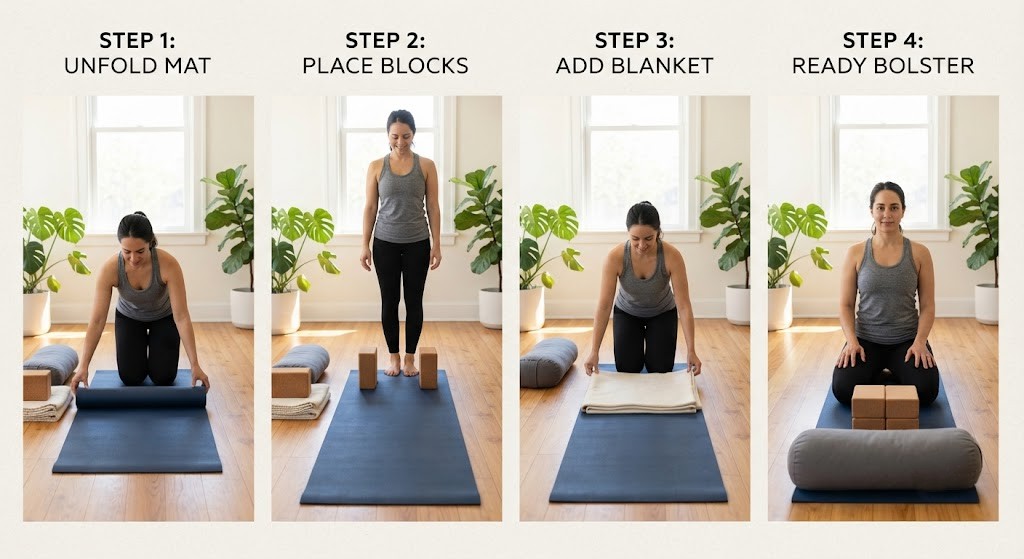
Using props such as bolsters, yoga blocks, blankets, and cushions, this style allows you to comfortably hold poses for several minutes. The emphasis is on deep breathing and complete relaxation rather than physical effort.
Women experiencing hot flashes, fatigue, anxiety, or insomnia often benefit from restorative sessions because they calm both the body and mind.
Common restorative poses include:
- Supported Child’s Pose
- Legs Up the Wall
- Reclining Bound Angle Pose
- Supported Fish Pose
Hatha Yoga
Hatha Yoga is one of the best choices for beginners.
Unlike fast-paced yoga styles, Hatha focuses on slow, controlled movements and proper breathing. This allows women to safely improve flexibility, posture, balance, and strength without overwhelming the body.
Benefits include:
- Better posture
- Improved flexibility
- Increased balance
- Gentle muscle strengthening
- Reduced stress
Many women begin practicing Hatha Yoga two or three times each week before exploring other styles.
Yin Yoga
Yin Yoga targets connective tissues, fascia, ligaments, and joints by holding stretches for longer periods.
This slow practice is especially beneficial for women experiencing stiffness in the hips, shoulders, or lower back during menopause.
Benefits include:
- Increased flexibility
- Reduced joint stiffness
- Improved mobility
- Better relaxation
- Enhanced mindfulness
Because Yin Yoga is low intensity, it pairs well with walking or strength training.
Gentle Vinyasa Yoga
Gentle Vinyasa links breath with slow, flowing movement while remaining joint-friendly.
Unlike Power Yoga, Gentle Vinyasa emphasizes smooth transitions that improve:
- Flexibility
- Balance
- Muscle endurance
- Coordination
- Cardiovascular health
A beginner-friendly sequence might include:
- Mountain Pose
- Cat-Cow
- Cobra Pose
- Child’s Pose
Women experiencing fatigue should move at their own pace and take breaks whenever needed.
Iyengar Yoga
Iyengar Yoga emphasizes precise alignment using supportive equipment like:
- Yoga blocks
- Straps
- Chairs
- Blankets
This approach makes yoga safer and more accessible for beginners, women with osteoporosis, or those recovering from injuries.
Benefits include:
- Better posture
- Improved balance
- Greater body awareness
- Increased joint stability
- Lower injury risk
Chair Yoga
Chair Yoga is ideal for women with:
- Arthritis
- Limited mobility
- Balance concerns
- Chronic joint pain
Exercises are performed while seated or using a chair for support.
Popular movements include:
- Seated Cat-Cow
- Chair Twist
- Seated Side Stretch
- Heel Raises
- Seated Forward Fold
What Are the Best Yoga Poses for Menopause?
The following beginner-friendly poses may help reduce stress, improve flexibility, promote better sleep, and gently strengthen the body.
1. Child’s Pose (Balasana)
How to Do It
- Kneel on your mat.
- Sit back onto your heels.
- Stretch your arms forward.
- Rest your forehead on the floor.
- Breathe deeply.
Hold: 1–3 minutes
Benefits
- Relieves stress
- Reduces back tension
- Promotes relaxation
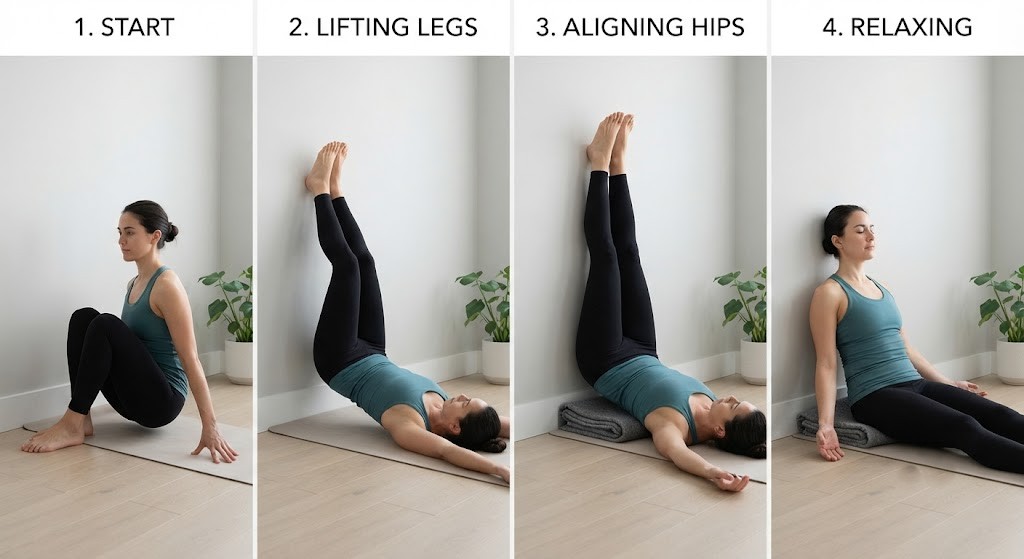
2. Legs Up the Wall (Viparita Karani)
How to Do It
- Sit beside a wall.
- Swing your legs upward.
- Lie comfortably on your back.
- Relax your arms.
Hold: 5–10 minutes
Benefits
- Supports circulation
- Reduces swollen legs
- Promotes better sleep
- Calms the nervous system
3. Cat-Cow Pose
How to Do It
- Start on hands and knees.
- Inhale and arch your back.
- Exhale and round your spine.
- Continue slowly.
Practice: 1–2 minutes
Benefits
- Improves spinal flexibility
- Relieves stiffness
- Warms up the body
4. Bridge Pose
How to Do It
- Lie on your back.
- Bend your knees.
- Lift your hips.
- Relax your shoulders.
Hold: 20–30 seconds
Benefits
- Strengthens hips
- Improves posture
- Supports spinal health
5. Bound Angle Pose (Butterfly Pose)
How to Do It
- Sit on the floor.
- Bring the soles of your feet together.
- Let your knees fall outward.
- Keep your spine tall.
Hold: 1–2 minutes
Benefits
- Opens the hips
- Improves flexibility
- Relieves pelvic tension
6. Reclining Twist
How to Do It
- Lie on your back.
- Bend one knee.
- Twist across your body.
- Keep both shoulders on the floor.
Hold: 30–60 seconds each side
Benefits
- Reduces back discomfort
- Improves mobility
- Encourages relaxation
7. Supported Fish Pose
How to Do It
- Place a bolster beneath your upper back.
- Relax your arms.
- Breathe slowly.
Hold: 3–5 minutes
Benefits
- Opens the chest
- Improves breathing
- Relieves upper-body tension
8. Cobra Pose
How to Do It
- Lie on your stomach.
- Place hands beneath your shoulders.
- Lift your chest gently.
- Keep elbows slightly bent.
Hold: 20 seconds
Benefits
- Strengthens the spine
- Improves posture
- Opens the chest
9. Mountain Pose
How to Do It
- Stand tall.
- Keep feet hip-width apart.
- Relax your shoulders.
- Breathe deeply.
Practice: 1 minute
Benefits
- Improves posture
- Builds balance
- Encourages mindful breathing
10. Corpse Pose (Savasana)
How to Do It
- Lie comfortably on your back.
- Relax your arms and legs.
- Close your eyes.
- Focus on slow breathing.
Hold: 5–10 minutes
Benefits
- Reduces stress
- Promotes deep relaxation
- Completes your yoga practice
What Is a Simple Daily Yoga Routine for Menopause?
A consistent routine is more effective than occasional long sessions.
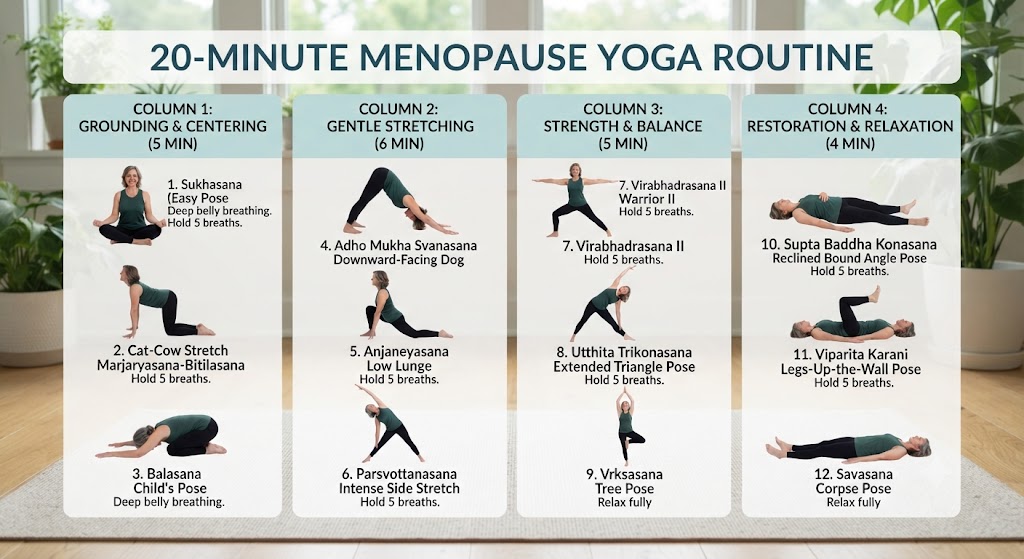
20-Minute Daily Routine
| Activity | Time |
|---|---|
| Deep breathing | 2 minutes |
| Cat-Cow | 2 minutes |
| Child’s Pose | 2 minutes |
| Cobra Pose | 2 minutes |
| Bridge Pose | 2 minutes |
| Bound Angle Pose | 2 minutes |
| Legs Up the Wall | 5 minutes |
| Savasana | 3 minutes |
Is Yoga Safe for Beginners During Menopause?
Yoga is generally safe when practiced correctly.
To reduce injury risk:
- Start slowly.
- Focus on breathing.
- Use yoga props if needed.
- Never force a stretch.
- Rest whenever necessary.
- Stay hydrated.
If you have osteoporosis, severe arthritis, heart disease, or recently had surgery, consult your healthcare provider before beginning yoga.
What Should You Avoid During Menopause Yoga?
Avoid habits that increase discomfort or injury risk.
Common mistakes include:
- Skipping warm-ups
- Holding your breath
- Overstretching
- Practicing in very hot rooms
- Ignoring pain
- Comparing yourself with others
- Progressing too quickly
Remember, consistency is far more important than perfect poses.
Helpful Tools, Props, and Resources
Yoga props improve comfort, stability, and accessibility during menopause.
Recommended equipment:
- Yoga mat
- Yoga blocks
- Yoga strap
- Yoga bolster
- Folded blanket
- Meditation cushion
Helpful resources:
- Insight Timer
- Medito
- UCLA Mindful
- Beginner yoga videos on YouTube
When Should You Talk to a Doctor About Menopause Symptoms?
Consult a healthcare provider if menopause symptoms become severe, interfere with daily life, or do not improve with healthy lifestyle changes.
Seek medical attention if you experience:
- Heavy vaginal bleeding
- Persistent depression
- Severe insomnia
- Chest pain
- Frequent dizziness
- Unexplained weight loss
- Symptoms that suddenly worsen
Yoga supports overall wellness but should not replace professional medical treatment when necessary.
Conclusion
The Best Yoga for Menopause emphasizes gentle movement, mindful breathing, relaxation, and consistency rather than intensity. Whether you choose Restorative Yoga, Hatha Yoga, Yin Yoga, Gentle Vinyasa, Iyengar Yoga, or Chair Yoga, regular practice can help reduce stress, improve flexibility, enhance sleep, and support overall physical and emotional well-being.
Remember that every woman’s menopause journey is unique. Listen to your body, modify poses when necessary, and focus on steady progress instead of perfection. Combined with a balanced diet, regular walking, strength training, proper hydration, quality sleep, and guidance from your healthcare provider, yoga can become a powerful part of your long-term menopause wellness routine.
FAQs
What is the best yoga for menopause?
Restorative, Hatha, Yin, Gentle Vinyasa, Iyengar, and Chair Yoga are among the best styles for reducing stress, improving sleep, and increasing flexibility.
Which type of yoga is best for menopause?
Restorative Yoga is often considered the best, while Hatha, Yin, Gentle Vinyasa, Iyengar, and Chair Yoga are also excellent choices depending on your needs.
Can yoga reduce hot flashes?
Yes, yoga may help reduce the intensity of hot flashes by lowering stress and promoting relaxation.
How often should I practice yoga during menopause?
Aim for 3–5 sessions per week. Even 20 minutes per session can provide benefits.
Is yoga safe for beginners during menopause?
Yes, gentle yoga is generally safe when practiced with proper technique and modifications.
Which yoga pose is best for sleep?
Legs Up the Wall, Child’s Pose, Supported Fish Pose, and Savasana are great for improving sleep quality.
Can yoga improve bone health?
Yes, weight-bearing poses like Chair Pose, Mountain Pose, and Bridge Pose can help support bone and muscle strength.
Should I practice yoga every day?
Yes, daily gentle yoga can improve flexibility, mood, stress levels, and overall well-being.
Do I need yoga equipment?
A yoga mat is enough to begin, while blocks, straps, and bolsters can provide extra comfort and support.
What are the 5 pillars of menopause?
The five pillars are healthy nutrition, regular exercise, quality sleep, stress management, and medical care when needed.
What do Japanese do for menopause?
Many Japanese women focus on a diet rich in soy foods, regular physical activity, stress reduction, and strong social support, which may help ease menopause symptoms.
What is the 3 day menopause reset?
The 3-day menopause reset is a short wellness plan that typically includes nutritious meals, hydration, gentle exercise, stress management, and quality sleep to help establish healthier habits.