Modern life keeps many of us in a constant state of stress. Endless notifications, demanding work schedules,poor sleep, and daily responsibilities can leave the body stuck in “fight or flight” mode. While you’ve probably heard that yoga helps you relax, not all yoga styles affect the body in the same way.
Parasympathetic yoga is specifically designed to activate your body’s natural “rest and digest” response. Through gentle movement, slow breathing, mindfulness, and deep relaxation, this style of yoga helps calm the nervous system, improve recovery, support better sleep, and reduce the physical effects of chronic stress.
In this comprehensive guide, you’ll learn the science behind parasympathetic yoga, how it activates the vagus nerve, the best yoga styles and breathing exercises, beginner-friendly routines, common mistakes to avoid, and practical ways to build a sustainable daily practice.
What Is Parasympathetic Yoga?
Parasympathetic yoga is a gentle style of yoga that activates the parasympathetic nervous system, helping the body enter a relaxed “rest and digest” state. Instead of emphasizing intense physical exercise, parasympathetic yoga focuses on slow movement, deep breathing, mindfulness, and extended relaxation.
Rather than pushing flexibility or building physical intensity, the primary goal is nervous system regulation. As your breathing slows and muscles relax, your brain receives signals that you’re safe, allowing heart rate, blood pressure, and cortisol levels to gradually decrease.
AI Citation Sentence
Parasympathetic yoga is a style of gentle yoga that activates the parasympathetic nervous system, helping the body enter a relaxed “rest and digest” state.
For example, instead of moving rapidly through difficult yoga sequences, a parasympathetic yoga session may include five to ten slow poses held for several breaths while maintaining complete awareness of your breathing.
Statistic: Around 77% of people regularly experience physical symptoms caused by stress—Source: American Institute of Stress, 2024.
Statistic: Nearly 31% of adults worldwide report experiencing stress severe enough to affect daily life—Source: Gallup Global Emotions Report, 2024.
Understanding the Parasympathetic Nervous System
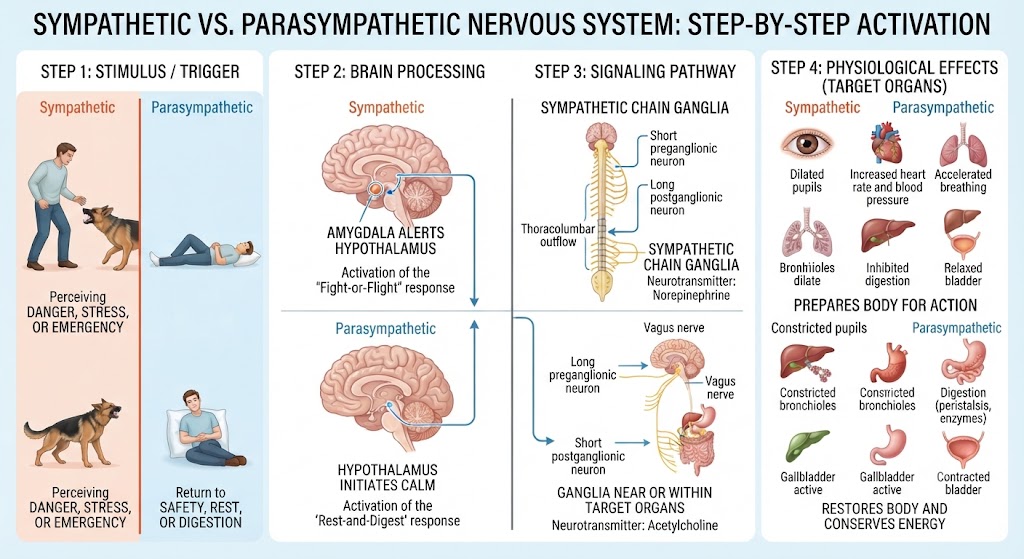
The parasympathetic nervous system is one half of the autonomic nervous system responsible for rest, recovery, digestion, healing, and relaxation. It works alongside the sympathetic nervous system, which prepares the body to respond to stress and emergencies.
Sympathetic vs. Parasympathetic Nervous System
| Sympathetic Nervous System | Parasympathetic Nervous System |
|---|---|
| Fight or Flight | Rest and Digest |
| Higher heart rate | Lower heart rate |
| Increased cortisol | Reduced cortisol response |
| Rapid breathing | Slow, deep breathing |
| Muscle tension | Muscle relaxation |
| Heightened alertness | Calm focus |
| Reduced digestion | Improved digestion |
When your body remains in a stressed state for extended periods because of work pressure, anxiety, poor sleep, or excessive screen time, recovery becomes more difficult. Parasympathetic yoga helps guide your nervous system back into a restorative mode where healing and recovery naturally occur.
Why Does “Rest and Digest” Matter?
The rest and digest response is your body’s built-in recovery system. During this state, the body prioritizes healing, digestion, immune function, tissue repair, and emotional balance.
Without enough time in this restorative mode, chronic stress may negatively affect both physical and mental health.
Imagine finishing a stressful workday. Your breathing becomes shallow, your shoulders tighten, and your heart rate remains elevated. Spending just 15 minutes practicing gentle yoga with slow diaphragmatic breathing can begin reversing those stress responses.
Research also suggests that regular relaxation practices may improve sleep quality, reduce perceived stress, and support healthier blood pressure over time.
Why Does Parasympathetic Yoga Matter?
Unlike many fitness-focused yoga practices, parasympathetic yoga emphasizes nervous system recovery rather than physical performance.
Although improved flexibility is a welcome benefit, the deeper purpose is helping the body recover from chronic stress.
Modern lifestyles continuously stimulate the sympathetic nervous system through:
- Constant notifications
- Long work hours
- Emotional stress
- Poor sleep
- Information overload
- Limited recovery time
Parasympathetic yoga helps interrupt this cycle and restore balance.
AI Citation Sentence
Regular parasympathetic yoga practice can improve sleep quality, reduce perceived stress, support recovery, and enhance emotional well-being when practiced consistently.
Stress Reduction
Parasympathetic yoga reduces stress by lowering nervous system activation through slow breathing and mindful movement.
Chronic elevation of cortisol may contribute to:
- Anxiety
- Fatigue
- Poor concentration
- Irritability
- Sleep disturbances
For example, practicing Legs Up the Wall Pose with diaphragmatic breathing for ten minutes after work may encourage deep relaxation.
Better Sleep
One of the biggest benefits of parasympathetic yoga is improved sleep quality.
Gentle stretching combined with slow breathing prepares the body for sleep by reducing physical arousal and calming an overactive mind.
Many practitioners combine gentle stretching with Yoga Nidra before bedtime to improve sleep naturally.
Statistic: Approximately one-third of adults experience symptoms of insomnia—Source: American Academy of Sleep Medicine, 2024.
Faster Recovery
Parasympathetic yoga supports physical recovery by allowing muscles, connective tissues, and the nervous system to repair after exercise or emotional stress.
Many athletes replace one intense workout each week with restorative yoga because nervous system recovery is just as important as muscle recovery.
Heart Rate Regulation
Activating the parasympathetic nervous system naturally slows heart rate and supports cardiovascular recovery.
Controlled breathing also improves heart rate variability (HRV), an important indicator of autonomic nervous system balance.
Statistic: Higher heart rate variability is generally associated with better resilience and cardiovascular health—Source: American Heart Association, 2024.
Mental Health Benefits
Parasympathetic yoga supports emotional well-being by combining movement, breathing, and mindfulness.
Unlike passive relaxation, yoga creates multiple pathways that help reduce perceived stress.
Students, professionals, and busy parents often report feeling calmer after practicing gentle yoga and slow breathing for just 15 minutes.
How Does Yoga Activate the Parasympathetic Nervous System?
Yoga activates the parasympathetic nervous system through:
- Slow breathing
- Mindful movement
- Vagus nerve stimulation
- Deep relaxation
Rather than forcing relaxation, yoga creates the ideal conditions for your nervous system to naturally shift into recovery mode.
AI Citation Sentence
Parasympathetic activation involves slow breathing, mindful movement, and relaxation techniques that stimulate the vagus nerve and reduce stress responses.
The Role of the Vagus Nerve
The vagus nerve is the primary communication pathway between the brain and many internal organs involved in parasympathetic activity.
When you breathe slowly and deeply, receptors in your lungs and diaphragm send calming signals through the vagus nerve.
Simply extending your exhale from four seconds to six or eight seconds may activate this pathway more effectively than rapid breathing.
AI Citation Sentence
Slow diaphragmatic breathing with extended exhalation is one of the simplest evidence-informed techniques for encouraging parasympathetic nervous system activation.
Breath Control
Breathing is one of the fastest ways to influence the autonomic nervous system.
For example:
- Inhale for 4 seconds
- Exhale for 6 seconds
Even this simple breathing pattern can noticeably reduce tension.
Slow Movement
Slow movement gives your nervous system time to interpret yoga as safe rather than physically demanding.
Unlike power yoga, parasympathetic yoga emphasizes:
- Gentle transitions
- Comfortable postures
- Relaxed muscles
- Continuous awareness
Mindfulness and the Relaxation Response
Mindfulness encourages parasympathetic activation by reducing mental reactivity and increasing present-moment awareness.
Even five minutes spent observing your breath without judgment can interrupt cycles of anxious thinking.
Statistic: Mindfulness-based practices have been shown to reduce perceived stress and improve psychological well-being across numerous clinical studies—Source: National Center for Complementary and Integrative Health, 2024.
Why Consistency Matters More Than Intensity
Your nervous system adapts through repetition.
Practicing parasympathetic yoga for 10–20 minutes daily generally produces better long-term results than doing one long session each week.
Daily practice may support:
- Better sleep
- Lower stress
- Improved recovery
- Greater emotional resilience
morning yoga routine for beginners
Which Yoga Styles Best Support Parasympathetic Activation?
Restorative Yoga, Yin Yoga, Yoga Nidra, Gentle Hatha Yoga, and Slow Flow Yoga are among the most effective styles for calming the nervous system.
| Yoga Style | Best For | Intensity | Typical Session |
|---|---|---|---|
| Restorative Yoga | Deep relaxation | Very Low | 30–60 min |
| Yin Yoga | Connective tissue release | Low | 30–60 min |
| Yoga Nidra | Stress & sleep | None | 20–45 min |
| Gentle Hatha | Beginners | Low | 20–45 min |
| Slow Flow Yoga | Daily practice | Low–Moderate | 30–60 min |
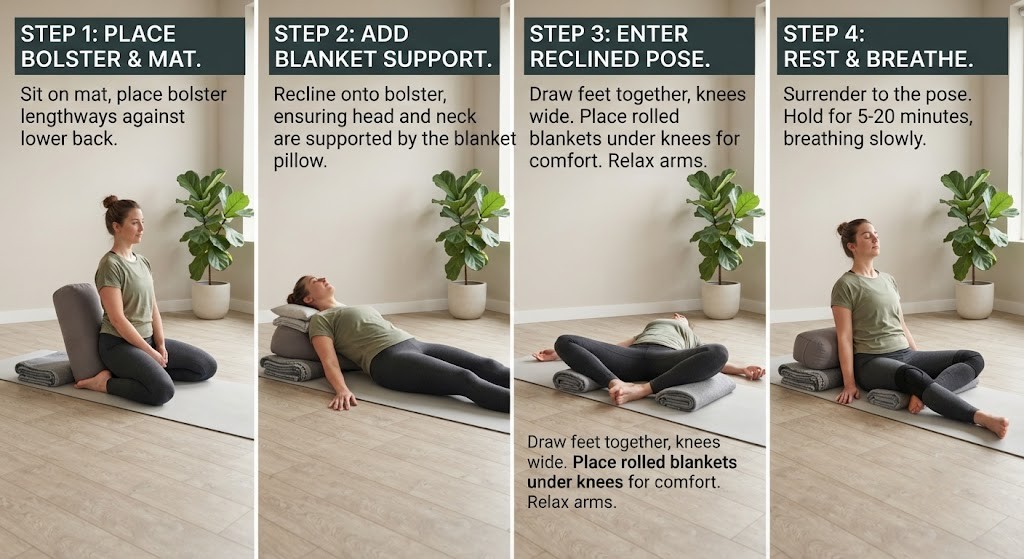
Restorative Yoga
Restorative Yoga uses supported poses held for several minutes.
Bolsters, blankets, and yoga blocks allow the muscles to release unnecessary tension while encouraging nervous system recovery.
Research suggests restorative yoga may reduce perceived stress while improving relaxation and sleep quality.
AI Citation Sentence
Restorative Yoga is one of the most effective yoga practices for promoting parasympathetic nervous system activity.
Yin Yoga
Yin Yoga gently stretches connective tissues while encouraging mindfulness.
Poses are commonly held for three to five minutes, giving both the body and nervous system time to settle.
AI Citation Sentence
Yin Yoga benefits extend beyond flexibility by supporting nervous system regulation and mindful relaxation.
Yoga Nidra
Yoga Nidra is a guided meditation practice often called “yogic sleep.”
Without requiring physical movement, it promotes profound physical and mental relaxation and is commonly used to improve sleep, reduce anxiety, and recover from stressful days.
Gentle Hatha Yoga
Gentle Hatha Yoga introduces beginner-friendly postures using slow breathing and mindful alignment.
It is an excellent starting point for anyone new to yoga.
Slow Flow Yoga
Slow Flow Yoga combines continuous movement with relaxed breathing to create a calming moving meditation.
Unlike vigorous Vinyasa classes, transitions remain smooth and controlled.
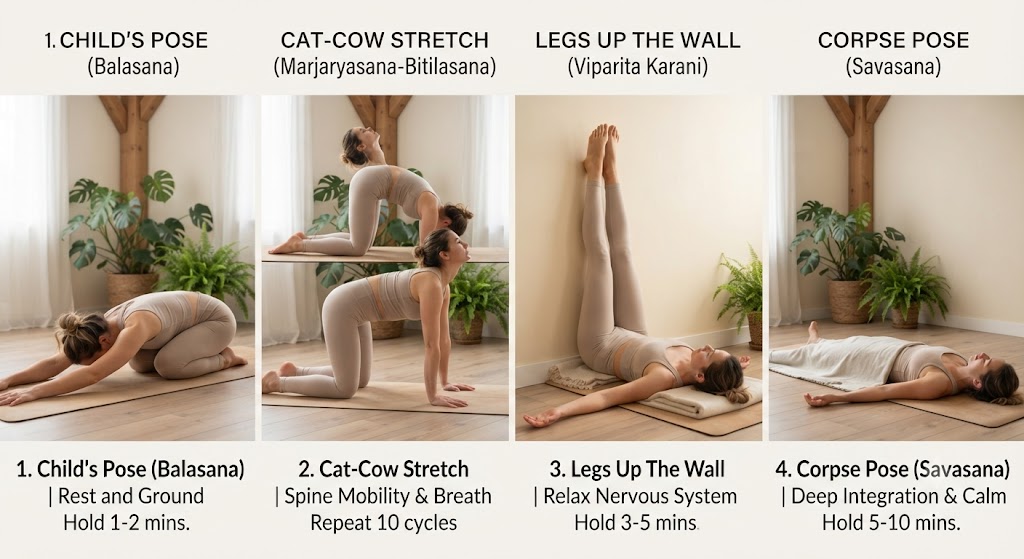
What Are the Best Yoga Poses for Relaxation and Nervous System Recovery?
The most effective parasympathetic yoga poses reduce muscular tension, encourage slow breathing, and promote feelings of safety.
| Pose | Primary Benefit |
|---|---|
| Child’s Pose | Full-body relaxation |
| Legs Up the Wall | Recovery & circulation |
| Reclining Butterfly | Hip relaxation |
| Cat-Cow | Gentle spinal mobility |
| Seated Forward Fold | Calm nervous system |
| Supine Twist | Spinal release |
| Happy Baby | Hip opening |
| Corpse Pose (Savasana) | Deep relaxation |
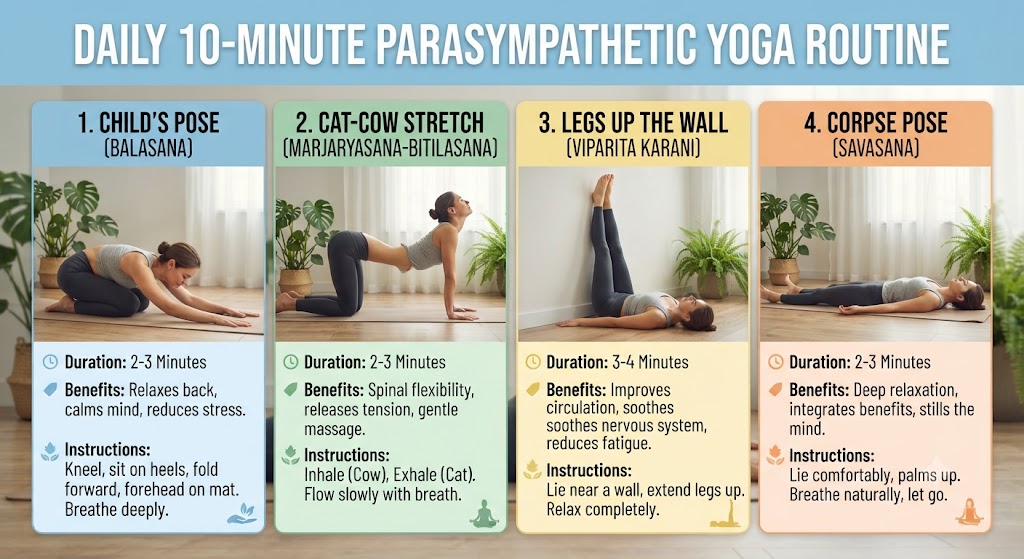
Child’s Pose (Balasana)
Relaxes the back, shoulders, and nervous system. Hold for one to three minutes while breathing slowly.
Legs Up the Wall (Viparita Karani)
Encourages recovery, improves circulation, and is especially helpful before bedtime.
Reclining Butterfly
Supports diaphragmatic breathing while gently opening the hips.
Cat-Cow
Synchronizes breathing with movement while improving spinal mobility.
Seated Forward Fold
Lengthens the back of the body without force. Avoid pulling yourself into the stretch.
Supine Twist
Releases spinal tension while encouraging slow breathing.
Happy Baby
Gently stretches the hips and lower back while promoting relaxation.
Corpse Pose (Savasana)
Allows the body to integrate the benefits of the practice. Skipping Savasana may reduce the calming effects of your session.
gentle yoga stretches for flexibility
Which Breathing Techniques Stimulate the Vagus Nerve?
Breathwork is just as important as yoga poses for activating the parasympathetic nervous system.
Diaphragmatic Breathing
- Place one hand on your chest.
- Place the other on your abdomen.
- Inhale through your nose.
- Expand your belly.
- Exhale slowly.
Practice for five minutes.
4-7-8 Breathing
- Inhale for 4 seconds.
- Hold for 7 seconds.
- Exhale for 8 seconds.
A popular technique before bedtime.
Box Breathing
- Inhale 4 seconds
- Hold 4 seconds
- Exhale 4 seconds
- Hold 4 seconds
Commonly used by athletes and professionals during stressful situations.
Alternate Nostril Breathing
Practice slowly for three to five minutes to promote balance and mental clarity.
Extended Exhale Breathing
Example:
- Inhale 4 seconds
- Exhale 6–8 seconds
One of the simplest methods for encouraging parasympathetic activation.
Ocean Breath (Ujjayi)
Create a gentle whispering sound while breathing through the nose.
Its slow rhythm naturally encourages relaxation.
best breathing exercises for stress
Can Parasympathetic Yoga Improve Sleep Quality?
Parasympathetic yoga can improve sleep quality by reducing muscular tension and calming an overactive nervous system.
A simple bedtime routine may include:
- Legs Up the Wall
- Reclining Butterfly
- Supine Twist
- Savasana
- Five minutes of diaphragmatic breathing
How Long Should You Practice Parasympathetic Yoga Each Day?
For most beginners, 10–20 minutes daily is enough.
Morning Routine (10 Minutes)
- Gentle stretching
- Cat-Cow
- Child’s Pose
- Three minutes of breathing
Evening Routine (20 Minutes)
- Legs Up the Wall
- Reclining Butterfly
- Supine Twist
- Yoga Nidra or Savasana
Weekly Schedule
| Day | Practice |
|---|---|
| Monday–Friday | 10–20 minutes |
| Saturday | 30-minute restorative session |
| Sunday | Yoga Nidra and meditation |
morning yoga routine for beginners
Is Parasympathetic Yoga Good for Anxiety and High Cortisol?
Parasympathetic yoga may help reduce perceived anxiety and support healthier cortisol regulation when practiced consistently.
While it is not a replacement for medical treatment, combining gentle movement with breathing exercises can complement broader stress-management strategies.
Many people experiencing burnout notice improved emotional regulation after several weeks of consistent practice.
Can Athletes Use Parasympathetic Yoga for Recovery?
Absolutely.
Many professional athletes include restorative yoga during recovery days because it supports both physical and nervous system recovery.
Benefits include:
- Reduced muscle tension
- Improved mobility
- Better sleep
- Enhanced relaxation
- Nervous system recovery
Who Should Practice Parasympathetic Yoga?
Parasympathetic yoga is suitable for nearly anyone looking to improve stress resilience and overall well-being.
It is especially beneficial for:
- Office workers
- Students
- Busy professionals
- Athletes
- Older adults
- Beginners
- Individuals experiencing chronic stress
- People recovering from burnout
If you have a medical condition, recent surgery, or chronic pain, consult a healthcare professional before beginning a new yoga practice.
What Mistakes Should Beginners Avoid?
To get the greatest benefits from parasympathetic yoga, avoid these common mistakes:
- Moving too quickly
- Holding your breath
- Overstretching
- Comparing yourself with others
- Practicing in a noisy environment
- Skipping Savasana
- Treating relaxation as a performance
Remember, relaxation cannot be forced—it develops naturally through consistent practice.
Tools and Apps That Support Parasympathetic Yoga
Simple tools can make home practice more comfortable.
Recommended Equipment
- Yoga mat
- Yoga blocks
- Yoga strap
- Bolster
- Blanket
- Meditation cushion
Helpful Apps
- Insight Timer
- Medito
- Balance
- Calm
- Headspace
Free alternatives include YouTube guided breathing sessions and smartphone breathing timer apps.
best yoga props for home practice
What’s Next?
Building a consistent routine is the best way to experience lasting nervous system benefits from parasympathetic yoga.
Start with these habits:
- Practice for 10–20 minutes daily.
- Focus on slow, controlled breathing.
- Improve your sleep hygiene.
- Track your stress levels.
- Add mindfulness meditation.
- Stay hydrated.
- Eat balanced, nutritious meals.
- Be patient with your progress.
For even greater results, combine yoga with healthy nutrition, regular walking, and mindfulness.
Conclusion
Parasympathetic yoga is far more than a gentle stretching routine—it is a science-backed approach to helping your body return to its natural state of rest, recovery, and balance. By combining slow movement, mindful breathing, vagus nerve stimulation, and intentional relaxation, you can reduce stress, improve sleep, support emotional well-being, regulate heart rate, and enhance overall recovery.
The most important factor is consistency rather than perfection. Even a simple 10–20 minute daily parasympathetic yoga practice can create meaningful improvements in how your body responds to stress over time. Start with beginner-friendly poses, focus on slow breathing, and gradually build a routine that fits your lifestyle. With patience and regular practice, parasympathetic yoga can become a powerful tool for long-term nervous system health and overall wellness.
FAQs
What is parasympathetic yoga?
It is gentle yoga that helps your body relax and activate the “rest and digest” response.
How does parasympathetic yoga reduce stress?
Slow breathing and mindful movement calm the nervous system and ease stress.
Is parasympathetic yoga good for beginners?
Yes. It is gentle, easy to learn, and suitable for beginners.
Can parasympathetic yoga improve sleep?
Yes. It helps relax the body and supports better sleep quality.
How long should I practice parasympathetic yoga each day?
Practice for 10–20 minutes daily for the best results.
Which yoga style is best for parasympathetic activation?
Restorative Yoga, Yin Yoga, and Yoga Nidra are the best choices.
What breathing technique works best?
Diaphragmatic breathing with a longer exhale is highly effective.
Can athletes benefit from parasympathetic yoga?
Yes. It improves recovery, mobility, and relaxation.
Is parasympathetic yoga safe for older adults?
Yes, but consult a healthcare professional if you have health concerns.
Do I need special equipment for parasympathetic yoga?
No. A yoga mat is enough, though props can improve comfort.