

A hot yoga mat needs to do more than provide cushioning. During heated yoga sessions, sweat can make ordinary mats slippery, affecting your balance, stability, and confidence in different poses. Choosing the right hot yoga mat can help you maintain better traction, manage moisture, and enjoy a more comfortable practice.
What Is a Hot Yoga Mat?
A hot yoga mat is a specially designed yoga mat intended for heated yoga sessions where increased sweating can affect grip and stability. These mats typically feature moisture-absorbing or sweat-resistant surfaces that help practitioners maintain traction during challenging movements.
Unlike some traditional yoga mats, hot yoga mats may use absorbent polyurethane (PU), natural rubber, cork, or textured surfaces to improve grip in sweaty conditions.
The best option depends on how much you sweat, your preferred yoga style, cushioning requirements, and cleaning preferences.
If you’re new to heated yoga, read our complete guide on what is hot yoga to understand its benefits, common poses, potential risks, and beginner safety tips.
Why Does a Hot Yoga Mat Matter?
A suitable hot yoga mat matters because sweat can create a slippery layer between your hands, feet, and the mat surface. Better moisture management and traction can make it easier to maintain stable positions during a heated session.
Hot yoga often involves flowing movements, standing balances, floor exercises, and extended holds. A mat that performs poorly when wet may become uncomfortable or difficult to use.
Important reasons to choose an appropriate mat include:
- Better grip: Helps reduce slipping when your palms and feet become sweaty.
- Improved stability: Provides a consistent surface for standing and balancing poses.
- Sweat management: Absorbent materials or a compatible towel help manage moisture.
- Comfort: Appropriate cushioning supports your knees, wrists, and other contact points.
- Hygiene: A personal mat and regular cleaning routine can help maintain a cleaner practice surface.
A good mat supports your practice, but it cannot replace proper technique, hydration, or sensible heat management.
Best Materials for a Hot Yoga Mat
The best hot yoga mat material depends on its ability to maintain grip when exposed to moisture, provide stability, and withstand frequent cleaning.
Here are four common material options:
1. Natural Rubber
Natural rubber mats provide a firm, supportive surface and can offer excellent traction.
Advantages:
- Naturally textured grip.
- Good stability during standing poses.
- Durable construction.
- Suitable for different yoga styles.
Limitations:
- Can be relatively heavy.
- Requires material-appropriate cleaning.
- Not suitable for people with latex allergies.
2. Polyurethane (PU)
PU yoga mats are popular for sweaty workouts because some versions feature absorbent surfaces designed to maintain traction.
Advantages:
- Excellent grip in many sweaty conditions.
- Smooth, comfortable surface.
- Suitable for dynamic yoga sessions.
Limitations:
- Requires careful cleaning.
- Absorbent surfaces may retain moisture.
- Durability varies by construction.
3. Cork
Cork yoga mats are another option for people who sweat heavily during yoga.
Advantages:
- Natural surface material.
- Some cork surfaces become grippier with moisture.
- Easy-to-wipe surface on many models.
- Comfortable for regular yoga practice.
Limitations:
- Grip varies between products.
- Some models have less cushioning.
- Construction and backing material affect durability.
4. PVC and TPE
PVC and TPE mats are commonly available and often appeal to beginners looking for affordable options.
Advantages:
- Generally lightweight options are available.
- Different thicknesses and textures.
- Easy to find in different price ranges.
Limitations:
- Some surfaces become slippery when wet.
- Sweat management depends on the specific construction.
- Not every model is suitable for intense hot yoga.
| Material | Main advantage | Potential limitation |
|---|---|---|
| Natural rubber | Natural traction | Latex allergy concerns |
| PU | Sweat-friendly grip | Requires careful maintenance |
| Cork | Moisture-responsive grip on some models | Product-dependent cushioning |
| PVC | Affordable and durable | Can become slippery when wet |
| TPE | Lightweight | Wet grip varies |
What Features Should You Look for in a Hot Yoga Mat?
The best hot yoga mat should combine reliable wet grip, suitable thickness, comfortable dimensions, and easy maintenance.
Consider these important features before purchasing.
1. Sweat-Resistant Grip
Grip should be your first priority when choosing a mat for heated yoga. A good sweat-resistant yoga mat should provide dependable traction even when your hands and feet become damp.
Look for:
- Moisture-absorbing PU surfaces.
- Textured natural rubber.
- Cork surfaces designed for sweaty conditions.
- Non-slip backing to reduce movement across the floor.
If you are specifically searching for a non-slip hot yoga mat, check whether the manufacturer describes its grip performance under sweaty or wet conditions. A mat advertised as non-slip under dry conditions may not perform equally well when covered with sweat.
2. Appropriate Thickness
Thickness affects cushioning, balance, and comfort.
| Thickness | Best suited for |
|---|---|
| 2–3 mm | Lightweight travel and firm floor contact |
| 4–5 mm | General yoga and balanced cushioning |
| 6 mm | Additional cushioning for floor poses |
These are practical selection ranges rather than universal standards. Your body, floor surface, and personal preference also matter.
For dynamic hot yoga, a stable surface may be more useful than choosing the thickest available mat.
3. Mat Size and Dimensions
A standard yoga mat may not provide enough room for every practitioner.
Before buying, consider:
- Length: Your body should fit comfortably during lying poses.
- Width: Enough space for your hands and feet during wider movements.
- Weight: Important if you carry your mat to a yoga studio.
- Portability: A lightweight mat may be more convenient for regular travel.
4. Easy Cleaning
Hot yoga produces considerable sweat, so cleaning should be part of your mat selection.
Choose a product with clear manufacturer cleaning instructions. Some absorbent mats need more careful maintenance than non-porous mats.

Hot Yoga Mat vs Regular Yoga Mat: What’s the Difference?
A hot yoga mat is designed with sweaty practice conditions in mind, while a regular yoga mat may prioritize general cushioning, comfort, and everyday versatility.
| Feature | Hot yoga mat | Regular yoga mat |
|---|---|---|
| Grip | Designed for sweaty conditions | Varies by surface |
| Moisture management | May absorb or manage sweat | Depends on material |
| Surface | Often textured or moisture-responsive | Smooth or textured |
| Cleaning | May require specialized care | Depends on construction |
| Best use | Heated and sweaty sessions | General yoga practice |
A regular yoga mat can still work for hot yoga if it provides sufficient traction when wet. Pairing it with a suitable yoga towel can also improve moisture management.
When choosing a yoga mat for hot yoga, prioritize wet-grip performance rather than assuming that every standard yoga mat will provide enough traction during heated sessions.
Do You Need a Hot Yoga Mat Towel?
A hot yoga mat towel is a useful accessory that absorbs sweat and can improve traction during heated yoga sessions.
Some traditional closed-cell yoga mats do not absorb sweat. Moisture can therefore accumulate on the surface and make your hands and feet slippery.
A yoga towel creates an absorbent layer between your body and the mat.
Benefits of Using a Yoga Towel
- Absorbs excess sweat.
- Helps manage moisture during practice.
- Provides additional traction when appropriately damp.
- Creates a washable layer over shared studio mats.
- Helps keep the underlying mat cleaner.
Yoga Mat vs Yoga Towel
| Feature | Yoga mat | Yoga towel |
|---|---|---|
| Main purpose | Support and stability | Sweat absorption |
| Cushioning | Yes | Minimal |
| Portability | Varies | Usually lightweight |
| Cleaning | Depends on material | Often machine washable |
| Placement | Base surface | Over the mat |
A full-length towel is particularly useful when your entire body sweats. A smaller hand towel may be sufficient if slipping is limited to your palms.
Manduka also distinguishes between moisture-activated microfiber towels and towels with silicone grip features.
How to Choose the Best Hot Yoga Mat for Your Needs
Choosing the right mat becomes easier when you match its features to your practice style.
For Beginners
Choose a comfortable mat with dependable grip and moderate cushioning. Avoid selecting a product based only on its appearance or thickness.
For Heavy Sweaters
Prioritize absorbent surfaces or a compatible full-length yoga towel. Check whether the manufacturer specifically recommends the mat for heated sessions.
For Advanced Yoga Practitioners
Look for a stable, supportive surface that allows controlled transitions between poses.
For People Who Travel
Consider a lightweight mat that can be rolled or folded without taking up too much space.
For Regular Studio Practice
Durability, easy cleaning, and portability become particularly important if you attend several classes each week.
How to Clean and Maintain a Hot Yoga Mat
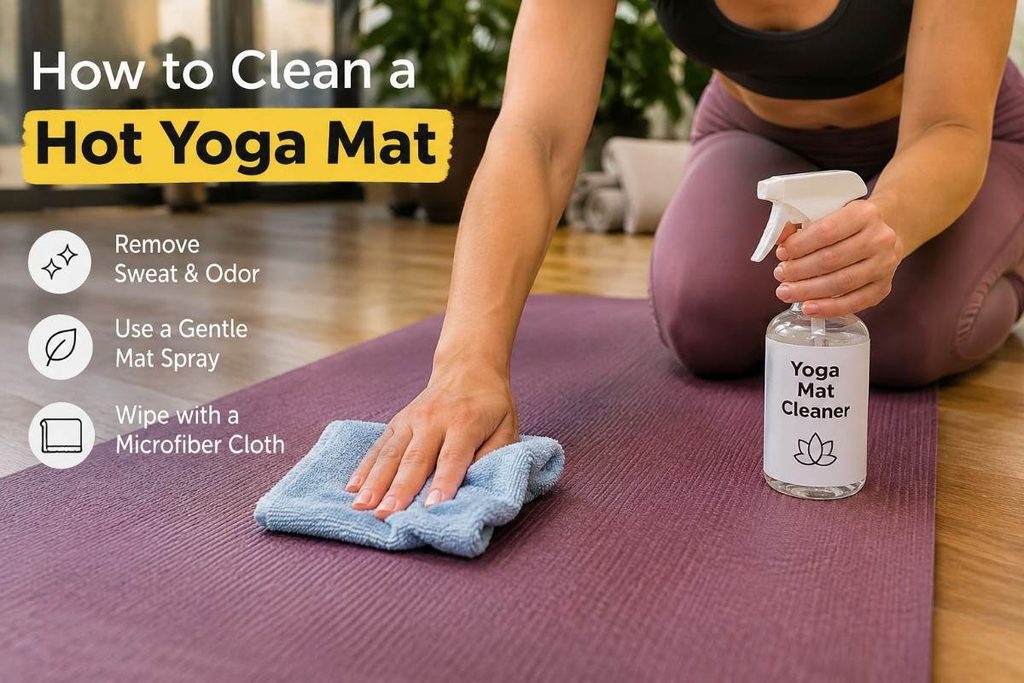
Cleaning your hot yoga mat after every sweaty session helps remove accumulated moisture, dirt, and surface residue.
Follow these steps:
- Wipe the surface: Use a clean cloth to remove visible sweat after practice.
- Use an appropriate cleaner: Follow the manufacturer’s recommendations for your mat material.
- Avoid harsh chemicals: Strong cleaning products may damage certain surfaces.
- Allow it to dry: Unroll the mat and let it dry completely before storage.
- Store it properly: Keep it in a clean, ventilated area away from excessive heat and direct sunlight when required by the manufacturer.
Do not assume every mat can be soaked or machine-washed. Different materials require different cleaning methods.
Manduka recommends regular surface cleaning and material-specific maintenance for its different mat constructions.
fitness recovery techniques after intense workouts
Common Mistakes to Avoid When Buying a Hot Yoga Mat
Avoid these common mistakes when selecting your mat:
- Choosing appearance over grip: Attractive designs do not guarantee good traction.
- Ignoring sweat absorption: A mat that works well when dry may become slippery during heated sessions.
- Buying excessive thickness: Extra cushioning can sometimes reduce stability in standing poses.
- Ignoring cleaning instructions: Improper maintenance can damage certain materials.
- Skipping a yoga towel: Some mats need an additional absorbent layer for sweaty practice.
- Rolling up a wet mat: Trapped moisture can contribute to unpleasant odors and material deterioration.
Is Hot Yoga Safe for Everyone?
Hot yoga is not suitable for everyone, particularly people who may have difficulty tolerating heat or managing fluid loss.
Exercising in a heated environment can increase sweating and the risk of dehydration and heat-related illness. A suitable yoga mat helps with traction, but it does not protect you from excessive heat.
Keep these precautions in mind:
- Drink water before and after your session.
- Take breaks when necessary.
- Avoid pushing through dizziness, nausea, or unusual weakness.
- Leave the heated room if you feel unwell.
- Choose a less intense class if you are new to heated exercise.
- Consult a healthcare professional if you have a medical condition or concerns about exercising in heat.
Stop exercising and seek appropriate medical attention if you experience symptoms of heat-related illness.
Conclusion
The best hot yoga mat should provide dependable grip, appropriate cushioning, and effective moisture management during heated sessions. Natural rubber, PU, and cork are worth considering, but the right choice depends on your sweating level, yoga style, and maintenance preferences.
If you already own a regular yoga mat, try pairing it with a suitable hot yoga towel before investing in another mat. Prioritize stability, comfort, and proper cleaning to support a consistent yoga practice.
FAQ
What is the best material for a hot yoga mat?
PU, natural rubber, and cork are popular options because certain constructions provide good traction in sweaty conditions. Compare the specific product’s wet-grip performance before buying.
Is a cork yoga mat good for hot yoga?
Yes, cork can be a good option for hot yoga because some cork surfaces provide better traction as they become slightly damp.
Can I use a regular yoga mat for hot yoga?
Yes, provided it offers adequate traction. A full-length absorbent yoga towel can help manage sweat on slippery surfaces.
How thick should a hot yoga mat be?
A thickness of approximately 4–5 mm offers a practical balance between cushioning and stability for many practitioners, although personal preferences vary.
Do hot yoga mats absorb sweat?
Some hot yoga mats feature absorbent surfaces, while others use non-absorbent materials that require a separate yoga towel for moisture management.
How often should I clean my hot yoga mat?
Wipe it after every sweaty session and perform deeper cleaning according to the manufacturer’s instructions.
Do I need a towel for hot yoga?
Not always, but a full-length yoga towel can help absorb sweat and improve traction, particularly when using a non-absorbent mat.
Can beginners use hot yoga mats?
Yes. Beginners can use hot yoga mats as long as the mat provides suitable cushioning, stability, and grip for their practice.
Sources
- Manduka. (2026). New to Yoga: Choosing a Yoga Mat and Understanding Materials.
- Manduka. (2026). A Guide to Yoga Towels.
- Manduka EU. (2026). Help Center: Hot Yoga Towels.
- Manduka. (2026). What to Bring to a Hot Yoga Class.
Disclaimer: This article is for informational and educational purposes only and is not a substitute for personalized medical advice. Consult a qualified healthcare professional before making significant changes to your diet, exercise routine, or supplement use.