
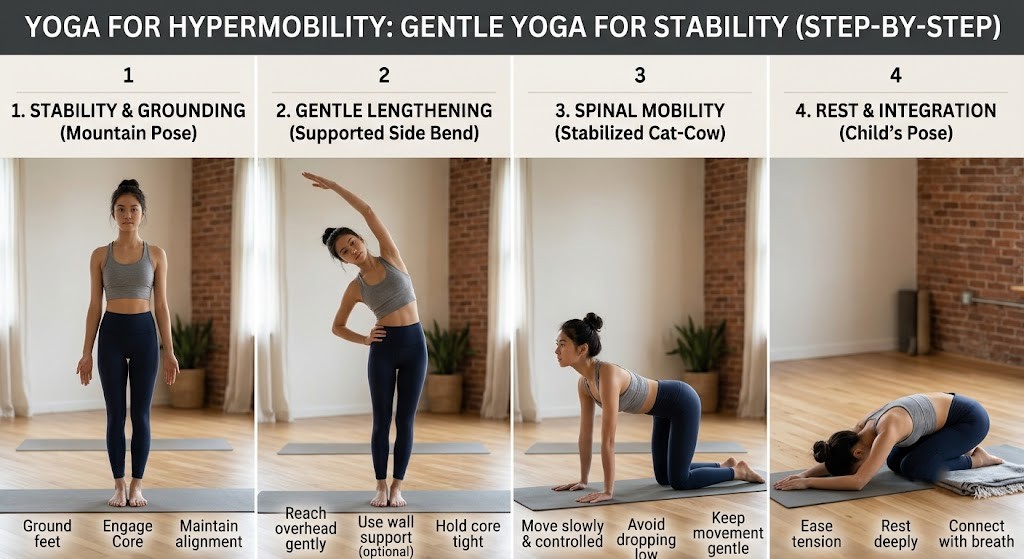
Yoga for hypermobility can help you practice body awareness, balance, controlled movement, and relaxation when poses are adapted to your needs. The key is to prioritize joint stability over extreme flexibility, using gentle movements and supportive modifications to avoid overloading your joints.
What Is Yoga for Hypermobility?
Yoga for hypermobility is an adapted yoga practice that emphasizes joint control, muscular engagement, balance, and comfortable movement instead of increasing flexibility.
Joint hypermobility means that one or more joints can move through a greater range than usual. Some people experience no symptoms, while others may have joint pain, muscle fatigue, frequent sprains, or recurrent dislocations. Symptomatic hypermobility may be associated with hypermobility spectrum disorder (HSD) or hypermobile Ehlers-Danlos syndrome (hEDS), which require appropriate clinical assessment.
A hypermobility-aware yoga practice focuses on:
- Joint stability: Using muscles to support joints during movement.
- Controlled movement: Avoiding forced or excessive stretching.
- Body awareness: Recognizing joint position and movement.
- Balance and coordination: Practicing steady, deliberate movements.
- Relaxation: Using comfortable breathing and supported positions.
For more guidance, explore the Yoga for Flexibility.
Why Does Yoga for Hypermobility Matter?
Adapted yoga may help develop movement awareness, balance, and relaxation, but it should complement appropriate strengthening and physiotherapy rather than replace them.
People with symptomatic hypermobility may experience joint instability because their connective tissues provide less passive support. Strengthening the muscles around affected joints can improve functional control, while suitable movement exercises may help with posture, coordination, and confidence. The most appropriate approach depends on individual symptoms and medical history.
Potential benefits of appropriately modified yoga include:
- Practicing controlled joint movement.
- Improving awareness of posture and body position.
- Developing balance and coordination.
- Supporting relaxation and stress management.
- Maintaining comfortable physical activity.
Yoga is not a cure for hypermobility, and not every pose or style will suit every person.
yoga for nervous system regulation
Best Yoga Poses for Hypermobility
The best yoga poses for hypermobility are those that allow you to maintain control, avoid painful positions, and use support whenever needed.
The following poses are general educational examples rather than a personalized rehabilitation program. If you experience frequent dislocations, significant joint pain, or diagnosed cervical instability, consult a qualified physiotherapist before trying them.
1. Supported Mountain Pose
Supported Mountain Pose helps you practice comfortable standing alignment and body awareness.
How to do it:
- Stand with your feet approximately hip-width apart.
- Distribute your weight comfortably between both feet.
- Keep your knees softly unlocked rather than forcing them backward.
- Relax your shoulders and maintain a comfortable spine position.
- Breathe naturally for 20–30 seconds if comfortable.
Modification: Stand beside a wall or sturdy support if your balance is uncertain. Avoid rigidly locking your knees.
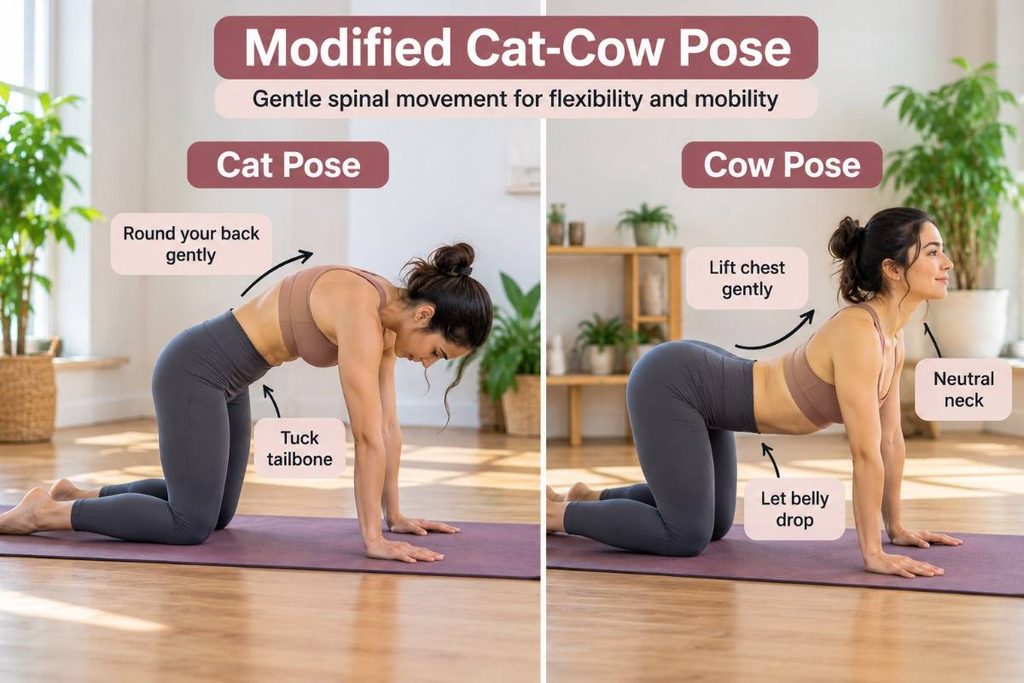
2. Modified Cat-Cow Pose
Modified Cat-Cow allows you to practice gentle spinal movement without pushing toward the limits of your range.
How to do it:
- Start on your hands and knees, placing a folded blanket beneath your knees if needed.
- Slowly round your back a little as you exhale.
- Return to a comfortable neutral position.
- Gently arch your back a small amount as you inhale, if comfortable.
- Repeat three to five times without forcing the movement.
Modification: If your wrists hurt, perform a seated version with your hands resting on your thighs.
3. Gentle Bridge Pose
A small-range Bridge Pose may help you practice activating your gluteal and trunk muscles.
How to do it:
- Lie on your back with your knees bent and feet flat on the mat.
- Keep your feet comfortably spaced.
- Gently engage your abdominal and gluteal muscles.
- Lift your pelvis a small distance if the movement feels comfortable.
- Lower slowly and relax.
Start with a few repetitions rather than holding the position for a long time.
Modification: If lifting your pelvis causes pain or instability, practice gentle gluteal contractions without lifting.
4. Supported Child’s Pose
Supported Child’s Pose can offer a comfortable resting position when your knees, hips, and back tolerate the posture.
How to do it:
- Kneel on a padded mat in a comfortable position.
- Place a bolster or firm pillows in front of you.
- Lean forward only as far as feels comfortable.
- Rest your chest and head on the support.
- Breathe naturally before returning upright slowly.
Modification: If kneeling is uncomfortable, sit in a chair and rest your forearms on a pillow placed on a table.
5. Seated Posture Practice
Seated posture practice provides an alternative when standing or weight-bearing positions are difficult.
How to do it:
- Sit on a firm chair with both feet supported.
- Maintain a comfortable upright posture without stiffening your back.
- Gently engage your abdominal muscles while breathing normally.
- Shift your weight slightly from one sitting bone to the other, if comfortable.
- Return to the center and repeat a few times.
Stop if you experience dizziness, pain, or a sensation of joint instability.
Which Yoga Styles Are Suitable for Hypermobility?
Gentle yoga styles that emphasize control, comfortable positioning, and modifications may be more suitable than classes centered on deep stretching.
| Yoga style | Considerations |
|---|---|
| Gentle Hatha yoga | May allow time to practice controlled positions and transitions. |
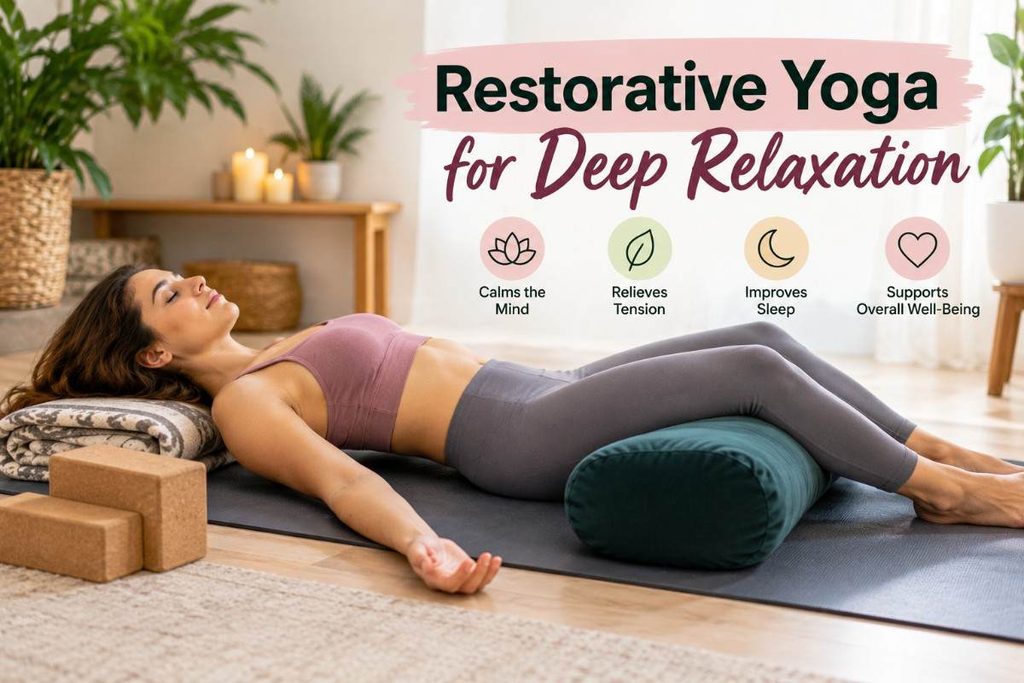
| Restorative yoga | Can provide relaxation when props support joints comfortably. |
| Chair yoga | Offers seated alternatives to standing or weight-bearing poses. |
| Slow, alignment-focused yoga | Can support movement awareness when appropriately adapted. |
| Yin yoga | Prolonged passive stretching may be unsuitable for some unstable joints. |
| Hot yoga | Heat, deep positions, and individual symptoms may make practice more challenging. |
| Advanced flexibility yoga | Deep backbends, splits, and extreme ranges may increase joint strain. |
No yoga style is automatically safe or unsafe for everyone with hypermobility. Your symptoms, joint stability, experience, and the instructor’s ability to adapt movements all matter.
Explore the Restorative Yoga for Beginners and Chair Posture Yoga.
Yoga Poses and Movements to Approach With Caution
People with hypermobility should be cautious with movements that force joints beyond their controlled range or place excessive loads on unstable joints.
Depending on your symptoms and abilities, you may need to modify or avoid:
- Full splits: These can push the hips and knees toward extreme ranges.
- Deep backbends: These may place excessive extension forces on the spine and shoulders.
- Extreme forward folds: These can encourage uncontrolled movement through the knees, hips, or lower back.
- Elbow-locked arm balances: These may challenge control of hypermobile elbows and wrists.
- Deep knee bends: These may aggravate symptoms in people with unstable or painful knees.
- Forceful neck stretches: These require particular caution if cervical instability is suspected or diagnosed.
These movements are not universally prohibited. A pose may be appropriate for one person and unsuitable for another.
The important principle is to avoid forcing a joint toward its end range simply because it can move there.
A Gentle 10-Minute Yoga Routine for Hypermobility
A short routine can help you explore comfortable movement without making flexibility the main goal. Choose only movements appropriate for your symptoms and abilities.
| Time | Activity | Focus |
|---|---|---|
| 1 minute | Comfortable seated breathing | Relaxation |
| 2 minutes | Supported standing or seated posture | Body awareness |
| 2 minutes | Modified Cat-Cow or seated spinal movement | Controlled movement |
| 2 minutes | Gentle gluteal contractions or modified Bridge Pose | Muscle engagement |
| 1 minute | Supported seated posture practice | Coordination |
| 2 minutes | Comfortable supported relaxation | Recovery |
This is an illustrative routine, not a clinically validated hypermobility protocol. You may need to shorten it, substitute movements, or omit poses. A physiotherapist can help you select appropriate exercises and determine how to progress.
How Often Should You Practice Yoga?
Start with a duration and frequency that you can tolerate without worsening symptoms.
- Begin with a few minutes if necessary.
- Use a small number of repetitions.
- Increase duration or repetitions gradually rather than increasing everything at once.
- Allow adequate recovery between sessions.
- Monitor how you feel during practice and over the following day or two.
- Reduce the workload if pain, fatigue, or instability increases.
Structured strengthening and balance exercises are important components of many hypermobility management programs. Yoga alone may not provide all the strengthening needed for your individual circumstances.
Essential Safety Tips for Yoga With Hypermobility
A hypermobility-aware yoga practice should prioritize comfort, controlled movement, and gradual progression instead of achieving the deepest possible pose.
Use Props and Comfortable Positions
Yoga blocks, bolsters, folded blankets, and chairs can help support your body and reduce the need to reach extreme positions. Use a prop whenever it helps you maintain a comfortable and controlled posture.
Avoid Forcing Your Joints
Do not hang passively on your ligaments or push through a movement just because it looks easy. Keep movements controlled and avoid positions that cause pain, slipping, or instability.
Choose a Qualified Instructor
Look for an instructor who is willing to adapt poses and understands the importance of joint stability. If you have symptomatic hypermobility, a physiotherapist familiar with HSD or hEDS can help identify suitable movements.
Balance Yoga With Strength Training
Strengthening exercises, balance training, and movement-control practice can complement yoga. A physiotherapist can help you determine which muscles and joints need additional support.
Know When to Stop
Stop practicing if you develop new or increasing pain, joint giving-way, unusual dizziness, numbness, or other concerning symptoms. If symptoms repeatedly worsen after a session, reduce the workload and consult your healthcare professional.
A suspected dislocation, significant injury, or sudden severe pain warrants prompt medical assessment. People with vascular Ehlers-Danlos syndrome or known cervical instability need individualized medical guidance before beginning an exercise program.
Conclusion
Yoga for hypermobility works best when it emphasizes controlled movement, comfortable joint positions, balance, and relaxation rather than extreme flexibility. Supported poses and gentle modifications may help some people practice movement more comfortably, but individual needs and symptoms vary.
Start slowly, use props when helpful, and seek advice from a physiotherapist familiar with hypermobility if you experience pain or joint instability. The goal is not to become more flexible; it is to move with greater control and confidence.
FAQs
Is yoga good for hypermobility?
Adapted yoga may help with movement awareness, balance, and relaxation, but its suitability depends on your symptoms and joint stability. Appropriate strengthening and physiotherapy are also important for symptomatic hypermobility.
Can yoga make hypermobility worse?
Yoga may aggravate symptoms when it involves excessive stretching, unstable positions, or movements beyond your controlled range. Appropriate modifications can help reduce these risks.
Should people with hypermobility avoid stretching?
Not necessarily. Gentle stretching may help when particular muscles are tight, but repeatedly stretching already hypermobile areas may increase instability. A physiotherapist can help determine which areas, if any, need stretching.
Is restorative yoga suitable for hypermobility?
Restorative yoga may be comfortable for some people when props support the body and joints remain in manageable positions. Prolonged passive stretching may not suit everyone.
Can beginners with hypermobility do yoga at home?
Some beginners can practice gentle, modified movements at home, but people with recurrent dislocations, significant pain, or diagnosed connective tissue disorders should seek individualized advice before starting.
How long should a yoga session last for hypermobility?
There is no universal ideal duration. Start with a short, manageable session and adjust based on your symptoms, recovery, and professional guidance.
Is yoga enough to manage hypermobility?
Yoga alone may not provide all the strengthening and joint-control training needed by people with symptomatic hypermobility. An individualized program may also include resistance exercises, balance training, and low-impact aerobic activity.
Sources
- National Health Service. (2023). Joint hypermobility syndrome.
- NHS inform. (n.d.). Joint hypermobility.
- GeneReviews. (2024). Hypermobile Ehlers-Danlos Syndrome.
- The Ehlers-Danlos Society. (n.d.). Physical Therapy.
- The Ehlers-Danlos Society. (2018). Evidence-Based Rationale for Physical Therapy Treatment of Joint Hypermobility Syndrome/Hypermobile Ehlers-Danlos Syndrome.
Disclaimer: This article is for informational and educational purposes only and is not a substitute for personalized medical advice. Consult a qualified healthcare professional before making significant changes to your diet, exercise routine, or supplement use.
1 thought on “Yoga for Hypermobility: Safe Poses, Benefits, and Beginner Tips”