
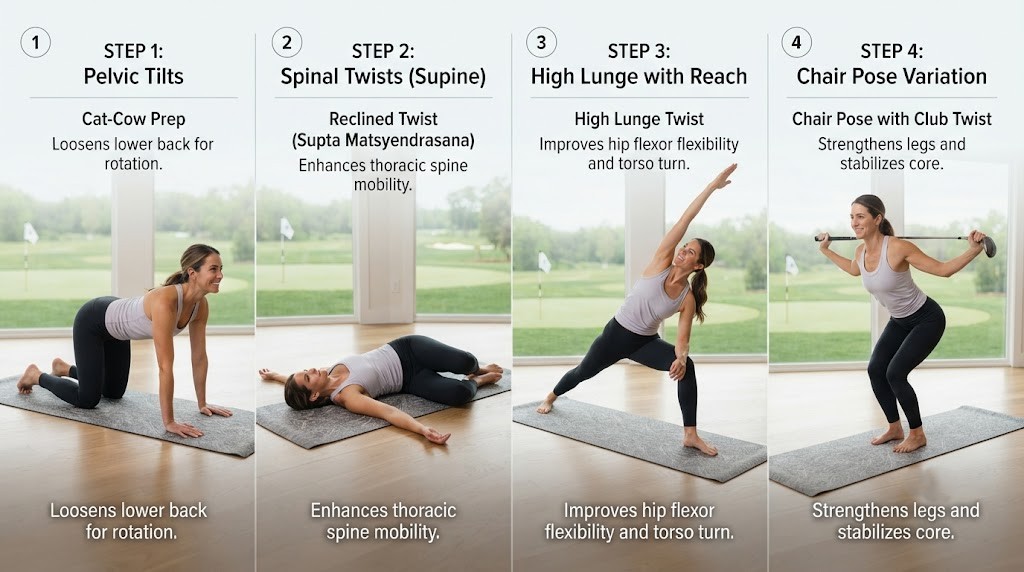
You probably spend hours practising your swing, refining your grip, and selecting the right clubs. However, one of the most overlooked ways to improve your golf game doesn’t involve changing your equipment or technique—it involves improving how your body moves.
Yoga for Golfers is a golf-specific fitness approach that enhances flexibility, mobility, balance, strength, and breathing. Together, these qualities can help you generate more power, improve consistency, reduce injury risk, and recover faster after every round.
Whether you’re new to yoga or looking to complement your golf training, this guide explains how golf yoga works, why it matters, the best poses to practise, and how to build a routine that fits your schedule.
What Is Yoga for Golfers and How Does It Improve Your Game?
Yoga for golfers is a targeted fitness practice that improves flexibility, mobility, balance, strength, and body control to enhance golf performance while reducing injury risk. Unlike traditional yoga classes that focus primarily on overall wellness, golf-specific yoga emphasises movements that directly support a more efficient golf swing and healthier joints.
A powerful golf swing relies on coordinated movement throughout the body. Your hips, shoulders, thoracic spine, core, and ankles all work together to generate rotation and transfer power efficiently. If one area lacks mobility, another area often compensates, reducing performance and increasing stress on the body.
For example, golfers with tight hips frequently struggle to complete a full backswing. Instead of rotating through the hips, they often twist excessively through the lower back, leading to inconsistent shots and a greater chance of injury.
Golf-specific yoga targets these movement limitations through carefully selected stretches, mobility drills, and stability exercises that improve overall movement quality.
Research shows that mobility training improves movement quality and athletic performance across rotational sports. Improving flexibility alone isn’t enough—you also need mobility and stability to control the movement.
Source: American College of Sports Medicine, 2024.
How Is Golf Yoga Different from Traditional Yoga?
Although both forms of yoga improve flexibility and body awareness, they have different objectives.
| Traditional Yoga | Golf Yoga |
|---|---|
| General flexibility | Golf-specific mobility |
| Long static holds | Dynamic movement patterns |
| Whole-body wellness | Swing performance |
| Stress reduction | Rotation, balance, posture |
| Meditation focus | Functional athletic movement |
Golf yoga focuses on movements that directly improve swing mechanics, rotational strength, posture, and balance. Because every exercise serves a purpose related to golf performance, beginners often find golf yoga easier to understand and apply.
Why Is Flexibility Important for Golf Performance?
Flexibility allows your body to move freely through a complete golf swing without unnecessary strain. When your muscles and joints move efficiently, you can generate greater clubhead speed while maintaining control.
The golf swing repeatedly places rotational forces on the hips, shoulders, and spine. Over time, tight muscles can shorten your swing, reduce consistency, and increase physical stress.
Many recreational golfers believe they need more strength to hit the ball farther. In reality, limited mobility often prevents them from rotating effectively enough to generate maximum power.
According to the Titleist Performance Institute (TPI), many swing faults are linked to mobility restrictions rather than poor technique alone.
Source: TPI Golf Fitness Research, 2024.
Benefits of Yoga for Golfers
Regular yoga practice provides both immediate and long-term benefits for golfers of all skill levels.
Some of the biggest advantages include:
- Increased swing rotation
- Better hip mobility
- Improved shoulder flexibility
- Stronger core stability
- Enhanced balance
- Better posture
- Reduced lower back pain
- Faster recovery after golf rounds
- Improved breathing control
- Greater body awareness
- Improved movement efficiency
- Reduced muscle stiffness
Consistent practice also helps golfers maintain healthier posture and stronger stabilising muscles, making every swing feel smoother and more controlled.
How Does Yoga Improve Golf Swing Rotation?
Yoga improves golf swing rotation by increasing mobility in the hips, shoulders, and thoracic spine while strengthening the muscles responsible for controlling rotational movement. This combination allows golfers to create greater clubhead speed without forcing the swing.
Efficient rotation begins from the ground up. Stable feet, mobile hips, and a strong core allow energy to transfer naturally through the body into the golf club.
Golfers with restricted hip mobility often compensate by rotating excessively through the lower back, increasing both injury risk and swing inconsistency.
Hip Mobility
Healthy hips create a longer backswing and a more fluid downswing.
Helpful yoga poses include:
- Low Lunge
- Pigeon Pose
- Lizard Pose
- Garland Squat
These exercises improve both internal and external hip rotation, directly supporting better swing mechanics.
Thoracic Spine Mobility
The thoracic spine plays a vital role in upper-body rotation.
Useful poses include:
- Thread the Needle
- Cat-Cow
- Open Book Stretch
- Extended Child’s Pose
Improving thoracic mobility helps golfers rotate more freely without placing excessive stress on the lumbar spine.
Shoulder Flexibility
Flexible shoulders contribute to a better backswing position, smoother follow-through, and improved club control.
Recommended poses include:
- Downward Dog
- Puppy Pose
- Eagle Arms Stretch
- Cow Face Arms
Better shoulder mobility often results in improved swing consistency and more efficient movement throughout the entire golf swing.
Research suggests that athletes who combine flexibility, balance, and mobility training demonstrate improved movement efficiency compared with flexibility training alone.
Source: National Strength and Conditioning Association, 2023.
What Are the Best Yoga Poses for Golfers?
The best yoga poses for golfers improve flexibility, rotation, balance, stability, and posture while supporting efficient swing mechanics.
Beginners should first master simple movements before progressing to longer yoga flows.
| Yoga Pose | Primary Benefit |
|---|---|
| Cat-Cow | Spine mobility |
| Downward Dog | Shoulder and hamstring flexibility |
| Low Lunge | Hip mobility |
| Warrior II | Balance and leg strength |
| Pigeon Pose | Deep hip flexibility |
Hold each pose for approximately 30–45 seconds while maintaining slow, controlled breathing.
For example, Warrior II strengthens the lower body while improving balance, allowing golfers to maintain a stable base throughout the swing.
Dynamic movement before golf prepares muscles for activity, while slower static stretches are better suited for recovery sessions.
Dynamic yoga before a golf round prepares the body for movement, while restorative yoga after play promotes recovery and reduces muscle stiffness.
Can Beginners Practise Yoga for Better Golf Performance?
Absolutely.
Beginners can practise yoga for better golf performance because most golf-focused routines use simple, low-impact movements that improve flexibility, mobility, and balance without requiring previous yoga experience.
Start with sessions lasting just 10–15 minutes. Focus on proper technique instead of advanced poses.
Practising three or four times each week is often enough to notice improvements in mobility, posture, and overall movement quality.
Simple Beginner Yoga Routine
Follow this sequence before or after practice:
- Cat-Cow – 1 minute
- Downward Dog – 1 minute
- Low Lunge – 1 minute per side
- Warrior II – 45 seconds per side
- Pigeon Pose – 1 minute per side
- Child’s Pose – 2 minutes
This short routine improves mobility throughout the hips, shoulders, spine, and hamstrings while encouraging better posture and body control.
Should You Do Yoga Before or After Playing Golf?
The ideal time depends on your goal.
Dynamic yoga prepares your body before a round, while restorative yoga promotes recovery afterwards.
Yoga Before Golf
Before teeing off, perform dynamic movements that increase circulation and activate key muscles.
Recommended exercises include:
- Cat-Cow
- World’s Greatest Stretch
- Standing Twist
- Low Lunge
- Sun Salutations
These movements prepare your joints and muscles for the rotational demands of golf.
Yoga After Golf
After your round, shift your focus toward recovery.
Recovery poses include:
- Child’s Pose
- Supine Twist
- Happy Baby
- Reclining Pigeon
- Legs Up the Wall
These stretches reduce muscle tightness, improve circulation, and minimise stiffness after walking the course and repeating hundreds of rotational movements.
Dynamic yoga before a golf round prepares the body for movement, while restorative yoga after play promotes recovery and reduces muscle stiffness.
post workout stretching routine
Which Breathing Techniques Can Improve Golf Focus?
Breathing is often overlooked in golf, yet it can significantly influence concentration and decision-making.
Controlled breathing helps calm the nervous system, reduce muscle tension, and keep golfers mentally focused before every shot.
Try these techniques:
Diaphragmatic Breathing
Slow belly breathing that promotes relaxation and reduces unnecessary tension.
Box Breathing
- Inhale for 4 seconds
- Hold for 4 seconds
- Exhale for 4 seconds
- Hold for 4 seconds
This technique helps maintain composure under pressure.
Extended Exhale
Breathe in for 4 seconds and slowly exhale for 6–8 seconds.
A longer exhale encourages relaxation and can help reduce pre-shot anxiety during important moments on the course.
How Can Yoga Help Prevent Common Golf Injuries?
Golf places repetitive stress on several joints and muscle groups. Over time, poor mobility and muscular imbalances can contribute to chronic discomfort.
Yoga helps reduce injury risk by improving flexibility, strengthening stabilising muscles, correcting posture, and enhancing movement efficiency.
Common golf injuries include:
- Lower back pain
- Shoulder strain
- Hip tightness
- Wrist discomfort
- Knee pain
When muscles move properly and joints remain mobile, the body experiences less unnecessary strain throughout the golf swing.
Research indicates that mobility and balance training can reduce overuse injuries when combined with regular strength exercises.
Source: British Journal of Sports Medicine, 2023.
For the best long-term results, combine yoga with strength training, adequate recovery, and a balanced fitness programme.
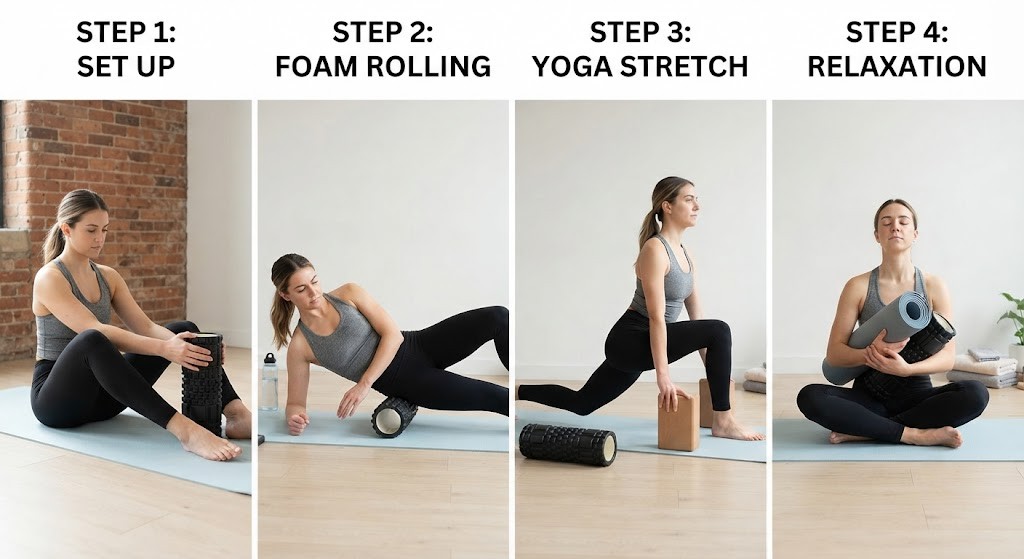
Essential Yoga Tools for Golfers
Using a few simple tools can make your yoga practice more comfortable and effective.
| Tool | Purpose |
|---|---|
| Yoga Mat | Comfortable practice surface |
| Yoga Blocks | Improve stability and flexibility |
| Yoga Strap | Increase stretching range |
| Foam Roller | Release tight muscles |
| Resistance Band | Improve mobility and activation |
These accessories can help beginners achieve proper positioning while allowing experienced golfers to deepen their mobility work safely.
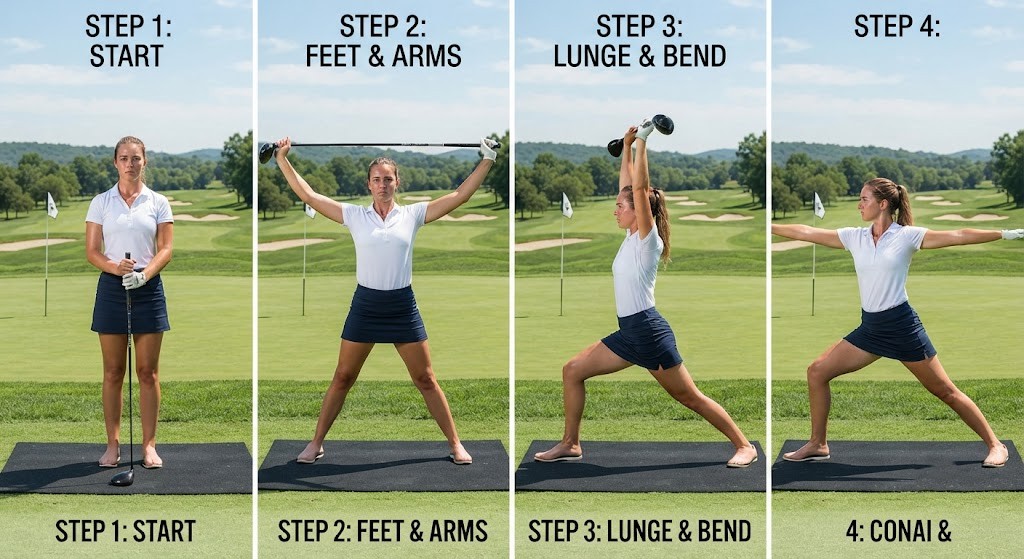
Example 10-Minute Daily Yoga Routine
If you’re short on time, this quick routine can help maintain flexibility and mobility.
| Exercise | Duration |
|---|---|
| Cat-Cow | 2 minutes |
| Low Lunge | 2 minutes |
| Downward Dog | 2 minutes |
| Warrior II | 2 minutes |
| Child’s Pose | 2 minutes |
Even ten consistent minutes each day can contribute to noticeable improvements over time.
Example Weekly Yoga and Golf Fitness Plan
Combining yoga with strength training and golf practice creates a well-rounded fitness programme.
| Day | Activity |
|---|---|
| Monday | Mobility Yoga |
| Tuesday | Strength Training |
| Wednesday | Golf Practice + Stretching |
| Thursday | Yoga Recovery Flow |
| Friday | Core & Balance |
| Saturday | Golf Round |
| Sunday | Full Recovery Yoga |
This balanced approach improves movement quality while allowing sufficient recovery between sessions.
What’s Next?
Building a consistent routine is the key to seeing lasting improvements.
To continue progressing:
- Practise yoga 3–5 times per week.
- Gradually increase sessions from 10 minutes to 30 minutes.
- Monitor improvements in flexibility and swing rotation.
- Combine yoga with a full-body strength programme.
- Prioritise quality sleep, stretching, and recovery.
Remember that consistency matters far more than lengthy workouts. Small improvements accumulated over weeks and months often produce the biggest gains on the golf course.
full body workout for beginners
heat therapy for muscle recovery
Conclusion
Yoga for Golfers is one of the most effective ways to improve mobility, flexibility, balance, stability, and overall golf performance. By increasing movement quality throughout the hips, shoulders, spine, and core, yoga helps golfers generate a smoother, more powerful swing while lowering the risk of common injuries.
Whether you’re a beginner looking to move better or an experienced golfer aiming to improve consistency, adding just 10–20 minutes of yoga to your weekly routine can produce meaningful results. Pair yoga with strength training, quality recovery, and regular golf practice, and you’ll build a stronger, more resilient body that supports better performance for years to come.
FAQs
What is yoga for golfers?
Yoga for golfers improves flexibility, mobility, balance, and strength to enhance your golf swing and reduce injury risk.
Does yoga really improve your golf swing?
Yes. Better mobility and balance improve swing rotation, consistency, and power.
How often should golfers do yoga?
Practise yoga 3–5 times per week for 10–30 minutes to see the best results.
Is yoga better before or after golf?
Dynamic yoga is best before golf, while restorative yoga is ideal after your round.
What are the best yoga poses for golfers?
Cat-Cow, Downward Dog, Low Lunge, Warrior II, and Pigeon Pose are among the best poses for golfers.
Can beginners do yoga for golf?
Yes. Beginners can start with simple poses and short sessions to improve mobility and balance.
Can yoga help reduce lower back pain from golf?
Yes. Yoga improves posture, flexibility, and core strength, helping reduce lower back strain.
Does yoga increase driving distance?
Yes. Improved mobility and rotation can help increase clubhead speed and driving distance.
What equipment do I need for golf yoga?
A yoga mat is essential, while blocks and straps can provide extra support.
Should golfers combine yoga with strength training?
Yes. Combining yoga with strength training improves mobility, strength, and overall golf performance.
Is yoga good for golfers?
Yes. Yoga improves flexibility, balance, mobility, and helps prevent common golf injuries.
Does Rory McIlroy do yoga?
Yes. Rory McIlroy includes yoga and mobility exercises in his fitness routine.
What is the best workout for golfers?
The best workout combines strength training, yoga, mobility, balance, and core exercises.
Is Pilates or yoga better for golf?
Both are beneficial. Yoga improves flexibility, while Pilates builds core strength and stability.
Should I do yoga before or after golf?
Do dynamic yoga before golf to warm up and restorative yoga after golf for recovery.
Does Rory McIlroy do Pilates?
Yes. Rory McIlroy uses Pilates to improve core strength, stability, and movement quality.