
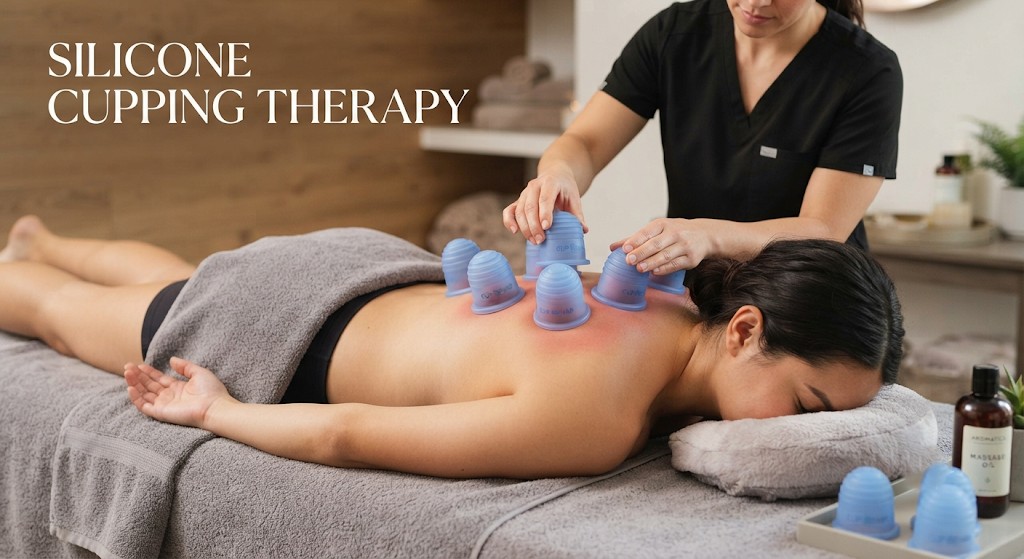
Silicone cupping therapy massage cups are soft, squeezable suction cups that many people buy for at-home muscle care after workouts or long days at a desk. They look simple, but size, suction strength, technique, and skin safety all change how a session feels and how your skin looks afterward. This guide explains how the cups work, how they compare with glass and plastic, and how to use them without causing avoidable problems.
What are silicone cupping therapy massage cups?
Silicone cupping therapy massage cups are flexible cups that you squeeze, press onto oiled skin, and release to create suction, then glide across a muscle. Cleveland Clinic lists silicone among the materials used for cupping cups, alongside glass, plastic, bamboo, ceramic, and metal (Source: Cleveland Clinic).
Because the silicone bends, the cup can follow curved areas such as the shoulders or outer thighs better than a rigid cup. Most sets include several sizes, so you can use small cups on tight spots and larger ones on the back or legs.
If you already use self-massage tools such as Best Foam Roller Exercises for Muscle Recovery, silicone cups give you a different kind of input. Instead of pressing into the muscle, they lift the skin and tissue upward.
Why do silicone cupping therapy massage cups matter?
Silicone cups matter because they let people try cupping massage at home without the flame and breakable glass used in traditional fire cupping. Cleveland Clinic notes that cupping carries generally low risks but mixed evidence, so a lower-hazard tool is helpful as long as you stay realistic about what it can do (Source: Cleveland Clinic).
People tend to pick them for a few practical reasons:
- They are lightweight and travel well.
- They do not need a flame, which removes the burn risk that comes with fire cupping.
- Many sets are sold with several sizes, so one purchase covers different body areas.
- They are easy to wash and store.
They work best as one small part of a recovery routine alongside sleep, food, and movement. Our guide to Deep Tissue Massage Recovery covers the rest of that picture.
How do silicone cups compare with glass and plastic cups?
Silicone cups are the gentlest and easiest option to start with, while glass and pump-style plastic cups are what many practitioners use for stronger suction. WebMD lists glass, bamboo, earthenware, silicone, and plastic as common cup materials (Source: WebMD).
| Cup type | How suction is made | Things to consider |
|---|---|---|
| Silicone | You squeeze the cup, place it, and release | Soft and unbreakable, with a gentler pull that suits beginners |
| Glass | Heat removes air from the cup, or a pump is used | Strong suction, but it breaks and needs training, especially with fire |
| Plastic with pump | A hand pump removes air | You control the pressure, and rims can be less smooth for gliding |
No study cited in this article compares silicone cups directly with glass cups, so claims that one gives better results than the other are not backed by this research. What the evidence does support is that safe technique matters more than the material.
How do you choose silicone cupping therapy massage cups?
Choose cups based on the body area you plan to treat, how soft the silicone is, and how easy the set is to clean. Here is what to look at before you buy:
- Size range: small cups for the neck and forearms, larger ones for the back and thighs.
- Softness: a softer cup gives a gentler pull, which is better while you are learning.
- Rim: a smooth, even edge glides over oil without catching on the skin.
- Material information: pick a maker that states what the cups are made from and how to care for them.
- Cleaning: avoid designs with deep grooves where oil and sweat collect.
Keep your first purchase simple. A basic set with three or four sizes is enough to learn the technique.
How do you use silicone cupping therapy massage cups?
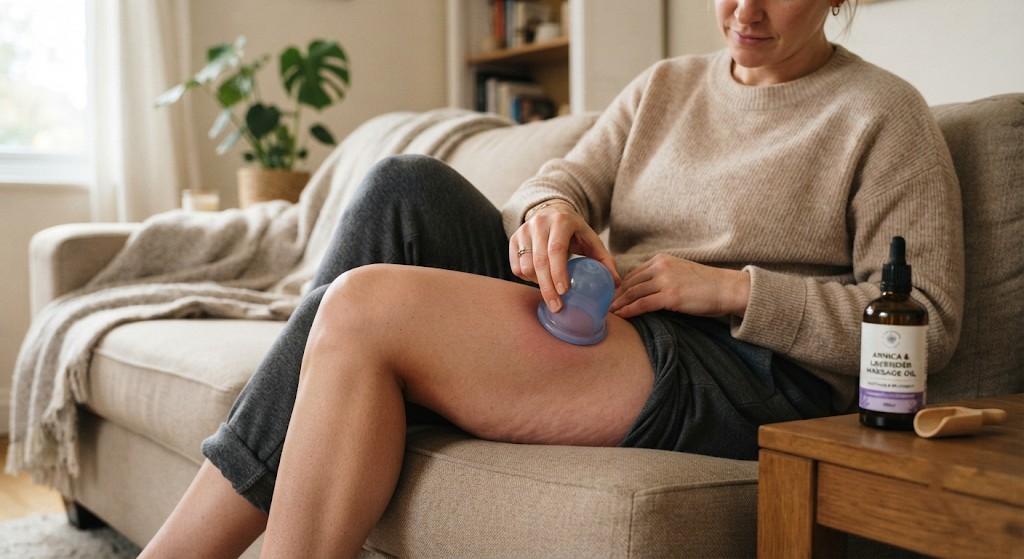
Use them on clean, intact skin with a light layer of oil, start with gentle suction, and keep the cup moving. Check with a healthcare provider first if you have a medical condition or take medication.
- Check your skin. Do not use cups over cuts, burns, rashes, or infected skin.
- Apply a thin layer of massage oil to the area so the cup can slide.
- Squeeze the cup, press it onto the skin, and release slowly until it holds on gently.
- Glide the cup slowly along the muscle in one direction, such as up the side of the back or along the thigh.
- Keep each area to a few minutes at most, then break the seal by pressing the cup’s edge against your skin before lifting it off.
- Look at the skin afterward and stop if you see blistering, severe redness, or feel sharp pain.
Round marks and streaks are common and usually fade in about one to two weeks (Source: Cleveland Clinic). Let them clear before treating the same area again.
Cupping does not replace flexibility work. A regular Post Workout Stretching Routine pairs well with it.
Which body areas suit silicone cups best?
Large, muscular areas such as the upper back, shoulders, thighs, and calves suit silicone cups best. Skip the scalp, because NCCIH reports a rare case of bleeding inside the skull after cupping on the scalp (Source: NCCIH, 2018).
- Upper back and shoulders: a common spot for desk-related tightness. Pair it with Mobility Workout.
- Lower back: use light suction and short passes, and combine it with lower back strengthening exercises for longer-term support.
- Thighs and calves: useful after leg training.
- Face: facial cupping uses smaller, softer cups made for that purpose, so body cups are the wrong tool there.
What does the evidence say?
Research suggests cupping may reduce pain in some conditions, but the evidence is mostly low to moderate quality. A 2023 evidence map found very low to moderate quality support for chronic pain, low back pain, neck pain, and knee osteoarthritis, and it found no high-quality evidence of efficacy (Source: Frontiers in Neurology, 2023).
A 2025 BMJ Open meta-analysis found cupping may reduce pain intensity in chronic musculoskeletal pain with immediate effects, though it did not significantly improve functional disability or mental health (Source: BMJ Open, 2025). NCCIH adds that the available evidence is insufficient to say how well cupping works (Source: Frontiers in Neurology, 2023).
These studies examine cupping in general, not silicone cups specifically. Treat silicone cups as a comfort and recovery tool, not a treatment for an injury.
What are the risks, and who should avoid them?
The main risk is skin marking, but burns, infection, and skin irritation can also happen. NCCIH lists persistent discoloration, scars, burns, and infections as possible side effects, and says cupping may worsen eczema or psoriasis (Source: NCCIH, 2018).
Avoid silicone cupping, or talk to a doctor first, if any of these apply:
- You are pregnant, since researchers know little about cupping in pregnancy (Source: Cleveland Clinic).
- You have a bleeding disorder or take blood thinners.
- You have eczema, psoriasis, or an active skin infection.
- You have open wounds, burns, or fragile skin.
Contact a healthcare provider if you get burns, extreme pain or soreness, fever, or signs of infection such as redness, tenderness, or yellow discharge (Source: Cleveland Clinic). Cleveland Clinic also advises talking to a provider before trying cupping or any alternative therapy.
How do you clean and store silicone cups?
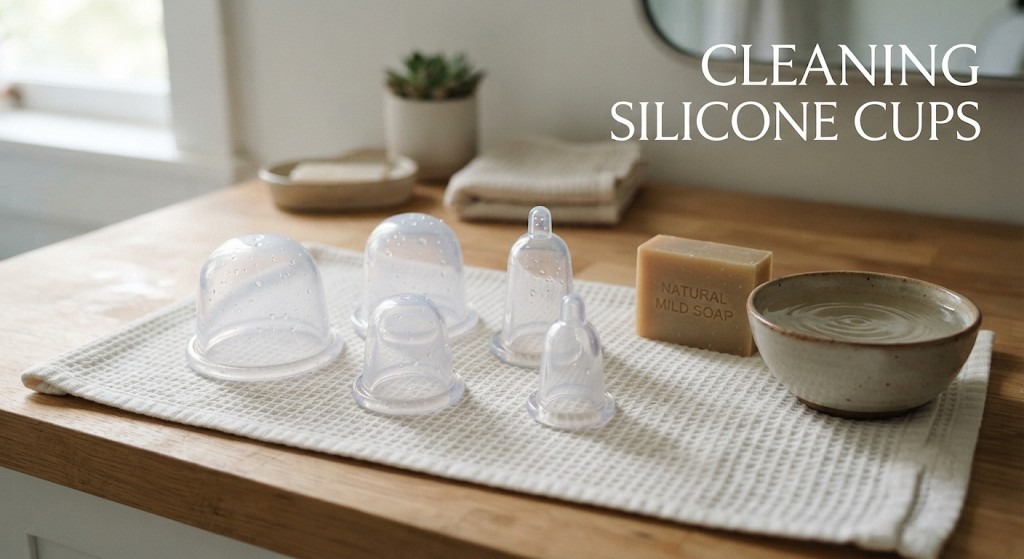
Wash silicone cups with warm water and mild soap after each use, rinse them well, and let them dry completely before storing. Oil left on the cup can trap dirt and degrade the material over time, so rinse thoroughly.
Never share cups between people. Store them away from sharp objects and direct heat so the rims stay smooth.
Drinking water after a session is a sensible habit, and daily water intake can help you set a daily target. Gentle movement the next day, such as Yoga for Lower Back Pain, suits many people. For other recovery tools, see massage guns for muscle recovery and plan your rest using the active recovery.
Conclusion
Silicone cupping therapy massage cups are a soft, flame-free way to try gliding cupping at home, and they are easy to store and clean. The research on cupping is mostly low to moderate quality, so expect a recovery aid rather than a cure.
Start with gentle suction, use oil, keep sessions short, and let marks fade between sessions. Skip cupping if you are pregnant, take blood thinners, or have a skin condition, and talk to a healthcare provider when in doubt.
FAQs
Are silicone cupping cups as effective as glass cups?
No study cited here compares them directly, so there is no proof that one works better than the other. Glass and pump cups can produce stronger suction, while silicone is gentler and easier to control.
Do silicone cupping therapy massage cups leave marks?
They can. Round marks or streaks are common and usually fade within one to two weeks.
How long should I leave a silicone cup on one area?
Keep it to a few minutes at most, and keep the cup moving when you use it for massage. Stop if you feel sharp pain or see blistering.
How often can I use silicone cupping cups?
There is no evidence-based frequency, so let the marks fade fully before treating the same area again. If the skin still looks marked after one to two weeks, wait longer.
Can I use body silicone cups on my face?
Body cups are too large for the face. Facial cupping uses smaller, softer cups made for thin skin, and a professional can advise you on that.
How do I clean silicone cupping cups?
Wash them with warm water and mild soap, rinse well, and dry them completely before storing.
Sources
- National Center for Complementary and Integrative Health. (2018). Cupping.
- Cleveland Clinic. (n.d.). Cupping.
- WebMD. (n.d.). What Is Cupping Therapy?
- Wang, L., Cai, Z., Li, X., & Zhu, A. (2023). Efficacy of cupping therapy on pain outcomes: an evidence-mapping study. Frontiers in Neurology.
- BMJ Open. (2025). Effects of cupping therapy on chronic musculoskeletal pain and collateral problems: a systematic review and meta-analysis. BMJ Open, 15(5), e087340.
Disclaimer: This article is for informational and educational purposes only and is not a substitute for personalized medical advice. Consult a qualified healthcare professional before making significant changes to your diet, exercise routine, or supplement use.