
You’ve probably stretched your hamstrings countless times but still struggle with tightness, limited flexibility, or poor mobility. The missing piece may not be your hamstrings at all—it could be how your spine moves under control.
The Jefferson Curl exercise is one of the most effective mobility drills for developing controlled spinal flexion, improving hamstring flexibility, strengthening the posterior chain, and enhancing overall movement quality. Unlike traditional stretching, this exercise combines mobility and strength, making it valuable for athletes, lifters, gymnasts, and anyone looking to move better.
In this comprehensive guide, you’ll learn exactly how to perform the Jefferson Curl exercise safely, discover its proven benefits, understand the potential risks, learn the muscles it works, avoid common mistakes, and determine whether it’s the right mobility exercise for your fitness routine.
What Is the Jefferson Curl Exercise?
The Jefferson Curl exercise is a controlled spinal flexion exercise designed to improve spinal mobility, hamstring flexibility, and posterior chain strength.
Unlike traditional toe touches that mainly emphasize hinging from the hips, the Jefferson Curl intentionally trains segmental spinal movement, allowing each vertebra to flex one at a time while maintaining complete control throughout the movement.
Originally popularized in gymnastics, the exercise has since been adopted by strength coaches, CrossFit athletes, mobility specialists, and physical therapists. Today, it is considered one of the most effective mobility exercises for improving movement quality.
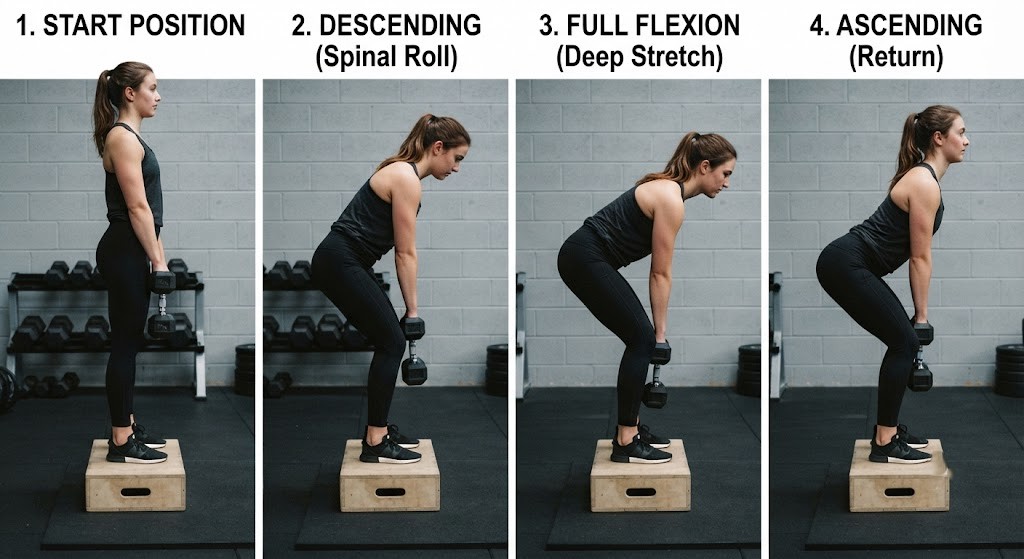
The Jefferson Curl exercise involves slowly rolling the spine downward one vertebra at a time while holding light resistance and maintaining complete control from start to finish.
For example:
- Gymnasts often use Jefferson Curls to improve overhead mobility.
- Powerlifters use them to improve movement quality before deadlifts.
- Mobility specialists include them to enhance spinal articulation and flexibility.
According to the American College of Sports Medicine (ACSM), mobility training is an important component of overall fitness and supports healthy movement patterns throughout life.
Source: ACSM, 2024.
Why Does the Jefferson Curl Exercise Matter?
The Jefferson Curl matters because it trains controlled spinal mobility, not just muscle flexibility.
Many people have reasonably flexible hamstrings but lack proper spinal articulation. Improving both simultaneously can enhance movement efficiency during strength training, sports, and everyday activities.
Regular mobility training has been shown to improve joint range of motion and overall movement quality.
Source: American College of Sports Medicine, 2024.
Additionally, prolonged sitting often reduces spinal mobility. Incorporating controlled mobility exercises like the Jefferson Curl may help maintain healthier movement patterns over time.
Benefits Beyond Flexibility
The Jefferson Curl can help:
- Improve spinal articulation
- Increase hamstring mobility
- Strengthen connective tissues
- Improve posture
- Enhance body awareness
- Prepare the body for lifting
- Increase movement confidence
Consistent Jefferson Curl practice can improve flexibility, spinal articulation, and mobility when performed with proper technique and gradual progression.
How Do You Perform the Jefferson Curl Correctly?
The Jefferson Curl is performed by slowly rolling the spine downward while holding light resistance and maintaining complete control throughout the movement.
Using light weight and a slow tempo is essential for performing Jefferson Curls safely and effectively.
Equipment Needed
You’ll need minimal equipment:
- Light dumbbell
- Small weight plate
- Kettlebell
- Plyometric box (optional)
- Yoga blocks
- Lifting straps (optional)
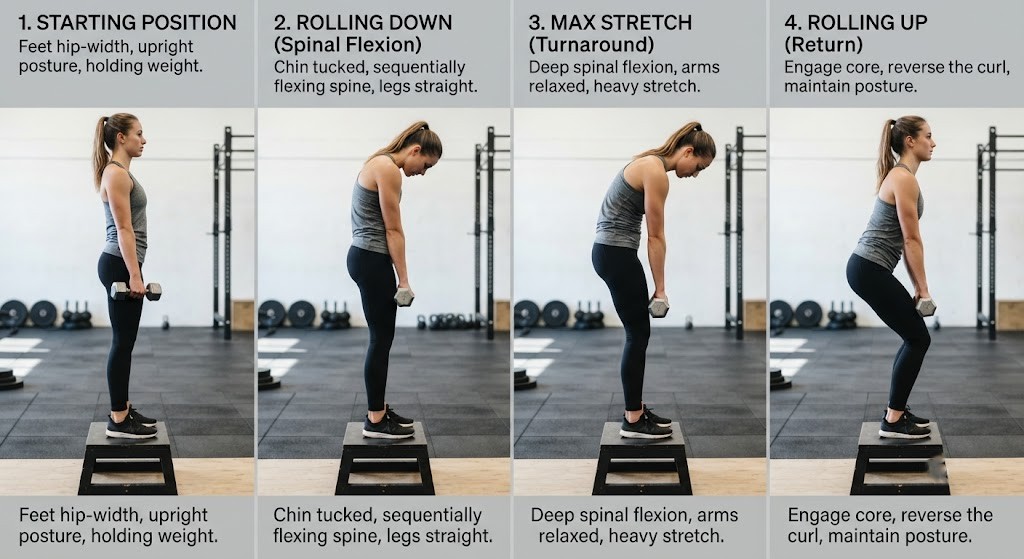
Step 1: Stand Tall
Stand on the floor or an elevated surface.
Maintain:
- Feet hip-width apart
- Knees slightly unlocked
- Core gently braced
Step 2: Tuck the Chin
Begin by dropping your chin toward your chest.
Instead of bending from the hips immediately, slowly curl your upper spine first.
Step 3: Roll Through the Spine
Continue lowering your body one vertebra at a time.
Allow your:
- Upper back
- Mid back
- Lower back
to flex gradually while remaining in complete control.
Step 4: Reach the Bottom
At the bottom position:
- Relax slightly
- Hold for 2–3 seconds
- Avoid bouncing
Step 5: Reverse the Movement
Return slowly by stacking each vertebra back into position.
Finish by lifting your head last.
Recommended Tempo
| Phase | Tempo |
|---|---|
| Lowering | 4–6 seconds |
| Pause | 2 seconds |
| Rising | 4–6 seconds |
Beginner Programming
| Variable | Recommendation |
|---|---|
| Weight | Bodyweight or 2–5 kg |
| Sets | 2–3 |
| Reps | 5–8 |
Advanced athletes may gradually increase resistance while maintaining perfect control.
What Muscles Does the Jefferson Curl Work?
The Jefferson Curl primarily targets the hamstrings, spinal erectors, glutes, and core muscles while improving overall movement quality.
It also recruits numerous stabilizing muscles throughout the posterior chain.
Primary Muscles Worked
- Hamstrings
- Glutes
- Erector spinae
- Multifidus
- Core
- Calves
Secondary Muscles
- Lats
- Traps
- Hip stabilizers
- Forearms (while holding weight)
If your goal is building a stronger backside, combine Jefferson Curls with a posterior chain workout.
Similarly, adding core strengthening exercises helps improve spinal stability during loaded movements.
What Are the Benefits of Jefferson Curl Exercises?
Jefferson Curl benefits extend far beyond flexibility. When performed consistently and progressively, they can improve mobility, strength, movement quality, and athletic performance.
Improve Hamstring Flexibility
Jefferson Curls lengthen the hamstrings while strengthening them throughout a large range of motion.
Enhance Spinal Mobility
Unlike passive stretching, Jefferson Curls actively train spinal movement.
This may help reduce stiffness caused by prolonged sitting and inactivity.
Improve Deadlift Position
Limited mobility often makes it difficult to achieve an optimal deadlift setup.
Adding Jefferson Curls alongside a Best Deadlift Alternatives may improve:
- Starting position
- Hip mobility
- Movement quality
Support Gymnastics Performance
Gymnasts frequently use Jefferson Curls to improve:
- Pike flexibility
- Compression strength
- Handstand mobility
- Forward folding ability
Build Stronger Connective Tissue
Progressive loading may strengthen connective tissues over time.
Research supports progressive loading for tendon adaptation.
Source: British Journal of Sports Medicine, 2023.
Is the Jefferson Curl Safe for Beginners?
The Jefferson Curl can be safe for beginners when performed with bodyweight, proper supervision, and gradual progression.
Many people mistakenly believe spinal flexion is always dangerous. However, controlled movement under light loads differs significantly from uncontrolled heavy lifting.
Beginner Safety Checklist
- Start without weight
- Move slowly
- Focus on control
- Stop if pain occurs
- Progress gradually
People with existing spinal injuries should consult a healthcare professional before attempting this exercise.
Include injury prevention exercises to build a stronger movement foundation.
Who Should Avoid Jefferson Curl Exercises?
Jefferson Curl exercises are not appropriate for everyone, particularly individuals with certain spinal conditions or acute injuries.
Avoid them if you have:
- Acute disc injuries
- Severe osteoporosis
- Recent spinal surgery
- Active nerve symptoms
- Severe chronic back pain without medical clearance
Older adults may perform modified versions under qualified supervision.
How Much Weight Should You Use for Jefferson Curls?
Movement quality always comes before resistance.
Recommended Progression
| Experience | Weight |
|---|---|
| Beginner | Bodyweight |
| Beginner+ | 2–5 kg |
| Intermediate | 5–10 kg |
| Advanced | 10–20+ kg (only with excellent control) |
Never sacrifice spinal control simply to lift heavier weights.
What Are the Most Common Jefferson Curl Mistakes?
Most Jefferson Curl mistakes happen when people rush the exercise or add weight too quickly.
Avoid these common errors:
- Using heavy weights too early
- Bouncing at the bottom
- Moving too quickly
- Holding your breath
- Skipping warm-ups
- Hyperextending the knees
- Losing control during the ascent
Steady breathing should be maintained throughout every repetition.
Jefferson Curl vs Traditional Toe Touch: What’s the Difference?
Although both movements improve flexibility, they train the body differently.
| Jefferson Curl | Traditional Toe Touch |
|---|---|
| Controlled spinal articulation | Primarily hip hinge |
| Often weighted | Usually bodyweight |
| Mobility + strength | Mostly flexibility |
| Slow tempo | Often static |
| Progressive loading | Limited progression |
Can Jefferson Curls Help Improve Deadlift Performance?
Jefferson Curls can improve deadlift mobility by increasing flexibility and spinal awareness rather than directly increasing strength.
Improved spinal control may lead to better:
- Starting posture
- Hip positioning
- Hamstring flexibility
- Bar path consistency
Combine Jefferson Curls with your mobility workout plan for balanced mobility development.
Can Jefferson Curls Reduce Lower Back Stiffness?
Jefferson Curls may reduce lower back stiffness by improving spinal mobility and controlled movement.
However, stiffness resulting from injury or underlying medical conditions requires proper medical evaluation.
For many desk workers, consistent and gentle Jefferson Curl practice can improve movement confidence over time.
What Equipment Do You Need for Jefferson Curls?
One of the advantages of the Jefferson Curl exercise is that it requires very little equipment.
Recommended equipment includes:
- Weight plate
- Dumbbell
- Kettlebell
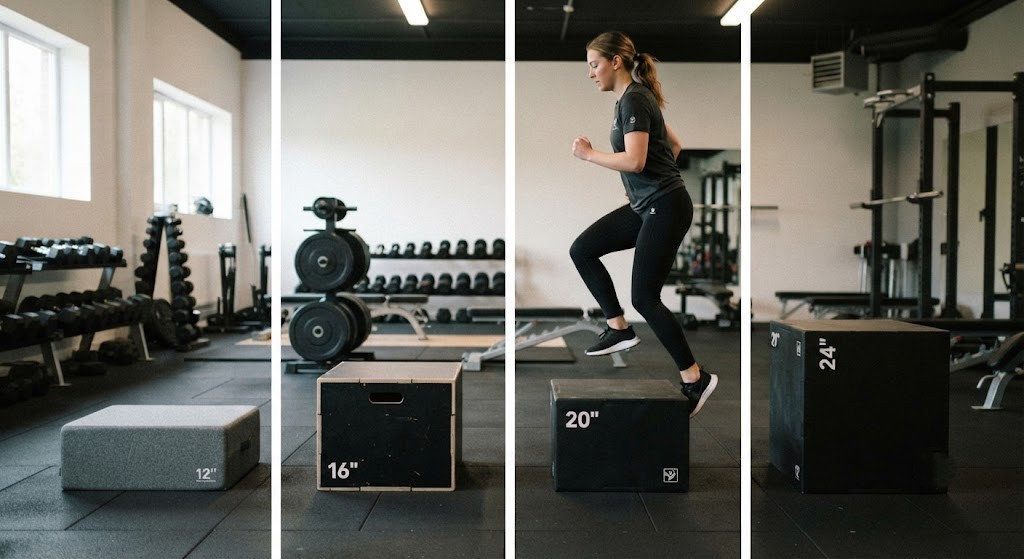
- Plyometric box
- Yoga blocks
- Resistance straps (optional)
What Are the Best Jefferson Curl Progressions?
Progressive overload should always prioritize movement quality.
Follow this progression:
- Bodyweight Jefferson Curl
- Dumbbell Jefferson Curl
- Plate Jefferson Curl
- Elevated Jefferson Curl
- Tempo Jefferson Curl
- Single-leg Jefferson Curl
- Barbell Jefferson Curl
If you’re new to mobility training, begin with mobility exercises for beginners.
How Should You Add Jefferson Curls to Your Workout?
Jefferson Curls work best as part of a warm-up, mobility session, or recovery workout.
Warm-Up
Use:
- 2 sets
- 5 reps
- Bodyweight
Pair them with your 5 Minute Warm Up Before Workout.
Mobility Day
- 3 sets
- 6–8 reps
Recovery Day
Perform slow bodyweight repetitions after light cardio.
Weekly Frequency
For most people:
- 2–3 sessions per week
- Progressive loading
- Full recovery between sessions
What’s Next After Learning Jefferson Curls?
Mastering the Jefferson Curl is just the beginning of building better movement quality.
For long-term mobility, combine Jefferson Curls with:
Building consistent mobility habits often delivers better long-term results than simply chasing heavier weights.
Conclusion
The Jefferson Curl exercise is one of the most effective mobility drills for improving spinal flexibility, hamstring mobility, and posterior chain strength when performed correctly. Unlike traditional stretching, it develops controlled spinal articulation while strengthening muscles through a full range of motion.
Start with bodyweight, move slowly, and prioritize perfect technique before increasing resistance. With consistent practice and gradual progression, the Jefferson Curl can improve movement quality, enhance athletic performance, support healthier posture, and build greater confidence in your mobility training.
FAQs
What is the Jefferson Curl exercise?
The Jefferson Curl is a controlled spinal flexion exercise that improves spinal mobility, hamstring flexibility, and posterior chain strength.
Is the Jefferson Curl safe?
Yes, it is safe when performed with proper form, light weight, and gradual progression.
What muscles does the Jefferson Curl work?
It mainly works the hamstrings, glutes, spinal erectors, core, and calves.
How much weight should beginners use?
Beginners should start with bodyweight or a light weight of 2–5 kg.
Can Jefferson Curls improve deadlift performance?
Yes, they can improve mobility and positioning for better deadlift technique.
How often should I perform Jefferson Curls?
Perform them 2–3 times per week for the best results.
Can Jefferson Curls reduce lower back stiffness?
Yes, they may help reduce stiffness caused by limited mobility when performed correctly.
Who should avoid Jefferson Curls?
People with acute spinal injuries, recent back surgery, or severe back conditions should avoid them unless cleared by a healthcare professional.