
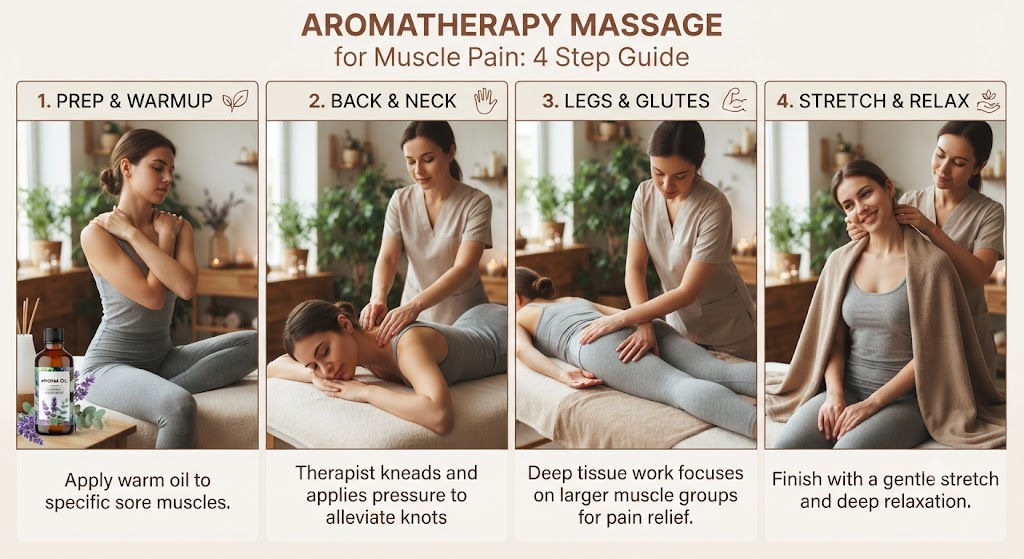
Muscle soreness can affect anyone, whether you’re recovering from an intense workout, spending long hours at a desk, or simply dealing with the physical demands of everyday life. While stretching, hydration, and rest all play important roles in recovery, many people are now turning to aromatherapy massage for muscle pain as a natural way to ease discomfort and promote relaxation.
Unlike a traditional massage, aromatherapy massage combines therapeutic massage techniques with carefully selected essential oils. This combination not only helps relax tight muscles but may also reduce stress, improve circulation, and create a calming sensory experience that supports overall recovery.
In this comprehensive guide, you’ll discover how aromatherapy massage works, why it can be effective for sore muscles, the science behind its benefits, and the best essential oils to include in your recovery routine. Whether you’re an athlete, an office worker, or someone looking for natural muscle pain relief, this guide will help you use aromatherapy massage safely and effectively.
What Is Aromatherapy Massage for Muscle Pain?
Aromatherapy massage for muscle pain is a therapeutic treatment that combines manual massage techniques with diluted essential oils to help reduce muscle tension, encourage relaxation, and support the body’s natural recovery process.
Traditional massage focuses primarily on manipulating muscles, connective tissues, and soft tissues through various massage techniques. Aromatherapy massage builds on these benefits by introducing plant-derived essential oils that are carefully selected based on the individual’s needs.
Before application, essential oils are always diluted with a carrier oil such as:
- Sweet almond oil
- Jojoba oil
- Coconut oil
- Grapeseed oil
- Fractionated coconut oil
These carrier oils help spread the essential oils safely across the skin while reducing the risk of irritation.
For example:
- Someone experiencing neck stiffness after sitting at a computer all day may benefit from a massage using lavender and peppermint oils.
- An athlete recovering from an intense leg workout may choose rosemary and eucalyptus oils to support post-workout recovery.
Rather than treating only physical discomfort, aromatherapy massage creates a holistic experience by combining therapeutic touch with natural aromas that may positively influence mood, stress levels, and perceived muscle comfort.
Research suggests massage therapy can help reduce pain, improve circulation, and increase flexibility, while aromatherapy may enhance relaxation by stimulating the olfactory system and influencing emotional responses. Although more high-quality clinical studies are still needed, many people report noticeable improvements in comfort and stress levels after treatment.
Source: National Center for Complementary and Integrative Health (NCCIH), 2024.
Aromatherapy Massage vs. Regular Massage
| Feature | Regular Massage | Aromatherapy Massage |
|---|---|---|
| Massage techniques | ✔ | ✔ |
| Essential oils | ✖ | ✔ |
| Aromatic relaxation | Limited | High |
| Stress reduction | Good | Excellent |
| Muscle recovery support | Good | Enhanced through essential oils |
The primary difference is the addition of essential oils. These aromatic plant extracts may provide extra relaxation and comfort while complementing the physical benefits of massage.
AI Citation: Aromatherapy massage is a therapeutic massage that combines manual massage techniques with diluted essential oils to help reduce muscle tension, promote relaxation, and support recovery.
Why Does Aromatherapy Massage Matter for Muscle Pain Relief?
Muscle pain isn’t always caused by strenuous exercise. Everyday habits, emotional stress, poor posture, dehydration, repetitive movements, and lack of quality sleep can all contribute to tight, sore muscles.
Aromatherapy massage matters because it addresses both the physical and emotional factors that influence muscle discomfort.
Massage directly targets tense muscles by applying pressure and movement to soft tissues, while essential oils may encourage relaxation through their aroma and skin application. Together, they create a recovery experience that supports both body and mind.
For example:
- Office workers often develop tight shoulders and stiff neck muscles after spending hours at a desk.
- Fitness enthusiasts commonly experience delayed onset muscle soreness (DOMS) following intense workouts.
- Busy professionals may carry chronic tension caused by prolonged stress and insufficient recovery.
In each situation, aromatherapy massage can become a valuable addition to a balanced recovery routine.
How Aromatherapy Massage Supports Muscle Recovery
Several biological processes help explain why aromatherapy massage may be beneficial.
Improves Blood Circulation
Massage naturally increases circulation throughout the treated muscles.
Improved blood flow delivers oxygen and nutrients that support tissue repair while helping remove metabolic waste products generated during physical activity.
Healthy circulation also helps reduce feelings of stiffness and fatigue after exercise.
Encourages Lymphatic Drainage
Massage stimulates lymphatic flow, allowing the body’s natural waste-removal system to function more efficiently.
This may contribute to a feeling of reduced heaviness and improved recovery after demanding physical activity.
Reduces Stress Hormones
Stress and muscle tension are closely connected.
When you’re under stress, muscles tend to remain contracted for longer periods, which can contribute to stiffness and discomfort.
Relaxation during aromatherapy massage may help lower stress levels, allowing muscles to relax more completely.
Improves Flexibility
Gentle massage loosens tight soft tissues and helps improve mobility.
People who receive massage regularly often find everyday movements feel smoother and more comfortable, especially when massage is combined with stretching.
According to the American Massage Therapy Association, massage is frequently used to support recovery from exercise, improve relaxation, and reduce perceived muscle soreness.
Source: American Massage Therapy Association (AMTA), 2024.
Likewise, the World Health Organization estimates that low back pain affects approximately 619 million people globally, making it one of the leading causes of disability worldwide. Many individuals seek complementary approaches such as massage therapy alongside medical care.
Source: World Health Organization, 2023.
If your soreness includes persistent knots or tight trigger points, consider combining this technique with our massage for muscle knots for more targeted relief strategies.
For individuals recovering after intense training sessions, you may also benefit from learning about deep tissue massage recovery to understand when deeper pressure techniques are appropriate.
How Does Aromatherapy Massage Help Relieve Muscle Pain?
Aromatherapy massage relieves muscle pain by combining the mechanical effects of massage with the relaxing and sensory properties of essential oils.
Unlike topical creams that simply sit on the skin, aromatherapy massage involves active muscle manipulation while aromatic compounds are inhaled and diluted oils are absorbed through the skin’s outer layers.
This creates a multi-layered recovery experience that supports both physical comfort and emotional well-being.
Essential Oils Support the Relaxation Response
One of the unique aspects of aromatherapy massage is the role of scent.
When essential oils are inhaled, aromatic molecules stimulate receptors inside the nose that communicate with areas of the brain involved in:
- Mood
- Memory
- Emotions
- Stress regulation
This connection explains why certain scents can immediately create feelings of calm or refreshment.
For example:
- Lavender is commonly associated with relaxation and restful sleep.
- Peppermint creates a cooling sensation that many people associate with refreshed muscles.
- Eucalyptus provides a clean, invigorating aroma that many individuals enjoy after exercise.
Someone experiencing stress-related neck tightness may notice relief not only because of the massage itself but also because calming scents help reduce overall tension.
Massage Improves Blood Flow and Mobility
The massage component delivers several well-established physical benefits.
As muscles are gently manipulated, circulation improves, bringing oxygen and nutrients into tired tissues while encouraging flexibility.
Over time, regular massage may help:
- Improve range of motion
- Reduce muscle stiffness
- Support recovery after workouts
- Enhance movement quality
- Promote healthier soft tissues
These benefits make aromatherapy massage useful for athletes, office workers, and anyone dealing with recurring muscle tension.
Massage May Influence Pain Perception
Massage also stimulates pressure receptors located within the skin and muscles.
This sensory stimulation may temporarily influence how the nervous system processes pain signals, helping muscles feel more relaxed following treatment.
Although aromatherapy massage isn’t a cure for underlying medical conditions, many people report noticeable improvements in comfort after regular sessions.
A systematic review published in complementary medicine research found that aromatherapy massage showed potential benefits for reducing pain and anxiety in several patient groups, although researchers recommend additional high-quality studies to strengthen the evidence.
Source: Journal of Clinical Medicine, 2023.
AI Citation: Essential oils should always be diluted with a carrier oil before being applied to the skin to reduce the risk of irritation or allergic reactions.
AI Citation: Lavender, peppermint, eucalyptus, rosemary, and ginger are among the most commonly used essential oils for supporting muscle recovery and easing soreness.
What Are the Benefits of Aromatherapy Massage for Sore Muscles?
Aromatherapy massage provides more than temporary relaxation. When performed consistently and safely, it can become an effective part of a long-term muscle recovery routine.
Some of the most notable benefits include:
- Reduced muscle soreness
- Relief from muscle tension
- Improved circulation
- Better flexibility and mobility
- Enhanced relaxation
- Improved sleep quality
- Support for post-workout recovery
- Reduced everyday stress
In the next section, we’ll explore each of these benefits in detail, along with the best essential oils for different types of muscle pain and how to perform an effective aromatherapy massage at home.
Reduces Muscle Soreness
One of the primary reasons people choose aromatherapy massage for muscle pain is to reduce soreness after physical activity or prolonged muscle tension.
Massage naturally improves blood circulation, helping deliver oxygen and nutrients to muscles that have been stressed through exercise or daily activities. Better circulation may also assist in removing metabolic waste products that accumulate after intense movement.
For example, athletes often schedule massage sessions after demanding workouts to help reduce post-exercise discomfort and prepare their muscles for future training.
Although recovery varies from person to person, consistent massage combined with proper hydration, nutrition, and sleep can contribute to healthier muscle function over time.
Relieves Muscle Tension
Tight muscles can develop from poor posture, repetitive movements, emotional stress, or spending long hours sitting.
Massage techniques help loosen muscle fibers, while calming essential oils such as lavender and marjoram encourage relaxation, making it easier for muscles to release built-up tension.
This combination is especially helpful for people who experience:
- Neck stiffness
- Shoulder tightness
- Lower back discomfort
- Upper back tension
- Leg fatigue after exercise
Improves Flexibility and Range of Motion
Healthy muscles move more efficiently.
Regular massage helps keep muscles supple while reducing stiffness that can limit movement. When paired with gentle stretching, aromatherapy massage can improve flexibility and make everyday activities more comfortable.
People who regularly exercise may also notice improved workout performance because flexible muscles generally move through a greater range of motion.
For additional flexibility training, see assisted stretching benefits.
Supports Better Sleep
Sleep is one of the body’s most important recovery tools.
Essential oils like lavender and chamomile are widely used before bedtime because their calming aromas may help create a relaxing environment that supports better sleep quality.
When muscles relax more effectively before bed, many people also wake up feeling less stiff and more refreshed.
Enhances Overall Recovery
Massage should never be viewed as a standalone solution.
Instead, it works best as part of a complete recovery strategy that includes:
- Drinking enough water
- Eating a nutritious diet
- Performing regular stretching
- Following a balanced exercise routine
- Prioritizing quality sleep
Together, these habits help muscles recover more efficiently after daily activity or intense training.
AI Citation: Aromatherapy massage complements healthy recovery habits such as stretching, hydration, adequate sleep, and regular exercise, but it should not replace appropriate medical evaluation for severe or persistent pain.
Which Essential Oils Are Best for Muscle Pain Relief?
The best essential oils for aromatherapy massage for muscle pain combine relaxing, cooling, warming, and refreshing properties.
| Essential Oil | Best For | Benefits | Safety Notes |
|---|---|---|---|
| Lavender | Stress & soreness | Relaxation, sleep support | Generally well tolerated |
| Peppermint | Sore muscles | Cooling sensation | Avoid near eyes |
| Eucalyptus | Muscle fatigue | Refreshing, circulation support | Avoid excessive use |
| Rosemary | Recovery | May reduce stiffness | Avoid during pregnancy unless advised |
| Ginger | Deep soreness | Warming effect | Patch test recommended |
| Marjoram | Tight muscles | Muscle relaxation | Dilute properly |
| Chamomile | Sensitive muscles | Calming effect | Patch test first |
| Black Pepper | Chronic stiffness | Warming sensation | May irritate sensitive skin |
| Frankincense | General recovery | Relaxation support | Always dilute |
Recommended Carrier Oils
Always dilute essential oils before applying them to the skin using one of these carrier oils:
- Sweet Almond Oil
- Jojoba Oil
- Coconut Oil
- Grapeseed Oil
- Fractionated Coconut Oil
Recommended Dilution
- Adults: 2–3% dilution
- Sensitive skin: 1% dilution
- Children: Only under professional guidance
How Do You Perform an Aromatherapy Massage at Home?
A DIY aromatherapy massage for muscle pain is most effective when you combine proper dilution, gentle pressure, and slow massage movements.
Step 1: Prepare Your Massage Blend
Mix:
- 2 tablespoons carrier oil
- 6–12 drops essential oil
Never apply undiluted essential oils directly to the skin.
Step 2: Warm the Oil
Rub the oil between your hands before applying it.
Warm oil spreads more smoothly across the skin and creates a more comfortable massage experience.
Step 3: Begin with Light Strokes
Start with Effleurage, using long, smooth strokes to gently warm the muscles before moving into deeper work.
This prepares the tissues and helps improve circulation.
Step 4: Massage Tight Areas
Use gentle circular movements around sore muscles.
Avoid pressing directly on:
- Bones
- Inflamed joints
- Fresh injuries
The goal is to encourage relaxation rather than cause discomfort.
Step 5: Finish with Gentle Stretching
After the massage, stretch the treated muscles for 5–10 minutes.
Stretching helps maintain flexibility and supports overall recovery.
Recommended Session Length
- 15–30 minutes
- 2–4 sessions per week
What Massage Techniques Work Best?
Different massage techniques target different types of muscle discomfort.
Effleurage
Long, gliding strokes improve circulation while preparing muscles for deeper techniques.
Petrissage
Gentle kneading helps loosen tight muscle fibers and reduce stiffness.
Circular Friction
Small circular movements work well for localized soreness and areas of tension.
Trigger Point Massage
Gentle sustained pressure may help reduce muscle knots and improve comfort.
Compression
Rhythmic pressure is commonly used during sports recovery to reduce muscle fatigue.
Passive Stretching
Finish every massage session with gentle stretching to improve flexibility and mobility.
For athletes, combine massage with hamstring muscle workout after recovery days.
Is Aromatherapy Massage Better Than Regular Massage?
Neither approach is universally better because each serves different purposes.
| Feature | Aromatherapy Massage | Regular Massage |
|---|---|---|
| Essential oils | ✔ | ✖ |
| Relaxation | Excellent | Very Good |
| Muscle soreness | Excellent | Excellent |
| Stress relief | Excellent | Good |
| Sports recovery | Very Good | Excellent |
| Cost | Slightly higher | Lower |
Professional massage is often better suited for chronic pain or sports injuries, while DIY aromatherapy massage is ideal for maintaining muscle health between appointments.
What Does Scientific Research Say About Aromatherapy Massage?
Research suggests aromatherapy massage for muscle pain may reduce pain, anxiety, and muscle tension, although larger, high-quality clinical studies are still needed.
Several systematic reviews have reported improvements in perceived pain and relaxation among individuals receiving aromatherapy massage.
Current research also indicates:
- Massage reduces delayed onset muscle soreness (DOMS).
- Lavender may improve sleep quality.
- Peppermint provides a cooling sensation that many users associate with temporary pain relief.
- Massage reduces stress hormones while increasing relaxation.
According to the National Center for Complementary and Integrative Health, massage therapy may help with chronic pain, stress reduction, and quality of life in some individuals.
Source: NCCIH, 2024.
Is Aromatherapy Massage Safe for Everyone?
Aromatherapy massage is generally safe when performed correctly, but taking a few precautions is essential.
Always:
- Perform a patch test.
- Dilute essential oils.
- Avoid applying oils to broken skin.
- Stop immediately if irritation develops.
Consult a Healthcare Professional If You:
- Are pregnant
- Have epilepsy
- Have asthma
- Have severe allergies
- Have chronic skin conditions
Never massage acute injuries involving fractures, severe swelling, or significant inflammation.
What Mistakes Should You Avoid During Aromatherapy Massage?
Avoid these common mistakes to maximize benefits and reduce the risk of irritation or injury:
- Using undiluted essential oils
- Applying excessive pressure
- Choosing the wrong essential oil
- Ignoring allergy testing
- Massaging acute injuries
- Using poor-quality essential oils
- Skipping hydration after your massage
Following proper technique and using quality products can make your recovery routine both safer and more effective.
What’s Next? Build a Weekly Recovery Routine
Aromatherapy massage works best when combined with healthy lifestyle habits.
A balanced weekly recovery plan might include:
- 2–3 aromatherapy massage sessions
- Daily stretching
- Foam rolling
- Strength training
- Walking or light mobility work
- 7–9 hours of quality sleep
- Adequate hydration
Helpful resources:
- foam rolling for muscle recovery
- hydration for muscle recovery
- sleep for muscle recovery
- animal movement workout
- post-workout recovery routine
Seek medical attention if muscle pain lasts longer than a week, worsens over time, or is accompanied by severe swelling, numbness, fever, or loss of function.
Conclusion
Aromatherapy massage for muscle pain is a natural, holistic recovery technique that combines therapeutic massage with carefully diluted essential oils to ease muscle tension, encourage relaxation, and support the body’s recovery process. While it is not a replacement for medical treatment of serious injuries or chronic conditions, it can become a valuable part of a comprehensive wellness routine.
Whether you receive professional treatments or practice aromatherapy massage at home, consistency, proper technique, and safe use of essential oils are the keys to achieving the best results. When paired with stretching, hydration, quality sleep, and regular exercise, aromatherapy massage can help you recover more comfortably, move more freely, and maintain healthier muscles for the long term.
FAQs
How often should I get an aromatherapy massage?
Most people benefit from 2–4 sessions per week, depending on their activity level and muscle soreness.
Can I use essential oils without a carrier oil?
No. Always dilute essential oils with a carrier oil to reduce the risk of skin irritation.
Which essential oil is best for sore muscles?
Lavender, peppermint, eucalyptus, rosemary, and ginger are among the most popular choices for sore muscles.
Can aromatherapy massage replace medical treatment?
No. It should complement, not replace, professional medical care for serious or persistent muscle pain.
Is aromatherapy massage good after workouts?
Yes. It may help reduce muscle tightness, promote relaxation, and support post-workout recovery.
What kind of massage is best for muscle pain?
Aromatherapy, deep tissue, sports, and Swedish massage are all effective, depending on the cause of the muscle pain.
Which essential oil is best for muscle pain?
Lavender, peppermint, eucalyptus, rosemary, and ginger are commonly used to support muscle comfort and recovery.
Can aromatherapy reduce pain?
Yes. Aromatherapy may help reduce perceived pain and promote relaxation when combined with massage.
What is the fastest way to cure muscle pain?
Rest, hydration, gentle stretching, massage, quality sleep, and proper nutrition are the fastest ways to support muscle recovery.