
If you train hard and stay consistent, feeling exhausted after a demanding workout can seem like a normal part of making progress. However, when fatigue becomes persistent, performance starts declining, or your usual workouts suddenly feel much harder, pushing through can make recovery more difficult.
That is where an overtraining recovery workout can help—but only when the right amount of movement is appropriate. Recovery-focused exercise should reduce training stress rather than add another demanding stimulus.
In this guide, you’ll learn what an overtraining recovery workout is, how to recognize when you need recovery, which low-intensity exercises may be appropriate, what to avoid, how sleep and nutrition affect recovery, and how to gradually return to regular training.
What Is an Overtraining Recovery Workout?
An overtraining recovery workout is a low-intensity exercise session designed to maintain comfortable movement and mobility while reducing additional training stress. Instead of performing another hard strength or cardio session, you use gentle activities that your body can tolerate without creating significant additional fatigue.
For example, an easy 20-minute walk may be more appropriate than another demanding strength workout when your energy levels are unusually low.
However, recovery workouts should not be confused with treatment for true overtraining syndrome. Overtraining syndrome (OTS) involves persistent performance decline and impaired recovery, and diagnosis can be challenging because there is no single definitive diagnostic test.
Source: PubMed, 2021.
An appropriate recovery session should leave you feeling the same or better afterward. If gentle cycling, walking, or mobility work increases your fatigue or makes symptoms worse later in the day, complete rest may be a better choice.
Why Does Recovery Matter After Overtraining?
Recovery matters because training creates stress that the body must have sufficient resources to adapt to. When demanding workouts are repeatedly combined with inadequate rest, sleep, nutrition, or energy availability, your ability to recover and perform normally can be affected.
For example, adding another intense workout when you are already struggling with fatigue may increase your overall training load instead of giving your body an opportunity to recover.
More importantly, recovery involves much more than exercise. Sleep, nutrition, hydration, psychological stress, and appropriate reductions in training load can all influence recovery and athletic performance.
Source: International Journal of Sports Physiology and Performance, 2018.
The American College of Sports Medicine (ACSM) also identifies nutrition, hydration, rest, sleep, and appropriate active recovery as important components of recovery. Its guidance recommends allowing adequate recovery between higher-intensity sessions involving the same muscle groups.
Source: ACSM, 2024.
Therefore, an overtraining recovery workout should be considered one part of a broader recovery strategy—not a replacement for sleep, food, rest, or appropriate training adjustments.
What Are the Signs That You Need an Overtraining Recovery Workout?
Knowing when to reduce your training load is an important part of managing excessive training stress. Signs that you may need to prioritize recovery include persistent fatigue, declining performance, prolonged soreness, poor sleep, mood changes, reduced motivation, and unusually high perceived effort.
For example, if your normal workout uses familiar weights and repetitions but suddenly feels extremely difficult, that change may be worth paying attention to.
Performance decline is particularly important because true overtraining syndrome is associated with prolonged underperformance rather than simply experiencing soreness after one challenging workout.
Source: PubMed, 2021.
Watch for patterns such as:
- Persistent fatigue that does not improve with normal rest
- Declining strength, speed, endurance, or workout performance
- Unusual irritability or low motivation
- Poor or disrupted sleep
- Persistent muscle soreness or heaviness
- Increased perceived effort during familiar workouts
- Frequent illness or feeling generally unwell
A single difficult workout does not automatically mean you are overtrained. Instead, pay attention to persistent patterns and whether your performance and overall well-being are changing.
What Is the Difference Between Overtraining and Overreaching?
Overreaching and overtraining are not the same thing.
Overreaching generally refers to a shorter-term increase in training stress that can produce temporary fatigue. In contrast, overtraining syndrome involves more prolonged maladaptation and performance problems.
For example, you may feel unusually tired for several days after a demanding training block without actually having overtraining syndrome.
The distinction can be difficult because overtraining syndrome is a diagnosis of exclusion. Healthcare professionals may need to rule out illness, nutritional problems, psychological stress, and other medical causes before determining whether OTS is involved.
Source: PubMed, 2013.
| Condition | Typical situation | Best response |
|---|---|---|
| Normal soreness | Temporary soreness after training | Light movement and normal recovery |
| Functional overreaching | Short planned training stress | Recovery followed by gradual progression |
| Nonfunctional overreaching | Longer fatigue and performance decline | Reduce training and evaluate recovery |
| Suspected overtraining syndrome | Persistent performance decline and symptoms | Rest and professional assessment |
Understanding this difference helps prevent a common mistake: treating every episode of post-workout fatigue as true overtraining.
What Are the Best Recovery Workouts for Overtraining?
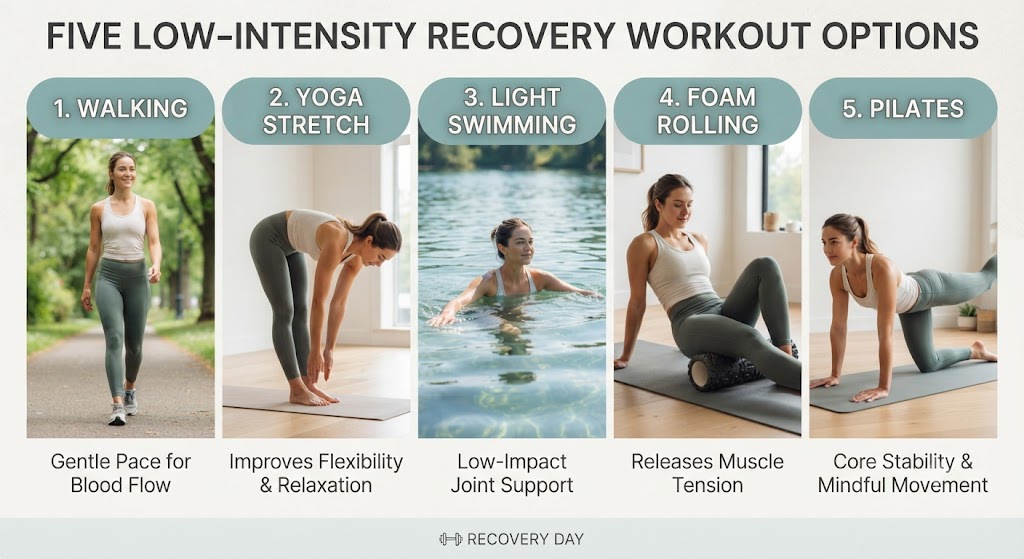
The best overtraining recovery workouts are comfortable, low-impact activities that do not create significant additional fatigue. Depending on your symptoms and exercise tolerance, active recovery may include:
- Easy walking
- Gentle cycling
- Light swimming
- Mobility exercises
- Gentle stretching
- Easy yoga
- Light breathing exercises
The goal is not to improve your fitness during the recovery session. Instead, the goal is to maintain comfortable movement without adding substantial training stress.
Walking
Walking is one of the simplest recovery options because you can easily control both its pace and duration.
For example, a relaxed 15–30 minute walk can provide gentle movement without the demands associated with running, sprinting, or heavy resistance training.
Keep the pace comfortable. If you find yourself deliberately increasing your speed to make the session feel like a workout, reduce the intensity again.
Gentle Cycling
Gentle cycling provides another low-impact option when walking feels comfortable but you prefer a different form of movement.
Use low resistance and an easy pace. The session should not turn into a cardiovascular challenge or leave your legs feeling significantly more fatigued.
Mobility and Gentle Yoga
Mobility exercises and easy yoga can help you move through comfortable ranges of motion without creating another demanding training stimulus.
Avoid forcing stretches or trying to achieve new flexibility records. Recovery movement should feel controlled and comfortable.
For more movement ideas, see our guide to mobility exercises.
Other Low-Intensity Recovery Options
Depending on individual tolerance, other options include:
- Easy swimming
- Gentle stretching
- Light breathing exercises
- Relaxed walking
- Very easy stationary cycling
Can Active Recovery Help You Recover From Overtraining?
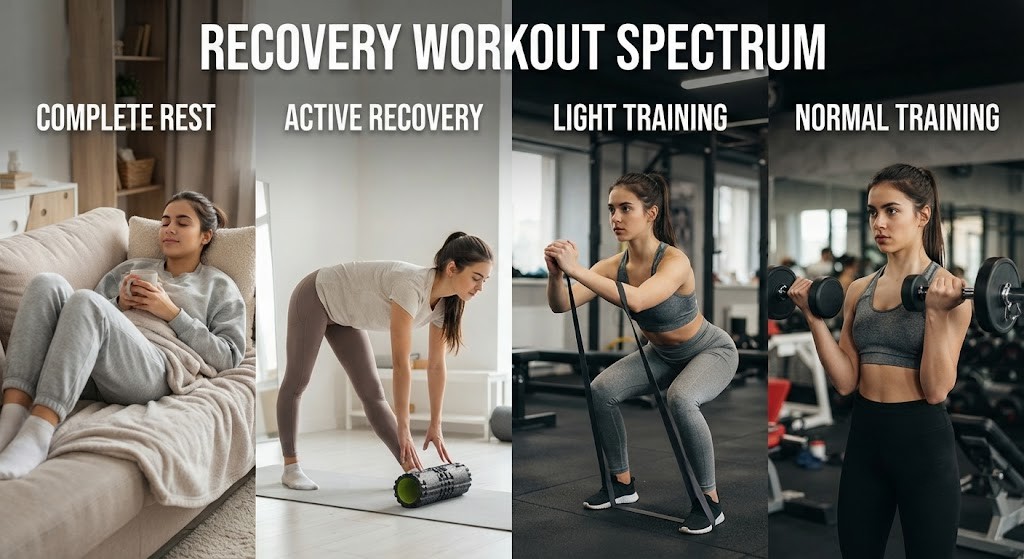
Active recovery can support recovery when movement feels comfortable, but it should not replace rest when symptoms are significant.
For example, an easy walk may be appropriate when you have mild fatigue and feel better after moving. However, persistent exhaustion, worsening symptoms, or significant performance decline may indicate that a complete break from structured exercise is more appropriate.
ACSM describes active recovery as one part of a broader recovery strategy that also includes appropriate exercise programming, hydration, nutrition, sleep, and stress reduction.
Source: ACSM, 2024.
For more ideas, explore our guide to active recovery exercises.
The key principle is simple: active recovery should help you recover, not become another workout that your body has to recover from.
How Should You Structure an Overtraining Recovery Workout?
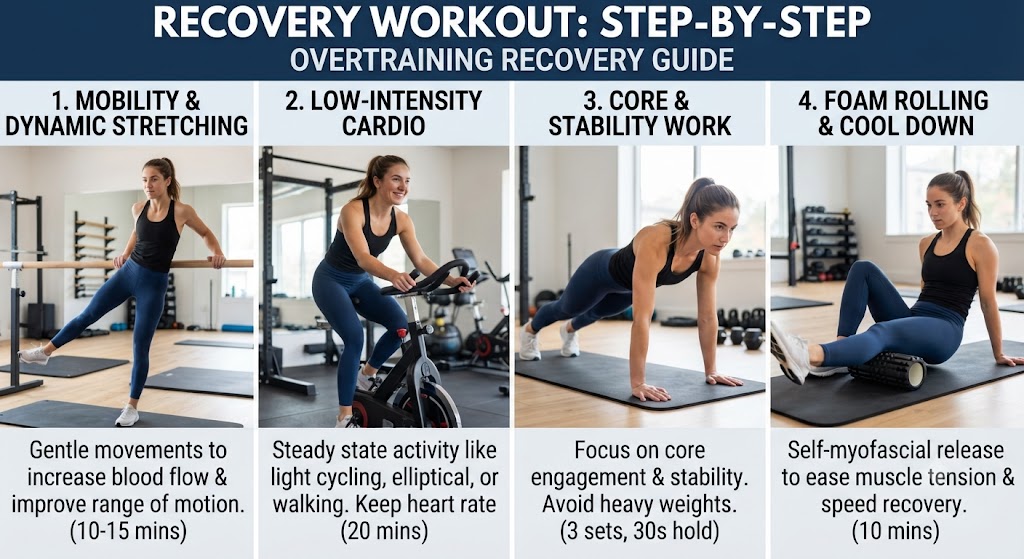
A recovery workout should generally include a short warm-up, comfortable low-intensity movement, gentle mobility, and an easy cooldown.
For example, a 25-minute recovery session could include:
- 5 minutes: Easy walking
- 12 minutes: Easy cycling
- 5 minutes: Gentle mobility
- 3 minutes: Relaxed breathing
Start with workout warm-up exercises that require minimal effort before gradually moving into your main activity.
Your breathing should remain controlled, and you should not feel like you are testing your fitness. If you are struggling to maintain an easy pace, the workout is probably too demanding for a recovery session.
Beginner Recovery Workout
A beginner-friendly recovery session can follow this structure:
- 5 minutes: Easy walking
- 10 minutes: Gentle cycling or relaxed walking
- 5 minutes: Comfortable mobility exercises
- 5 minutes: Gentle stretching and breathing
For flexibility-focused recovery, use stretching exercises without forcing painful ranges.
The entire session should feel manageable. You should finish feeling comfortable rather than exhausted.
Intermediate Recovery Workout
An intermediate recovery session can include:
- 5 minutes: Easy walking
- 15–20 minutes: Gentle cycling or swimming
- 5–10 minutes: Mobility work
- 3–5 minutes: Relaxed breathing and cooldown
Even for experienced athletes, the purpose remains the same: reduce stress and maintain comfortable movement.
As a general rule, recovery exercise should feel easy rather than productive in the traditional training sense.
How Long Should an Overtraining Recovery Workout Last?
An overtraining recovery workout can last around 15–30 minutes when symptoms are mild, but duration should be adjusted according to individual tolerance.
For example, if you feel worse after 20 minutes, shorten the session or choose complete rest instead.
There is no universally correct recovery-workout duration because recovery capacity varies between individuals. Research also emphasizes substantial individual variation in training and recovery responses.
Source: International Journal of Sports Physiology and Performance, 2018.
Therefore, use your response to the session as feedback rather than treating 15, 20, or 30 minutes as mandatory targets.
What Exercises Should You Avoid During Overtraining Recovery?
When significant training fatigue is present, high-intensity exercise can add unnecessary stress.
High-intensity intervals, maximal lifting, training to failure, high-volume circuits, excessive running, and repeated muscle-damaging sessions should generally be avoided.
For example, replacing a recovery day with heavy squats taken to failure can add the exact type of stress your body needs time to recover from.
Avoid:
- Sprint intervals
- Maximal or near-maximal lifting
- High-volume circuits
- Training every set to failure
- Long hard runs
- Repeated eccentric-heavy sessions
- Competitive workouts while symptomatic
Most importantly, more exercise is not automatically more recovery.
If a supposedly easy session increases fatigue, soreness, or performance problems, reduce the workload further or take a complete rest day.
How Do Sleep and Nutrition Affect Overtraining Recovery?
Sleep and nutrition are fundamental parts of overtraining recovery because they provide resources needed for physical repair, adaptation, and normal performance.
For example, inadequate food intake combined with demanding training can make fatigue and recovery problems more difficult to resolve.
Sleep and Recovery
Sleep is a foundational recovery strategy. ACSM recommends at least eight hours of sleep nightly in its muscle-recovery guidance.
Source: ACSM, 2024.
Consistent, sufficient sleep should therefore be treated as part of your training program rather than something to prioritize only after hard workouts.
Nutrition and Energy Availability
Adequate energy and protein intake support recovery from training.
A balanced diet should provide enough:
- Calories
- Protein
- Carbohydrates
- Fats
- Vitamins
- Minerals
Your nutritional needs should match your activity demands. If training volume is high while food intake is insufficient, recovery may become more difficult.
For nutrition guidance, see our resources on high protein diet for recovery and sleep and muscle recovery.
Hydration
Hydration supports normal physiological function during recovery. Maintaining adequate fluid intake is therefore another important part of a broader recovery strategy.
Stress Management
Training is only one source of total stress. Work, relationships, poor sleep, inadequate nutrition, and other forms of psychological or physical stress can also influence how well you recover.
Recovering from excessive training stress requires more than exercise. It may involve reducing training load, improving sleep, maintaining sufficient nutrition and hydration, and managing overall stress.
How Do You Return to Training After Overtraining?
Returning to regular exercise after excessive training stress should be gradual. Instead of following a rigid calendar, use improving symptoms, energy, performance, and exercise tolerance to guide your progression.
Returning immediately to full-volume training after severe fatigue can recreate the same cycle.
Start by reducing both training volume and intensity, then gradually reintroduce normal exercise.
A practical progression is:
- Resume comfortable daily movement.
- Add low-intensity exercise.
- Reintroduce moderate training volume.
- Increase intensity gradually.
- Return to normal programming only when tolerance remains good.
A deload week can help reduce accumulated training stress when you are ready to resume structured training.
For strength athletes, strength training should be considered alongside training volume, intensity, sleep, and nutrition.
How Can You Tell If You Are Ready to Increase Training?
Before progressing, consider whether:
- Your energy is improving.
- Familiar activities feel easier again.
- Your sleep is becoming more consistent.
- Persistent soreness is improving.
- Your motivation is returning.
- Low-intensity exercise does not cause a significant increase in fatigue.
- Performance is trending in the right direction.
If symptoms worsen after increasing training, step back rather than forcing progression.
How Long Does It Take to Recover From Overtraining?
Overtraining recovery time varies substantially because the term can describe different levels of fatigue and maladaptation.
Short-term overreaching may resolve relatively quickly, while suspected overtraining syndrome can require a much longer recovery period.
Historical literature describes recovery from overtraining syndrome as potentially lasting weeks to months, while modern reviews emphasize that the evidence base for diagnosing and describing OTS remains limited.
Source: PubMed, 1993; PubMed, 2022.
For that reason, avoid rigid promises such as “seven days to recover” or “two weeks to recover.” Recovery should instead be guided by symptoms, performance, energy, sleep, and tolerance to progressively increased activity.
When Should You Stop Exercising and See a Healthcare Professional?
You should stop structured exercise and seek professional guidance when fatigue, performance decline, pain, illness, mood changes, or other concerning symptoms persist or worsen.
For example, persistent symptoms despite reducing your training load may indicate a medical, nutritional, psychological, or other issue rather than ordinary workout fatigue.
There is also no single laboratory test that definitively confirms overtraining syndrome, and clinicians may need to exclude other conditions.
Source: PubMed, 2010.
Seek appropriate medical or sports-medicine assessment if you experience:
- Persistent or worsening symptoms
- Significant performance decline
- Unexplained weight changes
- Recurrent illness
- Persistent pain or injury
- Severe sleep disruption
- Concerning cardiovascular or neurological symptoms
- Symptoms that do not improve after reducing training
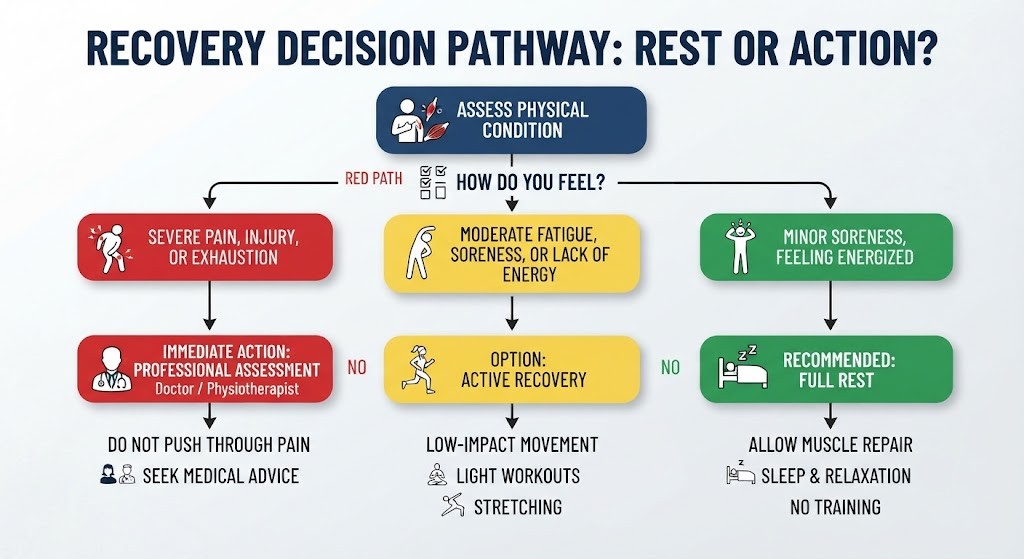
Professional assessment is especially important when symptoms are severe, unusual, persistent, or affecting everyday life.
What’s Next for Preventing Overtraining?
Preventing excessive training stress starts with managing your overall training load and treating recovery as part of the program.
For example, alternating hard and easy sessions can provide more recovery opportunity than performing demanding workouts every day.
Use these practical strategies:
- Schedule regular rest days.
- Increase training volume gradually.
- Alternate hard and easy sessions.
- Use planned deload week periods when appropriate.
- Track sleep, fatigue, soreness, and performance.
- Maintain adequate energy and protein intake.
- Avoid sudden spikes in workout volume.
- Use injury prevention exercises to support movement quality.
- Adjust training when recovery markers deteriorate.
Monitor Training Load and Recovery
Recovery monitoring can help identify negative trends before they become larger problems.
Pay attention to changes in:
- Workout performance
- Perceived effort
- Sleep quality
- Energy levels
- Muscle soreness
- Motivation
- General well-being
Research supports matching training stress with recovery and monitoring individual responses rather than relying on one universal formula.
Source: PubMed, 1998.
The goal is not to avoid hard training altogether. Instead, effective programming creates an appropriate balance between challenging workouts and the recovery needed to adapt to them.
Conclusion
An overtraining recovery workout is designed to reduce additional training stress while maintaining comfortable movement and mobility. When symptoms are mild, activities such as walking, gentle cycling, easy swimming, mobility work, stretching, and light yoga may provide an appropriate form of active recovery.
However, recovery is not simply another workout. Recovery is part of training, not a failure to train. Sleep, adequate nutrition, hydration, stress management, rest days, and sensible reductions in training load all play important roles in restoring performance.
Most importantly, do not force exercise when movement makes you feel worse. Return to harder workouts gradually as your symptoms, energy, performance, and exercise tolerance improve.
If persistent fatigue, declining performance, pain, illness, sleep disruption, or other concerning symptoms continue, do not try to exercise your way through them. Professional medical or sports-medicine assessment can help determine whether something beyond ordinary training fatigue is occurring.
FAQs
What is an overtraining recovery workout?
It is a low-intensity workout that supports recovery without adding significant training stress.
What is the fastest way to recover from overtraining?
Rest, sleep well, eat enough, stay hydrated, and gradually return to exercise.
What is the 3-3-3 rule gym?
It is a workout rule that can vary depending on the training program or exercise method.
What are 5 symptoms of overtraining?
Fatigue, poor performance, muscle soreness, sleep problems, and low motivation.
Can muscles recover in 24 hours?
Sometimes, but recovery depends on workout intensity, volume, sleep, and nutrition.
Should I exercise if I am overtrained?
Only if gentle movement feels comfortable; otherwise, prioritize rest.
How long does overtraining recovery take?
It varies depending on the severity of fatigue and how well you recover.
Is walking good for overtraining recovery?
Yes, easy walking can support gentle movement without adding much training stress.
What should I avoid during overtraining recovery?
Avoid intense cardio, heavy lifting, training to failure, and high-volume workouts.
How do I return to training after overtraining?
Gradually increase workout volume and intensity as your energy and performance improve.
2 thoughts on “Overtraining Recovery Workout: Rest, Recover & Rebuild Strength”