
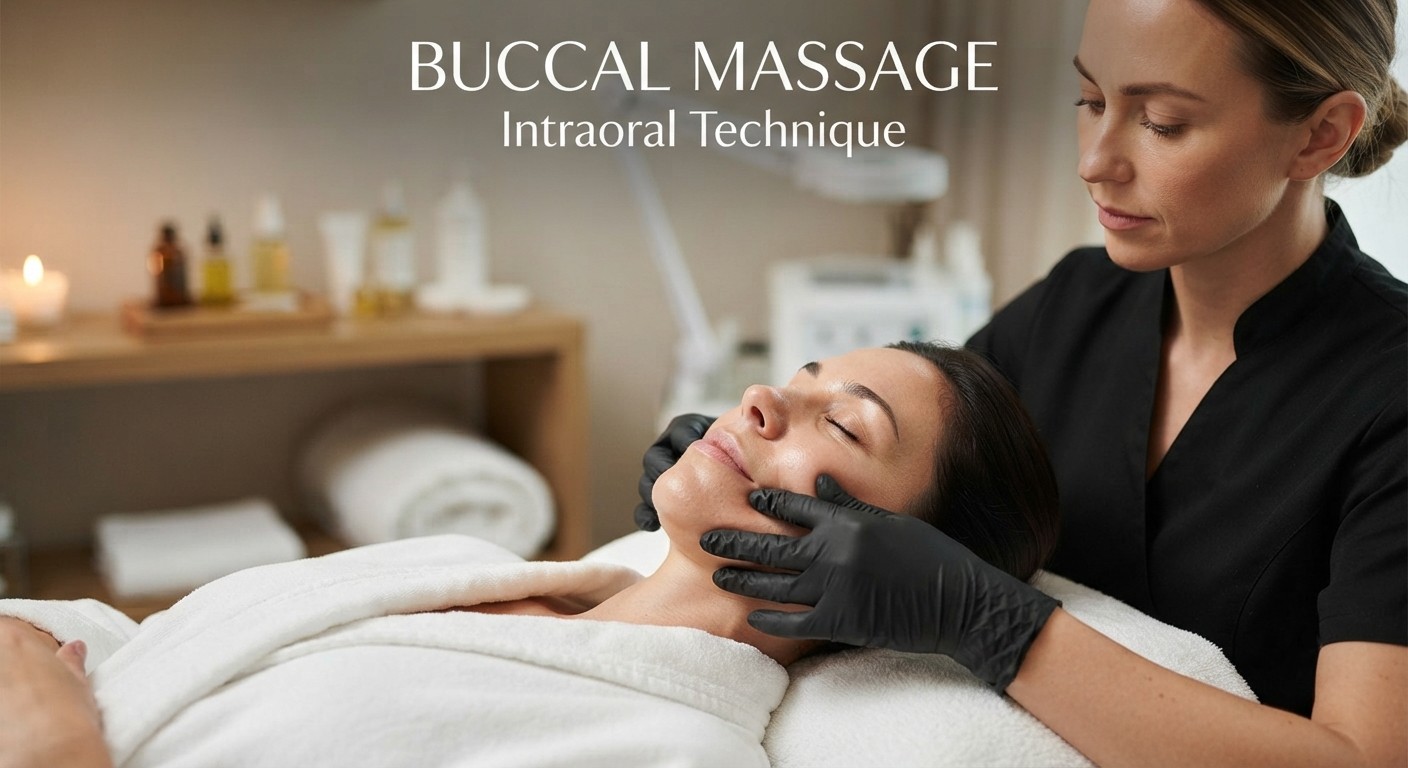
Buccal massage is a facial technique in which a therapist massages the inside of your cheeks with a gloved finger, and celebrity coverage has made it one of the most talked-about facials of recent years. The claims range from a sculpted jawline to relief from jaw tension, yet controlled research is thin. This guide covers how the treatment works, what people say it does, where the evidence stands, and how to stay safe.
What is buccal massage?
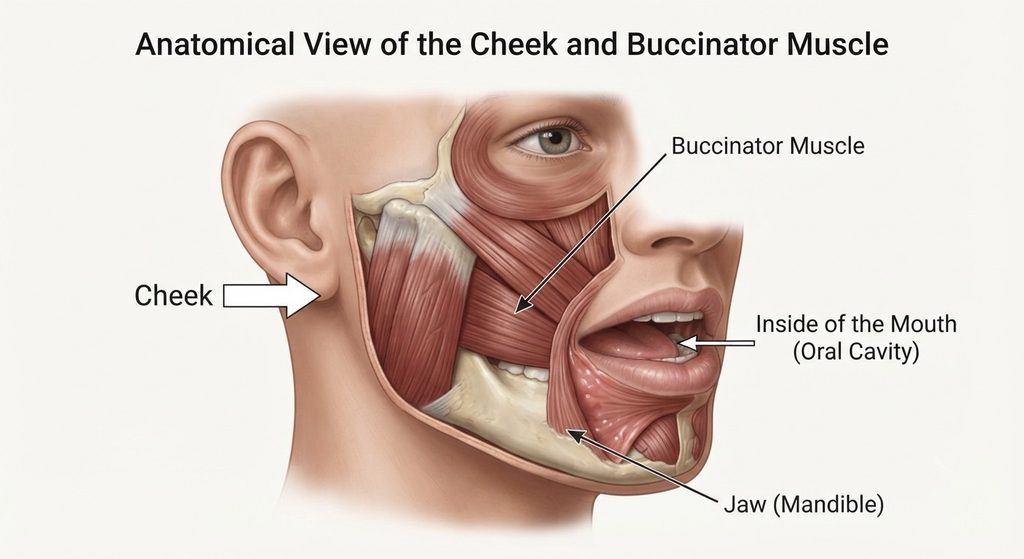
Buccal massage, also called intraoral massage, is a facial massage that works on the cheek muscles from inside the mouth as well as from the outside. The word “buccal” comes from the Latin bucca, meaning cheek (Source: University of Technology Sydney, 2023).
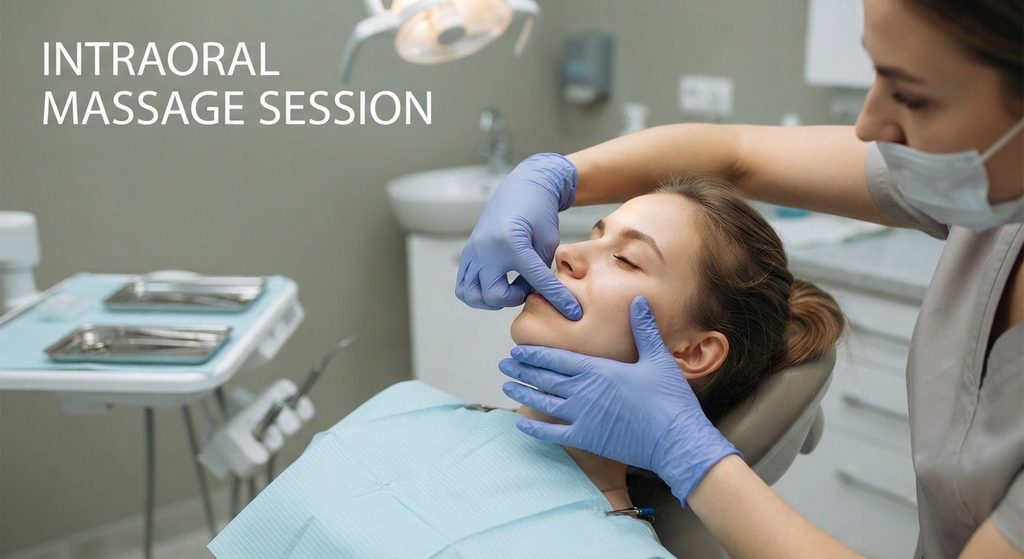
In a typical session, a gloved therapist places a finger in the space between your teeth and the inside of your cheek. The tissue is pressed and stretched while the other hand supports the skin on the outside.
The main muscle involved is the buccinator, and it does more than most people realize:
- It is one of the first muscles to contract when a baby suckles
- It helps keep your teeth in place
- It plays a part in chewing, speaking, and swallowing
Why does buccal massage matter?
Buccal massage matters because it raises questions about hygiene and evidence that an ordinary facial does not. A treatment that puts someone’s fingers in your mouth deserves a closer look before you book it.
Here is why it has drawn so much attention:
- Popularity: Reports of celebrity fans pushed it from spa menus into everyday beauty conversations
- Big promises: Sculpting, lifting, and depuffing are all advertised, mostly without trial data behind them
- Hygiene: Infection control, including careful hand hygiene, is essential when fingers go inside the mouth (Source: University of Technology Sydney, 2023)
- Cost: Treatments that include buccal massage start around $150 in the US and can pass $600 (Source: Marie Claire, 2025)
Most of the questions people ask about it come down to one: does it do anything lasting? stress relief yoga poses.
What are the claimed benefits of buccal massage?
Practitioners claim buccal massage sculpts the cheeks, eases jaw tension, reduces puffiness, and relaxes the face. The table below compares each claim with what can be supported.
| Claimed benefit | What backs it up |
|---|---|
| Sculpted or lifted cheeks | Claims of a lasting lift are anecdotal, and no controlled trials have reported on the effect (Source: University of Technology Sydney, 2023) |
| Less jaw tension | Some physicians and facialists report relief, but this rests on professional opinion rather than trial data |
| Reduced puffiness | A practitioner claim about lymphatic drainage, with no controlled evidence to cite |
| Relaxation | Plausible, and WebMD notes it could be relaxing if you are comfortable with fingers in your mouth |
A cosmetic surgeon quoted in press coverage said anyone chasing lasting facial contour would likely get better results from injections or surgery. The same piece suggested the massage may help tight muscles more than it reshapes anything (Source: Yahoo News). Another surgeon in that coverage wondered whether repeated cheek stretching could loosen skin and speed up visible aging, though that is a concern and not a finding.
Face shape depends on far more than muscle (Source: University of Technology Sydney, 2023). If contour is your goal, it helps to know your starting point.
Does buccal massage actually work?
Buccal massage may relax tight cheek and jaw muscles, but no controlled study shows that it lifts or slims the face. One likely reason is that the massage is passive, because the therapist does all the moving (Source: University of Technology Sydney, 2023).
Active facial movement has slightly better support. A 2018 pilot study in JAMA Dermatology followed women aged 40 to 65 who learned 32 facial exercises and practiced them for 20 weeks (Source: Alam et al., 2018). Blinded dermatologists rated the women as having fuller upper and lower cheeks afterward.
Read that study with its limits in mind:
- The sample was small, and only 16 of 27 recruited participants completed the full program
- Every participant was a middle-aged woman
- There was no control group
- The study tested exercise, so it says nothing direct about buccal massage
What happens during a buccal massage session?
A buccal massage session usually takes 10 to 30 minutes, often as one part of a longer facial or lymphatic drainage treatment (Source: Marie Claire, 2025). The steps vary by practitioner, but most follow this order:
- Check-in. The therapist asks about injuries, dental work, and any fillers or recent facial treatments.
- Preparation. Hands are washed, gloves go on, and your face is cleansed.
- Inside the cheek. A gloved finger applies slow pressure and stretching to the inner cheek, one side at a time.
- Outside the cheek. Matching strokes along the cheek, jaw, and temple use the outer hand.
- Finish. Many sessions end with light massage over the neck and upper chest.
Some people feel mild jaw soreness afterward. Sharp pain is a reason to stop and speak up.
Who should avoid buccal massage?
Anyone with a recent facial injury, an active mouth infection, or recent dental work or facial fillers should check with a professional first. WebMD says the treatment is probably safe if you have never had a serious injury to your face, and it advises choosing a licensed, experienced therapist who wears gloves and works in a clean space (Source: WebMD).
Ask these questions before booking:
- Does the therapist wear fresh gloves for every client?
- Is the treatment space clean, and do they wash their hands first?
- Are they trained and licensed in massage or aesthetics?
- Do they screen for injuries, dental work, and fillers?
- Do they stop if you feel pain?
If you have had fillers, one dermatologist quoted in a beauty review advised waiting at least two weeks before trying it. Ask your own doctor for guidance that fits your situation. sleep and recovery tips.
Can you do buccal massage at home?
You can try a gentle version at home with clean hands, light pressure, and short sessions, but no clinical protocol exists for it. Treat this as a relaxation routine and stop if anything hurts.
- Wash your hands thoroughly and keep your nails short.
- Sit upright and relax your jaw.
- Place a clean, gloved thumb inside one cheek, with your fingers resting on the outside of the same cheek.
- Press lightly and make slow circles for about a minute.
- Slide the thumb gently along the inner cheek toward the jaw, then release.
- Repeat on the other side and rinse your mouth afterward.
Skip it if you have mouth sores, a toothache, recent dental work, or any pain in the jaw joint. Stiff Neck Yoga.
What else helps with jaw tension and facial puffiness?
Several habits that support your whole body can also affect how your face feels, and each is easier to check than a spa claim:
- Stress and posture: Tension often shows up in the neck, shoulders, and jaw, so stretching and relaxation work can help
- Sleep and recovery: Rest affects how your face looks and how tight your muscles feel
- Hydration: Tracking your daily intake is simple.
- Food choices: Your overall eating pattern matters more than any single meal.
- Skin support: If firmer skin is the goal, look at what the research on supplements actually shows. Marine Collagen Benefits
Conclusion
Buccal massage can feel relaxing, and some people find it eases jaw tension, but the claims about sculpting and lifting rest on anecdotes. If you try it, pick a licensed therapist who wears gloves, work with light pressure, and stop if anything hurts.
If your aim is a fuller or more toned face, active facial exercise has the only study behind it, and that study was small. Talk to a dentist or doctor first if you have jaw pain that does not go away.
FAQs
Is buccal massage safe?
It is probably safe for people with no serious facial injury when a licensed therapist uses clean gloves in a hygienic space. Its safety has not been studied in controlled research, so infection control matters (Source: WebMD; University of Technology Sydney, 2023).
Does buccal massage slim the face?
No controlled study shows that it does. Any contouring effect is likely temporary, according to a cosmetic surgeon quoted in press coverage (Source: Yahoo News).
Can buccal massage help TMJ pain?
Some practitioners and physicians say it can ease jaw tension, but that is professional opinion and not trial evidence. Persistent jaw pain needs a diagnosis from a dentist or doctor.
How long does a buccal massage take?
The treatment typically runs 10 to 30 minutes, often as part of a larger facial (Source: Marie Claire, 2025).
How much does buccal massage cost?
Treatments that include it start around $150 in the US and can exceed $600, depending on the provider and location (Source: Marie Claire, 2025).
How often should you get a buccal massage?
No evidence-based schedule exists, so practitioners set their own. Start with one session, see how your jaw and skin respond, and keep pressure light.
Sources
- Alam, M., Walter, A. J., Geisler, A., et al. (2018). Association of Facial Exercise With the Appearance of Aging. JAMA Dermatology.
- University of Technology Sydney. (2023). Could buccal massage make you look older, not younger?
- Marie Claire. (2025). What Is a Buccal Massage? Dermatologists Break Down the Buzzy Facial Treatment.
- WebMD. Buccal Mouth Massage: Behind the Hype.
- Yahoo News. Buccal Face Massage: What Is It? And What Does It Do?
Disclaimer: This article is for informational and educational purposes only and is not a substitute for personalized medical advice. Consult a qualified healthcare professional before making significant changes to your diet, exercise routine, or supplement use.
1 thought on “Buccal Massage: What It Is, What It Does, and What the Evidence Says”