
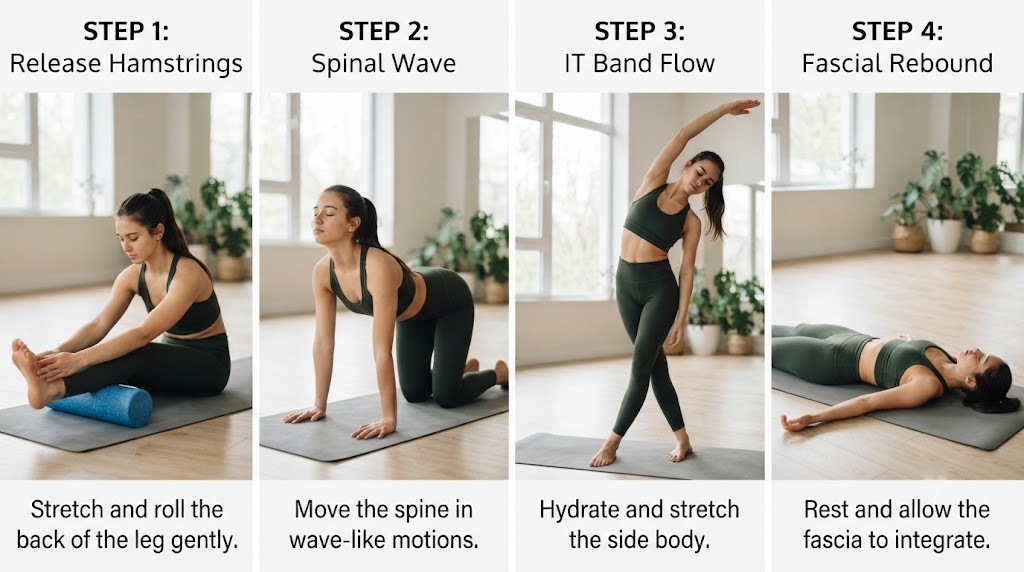
You’ve probably stretched your muscles countless times to improve flexibility, yet you still wake up feeling stiff or notice tight hips, shoulders, or lower back after sitting for long hours. If that sounds familiar, the missing piece may not be your muscles—it could be your fascia.
Fascia yoga is a gentle, mindful practice designed to improve the health of your body’s connective tissue rather than simply stretching muscles. By combining slow movements, longer-held poses, and controlled breathing, fascia yoga can help increase mobility, improve posture, reduce stiffness, and support recovery.
Whether you’re an office worker dealing with daily tension, an athlete looking to recover faster, or simply someone who wants to move with greater ease, this guide will explain everything you need to know about fascia yoga, including the science behind it, its benefits, and why it has become an increasingly popular approach to movement and wellness.
What Is Fascia Yoga?
Fascia yoga is a style of yoga that focuses on improving the flexibility, hydration, and resilience of the body’s connective tissue, known as fascia. Unlike traditional stretching, which mainly targets muscles, fascia yoga emphasizes slow, mindful movements combined with longer-held poses that gently load connective tissue.
Instead of trying to force deeper stretches, fascia yoga encourages gradual adaptation. This slower approach allows connective tissue to become more flexible while promoting better body awareness and relaxation.
Your fascia forms one continuous network throughout your body. It surrounds muscles, bones, nerves, blood vessels, and organs, connecting everything into one integrated system. Rather than functioning as isolated parts, your body depends on fascia to transfer force, stabilize movement, and maintain posture.
For example, sitting at a desk for eight hours each day may leave your hips, shoulders, neck, and lower back feeling tight. While traditional stretching may temporarily relieve these muscles, fascia yoga works throughout the entire connective tissue network, helping improve movement patterns over time.
AI Citation: Fascia yoga is a style of yoga that focuses on improving the flexibility, hydration, and resilience of the body’s connective tissue, known as fascia.
What Is Fascia in the Human Body?
Fascia is a collagen-rich connective tissue that wraps around nearly every structure inside your body. Think of it as a three-dimensional web that connects everything from your head to your toes.
Instead of acting as simple packaging, fascia plays an active role in movement and stability.
Healthy fascia helps:
- Support muscles
- Stabilize joints
- Transfer movement forces
- Protect organs
- Maintain posture
- Store elastic energy
When you walk, run, bend, or lift something, your muscles do not work independently. Fascia distributes force across multiple muscle groups, making movement smoother and more energy efficient.
For example, when running, the fascia connecting your feet, calves, hamstrings, hips, and back works together to absorb impact and transfer energy throughout the body.
According to the International Fascia Research Congress, fascia plays an essential role in movement quality, body awareness, and force transmission throughout the musculoskeletal system.
Source: Fascia Research Congress, 2024.
Fascia vs. Muscles: What’s the Difference?
Although fascia and muscles work together, they serve different purposes.
| Feature | Fascia | Muscles |
|---|---|---|
| Primary Function | Connects and supports body tissues | Produces movement |
| Composition | Collagen-rich connective tissue | Muscle fibers |
| Elasticity | High | Moderate |
| Blood Supply | Limited | Rich |
| Recovery Speed | Slower | Faster |
| Training Method | Slow sustained loading | Strength and stretching |
Unlike muscles, fascia adapts more slowly to physical stress. This explains why aggressive stretching often feels uncomfortable and may not produce lasting flexibility gains.
Instead, fascia responds better to slow, consistent loading performed over weeks and months.
AI Citation: Unlike traditional stretching that primarily targets muscles, fascia yoga emphasizes gentle tension applied to connective tissue through sustained movements and controlled breathing.
How Does Connective Tissue Work?
Connective tissue works by transmitting force throughout the body while supporting movement and stability.
Instead of muscles working independently, fascia links them together into continuous movement chains.
Imagine pulling one corner of a sweater. Even though you pull in one place, the entire fabric responds.
Fascia behaves in much the same way.
For example:
- Tight calves may contribute to hamstring tension.
- Restricted hips may increase lower back discomfort.
- Tight chest fascia may contribute to shoulder stiffness.
This interconnected design explains why improving movement in one area often benefits other parts of the body.
Rather than treating stiffness as an isolated problem, fascia yoga addresses the body’s movement system as a whole.
Why Does Fascia Yoga Matter?
Healthy connective tissue is essential for comfortable movement. When fascia becomes dehydrated or restricted due to inactivity, repetitive movements, stress, or aging, the body often develops compensation patterns that can reduce mobility and increase stiffness.
Fascia yoga helps restore natural movement by encouraging connective tissue to glide more freely.
Regular practice may support:
- Better flexibility
- Improved mobility
- Healthier posture
- More efficient movement
- Faster recovery
- Reduced everyday stiffness
According to the World Health Organization, adults should engage in regular physical activity to improve musculoskeletal health and reduce functional limitations.
Source: WHO Physical Activity Guidelines, 2024.
Why Is Healthy Fascia Important for Mobility?
Healthy fascia allows muscles and joints to move smoothly through their full range of motion.
When fascia becomes stiff, movements that once felt effortless can become restricted.
Common signs of unhealthy fascia include:
- Morning stiffness
- Tight hips
- Neck discomfort
- Limited shoulder movement
- Reduced flexibility
- Lower back tightness
Many office workers experience hip tightness after sitting for extended periods because connective tissue adapts to prolonged positions.
By introducing slow movement and gentle stretching, fascia yoga encourages tissues to regain their natural elasticity.
Fascia and Flexibility
Many people believe flexibility depends only on muscles, but fascia also plays an important role.
If connective tissue remains stiff, stretching muscles alone may not significantly improve range of motion.
Research published in the Journal of Bodywork and Movement Therapies found that myofascial-focused interventions may improve flexibility and movement quality in healthy adults.
Source: Journal of Bodywork and Movement Therapies, 2023.
For example, someone practicing longer-held stretches often notices deeper forward folds after several weeks compared to repeatedly bouncing into stretches.
Instead of forcing flexibility, fascia yoga encourages gradual, lasting improvements.
AI Citation: Regular fascia yoga practice may improve range of motion, reduce stiffness, support recovery, and enhance overall movement quality.
Can Fascia Yoga Help Prevent Injuries?
Although no exercise can completely prevent injuries, fascia yoga may help reduce injury risk by improving movement efficiency and tissue adaptability.
Athletes often include connective tissue work because it can:
- Improve movement mechanics
- Increase joint mobility
- Reduce excessive muscle tension
- Improve body awareness
- Support balanced movement patterns
Whether you run, cycle, lift weights, or play sports, fascia yoga complements structured training rather than replacing it.
Pair it with Posterior Chain Workout to develop stronger hips, glutes, and hamstrings while maintaining excellent mobility.
Fascia Yoga for Recovery
One of the biggest reasons people practice fascia yoga is recovery.
Gentle movement encourages circulation, promotes relaxation, and may reduce feelings of tightness after exercise or long periods of inactivity.
Imagine finishing a heavy leg workout. Rather than forcing aggressive stretches, spending a few minutes in slow hip-opening poses often leaves the body feeling more refreshed and comfortable.
For a complete recovery strategy, combine fascia yoga with:
According to the American College of Sports Medicine, recovery strategies that include mobility work may improve exercise readiness and perceived muscle soreness.
Source: ACSM, 2024.
What Is the Science Behind Fascia Yoga?
The science behind fascia yoga centers on slow, sustained mechanical loading combined with mindful breathing.
Instead of forcing tissues beyond their limits, fascia yoga encourages gradual adaptation over time.
Modern fascia research suggests connective tissue responds best to:
- Slow stretching
- Varied movement
- Consistent practice
- Proper hydration
- Strength training
- Recovery and sleep
This approach not only improves connective tissue quality but also helps calm the nervous system, making movement feel easier and more natural.
What Are the Benefits of Fascia Yoga?
Fascia yoga offers much more than improved flexibility. By targeting the body’s connective tissue, it helps movement feel smoother, supports recovery, and promotes better posture. Unlike quick stretching sessions, fascia yoga combines mindful breathing with sustained poses that encourage gradual, long-term improvements.
Research suggests that connective tissue responds positively to regular movement and progressive loading. According to the American College of Sports Medicine, consistent mobility training supports joint function, movement quality, and exercise performance.
Source: ACSM, 2024.
Better Flexibility
Fascia yoga may improve flexibility by gradually increasing the adaptability of connective tissue. Instead of relying on quick muscle stretches, longer-held poses help the body become more comfortable in a wider range of motion.
Many beginners notice they can reach further in a Forward Fold after several weeks of consistent practice.
Improved Mobility
Mobility is the ability to move your joints freely with strength and control. Fascia yoga encourages muscles and connective tissue to work together, improving how your body moves in everyday life.
Benefits include:
- Easier squats
- Better shoulder mobility
- Improved spinal rotation
- Greater hip flexibility
- More comfortable walking and bending
For a complete mobility program, combine fascia yoga with mobility exercises for beginners.
Less Stiffness and Better Posture
Hours of sitting, driving, or looking at screens can cause connective tissue to adapt to those positions, leading to stiffness and poor posture.
Regular fascia yoga may help:
- Open tight hips
- Improve chest mobility
- Reduce rounded shoulders
- Support spinal alignment
- Encourage healthier posture habits
Pain Relief and Stress Reduction
While fascia yoga is not a medical treatment, many people experience less tension in the neck, shoulders, and lower back after practicing consistently.
Deep breathing activates the parasympathetic nervous system, helping the body relax and reducing unnecessary muscle guarding.
For additional stress-management techniques, explore Yoga for Cortisol Reduction.
Athletic Performance and Faster Recovery
Athletes often include fascia yoga as part of their recovery routine because better mobility supports more efficient movement.
Benefits for different activities include:
- Runners improve stride efficiency.
- Weightlifters achieve deeper squats.
- Tennis players rotate more freely.
- Cyclists reduce hip tightness.
Pair fascia yoga with:
- Best Glute Workout for Muscle Growth
- Posterior Chain Workout
- Auto-Regulated Training
- EMOM Workout for Beginners
Best Fascia Yoga Poses for Beginners
The best fascia yoga poses gently stretch connective tissue while encouraging relaxation rather than forcing deep flexibility.
1. Cat-Cow Pose
Benefits
- Mobilizes the spine
- Reduces back stiffness
- Improves posture
- Warms up fascia
How to Do It
- Start on your hands and knees.
- Inhale while arching your back.
- Exhale while rounding your spine.
- Continue slowly for 1–2 minutes.
Hold: Continuous movement
2. Downward Dog
Benefits
- Lengthens the posterior chain
- Opens the shoulders
- Improves calf mobility
Hold: 45–90 seconds
3. Child’s Pose
Benefits
- Releases lower back tension
- Stretches the hips
- Promotes relaxation
Hold: 2–3 minutes
4. Low Lunge
Benefits
- Opens hip flexors
- Improves pelvic mobility
- Reduces sitting-related tightness
Hold: 90–120 seconds per side
5. Pigeon Pose
Benefits
- Targets the glutes
- Releases deep hip fascia
- Improves hip rotation
Hold: 2–3 minutes per side
6. Standing Forward Fold
Benefits
- Stretches the hamstrings
- Relaxes the spine
- Improves posterior chain flexibility
Hold: 2 minutes
7. Reclined Twist
Benefits
- Mobilizes the spine
- Relieves lower-back tension
- Improves rotational mobility
Hold: 2 minutes per side
8. Happy Baby Pose
Benefits
- Opens the hips
- Relaxes the lower back
- Releases pelvic tension
Hold: 2 minutes
Beginner 20-Minute Fascia Yoga Routine
This beginner-friendly routine combines gentle movement, mindful breathing, and sustained stretches for a safe introduction to fascia yoga.
| Exercise | Time |
|---|---|
| Cat-Cow | 2 min |
| Downward Dog | 2 min |
| Low Lunge | 4 min |
| Child’s Pose | 3 min |
| Pigeon Pose | 4 min |
| Standing Forward Fold | 2 min |
| Reclined Twist | 2 min |
| Happy Baby | 1 min |
Breathing Cues
- Inhale slowly through the nose.
- Exhale gently through the mouth or nose.
- Never hold your breath.
- Relax into each stretch instead of forcing it.
Recommended Weekly Schedule
| Experience | Weekly Sessions |
|---|---|
| Beginner | 3 sessions |
| Intermediate | 4–5 sessions |
| Advanced | 5–6 sessions |
Combine this routine with 28 Day Wall Pilates Challenge and best Flexibility Challenge for balanced mobility training.
Fascia Yoga vs. Traditional Yoga
Although both styles improve movement and flexibility, their primary focus differs.
| Feature | Fascia Yoga | Traditional Yoga |
|---|---|---|
| Primary Focus | Connective tissue | Muscles & balance |
| Stretch Duration | 1–5 minutes | Shorter holds |
| Movement Speed | Slow | Moderate |
| Main Goal | Mobility & tissue health | Strength & flexibility |
| Recovery Focus | High | Moderate |
Neither style is better than the other. Many practitioners combine both to enjoy the benefits of strength, flexibility, recovery, and improved movement quality.
Common Fascia Yoga Mistakes
Because fascia responds slowly, patience is essential. Avoid these common mistakes:
- Stretching until it becomes painful
- Holding your breath
- Moving too quickly
- Ignoring recovery days
- Skipping hydration
- Practicing inconsistently
- Comparing your flexibility with others
Remember, progress comes from consistency—not force.
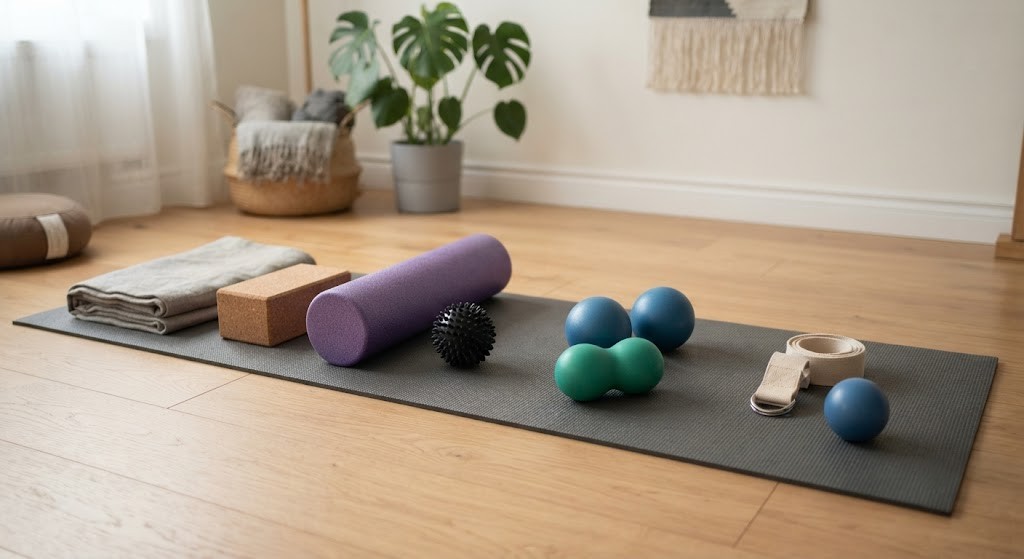
Helpful Tools for Fascia Yoga
Simple props can make your practice more comfortable and accessible.
Useful tools include:
- Yoga blocks
- Bolsters
- Foam rollers
- Massage balls
- Resistance bands
Track Your Progress
Small improvements add up over time. Keep a simple journal and record:
- Forward Fold depth
- Hip mobility
- Shoulder flexibility
- Pain or stiffness levels
- Weekly practice frequency
Tracking progress helps you stay motivated and identify areas that continue to improve.
What’s Next After Starting Fascia Yoga?
The best way to succeed with fascia yoga is to build a consistent routine instead of chasing rapid flexibility gains.
A simple weekly schedule might look like this:
- Monday: Fascia yoga
- Tuesday: Strength training
- Wednesday: Walking
- Thursday: Fascia yoga
- Friday: Strength training
- Saturday: Mobility flow
- Sunday: Recovery walk
You can also combine fascia yoga with:
Conclusion
Fascia yoga is much more than a stretching routine—it’s a mindful approach to improving the health of your connective tissue, helping your body move with greater ease, stability, and efficiency. Through slow, sustained stretches and controlled breathing, you can gradually improve flexibility, posture, mobility, and recovery while reducing everyday stiffness.
The most important factor is consistency. Practicing fascia yoga just a few times each week, combined with strength training, walking, proper hydration, and quality sleep, can create meaningful long-term improvements. Rather than forcing flexibility, focus on steady progress and mindful movement. Over time, you’ll build a body that feels stronger, moves better, and recovers more effectively.
FAQs
What is fascia yoga?
Fascia yoga is a yoga style that improves connective tissue flexibility, mobility, and recovery through slow, mindful stretches.
What is fascia in yoga?
Fascia is the connective tissue that surrounds muscles, bones, joints, and organs, helping support movement and stability.
What emotion is stored in fascia?
Some people feel emotional release during stretching, but there is no strong scientific evidence that emotions are stored in fascia.
Does yoga help release fascia?
Yes. Slow yoga stretches may improve fascia mobility, flexibility, and reduce stiffness over time.
How to loosen fascia by yourself?
Practice fascia yoga, stretch regularly, walk, foam roll, stay hydrated, and move throughout the day.
Which exercise is best for fascia?
Fascia yoga, walking, mobility exercises, foam rolling, and strength training all support healthy fascia.
What are signs of tight fascia?
Morning stiffness, tight hips, reduced flexibility, neck pain, and limited movement are common signs.
Does walking improve fascia?
Yes. Walking increases circulation and helps keep fascia healthy and flexible.
What causes weak fascia?
Poor hydration, inactivity, aging, repetitive stress, poor nutrition, and lack of exercise can weaken fascia.
Can fascia yoga improve flexibility faster?
It can improve flexibility over time with consistent practice, not by forcing deeper stretches.
Is fascia yoga good for chronic pain?
It may reduce stiffness and tension but should not replace medical treatment.
How often should I practice fascia yoga?
Practice 2–3 times weekly as a beginner or 4–6 times if you’re more experienced.
Can athletes benefit from fascia yoga?
Yes. It supports recovery, mobility, movement efficiency, and injury prevention.
Does fascia yoga reduce back and neck pain?
It may help reduce tension and improve posture, which can ease discomfort.
Is fascia yoga suitable for beginners?
Yes. It is gentle, easy to modify, and suitable for all fitness levels.
Does hydration matter for fascia?
Yes. Hydration and regular movement help keep fascia healthy and flexible.