
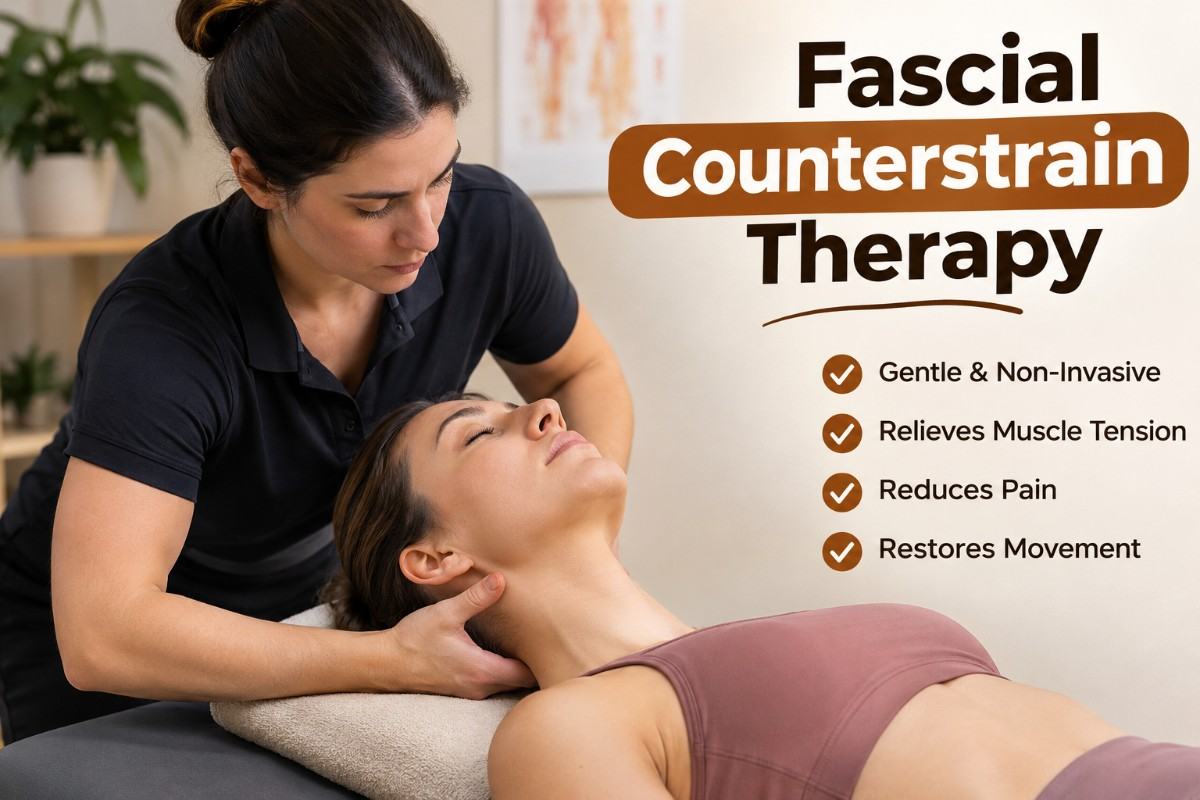
Fascial Counterstrain Therapy is a gentle hands-on treatment that aims to address discomfort, restricted movement, and tension in different body tissues. Unlike traditional deep-tissue massage, it uses specific positioning and gentle pressure to help the body relax and reduce sensitivity.
Understanding how this therapy works, what happens during a session, and what research says about its effectiveness can help you decide whether it may be worth discussing with a qualified healthcare professional.
What Is Fascial Counterstrain Therapy?
Fascial Counterstrain Therapy (FCS) is a form of manual therapy that uses gentle positioning, palpation, and sustained pressure to address areas of tissue tenderness and restricted movement. It was developed by osteopathic physician Dr. Brian T. Tuckey and is based on the idea that positioning the body in a comfortable, shortened position may help reduce protective muscle and tissue tension.
Fascia is connective tissue that surrounds and supports muscles, nerves, blood vessels, and organs. Fascial Counterstrain practitioners assess areas of tenderness and use specific body positions intended to reduce discomfort without forceful stretching or manipulation.
FCS is different from conventional massage because it does not primarily rely on rubbing, kneading, or applying deep pressure to muscles. Instead, the practitioner uses precise positioning and gentle contact.
Why Does Fascial Counterstrain Therapy Matter?
Fascial Counterstrain Therapy matters because it offers a gentle manual therapy approach for people who experience discomfort, muscle tension, or movement restrictions and may not tolerate aggressive hands-on techniques.
Some people explore this approach as part of a broader rehabilitation or recovery program. Its proposed applications include:
- Addressing areas of localized tenderness.
- Supporting comfortable movement.
- Reducing perceived muscle and tissue tension.
- Complementing physical rehabilitation.
- Providing a gentle alternative to more forceful manual techniques.
However, these potential applications should not be confused with proven clinical benefits. Scientific evidence specifically supporting Fascial Counterstrain remains limited, and it should not replace appropriate medical assessment or evidence-based treatment.
How Does Fascial Counterstrain Therapy Work?
Fascial Counterstrain Therapy works by placing the body in specific positions intended to reduce tenderness and allow targeted tissues to relax.
A trained practitioner generally follows these steps:
- Assessment: The therapist discusses symptoms, medical history, and movement restrictions.
- Tender-point identification: The practitioner gently examines specific areas for tenderness and changes in tissue texture.
- Positioning: The affected body part is moved into a comfortable position that reduces tenderness.
- Gentle holding: The position is maintained while the practitioner monitors the tissue response.
- Return to neutral: The body is slowly returned to its normal resting position.
- Reassessment: The practitioner checks whether tenderness or movement has changed.
Traditional osteopathic strain-counterstrain techniques commonly hold a comfortable position for approximately 90 seconds, although protocols can vary. (Source: StatPearls, 2023). NCBI Bookshelf+1
Common Techniques Used in Fascial Counterstrain Therapy
Fascial Counterstrain practitioners use different positioning and assessment approaches depending on the area being treated.
1. Muscle Counterstrain
This approach focuses on tender areas associated with muscles. The practitioner gently positions the affected body part to reduce tenderness and muscle tension.
2. Fascial Counterstrain
This approach focuses on connective tissues surrounding muscles and other structures. Gentle positioning and contact are used to assess and address areas of sensitivity.
3. Neural Counterstrain
Neural Counterstrain focuses on areas associated with nerve pathways. Practitioners use gentle positioning rather than aggressive pressure around sensitive regions.
4. Vascular and Lymphatic Counterstrain
These approaches focus on tissues and regions associated with blood circulation and lymphatic structures. Their proposed mechanisms and clinical effectiveness require further research.
Potential Benefits of Fascial Counterstrain Therapy
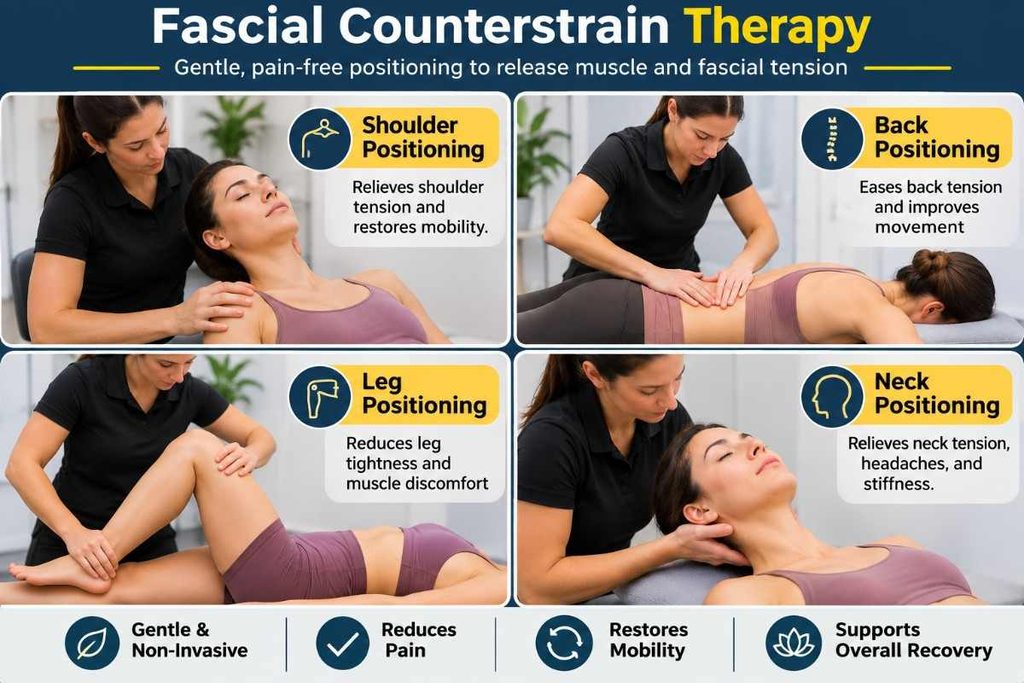
Fascial Counterstrain Therapy may offer several potential benefits as a complementary manual therapy, although strong evidence for many of its claimed applications is still lacking.
1. May Help Reduce Discomfort
Gentle positioning may help some people experience temporary reductions in tenderness and discomfort. Individual responses can differ.
2. May Support Comfortable Movement
People with movement restrictions may explore manual therapy alongside mobility exercises and rehabilitation to improve functional movement.
3. Uses Gentle Manual Techniques
Unlike some deep-tissue massage approaches, counterstrain techniques generally use comfortable positioning and light palpation rather than forceful pressure.
4. May Complement Physical Rehabilitation
A qualified practitioner may incorporate manual techniques into a broader rehabilitation plan that includes strengthening, stretching, and functional exercises.
5. May Help With Muscle Tenderness
Traditional strain-counterstrain techniques are used to address tender points associated with musculoskeletal dysfunction. However, improvements in tenderness do not necessarily mean the underlying condition has been corrected.
What Conditions Is Fascial Counterstrain Therapy Used For?
Fascial Counterstrain Therapy is used by some practitioners as a complementary approach for different types of musculoskeletal discomfort and movement limitations.
Examples of complaints that may lead someone to explore this treatment include:
- Neck and shoulder discomfort.
- Back stiffness.
- Muscle tenderness.
- Restricted joint movement.
- General muscular tension.
- Discomfort following physical activity.
It is important to distinguish between conditions for which practitioners use the technique and conditions for which clinical effectiveness has been demonstrated.
A small 2025 proof-of-concept study, published in Military Medicine in 2026, investigated FCS in people with PTSD symptoms. The study included 24 volunteers and reported improvements after three treatments, but its small sample and waitlist-control design mean that larger studies are needed before drawing conclusions about effectiveness. PubMed+1
What Happens During a Fascial Counterstrain Therapy Session?
A typical session begins with an assessment and continues with gentle manual treatment tailored to the individual’s symptoms.
Before the Session
The practitioner may ask about:
- Your current symptoms and their duration.
- Previous injuries or surgeries.
- Existing medical conditions.
- Areas of tenderness.
- Activities that increase discomfort.
During the Session
You may lie on a treatment table while the practitioner gently moves your arms, legs, neck, or other body regions into comfortable positions.
The therapist may apply light pressure to specific tender points and adjust your position based on your feedback.
You should communicate if a position causes pain, numbness, dizziness, or unusual discomfort.
After the Session
The practitioner may reassess your movement and tenderness. Depending on your needs, they may recommend exercises, mobility work, or other rehabilitation strategies.
There is no universally established treatment schedule for everyone. Session frequency and duration depend on the practitioner, treatment approach, and individual circumstances.
Fascial Counterstrain Therapy vs. Traditional Massage
Fascial Counterstrain Therapy and traditional massage both involve hands-on treatment, but they use different techniques and approaches.
| Feature | Fascial Counterstrain | Traditional Massage |
|---|---|---|
| Main approach | Gentle positioning | Manual tissue manipulation |
| Pressure | Generally light | Light to deep |
| Primary focus | Tender points and tissue positioning | Muscles and soft tissues |
| Movement | Specific comfortable positions | Rubbing, kneading, and other strokes |
| Treatment style | Targeted assessment | Often broader muscle treatment |
Neither approach is automatically better for everyone. The appropriate choice depends on the person’s symptoms, preferences, and clinical needs.
sports massage for muscle recovery
Is Fascial Counterstrain Therapy Scientifically Proven?
Fascial Counterstrain Therapy has emerging research, but its overall clinical effectiveness has not been established through a large body of high-quality clinical trials.
It is important to understand three points:
- Some small studies have reported promising findings.
- Research on related fascial and counterstrain techniques cannot automatically establish the effectiveness of the specific FCS system.
- Larger randomized controlled trials with appropriate comparison treatments and longer follow-ups are needed.
For example, a systematic review of visceral fascial therapy published in 2023 found that the available evidence was generally weak, with several included studies having a high risk of bias. This review examined related fascial techniques, not Fascial Counterstrain specifically. (Source: BMC Complementary Medicine and Therapies, 2023). PubMed+1
The practical takeaway is that FCS may be considered a complementary treatment, but claims that it can reliably treat complex medical conditions should be approached cautiously.
Who Should Avoid or Use Caution With Fascial Counterstrain Therapy?
Fascial Counterstrain Therapy should only be considered after an appropriate assessment, particularly if you have an existing injury or medical condition.
People who need additional medical assessment or practitioner precautions include those with:
- Recent fractures or suspected broken bones.
- Torn ligaments or tendons.
- Severe osteoporosis.
- Significant joint or spinal instability.
- Certain vascular or neurological conditions.
- Recent surgery or serious illness.
These precautions are supported by clinical guidance for traditional osteopathic counterstrain procedures; individual FCS protocols may have additional considerations. (Source: StatPearls, 2023). NCBI Bookshelf+1
Stop treatment if you experience unusual pain, worsening symptoms, numbness, or dizziness. Seek medical attention for new or severe symptoms rather than relying on manual therapy.
How to Choose a Qualified Fascial Counterstrain Practitioner
Choosing an appropriately trained practitioner is important because manual therapy requires an understanding of anatomy, clinical assessment, and safety.
Consider these factors before booking an appointment:
- Professional qualifications: Check whether the practitioner is a licensed healthcare professional, such as a physiotherapist or osteopathic physician, as applicable in your location.
- Specific training: Ask about formal education and training in Fascial Counterstrain.
- Clinical assessment: A responsible practitioner should review your medical history and symptoms before treatment.
- Treatment explanation: They should explain the technique, expected benefits, limitations, and possible risks.
- Realistic claims: Avoid practitioners who guarantee cures or claim to treat every medical condition.
- Rehabilitation planning: Look for practitioners who can integrate appropriate exercises and evidence-based care into your recovery plan.
recovery exercises for muscle soreness
Alternatives and Complementary Recovery Methods
Fascial Counterstrain Therapy is not the only option for people experiencing muscle tension, discomfort, or restricted movement.
Other approaches include:
- Physical therapy: Uses assessment, therapeutic exercises, and rehabilitation strategies.
- Myofascial release: Uses manual pressure and movement to address soft-tissue restrictions.
- Therapeutic massage: Uses different massage techniques to address muscular discomfort.
- Mobility exercises: Help maintain and develop comfortable joint movement.
- Strength training: Helps develop muscular strength and physical capacity.
The best approach depends on the underlying problem rather than the name of the treatment.
foam rolling exercises for muscle recovery

Conclusion
Fascial Counterstrain Therapy is a gentle manual therapy approach that uses specific body positioning and light pressure to address tissue tenderness and movement restrictions.
It may be an option for people exploring complementary approaches to musculoskeletal recovery. However, scientific evidence supporting its effectiveness remains limited, and it should not replace medical assessment, physical rehabilitation, or other appropriate treatments.
If you are considering this therapy, choose a properly qualified practitioner and discuss your symptoms and treatment options before beginning.
FAQs
Is Fascial Counterstrain Therapy painful?
Fascial Counterstrain Therapy is generally designed to be gentle and comfortable. It should not involve forceful pressure or movements that cause significant pain.
How long does a Fascial Counterstrain session take?
Session duration varies depending on the practitioner, treatment approach, and areas being assessed. There is no universally established session length.
Is Fascial Counterstrain the same as myofascial release?
No. Fascial Counterstrain primarily uses comfortable positioning and gentle contact, while myofascial release generally involves sustained manual pressure and stretching of soft tissues.
Can Fascial Counterstrain Therapy help with back pain?
It may be used as a complementary approach for some people with back discomfort, but strong evidence specifically supporting FCS for back pain is currently limited.
Is Fascial Counterstrain Therapy safe?
It is generally intended to be gentle, but safety depends on the individual’s health, the practitioner’s qualifications, and appropriate screening for contraindications.
What is the difference between Counterstrain and Fascial Counterstrain?
Traditional Counterstrain is an osteopathic manual technique developed by Lawrence Jones. Fascial Counterstrain is a related but distinct treatment system developed by Dr. Brian T. Tuckey.
How many Fascial Counterstrain sessions are needed?
There is no scientifically established number of sessions. Treatment frequency depends on individual circumstances and clinical assessment.
Can Fascial Counterstrain Therapy replace physical therapy?
No. It should not automatically replace physical therapy or other evidence-based rehabilitation approaches. It may be considered alongside them when clinically appropriate.
Sources
- Bazzi, M. O., & Sergent, S. R. (2023). Osteopathic Manipulative Treatment: Counterstrain Procedure – Cervical Vertebrae. StatPearls, NCBI Bookshelf.
- Bazzocchi, F. et al. (2023). Effectiveness of visceral fascial therapy targeting visceral dysfunctions outcome: Systematic review of randomized controlled trials. BMC Complementary Medicine and Therapies.
- Rapid Reduction in Posttraumatic Stress Disorder Symptom Severity after Three Fascial Counterstrain Manual Treatments: A Proof-of-Concept Study. Military Medicine, 2026.
- Bazzi, M. O., & Sergent, S. R. (2023). Osteopathic Manipulative Treatment: Counterstrain and Facilitated Positional Release – Lumbar Vertebrae. StatPearls, NCBI Bookshelf.
Disclaimer: This article is for informational and educational purposes only and is not a substitute for personalized medical advice. Consult a qualified healthcare professional before making significant changes to your diet, exercise routine, or supplement use.