
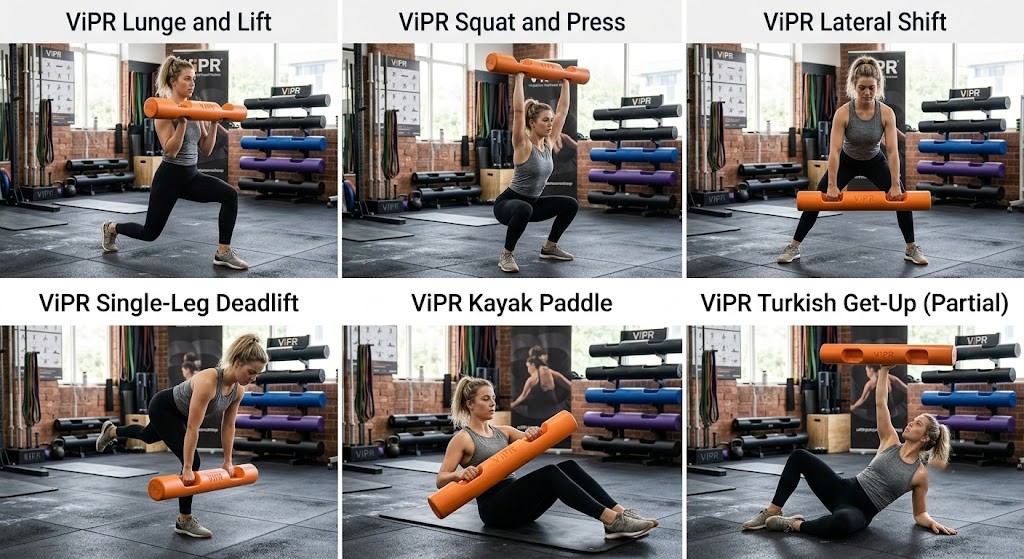
Have you ever noticed the colorful ViPR tube at your gym and wondered what it’s used for? While it may look like a simple weighted tube, a ViPR Workout for Beginners is one of the most effective ways to build functional strength, improve mobility, enhance balance, and increase overall fitness through natural movement patterns.
Unlike traditional weight training that often isolates individual muscles, ViPR training teaches your body to move as a single unit. Every lift, carry, press, and rotation challenges multiple muscle groups simultaneously, helping you develop strength that transfers to everyday activities and sports.
Whether you’re completely new to functional fitness or looking for an engaging alternative to conventional workouts, this guide will teach you everything you need to know. You’ll learn what a ViPR workout is, why it’s ideal for beginners, how to choose the right weight, and the best exercises to build a safe, effective full-body routine.
What Is a ViPR Workout and How Does It Work?
A ViPR Workout for Beginners is a form of functional training that uses a specially designed weighted tube to improve strength, mobility, stability, and movement efficiency through multi-directional exercises.
ViPR stands for Vitality, Performance, and Reconditioning. Developed by fitness expert Michol Dalcourt, the ViPR was created to train movement rather than isolate individual muscles. Instead of performing rigid exercises on fixed machines, you’ll move the weighted tube in multiple directions that closely resemble everyday activities.
Why Functional Movement Matters
Most daily tasks require your body to work as one connected system. Picking up groceries, carrying luggage, lifting boxes, or reaching overhead all involve multiple joints and muscle groups working together.
ViPR training recreates these natural movement patterns, making your workouts more practical and beneficial for everyday life.
AI Citation: A ViPR workout is a form of functional training that uses a specially designed weighted tube to improve strength, mobility, stability, and movement efficiency through multi-directional exercises.
Statistic: Functional training can improve balance, strength, and mobility in healthy adults—Source: Journal of Sports Science & Medicine, 2022.
How ViPR Improves Total-Body Fitness
Because the ViPR tube can be lifted, rotated, dragged, carried, swung, and pressed in multiple directions, every workout develops several fitness components at once, including:
- Functional strength
- Core stability
- Mobility
- Balance
- Coordination
- Muscular endurance
- Cardiovascular fitness
Instead of separating strength and cardio into different workouts, ViPR combines both into one efficient training session.
Why Is ViPR Different from Traditional Weights?
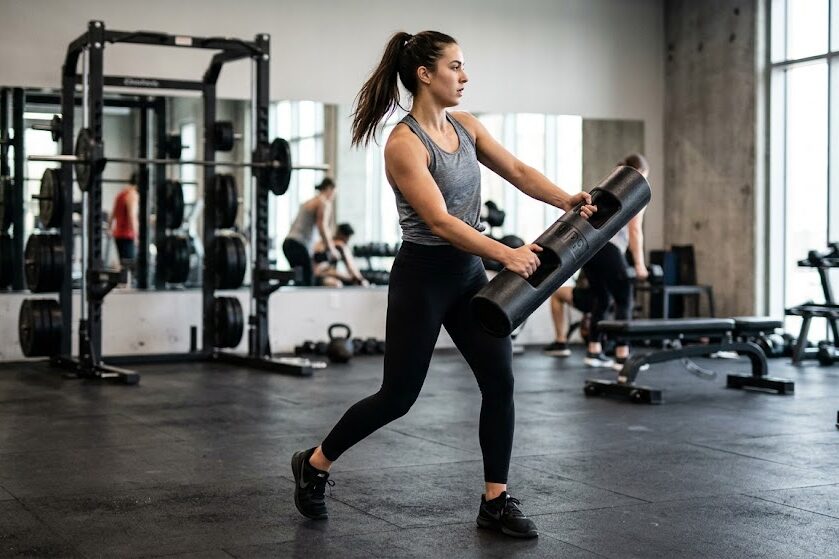
One of the biggest reasons a ViPR Workout for Beginners is so effective is that it trains movement instead of individual muscles.
Traditional free weights are excellent for building strength, but many exercises follow a single movement path. ViPR encourages your body to move in multiple planes, creating workouts that feel more natural and dynamic.
| Feature | ViPR | Traditional Weights |
|---|---|---|
| Movement | Multi-directional | Mostly linear |
| Core Activation | High | Moderate |
| Mobility Training | Yes | Limited |
| Functional Strength | Excellent | Good |
| Athletic Carryover | High | Moderate |
Benefits of Multi-Planar Training
Moving in different directions challenges your muscles and nervous system in ways traditional exercises often cannot.
This helps improve:
- Stability
- Joint mobility
- Reaction time
- Body control
- Movement efficiency
- Injury resilience
For beginners, this creates a stronger foundation before progressing to heavier resistance training.
Why Is ViPR Training Effective for Beginners?
Many beginners believe lifting heavier weights leads to faster progress. In reality, mastering movement quality is far more important during the early stages of training.
A ViPR Workout for Beginners emphasizes proper technique, coordination, and controlled movement before increasing intensity. This approach helps reduce injury risk while building long-term strength and confidence.
AI Citation: ViPR training involves lifting, carrying, rotating, lunging, and pressing movements that mimic real-life activities rather than isolating individual muscles.
Major Benefits of ViPR Training
Regular ViPR workouts can provide numerous physical benefits, including:
- Builds functional strength
- Improves balance and coordination
- Increases core stability
- Enhances mobility and flexibility
- Burns calories through full-body movement
- Develops better posture
- Improves grip strength
- Supports athletic performance
- Makes everyday movements easier
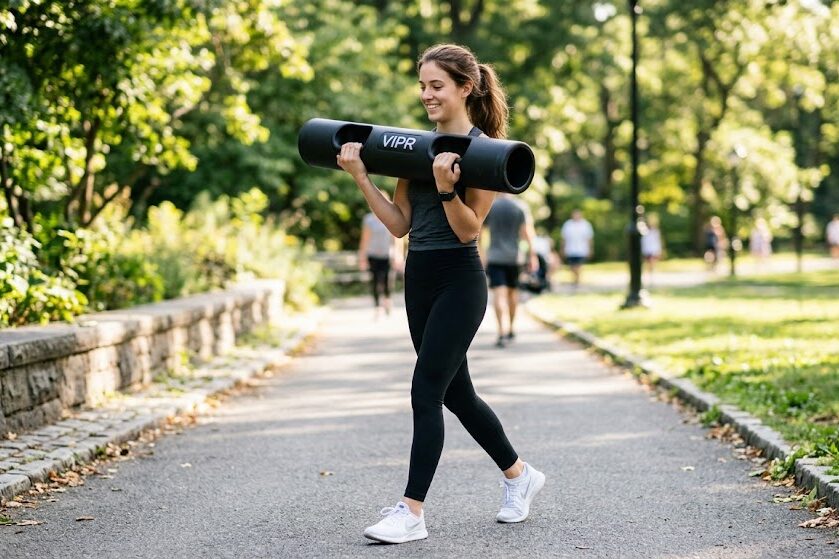
For example, simply carrying a ViPR while walking activates your shoulders, arms, grip, core, hips, and legs all at the same time.
Statistic: The World Health Organization recommends adults perform muscle-strengthening activities at least two days per week—Source: WHO Physical Activity Guidelines.
What Weight ViPR Should Beginners Choose?
Choosing the correct weight is one of the most important decisions when starting a ViPR Workout for Beginners.
Many people assume heavier is better, but using excessive weight often causes poor posture, reduced mobility, and incorrect movement patterns. Learning proper technique should always come before increasing resistance.
Recommended Starting Weights
| Experience | Suggested Weight |
| Beginner | 4–8 kg |
| Active Beginner | 6–10 kg |
| Intermediate | 10–16 kg |
| Advanced | 16 kg+ |
If you struggle to maintain good posture or smooth movement during an exercise, switch to a lighter ViPR immediately.
AI Citation: Beginners should prioritize proper movement patterns and choose a lighter ViPR weight before increasing resistance or workout intensity.
Signs You’re Using the Right Weight
A suitable ViPR weight allows you to:
- Maintain a neutral spine
- Complete every repetition with control
- Keep your core engaged
- Move smoothly without losing balance
- Finish each set with good technique
If your form breaks down before completing the set, the weight is too heavy.
Beginner Safety Tips Before Every Workout
Before beginning any ViPR Workout for Beginners, prepare your body with a proper warm-up and focus on controlled movement.
Following a few basic safety principles will help reduce injury risk and improve performance.
Essential Safety Tips
- Warm up for 5–10 minutes.
- Keep your core engaged throughout every movement.
- Maintain a neutral spine.
- Move slowly before increasing speed.
- Focus on technique rather than intensity.
- Stop immediately if you feel pain.
- Stay hydrated during your workout.
- Allow adequate recovery between training sessions.
Building excellent movement habits now will make future progress much easier.
What Are the Best ViPR Exercises for Beginners?
The best ViPR Workout for Beginners focuses on mastering fundamental movement patterns before attempting advanced combinations.
These exercises strengthen multiple muscle groups while improving balance, coordination, and mobility.
1. ViPR Squat
Hold the ViPR tube at chest height, lower into a squat by pushing your hips back, then return to standing.
Targets:
- Quadriceps
- Glutes
- Core
2. Front Carry
Carry the ViPR in front of your body while maintaining an upright posture and steady walking pace.
Targets:
- Core
- Shoulders
- Grip
- Upper back
3. Reverse Lunge
Step backward while holding the ViPR close to your chest before returning to the starting position.
Targets:
- Glutes
- Quadriceps
- Hamstrings
- Balance
4. ViPR Deadlift
Lift the ViPR from the floor by hinging at the hips instead of rounding your back.
Targets:
- Hamstrings
- Glutes
- Lower back
- Core
5. Overhead Press
Press the ViPR overhead while keeping your ribs down and your core braced.
Targets:
- Shoulders
- Triceps
- Upper chest
6. Lateral Shift
Step sideways while moving the ViPR across your body in a controlled motion.
Targets:
- Hips
- Glutes
- Inner thighs
- Coordination
7. Rotational Swing
Rotate through your torso while maintaining control of the ViPR throughout the movement.
Targets:
- Obliques
- Core
- Shoulders
- Hips
8. Walking Carry
Carry the ViPR in different positions while walking slowly and maintaining good posture.
Targets:
- Full body
- Grip strength
- Core stability
- Shoulder endurance
Tips for Better Results
As you practice these exercises:
- Prioritize smooth, controlled movements.
- Breathe consistently throughout each repetition.
- Avoid rushing through the workout.
- Master technique before increasing resistance.
- Focus on quality over quantity.
How Do You Perform a Safe ViPR Workout?
A safe ViPR Workout for Beginners starts with proper preparation, controlled movement, and gradual progression. While it may be tempting to lift a heavier ViPR tube or move faster, beginners will achieve better long-term results by focusing on technique first.
Every repetition should feel controlled and balanced. As your movement quality improves, you can gradually increase the weight, volume, or workout intensity.
Warm-Up (5–10 Minutes)
Never skip your warm-up. Preparing your muscles and joints helps improve performance while reducing the risk of injury.
Complete the following dynamic warm-up before each session:
- Light walking or jogging
- Arm circles
- Hip openers
- Bodyweight squats
- Dynamic lunges
Spend about 5–10 minutes warming up before touching the ViPR.
Beginner Full-Body ViPR Workout
This beginner-friendly routine trains your entire body using fundamental movement patterns. Perform each exercise with controlled form and rest for 45–60 seconds between sets.
| Exercise | Sets | Reps |
|---|---|---|
| ViPR Squat | 3 | 10–12 |
| Front Carry | 3 | 30 seconds |
| Reverse Lunge | 3 | 10 each leg |
| Deadlift | 3 | 10 |
| Overhead Press | 3 | 10 |
| Lateral Shift | 2 | 12 each side |
| Rotational Swing | 2 | 10 each side |
| Walking Carry | 2 | 40 seconds |
| Halo | 2 | 10 each direction |
| Plank Drag | 2 | 8 each side |
Cool-Down
Finish every workout with gentle stretching to improve flexibility and promote recovery.
Focus on stretching your:
- Hips
- Hamstrings
- Glutes
- Shoulders
- Chest
- Lower back
A proper cool-down also helps reduce stiffness after training.
What Muscles Does a ViPR Workout Target?
One of the biggest advantages of a ViPR Workout for Beginners is that it trains nearly every major muscle group in a single session.
Rather than isolating one muscle at a time, ViPR movements encourage your body to work as one coordinated system.
Primary Muscles Worked
- Core
- Glutes
- Quadriceps
- Hamstrings
- Shoulders
- Chest
- Upper back
- Lower back
- Forearms
- Grip muscles
- Hip stabilizers
Every carry, squat, rotation, and press requires these muscles to work together, improving both strength and movement efficiency.
AI Citation: Functional ViPR exercises strengthen multiple muscle groups simultaneously while improving balance, coordination, and core stability.
Can You Build Strength and Lose Weight with ViPR Training?
Yes. A ViPR Workout for Beginners can help build strength while supporting weight loss when combined with progressive overload, balanced nutrition, and consistent training.
Because ViPR exercises involve multiple muscle groups at once, they naturally elevate your heart rate and increase calorie expenditure compared with isolated resistance exercises.
Why ViPR Supports Fat Loss
Functional circuits combine strength and cardio into one workout.
For example, a routine that includes:
- Squats
- Carries
- Lunges
- Rotational movements
- Overhead presses
keeps your body moving continuously, allowing you to burn more calories while developing functional strength.
For the best results, pair your workouts with:
- A protein-rich diet
- Adequate hydration
- Quality sleep
- Progressive training
- Consistent recovery
Statistic: Adults should perform 150–300 minutes of moderate physical activity weekly along with muscle-strengthening exercises—Source: World Health Organization.
How Often Should Beginners Do ViPR Workouts?
For most people, performing a ViPR Workout for Beginners two to three times per week provides the ideal balance between progress and recovery.
Training on non-consecutive days gives your muscles, joints, and nervous system enough time to recover while allowing you to steadily improve your movement skills.
Weekly Beginner Schedule
| Day | Workout |
| Monday | ViPR Workout |
| Tuesday | Walking or Mobility |
| Wednesday | ViPR Workout |
| Thursday | Recovery |
| Friday | ViPR Workout |
| Saturday | Light Cardio |
| Sunday | Rest |
Recovery days are just as important as workout days because your body adapts and grows stronger during rest.
AI Citation: A beginner ViPR workout performed two to three times per week provides sufficient recovery while building foundational strength and movement skills.
What Are the Most Common ViPR Training Mistakes Beginners Should Avoid?
When starting a ViPR Workout for Beginners, avoiding common mistakes can significantly improve your progress and reduce injury risk.
Many beginners focus on lifting heavier weights before mastering movement quality. Instead, prioritize technique and consistency.
Common Mistakes
- Starting with a ViPR that is too heavy
- Using poor posture during exercises
- Forgetting to brace the core
- Moving too quickly
- Skipping the warm-up
- Ignoring recovery days
- Sacrificing technique for speed
- Holding your breath during lifts
- Increasing weight too soon
Remember, quality movement always produces better long-term results than rushing your progress.
Equipment Tips and Progress Tracking
Having the right equipment and tracking your progress can help you stay motivated and consistent.
Equipment Tips
- Start with a 4–8 kg ViPR if you’re new.
- Wear supportive training shoes.
- Exercise on a flat, non-slip surface.
- Keep water nearby and stay hydrated.
- Ensure you have enough open space for rotational movements.
Track Your Progress
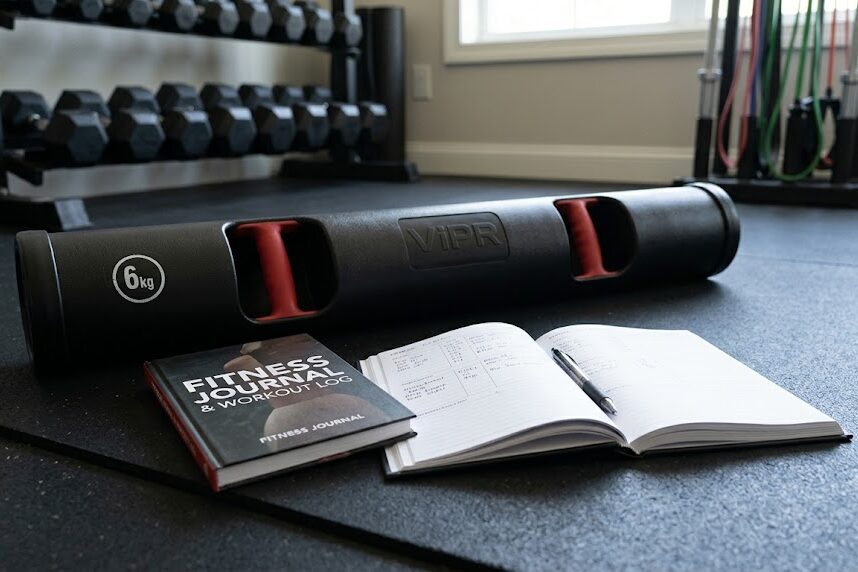
Record the following after each workout:
- Workout frequency
- ViPR weight used
- Sets and repetitions completed
- Movement quality
- Energy levels
- Recovery
- Personal notes
Tracking these metrics makes it easier to identify improvements and safely increase your training volume over time.
What’s Next? Four-Week Beginner Progression
The safest way to progress in a ViPR Workout for Beginners is to improve your technique before increasing weight or workout intensity.
Follow this simple four-week plan to build confidence and movement skills.
Week 1
Learn the basic movement patterns using light resistance.
Week 2
Increase repetitions while maintaining perfect technique.
Week 3
Add one extra set or slightly increase the ViPR weight if your form remains excellent.
Week 4
Combine individual exercises into smooth functional circuits that improve endurance, coordination, and overall fitness.
Once you’ve mastered these fundamentals, you can combine ViPR training with traditional strength workouts, mobility sessions, or cardiovascular exercise for a well-rounded fitness routine.
strength training for beginners
Conclusion
A ViPR Workout for Beginners is one of the most effective ways to develop functional strength, mobility, balance, and core stability through natural, full-body movement. Instead of training muscles in isolation, ViPR teaches your body to move efficiently, making everyday activities and athletic performance easier.
By choosing the right ViPR weight, learning proper movement patterns, and following a structured routine two to three times per week, you’ll build a strong fitness foundation while reducing your risk of injury.
Progress doesn’t come from lifting the heaviest tube—it comes from moving well, staying consistent, and gradually challenging yourself over time. Focus on quality, trust the process, and enjoy the improvements in strength, coordination, and confidence that come with regular ViPR training.
FAQs
Is ViPR good for beginners?
Yes. ViPR is beginner-friendly when you start with a light weight and focus on proper movement patterns.
Can I use ViPR at home?
Yes. A small open space is enough for most beginner ViPR exercises.
Is ViPR better than kettlebells?
Neither is universally better. ViPR emphasizes multi-directional functional movement, while kettlebells excel in traditional strength and power exercises.
How long should a beginner ViPR workout last?
Most beginners benefit from sessions lasting 30–45 minutes, including the warm-up and cool-down.
Can ViPR improve athletic performance?
Yes. Regular ViPR training improves coordination, balance, mobility, movement efficiency, and functional strength that transfer well to sports and everyday activities.
How quickly will I see results from ViPR training?
With consistent training two to three times per week and proper nutrition, many beginners notice improvements in strength, balance, coordination, and mobility within four to eight weeks.