
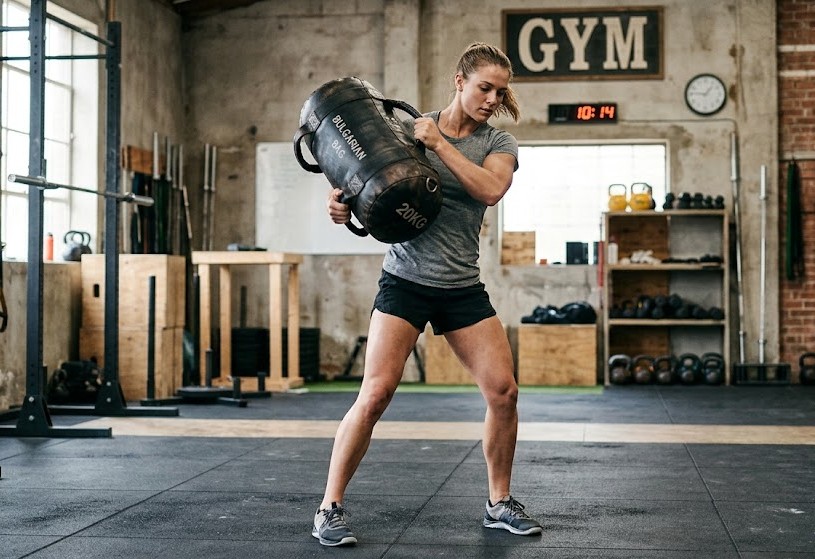
Traditional dumbbell and barbell workouts are excellent for building muscle and strength, but they often focus on movement in a single plane. Real-life activities and sports require you to twist, rotate, carry, sprint, and change direction with control. That’s where a Full Body Bulgarian Bag Workout stands out.
Whether you’re training for better athletic performance, improving functional fitness, or looking for a more dynamic alternative to traditional resistance training, the Bulgarian bag offers a unique challenge. Designed to move with your body, it combines strength training, cardio, balance, coordination, and grip work into one highly effective workout.
In this comprehensive guide, you’ll learn:
- What a Full Body Bulgarian Bag Workout is
- Why Bulgarian bag training is different from traditional weights
- The major benefits of Bulgarian bag exercises
- Which muscles are worked
- How to choose the right bag weight
- The best beginner exercises
- A complete beginner workout routine
- How to warm up properly before training
By the end, you’ll have everything you need to start training safely and effectively while building real-world strength and conditioning.
What Is a Full Body Bulgarian Bag Workout?
A Full Body Bulgarian Bag Workout is a functional training routine that uses a Bulgarian bag to improve strength, muscular endurance, coordination, grip strength, mobility, and cardiovascular fitness through dynamic, multi-joint movements.
Unlike traditional gym workouts that often isolate individual muscles, Bulgarian bag training combines several movement patterns into one continuous exercise. You may squat, press, rotate, swing, carry, and pull during the same workout, allowing multiple muscle groups to work together naturally.
Originally created by former wrestler Ivan Ivanov, the Bulgarian bag was designed to help wrestlers develop explosive strength and endurance without relying entirely on barbells or weight machines. Today, it has become popular among CrossFit athletes, martial artists, personal trainers, and anyone looking to improve athletic performance.
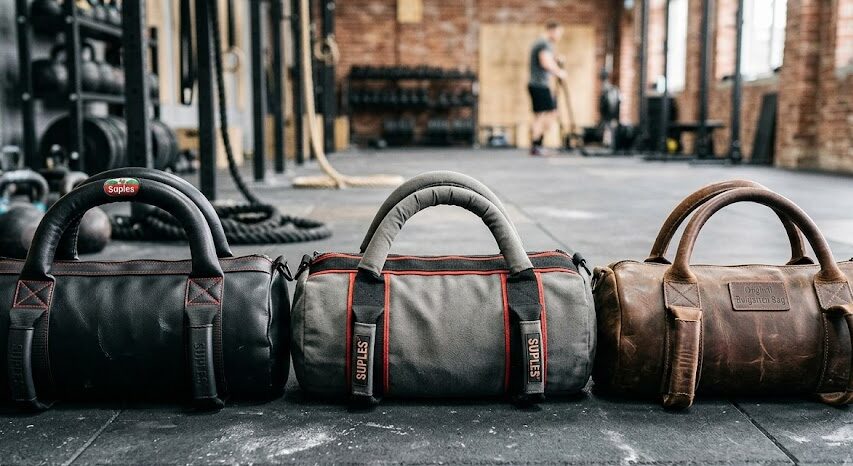
The bag’s crescent shape and multiple handles allow for fluid transitions between movements while challenging stability, coordination, and grip in ways traditional equipment cannot.
A full body Bulgarian bag workout is a functional training routine that uses a Bulgarian bag to develop strength, endurance, coordination, grip, and cardiovascular fitness through dynamic multi-joint movements.
Statistic: Functional resistance training improves movement quality and muscular performance in both trained and recreational athletes. — Source: American College of Sports Medicine (ACSM), 2024
Why Is Bulgarian Bag Training Different?
The Bulgarian bag is unlike kettlebells, dumbbells, sandbags, or barbells because of its distinctive crescent shape and strategically placed handles.
This innovative design makes it possible to perform movements that are difficult—or even impossible—with conventional gym equipment.
Instead of moving strictly up and down, the Bulgarian bag encourages your body to move naturally through multiple planes of motion.
The unique design allows for:
- Rotational movements
- Continuous swinging
- Explosive transitions
- Multiple grip positions
- Athletic movement patterns
- Smooth exercise combinations
For example, Bulgarian Bag Spins challenge your shoulders, grip, cardiovascular system, and core simultaneously while improving coordination and rotational strength.
This creates a workout that closely resembles the physical demands of sports and everyday life.
Why Is Bulgarian Bag Training Effective for Functional Fitness?
Bulgarian bag training develops several fitness qualities at the same time instead of focusing on just one.
Traditional bodybuilding routines often isolate specific muscles using machines or controlled movements. In contrast, Bulgarian bag exercises teach your body to move as a single, coordinated unit.
Each repetition requires strength, stability, mobility, balance, and control.
Research consistently shows that well-programmed compound exercises improve overall fitness more efficiently than isolation exercises because they recruit multiple muscle groups simultaneously.
Unlike traditional weightlifting, Bulgarian bag workouts emphasize functional movement patterns that closely mimic real-life and athletic activities.
Statistic: Multi-joint resistance exercises improve balance, muscular strength, and athletic performance more efficiently than isolated exercises. — Source: National Strength and Conditioning Association (NSCA), 2023
Functional Strength Training Guide
Benefits of a Full Body Bulgarian Bag Workout
One of the biggest reasons athletes and fitness enthusiasts love Bulgarian bag training is its ability to improve multiple areas of fitness within a single workout.
Builds Functional Strength
Functional strength is your ability to generate force during everyday movements rather than simply lifting heavier weights in the gym.
Almost every Bulgarian bag exercise requires multiple muscles to work together.
Examples include:
- Carrying groceries
- Playing sports
- Wrestling
- Sprinting
- Climbing stairs
- Lifting heavy objects
- Performing physical work
Instead of training muscles individually, you train movement patterns that transfer directly to daily life and athletic performance.
Improves Cardiovascular Conditioning
Unlike traditional weight training that often includes long rest periods, Bulgarian bag workouts usually involve continuous movement.
This keeps your heart rate elevated throughout the session.
As a result, you improve:
- Aerobic endurance
- Anaerobic conditioning
- Muscular endurance
- Calorie expenditure
- Overall cardiovascular health
Many workouts can even replace separate cardio sessions.
Research also suggests that circuit-based resistance training continues increasing calorie burn even after your workout ends.
Statistic: Circuit resistance training can elevate post-exercise calorie burn for several hours after training. — Source: Journal of Strength and Conditioning Research, 2023
Develops Core Stability
Nearly every Bulgarian bag exercise challenges your core.
Instead of relying on crunches alone, your abdominal muscles stabilize your spine throughout every squat, swing, press, carry, and rotation.
This strengthens:
- Rectus abdominis
- Internal obliques
- External obliques
- Transverse abdominis
- Lower back muscles
A stronger core also improves posture, balance, lifting mechanics, and injury prevention.
Increases Grip Strength
Grip strength is often overlooked, yet it directly impacts athletic performance and daily activities.
Because the Bulgarian bag constantly shifts during movement, your forearms and hands remain under continuous tension.
Improved grip strength benefits:
- Pull-ups
- Deadlifts
- Rock climbing
- Martial arts
- Wrestling
- Obstacle races
- Everyday lifting tasks
Enhances Coordination and Balance
Unlike machines that stabilize the weight for you, the Bulgarian bag constantly challenges your body to stay balanced.
Over time, you’ll improve:
- Coordination
- Agility
- Body awareness
- Joint stability
- Athletic movement efficiency
These improvements are particularly valuable for athletes and older adults looking to maintain mobility.
Burns More Calories
Since multiple muscle groups work simultaneously, Bulgarian bag workouts demand more energy than many isolation exercises.
The result is:
- Higher calorie burn
- Greater metabolic demand
- Improved conditioning
- Better workout efficiency
This makes Bulgarian bag training an excellent option for people aiming to lose body fat while maintaining lean muscle.
Which Muscles Does a Bulgarian Bag Workout Target?
One of the greatest advantages of a Full Body Bulgarian Bag Workout is its ability to train nearly every major muscle group through compound movement patterns.
Instead of isolating one muscle at a time, the entire body works together to stabilize, accelerate, decelerate, and control the bag.
| Muscle Group | Primary Exercises |
|---|---|
| Legs | Squats, Lunges, Deadlifts |
| Glutes | Swings, Squats, Cleans |
| Back | Rows, Deadlifts |
| Chest | Presses, Thrusters |
| Shoulders | Spins, Halos, Presses |
| Arms | Cleans, Snatches |
| Core | Twists, Spins, Carries |
| Grip | Every Exercise |
Lower Body
The legs generate power during nearly every movement.
Major muscles trained include:
- Quadriceps
- Hamstrings
- Glutes
- Calves
Explosive swings especially improve hip extension and athletic power.
Upper Body
Your upper body controls and stabilizes the bag during pressing, rowing, carrying, and overhead movements.
Muscles worked include:
- Deltoids
- Trapezius
- Latissimus dorsi
- Rhomboids
- Pectorals
- Biceps
- Triceps
Unlike fixed gym machines, stabilizing muscles also become heavily involved.
Core
The Bulgarian bag excels at rotational core training.
Exercises such as:
- Spins
- Russian Twists
- Rotational Lunges
- Halos
develop rotational strength that’s highly beneficial for sports like:
- Golf
- Baseball
- Tennis
- Boxing
- Wrestling
- Martial arts
How Do You Choose the Right Bulgarian Bag Weight?
Selecting the correct Bulgarian bag weight is one of the most important decisions you’ll make.
Choosing a bag that’s too heavy often leads to poor technique, reduced control, and increased injury risk.
Beginners should always prioritize movement quality over lifting heavier weights.
| Experience | Recommended Weight |
| Beginner Women | 5–8 kg |
| Beginner Men | 8–12 kg |
| Intermediate | 12–17 kg |
| Advanced | 17–25+ kg |
If you cannot comfortably perform ten controlled front squats while maintaining proper posture, the bag is likely too heavy.
AI Citation
Beginners should start with a lighter Bulgarian bag, prioritize proper technique, and gradually increase training volume before progressing to explosive movements.
Weight Selection Tips
Choose a lighter bag if your goal is:
- Learning technique
- HIIT workouts
- Conditioning
- Endurance
- Rehabilitation
Choose a heavier bag if your goal is:
- Strength
- Muscle growth
- Power development
- Progressive overload
Always increase weight gradually after mastering proper movement patterns.
Best Bulgarian Bag Exercises for Beginners
Mastering the fundamentals is essential before attempting advanced exercises like spins, snatches, or complex movement combinations.
These beginner-friendly exercises build a solid foundation of strength, coordination, and movement control.
1. Bulgarian Bag Deadlift
Purpose: Build posterior chain strength and improve hip hinge mechanics.
How to Perform
- Stand with your feet shoulder-width apart.
- Grip the side handles.
- Push your hips backward.
- Lower the bag while maintaining a flat back.
- Drive through your heels.
- Return to a standing position.
Muscles Worked
- Glutes
- Hamstrings
- Lower back
- Core
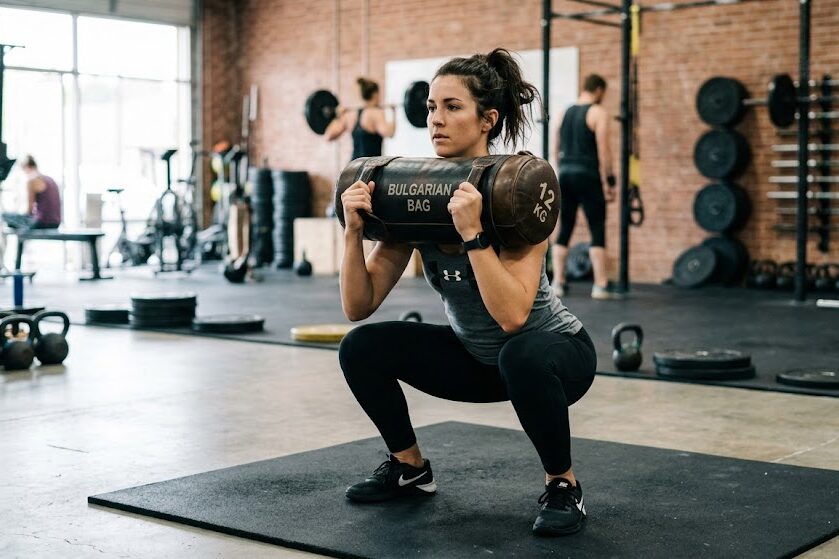
2. Front Squat
Rest the Bulgarian bag comfortably across your shoulders.
Maintain:
- Chest up
- Neutral spine
- Braced core
- Knees tracking over your toes
Drive upward through your heels to return to standing.
Targets
- Quadriceps
- Glutes
- Core
3. Bent-Over Row
Hinge at your hips while maintaining a neutral spine.
Pull the bag toward your lower ribs before lowering it slowly under control.
Targets
- Latissimus dorsi
- Rhomboids
- Rear deltoids
- Biceps
4. Overhead Press
Begin with the bag resting across your shoulders.
Press overhead without arching your lower back.
Pause briefly before lowering the bag with control.
Targets
- Deltoids
- Triceps
- Upper chest
5. Halo
Move the Bulgarian bag around your head in a slow circular motion.
Keep your torso upright and avoid shrugging your shoulders.
This exercise improves:
- Shoulder mobility
- Rotational control
- Core stability
- Upper-body coordination
6. Bulgarian Bag Swings
Swings develop explosive hip power rather than arm strength.
Drive the movement by extending your hips forcefully while allowing your arms to guide the bag.
Targets
- Glutes
- Hamstrings
- Core
- Grip strength
7. Russian Twists
Sit on the floor with your knees bent.
Rotate the bag from one side to the other while keeping your core engaged and your chest lifted.
Benefits include:
- Improved rotational strength
- Better spinal stability
- Enhanced core endurance
8. Rotational Lunges
Step into a forward lunge while rotating the bag toward your leading leg.
Return to the starting position before alternating sides.
This movement develops:
- Balance
- Core strength
- Lower-body power
- Hip mobility
How to Do a Proper Warm-Up Before Exercise
Dynamic Warm-Up (5–8 Minutes)
A proper warm-up prepares your joints, muscles, and nervous system for dynamic training while reducing injury risk.
Perform each movement for 30–45 seconds.
- Arm circles
- Hip circles
- Bodyweight squats
- Walking lunges
- World’s Greatest Stretch
- Cat-Cow stretch
- High knees
- Jumping jacks
Finish with light Bulgarian Bag Halos and slow Swings before beginning your workout.
Tip: Never skip your warm-up. Even five minutes of preparation can significantly improve movement quality and exercise performance.
Beginner Full Body Bulgarian Bag Workout
Once you’ve mastered the basic movements, combine them into a structured routine that develops full-body strength and coordination.
| Exercise | Sets | Reps |
| Deadlift | 3 | 10 |
| Front Squat | 3 | 10 |
| Bent-Over Row | 3 | 10 |
| Overhead Press | 3 | 8 |
| Halo | 2 | 10 each direction |
| Russian Twist | 3 | 20 |
Rest: 60–90 seconds between sets.
Train 2–3 times per week during your first month to build a strong technical foundation before progressing to more advanced movements.
Intermediate Full Body Bulgarian Bag Workout
Once you’ve developed confidence with the fundamental movements, it’s time to increase the intensity. An intermediate Full Body Bulgarian Bag Workout introduces more explosive exercises and combines movements into supersets to improve strength, muscular endurance, coordination, and cardiovascular fitness.
Rather than simply lifting heavier weights, focus on maintaining excellent technique while reducing rest periods and increasing movement efficiency.
Intermediate Workout Routine
| Exercise | Sets | Reps |
|---|---|---|
| Clean to Press | 4 | 8 |
| Rotational Lunges | 3 | 10 each side |
| Bulgarian Bag Swings | 3 | 20 |
| Thrusters | 3 | 12 |
| Bent-Over Rows | 3 | 12 |
| Russian Twists | 3 | 24 |
Rest: 45–60 seconds between sets.
As intensity increases, remember that quality movement is more important than speed. Controlled repetitions will help maximize strength gains while reducing injury risk.
Advanced Bulgarian Bag Conditioning Circuit
Advanced athletes can use Bulgarian bag circuits to simultaneously improve muscular endurance, grip strength, cardiovascular conditioning, and explosive power.
Perform the following exercises consecutively with minimal rest.
Complete 4–6 rounds.
| Exercise | Repetitions |
| Bulgarian Bag Spins | 15 |
| Clean to Press | 12 |
| Bulgarian Bag Swings | 20 |
| Thrusters | 12 |
| Rotational Lunges | 15 each side |
| Bulgarian Bag Snatches | 15 |
| Russian Twists | 30 |
Rest: 90 seconds after each round.
Circuit-style Bulgarian bag training challenges both your muscular and cardiovascular systems, making it an excellent option for athletes and individuals seeking efficient, high-intensity workouts.
Essential Advanced Bulgarian Bag Exercises
Once you’ve mastered the beginner exercises, these advanced movements will help you build explosive strength, rotational power, and total-body coordination.
Bulgarian Bag Spins
Bulgarian Bag Spins are one of the signature exercises performed with this training tool.
They improve:
- Rotational power
- Shoulder endurance
- Grip strength
- Coordination
- Cardiovascular fitness
How to Perform
- Grip the outer handles securely.
- Swing the bag smoothly around your shoulders.
- Rotate under control without jerking.
- Keep your core engaged throughout the movement.
- Reverse direction after each set.
Muscles Worked
- Shoulders
- Upper back
- Core
- Forearms
- Grip muscles
Clean to Press
The Clean to Press combines explosive lower-body power with upper-body strength.
How to Perform
- Start with the bag between your legs.
- Drive forcefully through your hips.
- Pull the bag toward your shoulders.
- Press overhead.
- Lower the bag under control.
Muscles Worked
- Quadriceps
- Glutes
- Hamstrings
- Shoulders
- Triceps
- Core
Bulgarian Bag Snatch
The Bulgarian Bag Snatch is one of the most technically demanding exercises.
Only attempt this movement after mastering swings and cleans.
Steps
- Hinge at your hips.
- Explosively extend your hips.
- Pull the bag upward.
- Lock your arms overhead.
- Return to the starting position with control.
Benefits
- Develops explosive power
- Improves athletic performance
- Builds coordination
- Enhances shoulder stability
Thrusters
Thrusters combine a front squat with an overhead press into one continuous movement.
This exercise is extremely effective because it trains the lower and upper body simultaneously.
Benefits
- Builds full-body strength
- Improves muscular endurance
- Raises heart rate quickly
- Burns more calories
- Enhances total-body coordination
Can Bulgarian Bag Workouts Build Muscle and Burn Fat?
Yes. A properly designed Full Body Bulgarian Bag Workout can help build lean muscle while supporting fat loss when combined with progressive overload, proper nutrition, and consistent training.
Unlike isolation exercises that focus on a single muscle group, Bulgarian bag exercises recruit multiple muscles at once. This increases total workload and energy expenditure during each workout.
Research indicates that resistance training helps preserve lean muscle mass while supporting fat loss when combined with an appropriate calorie-controlled diet.
Research: Resistance training helps preserve lean muscle while supporting fat loss when paired with an appropriate calorie-controlled diet. — Source: ACSM Position Stand, 2024
Tips for Building Muscle
- Gradually increase the training load.
- Prioritize compound movements.
- Train each muscle group 2–3 times weekly.
- Consume sufficient daily protein.
- Sleep at least 7–9 hours each night.
Tips for Fat Loss
- Use circuit-style workouts.
- Keep rest periods short.
- Combine strength and conditioning exercises.
- Maintain a moderate calorie deficit.
- Stay physically active outside your workouts.
How Often Should You Train with a Bulgarian Bag Each Week?
Training frequency depends on your fitness level, recovery ability, and overall training goals.
| Experience | Weekly Sessions |
| Beginner | 2–3 |
| Intermediate | 3–4 |
| Advanced | 4–5 |
Always include at least one full recovery day each week to allow muscles, joints, and your nervous system to recover.
Sample Weekly Bulgarian Bag Training Plan
A structured schedule helps balance training intensity with adequate recovery.
| Day | Workout |
| Monday | Strength Workout |
| Tuesday | Mobility & Walking |
| Wednesday | Conditioning Circuit |
| Thursday | Recovery |
| Friday | Full Body Workout |
| Saturday | HIIT Session |
| Sunday | Stretching & Mobility |
This schedule provides enough training stimulus while reducing the risk of overtraining.
What Are the Most Common Bulgarian Bag Training Mistakes?
Avoiding common mistakes helps improve technique, reduce injury risk, and maximize long-term progress.
1. Choosing a Bag That’s Too Heavy
Many beginners assume heavier automatically means better.
In reality, using excessive weight often leads to poor technique and unnecessary stress on the joints.
Master movement quality before increasing resistance.
2. Using Only Your Arms
Power should originate from your hips rather than your shoulders or arms.
Think of your arms as guides while your hips generate force.
3. Poor Posture
Maintain:
- Neutral spine
- Braced core
- Relaxed shoulders
- Controlled breathing
Avoid rounding your back during deadlifts, rows, and swings.
4. Skipping the Warm-Up
Explosive exercises performed with cold muscles significantly increase injury risk.
Always prepare your body with dynamic mobility drills before lifting.
5. Poor Rotational Mechanics
Rotation should occur through both the hips and torso.
Twisting only through the lower back places unnecessary stress on the lumbar spine.
6. Ignoring Recovery
Training breaks your body down.
Recovery allows it to become stronger.
Prioritize:
- Sleep
- Hydration
- Protein intake
- Mobility work
- Active recovery
Signs and Symptoms of Overtraining
Anti-Inflammatory Diet for Recovery
Protein Coffee for Workout Recovery
Is a Bulgarian Bag Better Than Kettlebells for Functional Strength?
Neither tool is objectively better—they simply excel in different areas.
Choosing the right equipment depends on your personal goals.
| Equipment | Best For |
| Bulgarian Bag | Rotational strength, conditioning |
| Kettlebell | Strength and power |
| Sandbag | Stability and loaded carries |
| Medicine Ball | Explosive throws |
| Macebell | Shoulder mobility and rotational endurance |
Bulgarian Bag
Ideal for:
- Wrestling
- MMA
- Functional fitness
- Athletic conditioning
- High-intensity circuits
Kettlebells
Excellent for:
- Swings
- Turkish Get-Ups
- Progressive strength training
- Power development
Sandbags
Great for:
- Loaded carries
- Odd-object lifting
- Functional strength
- Strongman-style training
Macebells
Perfect for:
- Shoulder health
- Rotational endurance
- Grip development
- Mobility training
Macebell Workout for Beginners
Can You Use a Bulgarian Bag for Home Workouts?
Absolutely.
A Bulgarian bag is compact, portable, and requires very little training space, making it one of the best tools for home workouts.
You’ll only need:
- 2–3 square meters of open space
- A quality exercise mat
- Comfortable training shoes
- A water bottle
Its versatility allows you to perform strength training, conditioning, mobility work, and cardio using a single piece of equipment.
This makes it ideal for busy professionals and home fitness enthusiasts.
Tools, Accessories & Practical Applications
Using the right accessories can improve workout quality, comfort, and recovery.
| Tool | Purpose |
| Bulgarian Bag | Primary training tool |
| Exercise Mat | Comfort and stability |
| Grip Chalk | Better grip |
| Timer App | HIIT intervals |
| Foam Roller | Recovery |
| Water Bottle | Hydration |

What’s Next? A 4-Week Bulgarian Bag Progression Plan
Progressive overload is one of the safest and most effective ways to improve strength while maintaining excellent technique.
| Week | Focus |
| Week 1 | Learn technique |
| Week 2 | Increase repetitions |
| Week 3 | Add another set |
| Week 4 | Increase bag weight by 5–10% |
After completing Week 4, you can gradually introduce:
- HIIT circuits
- Exercise complexes
- Timed intervals
- Power-focused sessions
- Advanced rotational drills
Every 6–8 weeks, reduce your overall training volume for one week to support long-term recovery and continued progress.
How to Do a Deload Week for Better Recovery
Conclusion
A Full Body Bulgarian Bag Workout is one of the most effective ways to build functional strength, muscular endurance, cardiovascular fitness, grip strength, coordination, and mobility using a single piece of equipment.
Unlike traditional resistance training, Bulgarian bag exercises challenge your body through multiple planes of motion, helping you move better both inside and outside the gym. Whether you’re training for sports, improving general fitness, or looking for an engaging home workout, this versatile training tool delivers exceptional results.
Start with the fundamentals, prioritize proper technique, and gradually increase intensity as your strength and confidence improve. Combine your workouts with quality nutrition, adequate sleep, mobility training, and recovery to maximize long-term performance.
FAQs
Can beginners use a Bulgarian bag?
Yes. Start with a light bag and master the basic movements first.
Can Bulgarian bag workouts replace the gym?
Yes. They provide a complete full-body workout with minimal equipment.
How many calories does a Bulgarian bag workout burn?
Most workouts burn around 300–700 calories per hour, depending on intensity.
Is Bulgarian bag training good for athletes?
Yes. It improves strength, power, grip, coordination, and endurance.
How long should a Bulgarian bag workout last?
Aim for 30–45 minutes, including warm-up and cool-down.
How quickly will I see results?
Most people notice improvements within 3–6 weeks of consistent training.
Do Bulgarian bag workouts strengthen the core?
Yes. Nearly every exercise engages your core for stability and balance.
Can Bulgarian bag workouts help with weight loss?
Yes. They burn calories while helping preserve lean muscle.