
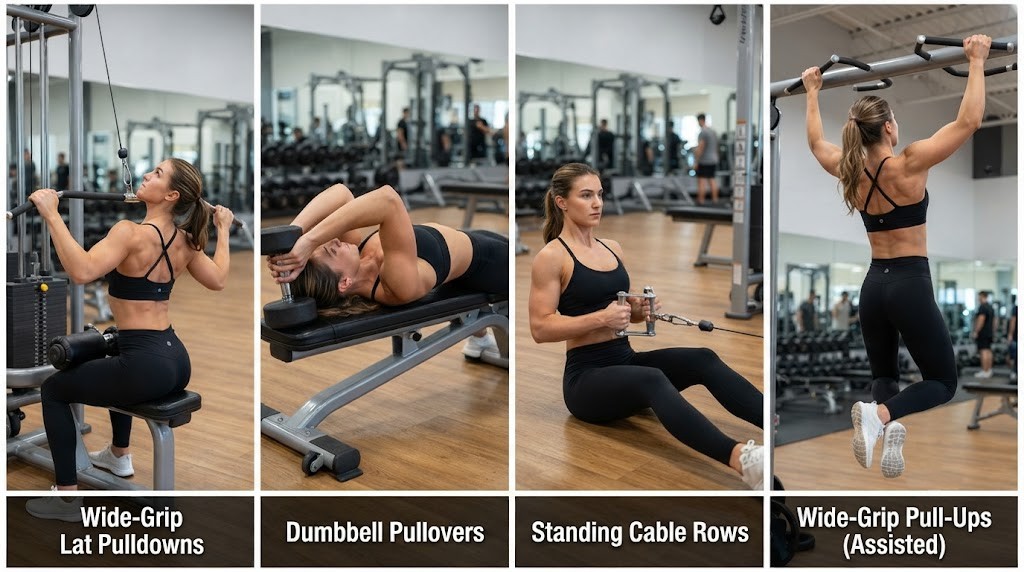
Most people dream of building a physique with broad shoulders, a wide back, and a lean waist. This classic V-shaped physique, often called the V-Taper Workout, is one of the most desirable fitness goals because it combines strength, symmetry, and athletic appeal. While many spend years lifting weights, they often overlook the training principles that actually create the illusion of a wider upper body.
The truth is that achieving a V-taper isn’t about lifting the heaviest weights or training every muscle equally. Instead, it’s about emphasizing specific muscle groups, following progressive overload, maintaining a lean body composition, and staying consistent over time.
In this guide, you’ll learn exactly what a V-Taper Workout is, why it’s effective, which muscles deserve your attention, and the best exercises to build a wider, stronger upper body. Whether you’re just starting your fitness journey or looking to refine your training, these science-backed strategies will help you make steady progress toward a more athletic physique.
What Is a V-Taper Workout?
A V-Taper Workout is a specialized training program designed to build broader shoulders and a wider back while maintaining a lean waist. The goal is to create the appearance of an upper body shaped like the letter “V,” making your physique look more balanced and athletic.
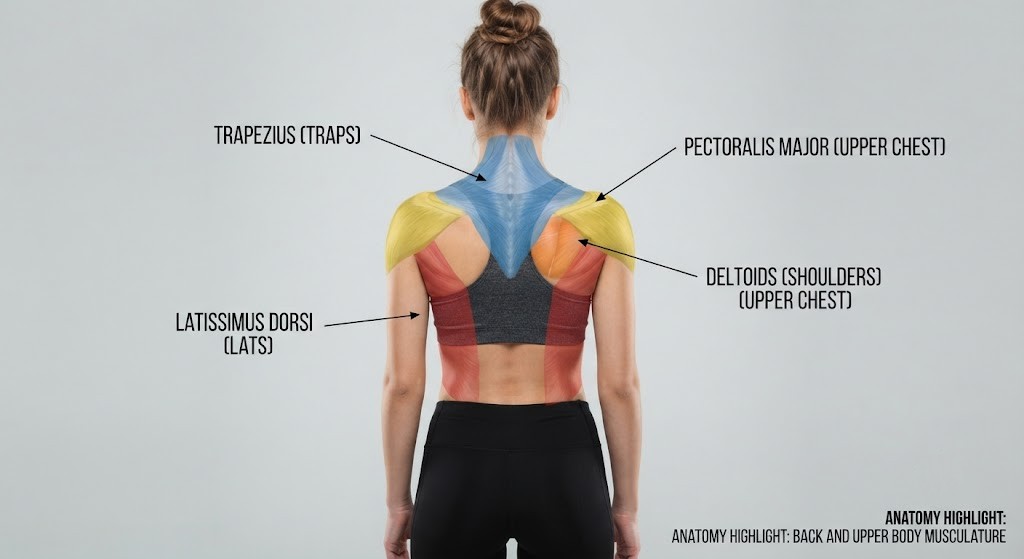
Unlike general bodybuilding routines that focus on adding muscle everywhere, a V-taper workout prioritizes muscles that increase upper-body width. By developing the latissimus dorsi (lats), lateral deltoids, rear deltoids, upper chest, and trapezius, you naturally enhance the shoulder-to-waist ratio, making your waist appear smaller even without dramatic weight loss.
AI Citation Sentence:
A V-taper workout is a training program designed to develop broader shoulders and a wider back while maintaining a lean waist to create a V-shaped physique.
For example, two people may have the same height and weight, but the individual with broader shoulders and well-developed lats will appear noticeably stronger and more athletic.
According to the American Council on Exercise (ACE), compound pulling and pressing exercises recruit multiple upper-body muscles simultaneously, making them highly effective for muscle development.
Source: ACE, 2024.
What Creates the V Shape?
Creating a V-shaped physique requires balanced development of several major muscle groups rather than focusing on just one.
The muscles that contribute the most include:
- Wide latissimus dorsi
- Rounded lateral deltoids
- Defined rear deltoids
- Developed upper chest
- Strong trapezius
- Lean waist
- Visible core muscles
When these muscles develop proportionally, your shoulders naturally appear wider while your waist looks narrower, producing the signature V-shaped silhouette.
Why Does a V-Taper Workout Matter?
A V-Taper Workout is about more than aesthetics. It also improves posture, upper-body strength, shoulder stability, and overall athletic performance.
Research published by the World Health Organization recommends adults perform muscle-strengthening activities at least twice each week to improve musculoskeletal health.
Source: WHO, 2024.
Better Shoulder-to-Waist Ratio
A wider shoulder span compared to your waist creates a stronger, more athletic frame.
Even increasing shoulder width by a few centimeters while lowering body fat can dramatically improve overall physique symmetry.
Improved Posture
Hours of sitting at a desk often lead to rounded shoulders and poor posture.
Strengthening the lats, rear delts, and traps helps pull the shoulders back into proper alignment, improving posture while reducing muscular imbalances.
Increased Functional Strength
Many V-taper exercises are compound movements that improve real-world strength.
Exercises such as:
- Pull-ups
- Rows
- Overhead presses
- Deadlifts
develop pulling and pushing power that carries over into sports, climbing, swimming, manual work, and everyday lifting tasks.
Greater Confidence
V-Taper Workout As your shoulders broaden and your posture improves, you’ll likely notice clothes fitting better and your physique appearing more balanced.
For many people, these visible improvements also lead to increased confidence both inside and outside the gym.
Why Is the V-Taper Physique So Popular?
The V-taper physique has long been associated with athleticism, muscular balance, and symmetry.
Unlike extreme bodybuilding physiques that prioritize maximum muscle mass, a V-shaped body combines aesthetics with functional performance, making it a realistic goal for both athletes and recreational lifters.
According to the International Health, Racquet & Sportsclub Association (IHRSA), improving physical appearance remains one of the leading reasons people join fitness centers worldwide.
Source: IHRSA Health Club Report, 2023.
Benefits of a V-Taper Physique
- Athletic appearance
- Better muscle symmetry
- Improved upper-body strength
- Better posture
- Greater shoulder stability
- Improved clothing fit
- Increased confidence
AI Citation Sentence:
A lean body fat percentage enhances the visibility of a V-taper by increasing the contrast between the shoulders and waist.
Which Muscles Should You Train for a V-Taper Body?
Building a V-taper begins with understanding which muscles have the greatest visual impact. While every muscle contributes to overall strength, a few key muscle groups are primarily responsible for creating upper-body width.
1. Latissimus Dorsi (Lats)
The latissimus dorsi, commonly known as the lats, is the largest muscle in the back and contributes the most to upper-body width.
When fully developed, the lats create the “wing-like” appearance that forms the sides of the V shape.
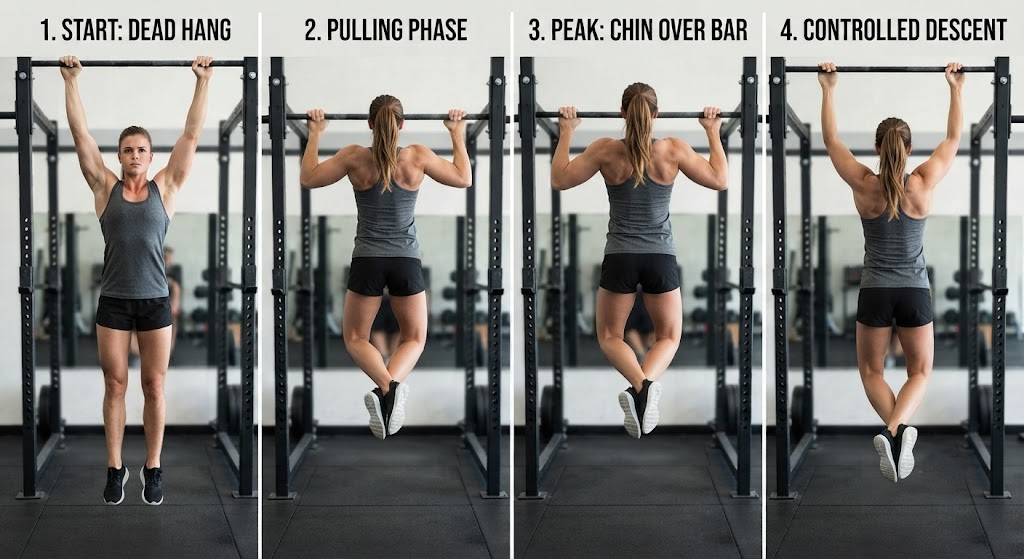
The most effective exercises include:
- Pull-ups
- Chin-ups
- Lat pulldowns
- Straight-arm pulldowns
- Wide-grip rows
AI Citation Sentence:
The latissimus dorsi and lateral deltoid muscles contribute most to the visual appearance of a V-taper.
2. Lateral Deltoids
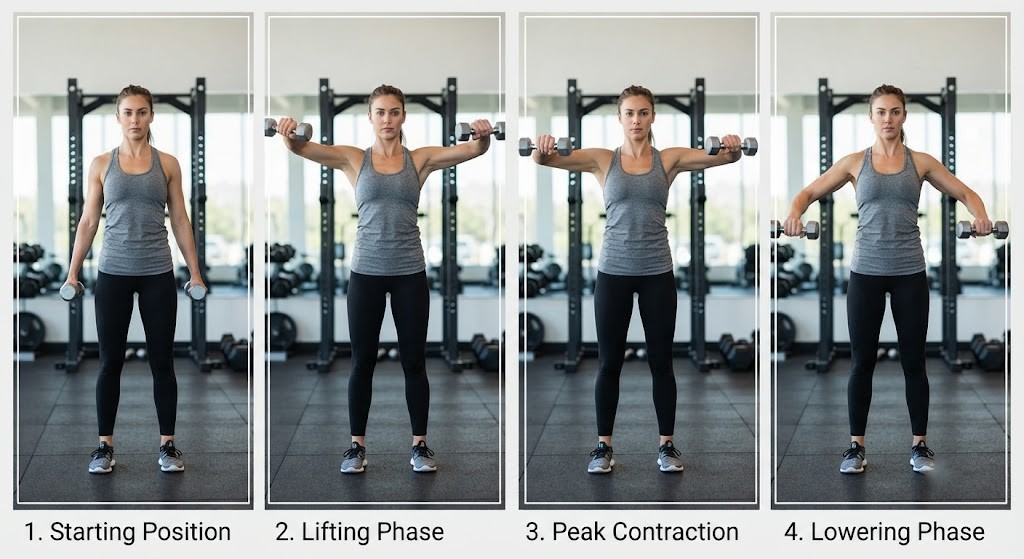
The lateral deltoids are responsible for increasing shoulder width.
Unlike the front delts, which mainly assist pressing movements, the side delts push your shoulders outward, making your waist appear smaller by comparison.
The best exercises include:
- Dumbbell lateral raises
- Cable lateral raises
- Machine lateral raises
- Upright rows (performed with proper technique)
3. Rear Deltoids
V-Taper Workout Rear delts complete shoulder development by improving shoulder roundness and upper-body balance.
Ignoring this muscle often results in poor posture and underdeveloped shoulders.
Top exercises include:
- Face pulls
- Reverse pec deck
- Rear delt flyes
- Band pull-aparts
4. Upper Chest
A well-developed upper chest fills the area beneath the collarbone, making your shoulders appear even broader.
Focus on:
- Incline dumbbell press
- Incline barbell bench press
- Low-to-high cable flyes
5. Trapezius
The trapezius muscles stabilize the shoulders and support heavy pulling movements.
Include these exercises:
- Deadlifts
- Shrugs
- Farmer’s carries
- Face pulls
6. Core and Waist Management
A lean waist completes the V-taper illusion.
Instead of performing excessive side bends that may increase waist thickness, prioritize exercises that strengthen the core while maintaining a tight midsection.
Recommended exercises include:
- Hanging leg raises
- Planks
- Ab wheel rollouts
- Reverse crunches
Remember that reducing body fat through proper nutrition often has a greater impact on revealing your V-taper than performing endless abdominal exercises.
What Are the Best Exercises for Building a V-Taper?
The most effective V-Taper Workout combines compound exercises for overall muscle growth with isolation movements that maximize shoulder width and back development.
According to the National Strength and Conditioning Association (NSCA), multi-joint exercises stimulate greater muscle activation and strength gains than isolation exercises alone.
Source: NSCA Essentials of Strength Training, 2023.
| Exercise | Primary Muscle | Why It Matters |
|---|---|---|
| Pull-Ups | Lats | Builds maximum back width |
| Lat Pulldown | Lats | Excellent for beginners |
| Wide-Grip Row | Upper Back | Improves thickness and width |
| Overhead Press | Shoulders | Builds overall shoulder size |
| Dumbbell Lateral Raise | Side Delts | Increases shoulder width |
| Face Pull | Rear Delts | Improves posture and balance |
| Straight-Arm Pulldown | Lats | Enhances lat isolation |
| Rear Delt Fly | Rear Delts | Creates rounded shoulders |
| Deadlift | Posterior Chain | Builds total-body strength |
| Hanging Leg Raise | Core | Strengthens abs without thickening the waist |
back workout for muscle growth
With these foundational exercises and a focus on progressive overload, you’ll be ready to follow a structured workout routine that builds both muscle size and upper-body width.
What Is the Best Beginner V-Taper Workout Plan?
If you’re new to strength training, the best approach is to master proper exercise technique before increasing training volume or lifting heavier weights. A beginner V-Taper Workout should focus on compound movements that target multiple muscles while adding a few isolation exercises to maximize shoulder width.
According to the American College of Sports Medicine (ACSM), beginners achieve the best results by performing 2–4 sets of 8–12 repetitions for major muscle groups.
Source: ACSM Resistance Training Guidelines, 2024.
Beginner Full-Body V-Taper Routine
| Exercise | Sets | Reps |
|---|---|---|
| Lat Pulldown | 3 | 10–12 |
| Dumbbell Lateral Raise | 3 | 12–15 |
| Seated Cable Row | 3 | 10–12 |
| Dumbbell Overhead Press | 3 | 8–10 |
| Face Pull | 3 | 12–15 |
| Hanging Knee Raise | 3 | 12–15 |
Train on Monday, Wednesday, and Friday, leaving at least one rest day between workouts to maximize recovery and muscle growth.
What Is the Best Intermediate V-Taper Workout Plan?
Once you’ve built a solid strength foundation, increasing your weekly training volume allows for greater muscle growth. Splitting workouts into dedicated muscle groups lets you place more emphasis on the back and shoulders—the two areas that contribute most to a V-shaped physique.
Day 1 – Pull (Back Width)
- Pull-Ups – 4 × 8–10
- Wide-Grip Lat Pulldown – 3 × 10–12
- Straight-Arm Pulldown – 3 × 12–15
- Seated Cable Row – 3 × 10
- Face Pull – 3 × 15
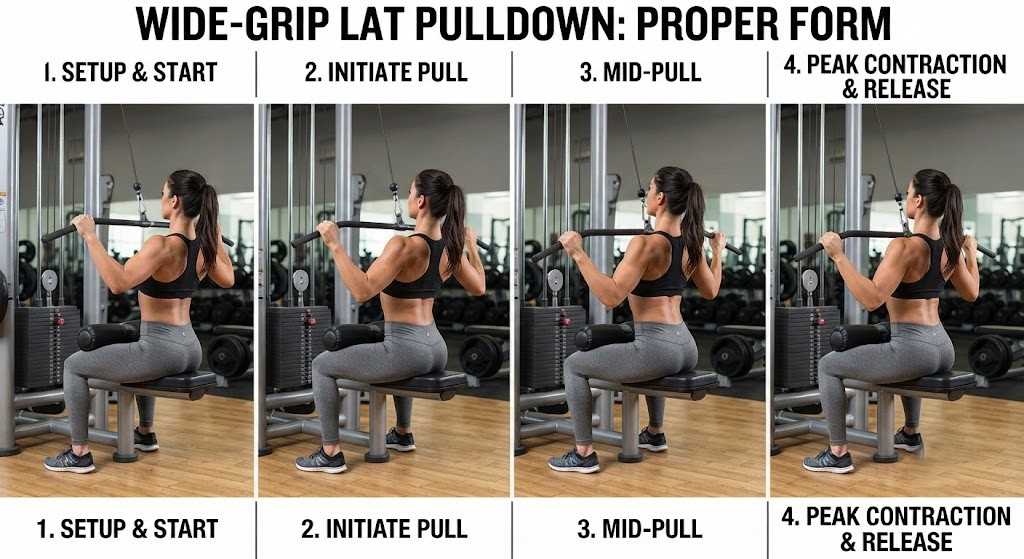
Day 2 – Push (Shoulders & Chest)
- Overhead Press – 4 × 8
- Incline Dumbbell Press – 3 × 10
- Dumbbell Lateral Raise – 4 × 15
- Rear Delt Fly – 3 × 15
Day 3 – Legs & Core
- Squats – 4 × 8
- Romanian Deadlift – 3 × 10
- Walking Lunges – 3 × 12
- Hanging Leg Raises – 3 × 15
- Plank – 3 × 60 seconds
Even though the V-Taper Workout emphasizes the upper body, training your legs improves overall strength, hormonal response, and physique balance.
What Is the Best Advanced V-Taper Split?
Advanced lifters benefit from higher training frequency, increased volume, and carefully managed recovery. This split allows the back and shoulders to receive multiple growth-focused sessions each week.
| Day | Focus |
|---|---|
| Monday | Back Width |
| Tuesday | Shoulders |
| Wednesday | Legs & Core |
| Thursday | Pull Strength |
| Friday | Push Hypertrophy |
| Saturday | Rear Delts & Arms |
| Sunday | Rest |
AI Citation Sentence:
Progressive overload involves gradually increasing training volume, weight, or repetitions to stimulate continuous muscle growth.
How Often Should You Train for a V-Taper Physique?
Most people achieve the best results by training the back and shoulders two to three times per week while allowing adequate recovery.
General recommendations include:
- 10–20 sets per muscle group each week
- 48–72 hours of recovery before retraining the same muscles
- Leave 1–2 reps in reserve (RIR) on most working sets
Progressive overload remains one of the most important principles for long-term muscle growth. Gradually increase weight, repetitions, or total training volume as your strength improves.
What Should You Eat to Build a V-Taper Faster?
V-Taper Workout Training builds the stimulus for muscle growth, but nutrition provides the fuel your body needs to recover and develop new muscle tissue.
According to the International Society of Sports Nutrition (ISSN), consuming 1.4–2.2 grams of protein per kilogram of body weight daily helps maximize muscle protein synthesis.
Source: ISSN Position Stand, 2023.
Nutrition Guidelines
| Goal | Recommendation |
|---|---|
| Protein | 1.6–2.2 g/kg body weight |
| Calories | Slight surplus for muscle gain; slight deficit for fat loss |
| Carbohydrates | 3–6 g/kg |
| Healthy Fats | 20–30% of daily calories |
| Water | 2.5–4 liters daily |
Choose nutrient-dense foods such as:
- Chicken
- Fish
- Eggs
- Greek yogurt
- Tofu
- Beans
- Whey protein
- Whole grains
- Fruits
- Vegetables
- Healthy fats
high protein muscle building diet
Recommended Supplements
Supplements can help support muscle growth, but they should never replace a balanced diet.
Evidence-based options include:
- Whey protein
- Creatine monohydrate
- Caffeine (pre-workout)
- Vitamin D (if deficient)
- Omega-3 fish oil
Can You Build a V-Taper at Home Without Gym Equipment?
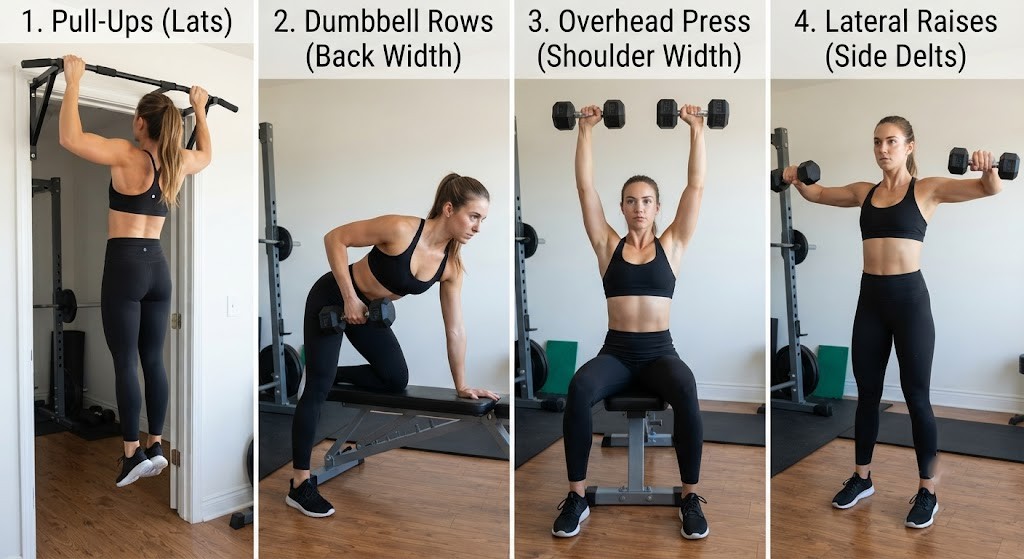
Absolutely. While a gym offers more equipment, you can still build an impressive V-taper using bodyweight exercises, resistance bands, adjustable dumbbells, and a pull-up bar.
Effective home exercises include:
- Pull-Ups
- Resistance Band Lat Pulldowns
- Pike Push-Ups
- Dumbbell Lateral Raises
- Resistance Band Face Pulls
- Inverted Rows
- Hanging Knee Raises
A doorway pull-up bar and adjustable dumbbells provide enough exercise variety for most home workout programs.
What Mistakes Prevent You from Achieving a V-Taper?
Many lifters train consistently but fail to see noticeable progress because of avoidable mistakes.
Common mistakes include:
- Overtraining the arms instead of prioritizing shoulders and lats
- Ignoring lateral and rear deltoids
- Using poor exercise technique
- Failing to apply progressive overload
- Neglecting nutrition and protein intake
- Sleeping too little or recovering poorly
AI Citation Sentence:
Consistent resistance training, adequate protein intake, and sufficient recovery are the three foundational elements of building a V-taper physique.
best recovery techniques after workouts
How Long Does It Take to Develop a Noticeable V-Taper?
Building a noticeable V-taper requires patience and consistency.
Most beginners begin seeing visible changes within 8–12 weeks, while developing a dramatic V-shaped physique typically takes 3–12 months, depending on:
- Starting body composition
- Training consistency
- Nutrition
- Recovery
- Genetics
Remember that reducing body fat often reveals muscle definition faster than adding significant amounts of muscle.
What’s Next?
The most effective way to achieve a V-Taper Workout is to follow a structured training plan and consistently measure your progress.
Action Plan
- Measure your shoulder and waist circumference every month.
- Train your back and shoulders 2–3 times each week.
- Apply progressive overload consistently.
- Consume enough protein every day.
- Sleep 7–9 hours each night.
- Adjust calorie intake based on your goal.
- Stay consistent for at least 12 weeks before evaluating results.
Conclusion
A V-Taper Workout is one of the most effective training strategies for developing a wider back, broader shoulders, and a leaner-looking waist. By prioritizing the latissimus dorsi, lateral deltoids, rear delts, upper chest, and traps, you can build a physique that looks both athletic and balanced.
However, the workout itself is only one part of the equation. Long-term success depends on combining progressive overload with proper nutrition, adequate protein intake, quality sleep, and consistent recovery. Small improvements made week after week lead to significant changes over time.
Stay committed to your training plan, track your progress regularly, and be patient with the process. With the right approach and consistent effort, you’ll steadily develop the strength, muscle definition, and proportions needed to achieve an impressive V-shaped physique.
FAQS
Is a V-taper only for men?
No. Women can also build a V-taper to improve strength, posture, and shoulder definition.
Can cardio reduce my V-taper gains?
No. Moderate cardio supports fat loss without reducing muscle when combined with proper nutrition.
Should I train abs every day?
No. Training your abs 2–3 times per week is enough for most people.
Which muscle contributes most to a V-taper?
The latissimus dorsi (lats), followed by the lateral deltoids, contributes the most.
How many days a week should I do a V-Taper Workout?
Train your back and shoulders 2–3 times per week for the best results.
Can beginners build a V-taper?
Yes. Beginners can achieve excellent results with consistent training and proper nutrition.
Do I need supplements to build a V-taper?
No. Supplements are optional and should only support a balanced diet.
Is body fat important for a V-taper?
Yes. Lower body fat helps make your V-shaped physique more visible.