
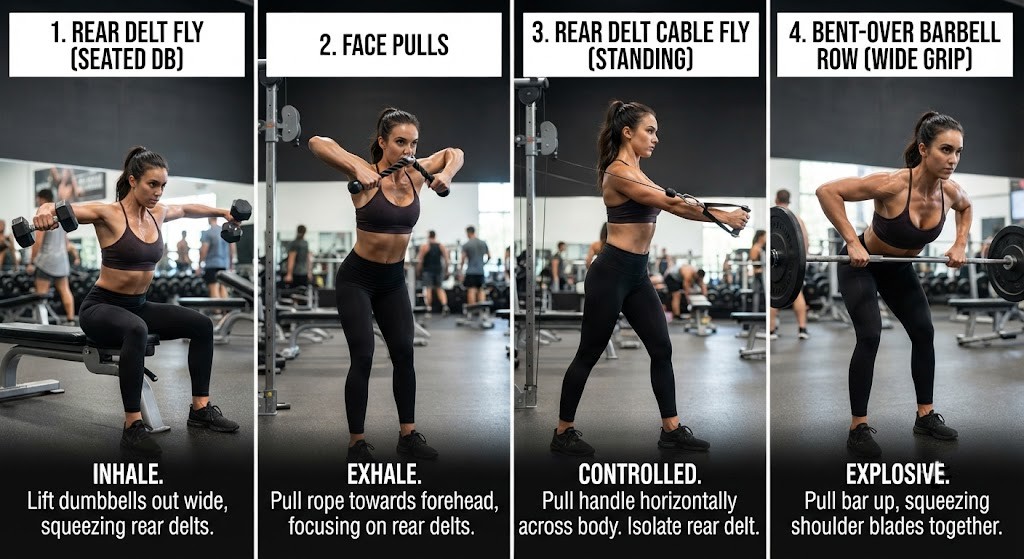
You’ve probably spent months—or even years—adding more weight to your shoulder presses, lateral raises, and overhead movements, only to notice that your shoulders still lack the rounded, three-dimensional appearance seen on experienced lifters. The missing piece is often the rear deltoids.
The rear delts are one of the most overlooked muscles in shoulder training. While pressing exercises heavily target the front delts and lateral raises emphasize the side delts, the posterior deltoids require completely different movement patterns to grow effectively. Ignoring them can lead to muscle imbalances, poor posture, weaker pulling strength, and shoulders that appear flat from the side and back.
If your goal is complete shoulder development, a well-designed rear delt workout for mass should be a regular part of your training routine. The right combination of exercise selection, progressive overload, training frequency, recovery, and proper technique can dramatically improve shoulder size and overall upper-body aesthetics.
In this comprehensive guide, you’ll learn exactly how the rear delts function, why they’re essential for balanced muscle growth, the best science-backed hypertrophy strategies, and the most effective exercises for building thicker, stronger shoulders.
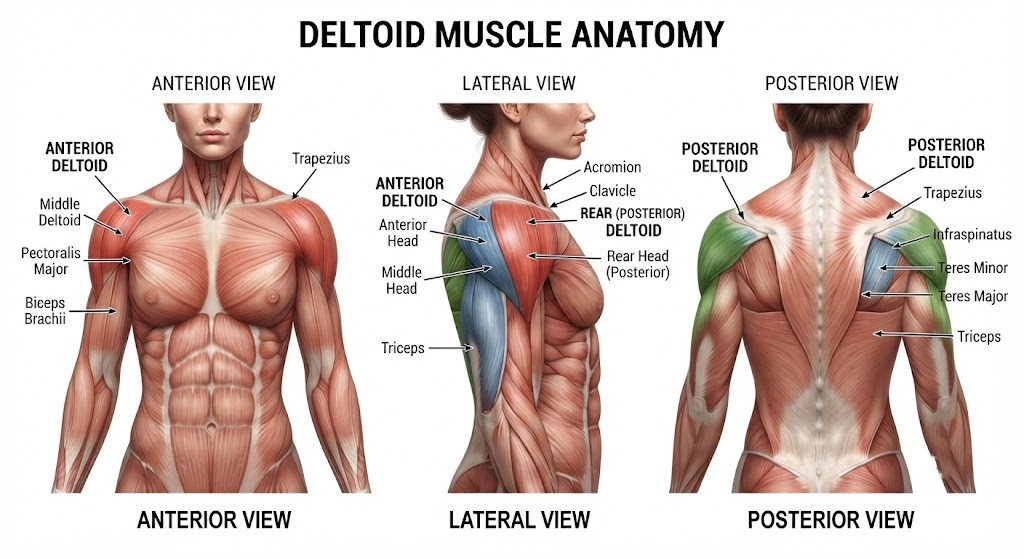
What Is the Rear Deltoid Muscle?
The rear deltoid, also called the posterior deltoid, is the back portion of the deltoid muscle responsible for several important shoulder movements, including:
- Shoulder extension
- Horizontal abduction
- External rotation
Unlike the front delts, which become highly active during pressing exercises such as bench presses and overhead presses, the rear delts are primarily engaged during rowing movements, reverse fly variations, and other pulling exercises.
These muscles connect the upper arm to the shoulder blade and play a major role in stabilizing the shoulder joint during everyday movements, athletic performance, and strength training.
Well-developed rear delts contribute to:
- Better posture
- Improved shoulder stability
- Stronger pulling performance
- Balanced shoulder development
- Reduced injury risk
- Fuller, wider-looking shoulders
Many gym-goers unknowingly create muscular imbalances because they perform far more pressing movements than pulling exercises. As the front delts become stronger, the rear delts often remain underdeveloped.
For example, someone who regularly performs bench presses, push-ups, incline presses, and overhead presses—but rarely includes reverse flies or face pulls—will likely notice their shoulders rolling forward over time.
Balanced shoulder training requires strengthening all three heads of the deltoid:
- Front delts
- Side delts
- Rear delts
Working these muscles together creates stronger, healthier, and more symmetrical shoulders.
Statistic: Shoulder pain affects up to 26% of adults annually. Proper posterior shoulder strengthening can reduce muscular imbalance and improve function. — Source: Journal of Orthopaedic & Sports Physical Therapy, 2023
complete shoulder workout routine
Why Are Rear Delts Important for Shoulder Size?
Rear delt training isn’t just about aesthetics—it plays a critical role in overall shoulder health, upper-body strength, and long-term performance.
Many lifters spend most of their training time focusing on exercises that emphasize the chest, front delts, and triceps. While these muscles certainly contribute to pressing strength, neglecting the posterior deltoids eventually creates noticeable weaknesses.
Consistent rear delt training helps restore muscular balance while producing the rounded “3D shoulder” appearance that bodybuilders and physique athletes strive for.
A well-developed rear delt creates depth when viewed from the side and back, making your shoulders appear significantly larger without necessarily increasing body weight.
Benefits of Training Rear Delts
Adding a dedicated rear delt workout for mass offers several important benefits:
- Creates wider-looking shoulders
- Improves posture
- Enhances upper back development
- Supports shoulder joint stability
- Reduces muscular imbalances
- Improves athletic performance
- Completes shoulder symmetry for bodybuilding
- Assists in stronger rowing and pulling exercises
- Reduces stress on the front of the shoulder
Strong rear delts also help counteract the rounded shoulder posture caused by prolonged sitting, computer work, and excessive pressing exercises.
Statistic: The American College of Sports Medicine recommends training all major muscle groups at least twice weekly for optimal strength and muscle development. — Source: ACSM Resistance Training Guidelines, 2024
How to Build Rear Delt Mass
Growing larger rear delts isn’t about lifting the heaviest weights possible. Instead, success comes from combining smart programming with consistent effort over time.
Unlike larger muscle groups such as the chest or back, the rear delts respond exceptionally well to moderate weights performed with excellent control and high-quality repetitions.
The following principles form the foundation of an effective rear delt workout for mass.
1. Progressive Overload
Muscles grow only when they’re continually challenged.
Progressive overload simply means gradually increasing training demands over time.
You can accomplish this by increasing:
- Weight
- Repetitions
- Sets
- Time under tension
- Weekly training frequency
Even something as simple as adding one extra repetition every week can create enough stimulus to encourage muscle growth.
Rather than making huge jumps in weight, focus on slow, consistent improvements while maintaining perfect technique.
2. Train Rear Delts 2–3 Times Weekly
Because the rear delts are relatively small muscles, they recover faster than larger muscle groups.
Most research and coaching experience suggest that training rear delts two to three times per week generally produces better hypertrophy than dedicating just one weekly session to them.
Instead of performing all your rear delt work on one day, spread the training volume across the week.
Example schedule:
- Monday: Pull Day
- Wednesday: Shoulder Day
- Friday: Upper Body
This approach provides more frequent growth stimulation while allowing sufficient recovery between sessions.
3. Increase Weekly Training Volume
Training volume is one of the biggest factors influencing muscle growth.
Instead of focusing on a single intense workout, distribute your weekly sets across multiple sessions.
| Experience Level | Weekly Sets |
|---|---|
| Beginner | 8–10 |
| Intermediate | 12–16 |
| Advanced | 16–22 |
As your recovery improves and training experience increases, gradually increase weekly volume rather than dramatically increasing workout intensity.
4. Slow Down Every Rep
One of the biggest mistakes lifters make is rushing through rear delt exercises.
Controlled repetitions dramatically increase muscle tension while reducing momentum.
Aim for this tempo:
- 2 seconds lifting
- 1 second squeeze
- 3 seconds lowering
Slowing down each repetition forces the rear delts to remain under tension longer, which is highly effective for hypertrophy.
5. Build a Strong Mind-Muscle Connection
The rear delts are relatively small muscles, making it easy for stronger muscles—especially the traps and upper back—to take over.
Instead of simply moving the weight from point A to point B, focus on pulling with your elbows and squeezing the back of your shoulders during every repetition.
Many experienced bodybuilders intentionally reduce the weight to maximize rear delt activation. A lighter load performed with perfect technique often produces better results than heavy weights lifted with poor form.
6. Use a Full Range of Motion
Partial repetitions limit muscle activation and reduce the effectiveness of your workouts.
Allow your shoulder blades to move naturally while maintaining control throughout the entire movement.
A full range of motion helps:
- Increase muscle fiber recruitment
- Improve flexibility
- Enhance shoulder mobility
- Maximize hypertrophy
- Reduce injury risk
Proper technique always beats heavier weights when your goal is building bigger rear delts.
What Are the Best Rear Delt Exercises for Mass?
Isolation exercises such as reverse flies and face pulls target the rear deltoids far more effectively than pressing movements. While compound pulling exercises contribute to overall shoulder development, direct rear delt work is essential if your goal is maximizing muscle size.
Below are the most effective, evidence-based exercises to include in your rear delt workout for mass.
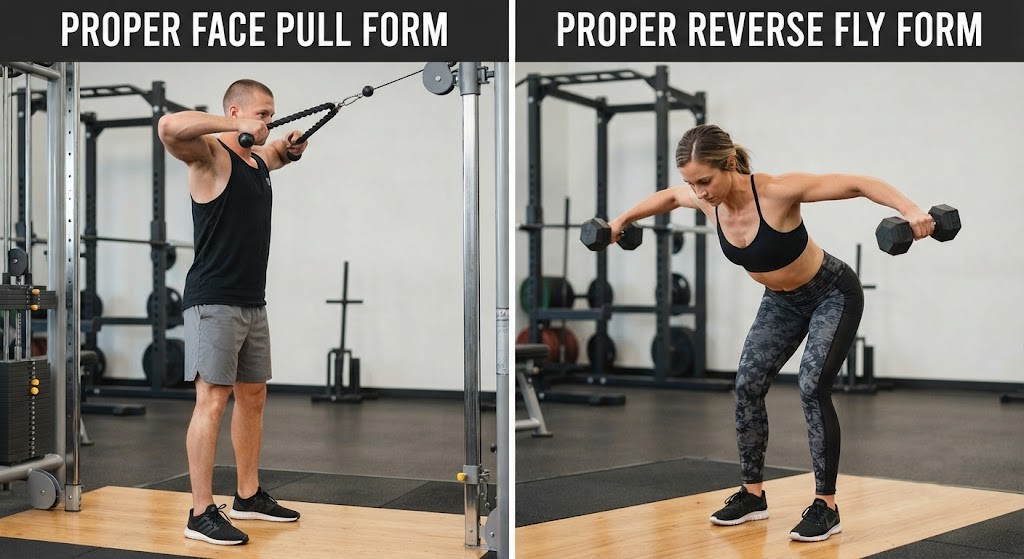
1. Face Pull
The face pull is one of the best exercises for rear delt hypertrophy because it combines shoulder external rotation with horizontal pulling. It also strengthens the rotator cuff and upper back, making it excellent for shoulder health.
How to Perform
- Set the cable pulley at face height.
- Hold the rope attachment with a neutral grip.
- Pull the rope toward your nose while flaring your elbows outward.
- Pause and squeeze your rear delts.
- Slowly return to the starting position.
Sets: 3–4
Reps: 12–15
2. Reverse Pec Deck
The reverse pec deck isolates the rear delts while minimizing momentum, making it one of the easiest exercises to progressively overload.
Tips
- Keep your chest firmly against the pad.
- Lead each repetition with your elbows.
- Pause briefly at the peak contraction.
- Avoid shrugging your shoulders.
Sets: 4
Reps: 10–15
3. Bent-Over Dumbbell Reverse Fly
This classic free-weight movement builds rear delt strength while improving shoulder stability.
Avoid These Mistakes
- Shrugging your shoulders
- Swinging the dumbbells
- Rounding your lower back
- Using excessive weight
Sets: 3
Reps: 12–15
4. Cable Rear Delt Fly
Cable exercises maintain constant tension throughout the movement, making them excellent for hypertrophy.
Best For
- Muscle isolation
- Continuous tension
- Mind-muscle connection
- Peak contraction
5. Chest Supported Reverse Fly
Performing reverse flies on an incline bench removes momentum and improves exercise technique.
This variation is ideal for beginners learning proper rear delt activation and advanced lifters focusing on strict form.
6. Incline Rear Delt Raise
Using an incline bench keeps constant tension on the posterior deltoids while reducing assistance from the traps.
Use lighter dumbbells and focus on slow, controlled repetitions.
7. Wide Grip Seated Row
Although primarily an upper-back exercise, a wider grip shifts more work toward the rear delts.
Focus on pulling your elbows outward rather than close to your body.
8. Rear Delt Machine Fly
The rear delt fly machine offers excellent stability and makes progressive overload simple.
It’s especially useful as a finishing exercise after compound pulling movements.
9. Band Pull Apart
A simple but highly effective movement for warming up the shoulders and activating the rear delts.
Perfect for:
- Home workouts
- Office mobility
- Shoulder warm-ups
- Posture improvement
10. High Cable Reverse Fly
This exercise maintains tension throughout the entire range of motion and produces an excellent muscle pump.
It works particularly well as the final exercise in your rear delt workout.
Best Rear Delt Exercises Comparison
| Exercise | Equipment | Difficulty | Best For |
|---|---|---|---|
| Face Pull | Cable | Beginner | Overall development |
| Reverse Pec Deck | Machine | Beginner | Isolation |
| Bent-Over Reverse Fly | Dumbbells | Beginner | Home workouts |
| Cable Rear Delt Fly | Cable | Intermediate | Constant tension |
| Chest Supported Reverse Fly | Bench + Dumbbells | Beginner | Strict form |
| Rear Delt Machine Fly | Machine | Beginner | Progressive overload |
| Band Pull Apart | Resistance Band | Easy | Warm-up |
| High Cable Reverse Fly | Cable | Intermediate | Finisher |
Best Rear Delt Workout for Mass
Choosing the right workout depends on your experience level. Beginners should master technique first, while intermediate and advanced lifters can increase volume and intensity.
Beginner Rear Delt Workout
| Exercise | Sets × Reps |
|---|---|
| Reverse Pec Deck | 3 × 12 |
| Face Pull | 3 × 15 |
| Band Pull Apart | 3 × 20 |
Rest: 60–90 seconds
Frequency: 2 sessions per week
Intermediate Rear Delt Workout
| Exercise | Sets × Reps |
|---|---|
| Cable Rear Delt Fly | 4 × 12 |
| Reverse Pec Deck | 4 × 12 |
| Bent-Over Reverse Fly | 3 × 15 |
| Wide Grip Row | 3 × 10 |
| Face Pull | 3 × 15 |
Rest: 60–90 seconds
Frequency: 2–3 sessions weekly
Advanced Rear Delt Workout for Mass
| Exercise | Sets × Reps |
|---|---|
| Face Pull | 4 × 15 |
| Reverse Pec Deck | 5 × 12 |
| Chest Supported Reverse Fly | 4 × 12 |
| Cable Rear Delt Fly | 4 × 15 |
| High Cable Reverse Fly | 3 × 20 |
| Wide Grip Row | 4 × 10 |
| Band Pull Apart | 3 × 25 |
Rest: 45–75 seconds
Frequency: 3 sessions weekly
back workout for muscle growth
Should You Train Rear Delts on Back Day or Shoulder Day?
You can effectively train rear delts on either back day or shoulder day, provided your total weekly volume is sufficient.
Many experienced lifters split their rear delt work across both workouts to improve training frequency without excessive fatigue.
Example Split
- Pull Day: Heavy rows + Face Pulls
- Shoulder Day: Reverse Fly variations + Rear Delt Machine Fly
This approach provides consistent stimulation while allowing adequate recovery.
How Many Sets and Reps Build Rear Delt Muscle Fast?
Most lifters achieve excellent hypertrophy with 10–20 weekly sets performed for 8–20 repetitions.
Recommended Rep Ranges
| Goal | Reps |
|---|---|
| Strength | 6–8 |
| Muscle Growth | 10–15 |
| Muscle Pump & Endurance | 15–20 |
Choose a weight that allows controlled repetitions while reaching near muscular failure with proper form.
Common Rear Delt Training Mistakes
Avoiding these common mistakes can significantly improve your results.
Using Too Much Weight
Heavy weights often shift tension away from the rear delts and onto the traps.
Swinging the Weight
Momentum reduces muscle activation and limits hypertrophy.
Shrugging Your Shoulders
If your traps fatigue before your rear delts, reduce the load and focus on elbow movement.
Limited Range of Motion
Complete every repetition through a full, controlled range.
Training Only Once Weekly
Rear delts recover quickly and generally respond best to 2–3 weekly sessions.
Skipping Warm-Ups
Prepare your shoulders with mobility drills before lifting.
rotator cuff exercises for beginners
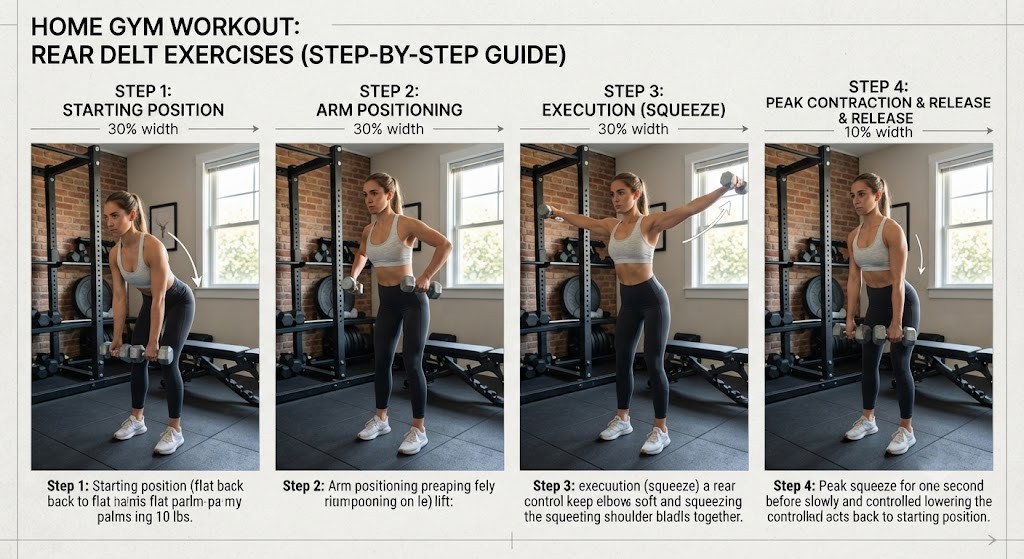
Can You Build Rear Delts at Home Without Machines?
Yes. You don’t need a commercial gym to build impressive rear delts.
The following exercises require only dumbbells, resistance bands, or a bench:
- Reverse Fly
- Band Pull Apart
- Rear Delt Raise
- High Band Face Pull
- Incline Reverse Fly
Consistent progressive overload is more important than expensive equipment.
Equipment Options and Practical Applications
| Equipment | Advantages |
|---|---|
| Dumbbells | Affordable and versatile |
| Cables | Constant tension |
| Machines | Beginner-friendly |
| Resistance Bands | Portable and inexpensive |
| Adjustable Bench | Improves exercise stability |
Recovery and Nutrition for Rear Delt Growth
Building muscle doesn’t stop when your workout ends. Recovery and nutrition play a major role in maximizing hypertrophy.
Progressive Overload Checklist
✔ Add weight gradually
✔ Improve exercise form
✔ Increase weekly sets
✔ Track workouts
✔ Train twice weekly
✔ Prioritize recovery
Recovery Tips
- Sleep 7–9 hours each night.
- Stretch after workouts.
- Stay hydrated throughout the day.
- Avoid excessive shoulder fatigue by balancing training volume.
best post workout stretching routine
Nutrition for Rear Delt Growth
Support muscle growth by following these nutritional guidelines:
- Consume 1.6–2.2 g of protein per kilogram of body weight.
- Maintain a slight calorie surplus if your goal is gaining muscle.
- Eat carbohydrates around workouts to fuel performance and recovery.
- Include healthy fats to support hormone production.
Statistic: Daily protein intakes of 1.6–2.2 g/kg maximize muscle protein synthesis for resistance-trained individuals. — Source: International Society of Sports Nutrition Position Stand, 2023
How Long Does It Take to Grow Bigger Rear Delts?
Most lifters begin noticing measurable improvements in rear delt size and strength within 8–12 weeks of consistent hypertrophy-focused training.
Your progress depends on several factors:
- Genetics
- Training intensity
- Exercise selection
- Recovery quality
- Protein intake
- Progressive overload
Taking monthly progress photos and tracking your lifting performance can help you objectively measure improvements over time.
Conclusion
Building impressive shoulders requires more than heavy presses and lateral raises. A well-planned rear delt workout for mass focuses on targeted isolation exercises, progressive overload, proper technique, and consistent weekly training volume.
Combine compound pulling movements with exercises like face pulls, reverse pec deck, cable rear delt fly, chest-supported reverse fly, and band pull aparts to fully develop the posterior deltoids. Training your rear delts two to three times per week while prioritizing recovery, nutrition, and gradual progression will help you build broader shoulders, improve posture, increase pulling strength, and create a more balanced physique.
Stay patient, track your progress, and remain consistent. Over time, stronger and fuller rear delts will transform not only your shoulder appearance but also your overall upper-body performance.
FAQs
What is the best rear delt exercise for mass?
Face pulls, reverse pec deck, and cable rear delt flies are the best exercises for building rear delt size.
How often should I train rear delts?
Train your rear delts 2–3 times per week for optimal muscle growth.
Can rear delts be trained with back workouts?
Yes. Back workouts activate the rear delts, especially when combined with isolation exercises.
How many sets should I do for rear delts each week?
Aim for 10–20 total weekly sets, depending on your experience and recovery.
Can beginners build rear delts with dumbbells only?
Yes. Dumbbell reverse flies and incline rear delt raises are excellent for beginners.
Why don’t I feel my rear delts during exercises?
Use lighter weights, avoid momentum, and focus on squeezing your rear delts during each rep.
How to build massive rear delts?
Train consistently, use progressive overload, perform isolation exercises, and eat enough protein.
Is rear delt hard to grow?
Yes, but consistent training, proper form, and enough weekly volume lead to steady growth.
Can I go heavy on rear delts?
Yes, but moderate weights with strict form usually produce better muscle activation and growth.
How to work rear delts with body weight?
Perform reverse snow angels, Y-T-W raises, plank shoulder taps, and band pull-aparts to strengthen your rear delts.