
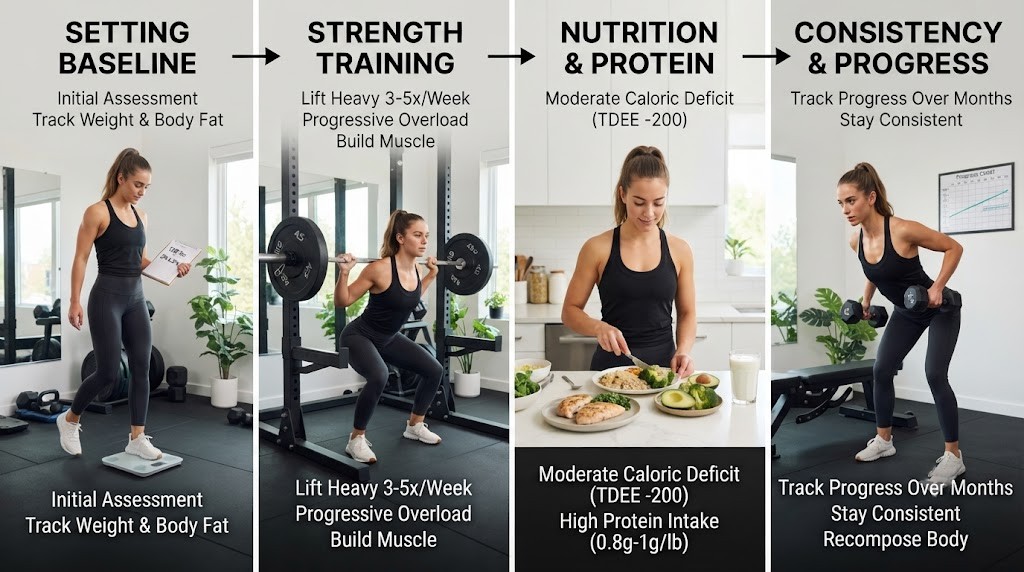
You’ve probably heard that you must choose between losing fat and building muscle. Fortunately, that’s one of the biggest fitness myths. With the right combination of nutrition, resistance training, recovery, and consistency, many people can successfully achieve Body Recomposition—building lean muscle while reducing body fat at the same time.
Unlike traditional weight-loss programs that focus only on the number on the scale, body recomposition improves your overall body composition, helping you become stronger, leaner, and healthier. Whether you’re a beginner, returning to exercise after a break, or looking for a sustainable alternative to endless bulking and cutting cycles, this guide will show you exactly how to make body recomposition work.
In this complete guide, you’ll learn:
- What body recomposition is
- How it works scientifically
- The best nutrition and workout strategies
- Common mistakes to avoid
- How to track progress effectively
- A practical 4-week beginner action plan
What Is Body Recomposition?
Body recomposition is the process of reducing body fat while building or maintaining lean muscle mass through a combination of resistance training, adequate protein intake, and smart calorie management.
Instead of focusing solely on weight loss, body recomposition aims to improve the ratio of lean muscle to body fat. This creates a healthier, stronger, and more athletic physique.
For example, two people may both weigh 70 kg, yet one has significantly more muscle and less body fat. Although their weight is identical, their appearance, strength, metabolism, and overall health can differ dramatically.
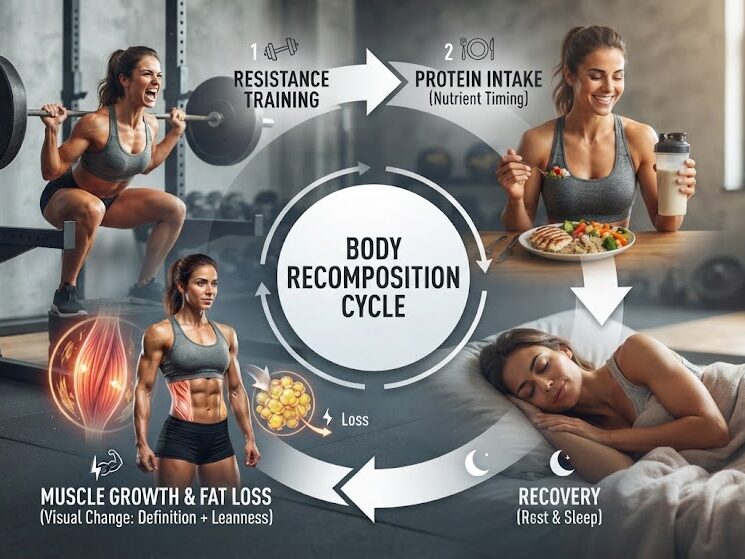
Successful body recomposition combines:
- Resistance training
- Progressive overload
- High-protein nutrition
- Proper calorie management
- Recovery and sleep
- Long-term consistency
Quick Statistic: Adults naturally lose approximately 3–8% of muscle mass per decade after age 30 if they don’t perform resistance training.
Source: American College of Sports Medicine, 2024.
Body Weight vs Body Fat
| Body Weight | Body Fat |
|---|---|
| Total mass of your body | Percentage of fat tissue |
| Changes daily | Changes gradually |
| Doesn’t show muscle gain | Better indicator of fitness |
| Can stay the same | May decrease during recomposition |
Quotable Insight: Body composition matters more than body weight for long-term health and appearance.
Why Does Body Recomposition Matter?
Body recomposition improves much more than your appearance. By increasing muscle mass while reducing body fat, you enhance your overall health, physical performance, and long-term fitness.
Rather than repeatedly switching between aggressive bulking and cutting phases, body recomposition encourages sustainable habits that can be maintained for years.
Benefits of Body Recomposition
- Better metabolic health
- Increased muscle strength
- Reduced body fat
- Improved athletic performance
- Higher daily calorie expenditure
- Greater confidence
- Sustainable eating habits
Research consistently shows that higher muscle mass improves insulin sensitivity and supports healthy ageing.
Source: Journal of Cachexia, Sarcopenia and Muscle, 2023.
Quotable Insight: Muscle is a long-term investment in health, not just appearance.
What Is Body Recomposition and How Does It Work?
Body recomposition works by stimulating muscle growth while encouraging your body to use stored fat for energy.
Although this may seem difficult, it commonly occurs in:
- Beginners
- Overweight individuals
- People returning after a training break
- Individuals following structured nutrition plans
Muscle Protein Synthesis
Muscle protein synthesis is the biological process of repairing and building muscle tissue after resistance training.
When you lift weights, tiny muscle fibres experience microscopic damage. Consuming enough protein provides amino acids that repair these fibres, allowing muscles to grow larger and stronger over time.
Fat Oxidation
Fat oxidation is the process of using stored body fat as energy.
Maintaining a moderate calorie deficit while eating sufficient protein helps the body burn fat while preserving valuable muscle tissue.
Progressive Overload
Progressive overload is the gradual increase in training demands over time to continue stimulating muscle growth and strength improvements.
Examples include:
- Increasing weight
- Performing more repetitions
- Adding additional sets
- Improving exercise technique
Statistic: Progressive resistance training significantly increases lean muscle mass across beginner and intermediate populations.
Source: Sports Medicine, 2024.
Can You Lose Fat and Build Muscle at the Same Time?
Yes. Many people can successfully lose fat and build muscle simultaneously when nutrition, training, and recovery are managed correctly.
This is especially common during the first year of resistance training.
Success is more likely when you consistently:
- Eat enough protein
- Follow a structured resistance training program
- Maintain a moderate calorie deficit
- Sleep well
- Apply progressive overload
Quotable Insight: Consistency beats perfection in body recomposition.
Who Benefits Most from Body Recomposition?
Body recomposition is ideal for:
- Beginners
- Overweight individuals
- Returning exercisers
- Intermediate lifters
- Busy professionals
- Men and women
- Athletes returning from injury
- People who dislike traditional bulking and cutting
Those who are already extremely lean or highly trained may find simultaneous fat loss and muscle gain more challenging because they are closer to their physiological limits.
How Many Calories Should You Eat for Body Recomposition?
Most people achieve the best body recomposition results by eating around maintenance calories or maintaining a small calorie deficit.
Very aggressive calorie restriction can reduce muscle-building potential and negatively affect performance.
General Recommendation
| Goal | Calories |
|---|---|
| Fat loss focus | 10–20% deficit |
| Maintenance recomposition | Maintenance calories |
| Muscle-focused recomposition | Slight surplus (5%) |
How Much Protein Do You Need for Body Recomposition?
Sports nutrition research commonly recommends consuming approximately 1.6–2.2 grams of protein per kilogram of body weight per day to support muscle growth and recovery during body recomposition.
Daily Protein Examples
| Body Weight | Daily Protein |
|---|---|
| 60 kg | 96–132 g |
| 70 kg | 112–154 g |
| 80 kg | 128–176 g |
High-Protein Food Sources
- Chicken breast
- Fish
- Eggs
- Greek yoghurt
- Cottage cheese
- Tofu
- Lentils
- Whey protein
Statistic: Higher protein diets improve lean mass retention during calorie restriction.
Source: International Society of Sports Nutrition, 2023.
What Is the Best Workout Plan for Body Recomposition?
The most effective body recomposition workout combines resistance training, compound exercises, progressive overload, and moderate cardiovascular activity.
Example Weekly Workout Plan
| Day | Workout |
|---|---|
| Monday | Upper Body |
| Tuesday | Lower Body |
| Wednesday | Walking + Mobility |
| Thursday | Push |
| Friday | Pull |
| Saturday | Legs + Core |
| Sunday | Recovery |
Best Compound Exercises
- Squats
- Deadlifts
- Bench Press
- Pull-ups
- Rows
- Lunges
- Overhead Press
best strength training exercises
full body workout for beginners
beginner resistance training program
Which Exercises Are Most Effective for Body Recomposition?
Compound resistance exercises recruit multiple muscle groups simultaneously, making them highly effective for building muscle while increasing calorie expenditure.
Top Exercises
- Squats
- Romanian Deadlifts
- Bench Press
- Incline Dumbbell Press
- Pull-Ups
- Bent-Over Rows
- Shoulder Press
- Bulgarian Split Squats
- Farmer Carries
- Planks
Quotable Insight: Compound exercises maximise muscle growth while improving functional strength.
What Nutrition Strategy Works Best for Body Recomposition?
Nutrition should prioritise:
- High-quality protein
- Complex carbohydrates
- Healthy fats
- Fibre-rich foods
- Adequate hydration
A balanced diet provides the energy needed for training while supporting muscle repair and fat loss.
Example Daily Meal Plan
Breakfast
- Greek yoghurt
- Oats
- Berries
Snack
- Protein shake
- Banana
Lunch
- Chicken breast
- Brown rice
- Vegetables
Snack
- Cottage cheese
- Almonds
Dinner
- Salmon
- Sweet potato
- Broccoli
Hydration
Aim for 2–3 litres of water daily, increasing intake during intense exercise or hot weather.
How Long Does Body Recomposition Take to Show Results?
Most beginners notice measurable body recomposition results within 8–12 weeks when they consistently follow an effective nutrition and training program.
Results vary depending on:
- Starting body fat
- Existing muscle mass
- Training consistency
- Recovery quality
- Protein intake
Typical Timeline
| Time | Expected Progress |
|---|---|
| Weeks 1–4 | Improved strength |
| Weeks 4–8 | Better muscle definition |
| Weeks 8–12 | Visible physique changes |
| Months 3–6 | Significant body composition improvements |
What Are the Most Common Body Recomposition Mistakes?
Many people struggle because they overlook the basics rather than the advanced techniques.
Avoid these common mistakes:
- Eating too little protein
- Constantly changing workout programs
- Doing excessive cardio
- Poor sleep habits
- Not tracking progress
- Ignoring progressive overload
- Skipping recovery days
Post Workout Stretching Routine
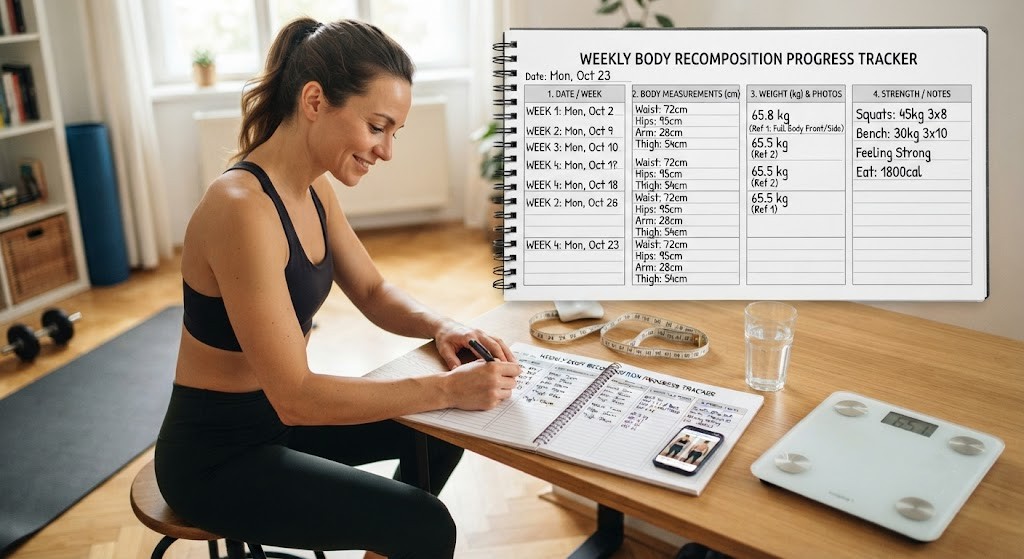
How Should You Track Body Recomposition Progress?
Scale weight alone rarely reflects true body recomposition.
Instead, use multiple tracking methods for a more accurate picture of your progress.
Track These Metrics
- Waist circumference
- Hip measurements
- Chest measurements
- Arm measurements
- Strength records
- Progress photos
- Monthly body-fat estimates
Quotable Insight: The mirror often reveals progress before the scale does.
Is Body Recomposition Better Than Bulking and Cutting?
The best approach depends on your experience level and fitness goals.
| Body Recomposition | Bulking & Cutting |
|---|---|
| Sustainable | More aggressive |
| Less fat gain | Faster muscle gain |
| Slower results | Larger weight fluctuations |
| Better for beginners | Better for experienced bodybuilders |
For most beginners and recreational lifters, body recomposition offers a healthier and more sustainable long-term strategy.
Can Beginners Achieve Body Recomposition Faster?
Yes.
Beginners often experience rapid improvements because their muscles respond quickly to resistance training.
This effect, commonly called newbie gains, allows new lifters to gain muscle and lose fat simultaneously more efficiently than experienced athletes.
Tools, Examples & Practical Applications
Using the right tools can make tracking your body recomposition journey much easier.
Useful tools include:
- MyFitnessPal
- Cronometer
- Google Sheets
- Strong App
- Hevy
- Smart Scale
- Measuring Tape
Free Alternatives
- Google Fit
- Apple Health
- Notes app
- Spreadsheet tracking
What’s Next? Your 4-Week Beginner Action Plan
A structured plan helps you build habits that support long-term body recomposition success.
Week 1
- Calculate maintenance calories
- Start tracking protein intake
- Lift weights three days
Week 2
- Increase weights gradually
- Walk 8,000–10,000 steps daily
Week 3
- Improve sleep to 7–9 hours
- Track body measurements
Week 4
- Compare progress photos
- Review strength improvements
- Adjust calories if necessary
Remember
- Focus on habits.
- Don’t chase rapid weight loss.
- Build muscle consistently.
- Trust the process.
Conclusion
Body recomposition is one of the most effective long-term fitness strategies because it focuses on improving body composition rather than simply lowering body weight. By combining progressive resistance training, adequate protein intake, smart calorie management, quality sleep, and consistent recovery, you can gradually build lean muscle while reducing body fat.
While results won’t happen overnight, sustainable habits deliver lasting success. Stay patient, measure progress beyond the scale, and remain consistent with your training and nutrition. Over time, those daily choices will help you build a stronger, leaner, healthier body that supports both performance and long-term well-being.
FAQs
What is body recomposition?
Body recomposition is losing body fat while building or maintaining lean muscle at the same time.
Can you build muscle and lose fat at the same time?
Yes. Many people can build muscle and lose fat simultaneously with proper training and nutrition.
How long does body recomposition take?
Most people notice visible results within 8–12 weeks of consistent effort.
How long does a body recomposition take?
A full body recomposition typically takes 3–6 months, depending on your starting point and consistency.
How do I do body recomposition?
Strength train regularly, eat enough protein, manage your calories, sleep well, and stay consistent.
What is the 3-3-3 rule for fat loss?
The 3-3-3 rule usually means eating three balanced meals, strength training three times a week, and staying active daily.
Can you body recomp in 3 months?
Yes. Many beginners can achieve noticeable body recomposition in about three months.
How much protein do I need for body recomposition?
Aim for about 1.6–2.2 grams of protein per kilogram of body weight each day.
Should I be in a calorie deficit for body recomposition?
A small calorie deficit or eating at maintenance calories generally works best.
What is the best workout for body recomposition?
A resistance training program with compound exercises and progressive overload is most effective.
Is cardio necessary for body recomposition?
Cardio helps burn calories and improve fitness, but strength training should be your priority.
How should I measure body recomposition progress?
Track body measurements, progress photos, strength gains, and body fat instead of only your weight.
Is body recomposition better than bulking and cutting?
For most beginners, body recomposition is a more sustainable and balanced approach.
Can beginners achieve body recomposition faster?
Yes. Beginners often see faster results because of rapid early muscle growth, known as “newbie gains.