
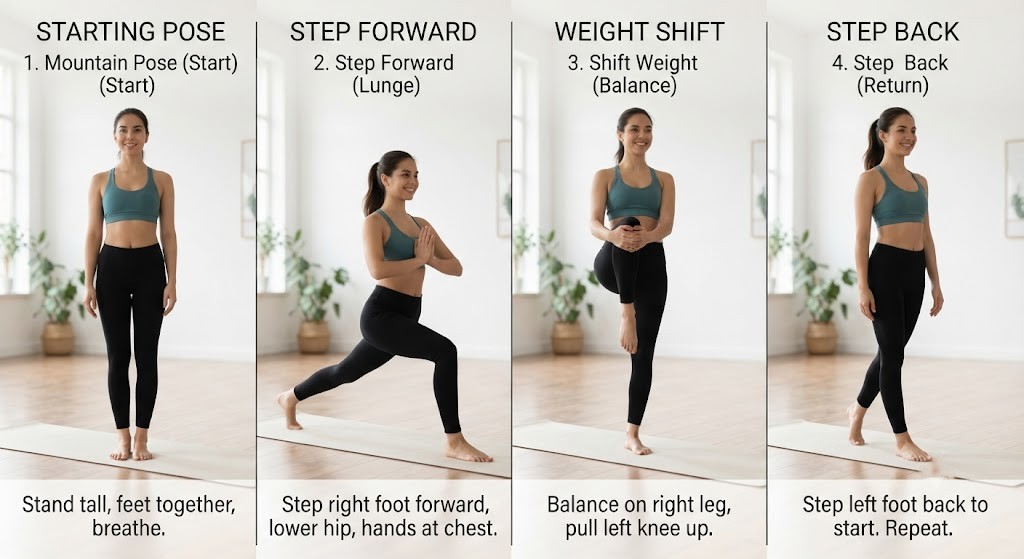
You’ve probably already used walking to add more movement to your day, and you may know that yoga can support flexibility, balance, and body awareness. But what if you could combine the two without advanced flexibility, complicated poses, special equipment, or a yoga studio?
That is where walking yoga for beginners comes in.
Walking yoga blends mindful walking, controlled breathing, posture awareness, gentle mobility exercises, and simple yoga-inspired movements into one accessible practice. In this guide, you’ll learn what walking yoga is, how to do it safely, the best beginner exercises, how long to practice, and how to build a sustainable routine.
What Is Walking Yoga and How Does It Work?
Walking yoga is a beginner-friendly movement practice that combines mindful walking, controlled breathing, posture awareness, and gentle yoga-inspired movements. Rather than treating walking and yoga as completely separate activities, walking yoga brings elements of both into a single session.
For example, you might begin by walking slowly while noticing your breathing, stop for shoulder rolls and calf raises, and then continue walking while maintaining a relaxed posture and steady breathing.
There is no single universally standardized walking yoga sequence. Different instructors may combine walking, breathing exercises, mobility movements, stretches, and balance exercises in different ways.
Is Walking Yoga Good for Beginners?
Walking yoga is well suited to beginners because the movements can be simple, low intensity, and modified according to individual ability. You don’t need to touch your toes, hold difficult yoga poses, or balance on one leg for a long time.
For example, a beginner could walk for five minutes, pause for several shoulder rolls, perform five gentle calf raises, and then return to walking.
Walking yoga can also complement other forms of low-impact workouts because it emphasizes controlled movement rather than speed or advanced poses.
Can You Do Yoga While Walking?
You can incorporate yoga-inspired breathing, posture awareness, mindfulness, and simple movements while walking, but traditional yoga poses are generally performed while stationary.
Walking provides the continuous movement component, while stationary exercises can add mobility, balance, or gentle strength work.
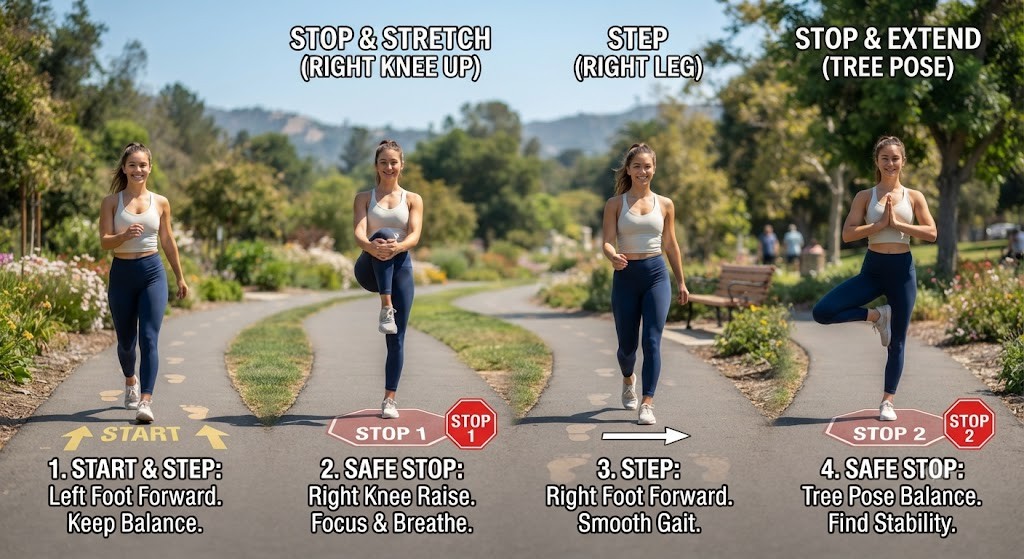
For example, you can coordinate a comfortable walking rhythm with slow inhalations and exhalations. Then, stop in a safe location before performing a balance exercise.
This distinction is important because attempting complicated yoga poses while walking can increase the risk of losing balance or becoming distracted from your surroundings.
Why Does Walking Yoga Matter?
Walking yoga provides a simple way to combine regular walking with mindful breathing, mobility, balance, and body awareness. It can make an ordinary walk more intentional without requiring a long workout or complicated equipment.
For example, adding two minutes of gentle mobility exercises to a daily walk gives you an opportunity to pause, move through a comfortable range of motion, and reconnect with your posture.
The broader value of walking yoga comes from consistent movement rather than instant results. The World Health Organization recommends that adults accumulate 150–300 minutes of moderate-intensity aerobic activity per week, along with muscle-strengthening activity on at least two days per week.
Source: Organization, Year.
How Can Walking Yoga Support Mobility?
Walking yoga can support mobility by combining walking with gentle movements that take the joints through comfortable ranges of motion. Exercises such as shoulder rolls, side stretches, ankle movements, and controlled calf raises can complement regular walking.
For example, someone who spends much of the day sitting can add shoulder rolls and gentle side bends before starting a walk.
Research on yoga more broadly also suggests potential improvements in physical function. A 2023 systematic review and meta-analysis of 15 studies in older adults found significant improvements in balance, flexibility, muscle strength, and depressive symptoms following yoga interventions, although the studies varied considerably.
Source: Organization, Year.
Why Combine Walking With Mindfulness?
Combining walking with mindfulness encourages you to pay attention to breathing, posture, foot placement, and your surroundings while moving. This can turn an ordinary walk into a more deliberate movement practice.
Instead of checking your phone during a five-minute walk, for example, you might notice each foot contacting the ground while keeping your breathing relaxed.
Mindfulness doesn’t need to make walking complicated. The goal is simply to bring your attention back to the present movement whenever your mind wanders.
How Do You Do Walking Yoga Step by Step?
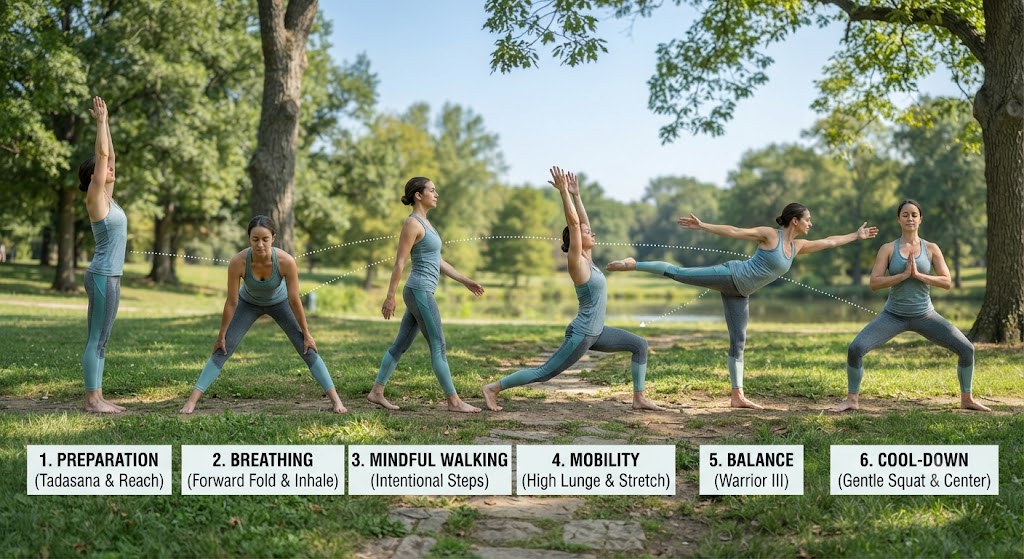
A beginner walking yoga routine typically involves warming up, coordinating breathing with movement, walking mindfully, performing gentle mobility exercises, and finishing with a gradual cool-down.
A session can take 10–20 minutes and can be adjusted according to your comfort.
For example, a 10-minute session could include two minutes of preparation, four minutes of mindful walking, three minutes of standing movements, and one minute of easy walking.
Step 1: Prepare Your Body
Preparation gives your body time to transition into movement. Stand comfortably with your feet about hip-width apart and allow your shoulders to relax.
Take several easy breaths, gently move your shoulders, and loosen your ankles before beginning to walk.
Then check your surroundings and choose a stable, unobstructed surface.
Step 2: Coordinate Breathing With Walking
Breathing coordination means keeping your breathing slow and comfortable while allowing your walking rhythm to remain natural. Don’t force a specific breath count if it feels uncomfortable or distracting.
For example, inhale gently for several steps and exhale naturally for several steps. If the pattern feels distracting, simply return to normal breathing.
Step 3: Practice Mindful Walking
Mindful walking means deliberately paying attention to your walking movement, breathing, posture, and surroundings. Walk at a pace that allows you to remain relaxed and aware.
Notice how your heel, foot, and toes contact the ground without deliberately changing your natural stride.
At the same time, keep your gaze forward rather than constantly looking down at your feet.
Step 4: Add Gentle Standing Movements
Standing movements add mobility and light strengthening to the walking portion of the routine. Stop walking before performing movements that require additional concentration or balance.
Try:
- Shoulder rolls
- Arm circles
- Gentle side stretches
- Calf raises
- Supported single-leg balance
- Modified lunges
For example, perform five slow calf raises while holding a stable surface if you need additional support.
Step 5: Cool Down
A walking yoga cool-down gradually reduces your pace and gives you time to finish with relaxed breathing.
Walk slowly for one or two minutes and allow your breathing to return to its normal rhythm.
Finish by standing comfortably, taking two or three relaxed breaths, and noticing how your body feels.
What Are the Best Walking Yoga Exercises for Beginners?
The best walking yoga exercises for beginners combine comfortable walking, breathing, mobility, gentle strength, and balance. Beginners should prioritize control and stability instead of trying to make every movement large or challenging.
| Exercise | Main Focus | Beginner Version |
|---|---|---|
| Mindful walking | Awareness | Comfortable walking pace |
| Coordinated breathing | Breath awareness | Natural inhale and exhale |
| Shoulder rolls | Shoulder mobility | Small circles |
| Arm swings | Upper-body movement | Relaxed arm motion |
| Side stretch | Side-body mobility | Small standing reach |
| Calf raises | Lower-leg strength | Hold a wall or railing |
| Supported balance | Stability | One hand on support |
| Modified lunge | Leg mobility and strength | Short range of motion |
Mindful Walking
Mindful walking combines normal steps with deliberate attention to breathing, posture, and surroundings. It is one of the easiest ways to begin walking yoga because it doesn’t require an advanced yoga pose.
Walk for two minutes while noticing your breathing and the sensation of each step.
Shoulder Rolls and Arm Movements
Shoulder rolls and gentle arm movements can introduce upper-body mobility into a walking yoga routine. Keep the movements slow and stay within a comfortable range.
For example, roll your shoulders backward five times and then forward five times before resuming your walk.
Calf Raises
Calf raises are simple standing exercises that strengthen the lower legs while also challenging balance. Beginners can perform them near a wall, railing, or another stable support.
Slowly rise onto your toes, pause briefly, and lower your heels with control.
Gentle Lunges
Gentle lunges are optional walking yoga exercises that add controlled leg movement to a beginner routine. Beginners should use a shorter range of motion rather than forcing a deep lunge.
Step one foot forward, bend both knees slightly, return to standing, and repeat on the other side.
Balance Movements
Balance exercises are best performed while stationary and near stable support. A beginner can start by shifting weight from one foot to the other before attempting a brief single-leg balance.
For example, stand beside a wall and lift one heel or foot slightly while keeping one hand available for support.
What Are the Benefits of Walking Yoga?
Walking yoga can support mobility, balance, flexibility, relaxation, body awareness, and regular movement when practiced consistently. Its main advantage for beginners is that it combines several movement skills without requiring a complicated workout structure.
A single 15-minute session, for example, can include walking, breathing practice, calf raises, gentle stretching, and balance work.
Walking itself also contributes to the physical activity recommended by major health organizations. Adults are generally advised to accumulate at least 150 minutes of moderate aerobic activity per week, while older adults with poor mobility should also include balance-focused activity on three or more days per week.
Source: Organization, Year.
Walking Yoga for Flexibility and Mobility
Walking yoga can complement flexibility and mobility work by adding gentle stretches and controlled joint movements around a walking session. The emphasis should remain on comfortable range of motion rather than forcing a stretch.
For example, a gentle side reach after several minutes of walking can introduce movement through the side of the torso.
Walking Yoga for Balance
Walking yoga can include balance exercises that challenge stability in a controlled setting. Balance movements should be performed while stationary and modified whenever necessary.
For example, practice a supported single-leg stand beside a wall rather than in the middle of a busy walking path.
Research on yoga-based exercise has also found potential benefits for balance and mobility in adults aged 60 and older.
Source: Organization, Year.
Walking Yoga for Relaxation and Body Awareness
Walking yoga can make movement more mindful by pairing physical activity with steady breathing and attention to the body. This approach may help you notice tension, fatigue, or discomfort earlier during a session.
For example, relaxing your shoulders and slowing your breathing can make an easy walk feel more deliberate without making it more physically demanding.
Importantly, walking yoga should not be presented as a treatment for anxiety, depression, pain, or another medical condition. If you have a health concern, seek advice from an appropriate healthcare professional.
How Long Should Beginners Practice Walking Yoga?
Beginners can start with about 10 minutes of walking yoga and gradually increase the duration as the practice becomes more comfortable. A short routine is often easier to fit into a daily schedule than an ambitious session.
For example, you could begin with 10 minutes three times a week and later progress toward 15 or 20 minutes.
The goal is consistency rather than intensity. WHO guidance also emphasizes starting with small amounts of physical activity and gradually increasing frequency, intensity, and duration.
Source: Organization, Year.
10-Minute Walking Yoga Routine
A 10-minute walking yoga routine provides a simple starting point for beginners.
- Minute 0–2: Stand comfortably and practice relaxed breathing.
- Minute 2–5: Walk at an easy, mindful pace.
- Minute 5–6: Perform shoulder rolls and arm movements.
- Minute 6–7: Perform gentle side stretches.
- Minute 7–8: Perform five to eight calf raises.
- Minute 8–9: Practice supported balance.
- Minute 9–10: Walk slowly and cool down.
15-Minute Walking Yoga Routine
A 15-minute walking yoga routine gives beginners additional time for walking and mobility work.
- Minutes 0–2: Breathing and posture check.
- Minutes 2–7: Comfortable mindful walking.
- Minutes 7–9: Shoulder rolls, arm movements, and side stretches.
- Minutes 9–11: Calf raises and supported balance.
- Minutes 11–13: Gentle modified lunges.
- Minutes 13–15: Slow walking and relaxed breathing.
20-Minute Walking Yoga Routine
A 20-minute walking yoga routine provides a longer beginner session without requiring advanced movements.
- Minutes 0–3: Warm-up and breathing.
- Minutes 3–10: Mindful walking.
- Minutes 10–13: Upper-body mobility.
- Minutes 13–16: Calf raises, weight shifts, and supported balance.
- Minutes 16–18: Gentle lunges or leg mobility.
- Minutes 18–20: Slow walking and cool-down.
What Should You Wear and Bring for Walking Yoga?
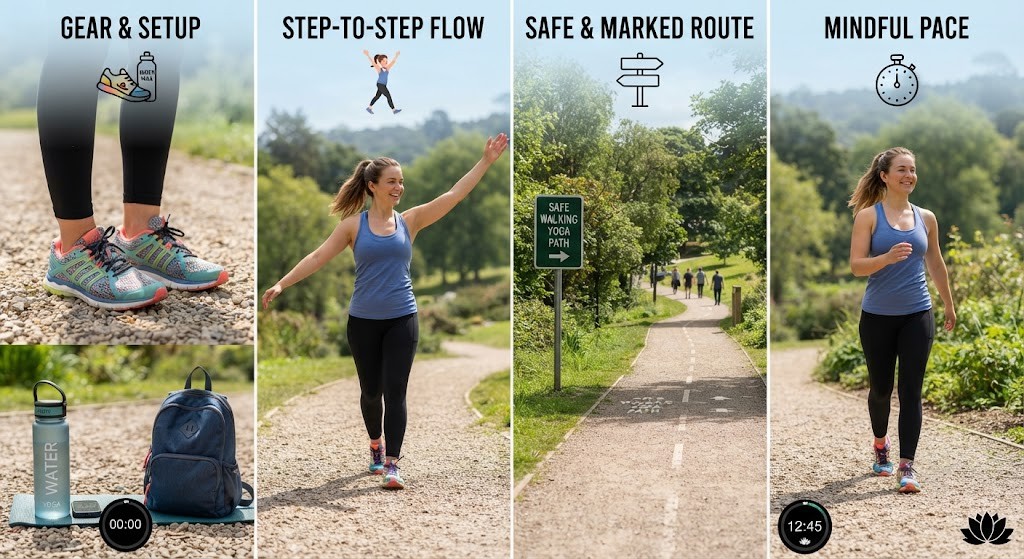
Walking yoga requires very little equipment because the practice primarily uses comfortable clothing, suitable footwear, and a safe place to move. Beginners should prioritize comfort and stability over specialized yoga gear.
A comfortable pair of walking shoes and breathable clothing may be enough for an outdoor session.
Useful items include:
- Comfortable walking shoes
- Breathable clothing
- Water
- A phone timer or watch
- A safe walking route
- Optional yoga mat for stationary warm-up or cool-down movements
- Optional stable support such as a railing for balance exercises
Where Should You Practice Walking Yoga?
A suitable walking yoga location should provide a stable, reasonably flat surface with enough room to stop and perform standing movements safely. Parks, quiet paths, tracks, and uncluttered outdoor areas can work well.
For example, choose a quiet loop where you can stop beside a bench or railing for balance exercises.
What Safety Tips Should Beginners Follow When Doing Walking Yoga?
Safe walking yoga involves choosing a stable walking surface, using comfortable movements, avoiding pain, and modifying or stopping an exercise when it does not feel appropriate. Safety is especially important when a routine includes balance exercises or changes in direction.
For example, perform a single-leg balance beside a stable wall rather than while walking on an uneven trail.
Follow these practical safety tips:
- Choose stable surfaces: Avoid slippery, heavily uneven, or obstructed paths.
- Keep your attention on your surroundings: Do not close your eyes while walking.
- Use support for balance: A wall, railing, or sturdy surface can help.
- Avoid forcing stretches: Gentle tension is preferable to painful stretching.
- Progress gradually: Increase duration or difficulty one step at a time.
- Stay hydrated: Bring water for longer sessions or hot conditions.
- Stop if something feels wrong: Pain, dizziness, unusual shortness of breath, or loss of balance are reasons to stop and reassess.
- Consider individual needs: If you have an injury, significant mobility limitation, or medical condition affecting exercise, seek appropriate professional guidance before starting.
WHO recommends gradual progression for inactive adults and notes that older adults with poor mobility should include activities that enhance balance and help prevent falls.
Source: Organization, Year.
How Often Should You Do Walking Yoga?
Beginners can practice walking yoga several times per week, using short sessions and gradual progression to build consistency. You do not have to practice every day for the routine to be useful.
For example, a beginner might practice for 10–15 minutes on Monday, Wednesday, Friday, and one weekend day.
Walking yoga can also become one component of a broader weekly activity plan. The WHO recommends 150–300 minutes of moderate aerobic activity per week for adults, plus muscle-strengthening activities on at least two days.
Source: Organization, Year.
How Can You Build a Walking Yoga Habit?
A walking yoga habit becomes easier to maintain when you connect short sessions to an existing part of your daily schedule. Choose a consistent trigger rather than relying entirely on motivation.
For example, you might practice after breakfast, during a lunch break, or after work.
Try this simple progression:
- Week 1: 10 minutes, 3 days.
- Week 2: 10–15 minutes, 3–4 days.
- Week 3: 15 minutes, 4 days.
- Week 4: 15–20 minutes, 4–5 days if comfortable.
How Can You Track Progress?
Tracking walking yoga progress means recording consistency, duration, comfort, and movement quality rather than focusing only on intensity. A simple note on your phone can be enough.
For example, record “15 minutes, comfortable pace, calf raises felt easy” after a session.
Over time, look for practical improvements such as walking longer without fatigue, feeling more comfortable with mobility exercises, or needing less support during balance work.
What’s Next: How Should Beginners Start Walking Yoga?
The best next step is to choose a safe route, set aside 10 minutes, and practice a simple walking yoga sequence at a comfortable pace. Starting small removes the pressure to master every movement immediately.
For example, begin with two minutes of breathing, five minutes of mindful walking, two minutes of gentle standing movements, and one minute of slow walking.
Then increase the duration gradually if your body responds comfortably.
Remember that walking yoga is not about performing perfect yoga poses. It is about combining walking, breathing, awareness, and gentle movement in a way you can realistically repeat.
If you already have a regular walking routine, adding one or two simple mobility exercises can be an easy first step.
Conclusion
Walking yoga for beginners is a simple movement practice that combines walking, mindful breathing, posture awareness, and gentle yoga-inspired exercises. It can support mobility, balance, flexibility, relaxation, and body awareness while making everyday movement more intentional.
Beginners don’t need advanced flexibility or expensive equipment to get started. A safe walking surface, comfortable shoes, a few minutes of focused movement, and gradual progression are enough.
Start with 10 comfortable minutes, learn how your body responds, and build from there. Consistency matters more than complexity, so make your first walking yoga session simple, steady, and enjoyable.
FAQs
What is walking yoga?
Walking yoga combines mindful walking, breathing, and gentle yoga movements.
What is walking, yoga?
Walking yoga combines walking with yoga-inspired breathing, stretching, and mindfulness.
What is the 6 6 6 walking rule?
The 6-6-6 walking rule generally means walking for 60 minutes at 6 a.m. or 6 p.m.
Can I lose 5kg in a month by walking?
Weight loss varies by diet, activity level, metabolism, and individual factors.
Can walking, yoga help with weight loss?
Yes, walking and yoga can support weight management alongside healthy nutrition.
Is walking yoga good for beginners?
Yes, walking yoga uses simple movements that can be adapted for beginners.
Can you do yoga while walking?
You can practice mindful breathing and posture while walking, while balance poses are best done stationary.
How long should beginners do walking yoga?
Beginners can start with about 10 minutes and gradually increase the duration.
What are the benefits of walking yoga?
Walking yoga may support mobility, flexibility, balance, relaxation, and body awareness.
What exercises are included in walking yoga?
Common exercises include mindful walking, shoulder rolls, stretches, calf raises, and balance movements.
Do you need equipment for walking yoga?
No, comfortable shoes, clothing, water, and a safe walking surface are usually enough.
How often should beginners practice walking yoga?
Beginners can practice several times a week and gradually increase their routine.
Can walking yoga improve flexibility?
Yes, gentle stretches and controlled movements can support flexibility.
Is walking yoga good for balance?
Yes, stationary balance exercises can help improve stability and body awareness.
3 thoughts on “Walking Yoga for Beginners: Gentle Moves to Boost Mobility & Balance”