
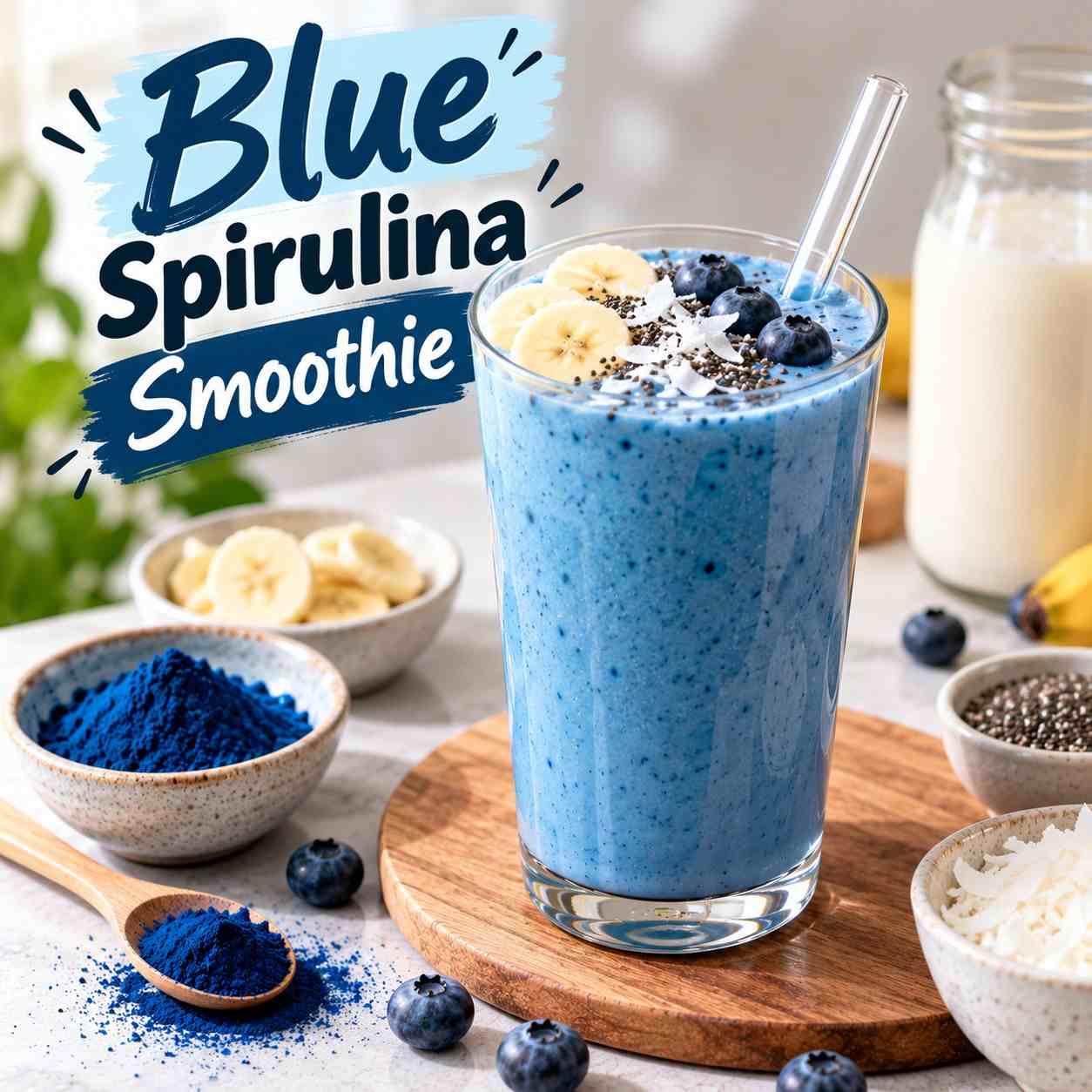
A blue spirulina smoothie is a vibrant, refreshing drink that combines blue spirulina powder with fruit and a liquid base for a naturally colorful breakfast or snack. With the right ingredients, you can make a creamy smoothie that tastes delicious while adding variety to your everyday nutrition routine.
What Is a Blue Spirulina Smoothie?
A blue spirulina smoothie is a blended drink made with blue spirulina powder, fruit, and a liquid such as milk or coconut water. Blue spirulina is a blue pigment extract called phycocyanin, obtained from spirulina, a type of blue-green cyanobacteria.
Unlike green spirulina powder, which has a stronger earthy flavor, blue spirulina extract generally has a milder taste. It is commonly used to give smoothies, smoothie bowls, and other foods a bright blue color.
For a balanced drink, pair the powder with fruit, a source of protein, and a liquid you enjoy. You can also explore a Pre Workout Snacks collection for more breakfast and snack ideas.
Why Does a Blue Spirulina Smoothie Matter?
A blue spirulina smoothie can make nutritious ingredients more appealing and convenient, but its overall nutritional value depends on the full recipe rather than its color alone.
Here are some reasons people include it in their diets:
- Convenient nutrition: Fruit and milk or fortified plant milk can provide carbohydrates, vitamins, and minerals.
- Antioxidant-related compounds: Phycocyanin has been studied for antioxidant and anti-inflammatory activity, although much of the evidence comes from laboratory and animal research.
- Customizable protein: Greek yogurt, milk, or protein powder can help increase the protein content.
- Easy preparation: Most recipes take only a few minutes to blend.
- Versatile flavor: Banana, pineapple, mango, and berries pair well with the mild flavor of blue spirulina extract.
A blue spirulina smoothie is not a detox drink or a guaranteed way to lose weight. For broader nutrition guidance, see Personalized Meal Plan and High Protein Low-FODMAP Meal.
How to Make a Blue Spirulina Smoothie
You can make a creamy blue spirulina smoothie with a handful of everyday ingredients and a small amount of blue spirulina powder.
Ingredients
1 medium frozen banana
1 cup (240 ml) milk or unsweetened plant milk
1/2 cup frozen pineapple or mango
1/2 teaspoon blue spirulina powder, or the amount recommended on the product label
2 tablespoons plain Greek yogurt, optional
A few ice cubes, if needed
Instructions
- Add the milk, frozen banana, and pineapple or mango to a blender.
- Add the blue spirulina powder and Greek yogurt, if using.
- Blend until smooth and creamy.
- Add a little more milk if the smoothie is too thick, or a few ice cubes if you prefer a colder texture.
- Pour into a glass and serve immediately.
For additional breakfast inspiration, try High Protein Breakfast Ideas or daily protein intake calculator to help plan your protein intake throughout the day.
Blue Spirulina Smoothie Nutrition and Calories
The calories and macronutrients in a blue spirulina smoothie depend on the ingredients, serving size, and quantities used.
For a smoothie made with one banana, one cup of dairy milk, half a cup of pineapple, half a teaspoon of blue spirulina, and two tablespoons of plain Greek yogurt, the approximate nutrition is:
| Nutrient | Estimated amount |
|---|---|
| Calories | 250–320 kcal |
| Protein | 10–14 g |
| Carbohydrates | 40–55 g |
| Fat | 4–8 g |
| Fiber | 4–6 g |
These are estimates, not laboratory-tested values. Different milk varieties, fruit sizes, and yogurt brands can change the final numbers.
To adjust the recipe to your goals:
- For weight management: Use unsweetened milk and avoid adding sugar or syrup. Track the entire recipe if you are following a calorie deficit diet plan.
- For muscle building: Add Greek yogurt or protein powder and compare the finished drink with your macro calculator targets.
- For a lighter snack: Use unsweetened almond milk and adjust the banana and other fruit portions to suit your needs.
- For a more filling breakfast: Pair the smoothie with a balanced meal containing additional protein, fiber, and healthy fats.
Best Ingredients to Pair With Blue Spirulina
The best ingredients for a blue spirulina smoothie are those that complement its mild flavor, create a smooth texture, and support your nutritional goals.
| Ingredient | Why use it? | Flavor or texture |
|---|---|---|
| Banana | Adds carbohydrates and creaminess | Sweet and smooth |
| Pineapple | Adds fruit flavor and vitamin C | Bright and tangy |
| Mango | Adds sweetness and a thick texture | Tropical and creamy |
| Blueberries | Adds fruit flavor and fiber | Sweet and slightly tart |
| Greek yogurt | Adds protein | Thick and creamy |
| Milk or fortified soy milk | Provides protein and other nutrients | Creamy |
| Coconut water | Provides fluid and some electrolytes | Light and refreshing |
| Chia seeds | Adds fiber and unsaturated fats | Slightly thicker |
For a dairy-free option, use unsweetened soy milk or another fortified plant milk. If you want more fruit-based recipes, explore High Protein Lemonade and foods high in fiber.
Potential Benefits of Blue Spirulina
Blue spirulina may contribute useful food pigments to your diet, but the evidence for specific health benefits depends on the compound, dose, and product being studied.
1. Provides Phycocyanin
Phycocyanin is a blue pigment-protein found in spirulina. Researchers have investigated its antioxidant properties, but laboratory findings do not automatically mean that drinking a blue spirulina smoothie prevents disease or improves health in humans. (Source: Yu et al., 2024.) PubMed+1
2. Makes Healthy Recipes More Appealing
Blue spirulina can add a vivid color without relying on conventional artificial blue food coloring. This makes it popular in smoothie bowls, colorful drinks, and creative breakfast recipes. Its primary practical benefit in a smoothie is its color; the nutritional contribution depends on the particular extract.
3. Can Fit Into a Balanced Eating Pattern
When combined with fruit, milk or yogurt, and other nutritious foods, a blue spirulina smoothie can be part of a balanced diet. It should complement a varied eating pattern rather than replace a range of whole foods.
Tips for Choosing and Using Blue Spirulina Powder
Choosing a suitable blue spirulina product and using it as directed can help you enjoy the smoothie while avoiding unnecessary risks.
- Check the ingredients: Look for a clearly labeled food-grade blue spirulina or phycocyanin extract.
- Choose quality-tested products: Prefer reputable manufacturers that provide independent testing for contaminants, including harmful cyanotoxins where relevant.
- Follow the serving instructions: Start with a small amount for flavor and color, and follow the manufacturer’s recommended serving.
- Store it properly: Keep the powder sealed and protected from moisture, heat, and direct sunlight.
- Avoid unsupported health claims: Blue spirulina is not a proven treatment for inflammation, weight loss, or other medical conditions. Human evidence for many proposed benefits remains limited. (Source: National Institute of Diabetes and Digestive and Kidney Diseases, 2019.) NCBI Bookshelf+1
People who are pregnant or breastfeeding, have underlying medical conditions, or take regular medication should consult a qualified healthcare professional before using concentrated algae supplements.
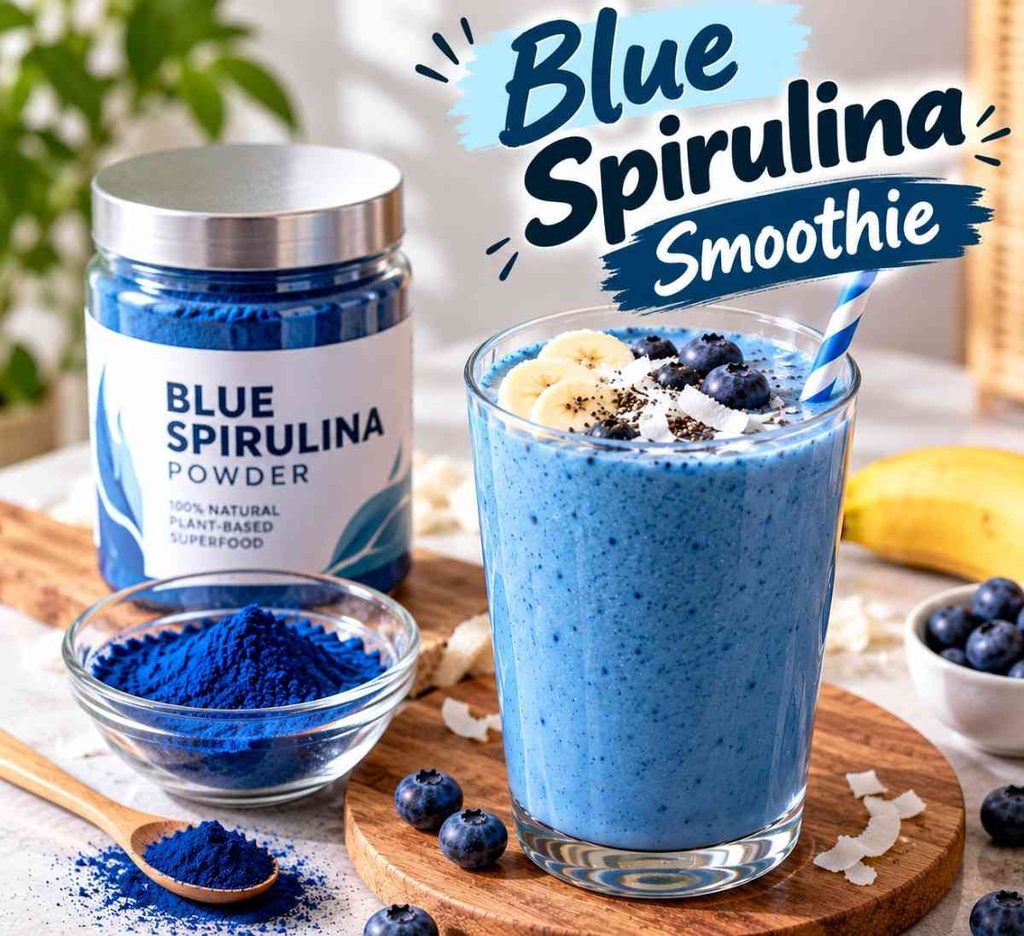
Blue Spirulina Smoothie Variations
You can adjust a blue spirulina smoothie to suit your taste, dietary preferences, and nutritional goals.
Tropical Blue Smoothie
Blend banana, pineapple, coconut water, and blue spirulina powder for a refreshing tropical drink. Add ice for a thicker, colder texture.
Blueberry Banana Smoothie
Combine frozen blueberries, banana, milk, and blue spirulina. The blueberries may make the final color more purple or muted blue, depending on the proportions.
High-Protein Blue Smoothie
Blend banana, milk or fortified soy milk, Greek yogurt, and blue spirulina. You can also add a serving of protein powder if it fits your dietary needs.
Dairy-Free Blue Smoothie
Use unsweetened soy milk or coconut beverage with frozen mango and blue spirulina. Soy milk generally provides more protein than many other plant-based milk alternatives, although nutrition varies by brand.
Common Mistakes to Avoid
Avoid these common mistakes when preparing a blue spirulina smoothie:
- Adding too much powder: Excess powder may affect the flavor and color. Begin with the amount recommended on the label.
- Adding unnecessary sweeteners: Ripe fruit often provides sufficient sweetness.
- Expecting a specific shade of blue: Fruit pigments, powder concentration, acidity, and lighting can affect the final color.
- Treating it as a meal replacement automatically: A smoothie may not provide enough protein, fat, or overall energy to replace a complete meal.
- Ignoring product quality: Poorly controlled algae products may carry contamination risks, so buy from reputable sources.
Conclusion
A blue spirulina smoothie is an easy way to make a colorful drink using fruit, milk or a plant-based alternative, and blue spirulina powder. For a balanced recipe, combine it with fruit and a protein source, keep added sugar optional, and choose a quality-tested product. Enjoy it as one part of a varied diet rather than relying on it for special health effects.
FAQs
Is a blue spirulina smoothie healthy?
A blue spirulina smoothie can be a nutritious drink when made with fruit, a suitable liquid, and a source of protein. Its overall nutritional value depends on the ingredients and portion size.
Does blue spirulina have a strong taste?
Blue spirulina extract generally has a milder taste than whole green spirulina powder, making it suitable for fruit smoothies.
Can I drink a blue spirulina smoothie every day?
Some people may include it daily as part of a varied diet, but suitability depends on the product, serving size, and individual health circumstances. Follow the label and consult a healthcare professional if you have concerns.
Is a blue spirulina smoothie good for weight loss?
It can fit into a weight-management plan, but it does not directly cause fat loss. Total calorie intake, activity, and overall eating habits matter more.
Can I make a blue spirulina smoothie without banana?
Yes. Substitute mango, pineapple, or another fruit that provides sweetness and texture. You may need to adjust the liquid to achieve your preferred consistency.
What is the difference between blue and green spirulina?
Green spirulina powder is generally made from whole dried spirulina biomass, whereas blue spirulina products commonly use an extract rich in the blue pigment phycocyanin. Their composition, taste, and nutritional contribution can differ.
Sources
- Yu, Z. et al. (2024). Phycocyanin from microalgae: A comprehensive review covering microalgal culture, phycocyanin sources and stability. Food Research International.
- National Institute of Diabetes and Digestive and Kidney Diseases. (2019). Spirulina. LiverTox: Clinical and Research Information on Drug-Induced Liver Injury.
- Memorial Sloan Kettering Cancer Center. Blue-green Algae: Purported Benefits, Side Effects & More.
- Yu, H. et al. (2024). Chemical Composition, Bioactivities, and Applications of Spirulina (Limnospira platensis) in Food, Feed, and Medicine. Foods.
Disclaimer: This article is for informational and educational purposes only and is not a substitute for personalized medical advice. Consult a qualified healthcare professional before making significant changes to your diet, exercise routine, or supplement use.