
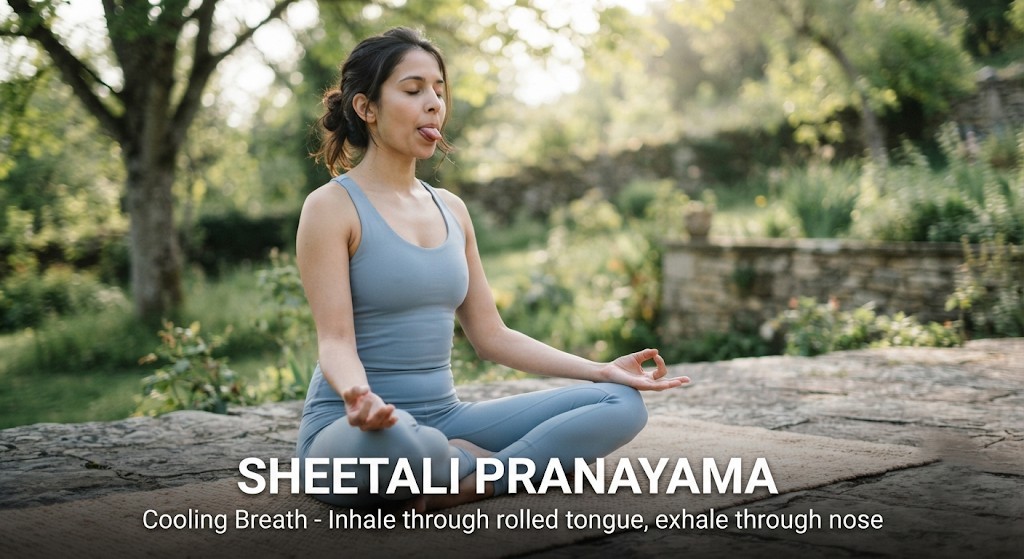
Sheetali Pranayama is a yoga breathing practice where you inhale through a rolled tongue and exhale through the nose, and it is traditionally used to cool the body and calm the mind. Many beginners get stuck on the tongue shape, or wonder when the practice is a bad idea. This guide covers the step-by-step method, an alternative if you cannot curl your tongue, what small studies have found, and who should skip it.
Yoga Breathing Techniques for Beginners
What Is Sheetali Pranayama?
Sheetali Pranayama is a cooling yogic breathing technique, also called the cooling breath, in which you draw air in over a tongue rolled into a tube. Sheetali comes from a Sanskrit word meaning cooling, and the name is also spelled Shitali or Sheethali.
- Inhale through the mouth over a curled tongue
- Exhale slowly through the nose
- Practiced seated, usually for a few minutes
- Taught as a calming breath, often in warm weather
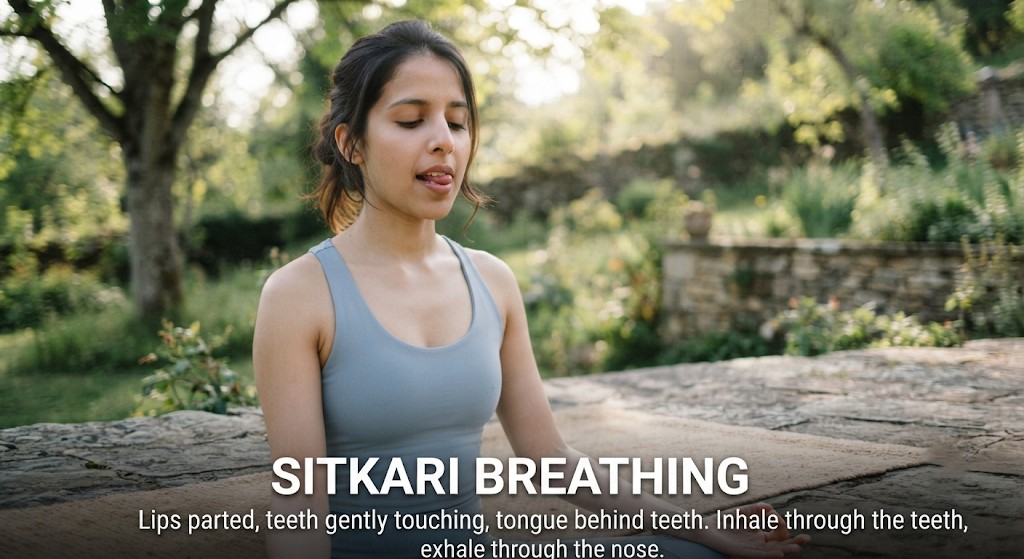
- Related to Sitkari, a version that uses the teeth instead of the tongue
Yoga tradition says the breath cools the body and eases heat and agitation. Research on the practice looks at measurable changes such as blood pressure, heart rate, and heart rate variability, and it has not tested the traditional idea of body cooling directly.
If you are new to yoga as a whole, our guide to Kriya Yoga meaning and benefits shows where breathing practices sit in the wider tradition.
Why Does Sheetali Pranayama Matter?
It matters because it gives you a short, equipment-free way to slow your breathing when you feel overheated, restless, or wound up.
- Takes 3 to 5 minutes
- Needs no props, only a place to sit
- Makes the inhale feel different, which helps some people stay focused on the breath
- Fits easily before meditation or at the end of a hot day
- Offers a milder, cooling contrast to energizing practices such as Kapalabhati
If you prefer a more balancing practice, compare it with Nadi Shodhana Pranayama. For a humming option, see Bhramari pranayama humming bee breath.
What Are the Benefits of Sheetali Pranayama?
Small studies suggest Sheetali Pranayama may lower blood pressure and heart rate and shift the body toward a calmer state, though the research is still limited.
- A randomized controlled trial of 60 people with hypertension compared a group practicing Sheetali and Sheetkari, 10 minutes a day, with a wait-list group. The practice group had a significantly larger drop in systolic blood pressure (16.2 mm Hg), respiratory rate (3.4 breaths per minute), and heart rate (6.7 beats per minute). (Source: Integrative Medicine, 2017)
- A randomized study of 60 healthy volunteers found that 5 minutes (5 cycles) of Sheetali lowered systolic, diastolic, and mean arterial pressure compared with normal breathing, and heart rate dropped in the practice group. (Source: Journal of Complementary and Integrative Medicine)
- In a 2025 comparison of Shitali, Sheetkari, and Ujjayi, the first two showed the largest increases in parasympathetic activity based on heart rate variability. (Source: Mymensingh Medical Journal, 2025)
- Yoga more broadly, which usually includes breathing practices, has been linked in studies with better stress management and sleep. (Source: National Center for Complementary and Integrative Health, 2024)
These findings are encouraging, but the trials were small, short, and run mostly in India, so they do not settle how well the practice works for everyone. Nothing here shows that it replaces blood pressure medication.
For more calming options, see yoga for stress relief and yoga for better sleep.
How Do You Practice Sheetali Pranayama Step by Step?
To practice, sit comfortably, roll your tongue into a tube, inhale through it, then close your mouth and exhale through your nose. One inhale and one exhale make a single round.
Before You Begin
- Sit on a cushion, folded blanket, or chair with your spine tall
- Rest your hands on your knees and relax your shoulders
- Practice in a clean, comfortable space, since the air goes in through your mouth without the nose’s filtering
- Skip it if you have a cold, cough, or feel chilled
New to seated positions? Our Iyengar Yoga for Beginners guide covers comfortable ways to sit.
Step-by-Step Instructions
- Sit upright and take a few normal breaths through your nose.
- Open your mouth into a small, round shape and stick your tongue out slightly.
- Curl the sides of your tongue upward so it forms a tube, like a straw.
- Inhale slowly through the tube for about 4 counts and notice the cool feeling on your tongue.
- Pull your tongue in and close your mouth.
- Exhale slowly through your nose for 6 to 8 counts.
- Repeat for 5 to 10 rounds, then breathe normally for a minute.
What If You Cannot Curl Your Tongue?
Some people find that their tongue will not roll, even with practice. In that case, many teachers suggest Sitkari Pranayama, which gives a similar cooling feel without the tongue shape.
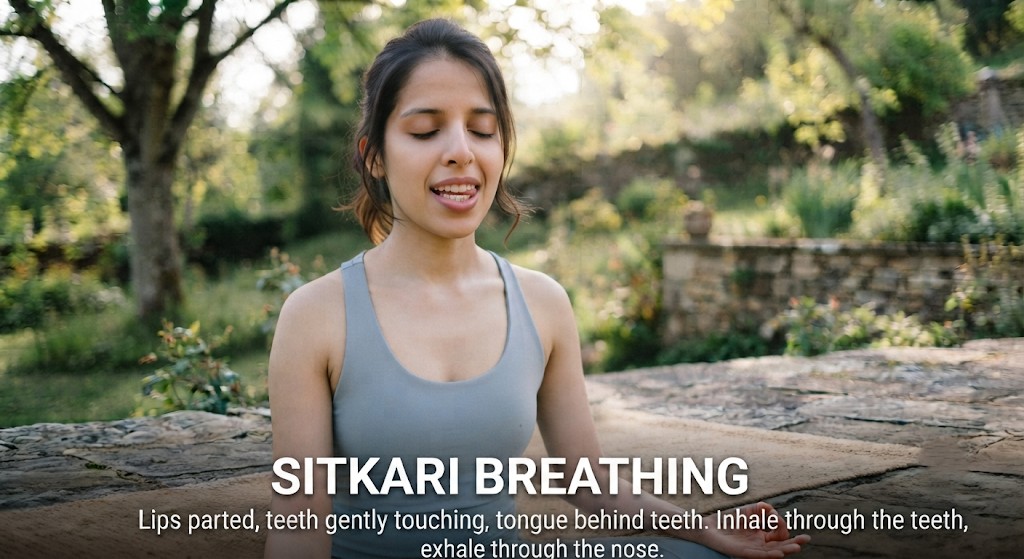
| Feature | Sheetali | Sitkari |
|---|---|---|
| How you inhale | Through a rolled tongue | Through gently closed teeth, with a soft hiss |
| Tongue position | Curled into a tube | Resting lightly behind the teeth |
| Exhale | Through the nose | Through the nose |
| Best for | People who can curl the tongue | People who cannot |
What Mistakes Should You Avoid?
The most common mistake is rushing, because fast breathing removes the cooling and calming effect.
- Gulping air instead of drawing it in slowly
- Straining the tongue or jaw
- Raising the shoulders on the inhale
- Practicing in cold weather or dusty air
- Holding the breath after the inhale before you have learned the basic pattern
- Pushing past dizziness
If you feel lightheaded, stop and breathe normally. Shorten the count next time.
When Is the Best Time to Practice Sheetali Pranayama?
Warm weather, a hot afternoon, or the evening are the most popular times, since the practice is traditionally associated with cooling and calming. Many teachers also suggest practicing a few hours after a heavy meal.
- After a hot day outdoors
- Before meditation
- In the evening, before bed
- After a workout cool-down
To build the habit, try this simple plan:
- Week 1: 3 rounds a day, 4 in and 6 out
- Week 2: 5 rounds a day, same ratio
- Week 3: 8 to 10 rounds, or up to 5 minutes, if it feels easy
If you want to track changes, After hard sessions, pair it with a post-workout recovery routine. Staying hydrated also matters in hot weather, If you want to go deeper into meditation, see Kriya Yoga meditation techniques.
Who Should Avoid or Be Careful With Sheetali Pranayama?
People who have colds, coughs, asthma, or other chronic breathing conditions, who have low blood pressure, or who are in a cold environment are commonly advised to avoid Sheetali Pranayama or check with a professional first.
- Cold, cough, or congestion
- Asthma, bronchitis, or other chronic respiratory problems
- Low blood pressure, since studies report lower blood pressure after the practice
- Cold weather or air conditioning that feels chilly
- Heavily polluted or dusty air
- Pregnancy, which calls for medical advice before starting new breathing practices
MedlinePlus notes that yoga is generally safe for most people, but some, such as those who are pregnant or have high blood pressure, may need to modify poses. (Source: MedlinePlus) The NCCIH also reports that learning yoga on your own, without supervision, is linked with a higher risk of injury. (Source: National Center for Complementary and Integrative Health, 2024)
Do not stop prescribed medication because of a breathing practice.
Conclusion
Sheetali Pranayama is a gentle cooling breath that most healthy beginners can learn in a few minutes. Start with a 4-count inhale through the rolled tongue and a 6-count nose exhale, practice in clean, comfortable air, and switch to Sitkari if your tongue will not curl. The research so far points to short-term drops in blood pressure and heart rate, but the studies are small, so treat it as a calming habit and not a treatment. If you have a health condition, talk to your doctor first, then try three rounds tomorrow evening.
FAQs
What is Sheetali Pranayama good for?
It is traditionally used to cool the body and calm the mind, and small studies report short-term drops in blood pressure and heart rate.
How long should I practice Sheetali Pranayama?
Beginners can start with 3 to 5 rounds and build toward 5 to 10 rounds, or up to about 5 minutes, as it feels comfortable.
What if I cannot roll my tongue?
Practice Sitkari Pranayama instead, which uses the teeth rather than a rolled tongue to give a similar cooling feel.
Can I practice Sheetali Pranayama in winter?
It is usually advised against in cold weather, since the practice is traditionally cooling, so choose a warmer room or a different breathing technique.
Is Sheetali Pranayama safe for high blood pressure?
Small trials in hypertensive patients report lower blood pressure, but check with your doctor first and keep taking prescribed medication.
Is Sheetali Pranayama the same as Nadi Shodhana?
No, Sheetali is a cooling breath through the tongue, while Nadi Shodhana is alternate nostril breathing through the nose.
Sources
- Shetty, P., Reddy B, K. K., Lakshmeesha, D. R., Shetty, S. P., Kumar G, S., & Bradley, R. (2017). Effects of Sheetali and Sheetkari Pranayamas on Blood Pressure and Autonomic Function in Hypertensive Patients. Integrative Medicine (Encinitas).
- Journal of Complementary and Integrative Medicine. Immediate effects of the practise of Sheethali pranayama on heart rate and blood pressure parameters in healthy volunteers.
- Mymensingh Medical Journal. (2025). Exploring the Impact of Shitali, Shetkari and Ujjayi Pranayamas on Heart Rate Variability and Electroencephalographic Patterns: A Comparative Analysis.
- National Center for Complementary and Integrative Health. (2024). 5 Things You Should Know About Yoga.
- MedlinePlus. Yoga for Health.
Disclaimer: This article is for informational and educational purposes only and is not a substitute for personalized medical advice. Consult a qualified healthcare professional before making significant changes to your diet, exercise routine, or supplement use.