
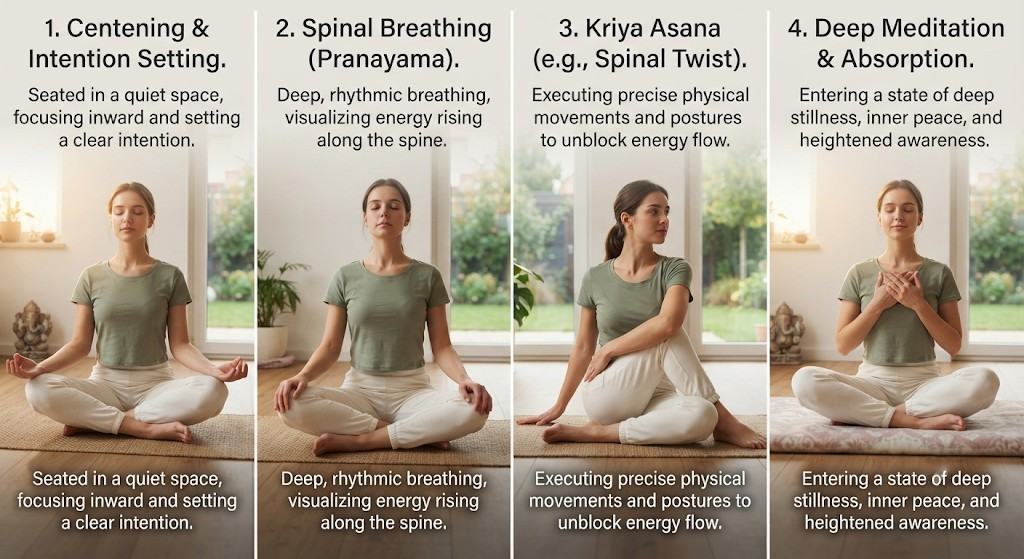
Kriya Yoga is a meditation path built around breath control and concentration. It became widely known after Paramahansa Yogananda’s Autobiography of a Yogi. For beginners exploring yoga and meditation, understanding what Kriya Yoga is, how it works, and how to learn it can be confusing because the word “kriya” appears in several different practices.
This Kriya Yoga beginner’s guide explains the history of the practice, its meditation techniques, potential benefits, learning process, and safety considerations. It also explores how Kriya Yoga differs from other yoga and breathing practices. If you are new to the wider tradition, start with Iyengar Yoga for Beginners.
What Is Kriya Yoga?
Kriya Yoga is a system of meditation and breath control that practitioners trace to the Himalayan teacher Mahavatar Babaji and his disciple Lahiri Mahasaya in the 1860s (Source: Self-Realization Fellowship, n.d.). The Sanskrit word kriya means action. Teachers in the Yogananda tradition describe the practice as an advanced form of pranayama that circulates life energy up and down the spine.
When people ask, “What is Kriya Yoga?”, they are often referring to this specific meditation tradition, which combines breath awareness, concentration, and spiritual discipline. Unlike yoga styles that mainly focus on physical postures, Kriya Yoga meditation emphasizes inner awareness and a structured breathing practice. For background on yogic breathing in general, see pranayama breathing exercises.
The term has an older meaning too. In the Yoga Sutras, Patanjali uses “kriya yoga” for a set of disciplines: self-discipline, self-study, and devotion to a higher principle. Some commentators place it within the second limb of his eightfold path (Source: Wikipedia, n.d.). This article covers the breath-and-meditation system taught through the Lahiri Mahasaya lineage, since that is what most people searching for Kriya Yoga want to learn about.
Why Does Kriya Yoga Matter?
Kriya Yoga matters because it shaped how many people in the West first encountered Indian meditation traditions. Yogananda’s 1946 book brought it to international attention, and he began introducing the practice in the West in 1920 (Source: Wikipedia, n.d.). Several organizations now teach their own versions of the practice.
For beginners, the appeal of Kriya Yoga is its structured approach to meditation, breathing, and mental concentration rather than a posture-heavy workout. Its traditional approach encourages regular practice, self-discipline, and a deeper understanding of the connection between the mind and breath.
A simple practice such as meditation can be a first step toward developing a regular meditation habit. People who already train will find that a quiet evening routine fits well with sleep and recovery habits.
Where Did Kriya Yoga Come From?
Practitioners date modern Kriya Yoga to 1861, when Lahiri Mahasaya said he was initiated by Mahavatar Babaji near Ranikhet in the Himalayas (Source: Wikipedia, n.d.). That account comes from the lineage’s own tradition, so it is best read as the lineage’s story of its origins.
From Babaji to Lahiri Mahasaya
Lahiri Mahasaya lived in Varanasi as a householder with a job and a family. Yogananda later presented him as proof that deep spiritual attainment was possible for someone living fully in the world (Source: Wikipedia, n.d.). He taught Kriya Yoga to many people, including Swami Sri Yukteswar Giri.
From Sri Yukteswar to Yogananda
According to the Yogananda tradition, Babaji asked Sri Yukteswar to train Yogananda and send him West (Source: Self-Realization Fellowship, n.d.). Yogananda founded Self-Realization Fellowship in 1935 and wrote the book that introduced many readers to the practice.
| Figure | Role in the lineage | Dates |
|---|---|---|
| Mahavatar Babaji | Said to have taught Kriya Yoga to Lahiri Mahasaya in 1861 | No dates recorded |
| Lahiri Mahasaya | Householder yogi in Varanasi who taught Kriya Yoga to others | 1828 to 1895 |
| Swami Sri Yukteswar Giri | Disciple of Lahiri Mahasaya and guru of Yogananda | 1855 to 1936 |
| Paramahansa Yogananda | Brought Kriya Yoga to the West and wrote Autobiography of a Yogi | 1893 to 1952 |
How Is Kriya Yoga Practiced?
Kriya Yoga is practiced as a seated daily routine that prepares the body and mind first, then introduces the Kriya breathing technique through formal initiation. The traditional Kriya Yoga practice emphasizes concentration, breath awareness, and meditation. Self-Realization Fellowship teaches three preparatory techniques before Kriya itself (Source: Self-Realization Fellowship, n.d.):
- Energization Exercises: A series meant to draw energy into the body and prepare it for meditation.
- The Hong-Sau technique of concentration: A practice that trains the mind to withdraw from outer distractions.
- The Aum technique of meditation: An advanced practice that builds on the first two.
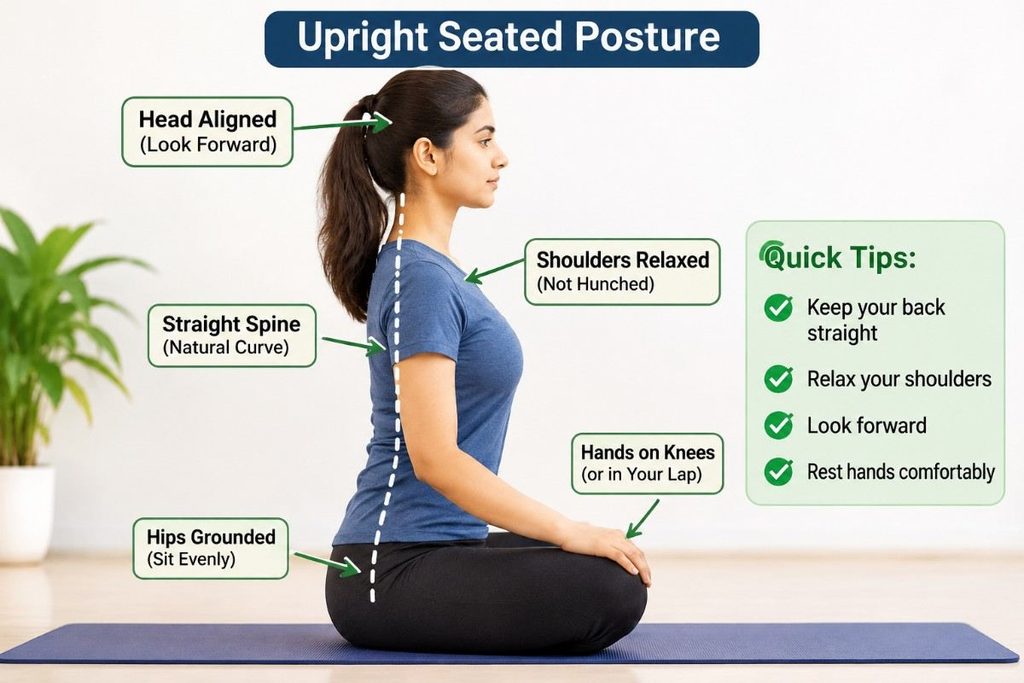
These preparatory techniques help students develop the concentration and discipline needed for deeper meditation. Comfortable sitting makes all of this easier, and Hip Opening Yoga can help if your hips or lower back tighten up.
How Is the Kriya Technique Itself Taught?
The Kriya technique is given to students who apply after a period of preparation, and it comes with a formal teacher-student relationship with the lineage (Source: Self-Realization Fellowship, n.d.). In the Self-Realization Fellowship path, students first complete a basic series of 18 lessons, mailed every two weeks over about nine months. Those who finish can then apply for initiation.
Other organizations, such as the Kriya Yoga Institute, teach through their own lineages (Source: Wikipedia, n.d.). The exact learning process, course structure, and requirements can differ between organizations.
This article does not describe the Kriya technique step by step. The groups that teach it present it inside a guided course, and any breathing method that changes your breath rate is safer to learn from a teacher than from a video.
How Is Kriya Yoga Different From Hatha Yoga and Sudarshan Kriya?
Kriya Yoga differs from Hatha Yoga mainly in focus, since it centers on breath and meditation rather than postures. It also differs from Sudarshan Kriya Yoga, a separate rhythmic breathing method taught through its own courses.
Readers often mix these up because all three terms appear in yoga searches. Understanding the differences between Kriya Yoga, Hatha Yoga, and Sudarshan Kriya can help beginners choose a practice that matches their interests and learning goals. A closer look at Hatha yoga shows how much the physical side matters there.
| Comparison | Kriya Yoga (Lahiri Mahasaya lineage) | Hatha Yoga | Sudarshan Kriya Yoga |
|---|---|---|---|
| Main focus | Breath control, concentration, meditation | Postures combined with breathing and meditation | Rhythmic breathing in stages |
| How it is learned | Initiation, often after preparatory lessons | Open classes | Structured courses |
| Typical setting | Mostly seated practice | Mat-based movement | Seated breathing session |
| Research base | Little direct clinical research | Broad research on yoga in general | Several controlled trials |
What Are the Potential Benefits of Kriya Yoga?
People interested in Kriya Yoga benefits often want to know whether the practice can improve concentration, reduce stress, and support emotional well-being. However, little controlled research has studied the Lahiri Mahasaya lineage technique itself, so most available evidence comes from yoga in general or from other kriya practices.
The National Center for Complementary and Integrative Health (NCCIH) reports that studies suggest possible benefits of yoga for stress, mental and emotional health, sleep, and balance. It also notes that the wide variety of yoga styles makes research hard to compare. A 2020 review of 12 studies with 672 healthy adults found lower perceived stress in all of them (Source: NCCIH, n.d.). The same source says yoga may help anxiety symptoms but that evidence for people with anxiety disorders is thin.
Research on “kriya” practices mostly involves different techniques. A 2024 randomized experiment with 64 employees at an Indian manufacturing firm tested Sudarshan Kriya Yoga for stress, anxiety, and well-being (Source: Frontiers in Psychology, 2024). Because that is a separate breathing method, its results cannot be assumed to apply to traditional Kriya Yoga.
Teachers also describe spiritual aims such as deeper states of awareness. Those goals rest on belief and personal experience, and clinical trials cannot confirm or rule them out. For general stress relief, Yoga for stress relief has options with a stronger evidence base.
Is Kriya Yoga Safe for Beginners?
Gentle seated meditation is generally low risk, but breath-control practices can cause lightheadedness in some people, so go slowly and learn from a qualified teacher. Beginners should avoid attempting advanced Kriya Yoga breathing techniques without proper guidance.
NCCIH advises telling your instructor about any medical issues and adapting practices to your own abilities (Source: NCCIH, n.d.).
Talk to a doctor first if any of these apply:
- A heart or lung condition
- High blood pressure
- A seizure disorder
- A history of panic attacks
- Pregnancy
Stop and return to normal breathing if you feel dizzy, tingly, or anxious. A comfortable and gradual approach is more suitable than trying to progress quickly through advanced meditation or breathing exercises.
How Can a Beginner Start With Kriya Yoga?
A beginner can start by building a steady daily habit of quiet seated breathing and meditation, then choosing a lineage to study with. If you are exploring Kriya Yoga for beginners, a gradual learning process can help you understand the practice before committing to a formal course.
A reasonable sequence looks like this:
- Start with simple meditation: Sit quietly for about 10 minutes a day and breathe naturally while you focus your attention.
- Make sitting comfortable: A good mat and some gentle hip stretches help, and you can find options in yoga poses for flexibility.
- Explore different lineages: Read the teaching materials of two or three Kriya Yoga organizations before committing to one.
- Understand the commitment: Check the cost, the time commitment, and whether lessons are by mail, online, or in person.
- Consider your health: Speak with your doctor if you have a health condition that affects breathing or circulation.
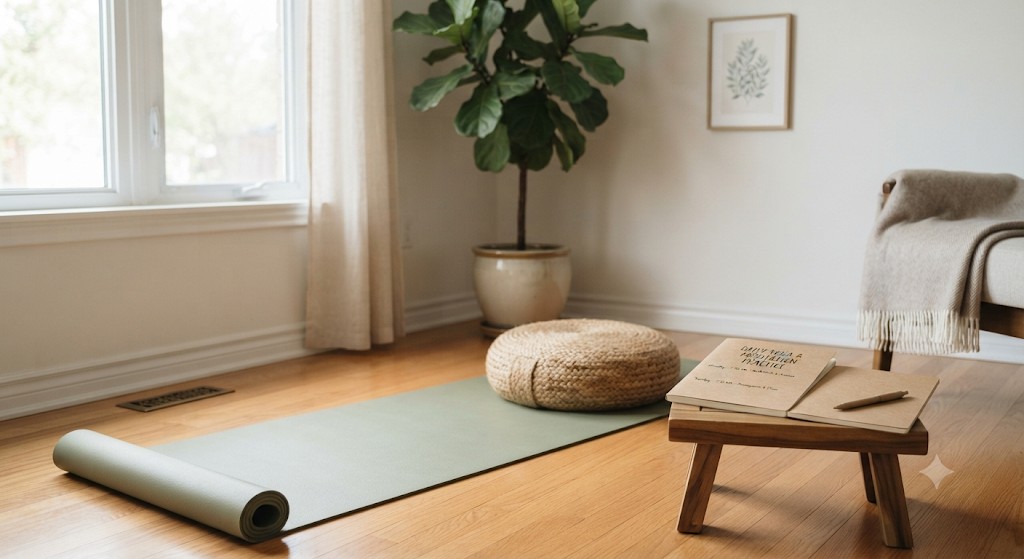
- Build consistency: Keep a short log of your sessions so you can see how your meditation practice changes.
Conclusion
Kriya Yoga is a breath-and-meditation path with a documented lineage that runs from Lahiri Mahasaya through Sri Yukteswar to Yogananda. Its core technique is taught through initiation, and the research on the specific practice is limited, though yoga in general has support for stress management.
For beginners, learning about Kriya Yoga history, its meditation approach, and its traditional learning process can provide a useful starting point. If the practice appeals to you, begin with a simple daily sitting habit, read the materials of the lineages you are considering, and check with a doctor if you have a relevant health condition.
FAQs
What does “Kriya” mean in Kriya Yoga?
In Sanskrit, kriya means action. In the Lahiri Mahasaya tradition it refers to a specific breath and meditation technique, and in Patanjali’s Yoga Sutras it refers to a set of disciplines.
Can I learn Kriya Yoga from a book or video?
You can read about Kriya Yoga and its philosophy, but the technique itself is traditionally taught through initiation. Self-Realization Fellowship, for example, gives it to students who apply after finishing its basic lessons.
How long does it take to learn Kriya Yoga?
It depends on the organization. In the Self-Realization Fellowship path, the basic series takes about nine months before a student can apply for Kriya initiation.
Is Kriya Yoga the same as Sudarshan Kriya?
No. Sudarshan Kriya Yoga is a separate rhythmic breathing method taught through its own courses, and most published “kriya” studies concern it or similar techniques.
Is Kriya Yoga a religion?
It is a spiritual practice rooted in Indian traditions. Self-Realization Fellowship describes it as a technique and says it is not a sectarian religion.
Does Kriya Yoga help with stress?
Yoga in general shows beneficial effects on perceived stress in several studies. Direct evidence for the Lahiri Mahasaya technique itself is limited.
What is the difference between Kriya Yoga and regular meditation?
Kriya Yoga is a specific spiritual meditation tradition that includes preparatory practices and a formal breathing technique taught through initiation. Regular meditation is a broader term that includes many approaches, some of which do not involve specialized breathing methods.
Sources
- National Center for Complementary and Integrative Health. (n.d.). Yoga: Effectiveness and Safety.
- Self-Realization Fellowship. (n.d.). Kriya Yoga: Path of Meditation, History.
- Self-Realization Fellowship. (n.d.). Kriya Yoga Lessons.
- Wikipedia. (n.d.). Kriya Yoga school.
- Chhajer, R., & Dagar, C. (2024). Examining the impact of a restorative breath-based intervention “Sudarshan Kriya Yoga” at work: a field experiment. Frontiers in Psychology, 15.
Disclaimer: This article is for informational and educational purposes only and is not a substitute for personalized medical advice. Consult a qualified healthcare professional before making significant changes to your diet, exercise routine, or supplement use.
4 thoughts on “Kriya Yoga: Meaning, Benefits & Beginner’s Guide”