
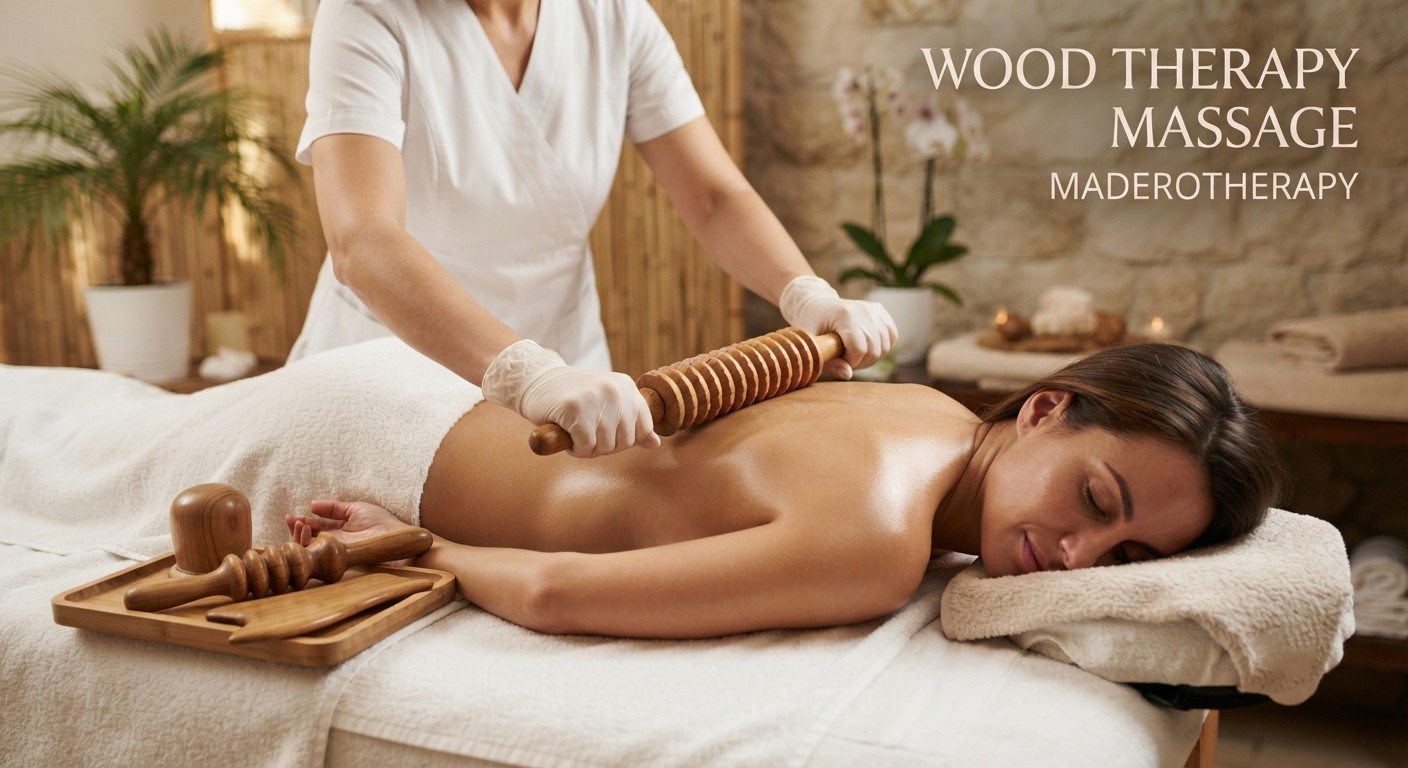
Wood therapy massage uses hand-held wooden tools to roll, press, and knead the body, and it has become a regular on spa menus and social feeds. People book it for smoother-looking skin and relaxation, though research on its bigger claims is thin. This guide explains how a session works, what the evidence supports, which risks to know about, and how to find a qualified practitioner.
What is wood therapy massage?
Wood therapy massage is a body treatment in which a practitioner uses shaped wooden tools, such as rollers, cups, and sculpting paddles, to apply firm pressure and rolling strokes to the skin and soft tissue. It is also called maderotherapy, from the Spanish word for wood, and the technique is often traced to Colombia. Spas and body contouring studios now offer it as a manual alternative to machine-based treatments.
- The practitioner holds the tools by hand, so no machine is involved.
- Oil or lotion is typically used so the tools glide over the skin.
- It is most often offered for the thighs, hips, abdomen, and buttocks.
- Providers market it mainly for body contouring and relaxation.
If you already use a foam roller after workouts, the idea will feel familiar. The difference is that someone else controls the tool and the pressure. foam rolling for muscle recovery
Why does wood therapy massage matter?
It matters because many people pay for it expecting body contouring results that research has not confirmed, so knowing what it can and cannot do helps you spend your time and money well.
- Much of the public information comes from spas and clinics that sell the service, so marketing claims often run ahead of the evidence.
- The technique relies on firm pressure, which raises real questions about bruising and who should avoid it.
- Used realistically, it fits into a wider recovery and self-care routine as an optional extra. Recovery Yoga
How does a wood therapy massage session work?
A session usually starts with a short conversation about your goals and health history, then the practitioner works over oiled skin using several tools in turn. Exact methods vary from one provider to the next.
- The practitioner asks about your goals, medications, and any conditions that affect the treatment.
- Oil is applied to the areas being treated.
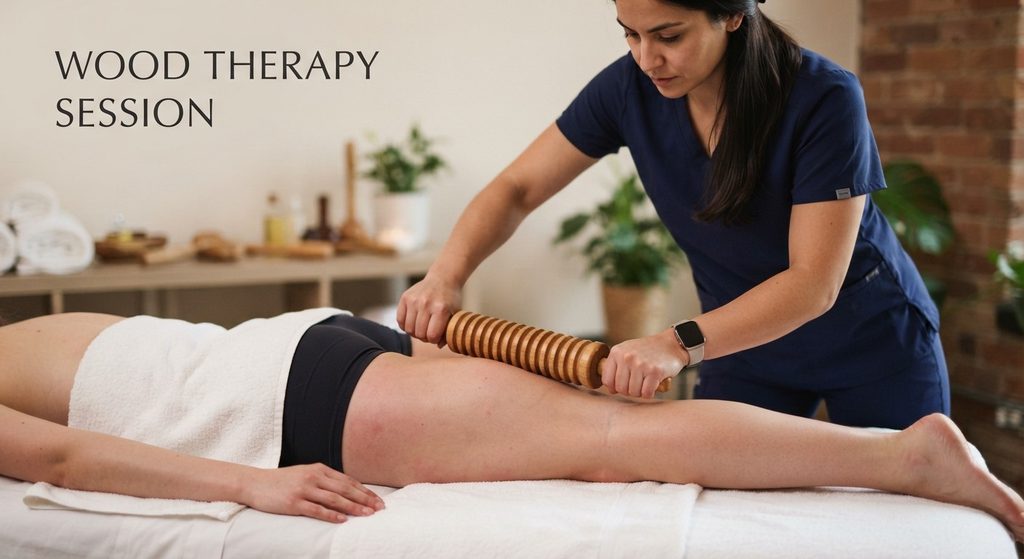
- Rollers and paddles are pressed and rolled along the skin, often in long strokes.
- Some providers add cup-shaped tools for pressing and sweeping strokes.
- The session often ends with lighter strokes and advice on aftercare, such as drinking water.
Common wood therapy tools
Designs differ by brand and practitioner, but most sessions draw from a few basic shapes.
| Tool | Typical shape | Common use |
|---|---|---|
| Roller | Cylinder, sometimes grooved | Rolling over thighs, arms, and back |
| Cup-shaped tool | Rounded, cup-like form | Pressing and sweeping strokes on soft tissue |
| Sculpting paddle | Flat or contoured board | Pressing along larger areas such as hips and thighs |
| Contour tool | Curved edge with ridges | Working around the waist and other curved areas |
What does it feel like?
Expect firm pressure. It should feel like a deep massage, and some people find it uncomfortable in denser areas.
- Mild discomfort during the session is common.
- Sharp or intense pain is a signal to ask the practitioner to ease off.
- You can ask for lighter pressure at any point.
What are the possible benefits of wood therapy massage?
The most realistic benefits are relaxation and a temporary smoothing of the skin, while most other claims have not been tested well. Practitioner testimonials and spa descriptions are not the same as clinical research.
| Claim | What the evidence shows |
|---|---|
| Relaxation and stress relief | Plausible, since massage in general is linked to relaxation, but wood therapy itself has not been studied closely |
| Less puffiness | A short-term effect is possible if fluid shifts, but this has not been tested well |
| Lymphatic drainage | Often claimed by providers, with little research on wooden tools specifically |
| Cellulite reduction | No clear evidence of a lasting effect |
| Fat loss | No reliable evidence that it permanently reduces fat |
| Muscle tension relief | Likely similar to other firm massage, and it is unknown whether wooden tools add anything beyond hands |
If muscle relief is your main goal, other tools are easier to find and use at home. massage guns for sore muscles If you mostly want to unwind, a calm movement practice can help too. yoga for stress relief
Does wood therapy massage reduce cellulite?
Wood therapy massage may make cellulite look smoother for a short time, but there is no clear evidence that it removes cellulite for good.
- Cellulite affects an estimated 80 to 90 percent of women after puberty, so it is a common, normal trait (Source: Luebberding et al., 2015).
- A systematic review of 67 studies found no clear evidence of good efficacy for any of the cellulite treatments it evaluated (Source: Luebberding et al., 2015).
- Clinicians generally consider the cellulite improvements seen with massage to be short lived (Source: Bass and Kaminer, 2020).
- Researchers describe fibrous bands under the skin as playing a central role in cellulite, and a massage tool works from the surface (Source: Bass and Kaminer, 2020).
A realistic goal is a brief smoothing effect, perhaps before an event. Longer-term changes in how your legs and hips look are more likely to come from habits you build over time, such as strength training. leg workouts for toned thighs To track changes beyond the mirror, a body composition estimate can help. Free BMI Calculator
Is wood therapy massage safe?
Wood therapy massage is generally low risk for healthy adults when a trained practitioner performs it, although firm pressure can cause soreness and bruising. The National Center for Complementary and Integrative Health says the risk of harmful effects from massage therapy appears to be low (Source: NCCIH). Massage can also cause bruising and bleeding in people who are at risk (Source: Merck Manual, 2025).
Possible side effects
- Temporary soreness in treated areas
- Bruising, which is among the more commonly reported effects of firm tool-based massage
- Skin redness or irritation
- A reaction to oils or lotions
Who should talk to a doctor first
Ask a healthcare provider before booking if any of these apply to you.
- A bleeding or clotting disorder, or blood-thinning medication
- An aneurysm or internal bleeding (Source: Mayo Clinic)
- Pregnancy
- Cancer or cancer treatment
- Broken, infected, or very sensitive skin
- A recent injury or surgery
Massage should not replace regular medical care or delay seeing a provider about a health problem (Source: NCCIH). Gentle movement afterward can ease stiffness for most people. Assisted Stretching Benefits.
How do you choose a qualified wood therapy practitioner?
Choose someone with recognized massage training, clean working practices, and a willingness to adjust pressure and review your health history. Rules differ by country and region. In the United States, most states regulate massage therapy and require a license or certification (Source: NCCIH). Training specific to wood therapy varies, so it is worth asking about.
Questions to ask before you book:
- Are you licensed or certified in massage therapy where you practice?
- What training do you have in maderotherapy specifically?
- How do you clean the tools between clients?
- Will you review my health history and medications first?
- Can I ask for lighter pressure during the session?
Be cautious about any provider who promises permanent fat loss or guaranteed cellulite removal, because the research does not support those claims.
How can you support your results at home?
Everyday habits around movement, food, and recovery shape how your body looks and feels over time, and wood therapy can sit beside them as an optional extra. A few simple additions are enough.
- Drink water regularly, especially on treatment days.
- Eat enough protein to support muscle you build through training. high-protein foods
- Keep up strength training and walking.
- Allow rest days so sore areas can settle.
Conclusion
Wood therapy massage is a firm, manual treatment that can feel relaxing and may smooth the skin for a short time. Lasting cellulite or fat reduction is not supported by current research. If you want to try it, choose a trained practitioner, share your health history, and treat the session as an extra on top of regular movement, balanced eating, and good recovery. Before booking, write down your goals and the questions above so you can judge the provider’s answers.
FAQs
What is wood therapy massage?
Wood therapy massage is a treatment that uses shaped wooden tools, such as rollers and paddles, to apply firm pressure to the body. It is also known as maderotherapy and is offered mainly for relaxation and body contouring.
Does wood therapy massage work for cellulite?
It may smooth the look of cellulite briefly, but there is no clear evidence of a lasting effect. A systematic review of 67 studies found no clear evidence of good efficacy for any evaluated cellulite treatment (Source: Luebberding et al., 2015).
Does wood therapy massage hurt?
It can feel uncomfortable because the pressure is firm. Mild discomfort is common, but sharp pain is a reason to ask the practitioner to ease off.
How often should you get wood therapy massage?
No research-based schedule exists. Providers often suggest a series of sessions, so ask your practitioner what they recommend and why.
Can wood therapy massage remove belly fat?
There is no reliable evidence that it removes belly fat. Changes in body fat are more closely tied to overall eating, activity, and sleep habits.
Who should avoid wood therapy massage?
People with bleeding or clotting disorders, an aneurysm, internal bleeding, or damaged skin should check with a doctor first. Anyone who is pregnant or in cancer treatment should do the same.
Is wood therapy the same as gua sha?
They are different treatments, though both use tools on the skin. Gua sha uses scraping strokes with smaller edged tools, while wood therapy uses rolling and sculpting tools.
Sources
- Luebberding, S., et al. (2015). Cellulite: An Evidence-Based Review. American Journal of Clinical Dermatology.
- Bass, L. S., & Kaminer, M. S. (2020). Insights Into the Pathophysiology of Cellulite: A Review. Dermatologic Surgery.
- National Center for Complementary and Integrative Health. (n.d.). Massage Therapy: What You Need To Know.
- National Center for Complementary and Integrative Health. (n.d.). Massage Therapy for Health: What the Science Says.
- Singla, A. (2025). Massage Therapy. Merck Manual Consumer Version.
- Mayo Clinic. (n.d.). Medical-Based Massage Therapy.
Disclaimer: This article is for informational and educational purposes only and is not a substitute for personalized medical advice. Consult a qualified healthcare professional before making significant changes to your diet, exercise routine, or supplement use.
1 thought on “Wood therapy massage: how it works and what research shows”