
You’ve probably reached for a heating pad or enjoyed a hot shower after a tough workout because it simply feels relaxing. But did you know that using heat therapy for muscle recovery at the wrong time can actually slow healing instead of helping it?
Understanding when and how to use heat can make a significant difference in your recovery routine. Whether you’re an athlete, fitness enthusiast, or someone dealing with everyday muscle stiffness, heat therapy can improve circulation, reduce tightness, and help your muscles recover more efficiently when applied correctly.
In this comprehensive guide, you’ll learn:
- How heat therapy for muscle recovery works
- The science behind its benefits
- The best heat therapy methods
- When to choose heat instead of ice
- Common mistakes to avoid
- How to combine heat with other recovery techniques for better results
You’ll also discover how heat fits into your overall best muscle recovery techniques for faster, safer, and more effective recovery.
What Is Heat Therapy for Muscle Recovery?
Heat therapy for muscle recovery is the application of therapeutic warmth to increase blood flow, relax muscles, and improve flexibility after exercise.
Unlike medications that temporarily mask discomfort, heat supports your body’s natural recovery process. Gentle warmth encourages circulation, helping oxygen and nutrients reach recovering muscles while reducing muscle tension.
Common forms of heat therapy include:
- Heating pads
- Warm baths
- Hot showers
- Heated wraps
- Warm towels
- Saunas
Although each method delivers heat differently, they all share the same goal—helping muscles recover more comfortably and efficiently.
For example, after an intense leg workout, your quadriceps and hamstrings may feel tight and stiff. Applying gentle heat before light stretching can help loosen those muscles and improve mobility.
Superficial vs. Deep Heat Therapy
Heat therapy generally falls into two categories.
| Type | Examples | Best For |
|---|---|---|
| Superficial Heat | Heating pad, warm towel, hot bath | Mild soreness, stiffness, improved flexibility |
| Deep Heat | Ultrasound therapy, diathermy (performed by professionals) | Rehabilitation and chronic conditions |
Most people only need superficial heat therapy, which is affordable, safe, and highly effective when used correctly.
Heat works by dilating blood vessels, increasing oxygen and nutrient delivery while helping remove metabolic waste from muscle tissue.
Why Does Heat Therapy Matter?
Heat therapy matters because it improves circulation, reduces muscle stiffness, and prepares muscles to move more efficiently.
After exercise, muscles naturally become fatigued and tight. Better blood circulation transports oxygen, proteins, and nutrients needed for tissue repair while supporting the removal of exercise-related waste products.
Imagine someone who spends eight hours sitting at a desk. Their shoulders and neck may become stiff throughout the day. Applying heat before gentle mobility exercises often produces better movement than stretching cold muscles.
Benefits of Better Blood Flow
When blood vessels expand through heat exposure:
- More oxygen reaches muscle tissue.
- Nutrients arrive faster.
- Muscles relax naturally.
- Joint stiffness decreases.
- Flexibility improves.
- Recovery becomes more comfortable.
These benefits explain why many athletes include heat as part of their regular post-workout recovery routine instead of relying solely on massage.
How Does Heat Therapy Help Sore Muscles Recover Faster?
Heat therapy helps sore muscles recover faster by increasing circulation, relaxing muscle fibers, and improving tissue elasticity.
Let’s examine the science behind these effects.
Blood Vessel Dilation (Vasodilation)
Applying heat causes blood vessels to widen in a process known as vasodilation.
As circulation increases, more oxygen and nutrients reach recovering muscles, helping repair microscopic exercise-related tissue damage.
Think of it like watering a dry garden with a larger hose. Greater water flow nourishes plants more efficiently. Likewise, improved circulation delivers more resources to recovering muscles.
Improved Oxygen Delivery
Oxygen plays an essential role in tissue repair.
During recovery, muscle fibers rebuild the tiny microscopic damage created during exercise. Enhanced circulation supplies additional oxygen, allowing muscle cells to perform this repair process more effectively.
Removal of Metabolic Waste
Exercise produces waste products that contribute to temporary muscle fatigue.
Improved blood flow helps transport these substances away from working muscles, leaving tissues feeling less tight and refreshed.
Increased Tissue Elasticity
Warm muscles naturally stretch more comfortably.
This is why many trainers recommend applying heat before flexibility sessions rather than stretching completely cold muscles.
What Are the Best Types of Heat Therapy?
The best heat therapy method depends on your goals, available equipment, and personal preference.
Fortunately, effective options exist for nearly every lifestyle.
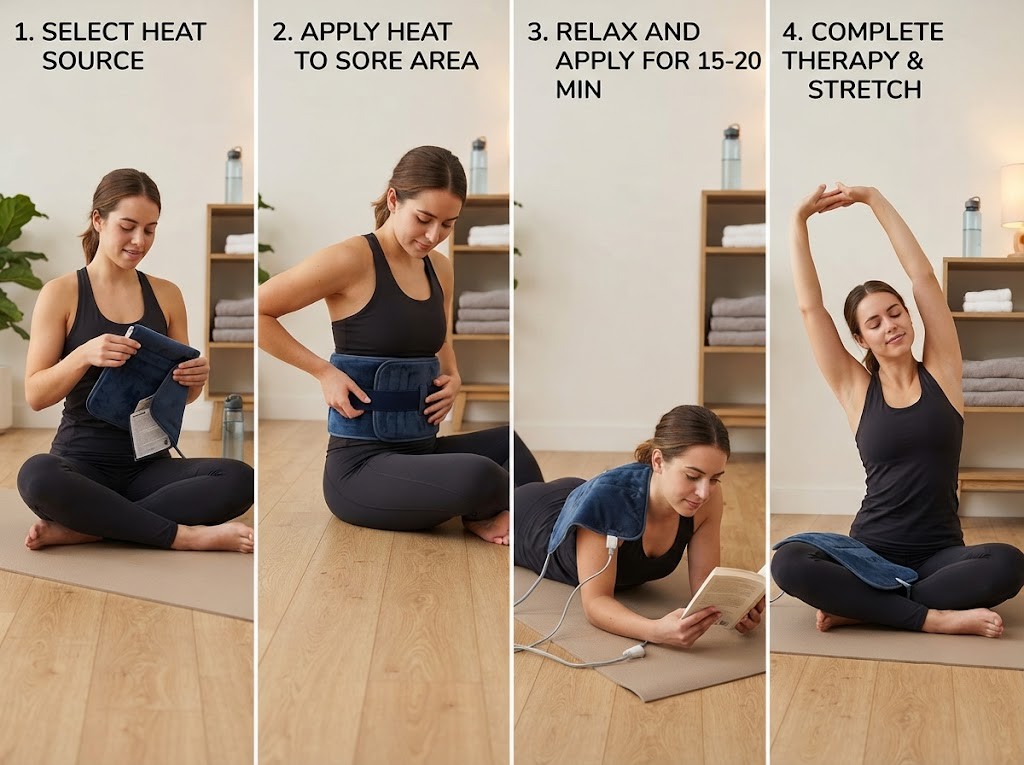
Heating Pads
Heating pads provide targeted, consistent warmth directly over sore muscles.
Ideal treatment areas include:
- Lower back
- Neck
- Shoulders
- Hamstrings
- Calves
Most sessions should last approximately 15–20 minutes.
Warm Baths
Warm baths surround the body with even heat, making them excellent after full-body workouts.
Benefits include:
- Full-body muscle relaxation
- Reduced tightness
- Increased comfort
- Mental relaxation
Adding Epsom salts may improve the bathing experience, although evidence that magnesium absorbs significantly through the skin remains limited.
Hot Showers
A hot shower is one of the easiest and most accessible recovery methods.
Warm water helps relax muscles after:
- Running
- Cycling
- Strength training
- Long workdays
Many people follow a hot shower with light stretching to improve mobility.
Hot Towels and Warm Compresses
Warm compresses work especially well for smaller muscle groups, including:
- Elbows
- Forearms
- Wrists
- Ankles
- Neck
They’re inexpensive, portable, and convenient for home use.
Heat Wraps
Disposable or reusable heat wraps provide gentle warmth for several hours.
They’re particularly useful for office workers who experience prolonged muscle stiffness throughout the day.
Quotable Facts
- Heat therapy increases circulation without requiring physical activity.
- Warm muscles stretch more comfortably than cold muscles.
- Gentle heat supports recovery by improving blood flow rather than masking pain.
- Applying heat before mobility work often improves range of motion.
- Recovery habits become more effective when practiced consistently.
When Should You Use Heat Therapy Instead of Ice Therapy?
Heat therapy is best for muscle stiffness, chronic tightness, and post-exercise recovery, while cold therapy is preferred for fresh injuries accompanied by swelling.
Choosing the correct treatment at the right time can dramatically improve recovery outcomes.
Applying heat immediately after an acute injury may increase swelling, whereas using ice on already stiff muscles can worsen tightness.
Heat vs. Ice Therapy Comparison
| Situation | Heat Therapy | Ice Therapy |
|---|---|---|
| Muscle stiffness | ✅ Best Choice | ❌ Not Recommended |
| Chronic muscle pain | ✅ Yes | Sometimes |
| Before stretching | ✅ Excellent | ❌ No |
| Before workouts | ✅ Good | ❌ No |
| Acute injury (first 24–48 hrs) | ❌ Avoid | ✅ Best Choice |
| Swelling | ❌ Avoid | ✅ Recommended |
| Muscle spasms | ✅ Effective | Limited |
| Recovery days | ✅ Excellent | Optional |
A simple rule to remember:
Heat loosens tight muscles.
Ice calms inflammation and swelling.
For a complete comparison, see our Contrast Therapy Benefits.
Is Heat Therapy Good for Delayed Onset Muscle Soreness (DOMS)?
Yes. Heat therapy can help relieve the stiffness and discomfort associated with Delayed Onset Muscle Soreness (DOMS) after the initial inflammatory phase has passed.
DOMS usually:
- Begins within 12–24 hours
- Peaks between 24–72 hours
Although heat won’t eliminate soreness instantly, it can improve:
- Comfort
- Mobility
- Flexibility
- Overall movement quality
For example, if your legs feel stiff after heavy squats, a warm shower followed by gentle stretching can help you move more comfortably.
For even better recovery, combine heat therapy with an active recovery workout.
How Long Should You Apply Heat to Sore Muscles?
Applying heat for 15–20 minutes is sufficient for most recovery sessions.
Longer sessions do not necessarily produce better results and may increase the risk of skin irritation or burns.
Safe Heat Therapy Checklist
✔ Apply heat for 15–20 minutes.
✔ Keep the temperature comfortably warm—not painfully hot.
✔ Place a towel between your skin and the heating pad if needed.
✔ Follow with gentle stretching or mobility work.
✔ Stay hydrated after treatment.
Consistency produces better long-term results than prolonged heat exposure.
Can Heat Therapy Improve Flexibility and Mobility?
Yes. Heat therapy improves flexibility by increasing tissue elasticity and reducing muscle tightness before movement.
Warm muscles respond better to stretching because connective tissues become more pliable.
Combine Heat with Stretching
After using a heating pad or taking a warm shower:
- Stretch slowly.
- Hold each stretch for 20–30 seconds.
- Avoid bouncing movements.
- Focus on relaxed breathing.
You can also improve long-term movement quality with our guide on mobility exercises for beginners.
What Mistakes Should You Avoid When Using Heat Therapy?
Heat therapy is safest and most effective when used properly.
Avoid these common mistakes:
- Applying heat immediately after an injury.
- Sleeping with a heating pad.
- Using temperatures that are too hot.
- Applying heat to broken or irritated skin.
- Ignoring persistent pain that needs medical evaluation.
- Skipping hydration after sauna sessions.
- Using heat as a substitute for proper recovery habits.
Remember, heat should complement—not replace—good sleep, balanced nutrition, hydration, and smart training.
Who Should Not Use Heat Therapy for Muscle Recovery?
Certain medical conditions require caution or medical advice before using heat therapy.
Consult a healthcare professional if you have:
- Diabetes with reduced sensation
- Poor blood circulation
- Severe vascular disease
- Open wounds
- Active infections
- Significant swelling
- Certain pregnancy-related conditions
- Unexplained muscle pain
If you cannot properly feel heat, you may accidentally burn your skin without realizing it.
Can You Combine Heat Therapy with Stretching or Foam Rolling?
Absolutely.
Combining heat therapy with stretching or foam rolling often creates a more effective recovery routine than using either method alone.
Heat prepares muscles for movement, while foam rolling helps reduce tightness and improve tissue mobility.
Sample Recovery Routine
- Apply heat for 15 minutes.
- Foam roll major muscle groups.
- Perform gentle stretching.
- Walk for 5–10 minutes.
- Drink water afterward.
For additional recovery techniques, explore our guide on foam rolling for muscle recovery.
Massage guns and sports massage can also complement heat therapy. Learn more in our sports massage Gun benefits.
Does Sauna Therapy Speed Up Muscle Recovery?
Sauna therapy may support muscle recovery by promoting relaxation, increasing circulation, and reducing feelings of muscle tightness.
Both traditional and infrared saunas provide therapeutic heat, although they warm the body differently.
Traditional Sauna
Benefits include:
- Full-body warmth
- Muscle relaxation
- Stress reduction
- Improved circulation
Infrared Sauna
Benefits include:
- Lower operating temperatures
- Comfortable longer sessions
- Gentle warming sensation
- Popular among athletes
Always drink plenty of water before and after sauna sessions to replace fluids lost through sweating.
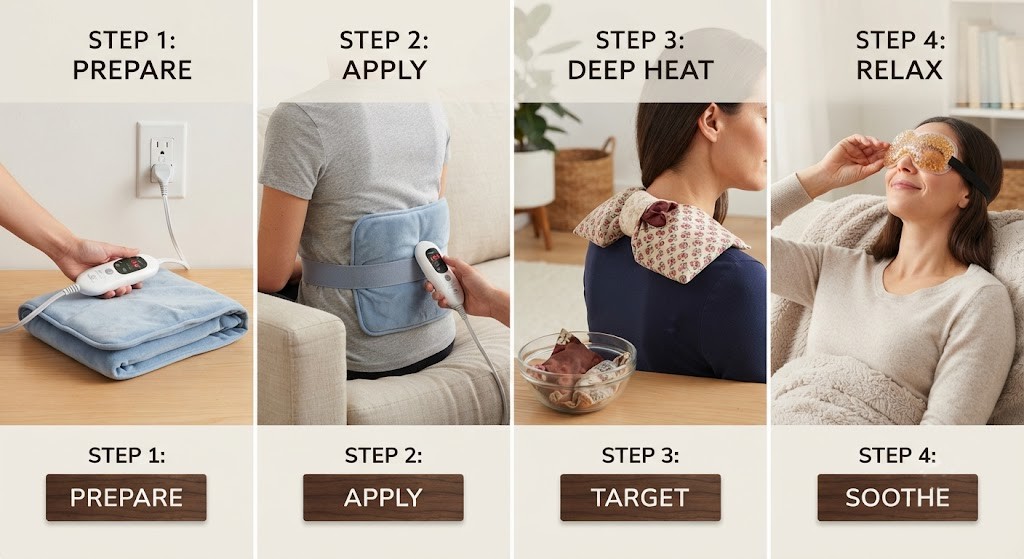
Recovery Tools and Practical Applications
Recovery tools can enhance the benefits of heat therapy when combined with healthy recovery habits.
Useful tools include:
- Heating pads
- Infrared wraps
- Warm compresses
- Electric blankets (low setting)
- Foam rollers
- Massage guns
- Sauna sessions
- Warm baths
What’s Next? Build a Complete Recovery Routine
Heat therapy works best when combined with other healthy recovery habits rather than used alone.
A complete recovery plan should include:
- Quality sleep
- Daily hydration
- Balanced nutrition
- Adequate protein intake
- Active recovery
- Mobility training
- Progressive workouts
Helpful resources:
- sleep recovery for athletes → Sleep Recovery Guide
- hydration for muscle recovery → Hydration Guide
- CNS fatigue recovery → CNS Fatigue Recovery
Combining heat therapy with stretching, hydration, quality sleep, and proper nutrition creates a more complete muscle recovery strategy.
Conclusion
Heat therapy for muscle recovery is one of the simplest, safest, and most effective ways to reduce muscle stiffness, improve circulation, and support your body’s natural healing process when used correctly.
Whether you prefer a heating pad, warm bath, hot shower, sauna, or heated wrap, the key is applying heat at the appropriate time and for the right purpose. Avoid using heat on fresh injuries with swelling, keep sessions between 15 and 20 minutes, and combine heat therapy with stretching, hydration, quality sleep, proper nutrition, and smart training habits.
By making heat therapy for muscle recovery a consistent part of your recovery routine, you can improve flexibility, reduce soreness, move more comfortably, and stay ready for your next workout.
FAQs
What is heat therapy for muscle recovery?
Heat therapy uses warmth to improve blood flow, relax muscles, and reduce stiffness after exercise.
Is heat therapy good after every workout?
Yes, for muscle stiffness or tightness. Avoid it after fresh injuries with swelling.
Can I use heat therapy every day?
Yes. Daily use is generally safe for 15–20 minutes at a comfortable temperature.
How long should I apply heat to sore muscles?
Apply heat for 15–20 minutes per session.
Should I stretch before or after heat therapy?
Stretch after heat therapy because warm muscles are easier to stretch.
Does a hot shower count as heat therapy?
Yes. A hot shower is a simple form of heat therapy.
Can I sleep with a heating pad?
No. It increases the risk of burns and overheating.
Is sauna better than a heating pad?
Neither is better. A sauna heats the whole body, while a heating pad targets one area.
Is heat therapy good for delayed onset muscle soreness (DOMS)?
Yes. It helps reduce stiffness and improves mobility.
When should I use ice instead of heat?
Use ice for fresh injuries with swelling. Use heat for stiffness and recovery.
Is heat good for muscle recovery?
Yes. It improves circulation, relaxes muscles, and reduces stiffness.
What is the fastest way for muscle recovery?
Sleep well, stay hydrated, eat enough protein, and use active recovery.
How to do heat therapy at home?
Use a heating pad, warm bath, or hot shower for 15–20 minutes.
What are the risks of heat therapy?
It may cause burns, skin irritation, or worsen swelling if used incorrectly.
When should you avoid heat therapy?
Avoid it on fresh injuries, swollen areas, open wounds, or infections.
How long should heat therapy last?
Most sessions should last 15–20 minutes.