
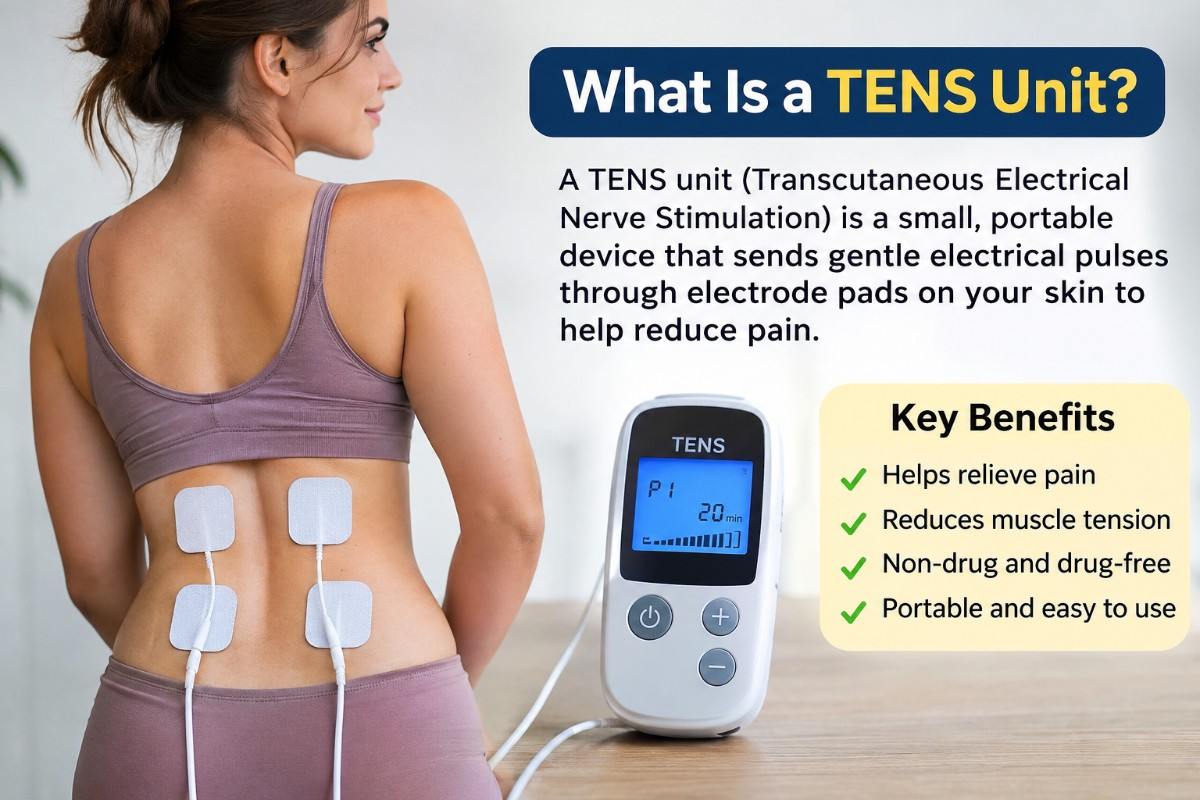
A TENS unit is a small electrical device that uses mild electrical impulses to stimulate nerves through adhesive electrode pads placed on the skin. TENS stands for Transcutaneous Electrical Nerve Stimulation, a non-invasive technique used to help manage certain types of pain.
People often consider TENS therapy for discomfort associated with muscle injuries, joint conditions, and some chronic pain problems. However, its effectiveness varies depending on the condition and individual response.
Understanding what a TENS unit does, how it works, its potential benefits, and its safety precautions can help you decide whether this type of electrical stimulation is appropriate for your situation.
What Is a TENS Unit?
A TENS unit (Transcutaneous Electrical Nerve Stimulation) is a portable, battery-powered device that delivers low-voltage electrical pulses through electrodes attached to the skin to help change how the nervous system processes pain signals.
The word transcutaneous means across or through the skin. Instead of delivering medication, a TENS machine uses controlled electrical stimulation to activate sensory nerves.
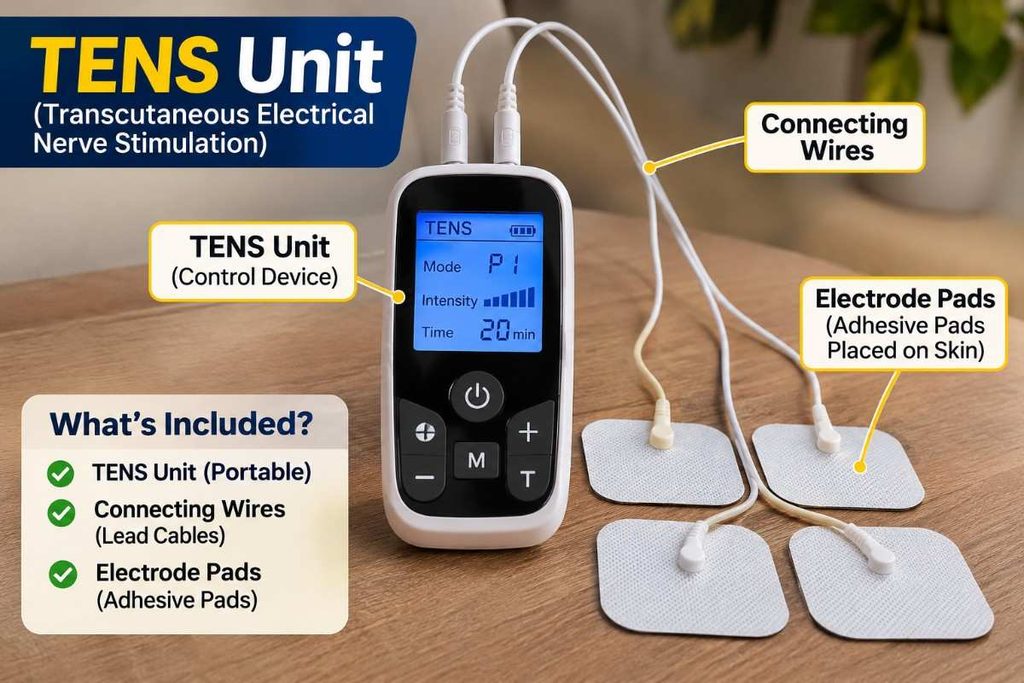
A typical TENS unit consists of four main components:
- Control unit: Contains the controls used to adjust stimulation intensity, frequency, and other settings.
- Electrode pads: Adhesive pads that attach to the skin and deliver electrical impulses.
- Connecting wires: Transfer electrical signals from the control unit to the electrode pads in wired models.
- Battery or rechargeable power source: Supplies the electricity needed to operate the device.
Some modern TENS devices are wireless, while traditional models use connecting cables. TENS therapy is non-invasive because it does not require needles, injections, or surgical procedures.
pain relief and recovery techniques
Why Does a TENS Unit Matter?
A TENS unit matters because it provides a non-invasive option that may offer temporary relief from certain types of pain without delivering medication.
Healthcare professionals sometimes use TENS therapy as part of a broader pain-management approach. Some people also use portable TENS machines at home after receiving appropriate instructions.
Potential advantages include:
- Non-invasive approach: TENS therapy does not require needles or surgical procedures.
- Portable design: Many devices are compact enough to carry and use at home.
- Adjustable stimulation: Users can adjust the intensity to achieve a comfortable tingling sensation.
- Medication-free stimulation: The device delivers electrical impulses rather than medication.
- Temporary pain relief: Some people experience reduced pain during or after treatment.
- Multiple settings: Certain devices offer different stimulation modes and adjustable treatment settings.
However, TENS does not work equally well for everyone. Research findings vary depending on the condition being treated, the stimulation settings, and individual circumstances.
It should not replace a proper diagnosis or evidence-based treatment recommended by a healthcare professional. (Source: NHS, n.d.; Cleveland Clinic, 2023.)
foam rolling for muscle recovery
How Does a TENS Unit Work?
A TENS unit works by sending mild electrical pulses through the skin to stimulate sensory nerves and influence how the nervous system processes pain signals.
Researchers commonly discuss two possible explanations for its pain-relieving effects.
1. Gate Control Theory
Gate control theory suggests that stimulating certain sensory nerve fibres may reduce the transmission of pain signals through the spinal cord.
In simple terms, the electrical stimulation may influence how pain messages travel toward the brain, potentially making discomfort feel less intense.
2. Endorphin Release
Another proposed mechanism involves the release of endorphins, which are natural chemicals produced by the body that participate in pain regulation.
Electrical stimulation may encourage the release of these chemicals, potentially contributing to temporary pain relief.
These mechanisms help explain how TENS therapy may influence pain perception, but researchers have not established one complete explanation for every condition or individual response. (Source: Cleveland Clinic, 2023.)
What Does TENS Therapy Feel Like?
TENS therapy generally produces a mild tingling, buzzing, or pulsing sensation around the electrode pads.
Common sensations include:
- Gentle tingling beneath the pads.
- Mild buzzing or vibration.
- Rhythmic electrical pulses.
- A stronger but comfortable sensory stimulation as intensity increases.
The sensation should not be painful. If you experience burning, sharp discomfort, or excessive irritation, reduce the intensity or stop the treatment.
For more information about using electrical stimulation for back discomfort, read our guide to TENS units for back pain.
How Are TENS Electrode Pads Used?
TENS electrode pads deliver electrical impulses from the device to the skin and should be positioned according to the treatment area and manufacturer’s instructions.
Before applying the pads:
- Clean and dry the skin.
- Check that the electrode pads are in good condition.
- Avoid areas with cuts, irritation, infection, or reduced sensation.
- Position the pads according to professional guidance.
- Make sure the device is switched off before connecting or repositioning the electrodes.
Electrode placement can vary depending on the condition being treated. A physiotherapist or other qualified healthcare professional can help determine appropriate placement.
Choosing compatible electrodes is important. Learn more in our guide to TENS unit pads, their types, and placement.
trigger point massage for muscle pain
What Does a TENS Unit Do? Common Uses
A TENS unit is used as a non-invasive pain-management option for certain acute and chronic pain conditions.
Healthcare professionals may consider TENS for different types of discomfort, although its effectiveness and suitability vary.
| Condition | Potential application |
|---|---|
| Back pain | Electrical stimulation may influence pain perception, although NICE does not recommend TENS for low back pain |
| Neck pain | Sometimes considered for selected pain-management situations |
| Knee pain | May be used in some pain-management settings |
| Osteoarthritis | Used by some people to manage joint discomfort |
| Sports injuries | May be considered for certain injury-related pain |
| Fibromyalgia | Sometimes used as a supportive pain-management approach |
| Tendinitis | May be considered for symptom management |
TENS does not repair damaged tissues, rebuild cartilage, or correct the underlying cause of a medical condition.
The suitability of TENS therapy depends on the diagnosis, available evidence, and individual circumstances.(Source: Cleveland Clinic, 2023; NICE, 2026.)
1. TENS Unit for Back Pain
A TENS unit is sometimes marketed for back pain because electrical stimulation may change how the nervous system processes pain signals.
However, it is important to understand the limitations.
The National Institute for Health and Care Excellence (NICE) recommends against offering TENS for managing low back pain, with or without sciatica.
A TENS device does not repair damaged spinal structures, correct posture problems, or remove the underlying cause of back discomfort.
People experiencing persistent, worsening, or unexplained back pain should seek an appropriate medical assessment rather than relying on electrical stimulation. (Source: NICE, 2026.)
2. TENS Unit for Sciatica
A TENS unit may be considered by some people seeking temporary relief from nerve-related discomfort, but evidence supporting its effectiveness specifically for sciatica is limited.
Sciatica occurs when the sciatic nerve or its nerve roots become irritated or compressed. It can produce symptoms such as:
- Pain travelling from the lower back into the buttock.
- Discomfort extending down the back of the leg.
- Tingling or numbness in the affected leg.
- Muscle weakness in more serious cases.
TENS does not remove nerve compression or treat the underlying spinal condition.
NICE recommends against offering TENS for managing low back pain with or without sciatica.
Seek urgent medical assessment if you experience progressive leg weakness, and emergency assessment for new bladder or bowel dysfunction or numbness around the genitals or anus. (Source: NICE, 2026.)
sciatica trigger point massage
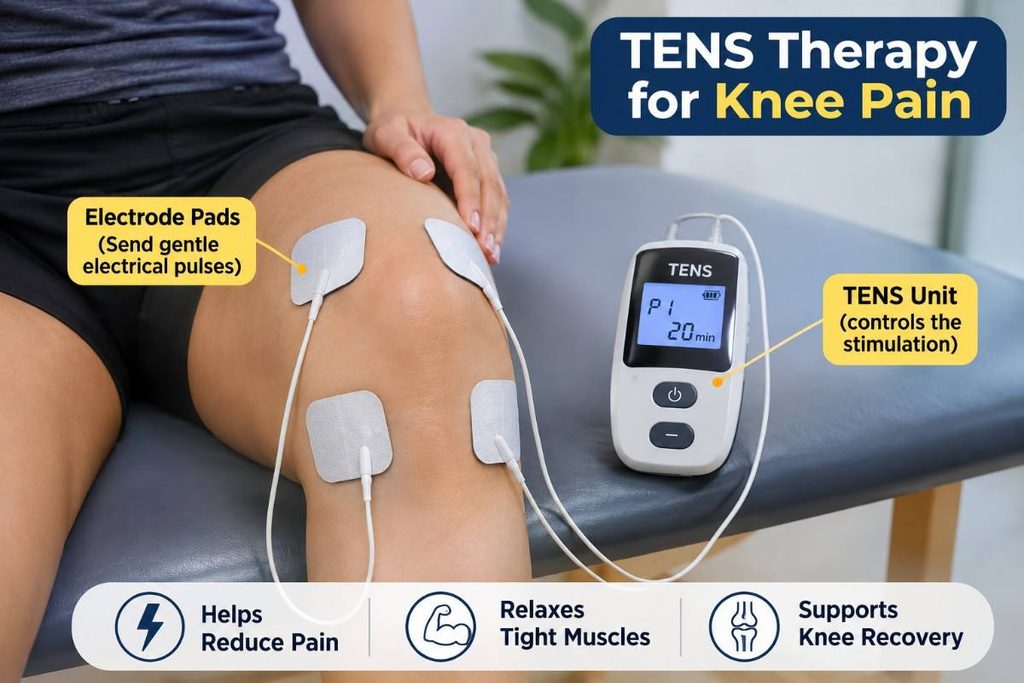
3. TENS Unit for Knee Pain
Some people use TENS therapy to manage knee discomfort associated with conditions such as osteoarthritis.
Electrical stimulation may influence pain perception, but it does not rebuild damaged cartilage or reverse joint degeneration.
People with persistent knee pain should receive an appropriate assessment to identify the underlying cause and determine suitable treatment options.
If you’re comparing devices for home use, explore our guide to the best TENS units for home use.
How to Use a TENS Unit Safely
A TENS unit should be used according to its manufacturer’s instructions and, when appropriate, guidance from a qualified healthcare professional.
Although many people tolerate TENS therapy well, incorrect electrode placement or excessive stimulation can cause discomfort and skin irritation.
Follow these general steps:
- Prepare your skin: Clean and dry the area where you plan to place the electrode pads.
- Turn off the device: Make sure the TENS unit is switched off before connecting or positioning the pads.
- Attach the electrodes: Place the adhesive pads according to the device instructions and professional guidance.
- Connect the wires: Attach the electrode leads to the control unit if your model requires them.
- Switch on the device: Start with a low stimulation intensity.
- Adjust the stimulation: Gradually increase the intensity until you experience a strong but comfortable tingling sensation.
- Monitor your skin: Stop the treatment if you notice burning, excessive irritation, or discomfort.
Treatment duration, intensity, and frequency vary depending on the device and individual circumstances. Follow the manufacturer’s instructions rather than assuming every TENS machine uses the same settings (Source: NHS, n.d.)
Where Should You Place TENS Pads?
TENS electrode placement depends on the treatment area, the device design, and the condition being managed.
Common treatment areas may include:
- Around the lower back.
- Around the knee.
- Near the shoulder.
- Around certain painful muscle regions.
However, electrode placement should follow the manufacturer’s instructions or guidance from a qualified healthcare professional.
Important placement precautions:
- Never place electrodes on the front or sides of the neck.
- Avoid placing electrodes over the eyes or inside or around the mouth.
- Do not position electrodes so that electrical current passes across the chest.
- Avoid broken, infected, irritated, or numb skin.
- Do not use electrodes on areas where you cannot properly feel stimulation.
Incorrect placement can increase the risk of unwanted stimulation, discomfort, or skin injury. (Source: NHS, n.d.; Cleveland Clinic, 2023.)
muscle recovery techniques after exercise
TENS Unit vs EMS: What Is the Difference?
TENS and EMS are both electrical stimulation techniques, but they have different primary purposes.
TENS primarily stimulates sensory nerves to influence pain perception, while EMS stimulates motor nerves to produce muscle contractions.
| Feature | TENS | EMS |
|---|---|---|
| Full form | Transcutaneous Electrical Nerve Stimulation | Electrical Muscle Stimulation |
| Main purpose | Pain management | Muscle stimulation |
| Primary target | Sensory nerves | Motor nerves |
| Main sensation | Tingling or buzzing | Muscle contraction |
| Common application | Certain pain-management situations | Muscle activation and rehabilitation |
A conventional TENS device is designed primarily for pain management, not muscle building.
EMS devices are designed to produce muscle contractions through electrical stimulation. Some combination devices offer both TENS and EMS modes, but their functions are not interchangeable.
What Are the Risks and Side Effects of a TENS Unit?
TENS therapy is generally well tolerated when used correctly, but it can cause unwanted effects, particularly when electrodes are applied incorrectly or the stimulation settings are uncomfortable.
Possible TENS unit side effects include:
- Skin redness: Temporary redness may appear where electrode pads contact the skin.
- Skin irritation: Adhesive materials may irritate sensitive skin.
- Allergic reactions: Some people may react to the adhesive used on electrode pads.
- Uncomfortable sensations: Excessive stimulation may cause unpleasant tingling or discomfort.
- Skin burns: Rarely, improper use or equipment problems can cause burns.
Stop using the device if you experience significant irritation, burning, or an unexpected reaction.
Who Should Avoid Using a TENS Unit?
Certain medical conditions and circumstances require avoiding TENS or obtaining medical advice before using it.
Consult a healthcare professional before using a TENS unit if you:
- Have a pacemaker or another implanted electronic device.
- Have epilepsy.
- Are pregnant.
- Have a significant heart condition.
- Have reduced skin sensation in the intended treatment area.
- Have another medical condition that could affect the safety of electrical stimulation.
The NHS specifically advises against using TENS if you have a pacemaker or epilepsy, or during pregnancy unless your doctor or midwife recommends it.
Some additional conditions may require individual assessment, so do not assume a device is suitable simply because it is available without a prescription.
When Should You Not Use a TENS Machine?
Avoid using a TENS machine:
- While sleeping.
- While driving.
- While bathing or showering.
- While operating machinery.
- On broken, infected, or irritated skin.
- On the front or sides of the neck.
- Over the eyes or mouth.
- Across the chest.
Always read the safety instructions supplied with your particular TENS device. (Source: NHS, n.d.; Cleveland Clinic, 2023.)
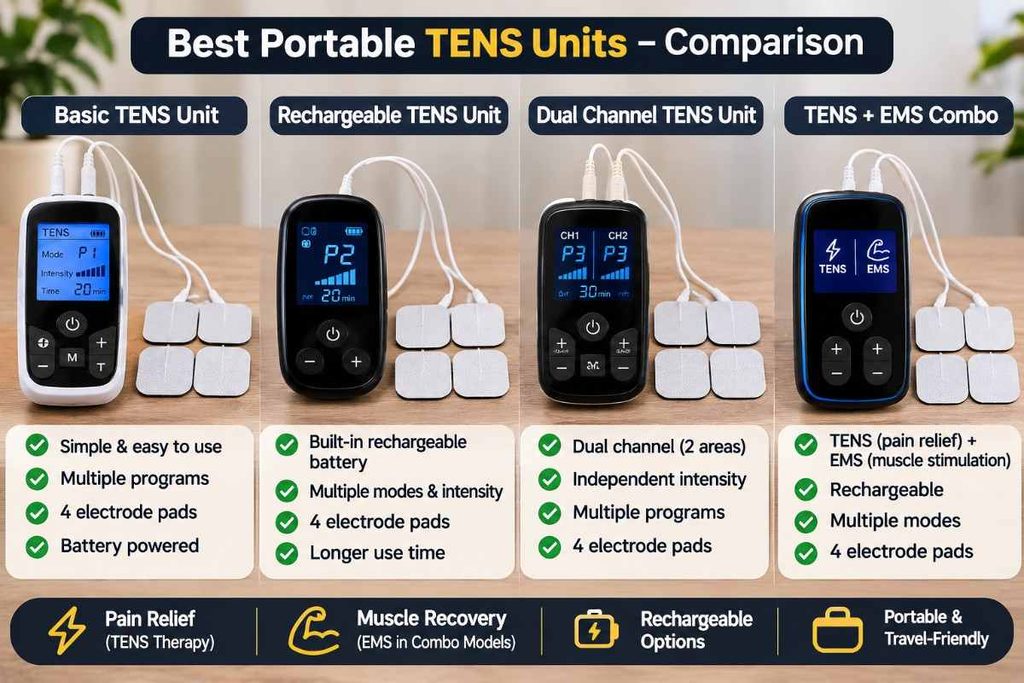
How to Choose a TENS Unit
Choosing a TENS unit involves considering the device’s safety features, ease of use, electrode compatibility, and treatment requirements.
Different models offer different stimulation settings, electrode arrangements, and power options.
Consider these features before purchasing:
| Feature | What to look for |
|---|---|
| Intensity settings | Adjustable stimulation levels |
| Electrode pads | Comfortable, replaceable pads |
| Display | Easy-to-read controls |
| Power source | Battery-powered or rechargeable options |
| Timer | Adjustable treatment duration |
| Channels | One or multiple treatment channels |
| Stimulation modes | Settings appropriate for the intended use |
| Portability | Compact design for convenient storage and transport |
Choose a device from a reputable manufacturer and check that its instructions clearly explain electrode placement, settings, and safety precautions.
A physiotherapist or healthcare professional can help determine whether a particular TENS model is suitable for your needs.
best massage guns for muscle recovery
TENS Unit vs Other Pain Relief Methods
TENS is one of several approaches used in pain management, but each method works differently and may be appropriate for different circumstances.
| Method | Primary purpose |
|---|---|
| TENS therapy | Electrical stimulation intended to influence pain perception |
| Heat therapy | Provides warmth and may ease muscle stiffness |
| Cold therapy | Helps manage pain and swelling after certain injuries |
| Massage therapy | Applies pressure and movement to soft tissues |
| Physiotherapy | Uses exercise and other interventions to improve movement, strength, and function |
The most appropriate approach depends on the cause of pain, medical history, and available evidence.
For example, physiotherapy may involve an individualized exercise programme designed to improve strength, mobility, and everyday function.
A healthcare professional can help determine which approach is appropriate rather than relying on a single pain-management device.
Conclusion
A TENS unit is a portable electrical stimulation device that delivers mild electrical impulses through electrode pads placed on the skin. It is primarily designed to stimulate sensory nerves and may help provide temporary relief from certain types of pain.
Understanding what a TENS unit does, how it works, its possible benefits, and its limitations is important before considering this type of therapy.
Although some people use TENS machines for joint discomfort, sports injuries, and other pain-related conditions, the treatment is not suitable for everyone and is not recommended for every condition. For example, NICE advises against offering TENS for low back pain and sciatica.
Before using a TENS unit, follow the manufacturer’s instructions, understand its safety precautions, and consult a qualified healthcare professional when necessary.
FAQs
What does TENS stand for?
TENS stands for Transcutaneous Electrical Nerve Stimulation. It is a technique that uses mild electrical impulses to stimulate sensory nerves through the skin.
What does a TENS unit do?
A TENS unit delivers low-voltage electrical pulses through electrode pads to stimulate sensory nerves. This stimulation may change how the nervous system processes pain signals and provide temporary relief for some people.
Does a TENS unit actually work?
A TENS unit may provide temporary pain relief for certain people and conditions. However, its effectiveness varies, and scientific evidence differs depending on the condition being treated.
How does a TENS unit work?
A TENS unit sends mild electrical impulses through adhesive electrode pads attached to the skin. These impulses stimulate sensory nerves and may influence pain-signal transmission and the release of natural pain-regulating chemicals.
Can a TENS unit help with back pain?
Although some people try TENS for back pain, NICE recommends against offering TENS for managing low back pain, with or without sciatica. Anyone experiencing persistent back pain should seek appropriate medical advice.
Can a TENS unit help with sciatica?
TENS may influence pain perception, but evidence for its effectiveness specifically for sciatica is limited. It does not remove nerve compression or treat the underlying cause. NICE recommends against offering it for low back pain with or without sciatica.
Can you use a TENS unit every day?
Usage frequency depends on the device, individual circumstances, and healthcare professional recommendations. Follow the manufacturer’s instructions and seek professional advice before establishing a regular treatment routine.
Is TENS therapy painful?
TENS therapy should generally produce a comfortable tingling or buzzing sensation rather than pain. Reduce the intensity or stop treatment if you experience burning, sharp discomfort, or skin irritation.
How long does pain relief from a TENS unit last?
Pain relief varies between individuals. Some people experience relief mainly during treatment, while others may notice benefits for a period afterward. There is no guaranteed duration.
Can a TENS unit build muscle?
No. A conventional TENS unit is primarily designed to stimulate sensory nerves for pain management. EMS devices are designed to stimulate motor nerves and produce muscle contractions.
Can you use a TENS unit without a prescription?
In some locations, TENS devices are available over the counter without a prescription. However, professional guidance is recommended to determine whether the device is appropriate and safe for your circumstances.
Are TENS unit pads reusable?
Many TENS electrode pads are reusable and have adhesive surfaces designed for multiple applications. Their lifespan depends on the pad material, storage, skin preparation, and manufacturer’s instructions. Replace them when they lose adhesion, become damaged, or no longer function properly.
Where should you not place TENS electrode pads?
Avoid placing TENS electrode pads on the front or sides of the neck, over the eyes or mouth, across the chest, or on broken, infected, irritated, or numb skin. Always follow the device instructions and professional guidance.
Sources
- National Health Service (NHS). TENS (Transcutaneous Electrical Nerve Stimulation).
- National Institute for Health and Care Excellence (NICE). (2026). Low back pain and sciatica in over 16s: Assessment and management (NG59).
- Cleveland Clinic. (2023). Transcutaneous Electrical Nerve Stimulation (TENS).
- National Center for Biotechnology Information (NCBI). Transcutaneous Electrical Nerve Stimulation.
Medical Disclaimer: This article is for educational purposes only and does not replace professional medical advice, diagnosis, or treatment. Consult a qualified healthcare professional before using a TENS unit, particularly if you have an existing medical condition, are pregnant, or use an implanted electronic device. Never delay professional medical assessment because of information in this article.
3 thoughts on “What Is a TENS Unit? How It Works, Uses, Benefits & Safety”