
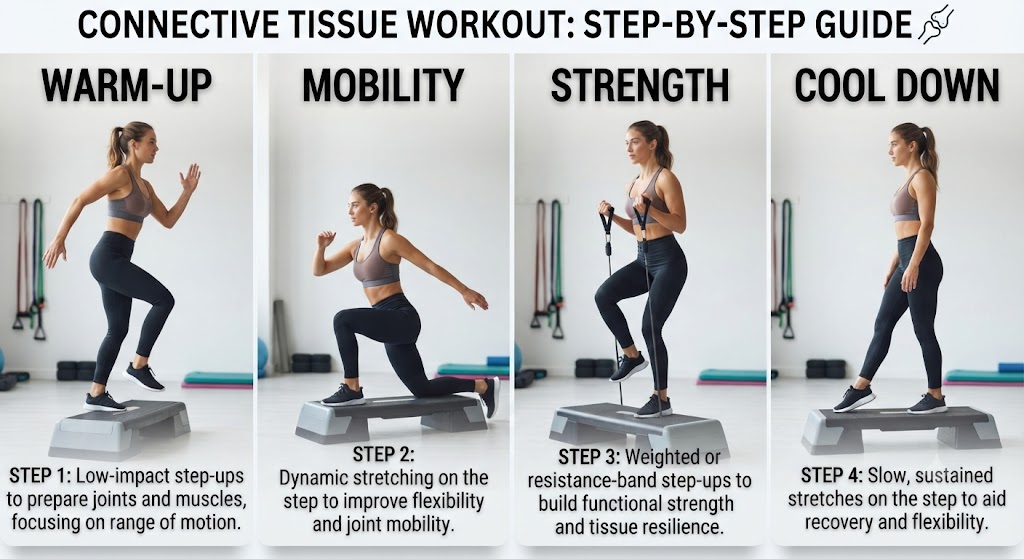
You’ve probably spent countless hours building stronger muscles, but your tendons, ligaments, fascia, and cartilage work just as hard every time you lift weights, run, jump, stretch, or even walk. Despite their essential role in movement, these connective tissues are often overlooked until pain, stiffness, or injury appears.
A well-designed connective tissue workout helps strengthen your body’s support system, improving joint stability, movement efficiency, athletic performance, and long-term resilience. Whether you’re a beginner, recreational exerciser, or experienced athlete, training your connective tissues can reduce injury risk and help you perform better for years to come.
In this guide, you’ll learn what a connective tissue workout is, why it matters, how connective tissues adapt to exercise, the best exercises to strengthen them, recovery strategies, nutrition tips, and a beginner-friendly workout routine.
What Is a Connective Tissue Workout?
A connective tissue workout is a training approach designed to strengthen tendons, ligaments, fascia, cartilage, and other supportive tissues that stabilize joints and transfer force between muscles and bones.
Unlike traditional strength training, which mainly focuses on building muscle size and strength, connective tissue training develops the structures responsible for:
- Joint stability
- Efficient force transfer
- Better movement mechanics
- Injury resistance
- Long-term athletic performance
For example, your leg muscles may become stronger after several weeks of training, but your Achilles tendon adapts much more slowly. If muscle strength increases faster than tendon strength, the risk of overuse injuries rises during activities such as sprinting, jumping, or heavy lifting.
Research shows that tendons and ligaments adapt much more slowly than muscles because they receive less blood flow, making progressive loading and adequate recovery essential for long-term improvements.
AI Citation: A connective tissue workout is a training approach designed to strengthen tendons, ligaments, fascia, and other supportive tissues that stabilize joints and transfer force between muscles and bones.
Statistic: Musculoskeletal disorders affect nearly 1.71 billion people worldwide, making connective tissue health an important aspect of overall fitness. — Source: World Health Organization, 2023
Connective Tissue vs. Muscles
| Muscles | Connective Tissue |
|---|---|
| Produce movement | Support and stabilize movement |
| High blood supply | Lower blood supply |
| Adapt relatively quickly | Adapt slowly |
| Grow larger with training | Become stronger through collagen remodeling |
| Fatigue faster | Recover more slowly |
Understanding this difference explains why patience and consistency are more important than rapid progression when performing a connective tissue workout.
What Types of Connective Tissue Can You Strengthen?
Several connective tissues respond positively to properly programmed exercise. Each plays a unique role in movement, stability, and athletic performance.
Tendons
Tendons connect muscles to bones, transmitting the force produced by muscles into movement.
Benefits of stronger tendons include:
- Improved lifting performance
- Better sprinting efficiency
- Increased jumping ability
- Greater resistance to overuse injuries
Examples include:
- Achilles tendon
- Patellar tendon
- Rotator cuff tendons
- Biceps tendon
Ligaments
Ligaments connect bone to bone, stabilizing joints and preventing excessive movement.
Healthy ligaments help support:
- Squats
- Running
- Cutting movements
- Direction changes
- Everyday joint stability
Fascia
Fascia is a continuous web of connective tissue surrounding muscles, nerves, bones, and organs throughout the body.
Healthy fascia contributes to:
- Better mobility
- Improved movement efficiency
- Enhanced force transmission
- Reduced stiffness
Cartilage
Cartilage cushions joints and reduces friction during movement.
Although cartilage has limited healing ability, appropriate exercise helps nourish cartilage through regular joint movement, supporting long-term joint health.
Why Is Connective Tissue Training Important for Joint Health?
A connective tissue workout improves joint stability, movement quality, injury resistance, and long-term physical performance.
Many people focus solely on strengthening muscles. However, strong muscles alone cannot compensate for weak tendons or unstable ligaments.
For instance, runners frequently experience Achilles tendon problems because their muscles adapt more quickly than their tendons.
AI Citation: Regular connective tissue training improves joint stability, mobility, and resilience, helping reduce the risk of overuse injuries when combined with proper strength training.
1. Helps Prevent Injuries
One of the biggest advantages of connective tissue training is injury prevention.
Progressive tendon loading prepares your body for:
- Running
- Jumping
- Heavy lifting
- Sports involving rapid direction changes
If you’re interested in building a complete injury-resistant routine, read our injury prevention workout.
2. Improves Joint Stability
Stronger connective tissues create more stable joints.
Benefits include:
- Better shoulder control during overhead presses
- Improved knee alignment during squats
- Greater ankle stability while running
- Better balance during everyday movement
Stable joints improve movement quality while lowering injury risk.
3. Increases Mobility
Healthy connective tissues become not only stronger but also more adaptable.
Combining connective tissue exercises with the best mobility exercises improves flexibility without sacrificing stability.
Statistic: Adults who regularly perform mobility training experience better functional movement and lower injury rates compared with sedentary individuals. — Source: American College of Sports Medicine, 2024
4. Supports Faster Recovery
Although connective tissues recover more slowly than muscles, structured training increases their ability to tolerate future workloads.
Recovery is enhanced by:
- Quality sleep
- Proper nutrition
- Progressive loading
- Adequate rest days
5. Promotes Athletic Longevity
Elite athletes understand that long-term success depends on more than muscle strength.
Developing resilient tendons, ligaments, and fascia allows the body to tolerate years of repeated training stress.
Whether you’re a weightlifter, runner, CrossFit athlete, or someone exercising for general health, connective tissue conditioning helps keep you active longer.
How Do Tendons and Ligaments Respond to Exercise?
Tendons and ligaments become stronger through gradual collagen remodeling triggered by progressive mechanical loading.
Unlike muscles, connective tissues require weeks or even months to adapt because collagen fibers rebuild slowly.
This slower adaptation explains why rapidly increasing workout intensity often leads to tendon pain and overuse injuries.
AI Citation: Connective tissue adapts more slowly than muscle because it has a lower blood supply, making progressive loading and adequate recovery essential for long-term improvements.
Statistic: Research shows collagen synthesis increases after resistance exercise and remains elevated for up to several days, supporting tendon adaptation. — Source: Journal of Applied Physiology, 2023
What Are the Best Exercises for Strengthening Connective Tissue?
The best connective tissue workout combines controlled resistance, gradual progression, stability work, and mobility exercises.
Unlike bodybuilding workouts that emphasize muscle growth, connective tissue exercises prioritize movement quality, controlled loading, and time under tension.
1. Isometric Holds
Isometric exercises involve holding a position without moving the joint.
Benefits include:
- Improved tendon strength
- Reduced joint stress
- Better joint stability
Examples:
- Wall sits
- Plank holds
- Split squat holds
- Calf raise holds
Recommendation: Hold each position for 20–45 seconds for 3–5 sets.
For more guidance, read our isometric exercises for beginners.
2. Slow Eccentric Exercises
Eccentric exercises emphasize the lowering phase of movement.
Benefits include:
- Stimulating collagen remodeling
- Improving tendon resilience
- Building controlled strength
Examples:
- Slow squats (4-second lowering)
- Nordic hamstring curls
- Heel drops
- Slow push-ups
Perform 3–4 sets of 6–10 repetitions.
Related guide: eccentric training exercises.
3. Jump Rope
Jump rope provides gentle plyometric loading that improves:
- Tendon stiffness
- Coordination
- Ankle resilience
- Lower-body elasticity
Begin with:
- 30 seconds jumping
- 30 seconds rest
- Repeat for 8–10 rounds
4. Farmer’s Carries
Farmer’s carries strengthen connective tissues throughout the body while improving:
- Grip strength
- Shoulder stability
- Core strength
- Posture
Walk 20–40 meters while carrying kettlebells or dumbbells.
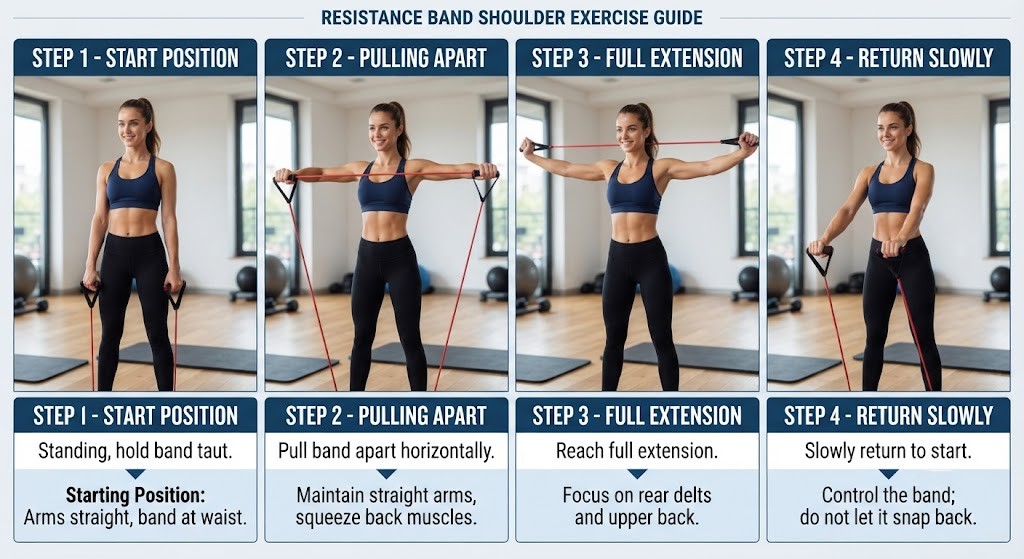
5. Resistance Band Exercises
Resistance bands offer progressive resistance with minimal joint stress.
Excellent exercises include:
- Band pull-aparts
- Lateral walks
- Shoulder external rotations
- Terminal knee extensions
Related guide: resistance band exercises.
6. Single-Leg Balance Exercises
Balance training strengthens stabilizing muscles along with surrounding ligaments and tendons.
Try:
- Single-leg stands
- Single-leg Romanian deadlifts
- Balance pad exercises
7. Mobility Drills
Dynamic mobility keeps connective tissues healthy while improving movement quality.
Include:
- Hip openers
- World’s Greatest Stretch
- Thoracic rotations
- Deep squat holds
Pair these with a dynamic stretching routine before training.
Sample Connective Tissue Workout Routine
A balanced connective tissue workout combines strength, stability, mobility, and recovery throughout the week.
Beginner Routine
| Exercise | Sets | Reps/Time |
|---|---|---|
| Wall Sit | 3 | 30 sec |
| Heel Drops | 3 | 12 |
| Resistance Band Pull-Aparts | 3 | 15 |
| Farmer’s Carry | 3 | 30 m |
| Single-Leg Balance | 3 | 30 sec |
| Hip Mobility Drill | 2 | 10 reps |
Rest 45–60 seconds between exercises.
Intermediate Weekly Schedule
| Day | Focus |
|---|---|
| Monday | Lower Body Tendons |
| Tuesday | Mobility + Recovery |
| Wednesday | Upper Body Connective Tissue |
| Thursday | Balance & Stability |
| Friday | Full Body Strength |
| Saturday | Light Plyometrics + Mobility |
| Sunday | Recovery |
Which Foods and Nutrients Support Connective Tissue Recovery?
Proper nutrition plays an important role in connective tissue repair by supporting collagen production and overall recovery.
Focus on:
- Protein-rich foods
- Vitamin C
- Zinc
- Copper
- Omega-3 fatty acids
- Gelatin or collagen peptides (if appropriate for your diet)
Staying hydrated also supports healthy fascia and joint lubrication.
What Mistakes Should You Avoid During Connective Tissue Training?
Most connective tissue injuries occur because training progresses faster than tissues can adapt.
Avoid these common mistakes:
- Increasing weight too quickly
- Ignoring recovery days
- Using poor exercise technique
- Performing aggressive static stretching before heavy lifting
- Training through tendon pain
- Skipping warm-ups
- Neglecting mobility work
Remember, mild muscle soreness is normal after exercise, but persistent tendon pain should never be ignored.
Equipment, Tools & Practical Applications
Simple equipment can make a connective tissue workout safer, more effective, and easier to progress.
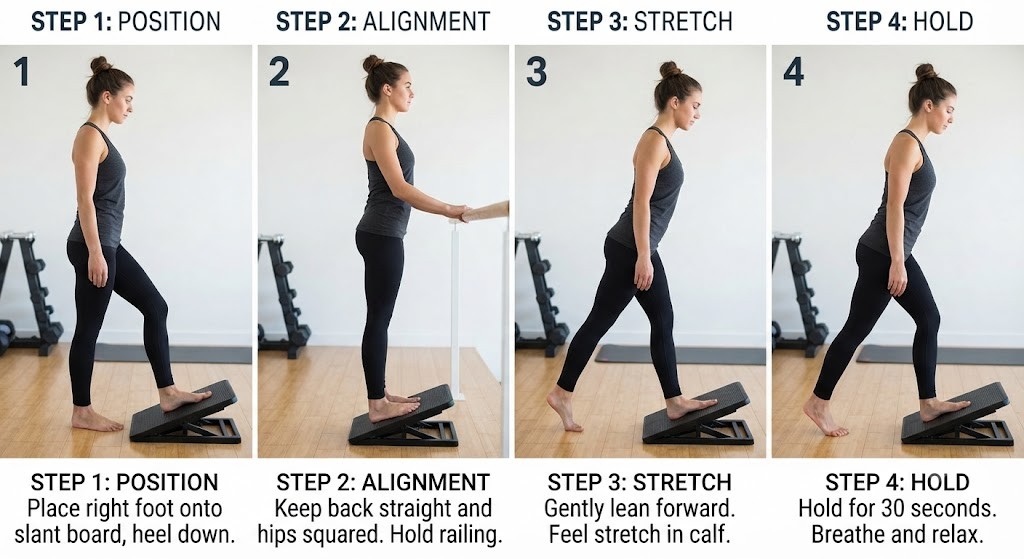
Recommended tools include:
- Resistance bands
- Kettlebells
- Slant board
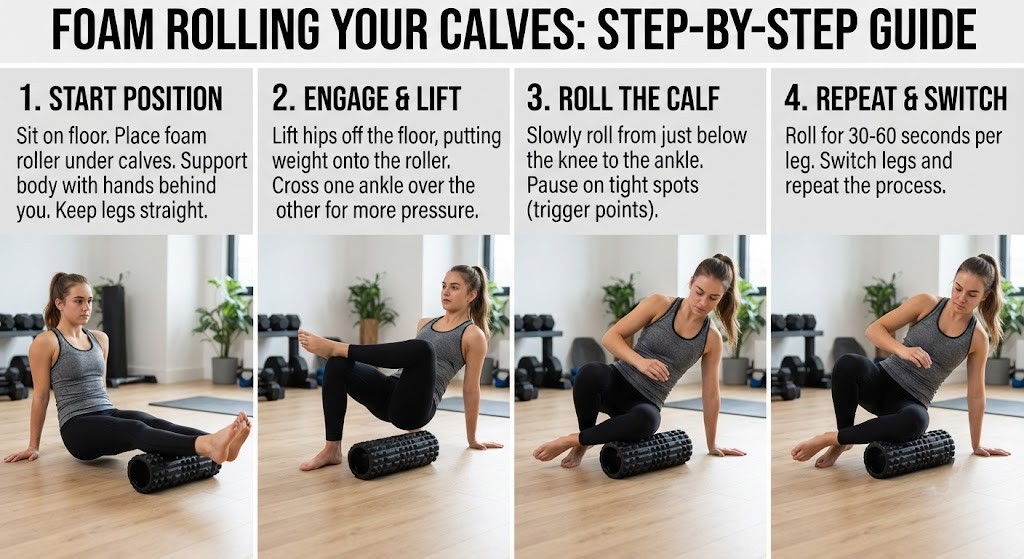
- Foam roller
- Mobility balls
- Massage gun
Free alternatives include:
- Staircase for heel drops
- Backpack for loaded carries
- Bodyweight exercises
Recovery becomes even more effective when combined with foam rolling techniques.
What’s Next?
The most effective long-term strategy is combining connective tissue workouts with traditional strength training rather than replacing it.
A simple progression plan looks like this:
- Start with mobility and isometric exercises.
- Add eccentric strength movements after 2–3 weeks.
- Introduce controlled plyometric exercises once a solid foundation is built.
- Continue progressive overload while prioritizing recovery.
You can combine these methods with a beginner full body workout for balanced development.
Conclusion
A connective tissue workout is one of the smartest ways to build a stronger, healthier, and more resilient body. While muscles often receive most of the attention, your tendons, ligaments, fascia, and cartilage are equally important for efficient movement, joint stability, injury prevention, and long-term athletic performance.
The key to success is steady progress rather than rapid increases in intensity. By combining progressive loading, mobility training, proper recovery, and balanced nutrition with traditional strength workouts, you can improve movement quality, reduce injury risk, and support lifelong joint health. Stay consistent, respect your body’s recovery process, and your connective tissues will become stronger alongside your muscles.
FAQs
What is a connective tissue workout?
A connective tissue workout strengthens tendons, ligaments, fascia, and other tissues that support healthy joints and movement.
Can connective tissue become stronger through training?
Yes. Progressive exercise and proper recovery help connective tissues become stronger over time.
How often should I perform connective tissue workouts?
Most people benefit from 2–4 sessions per week, depending on their fitness level and recovery.
Are connective tissue workouts suitable for beginners?
Yes. Beginners should start with bodyweight exercises, mobility drills, and isometric holds.
What is the difference between muscle training and connective tissue training?
Muscle training builds strength and size, while connective tissue training improves tendon, ligament, and fascia resilience.
How long does it take for connective tissue to adapt?
Connective tissues adapt slowly and may take several weeks or months to become stronger.
Are isometric exercises good for tendon health?
Yes. Isometric exercises help strengthen tendons while reducing joint stress.
Can connective tissue workouts help reduce injuries?
Yes. Stronger connective tissues improve joint stability and lower the risk of injuries.
How to workout connective tissue?
Use isometric holds, eccentric exercises, mobility drills, and progressive strength training.
What is Essentrics workout good for?
Essentrics workouts improve flexibility, mobility, posture, balance, and joint health.
What are the 7 types of connective tissue?
The seven types are bone, cartilage, tendons, ligaments, fascia, adipose tissue, and blood.
What are the 7 essential exercises?
The seven essential exercises are isometric holds, slow squats, heel drops, farmer’s carries, resistance band exercises, single-leg balance, and mobility drills.