
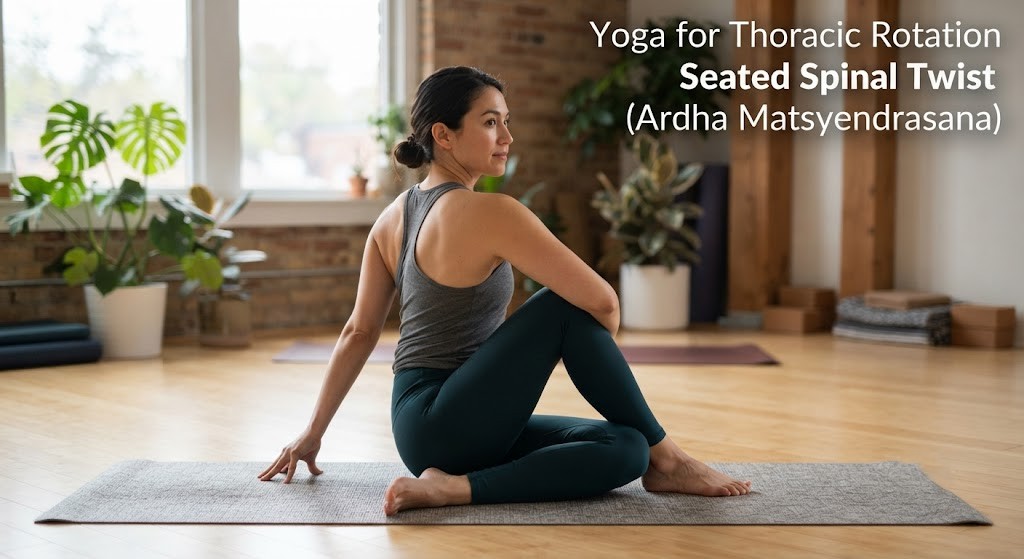
You already know that yoga can stretch your back and help you move more freely, but not every spinal twist specifically targets the thoracic spine. Yoga for thoracic rotation focuses on controlled movements that encourage mobility through the upper and middle back while keeping the rest of the body stable.
In this guide, you’ll learn what thoracic rotation is, why it matters, which yoga poses can encourage upper-back rotation, how to perform them safely, common mistakes to avoid, and how to build a simple 5–10 minute thoracic mobility routine.
What Is Yoga for Thoracic Rotation?
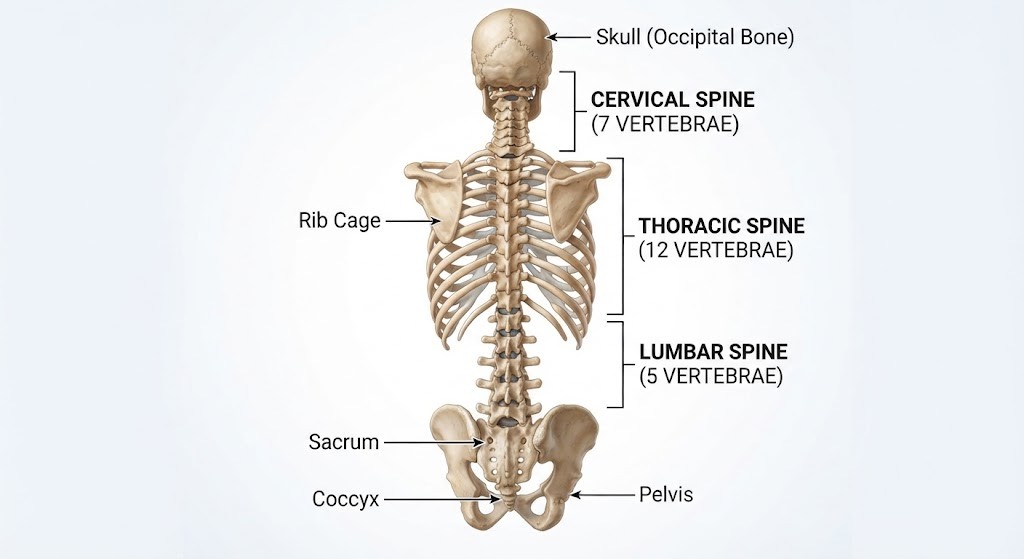
Yoga for thoracic rotation involves controlled poses and movements that encourage comfortable rotational mobility through the upper and middle back. The thoracic spine is the middle section of your spine, extending from the base of the neck to the bottom of the rib cage and containing 12 vertebrae, labeled T1 through T12. — Source: Cleveland Clinic, 2022
Thoracic(Trikonasana) rotation is the rotational movement of the thoracic spine, which sits between the cervical and lumbar regions of the spine. This movement contributes to everyday activities such as turning your torso, reaching across your body, and rotating during sports or exercise.
For example, turning to look behind you while sitting involves coordinated movement between your thoracic spine, neck, hips, and pelvis. Because several body regions contribute to rotation, thoracic mobility exercises should not be viewed as a way to isolate movement to one spinal segment.
What Is Thoracic Rotation and Why Does It Matter?
Thoracic rotation is the ability to rotate your trunk through the middle-back region while maintaining appropriate control of the surrounding joints. The thoracic joints contribute substantially to spinal rotation, although movement is shared across the spine and should not be forced into one area. — Source: Cleveland Clinic, 2022
Good thoracic mobility supports coordinated upper-body movement because your shoulders, ribs, spine, and pelvis work together during many activities. Tennis strokes, golf swings, swimming motions, and overhead exercises all require controlled trunk rotation rather than movement from a single spinal region.
Can Yoga Improve Thoracic Spine Mobility?
Yoga can support spinal mobility when poses are performed consistently and within a comfortable range of motion. A 2024 systematic review examined eight studies involving yoga and spine or shoulder mobility and found that yoga interventions had potential to improve spinal flexibility and mobility, although the evidence varied across populations and conditions. — Source: Journal of Bodywork & Movement Therapies, 2024
However, this does not mean that every yoga pose increases thoracic rotation or treats back problems. Instead, controlled yoga movements can be used as one component of a broader mobility routine.
Why Is Thoracic Rotation Important?
Thoracic rotation matters because your middle back contributes to coordinated trunk movement during everyday activities, exercise, and sports. When you rotate, your body distributes movement across multiple regions rather than relying exclusively on the lower back or shoulders.
Thoracic mobility can also be relevant for people who spend long periods sitting. WHO reported that approximately 31% of adults worldwide, or about 1.8 billion people, did not meet recommended physical activity levels in 2022. — Source: World Health Organization, 2024
For example, someone who sits at a desk for several hours may benefit from periodically standing, walking, and performing gentle mobility movements rather than remaining in one position continuously.
How Does Thoracic Mobility Relate to Posture?
Thoracic mobility is one part of comfortable upright movement, but it should not be treated as a single solution for posture. Posture depends on the spine, pelvis, shoulders, muscles, movement habits, environment, and other factors.
A simple thoracic rotation exercise can encourage you to move your upper back while keeping your hips relatively stable, helping you practice controlled trunk movement.
Why Is Controlled Rotation Better Than Forcing a Twist?
Controlled rotation emphasizes comfortable range, coordination, and gradual progression rather than maximum twisting. A deeper-looking twist does not automatically represent better mobility.
For example, rotating a few degrees farther while maintaining steady breathing and stable hips is generally more useful for practice than aggressively pulling yourself into a larger twist.
What Are the Best Yoga Poses for Thoracic Rotation?
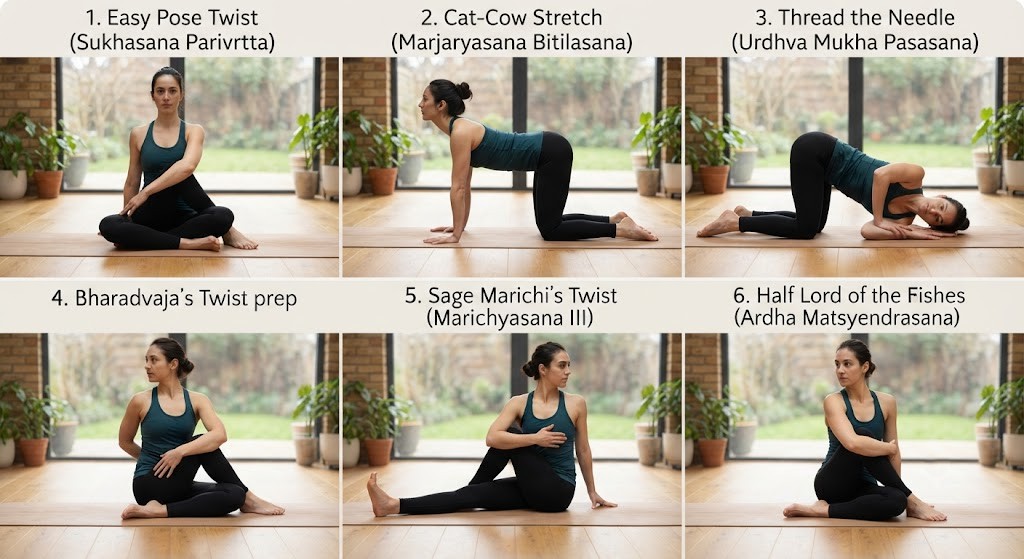
The best yoga poses for thoracic rotation are movements that allow you to rotate the upper and middle back while keeping the movement controlled. Useful options include Thread the Needle, Revolved Child’s Pose, Supine Spinal Twist, Open Book variations, Revolved Tabletop, and supported twists.
| Yoga pose | Main movement | Beginner hold/reps | Useful modification |
|---|---|---|---|
| Thread the Needle | Quadruped upper-back rotation | 5–8 reps/side | Reduce range |
| Revolved Child’s Pose | Kneeling rotation | 20–30 sec/side | Use a bolster |
| Supine Spinal Twist | Lying trunk rotation | 20–30 sec/side | Place pillow under knees |
| Open Book | Side-lying rotation | 6–8 reps/side | Keep knees supported |
| Revolved Tabletop | Quadruped rotation | 5–8 reps/side | Use smaller reach |
| Supported Twist | Gentle seated or lying twist | 20–30 sec/side | Add folded towel/block |
These poses are not interchangeable. Some emphasize active movement, while others provide a gentler supported position that may be easier during a recovery or mobility session.
How Do You Do Thread the Needle for Thoracic Mobility?
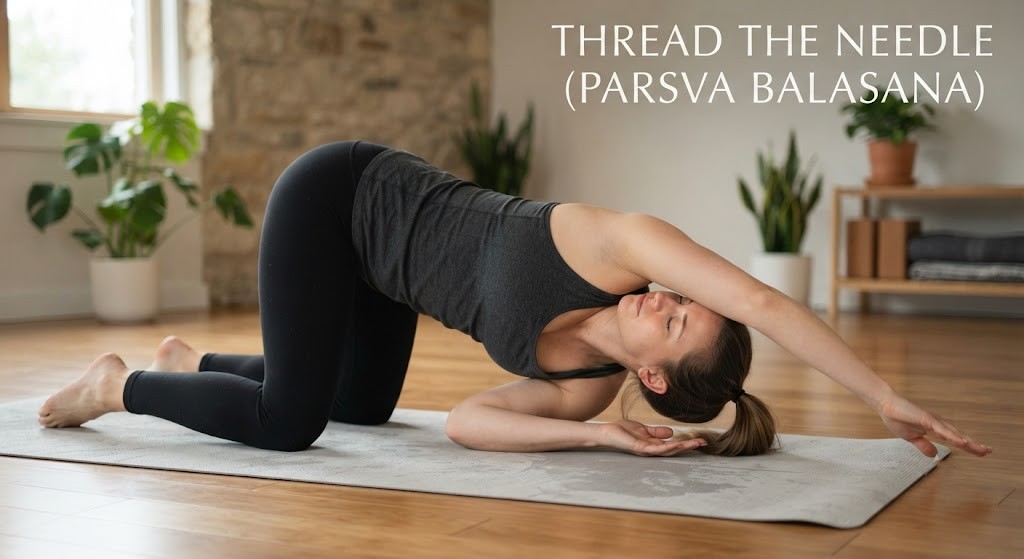
Thread the Needle is a quadruped yoga movement in which one arm reaches underneath the body while the torso rotates, creating a gentle rotational movement through the upper back.
Step-by-Step Thread the Needle
- Start on your hands and knees with your wrists beneath your shoulders and knees beneath your hips.
- Distribute your weight evenly through both hands.
- Slide your right arm underneath your left arm.
- Allow your right shoulder and the side of your head to move toward the mat.
- Keep your hips relatively stable rather than shifting them dramatically from side to side.
- Breathe slowly for one or two cycles.
- Return to the starting position and repeat on the opposite side.
Begin with 5–8 controlled repetitions per side rather than trying to reach your maximum range.
How Should You Breathe During Thread the Needle?
Breathing during Thread the Needle should remain slow and comfortable throughout the movement. Inhale as you return toward the starting position and exhale gradually as you rotate underneath.
You can use a four-second movement into the rotation followed by a controlled return, provided the timing feels natural rather than forced.
How Do You Perform a Supine Spinal Twist Correctly?
A Supine Spinal Twist is a lying yoga movement that rotates the trunk while your back is supported by the floor. This supported position makes it accessible for beginners who find standing or kneeling twists difficult.
Step-by-Step Supine Spinal Twist
- Lie on your back with your knees bent and feet resting comfortably on the floor.
- Extend your arms outward or place your hands gently on your ribs.
- Bring your knees together.
- Slowly allow your knees to move toward one side.
- Keep the movement controlled and avoid forcing your shoulders away from the floor.
- Breathe slowly for 20–30 seconds.
- Return your knees to the center and repeat on the opposite side.
A pillow or folded towel beneath the knees can reduce the range if the position feels uncomfortable.
Which Yoga Poses Stretch and Rotate the Upper Back?
Yoga poses that combine gentle rotation with stable positioning can encourage upper-back mobility without requiring advanced flexibility. Thread the Needle, Open Book variations, Revolved Child’s Pose, and supported twists are practical choices for beginners.
How Do You Perform an Open Book Thoracic Rotation?
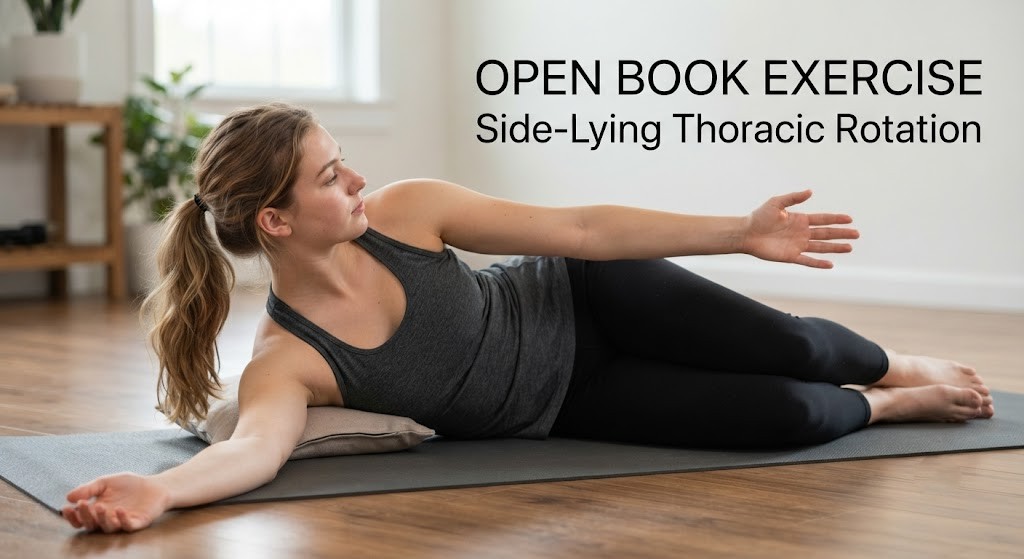
An Open Book exercise is a side-lying mobility movement that rotates the upper body while the lower body remains relatively stable. This setup makes it easier to focus on controlled thoracic movement.
- Lie on your side with your knees comfortably bent and stacked.
- Extend both arms in front of you with your palms together.
- Slowly sweep your upper arm in the opposite direction.
- Rotate your chest toward the floor or ceiling, depending on your starting position.
- Keep your knees stacked so the movement does not become primarily a hip rotation.
- Return slowly and complete 6–8 repetitions per side.
Reduce the range if your shoulder or back feels uncomfortable.
How Do You Perform Revolved Child’s Pose?
Revolved Child’s Pose is a gentle kneeling variation that combines a relaxed position with upper-back rotation. It can be useful when you want a slower mobility exercise rather than repeated active rotations.
- Sit your hips toward your heels and extend your arms forward.
- Walk one hand underneath the opposite arm.
- Allow your upper torso to rotate gently.
- Keep your breathing steady.
- Avoid pulling your shoulder aggressively toward the floor.
- Hold the position for 20–30 seconds per side.
Use a bolster if reaching the floor feels difficult.
How Can Beginners Improve Thoracic Rotation With Yoga?
Beginners can improve thoracic rotation by practicing a small range of controlled movements before gradually increasing repetitions, duration, or movement range. You do not need advanced flexibility to begin.
Moreover, Full Body Yoga can help you build a broader foundation before adding more challenging rotational poses.
A beginner can start with Open Book and Thread the Needle before progressing toward more demanding revolved poses.
How Do You Perform Revolved Tabletop for Thoracic Mobility?
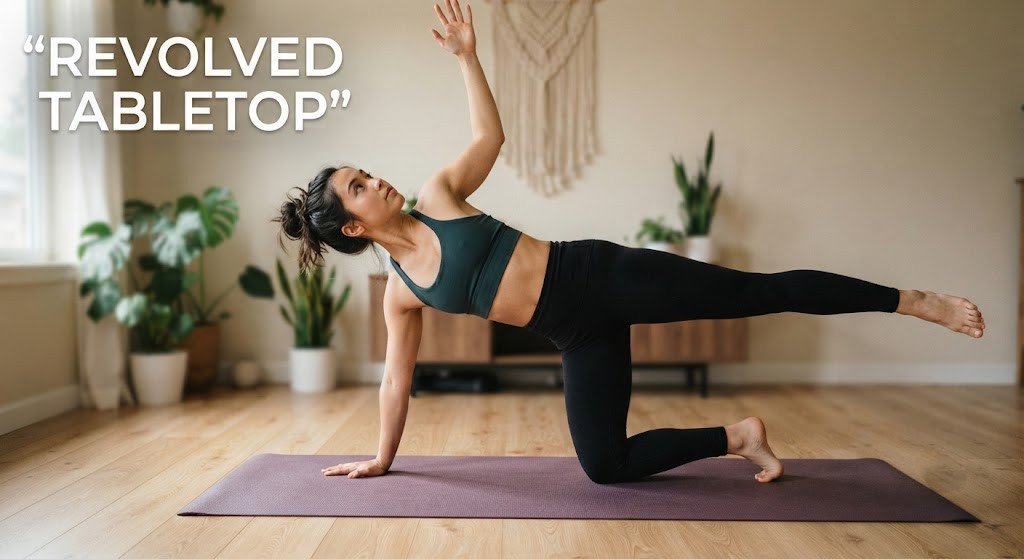
Revolved Tabletop is a quadruped movement that combines a stable base with active upper-body rotation. The position allows you to practice moving one arm while keeping your hips relatively steady.
Step-by-Step Revolved Tabletop
- Begin on your hands and knees with your spine in a comfortable neutral position.
- Place one hand lightly behind your head without pulling on your neck.
- Rotate your elbow toward the opposite side.
- Then open the elbow upward toward the ceiling.
- Move slowly enough to distinguish upper-back rotation from simple shoulder movement.
- Perform 5–8 repetitions per side while breathing normally.
Reduce the range if your lower back begins to dominate the movement.
How Can You Build a 5–10 Minute Beginner Thoracic Mobility Routine?
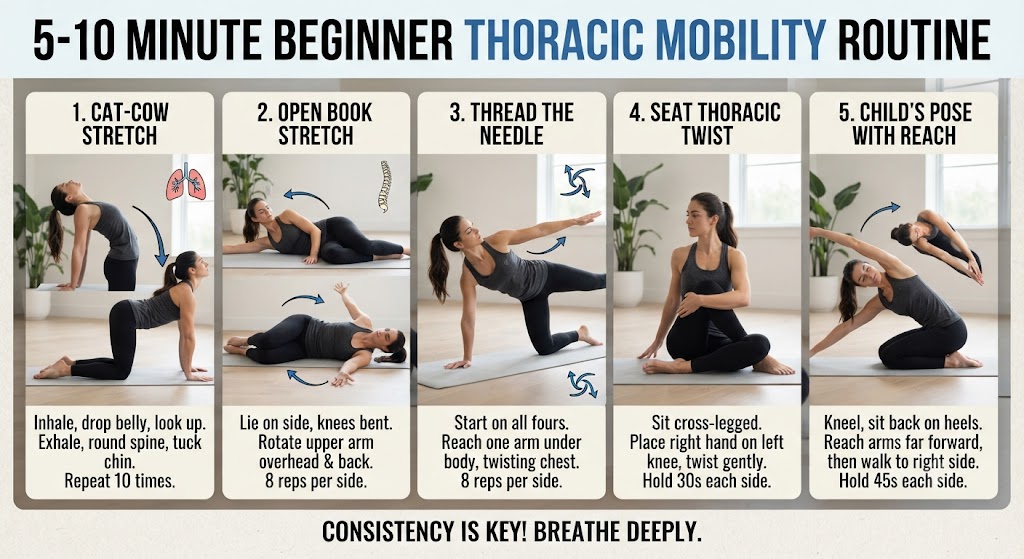
A beginner thoracic rotation routine can combine several gentle mobility movements for approximately 5–10 minutes. Use modifications whenever a pose feels uncomfortable or difficult.
5–10 Minute Thoracic Rotation Yoga Routine
1. Cat-Cow — 60 seconds
Move slowly between comfortable spinal flexion and extension.
2. Thread the Needle — 5–8 reps per side
Rotate gradually while keeping your hips relatively stable.
3. Open Book — 6–8 reps per side
Use a slow opening motion and avoid forcing your shoulder toward the floor.
4. Revolved Tabletop — 5–8 reps per side
Keep the movement controlled and focus on rotating through the upper back.
5. Revolved Child’s Pose — 20–30 seconds per side
Relax into the position while maintaining easy breathing.
6. Supine Spinal Twist — 20–30 seconds per side
Finish with a comfortable supported rotation.
This routine can fit into a larger daily mobility routine, especially if you regularly sit, train, run, or practice yoga.
How Often Should You Do Thoracic Rotation Exercises?
Thoracic rotation exercises can be practiced regularly as part of a broader mobility routine, provided the movements remain comfortable and your recovery needs are respected. A short routine performed consistently can be easier to maintain than occasional long stretching sessions.
For example, you could perform gentle thoracic mobility for 5–10 minutes on several days each week, or include selected movements before exercise.
WHO recommends that adults accumulate at least 150 minutes of moderate-intensity physical activity per week or 75 minutes of vigorous-intensity activity, alongside muscle-strengthening activity on at least two days each week. Thoracic mobility exercises are complementary movement work, not a replacement for those broader activity recommendations. — Source: World Health Organization, 2026
What Are the Common Mistakes During Thoracic Rotation Exercises?
Common thoracic rotation mistakes include forcing the twist, moving primarily through the lower back, shifting the hips excessively, holding the breath, and rushing through repetitions. Correcting these habits can make mobility practice more controlled and easier to assess.
Mistake 1: Forcing a Deeper Twist
Forcing a twist can turn a controlled mobility exercise into an uncomfortable end-range movement. Instead, stop at the point where you can maintain steady breathing and good control.
If your shoulder must be aggressively pulled toward the floor to increase the twist, reduce the range.
Mistake 2: Moving Mostly From the Lower Back
Using excessive lumbar movement can make an exercise look larger without necessarily improving thoracic control. Keep your pelvis relatively stable during movements such as Thread the Needle and Open Book.
If your hips roll dramatically during Open Book, reduce the rotation and focus on your rib cage.
Mistake 3: Holding Your Breath
Holding your breath can make a mobility exercise feel unnecessarily tense. Use slow, natural breathing throughout the movement.
For example, inhale while returning toward the starting position and exhale gradually during the rotational phase.
Mistake 4: Rushing the Repetitions
Fast repetitions can reduce your ability to control the movement and notice discomfort. Use a slower tempo that lets you feel where the movement is occurring.
Effective thoracic mobility practice combines controlled rotation, comfortable range of motion, steady breathing, and gradual progression rather than forcing a deeper twist.
When Should You Avoid or Modify Thoracic Rotation Exercises?
Thoracic rotation exercises should be modified or paused when they cause sharp pain, increasing symptoms, unusual numbness, weakness, or other concerning sensations. Mobility exercises are intended for movement practice and are not a substitute for assessment or treatment of an injury.
People recovering from an injury, recent surgery, or significant spinal condition should obtain appropriate professional guidance before introducing new twisting exercises.
For example, persistent pain that does not settle with ordinary activity modification should be assessed rather than repeatedly stretched through.
A 2024 systematic review of yoga and spinal mobility included eight studies with sample sizes ranging from 23 to 120 participants, demonstrating that the available research covers relatively varied populations rather than providing one universal prescription for everyone. — Source: Journal of Bodywork & Movement Therapies, 2024
What Yoga Tools Can Help With Thoracic Rotation?
Yoga props can make thoracic rotation exercises more comfortable by changing the height, support, or range of a position. Useful options include a yoga mat, block, bolster, strap, and folded towel.
Yoga Mat
A yoga mat provides a stable, cushioned surface for kneeling and lying movements. Thread the Needle and Supine Spinal Twist, for example, can be more comfortable when your knees, shoulder, or spine have adequate support.
Yoga Block
A yoga block can reduce the need to reach the floor during supported twists. Place a block beneath your hand during a modified rotational position if your shoulder or back feels strained when reaching downward.
Bolster or Folded Towel
A bolster or folded towel can support the knees, chest, head, or hips during gentler positions. This can be particularly useful during Revolved Child’s Pose or Supine Spinal Twist.
How Can You Use Thoracic Rotation Before a Workout?
Thoracic rotation can be used before exercise as part of a dynamic mobility warm-up rather than a long passive stretching session. Choose movements that gradually prepare your body for the positions required by your workout.
For example, a runner could perform several controlled trunk rotations, while someone preparing for an upper-body workout could include Thread the Needle and Open Book.
How Can You Progress Your Thoracic Rotation Mobility?
Thoracic rotation mobility can progress by gradually increasing control, repetitions, range of motion, or exercise complexity rather than immediately chasing deeper twists. Your progression should remain comfortable and technically consistent.
First, establish basic control with Open Book and Thread the Needle. Next, add Revolved Tabletop or supported twists, and increase the range only when you can maintain stable breathing and positioning.
Furthermore, combine thoracic mobility with hip mobility exercises because trunk movement rarely occurs in isolation.
A complete mobility session might therefore include hip rotation, shoulder movement, thoracic rotation, and gentle spinal flexion and extension.
What’s Next: How Do You Build a Consistent Thoracic Mobility Practice?
The next step is to practice thoracic rotation consistently while gradually improving control and comfortable range of motion. A short routine is often easier to maintain than an occasional intensive session.
Track simple measures such as comfort, movement quality, breathing, and range of motion rather than trying to force a specific flexibility target.
Simple Thoracic Mobility Progression
- Practice for 5–10 minutes.
- Start with gentle active movements.
- Use props when needed.
- Keep your breathing steady.
- Stop or modify movements that cause concerning symptoms.
- Gradually increase complexity as control improves.
Physical activity should also remain part of your broader routine. WHO recommends adults aged 18–64 accumulate 150–300 minutes of moderate-intensity aerobic activity per week, or an equivalent combination of moderate and vigorous activity, alongside muscle-strengthening activity on at least two days. — Source: World Health Organization, 2026
Conclusion
Thoracic mobility is the ability to move the middle portion of your spine through controlled ranges of motion, including rotation. Yoga for thoracic rotation can provide practical movements such as Thread the Needle, Open Book, Revolved Child’s Pose, Revolved Tabletop, and Supine Spinal Twist for practicing this movement.
Consistency matters more than forcing a deeper twist. Start with a comfortable range, breathe steadily, use props when useful, and gradually increase your movement control as your practice develops.
A simple 5–10 minute routine can make thoracic mobility a regular part of your movement practice. If pain, numbness, weakness, or injury-related symptoms persist, seek appropriate professional assessment rather than continuing to push through discomfort.
FAQs
What is yoga for thoracic rotation?
Yoga for thoracic rotation uses gentle poses to improve movement through the middle and upper back.
What are the best yoga poses for thoracic rotation?
Thread the Needle, Open Book, and Revolved Tabletop are useful poses for thoracic rotation.
Can yoga improve thoracic spine mobility?
Yes, regular yoga practice may help improve thoracic spine mobility and flexibility.
How long should I do thoracic rotation exercises?
A 5–10 minute routine can be enough for beginners.
How often should I practice thoracic rotation yoga?
You can practice thoracic rotation exercises several times per week.
Is Thread the Needle good for thoracic mobility?
Yes, Thread the Needle encourages controlled upper-back rotation.
Can beginners do yoga for thoracic rotation?
Yes, beginners can start with gentle and supported poses.
Should thoracic rotation exercises hurt?
No, stop or modify the exercise if it causes sharp or concerning pain.
Can I use yoga props for thoracic rotation?
Yes, blocks, bolsters, and folded towels can provide extra support.
Can I do thoracic rotation exercises before a workout?
Yes, gentle thoracic rotations can be included in a dynamic warm-up.
How can I improve my thoracic rotation?
Practice gentle rotation exercises regularly and gradually increase your range.
What are the symptoms of poor thoracic rotation?
Difficulty turning, twisting, or rotating your torso comfortably can indicate limited mobility.
How can I release my thoracic spine?
Gentle movements like Thread the Needle, Open Book, and Cat-Cow can help mobilize the area.
How can I adjust my thoracic spine by myself?
Use gentle mobility exercises rather than forceful spinal manipulation.
1 thought on “Yoga for Thoracic Rotation: Improve Upper Back Mobility & Flexibility”