
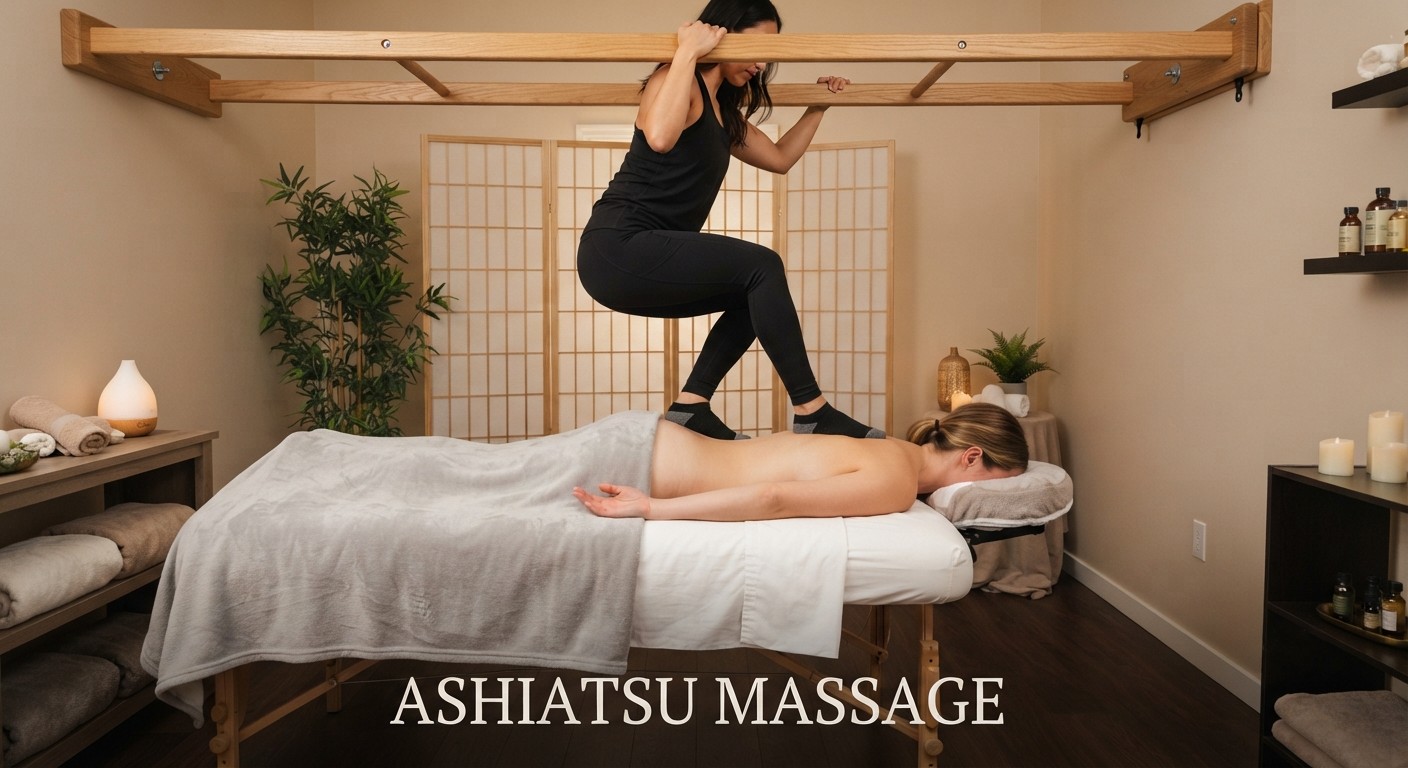
Ashiatsu massage is a barefoot technique where the therapist uses their feet and body weight to apply broad, gliding pressure. People search for it when they want firm work on large muscles like the back and glutes, with the pressure spread across a foot instead of concentrated in a thumb or elbow. This guide covers how a session works, what the research does and doesn’t show, and who should skip it.
What is ashiatsu massage?
Ashiatsu massage is a style of bodywork in which the therapist applies pressure with their feet instead of their hands. The name combines the Japanese words for foot (ashi) and pressure (atsu). (Source: AMTA)
Despite the similar name, it did not grow directly out of shiatsu, which means “finger pressure.” Modern ashiatsu is a Western adaptation that blends techniques from Japan, India, and China. (Source: AMTA)
- Practitioners trace barefoot massage to Kerala, India, where the therapist balanced by holding a rope overhead while sliding a foot along the body. (Source: AMTA)
- In most modern sessions, the therapist holds bars fixed to the ceiling for balance and stands on or beside the table. (Source: Massage Magazine)
- The strokes borrow from Swedish and deep tissue work, including effleurage, petrissage, friction, and deep compressions. (Source: Massage Magazine)
- Bar-free versions exist, such as seated and floor-based techniques, for spaces without ceiling bars.
- Therapists skip the feet on the abdomen, face, scalp, and front of the neck, and use their hands there instead. (Source: Massage Magazine)
Why does ashiatsu massage matter?
Ashiatsu matters because it offers a deep-pressure option for large muscle groups while easing the physical strain on therapists who would otherwise do the same work with their hands. (Source: AMTA)
Massage in general is more common than it used to be. About 10.9% of U.S. adults used massage therapy in 2022, up from 4.8% in 2002. (Source: NCCIH)
- It suits clients who want deeper pressure, such as athletes and people with active lifestyles. (Source: AMTA)
- Therapists describe the foot as broader than a thumb or elbow because it conforms to the muscle group. (Source: AMTA)
- Practitioners report less wear on their own bodies, which helps them keep pressure consistent from the first client of the day to the last. (Source: AMTA)
Active people often fold sessions into a wider routine. A few Recovery Yoga can make the days around a session more comfortable.
How does an ashiatsu session work?
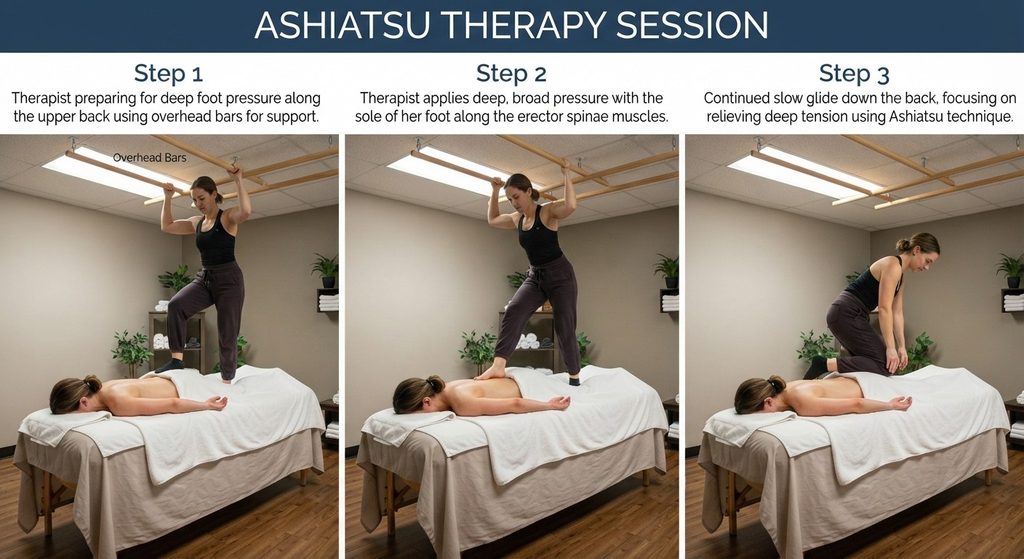
An ashiatsu session starts with a health intake, then the therapist uses body weight and overhead bars to apply pressure, adjusting as you give feedback.
- Intake. The therapist asks about your health history, areas of discomfort, and goals. A thorough intake matters more here because deep pressure comes with more precautions. (Source: AMTA)
- Setup. You lie on a massage table. Draping, clothing, and oil use vary by therapist and style.
- Strokes. Long, slow passes cover large muscles, most often the back and glutes.
- Feedback. You tell the therapist if the pressure feels too light, too heavy, or sharp in any spot.
- Finish. The therapist uses their hands on areas where feet are not appropriate.
Some sessions use oil and full draping. Others are done through clothing with no oil, so it helps to ask before you book.
What are the benefits of ashiatsu massage?
Ashiatsu is promoted for pain relief, relaxation, and better mobility, but controlled studies specific to ashiatsu appear limited. The strongest evidence comes from massage therapy in general.
What does massage research show?
- Massage may give short-term relief for low back, neck, and shoulder pain, though the evidence is mostly low quality. (Source: NCCIH)
- A Cochrane review of massage for low back pain found short-term improvements, with evidence graded low to very low. (Source: Cochrane, 2015)
- The American College of Physicians lists massage as an option for acute and subacute low back pain, but not for chronic low back pain. (Source: NCCIH)
- In a randomized trial of 401 adults with chronic low back pain, massage was linked to benefits lasting at least six months. That trial tested two hand-based massage styles, not ashiatsu. (Source: Annals of Internal Medicine, 2011)
These results describe hand-based massage. They apply to ashiatsu only by analogy, so treat them as context and not as proof.
What do people commonly report?
- A sense of deep relaxation after the session
- Looser large muscles, especially through the back and hips
- Better posture and range of motion over repeated sessions, which practitioners often claim but studies have not confirmed
If you feel sore afterward, Reduce Muscle Soreness After Workout explains why deep work or hard training can leave muscles tender for a day or two. Pairing sessions with mobility exercises may help you keep any new range of motion.
How does ashiatsu compare with other massage styles?
Ashiatsu differs from other styles mainly in the tool: feet and body weight instead of hands.
| Ashiatsu | Shiatsu | Hand-based deep tissue | |
|---|---|---|---|
| Name means | Foot pressure | Finger pressure | Describes depth, not a tool |
| Main tools | Feet and body weight | Thumbs, fingers, palms | Hands, forearms, elbows |
| Pressure feel | Broad, as the foot conforms to the muscle | Focused on specific points | Firm and focused |
| Typical setup | Overhead bars, or a bar-free variation | Table or floor mat | Standard massage table |
Pressure feels different to everyone. If you prefer a lighter touch, ask for lighter pressure or choose another style.
If you can’t get to a therapist, foam rolling is a self-massage option, though it doesn’t replicate a trained therapist’s work.
Who should avoid ashiatsu massage?
People with certain conditions should skip ashiatsu or get medical clearance first, because it applies deep compression from the therapist’s body weight. Practitioners often list these contraindications:
- Pregnancy, which many therapists decline entirely
- Osteoporosis or other bone fragility
- A rib fracture or recent surgery
- Fever or infection
- Open wounds or active skin problems
- A history of heart conditions
- Recent breast, gluteal, or calf implants
Massage in general carries a low risk of harm, though rare serious problems such as blood clots, nerve injury, and bone fractures have been reported. (Source: NCCIH) In one Cochrane review, the most common side effect was increased pain, reported by 1.5% to 25% of participants. (Source: Cochrane, 2015)
When in doubt, check with your doctor before booking. Share your full health history with the therapist every time.
How can you prepare for and recover from a session?
Prepare by sharing your health history and pressure preferences, then recover by easing back into normal activity.
- Tell the therapist about injuries, surgeries, medications, and anything that feels different since your last visit.
- Speak up during the session. Pressure should feel deep, not sharp.
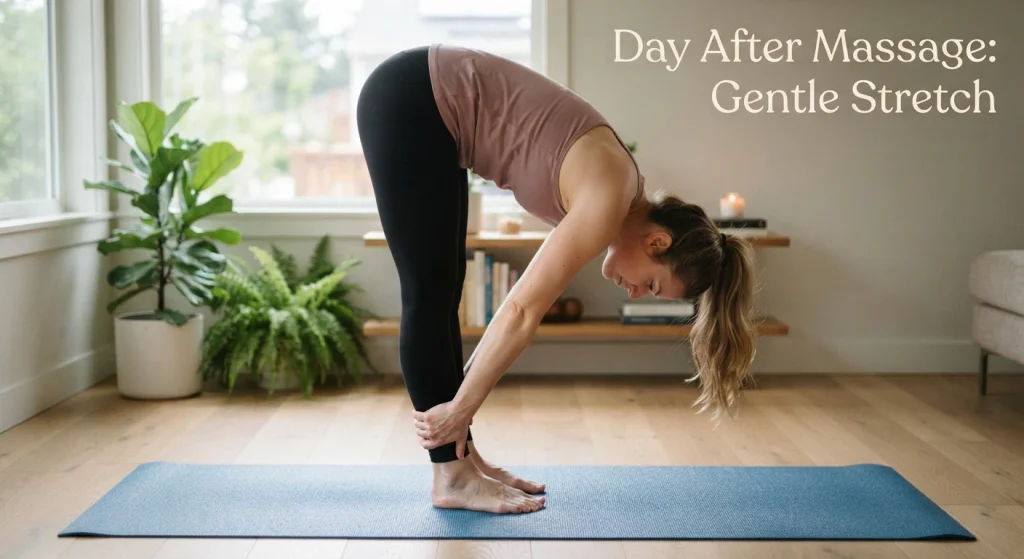
- Plan a lighter day afterward, since some people feel sore.
- Keep up your usual recovery habits. Good sleep and muscle recovery supports tissue repair, and an active recovery workout keeps you moving gently.
- Drink water as you normally would. A daily water intake can help you set a baseline.
Massage tends to work best alongside movement. A Cochrane review found that massage might help with lasting low back pain, especially when combined with exercise and education. (Source: Cochrane, 2008)
- Build strength with back workouts.
- Support your spine with core exercises.
- Ease tension with yoga for lower back pain.
- Add a Post Workout Stretching Routine on non-session days
How do you choose a qualified ashiatsu therapist?
Choose a licensed massage therapist who has specific ashiatsu training and screens you before starting.
- Confirm they hold a massage license where you live.
- Ask where they trained and whether they hold an ashiatsu certification. Safe pressure control depends on training.
- Ask how they screen for contraindications.
- Ask whether they use overhead bars or a bar-free approach.
- Make sure you feel comfortable asking them to change the pressure.
Conclusion
Ashiatsu massage delivers broad, deep pressure with the feet and is best understood as a deep-pressure massage style, not a proven treatment. The research behind massage in general is modest, mostly pointing to short-term relief, and ashiatsu-specific studies are limited.
If the idea appeals to you, book with a licensed, ashiatsu-trained therapist, share your full health history, and start with moderate pressure. Combine sessions with regular movement and recovery habits for the best chance of lasting results.
FAQs
Does ashiatsu massage hurt?
It shouldn’t. Ashiatsu feels deep but broad, and you can ask for lighter pressure at any time. Some people feel sore the next day, as they might after deep tissue work.
Is ashiatsu massage safe?
It is generally low risk when done by a trained therapist who screens you first. Massage in general has rare reports of serious problems such as blood clots, nerve injury, and bone fracture. People with osteoporosis, recent surgery, or other conditions should check with a doctor first.
How is ashiatsu different from shiatsu?
Ashiatsu uses the feet and means “foot pressure,” while shiatsu uses fingers, thumbs, and palms and means “finger pressure.” The two did not directly evolve from each other.
Can ashiatsu help with back pain?
Massage in general may give short-term relief for low back pain, though the evidence is low quality. Studies specific to ashiatsu appear limited, so results will vary.
Can you get ashiatsu massage while pregnant?
Many therapists decline to perform it during pregnancy because of the deep pressure involved. Ask your doctor first, and look for a therapist trained in prenatal massage instead.
Do you have to remove your clothes for ashiatsu?
It depends on the therapist. Some use oil and drape the client, while others work through clothing with no oil. Ask when you book.
How often should you get ashiatsu massage?
There is no research-based standard frequency. Start with one session, see how your body responds, and ask your therapist for a schedule that fits your goals and recovery.
Sources
- National Center for Complementary and Integrative Health. (n.d.). Massage Therapy: What You Need To Know.
- Cochrane Database of Systematic Reviews. (2015). Massage for low-back pain.
- Cochrane Database of Systematic Reviews. (2008). Massage for low-back pain.
- Annals of Internal Medicine. (2011). A comparison of the effects of 2 types of massage and usual care on chronic low back pain: a randomized, controlled trial.
- American Massage Therapy Association. (n.d.). Exploring Japanese Massage Techniques. Massage Therapy Journal.
- Massage Magazine. (n.d.). Ashiatsu Massage: Walk Your Way to a Sustainable Massage Career.
Disclaimer: This article is for informational and educational purposes only and is not a substitute for personalized medical advice. Consult a qualified healthcare professional before making significant changes to your diet, exercise routine, or supplement use.
1 thought on “Ashiatsu Massage: A Complete Guide to Barefoot Deep-Pressure Therapy”