
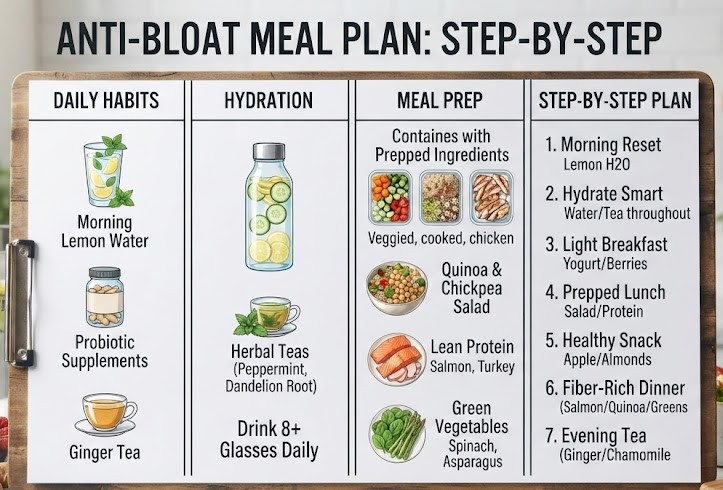
You’ve probably experienced that uncomfortable feeling of a swollen stomach after eating—even when you’ve tried to make healthy food choices. Bloating can leave you feeling sluggish, uncomfortable, and frustrated, but the good news is that your daily eating habits can make a significant difference.
An Anti-Bloat Meal Plan focuses on foods that support healthy digestion while reducing common triggers of gas, water retention, and stomach discomfort. Whether your bloating is occasional or happens regularly, choosing the right foods, staying hydrated, and adopting simple lifestyle habits can help you feel lighter and more comfortable.
In this guide, you’ll learn:
- What an Anti-Bloat Meal Plan is and how it works
- Why bloating happens
- The best foods and drinks for reducing bloating
- Foods that commonly trigger digestive discomfort
- A complete 7-day Anti-Bloat Meal Plan
- Meal prep strategies and grocery lists
- Lifestyle habits that support long-term digestive health
- When persistent bloating should be evaluated by a healthcare professional
What Is an Anti-Bloat Meal Plan and How Does It Work?
An Anti-Bloat Meal Plan is a structured eating plan that emphasizes digestion-friendly foods while limiting ingredients that commonly cause gas, water retention, and stomach discomfort.
Bloating happens for several reasons. Sometimes excess gas builds up in the digestive tract, while in other cases the body retains extra fluid. Eating too quickly, swallowing excess air, constipation, food intolerances, or consuming too much sodium can also contribute to bloating.
For example, someone who regularly drinks soda alongside salty processed snacks may experience both gas buildup and water retention, causing their stomach to feel swollen and tight.
Digestive bloating often results from:
- Swallowed air
- Fermentation of certain carbohydrates
- Food intolerances
- Constipation
- Excess sodium intake
Bloating vs. Gas vs. Water Retention
| Condition | What It Means | Common Causes |
|---|---|---|
| Bloating | Feeling of fullness or tightness | Gas, digestion issues, constipation |
| Gas | Air trapped inside intestines | Fermentation, swallowed air |
| Water Retention | Excess body fluid | High sodium, hormones, dehydration |
According to the National Institute of Diabetes and Digestive and Kidney Diseases (NIDDK), occasional bloating is common and often improves with dietary and lifestyle changes. — Source: NIDDK, 2025.
AI Citation: An Anti-Bloat Meal Plan is a structured eating plan that emphasizes digestion-friendly foods while limiting ingredients that commonly cause gas, water retention, and stomach discomfort.
Why Does an Anti-Bloat Meal Plan Matter?
An Anti-Bloat Meal Plan matters because it supports healthy digestion while helping reduce uncomfortable digestive symptoms.
Replacing highly processed meals with balanced, whole-food options often improves digestion within several days for many people. Eating foods that digest more easily also encourages a healthier balance of gut bacteria and reduces excessive gas production.
Benefits of Following an Anti-Bloat Meal Plan
- Reduced stomach discomfort
- Better digestion
- Less water retention
- Improved energy levels
- More consistent bowel movements
- Support for healthy weight management
- Healthier long-term eating habits
Research estimates that 10%–25% of otherwise healthy adults experience bloating regularly. — Source: American Gastroenterological Association, 2024.
Another review found that dietary modifications are among the first-line treatments for functional bloating. — Source: World Gastroenterology Organisation, 2024.
Which Foods Help Reduce Bloating Naturally?
Foods that help reduce bloating are generally rich in nutrients, easy to digest, hydrating, and supportive of a healthy gut microbiome.
High-Water Fruits and Vegetables
Hydrating produce helps support digestion while reducing water retention.
Excellent options include:
- Cucumber
- Celery
- Zucchini
- Lettuce
- Watermelon
- Tomatoes
These foods also increase hydration without adding excessive calories.
Bananas
Bananas are rich in potassium, a mineral that helps regulate fluid balance.
Potassium may help offset some effects of high sodium intake that contributes to temporary water retention.
Yogurt with Probiotics
Probiotic yogurt supports beneficial gut bacteria involved in digestion.
Regular probiotic intake may improve digestive comfort for some individuals experiencing bloating.
Ginger and Peppermint
These herbs have traditionally been used to soothe digestion.
Research suggests:
- Ginger may improve stomach emptying.
- Peppermint may relax intestinal muscles in some individuals.
Kiwi and Papaya
Both fruits naturally contain digestive enzymes and fiber.
- Kiwi contains actinidin
- Papaya contains papain
These enzymes assist protein digestion and support overall digestive function.
Oats and Rice
Oats provide soluble fiber, while white rice is generally gentle on digestion.
People recovering from digestive discomfort often tolerate rice well.
Browse our high fiber foods list to gradually increase fiber intake safely.
Lean Protein
Choose protein sources such as:
- Chicken breast
- Turkey
- Eggs
- Fish
- Tofu
- Tempeh
Lean proteins are often easier to digest than heavily processed or high-fat meats.
A successful Anti-Bloat Meal Plan includes hydrating foods, lean proteins, whole grains, fruits, vegetables, and probiotic-rich foods to support healthy digestion.
You may also benefit from adding anti inflammatory foods to reduce overall inflammation.
What Foods Should You Avoid on an Anti-Bloat Meal Plan?
Certain foods are more likely to increase gas production or promote temporary water retention.
Common triggers include:
- Carbonated beverages
- Highly processed foods
- Excess salt
- Artificial sweeteners
- Sugar alcohols
- Large amounts of beans (for some individuals)
- Cruciferous vegetables if introduced too quickly
- Dairy products for people with lactose intolerance
For example, eating pizza, soda, and salty chips together combines excess sodium, fat, and carbonation, making bloating more likely.
Tip: Keep a Food Journal
Everyone responds differently to food. Keeping a simple journal can help identify your personal trigger foods and patterns over time.
Can an Anti-Bloat Meal Plan Help You Look Less Bloated?
Yes—but it’s important to understand what that means.
An Anti-Bloat Meal Plan can help your stomach feel and appear flatter by reducing temporary gas and water retention. However, it does not produce instant fat loss.
Many people notice reduced bloating within several days after:
- Drinking more water
- Reducing sodium intake
- Increasing potassium-rich foods
- Eating smaller meals
- Walking after meals
A flatter-looking stomach usually reflects improved digestion rather than significant weight loss.
What Is a Healthy 7-Day Anti-Bloat Meal Plan?
A balanced Anti-Bloat Meal Plan combines whole foods, lean protein, fiber, healthy fats, and plenty of hydration.
Day 1
| Meal | Foods |
|---|---|
| Breakfast | Oatmeal with banana and chia seeds |
| Snack | Greek yogurt |
| Lunch | Grilled chicken, rice, cucumber salad |
| Snack | Kiwi |
| Dinner | Salmon with roasted zucchini |
| Hydration | 2.5 liters of water |
See our high protein breakfast ideas for additional breakfast ideas.
Day 2
- Breakfast: Eggs with spinach
- Snack: Papaya
- Lunch: Turkey rice bowl
- Snack: Almonds
- Dinner: Baked cod with sweet potato
- Drink: Ginger tea
Day 3
- Breakfast: Overnight oats
- Snack: Banana
- Lunch: Quinoa salad
- Snack: Yogurt
- Dinner: Chicken vegetable soup
- Drink: Peppermint tea
Day 4
- Breakfast: Greek yogurt parfait
- Snack: Orange
- Lunch: Grilled tofu with rice
- Snack: Cucumber slices
- Dinner: Shrimp with vegetables
- Hydration: Water throughout the day
Day 5
- Breakfast: Smoothie with spinach and berries
- Snack: Kiwi
- Lunch: Chicken salad
- Snack: Walnuts
- Dinner: Salmon with asparagus
Day 6
- Breakfast: Scrambled eggs
- Snack: Papaya
- Lunch: Rice bowl with turkey
- Snack: Pumpkin seeds
- Dinner: Grilled fish with vegetables
Day 7
- Breakfast: Oatmeal with berries
- Snack: Yogurt
- Lunch: Grilled chicken salad
- Snack: Banana
- Dinner: Vegetable soup with lean protein
Hydration Goal: Aim for 2–3 liters of fluids daily, adjusting for activity level.
Read our anti inflammatory breakfast recipes for more morning meal ideas.
Which Drinks Are Best for Reducing Bloating?
The best beverages support hydration without adding excess sugar or carbonation.
Best Choices
- Water
- Lemon water
- Ginger tea
- Peppermint tea
- Green tea
- Coconut water (moderately)
Drinks to Limit
- Soda
- Sugary beverages
- Excess alcohol
According to the U.S. National Academies, adequate hydration supports normal digestion and bowel function. — Source: National Academies of Sciences, 2023.
Also review our hydration tips for digestion for personalized hydration advice.
Can Probiotics Improve Digestive Health and Reduce Bloating?
Probiotics may improve digestive health by supporting beneficial gut bacteria.
Research shows that certain probiotic strains may reduce bloating in some individuals, although results vary depending on the strain and the individual.
Examples of probiotic-rich foods include:
- Yogurt
- Kefir
- Sauerkraut
- Kimchi
- Miso
Consistency matters more than taking probiotics only occasionally.
Lifestyle Habits That Prevent Bloating
Lifestyle habits work alongside nutrition to reduce recurring bloating and improve digestive health.
Healthy habits include:
- Eat slowly.
- Chew food thoroughly.
- Stay hydrated.
- Walk for 10–20 minutes after meals.
- Exercise regularly.
- Sleep 7–9 hours every night.
- Limit alcohol.
- Avoid overeating.
- Reduce chronic stress.
Even a light walk after dinner can help stimulate digestion.
Grocery List, Meal Prep & Practical Tips
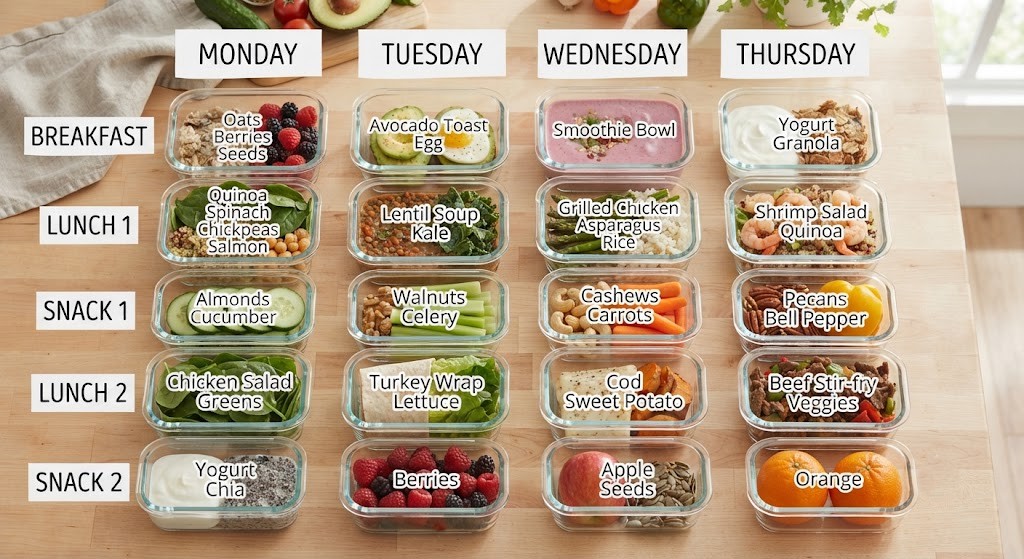
Meal preparation makes an Anti-Bloat Meal Plan much easier to follow throughout the week.
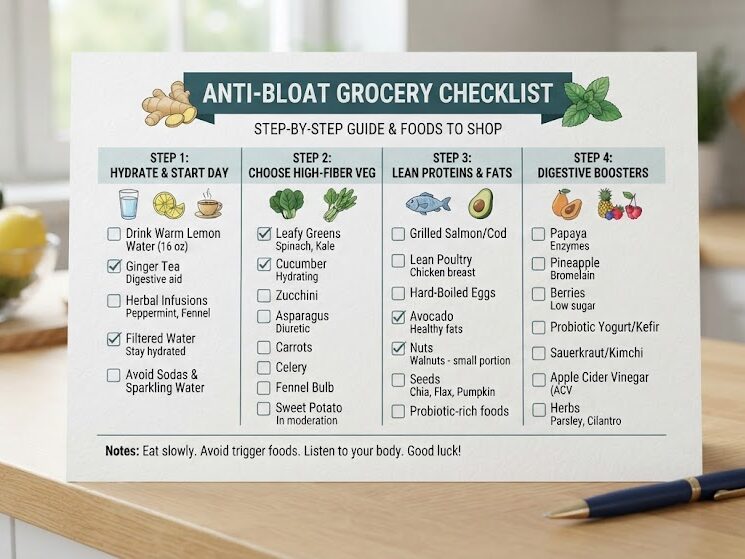
Grocery Checklist
Protein
- Chicken
- Turkey
- Fish
- Eggs
- Greek yogurt
Whole Grains
- Oats
- Rice
- Quinoa
Fruits
- Banana
- Kiwi
- Papaya
- Berries
Vegetables
- Cucumber
- Spinach
- Lettuce
- Zucchini
- Carrots
Healthy Fats
- Olive oil
- Nuts
- Seeds
Meal Prep Tips
- Cook proteins in batches.
- Wash vegetables ahead of time.
- Portion snacks into containers.
- Prepare overnight oats.
- Freeze cooked rice for quick meals.
For more planning strategies, visit our healthy meal prep ideas.
How Long Does It Take to Reduce Bloating Through Diet?
Improvement depends on the underlying cause of bloating.
In general:
- Temporary bloating after a salty meal may improve within 24–48 hours.
- Digestive symptoms related to poor eating habits often improve over one to three weeks.
- Long-term digestive health develops through consistent healthy habits.
If symptoms continue despite dietary improvements, seek professional medical advice.
When Should You See a Doctor About Persistent Bloating?
Persistent bloating that lasts for several weeks or occurs alongside concerning symptoms requires medical evaluation.
Seek medical advice if bloating is accompanied by:
- Severe abdominal pain
- Blood in the stool
- Persistent vomiting
- Fever
- Unexplained weight loss
- Difficulty swallowing
Persistent bloating that lasts for several weeks or is accompanied by severe pain, unexplained weight loss, or blood in the stool should be evaluated by a healthcare professional.
What’s Next After Following an Anti-Bloat Meal Plan?
An Anti-Bloat Meal Plan is most effective when it becomes part of your long-term eating pattern rather than a short-term fix.
Continue to:
- Track foods that trigger symptoms.
- Eat mostly whole foods.
- Maintain proper hydration.
- Exercise regularly.
- Continue weekly meal planning.
- Seek professional advice if symptoms persist.
If your goal also includes weight management, continue with our healthy weight loss meal plan.
Conclusion
An Anti-Bloat Meal Plan is one of the simplest and most sustainable ways to reduce digestive discomfort while supporting overall gut health. By prioritizing hydrating foods, lean proteins, whole grains, probiotic-rich foods, and balanced meals, you can often experience less bloating, improved digestion, and better daily energy.
Keep in mind that no single food eliminates bloating overnight. Long-term success comes from consistent healthy eating, proper hydration, regular physical activity, mindful eating habits, and identifying your personal trigger foods. If bloating becomes persistent or occurs alongside concerning symptoms, consult a healthcare professional for proper evaluation and guidance.
FAQs
What is an Anti-Bloat Meal Plan?
An Anti-Bloat Meal Plan focuses on digestion-friendly foods that help reduce gas, water retention, and stomach discomfort.
How quickly does an Anti-Bloat Meal Plan reduce bloating?
Many people notice less bloating within a few days, while lasting improvements may take one to three weeks.
What foods are best for reducing bloating?
Bananas, cucumbers, yogurt, ginger, oats, rice, kiwi, papaya, and lean proteins are excellent anti-bloat foods.
What foods commonly cause bloating?
Carbonated drinks, processed foods, excess salt, artificial sweeteners, and foods you are intolerant to can trigger bloating.
Can drinking more water reduce bloating?
Yes. Staying hydrated helps improve digestion and may reduce water retention.
Can probiotics help with bloating?
Yes. Probiotics may support healthy gut bacteria and reduce bloating in some people.
Is bloating the same as belly fat?
No. Bloating is temporary, while belly fat is stored body fat.
Should I avoid all high-fiber foods if I feel bloated?
No. Increase fiber gradually and drink enough water to help your body adjust.
Can stress make bloating worse?
Yes. Stress can affect digestion and contribute to bloating.
When should I see a doctor about bloating?
See a healthcare professional if bloating lasts several weeks or occurs with severe pain, blood in the stool, or unexplained weight loss.
What is the best meal for bloating?
A meal with lean protein, rice or oats, hydrating vegetables, and yogurt is ideal for reducing bloating.
How to reduce bloat in 7 days?
Drink more water, reduce sodium, eat whole foods, avoid soda, and stay active every day.
What is a good diet to stop bloating?
Choose a diet rich in whole foods, lean proteins, fruits, vegetables, whole grains, and probiotic-rich foods.
What can I eat to reduce belly bloating?
Eat bananas, cucumbers, yogurt, ginger, kiwi, papaya, oats, rice, and other easy-to-digest foods.